














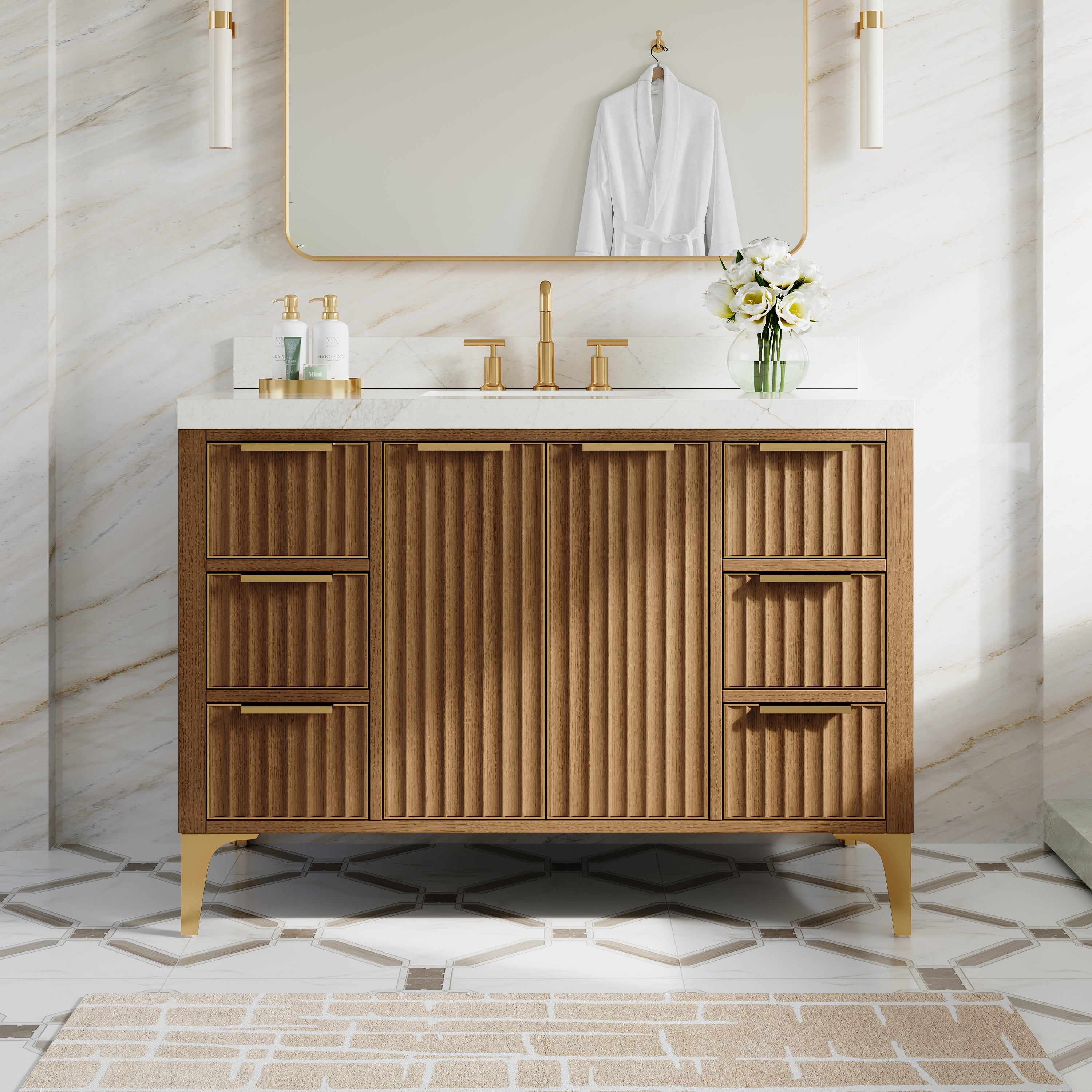
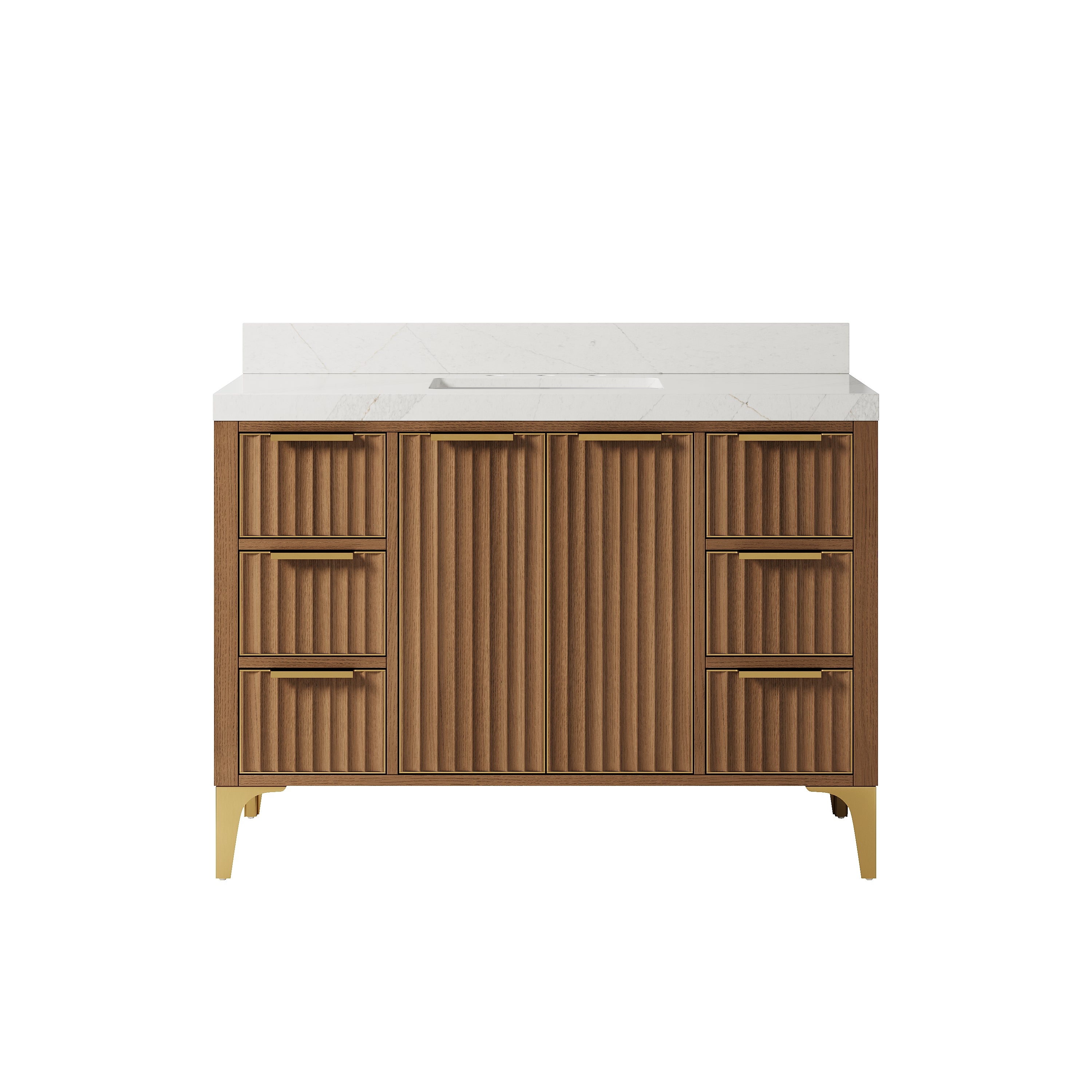


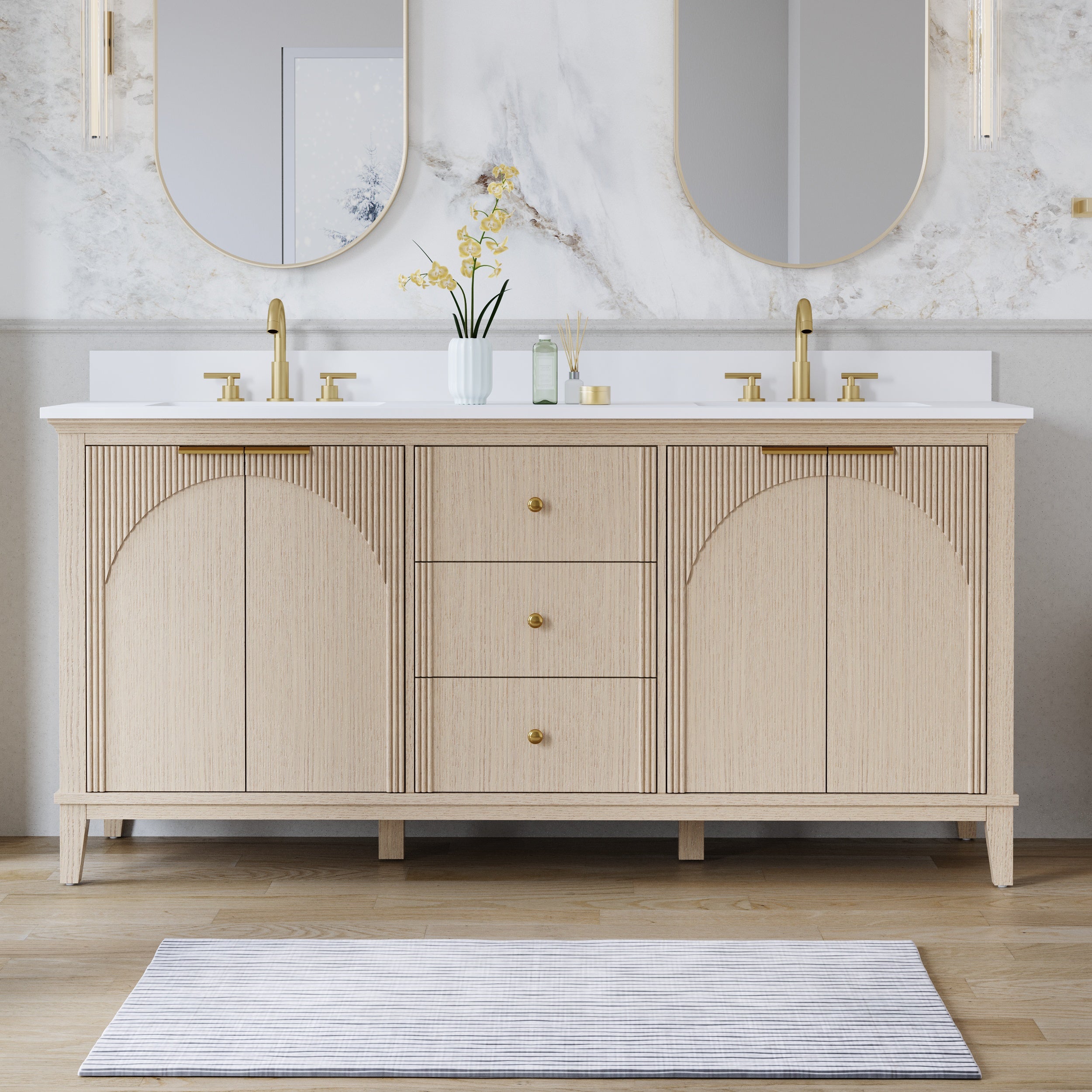
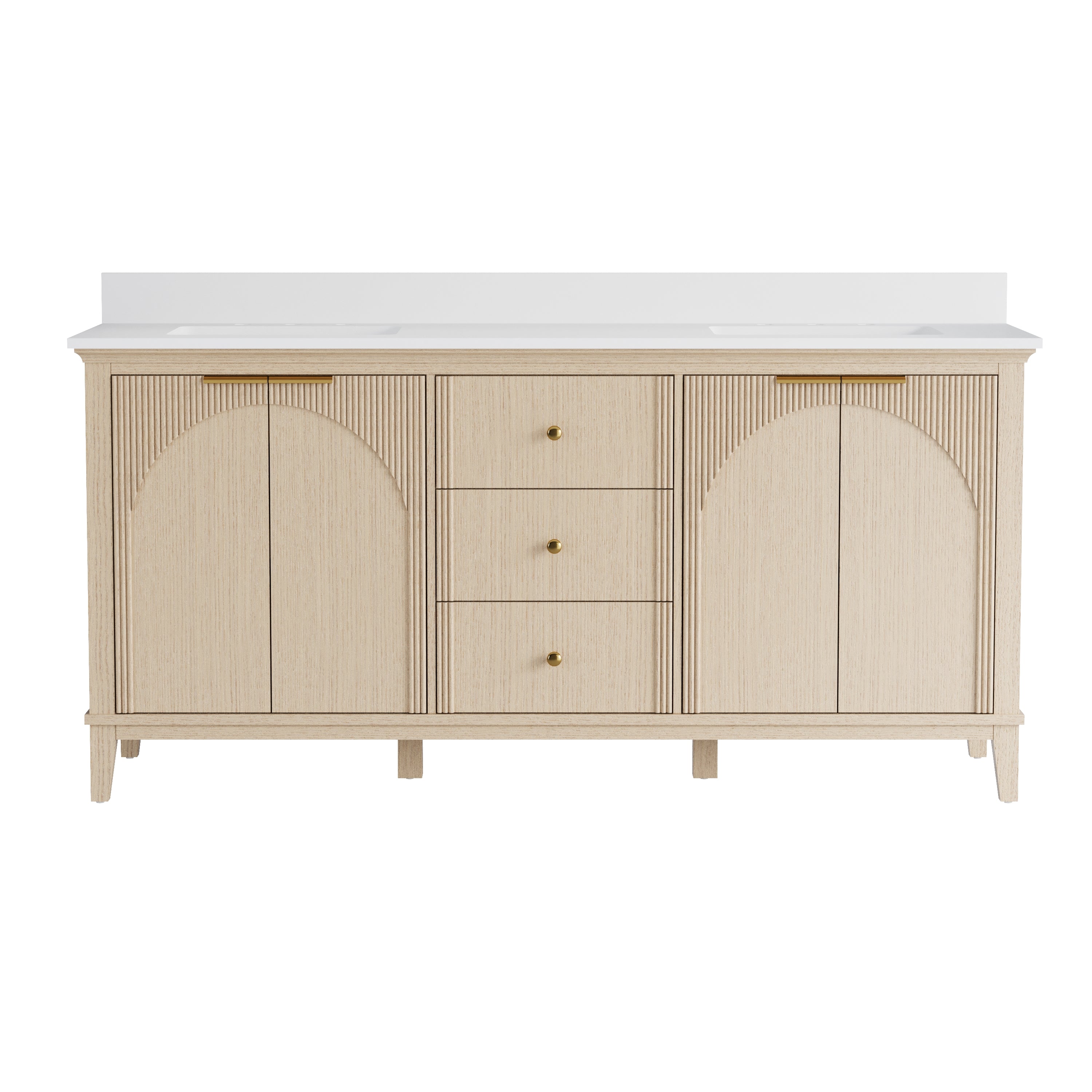
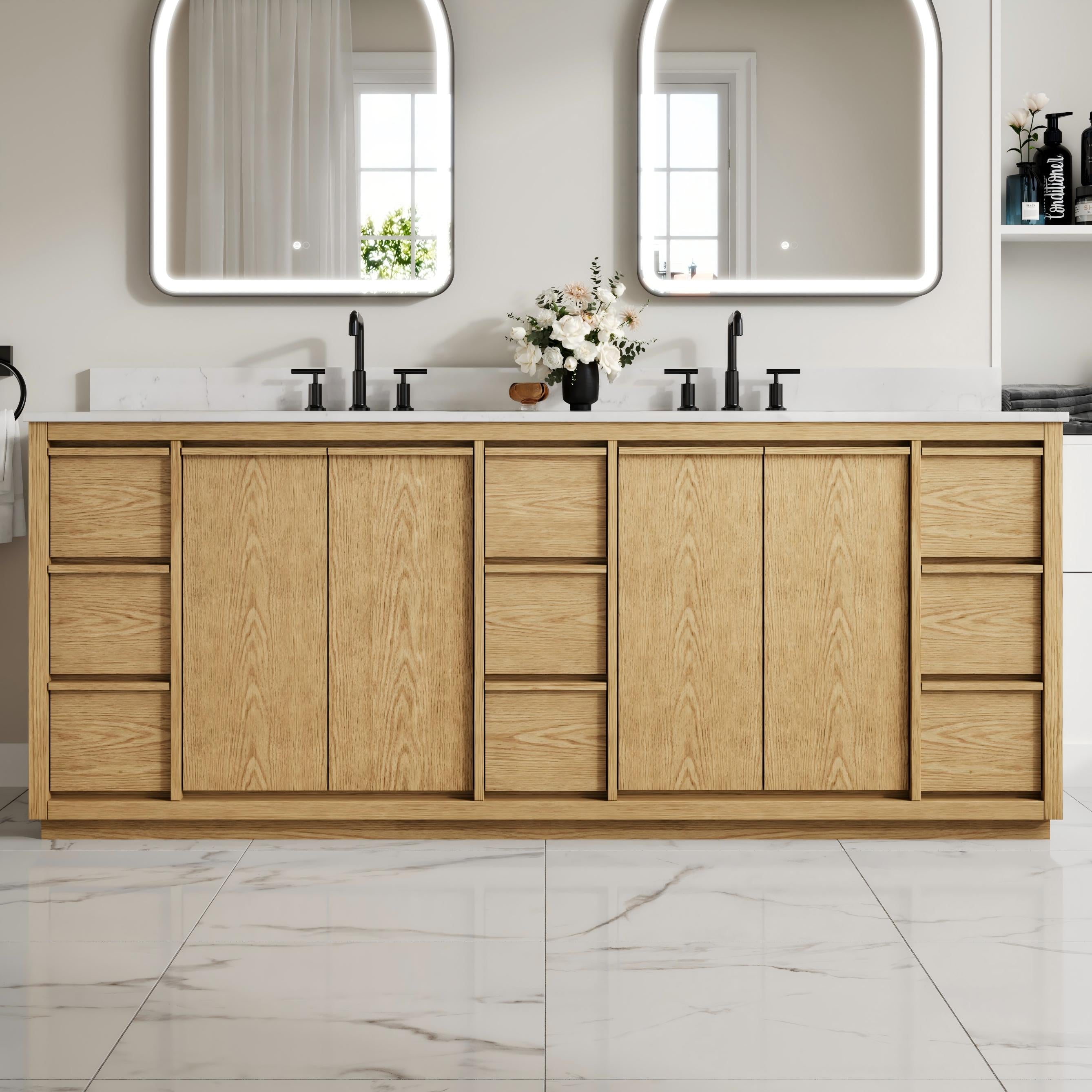
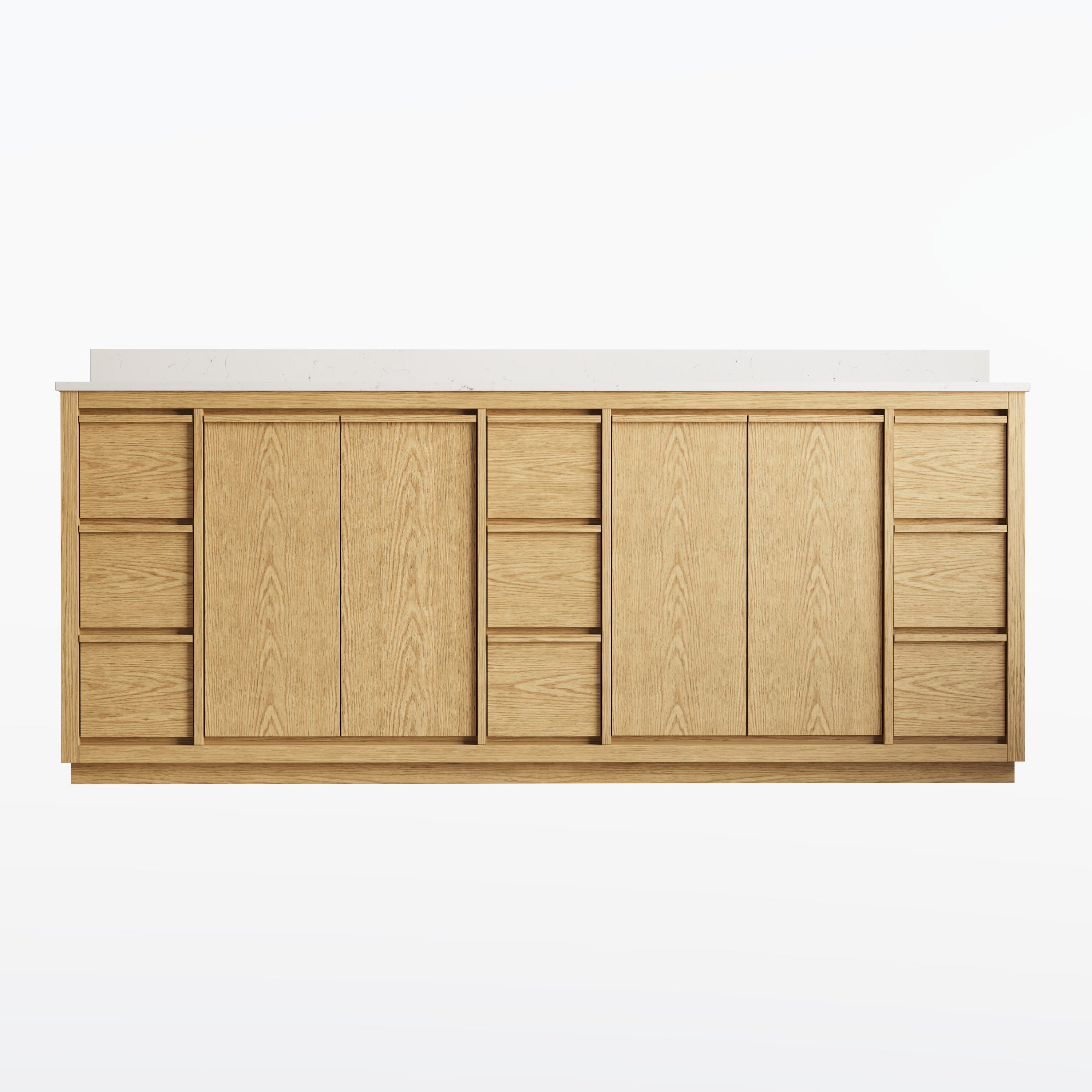
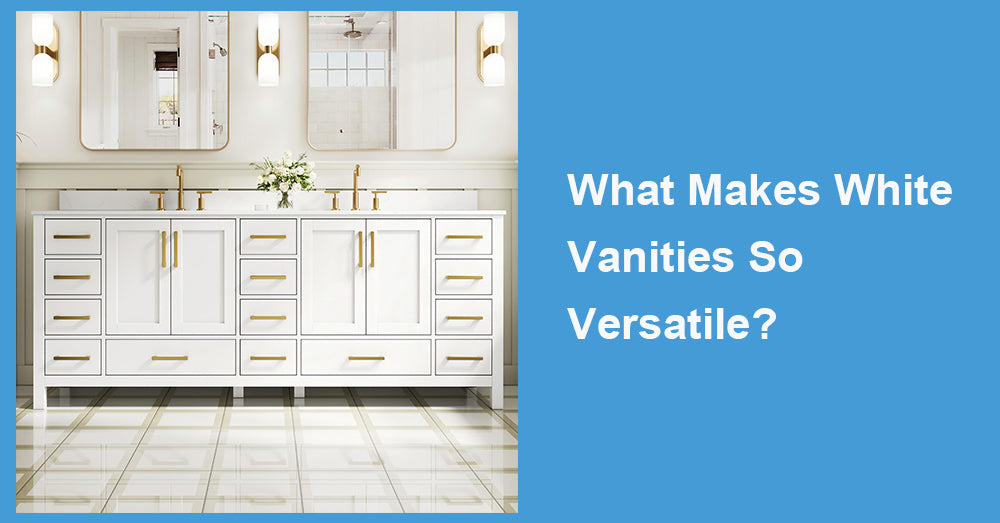
For a finish that has been around for decades, white vanities are proving surprisingly difficult to push out of bathroom design. Wood tones are gaining ground, warm neutrals are replacing cooler gray palettes, and green is appearing more often in tile and paint, yet white cabinetry continues to fit comfortably into all of those changes. Houzz's 2025 Bathroom Trends Study puts white at 20% of upgraded vanity colors, second to wood tones at 28%. More telling is what surrounds those cabinets: white remains the leading countertop color at 48%, with off-white adding another 20%. Rather than functioning as a trend color, white is increasingly being used as a flexible background that lets stone, wood, metal, lighting, and tile do more of the visual work.
White No Longer Means an All-White Bathroom
A decade ago, a white vanity was often paired with white walls, white subway tile, and a cool gray floor. That formula has loosened considerably.
Current bathrooms are warmer. NKBA's 2026 Bath Trends Report found that 96% of nearly 700 industry experts expect neutrals to dominate bathroom palettes. Off-white was selected by 58%, light brown and tan by 54%, and white by 40%. Sage green also reached 64%, suggesting that color is returning, but in quieter, nature-based forms.
A white vanity works well in this new palette because it does not need matching white finishes around it. It can sit beside pale oak flooring, beige porcelain tile, sage walls, cream-colored quartz, or a warm stone backsplash without looking disconnected.
That is a major reason the category keeps its relevance even as the rest of the bathroom becomes less monochromatic.
Cabinet Style Changes the Personality More Than Color Does
Two white vanities can look almost unrelated when their door styles are different.
Houzz reports that Shaker-style fronts account for 49% of upgraded vanities, while flat-panel designs represent 26%. Raised-panel doors come in at 15%.
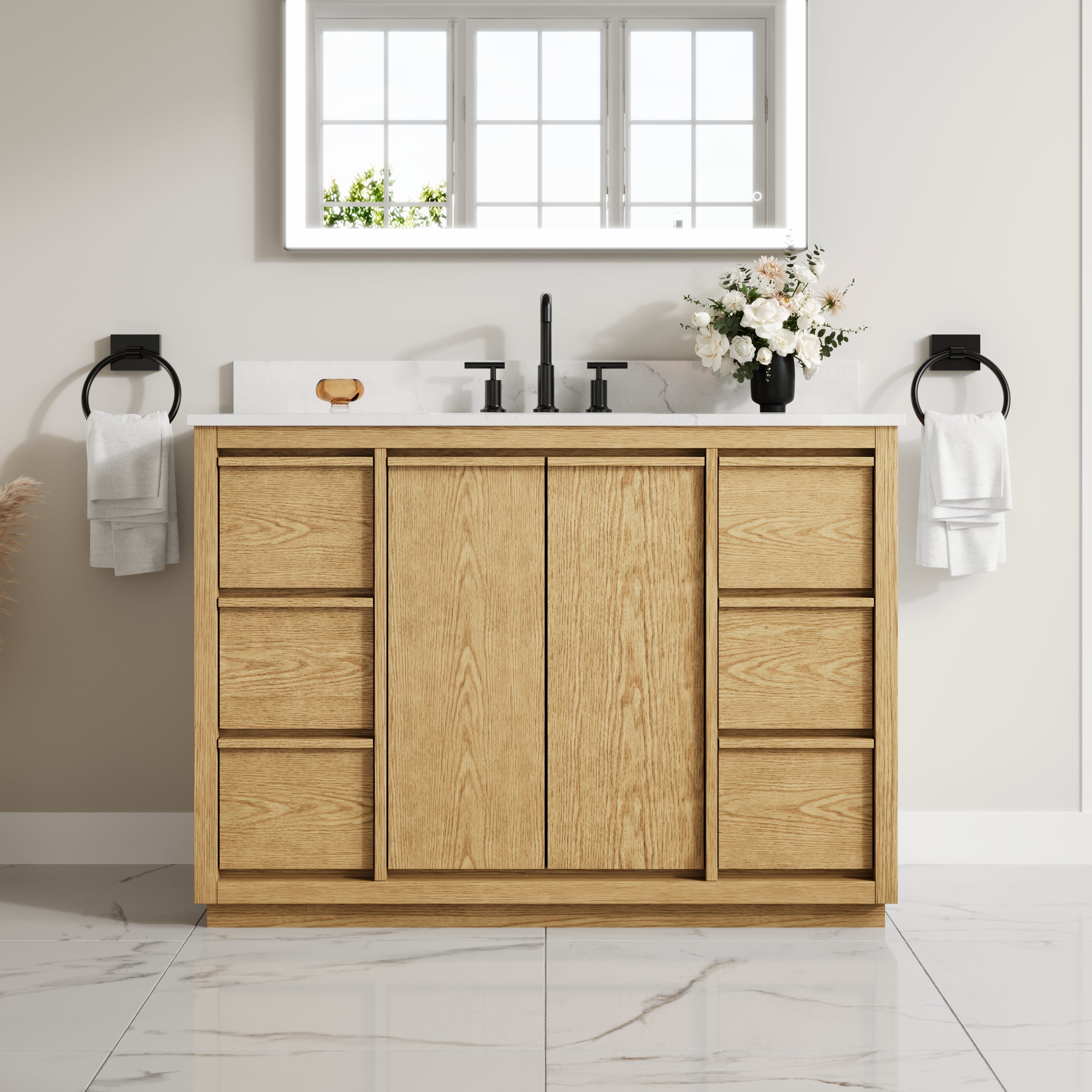
A 36-inch white Shaker vanity feels familiar and transitional. Replace the door with a slab front, remove visible handles, and mount the cabinet above the floor, and the same color suddenly becomes distinctly contemporary.
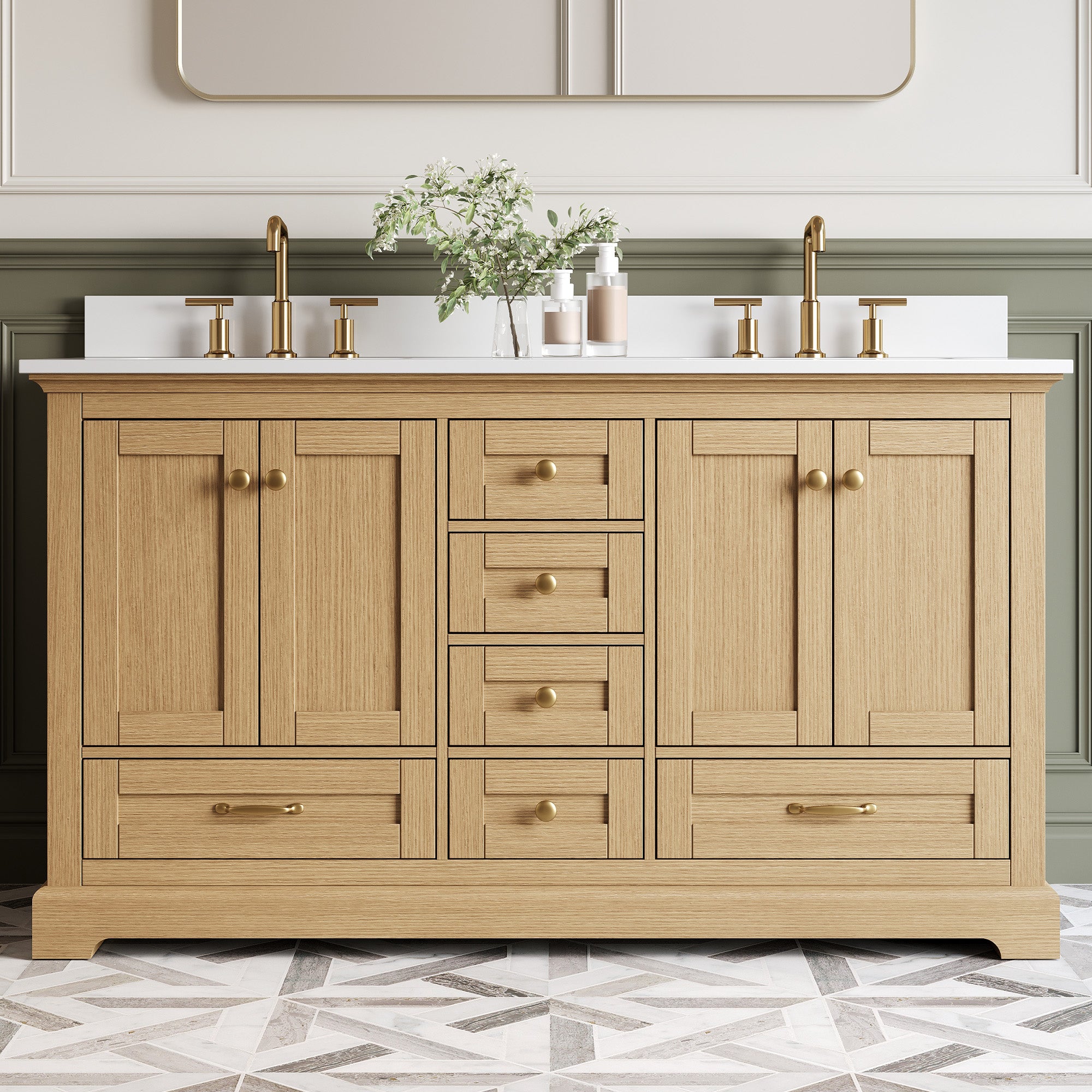
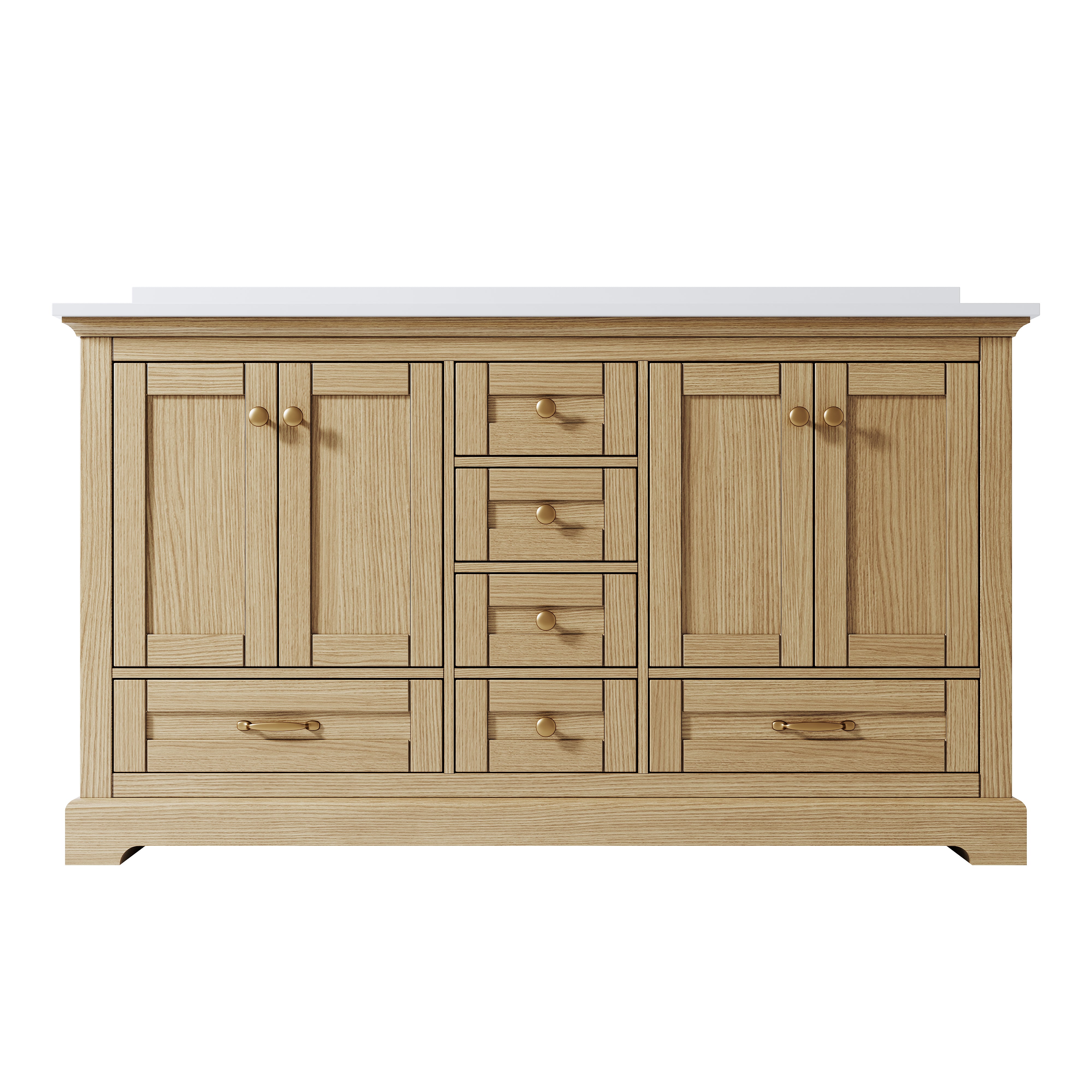
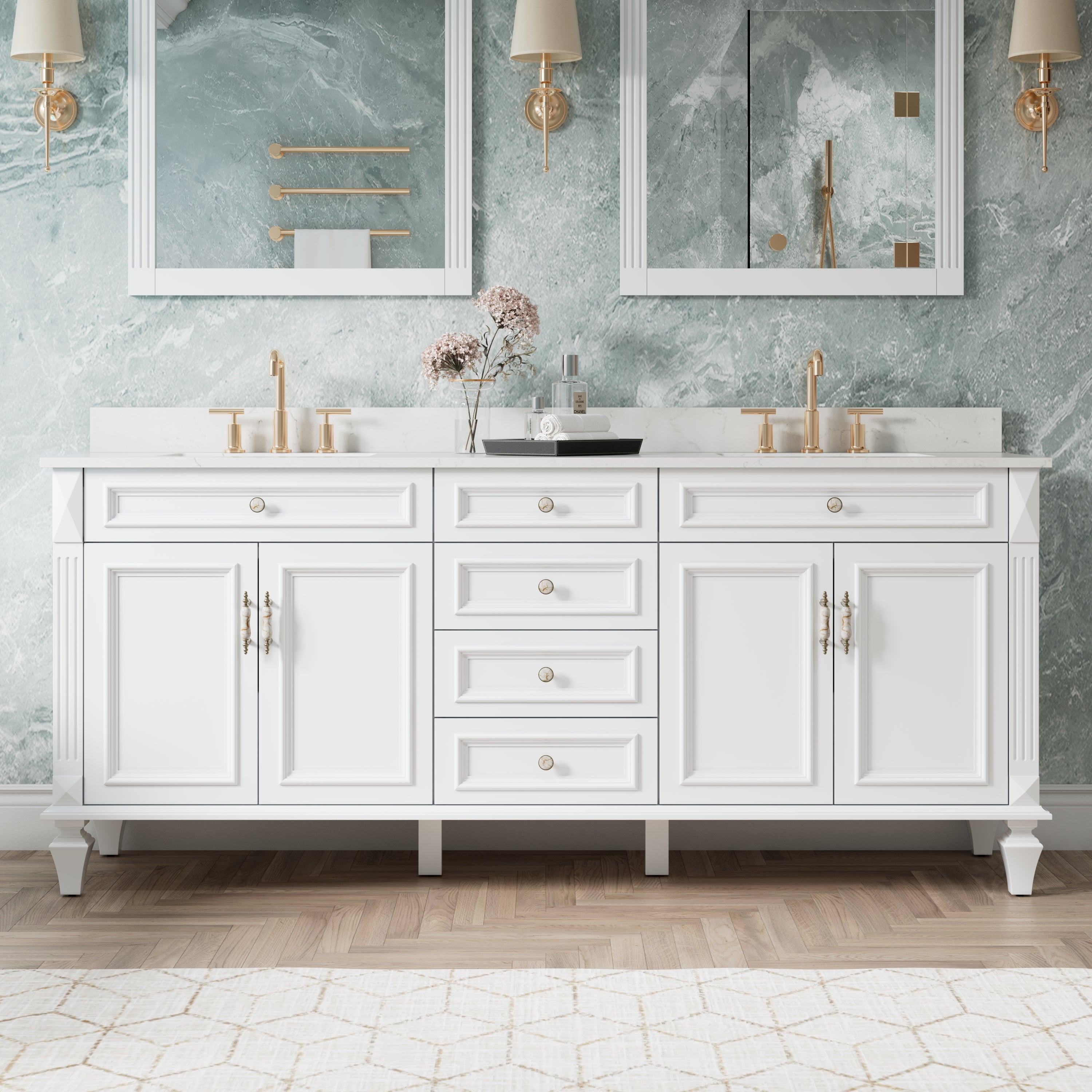
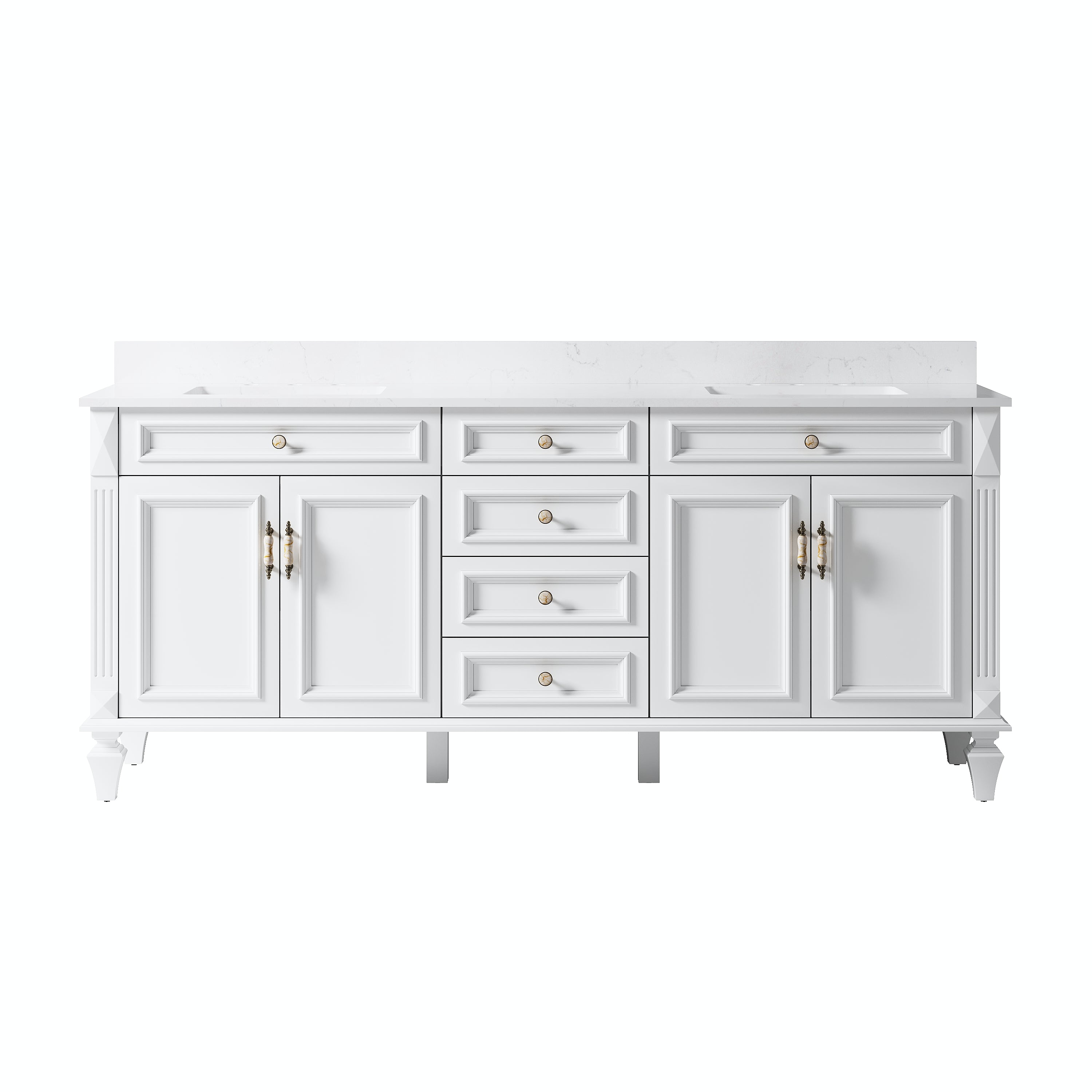
At 60 or 72 inches wide, framed doors and furniture-style legs can make white cabinetry feel traditional and substantial. A simple flat-panel version of the same width appears much quieter.
This is where white earns much of its versatility. The finish stays neutral while proportion, door profile, hardware, and mounting style determine the character.
It Solves a Real Problem in Smaller Bathrooms
A compact bathroom can become visually crowded long before it actually runs out of floor area.
Houzz found that 47% of upgraded vanities are 48 inches wide or smaller. Nineteen percent are 60 inches, 14% are 72 inches, and 13% are larger.
For a 30-inch or 36-inch vanity, white is useful because the cabinet tends to create less visual weight against a pale wall. It does not make the room physically larger, but it can keep one large object from dominating the view from the doorway.
The effect becomes stronger when the cabinet is paired with a frameless shower enclosure, a generous mirror, and flooring that continues without abrupt color changes.
A floating white vanity takes the idea further by exposing the floor underneath. Houzz places floating vanities at 11% of upgraded installations, compared with 30% for freestanding cabinets and 58% for built-ins. They remain a smaller segment, but in tight spaces their visual impact can be significant.
Countertop Choices Rarely Become Difficult
White cabinetry is unusually forgiving when countertop decisions come later in the project.
White tops remain dominant at 48%, followed by off-white at 20%, gray at 9%, beige at 6%, and black at 4%. Engineered quartz leads countertop materials at 45%, with quartzite at 20%, granite at 14%, and marble at 13%.
That gives designers considerable room.
White-on-white can look crisp, particularly on a 30-inch or 36-inch vanity where heavy contrast might make the cabinet feel busier. A warm beige-veined top can soften the look. Black or charcoal stone creates a sharper line and works particularly well on wider 48-inch or 60-inch cabinets.
The useful point is not that one combination is correct. White cabinetry makes several combinations workable without forcing the surrounding tile or flooring to change.
Natural Wood Trends Have Actually Made White More Interesting
The rise of wood vanities might seem like a threat to white cabinetry. In practice, the two materials increasingly appear in the same room.
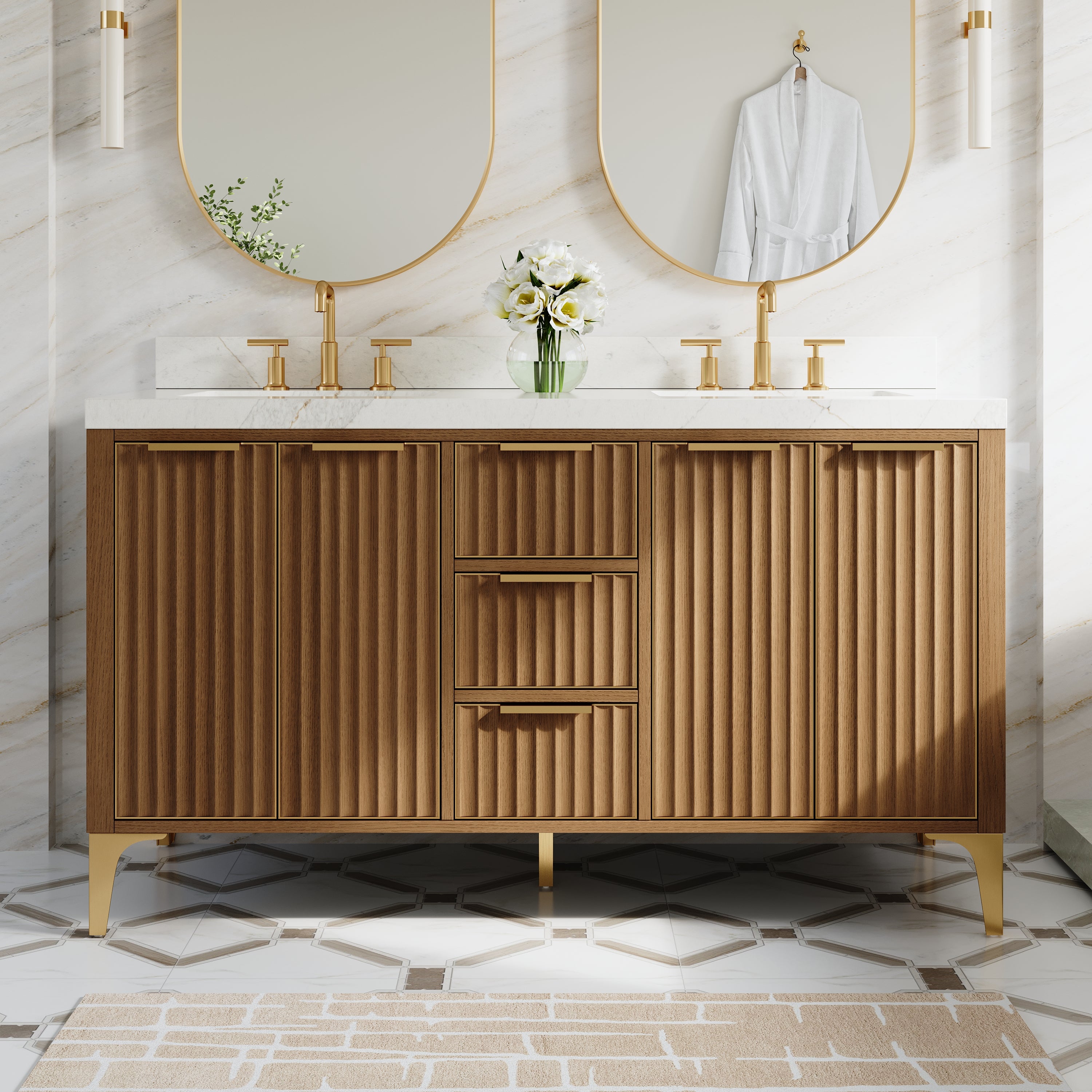
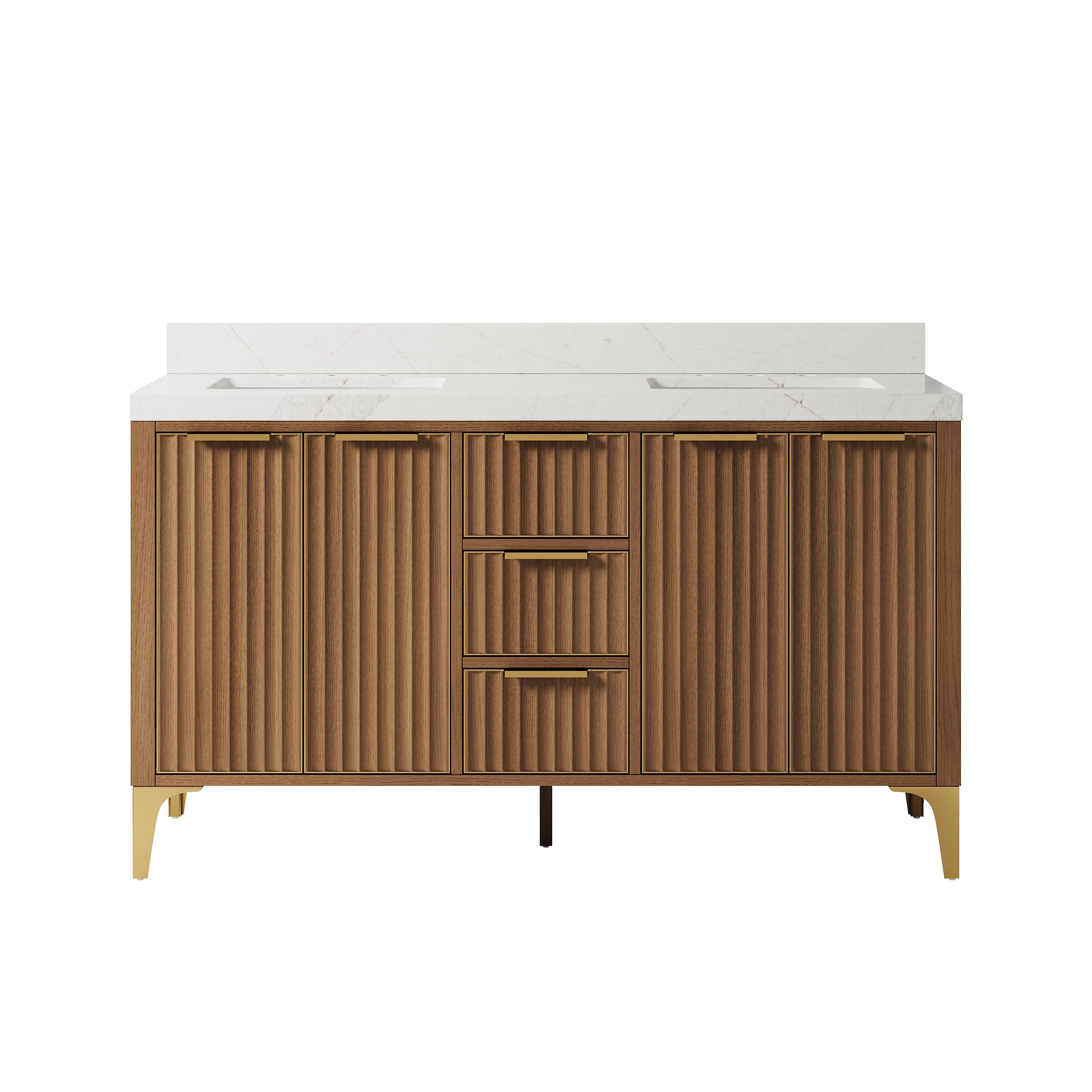
NKBA says wood-faced vanities have reached 62% in popularity, ahead of painted cabinetry at 53%. Houzz also found searches for white oak bathroom vanities rising 20% in its 2025 Emerging Summer Trends research.
Rather than competing with that look, a white vanity can borrow from it.
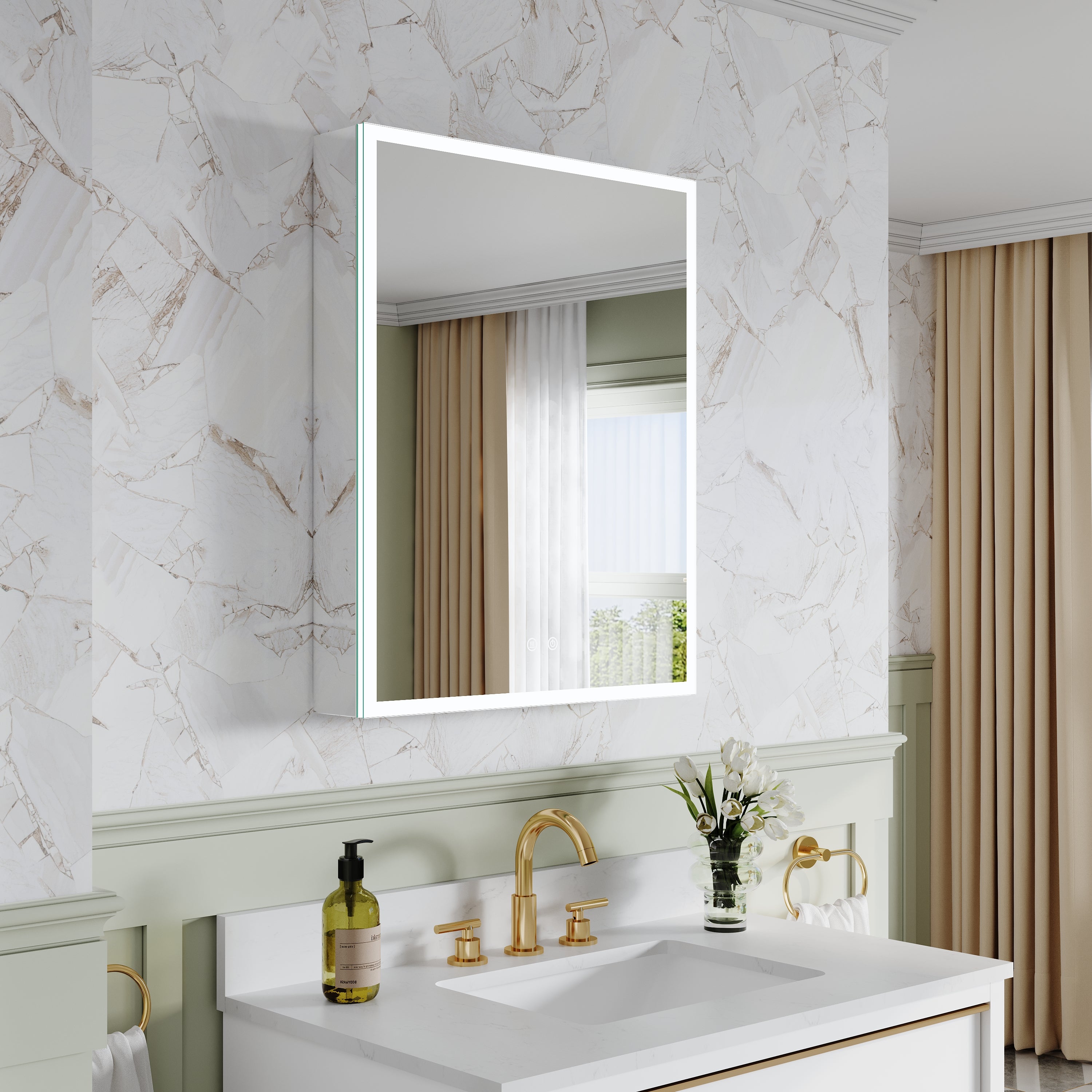
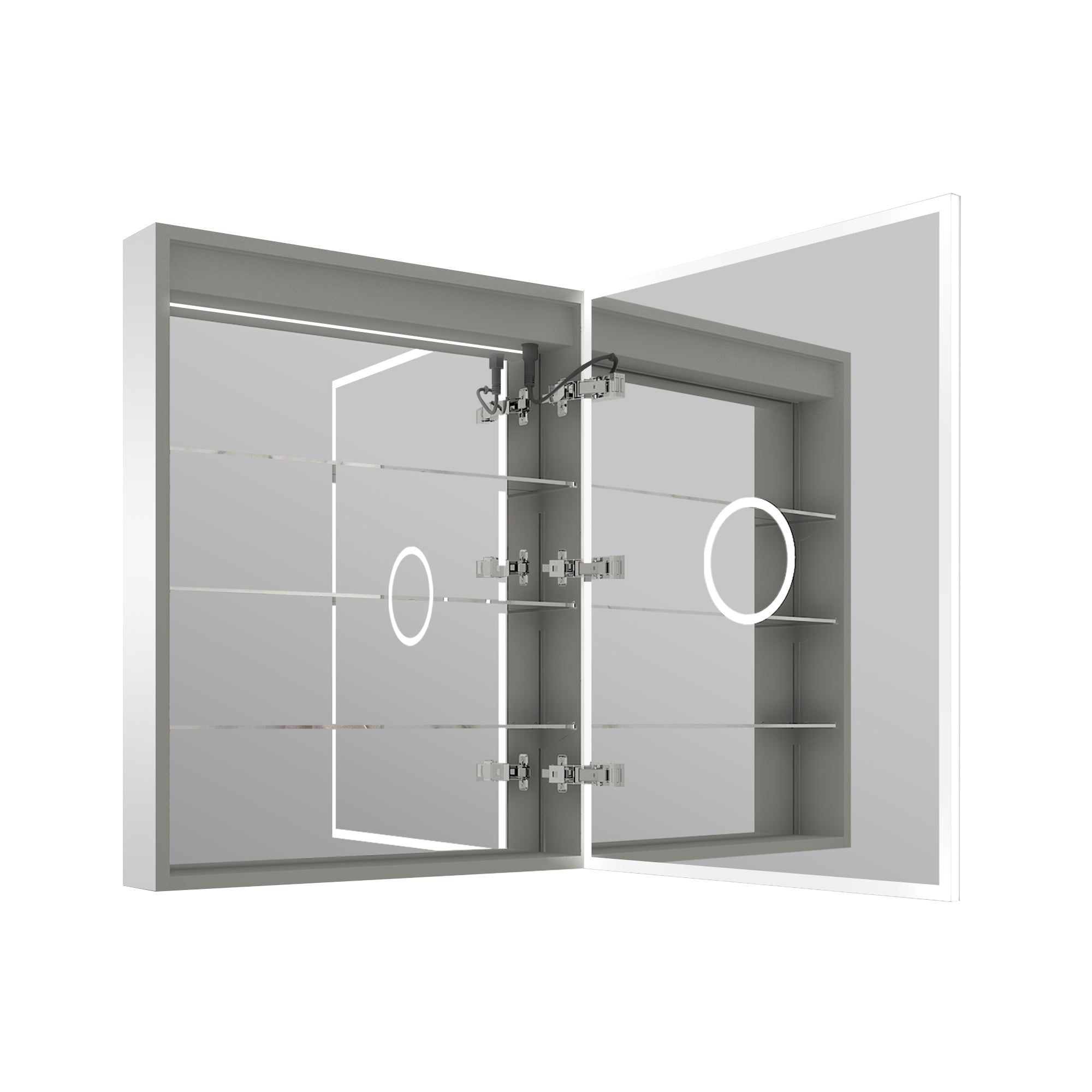
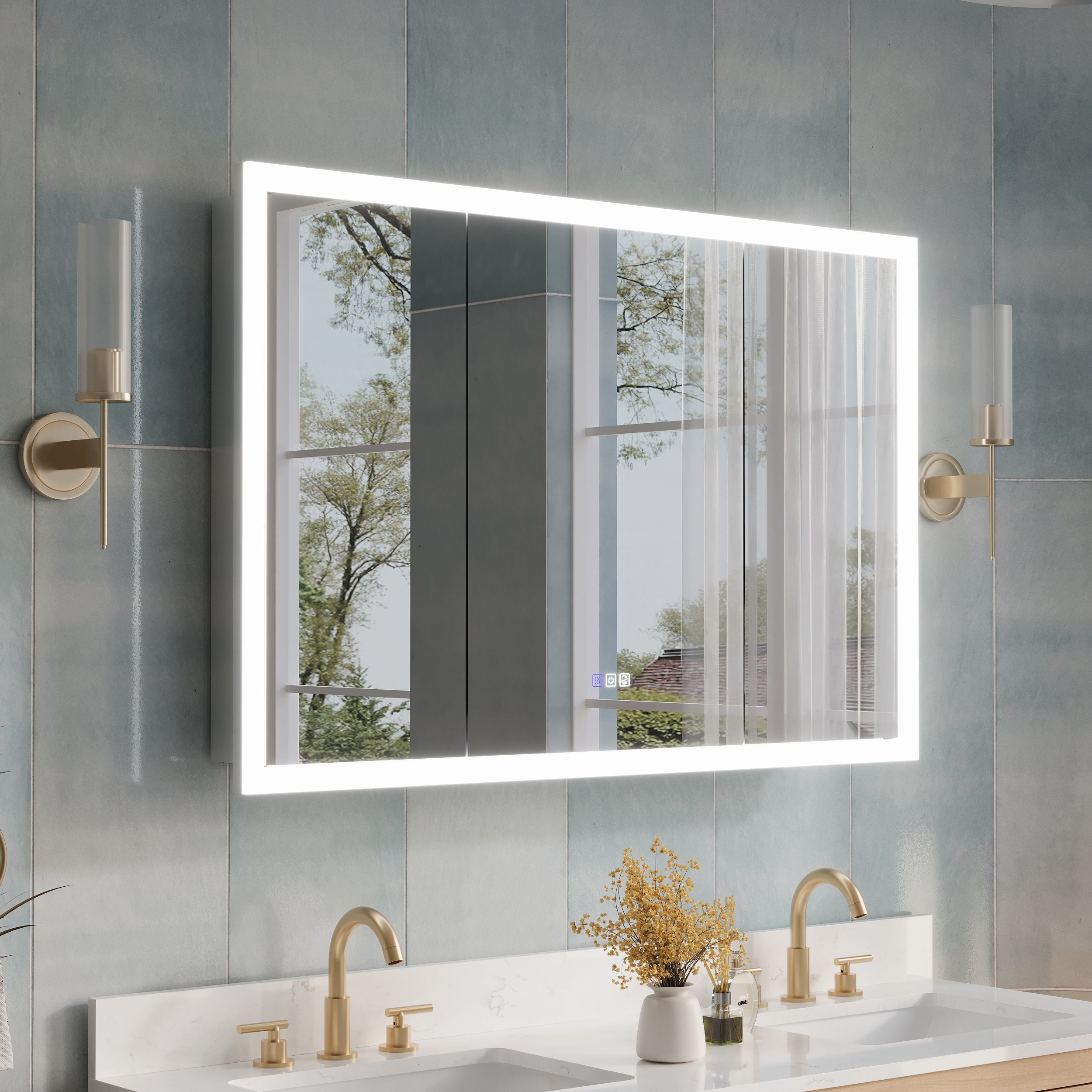
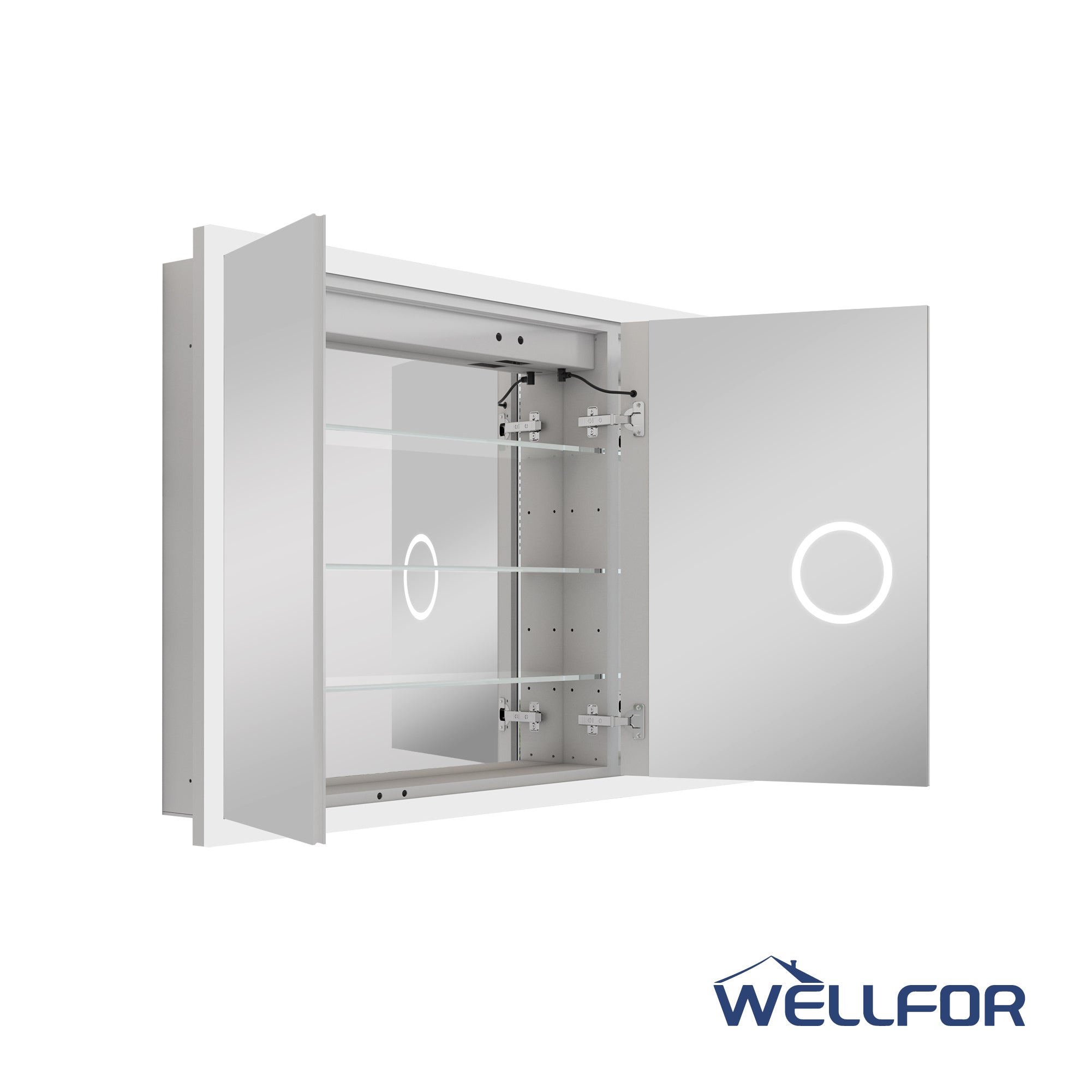
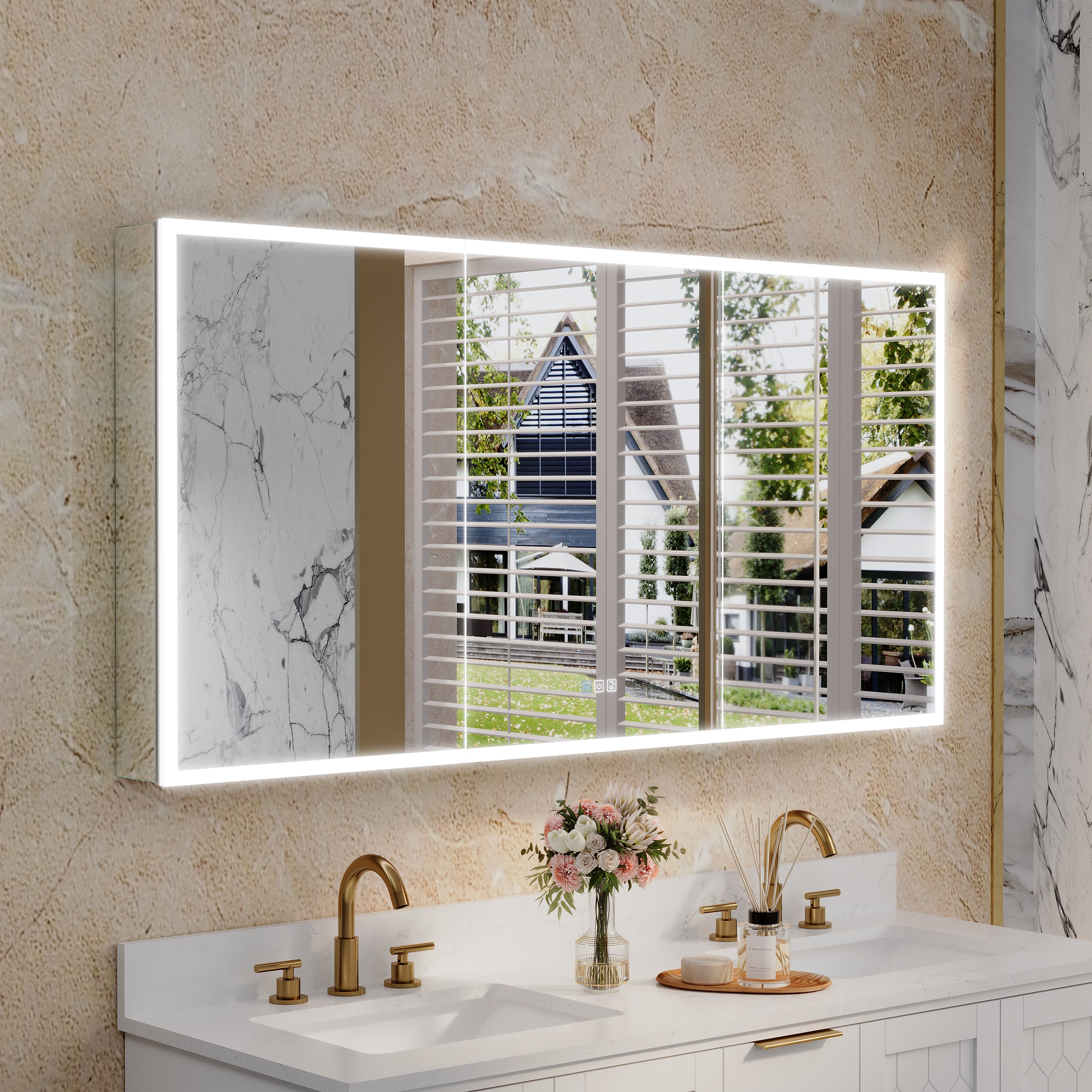
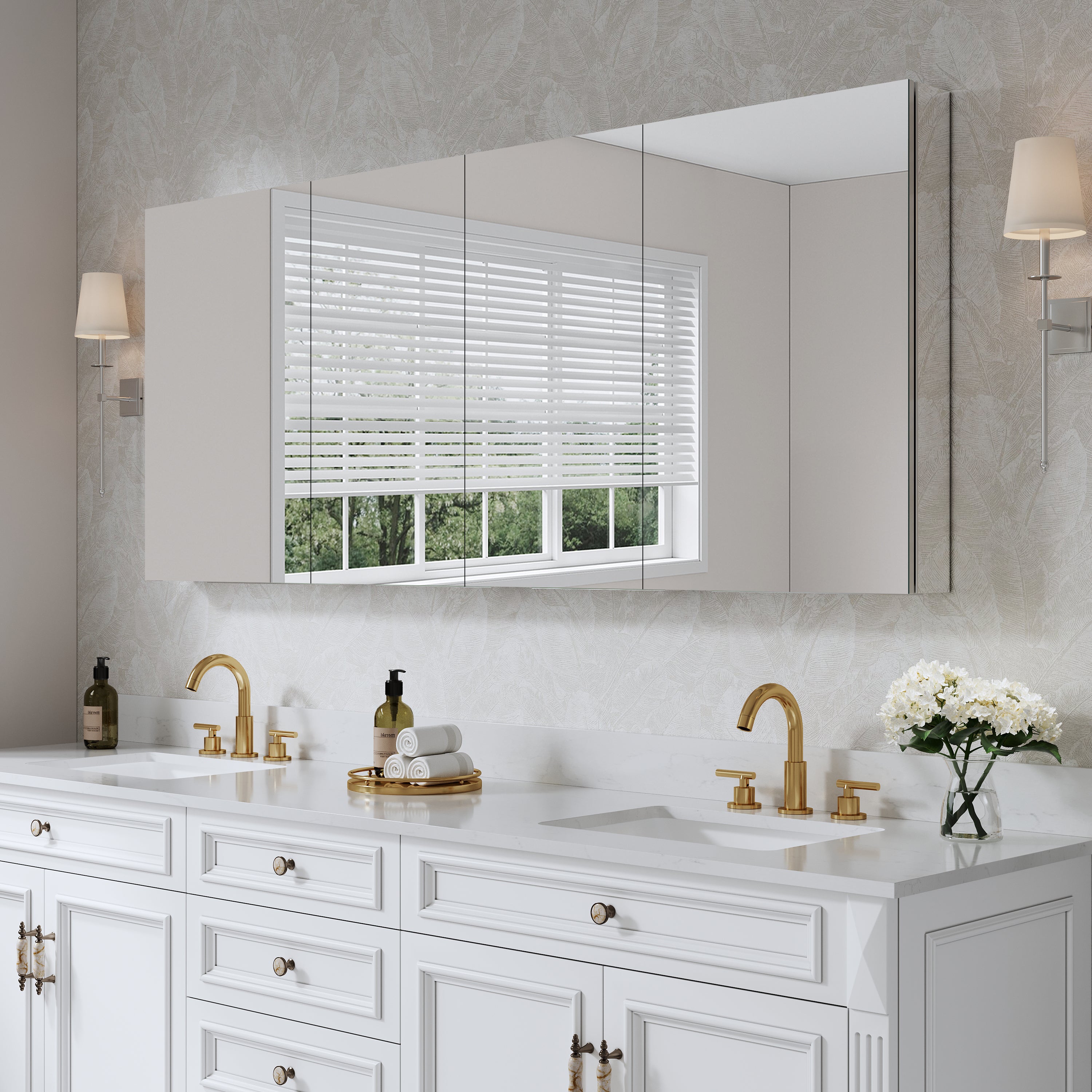
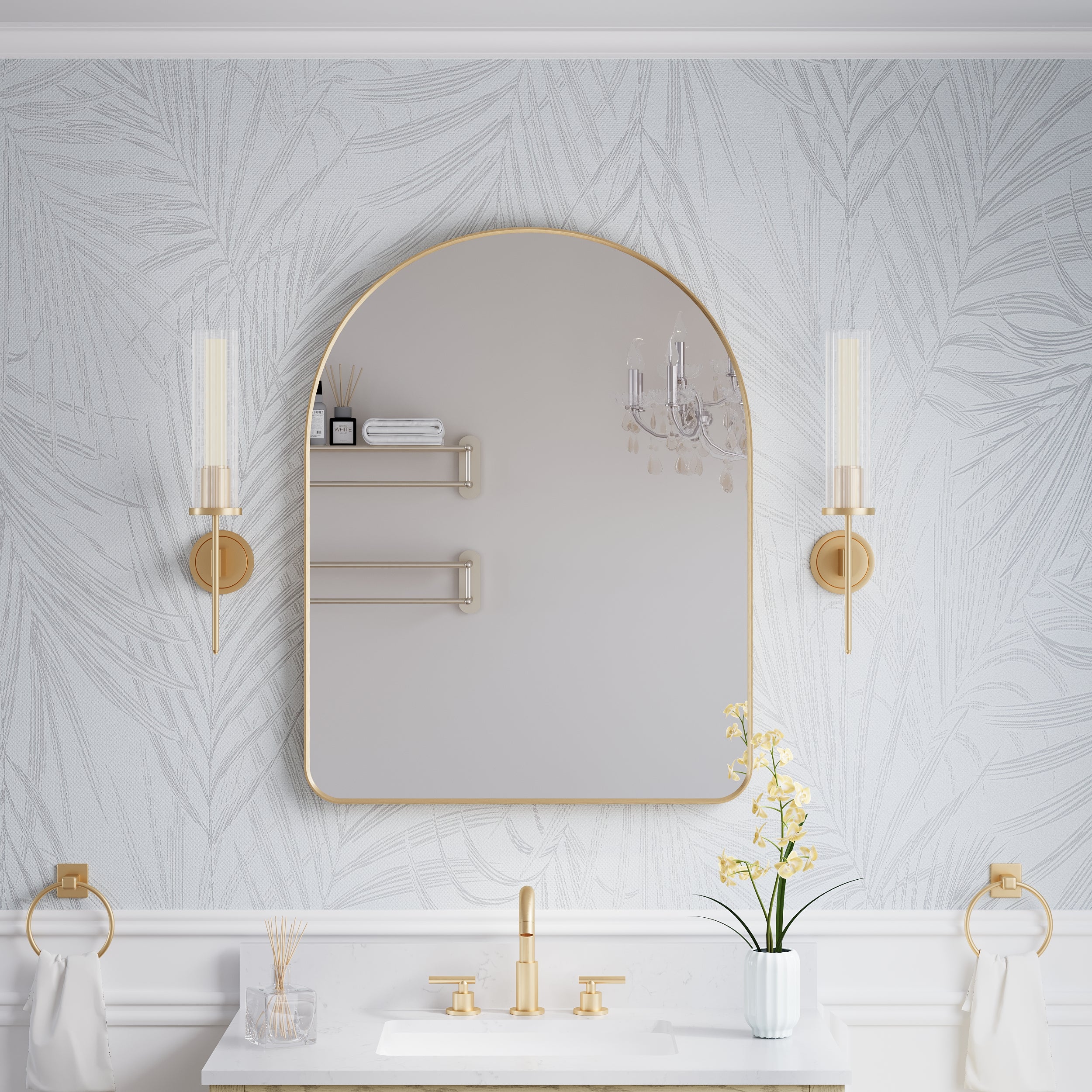
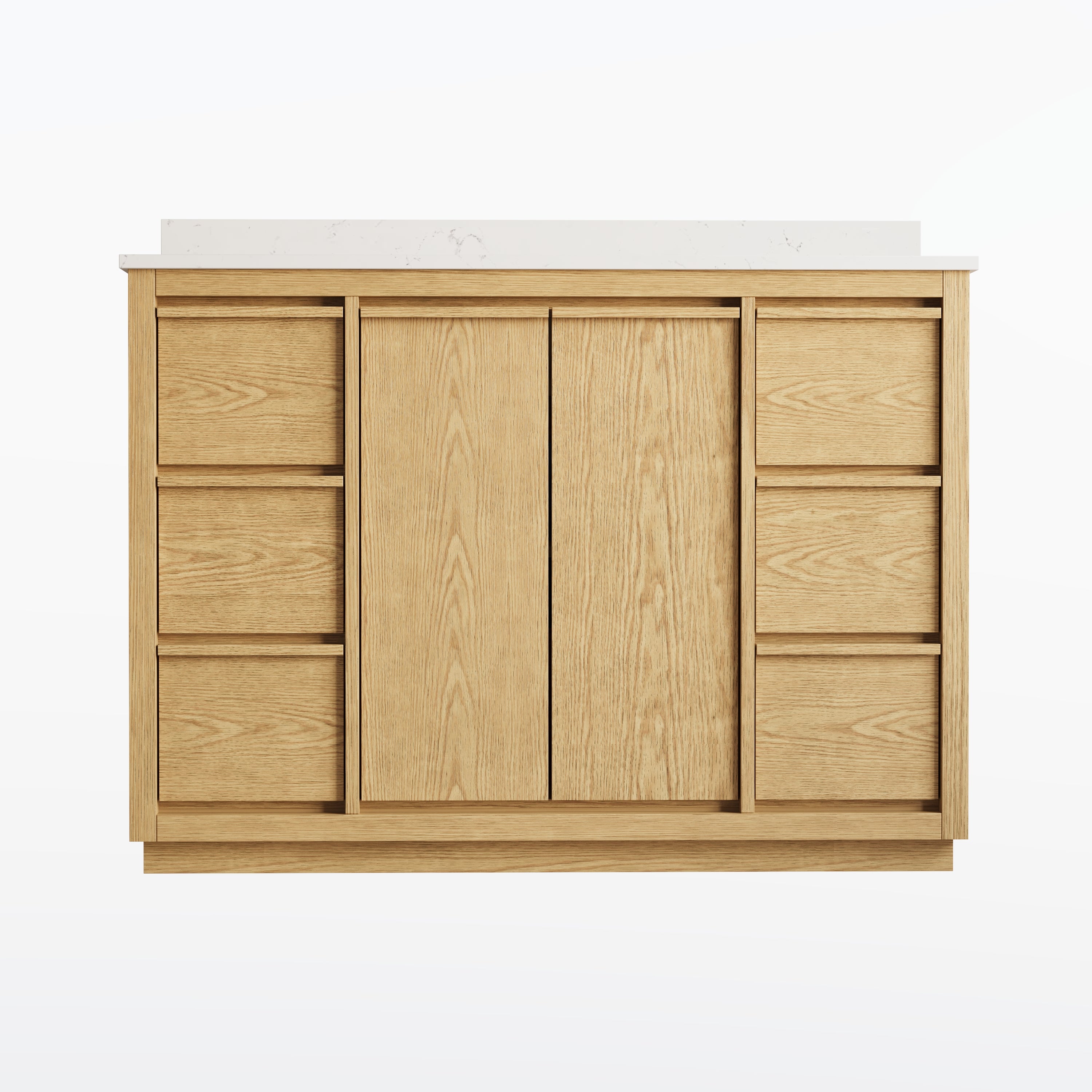
A white cabinet beneath a white oak medicine cabinet, for example, immediately feels warmer. A wood-framed mirror can produce the same effect. Even a small open shelf in pale oak can break up a white wall without changing the vanity itself.
This mix is one of the clearest differences between today's white bathrooms and the colder all-white rooms of the past.

Hardware Can Completely Reframe the Cabinet
White is also unusually responsive to hardware.
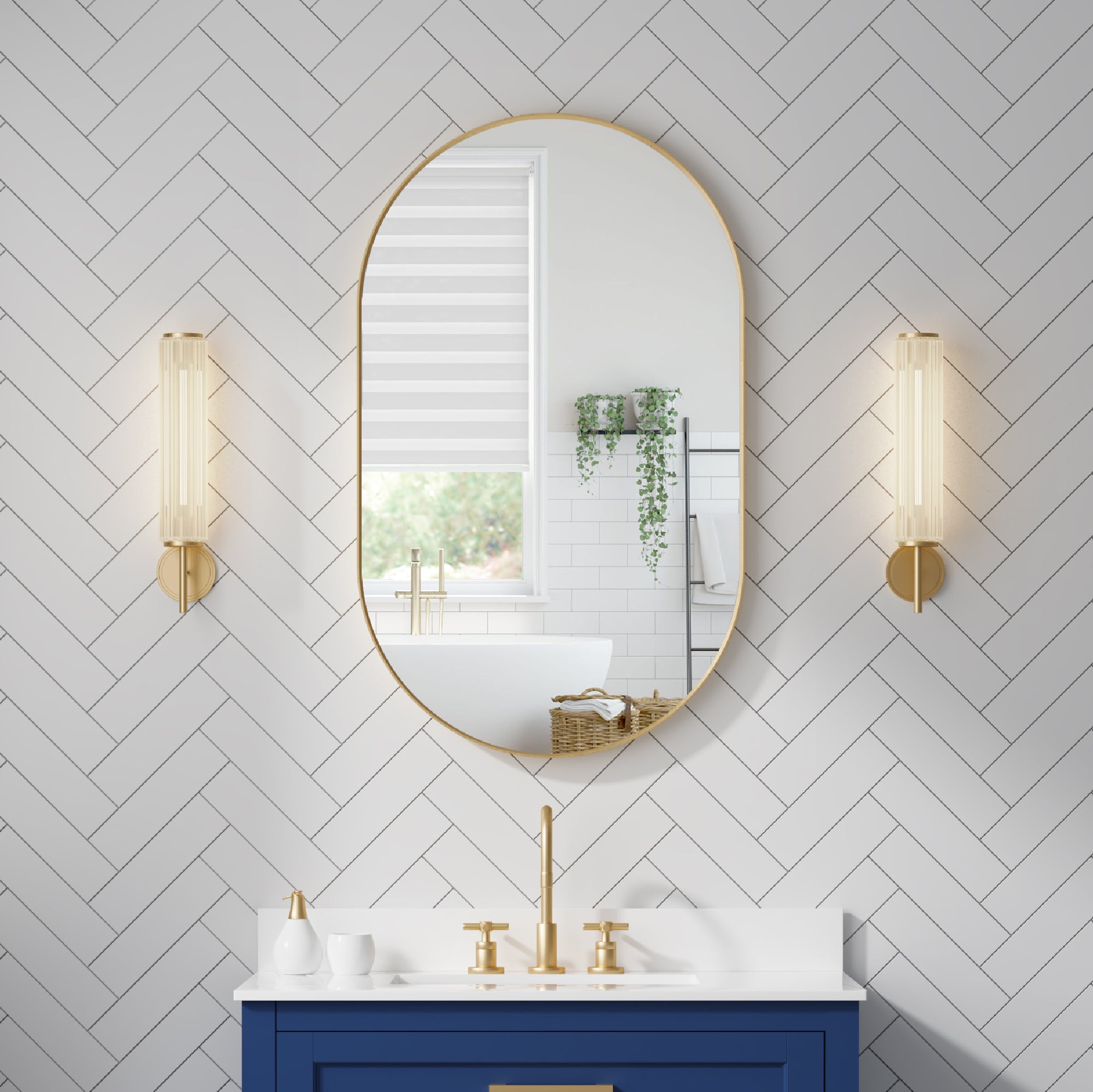
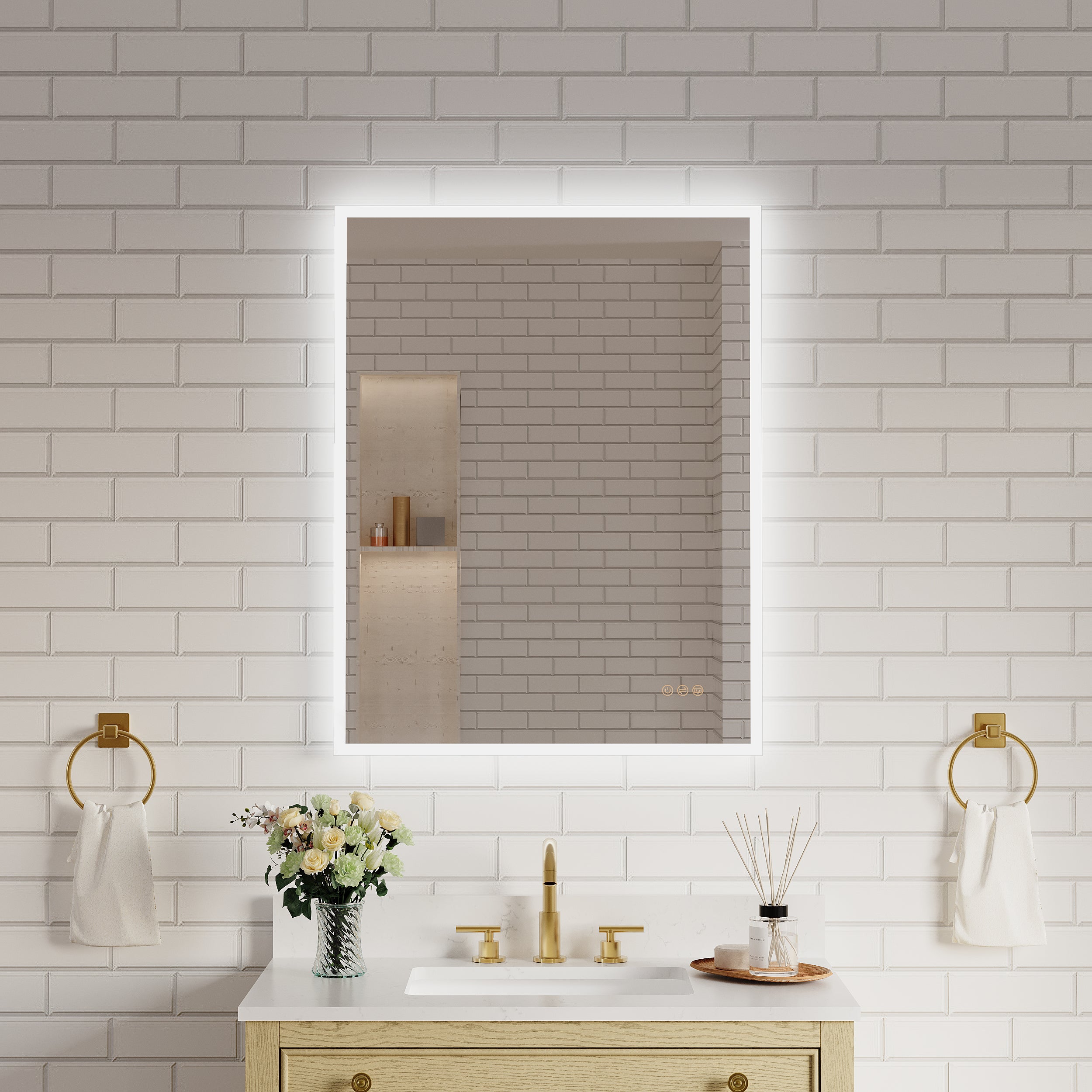
Matte black pulls create graphic contrast. Brushed nickel almost disappears into the composition. Brushed gold warms the cabinet immediately. Satin metal produces a softer middle ground.
NKBA's latest findings show matte faucet finishes at 54%, brushed at 51%, and satin at 46%, all ahead of polished finishes at 39%.
That creates an easy update path. A vanity installed with polished chrome hardware does not necessarily need replacement when the bathroom is refreshed five years later. Changing the faucet, handles, mirror frame, and lighting can move the same white cabinet in a very different direction.
For a major fixture, that kind of adaptability has practical value.
White Lets Storage Features Stay Visually Quiet
Vanity design is becoming less about how many doors fit across the front and more about what happens behind them.
NKBA's 2026 research points to configurable drawer systems, charging areas, electrical integration, hair-tool storage, makeup compartments, and medication organization as growing areas of interest.
White fronts help those more complicated interiors remain visually calm from the outside.
A 36-inch vanity may use U-shaped drawers around the plumbing. A 48-inch cabinet can combine an offset sink with a full drawer bank. At 60 or 72 inches, several drawer sizes can be incorporated without making the front elevation look too busy if the color and hardware remain restrained.
This is an important shift. Versatility now has as much to do with daily routines as with decoration.
The Best White Is Not Always the Brightest White
One reason some white vanities age poorly is that the wrong white was chosen for the room.
A very cool white can appear blue beside beige flooring or cream stone. A slightly warmer white usually works better with natural oak, brushed brass, warm gray tile, and the brown-based greens now showing up in bath forecasts.
Lighting changes the reading as well. NKBA says 91% of industry professionals consider lighting quality a top bathroom design concern, while 92% support task lighting in the primary bath and 88% prioritize natural light.
A cabinet sample should therefore be viewed beside the countertop and tile under the room's actual lighting, not just under showroom lamps.
White is flexible, but its undertone still matters.














Leave a comment
This site is protected by hCaptcha and the hCaptcha Privacy Policy and Terms of Service apply.