






















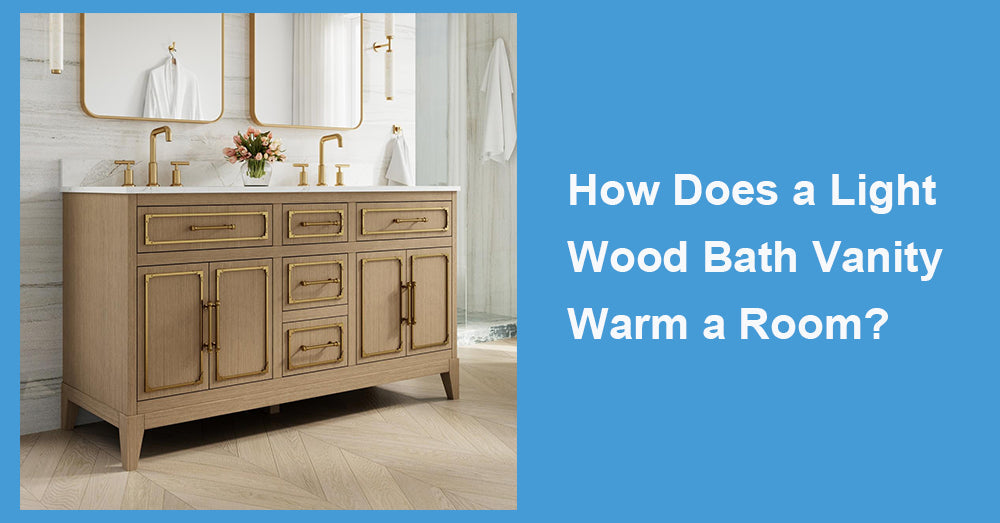
A light wood bath vanity can change the mood of a bathroom without making the space feel darker or visually heavy. After more than 20 years of working with bathroom cabinetry, I have found pale wood tones especially useful in rooms dominated by tile, stone, glass, and other hard surfaces. They introduce warmth through grain, color variation, and natural texture while still keeping the bathroom bright. The result can feel calmer and more residential than an all-white or gray scheme, provided the wood tone is chosen carefully.
1. A Light Wood Bath Vanity Softens Hard Bathroom Surfaces
Bathrooms naturally contain materials that can feel cool: porcelain, ceramic tile, mirrors, chrome, quartz, and glass.
Light wood creates contrast without becoming visually dominant.
White oak, ash, maple, and similar pale finishes introduce subtle grain and warmer undertones that break up large areas of stone or tile. In a white bathroom, this can prevent the space from feeling clinical. In a gray bathroom, wood can add enough warmth to make the room feel more comfortable without changing the entire color palette.
That balance is one reason light wood works so well in modern renovations.
2. Pale Wood Keeps the Room Bright
Dark wood can create richness, but it also carries more visual weight.
A light wood vanity offers much of the warmth of natural material while reflecting more light and blending easily with pale walls. This makes it particularly effective in guest baths, apartments, and smaller primary bathrooms.
Warmth Does Not Mean Yellow
One common mistake is choosing a wood finish that is too golden for the rest of the room.
A light oak with beige or neutral undertones generally works well with warm white walls, cream stone, and soft gray tile. A strongly yellow wood can clash with cooler finishes.
Always compare samples under the actual bathroom lighting before committing.
Artificial light can change wood dramatically.
3. Natural Grain Adds Texture Without Clutter
Good bathroom design does not always need more color. Sometimes it simply needs more texture.
A light wood vanity introduces fine grain and tonal variation that makes the room feel layered rather than flat.
This is especially useful when the surrounding surfaces are simple.
For example, a bathroom with white quartz, large-format beige tile, and frameless glass can feel unfinished if every surface is smooth. A natural wood cabinet gives the eye something softer to focus on.
I usually prefer quieter grain when the countertop already has strong veining. Too many expressive materials can make a small bathroom feel busy.
4. Light Wood Works Well With Warm Metals
Cabinet hardware and faucets can reinforce the warmer atmosphere.
Brushed brass, champagne bronze, and softer nickel finishes pair naturally with pale wood. Matte black creates more contrast and gives the vanity a slightly more modern edge.
Avoid Matching Every Finish Exactly
The goal is coordination, not duplication.
A brass faucet does not require identical brass drawer pulls. Slight variations in tone can make the room feel more natural.
What I would avoid is mixing several unrelated metal finishes in a small space. Two coordinated finishes are usually enough.
Let the wood remain the quiet foundation.
5. Floating and Freestanding Designs Create Different Moods
A floating light wood vanity combines natural warmth with a lighter architectural form.
Because the floor remains visible underneath, the cabinet feels less substantial. This works particularly well in compact bathrooms or modern interiors.
A freestanding version has more visual presence and often provides greater storage.
It can feel more furniture-like, which suits transitional bathrooms and larger primary suites.
Neither is automatically better.
Choose floating when openness and floor access matter. Choose freestanding when storage and easier installation are higher priorities.
6. Countertop Color Changes How Warm the Vanity Feels
The same wood finish can look completely different depending on the countertop.
Bright white quartz creates crisp contrast and keeps the room fresh. Cream or beige stone brings out warmer undertones and creates a softer appearance.
Gray countertops require more care.
If both the stone and wood have conflicting undertones, the room may feel disconnected. I recommend looking at cabinet, countertop, and tile samples together rather than selecting them separately.
A successful warm bathroom usually comes from several materials working quietly together.
7. Storage Still Matters More Than Styling
It is easy to focus on the wood finish and overlook cabinet function.
A beautiful vanity becomes frustrating if daily products have nowhere to go.
Deep drawers are useful for skincare, brushes, cosmetics, and grooming tools. Under-sink cabinets work better for cleaning supplies and taller bottles.
Look at the interior layout carefully.
Some drawer fronts may be decorative because the sink occupies the space behind them. Plumbing cutouts can also reduce usable storage.
For a family bathroom, practical drawers often matter more than a perfect grain pattern.
8. Light Wood Has Some Practical Limitations
Pale finishes can hide dust better than very dark cabinetry, but they are not maintenance-free.
Hair dye, makeup, dark cosmetics, and water stains may be noticeable if spills are left in place. Natural-looking finishes also need good edge sealing to prevent moisture from reaching the material underneath.
Wood is not waterproof.
If the bathroom has poor ventilation, frequent floor water, or shower spray reaching the vanity, I would address those conditions before choosing wood cabinetry.
A humid room can damage even a well-made cabinet over time.
9. Installation Should Protect the Material
Measure the wall, cabinet depth, countertop overhang, and nearby fixture clearance before buying.
Check the plumbing location against the drawer and cabinet layout. If the drain runs through a functional drawer, the installer may need to relocate plumbing or modify storage.
Set the vanity level before installing the countertop.
Seal the sink, faucet openings, backsplash, and countertop joints carefully. Test all plumbing connections before storing anything inside.
A slow leak beneath the sink is usually more damaging than normal bathroom humidity.

10. Keep the Warm Look Easy to Maintain
Use a soft cloth and mild, non-abrasive cleaner for everyday care. Wipe standing water promptly and run the exhaust fan during and after showers.
Avoid leaving wet towels against cabinet doors. Inspect the area beneath the sink periodically for leaks, discoloration, or swelling.
When comparing Wellfor options, start with cabinet dimensions, storage layout, finish quality, plumbing compatibility, and room lighting. Then compare the wood undertone with your tile and countertop. A light wood bath vanity works best when it adds warmth quietly—bringing natural texture into the room without making the bathroom feel dark, heavy, or overly decorated.









































Leave a comment
This site is protected by hCaptcha and the hCaptcha Privacy Policy and Terms of Service apply.