














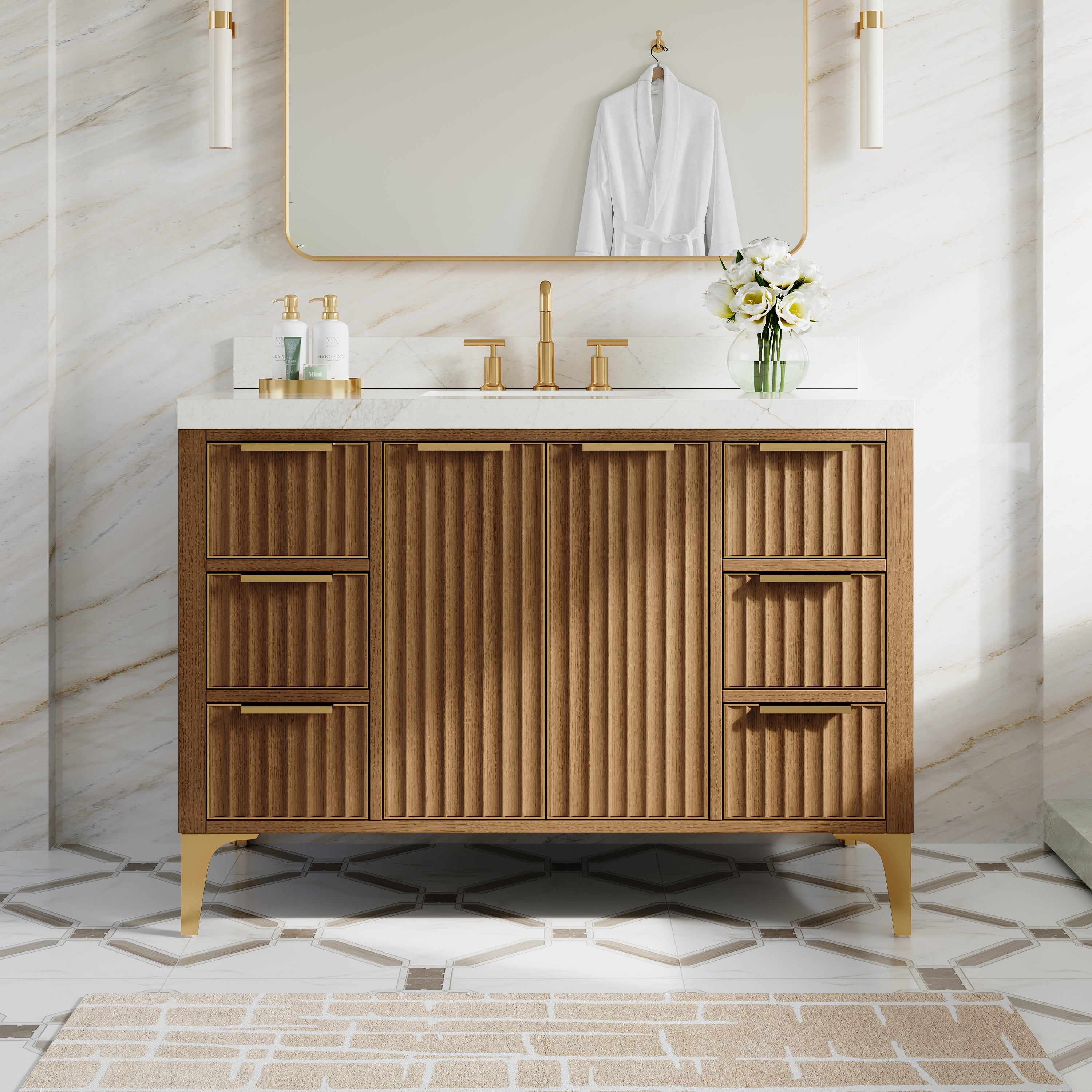
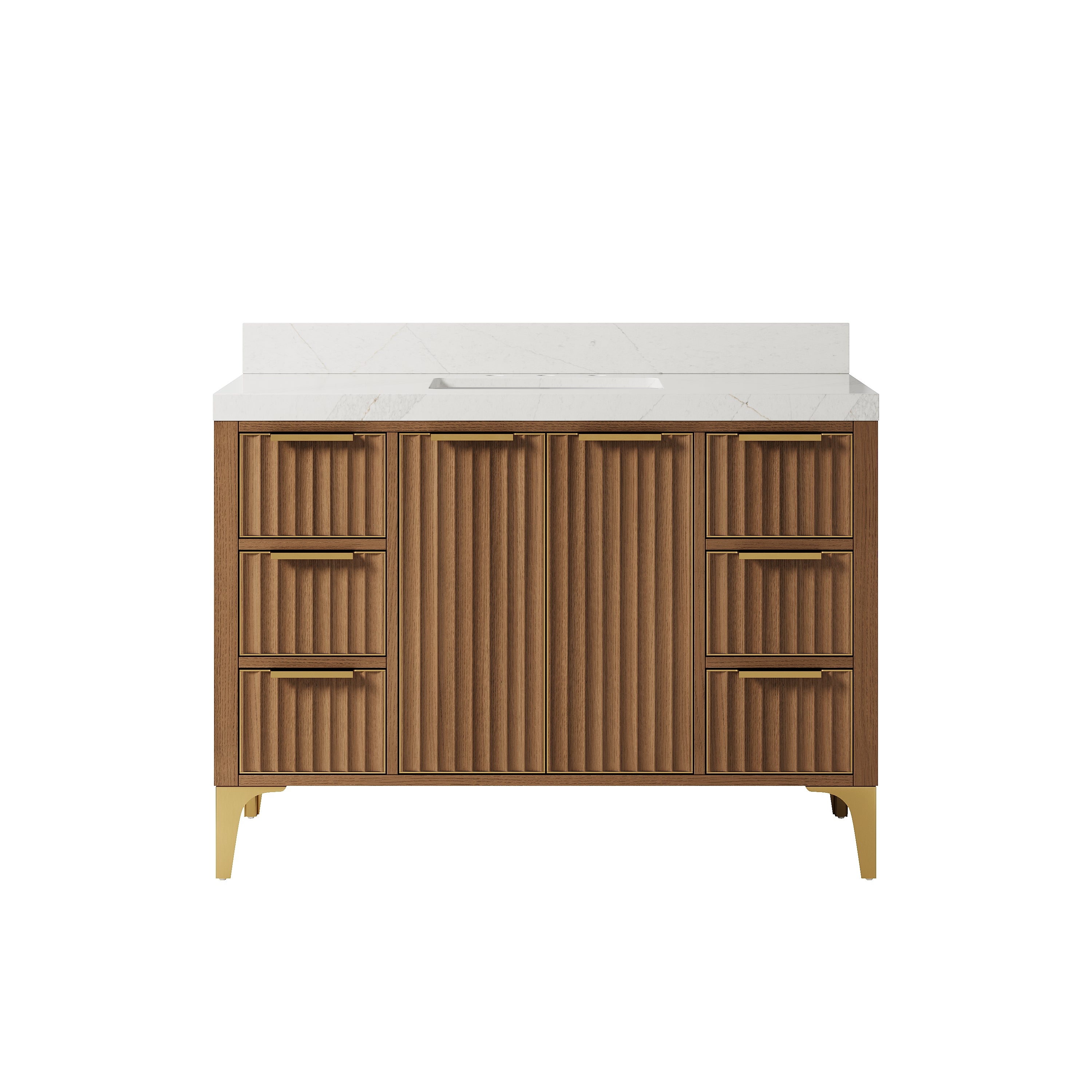


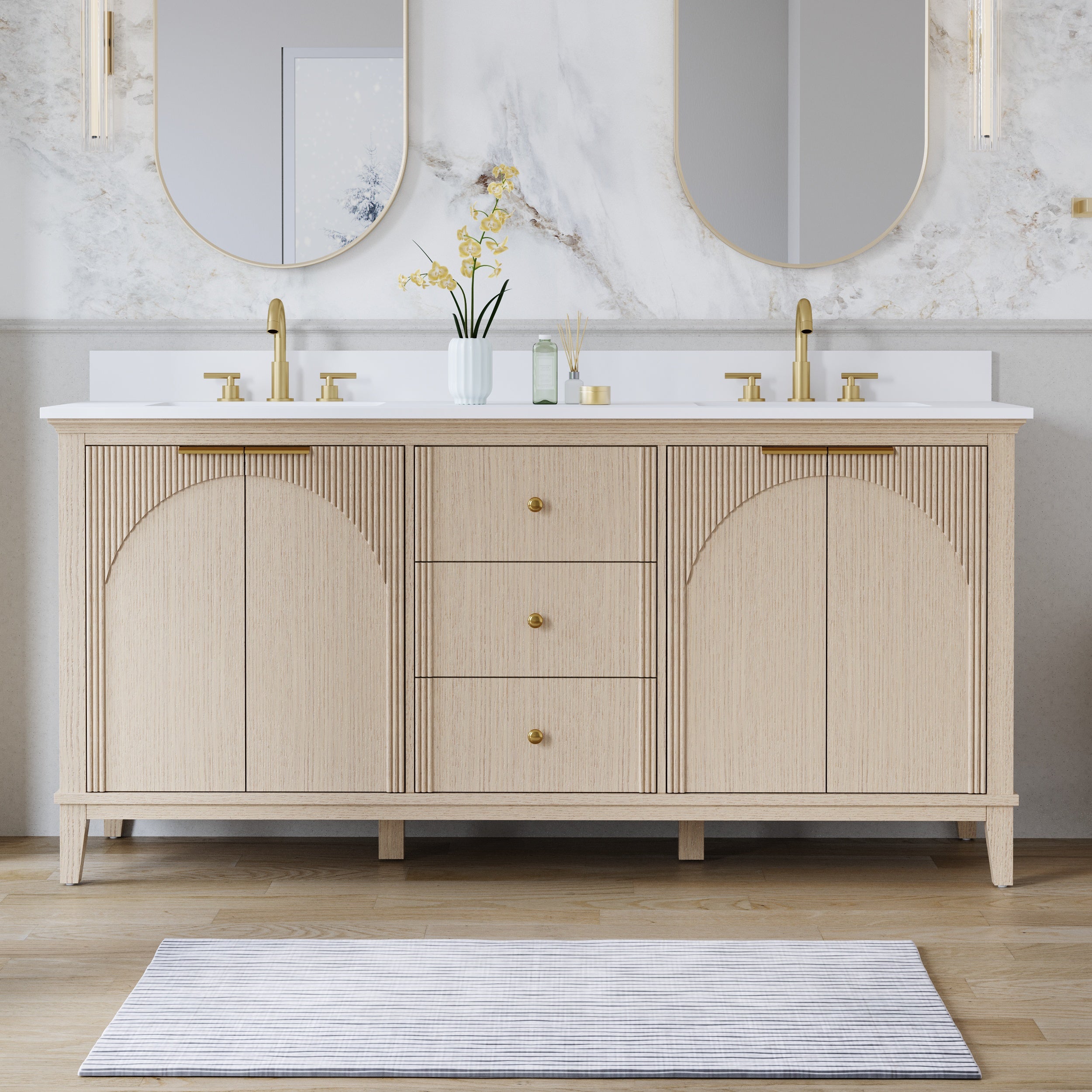
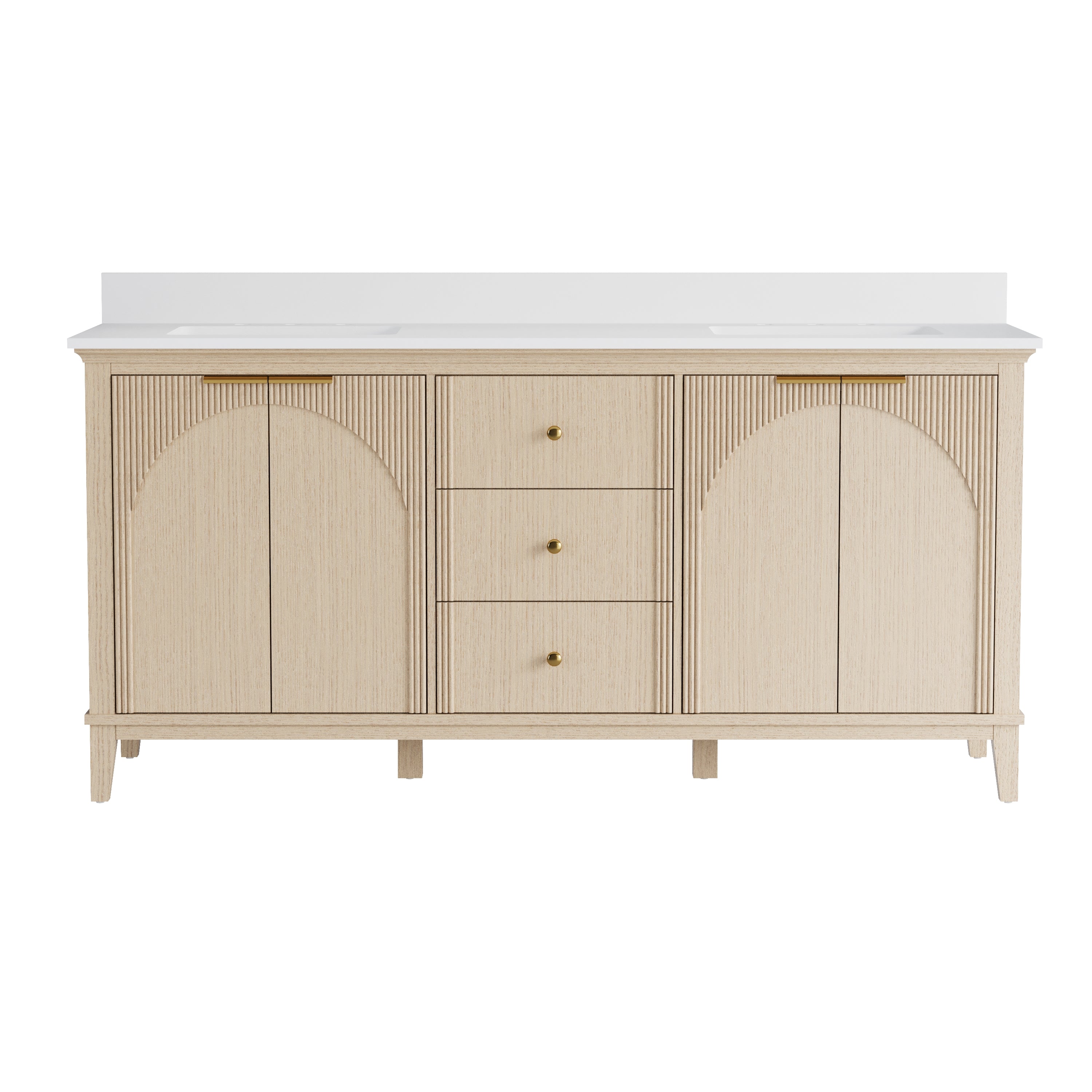
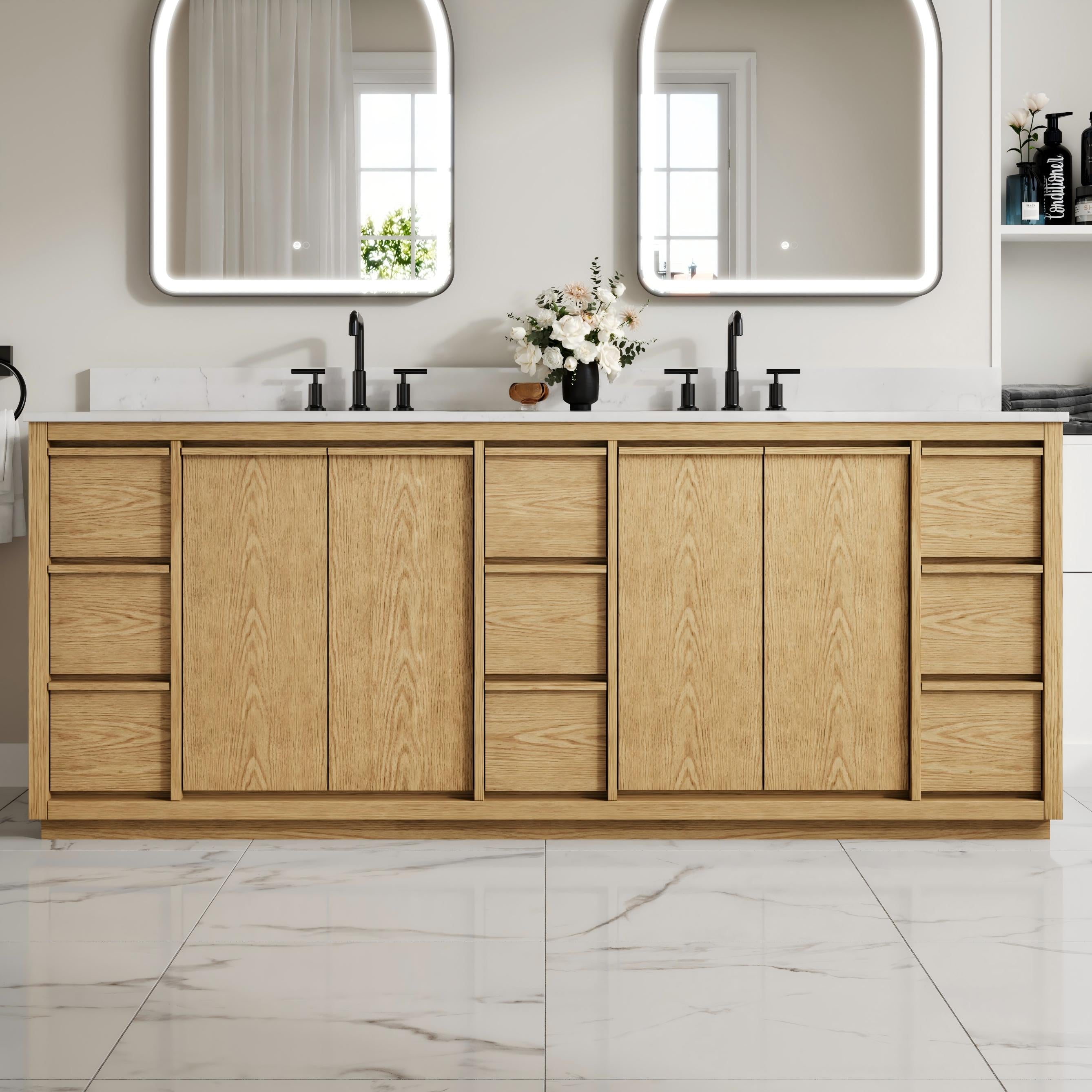
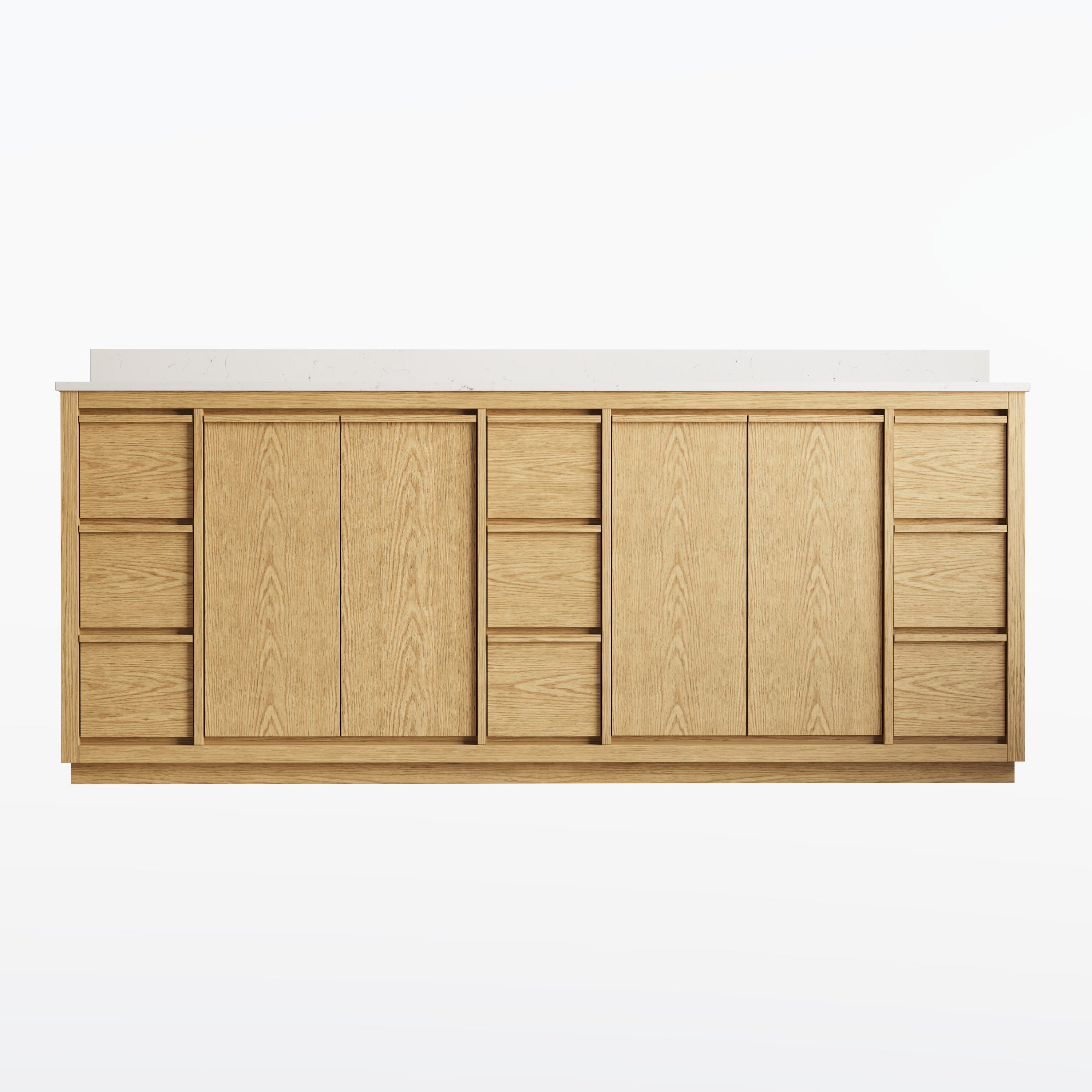

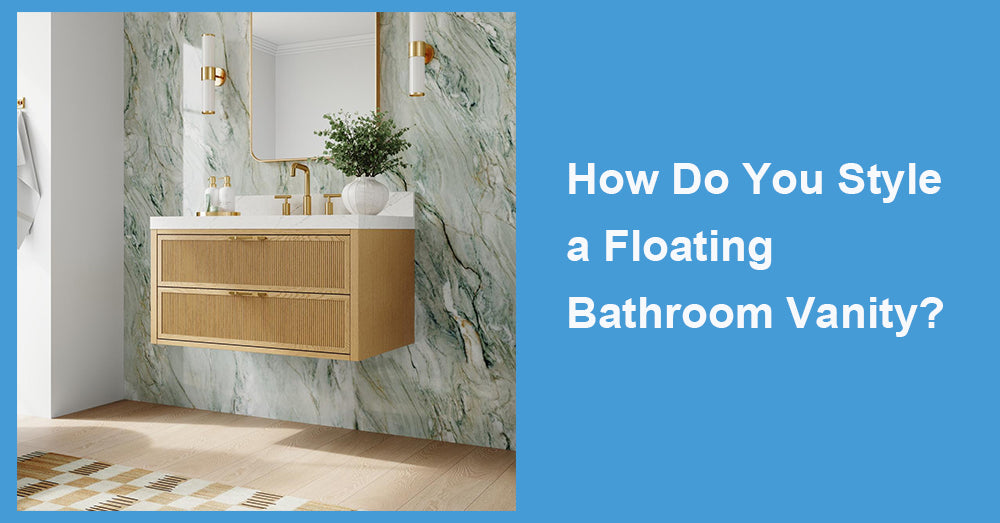
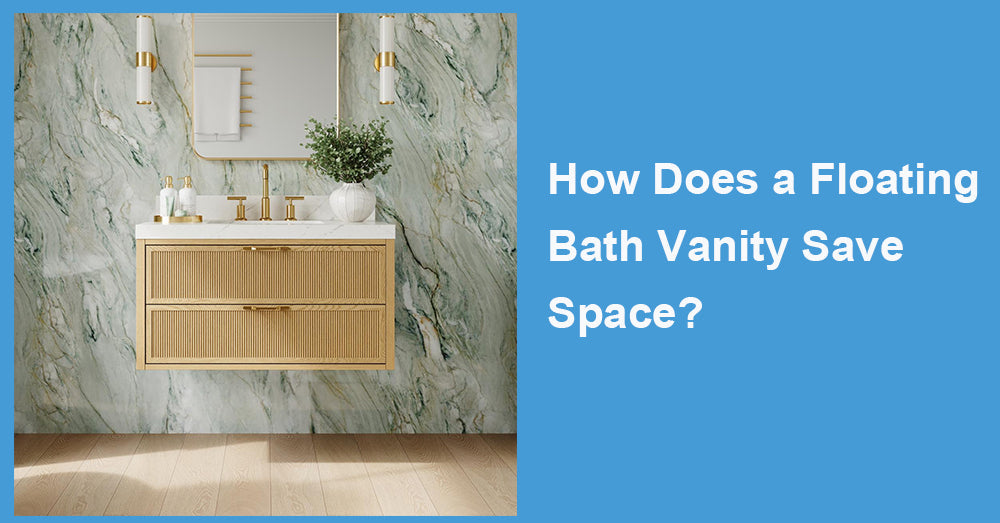
Floating vanities for bathrooms have become a practical choice for homeowners who want cleaner lines, easier floor access, and a more open visual layout. After more than 20 years of working with bathroom cabinetry and renovation planning, I have found that wall-mounted vanities perform especially well in compact bathrooms, modern primary suites, and spaces where traditional floor-standing cabinets feel too heavy. Their advantages are real, but the design also demands proper wall support, accurate plumbing, and realistic expectations about storage.
1. Floating Vanities for Bathrooms Create Visual Breathing Room
The most obvious advantage is the exposed floor beneath the cabinet.
A conventional vanity creates a solid block from countertop to floor. A floating model interrupts that mass, allowing the flooring to continue underneath. In a small guest bath or narrow primary bathroom, this can make the room feel noticeably lighter.
The room does not gain actual square footage, of course. What changes is perception.
That visual effect works especially well with large-format tile, light wood cabinetry, and simple wall finishes.
2. Floor Cleaning Becomes Much Easier
This is one benefit homeowners often appreciate more after installation.
Traditional vanity legs and toe kicks create awkward corners where hair, dust, moisture, and cleaning residue collect. With a wall-mounted vanity, a mop or vacuum can move underneath without navigating around those obstacles.
Clearance Should Be Planned, Not Guessed
The gap below the cabinet needs to be useful.
If the vanity is mounted only a few inches above the floor, the space may still be difficult to clean. If it is mounted too high, the sink can become uncomfortable to use.
I recommend deciding how you plan to clean the bathroom before choosing the final mounting height. If a robot vacuum is part of your routine, measure it first.
3. Modern Bathrooms Benefit From the Cleaner Architecture
Floating cabinetry naturally creates a strong horizontal line.
That makes it easy to pair with large mirrors, simple faucets, slab-front drawers, and understated lighting. The result feels architectural rather than furniture-heavy.
Still, floating does not have to mean cold or minimalist.
Natural oak introduces warmth. Walnut adds richness. Warm white works well with stone, brass, and softer neutral tile.
The mounting style creates the modern structure; the finish determines the mood.
4. Storage Can Be More Efficient Than It Looks
A common misconception is that floating vanities provide almost no storage.
They usually offer less total cabinet volume than comparable freestanding models, but thoughtful drawer design can make the available space more useful.
Deep drawers work well for skincare, cosmetics, grooming tools, and smaller toiletries. U-shaped drawers can fit around plumbing and recover space that might otherwise be lost.
Useful Storage Matters More Than Maximum Storage
A large open cabinet may technically hold more, but small items can disappear in the back.
Full-extension drawers make everyday products easier to see and reach.
For a guest bath or minimalist household, a two-drawer floating vanity may be more than enough. A busy family bathroom with towels, hair appliances, cleaning products, and backup toiletries may still benefit from a larger freestanding cabinet.
5. Installation Height Offers More Flexibility
Wall mounting lets you adjust the finished vanity height.
This can be useful for taller adults or bathrooms where a standard cabinet height feels uncomfortable.
The sink type matters, though.
A vessel sink raises the working height considerably. An undermount sink keeps the basin closer to the countertop.
Before installation, mark both the cabinet and finished sink height on the wall. Stand in front of it and mimic normal handwashing. That simple check can prevent an expensive mistake.
6. Plumbing Needs More Careful Planning
Floating cabinetry exposes more of the wall and floor, so plumbing has less room to hide.
Drain and supply lines should enter the cabinet neatly without dropping below it. They also need to avoid drawer boxes and mounting hardware.
Measure the existing plumbing before choosing the vanity.
If pipes interfere with the cabinet layout, relocation may be required. During a full remodel, this is usually manageable. During a simple replacement, plumbing changes can add unexpected cost.
For that reason, wall-mounted vanities are not always the easiest retrofit.
7. Strong Wall Support Is Essential
A floating vanity depends on the wall rather than the floor for support.
The wall must safely carry the cabinet, countertop, sink, stored items, and the forces created during everyday use.
Drywall alone should never be treated as sufficient support for a substantial vanity.
During renovation, structural blocking can be added before the wall is closed. In masonry construction, appropriate anchors and mounting systems are required.
If wall reinforcement would involve major demolition, a freestanding vanity may be the more sensible option.
8. Floating Vanities Are Especially Good for Small Bathrooms
Compact bathrooms benefit most from reduced visual weight.
A floating cabinet exposes more flooring, and a shallow model can improve actual circulation as well. This is useful in condos, apartments, guest baths, and narrow hallway bathrooms.
Do not assume wall mounting allows you to choose an oversized cabinet.
Width and depth still matter. If the vanity crowds the toilet or shower door, the room will feel cramped regardless of what happens underneath.
Use painter's tape to test the full footprint before ordering.
9. There Are Situations Where They Are Not Ideal
Wall-mounted vanities are not perfect for every bathroom.
They may not be the best choice when maximum storage is the top priority. Traditional bathrooms may also look more natural with furniture-style cabinetry.
Older walls can make installation more complicated, especially when structural conditions are uncertain.
And because the floor underneath is visible, damaged tile or unfinished flooring cannot be hidden behind the cabinet.
A good design decision should solve problems rather than create new ones.

10. Maintenance Is Simple but Still Necessary
Use a soft cloth and mild, non-abrasive cleaner on cabinet surfaces. Wipe standing water promptly, especially around the sink and countertop edges.
Run the exhaust fan after showers and inspect plumbing connections periodically for slow leaks.
Clean the exposed floor beneath the cabinet regularly. That open area is part of the design, so dust becomes easier to notice.
When comparing Wellfor options, look first at wall construction, cabinet depth, storage layout, sink style, plumbing position, and installation height. Floating vanities for bathrooms are ideal when you want a lighter visual footprint, easier floor cleaning, and efficient everyday storage, but they perform best when the hidden structural details are planned as carefully as the visible design.













Leave a comment
This site is protected by hCaptcha and the hCaptcha Privacy Policy and Terms of Service apply.