














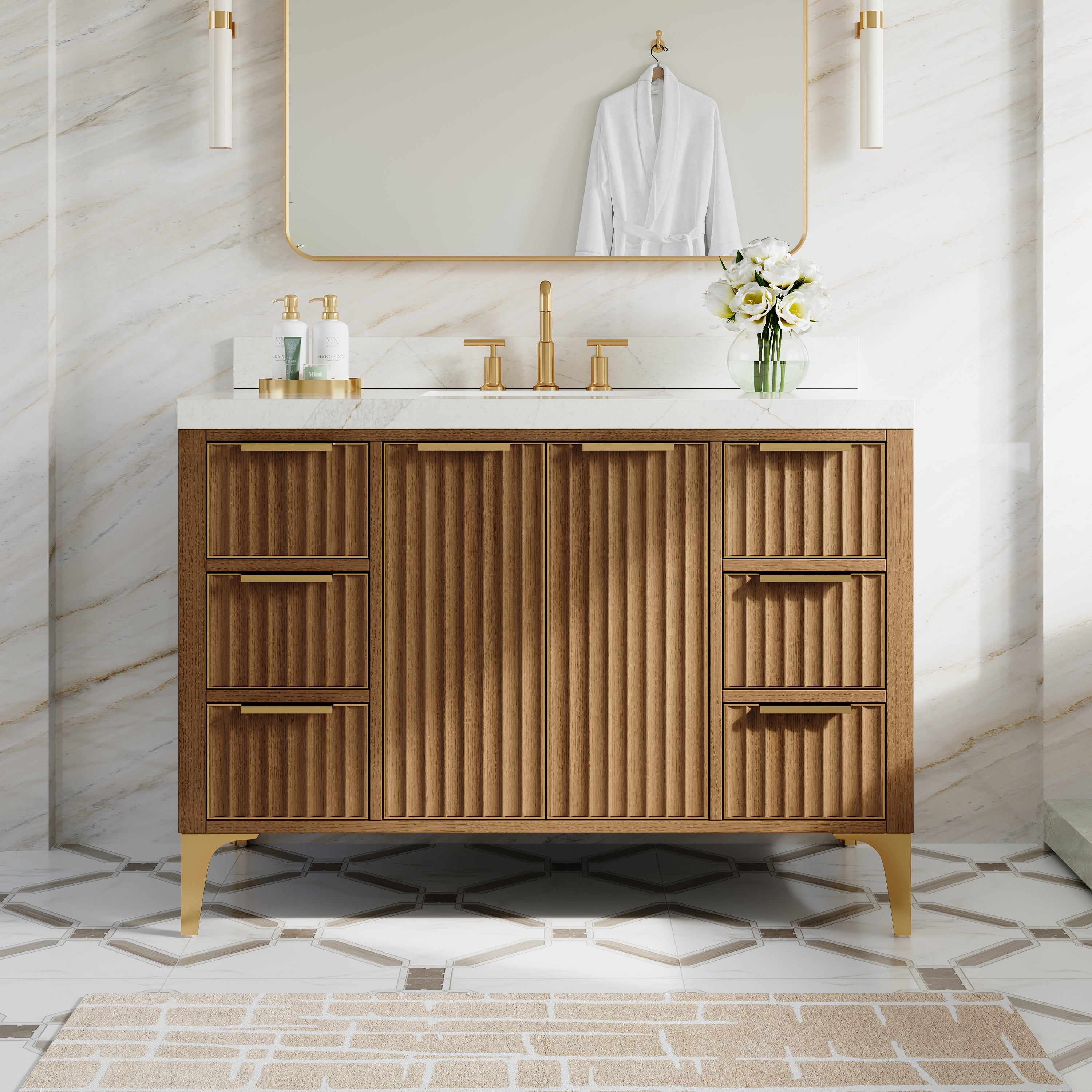
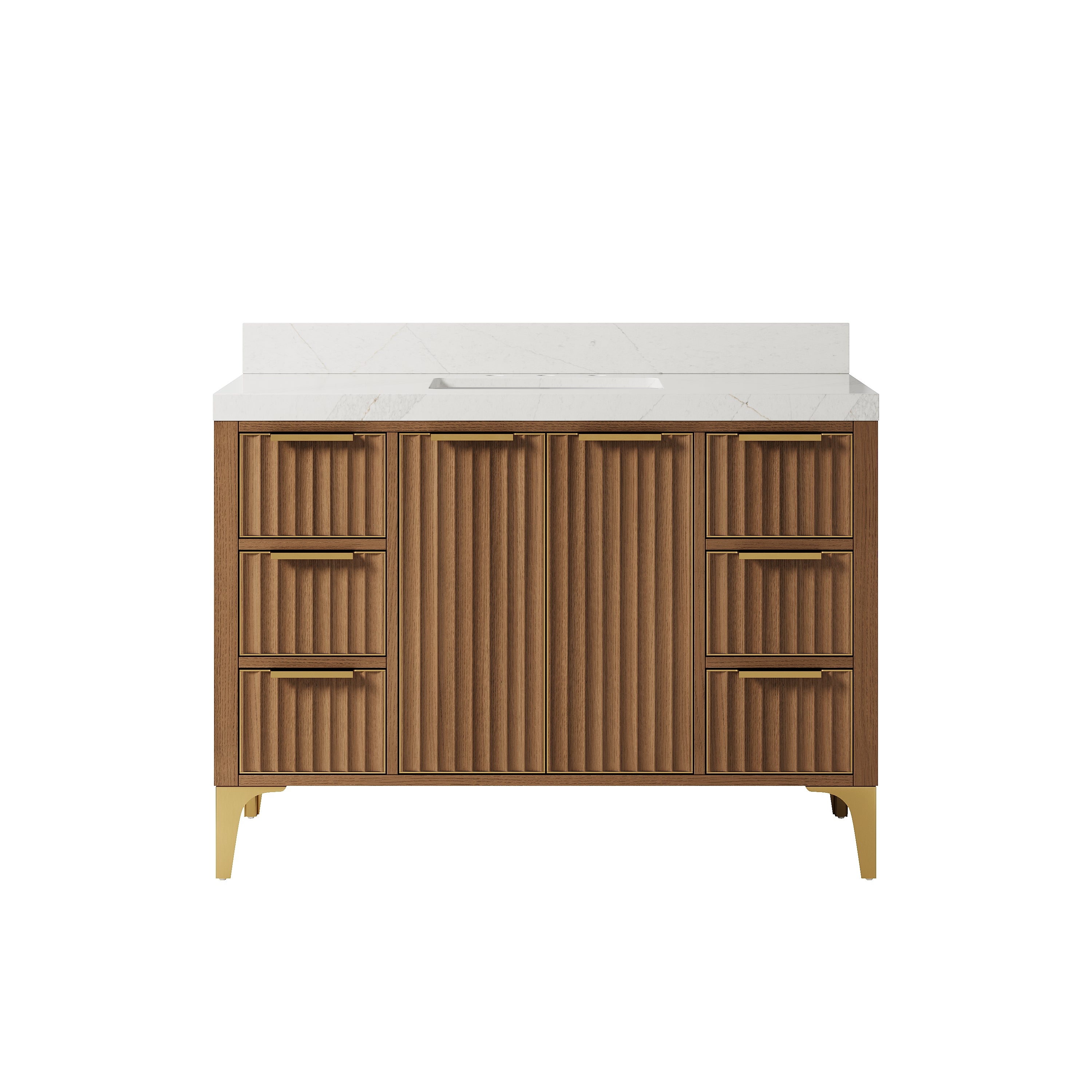


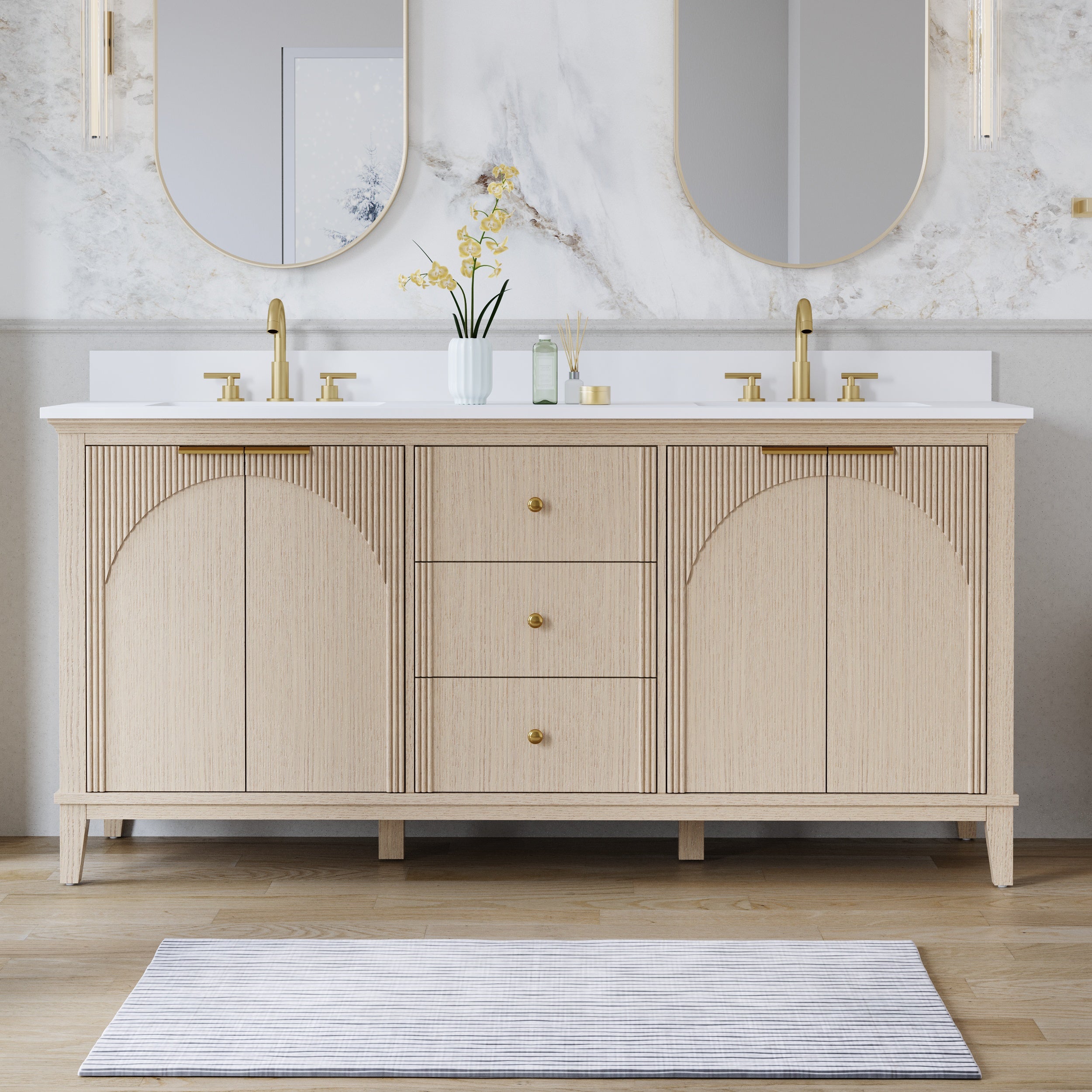
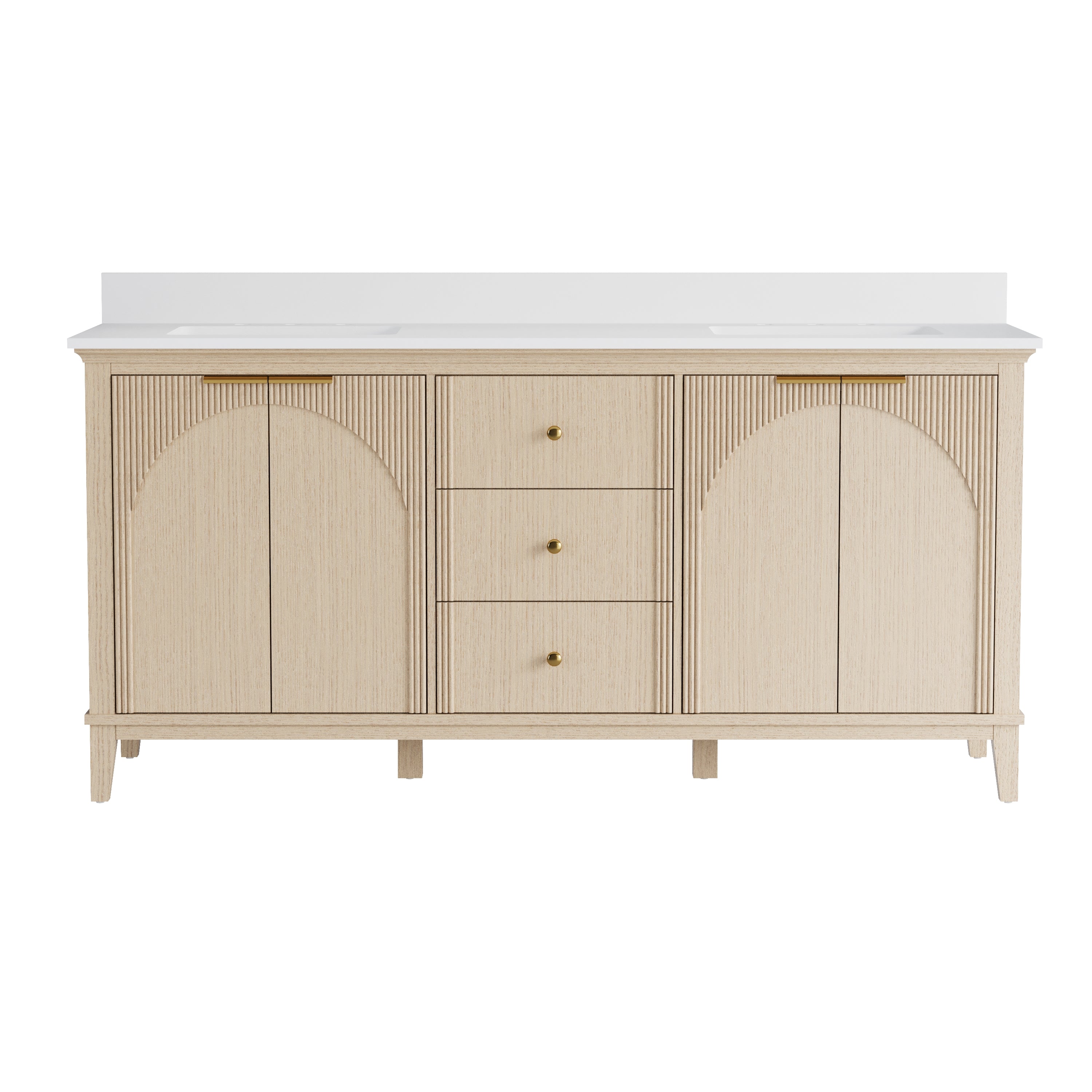
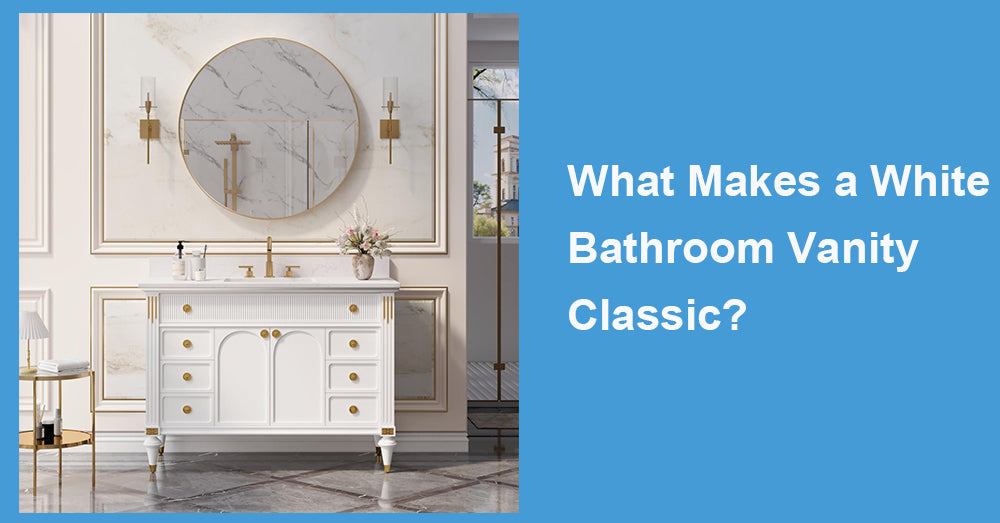
A white bathroom vanity has remained a reliable design choice for decades because it adapts easily as the rest of the bathroom changes. After more than 20 years of working with bathroom cabinetry and remodel projects, I have seen white vanities move comfortably from traditional interiors into modern, coastal, transitional, and minimalist spaces. Their appeal is not just about brightness. White provides a neutral foundation for stone, tile, hardware, and lighting, making it easier to update the room without replacing the cabinet itself.
1. A White Bathroom Vanity Works With Many Design Styles
White cabinetry is unusually flexible.
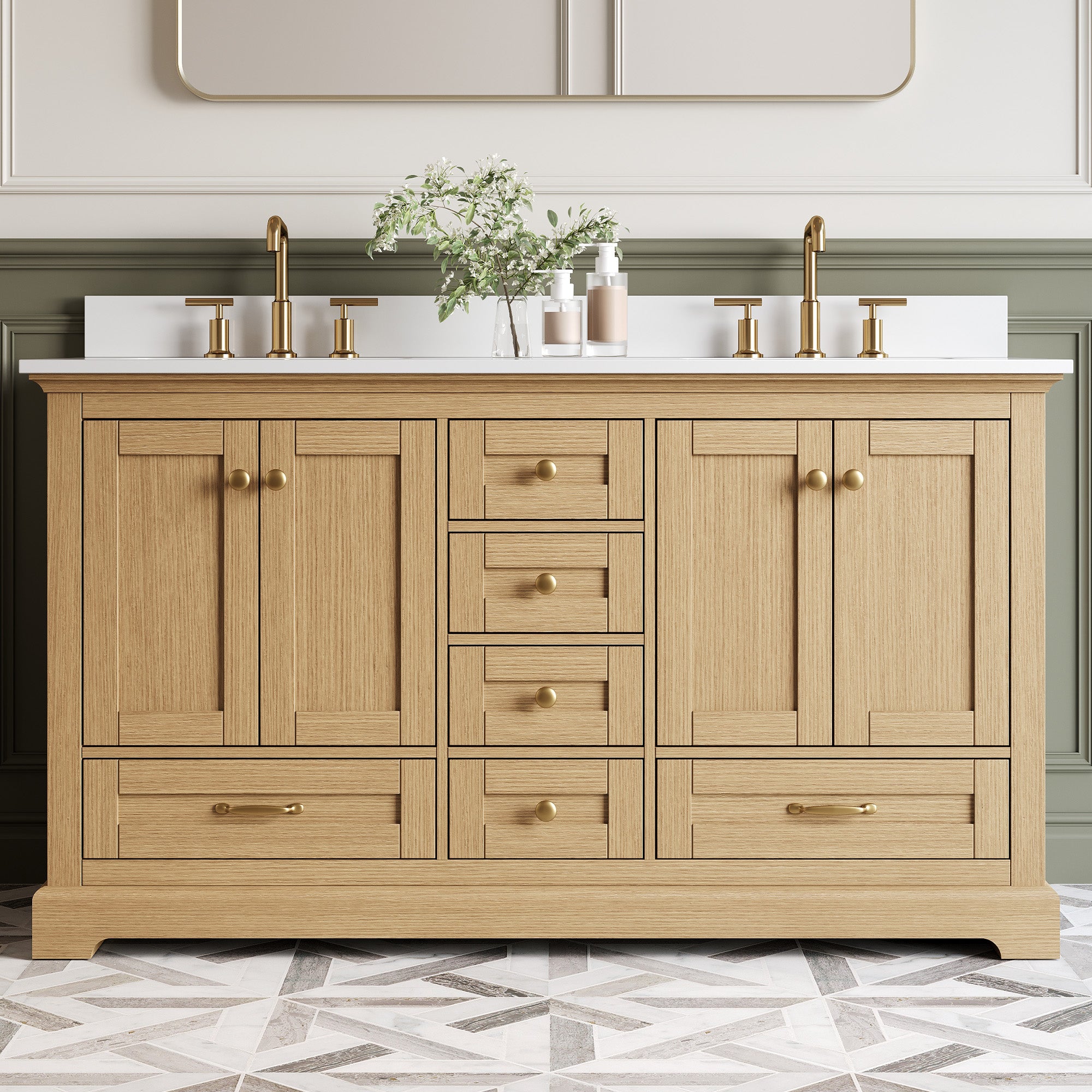
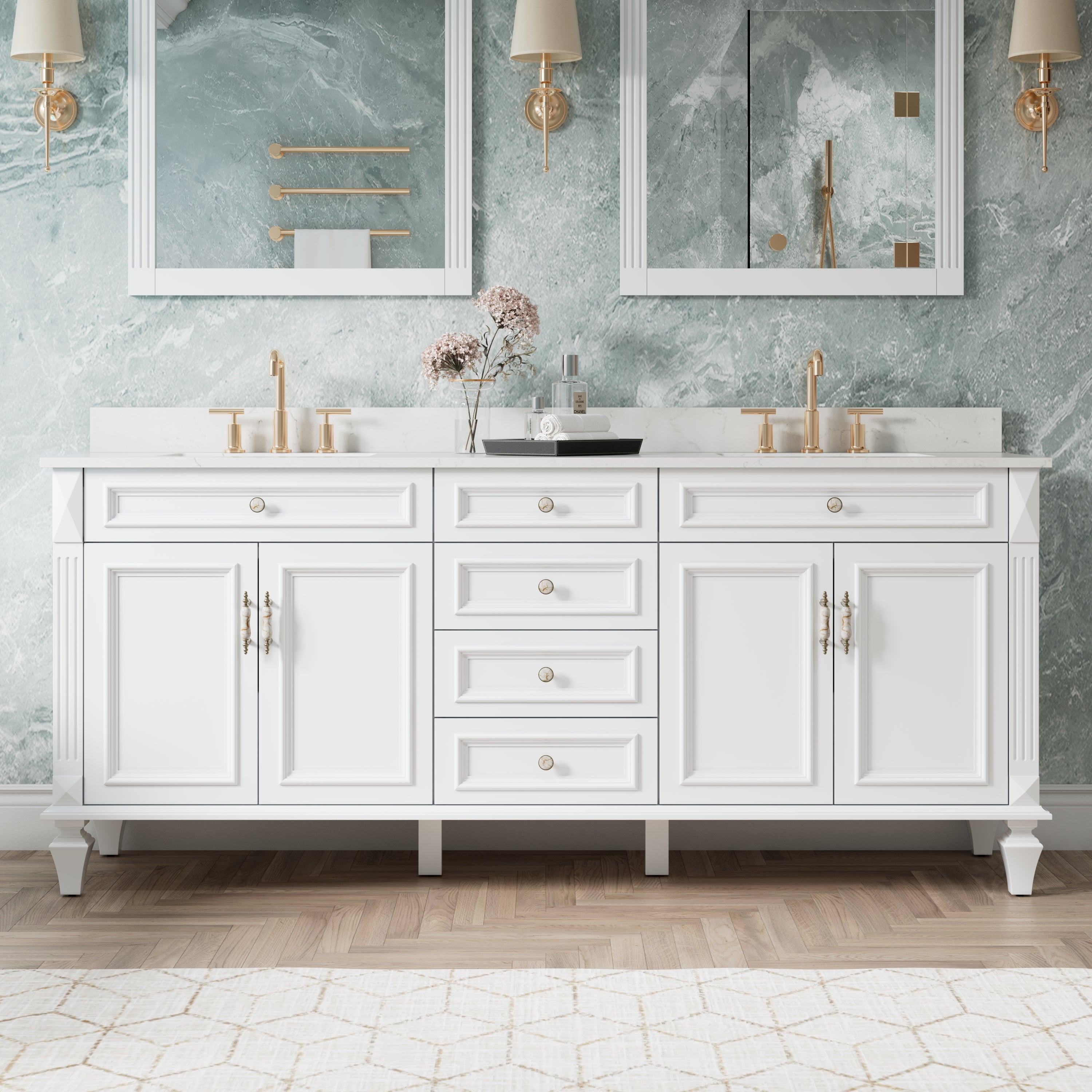
A Shaker-style vanity with polished nickel hardware can feel traditional, while the same color on flat-front drawers looks decidedly modern. Pair white with warm brass and beige stone, and the room becomes softer and more transitional.
That adaptability is one reason white has lasted longer than many color trends.
The cabinet color stays quiet while other materials define the personality of the room.
2. White Helps Create a Brighter Bathroom
Light-colored cabinetry reflects more light than dark wood or saturated finishes, which can be useful in bathrooms with small windows or limited natural light.
In compact guest baths, white can also reduce the visual weight of a cabinet.
White Does Not Automatically Make a Room Larger
This is a common misconception.
A deep or oversized white vanity can still overwhelm a narrow bathroom. Color can help the cabinet feel lighter, but it cannot correct poor proportions.
Measure the full width and depth before buying. Check toilet clearance, shower-door movement, and the main walking path.
Good sizing always matters more than finish.
3. White Creates an Easy Background for Countertops
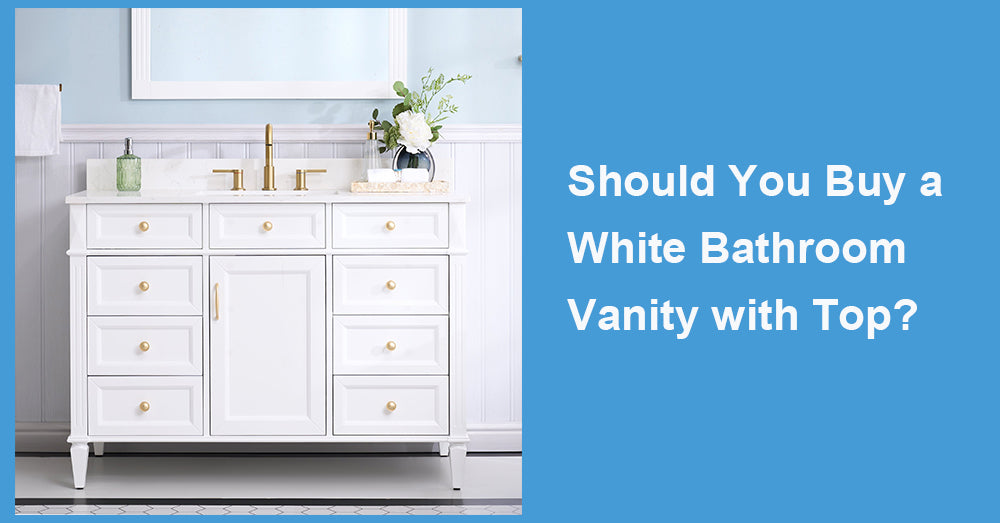
One of the strongest practical advantages of white cabinetry is how easily it works with countertop materials.
Carrara-look surfaces create a familiar classic combination. Warm quartz or cream stone can soften the room. Dark countertops create stronger contrast without making the cabinetry itself feel heavy.
The countertop should still be chosen carefully.
Highly patterned stone can make a simple vanity more interesting, but too much veining combined with busy floor tile can create visual competition.
I usually prefer one dominant surface and let the remaining materials support it.
4. Undertones Matter More Than the Word “White”
Not every white finish looks the same.
Some whites lean cool and slightly blue. Others have cream, beige, or gray undertones.
Look at Samples in the Actual Room
A bright cool white can appear harsh next to ivory tile. A warm white may look slightly yellow beside a cool gray countertop.
Bathroom lighting changes the result as well.
If possible, compare the cabinet finish with the flooring, wall tile, and countertop under both daylight and artificial light.
This is a small step, but it prevents one of the most common finish-selection mistakes I see during renovations.
5. White Can Make Storage Feel Less Visually Heavy
A larger vanity often becomes a major feature in the room.
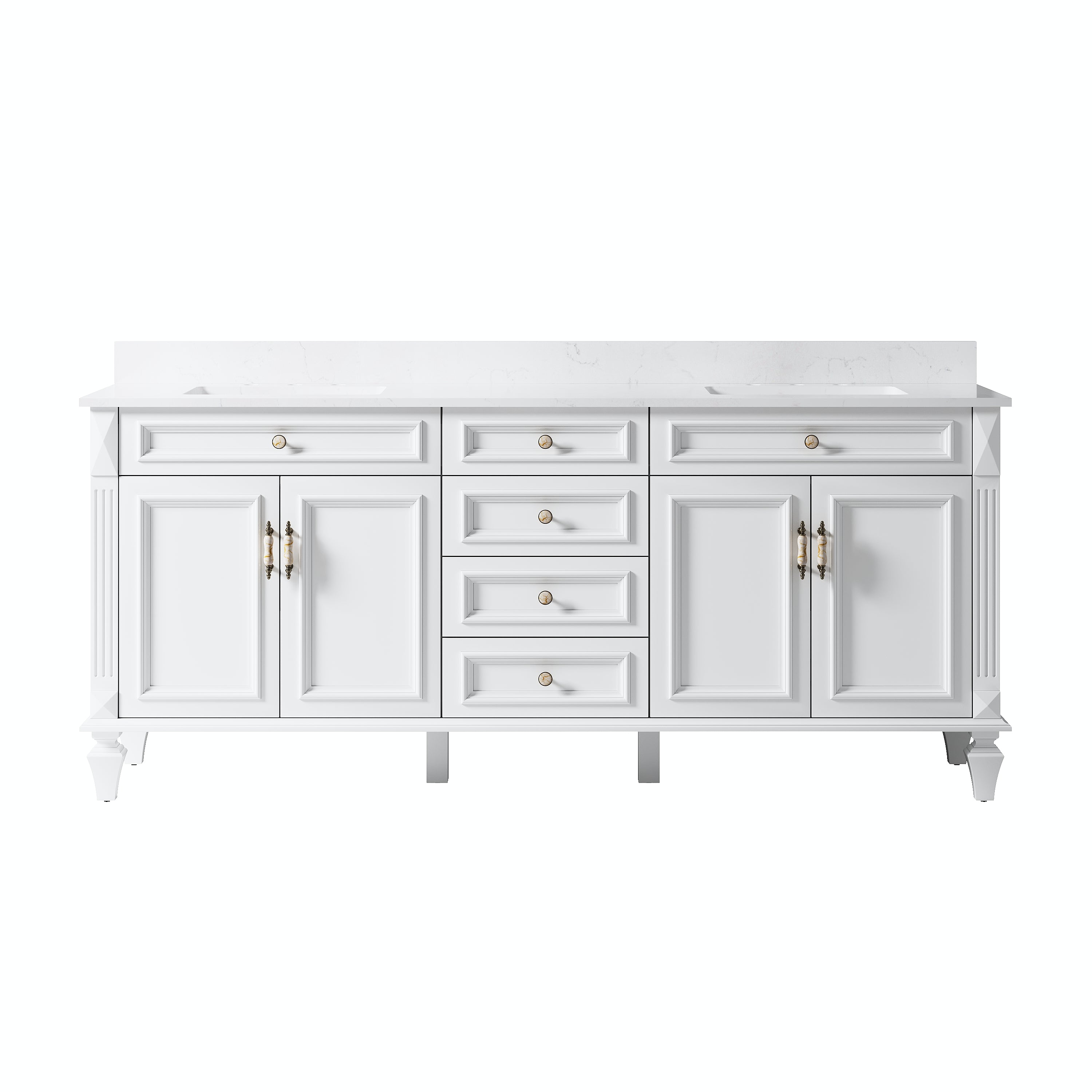
White softens that visual mass, which can be helpful with 48-, 60-, or 72-inch cabinets. A wide vanity feels more integrated with pale walls instead of dominating them.
That does not mean storage design should be ignored.
Deep drawers work well for cosmetics, skincare, brushes, and grooming tools. Under-sink cabinets suit taller bottles, paper goods, and cleaning products.
Check which drawer fronts are functional. The basin and plumbing may reduce usable interior space more than the exterior suggests.
6. White Finishes Have Real Maintenance Drawbacks
White cabinetry is not always the easiest option for a heavily used bathroom.
Makeup, hair dye, toothpaste, fingerprints, and darker product residue can become visible quickly. High-gloss finishes may show streaks under bright vanity lighting.
I generally prefer satin or low-sheen finishes for busy bathrooms because they balance clean appearance with easier maintenance.
White also makes chips more noticeable when darker material is exposed underneath.
If damage appears along an edge or corner, repair it early rather than allowing moisture to reach the substrate.
7. Construction Quality Still Matters Most
A classic color cannot compensate for poor cabinetry.
Look at drawer boxes, hinges, cabinet backs, edge sealing, and plumbing cutouts. Solid wood components can provide strength, while quality plywood is often a dependable material for cabinet boxes.
Well-sealed engineered materials can perform successfully too.
What matters in a bathroom is resistance to repeated humidity and occasional water exposure.
I would rather buy a well-constructed vanity in a simple finish than a fashionable model with weak drawers and exposed edges.
8. White Works Especially Well in Smaller Bathrooms
Guest baths, hallway bathrooms, and compact primary suites are natural places for white cabinetry.
A white floating vanity can make the effect even lighter because more flooring remains visible underneath. A freestanding model provides more traditional proportions and usually greater storage.
Both can work.
In very large bathrooms, however, too much white may feel flat or clinical if the room lacks texture.
Natural wood, stone, woven materials, or warm metal finishes can prevent that problem.
9. Installation Affects How Refined the Vanity Looks
White surfaces reveal alignment issues easily.
Install the cabinet level so doors and drawer gaps remain consistent. Check the countertop overhang and confirm that the sink sits properly before sealing everything in place.
Measure plumbing before installation. A drain running through a functional drawer can force unnecessary cabinet modifications.
Seal the sink, faucet openings, backsplash, and countertop joints carefully.
Then test the drain and supply lines before filling the cabinet.

10. Keep the Finish Looking Fresh
Use a soft cloth and mild, non-abrasive cleaner for routine care. Wipe toothpaste, makeup, and standing water promptly rather than letting residue build up.
Run the exhaust fan after showers and inspect beneath the sink periodically for slow leaks.
Avoid abrasive pads that can dull the finish, especially on painted surfaces.
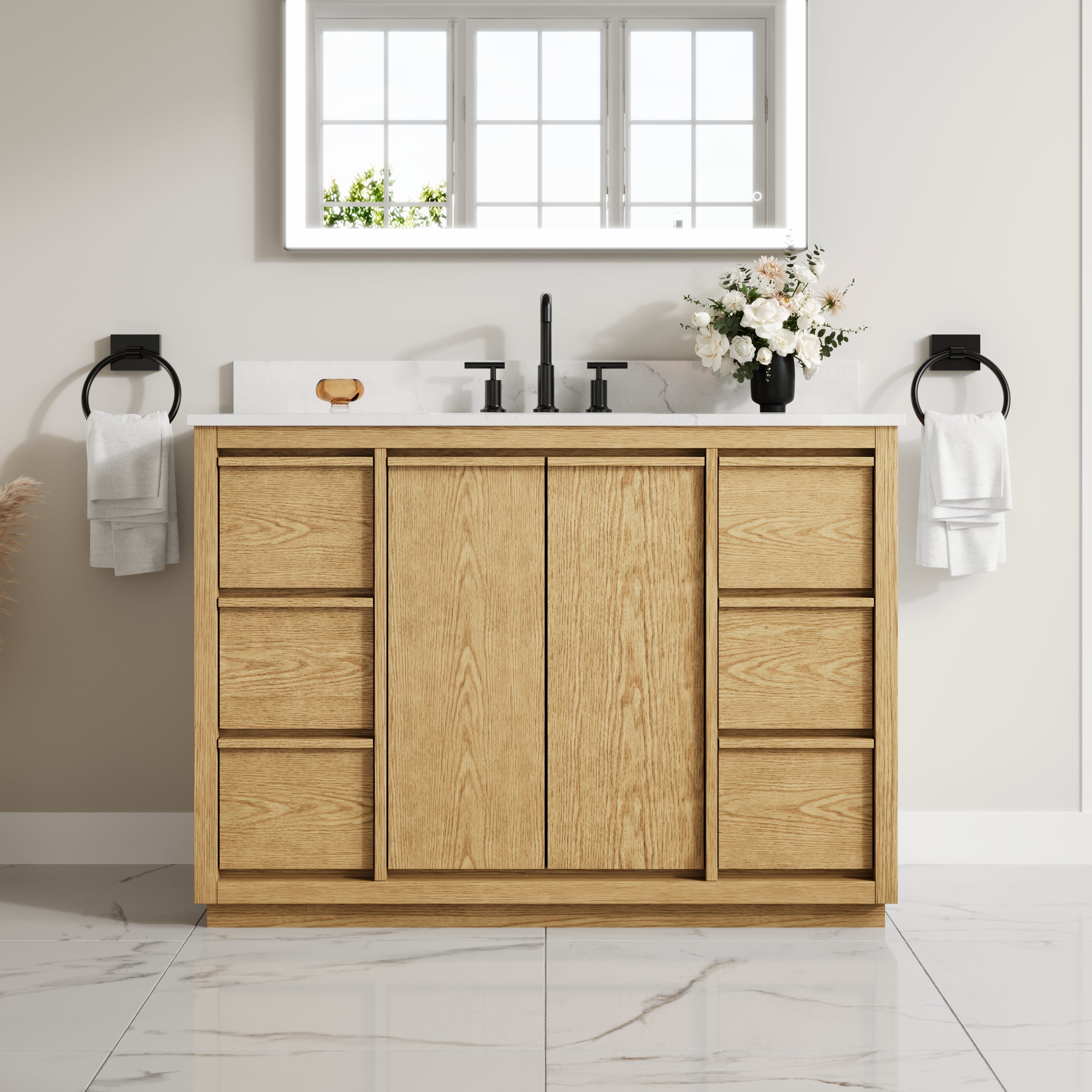
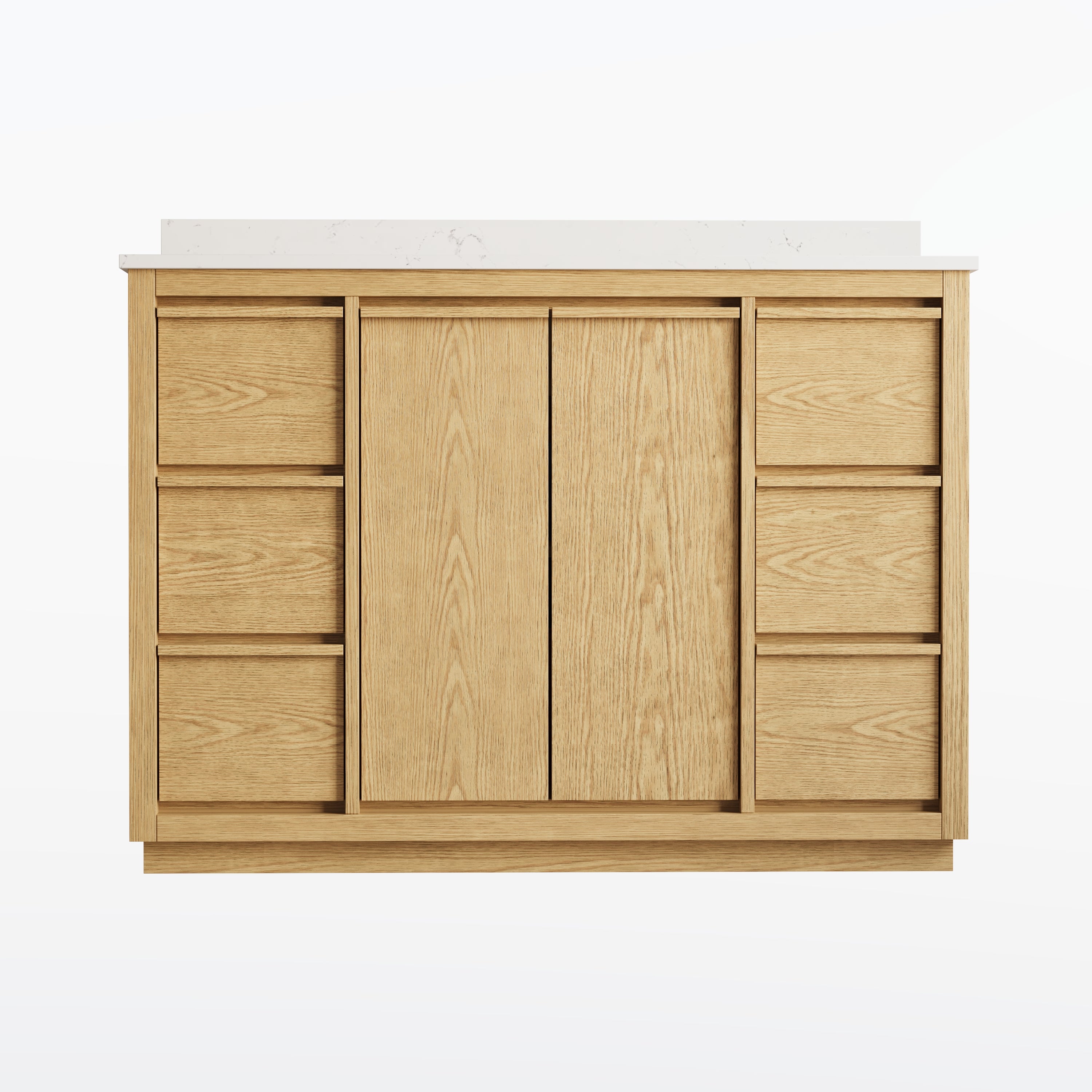
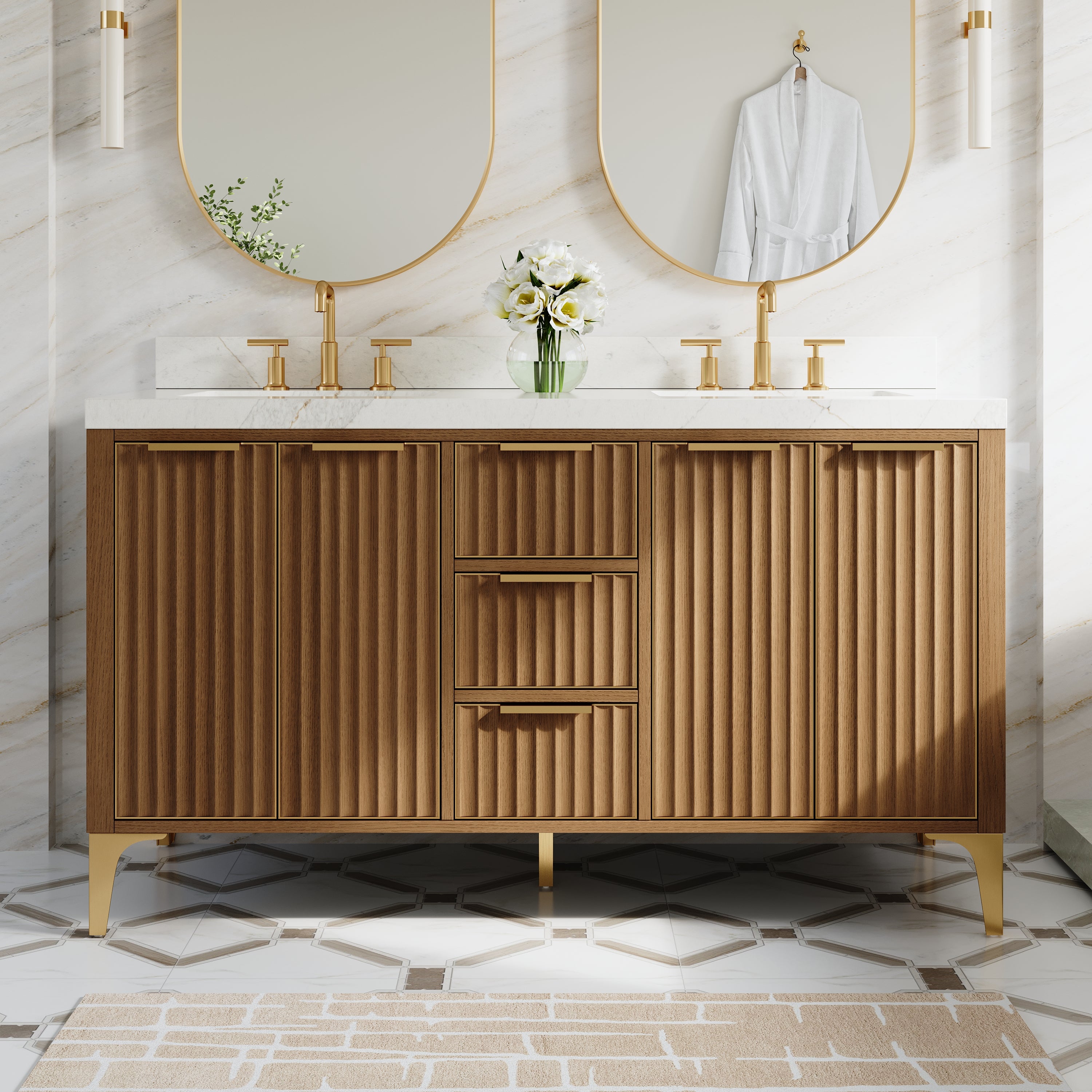
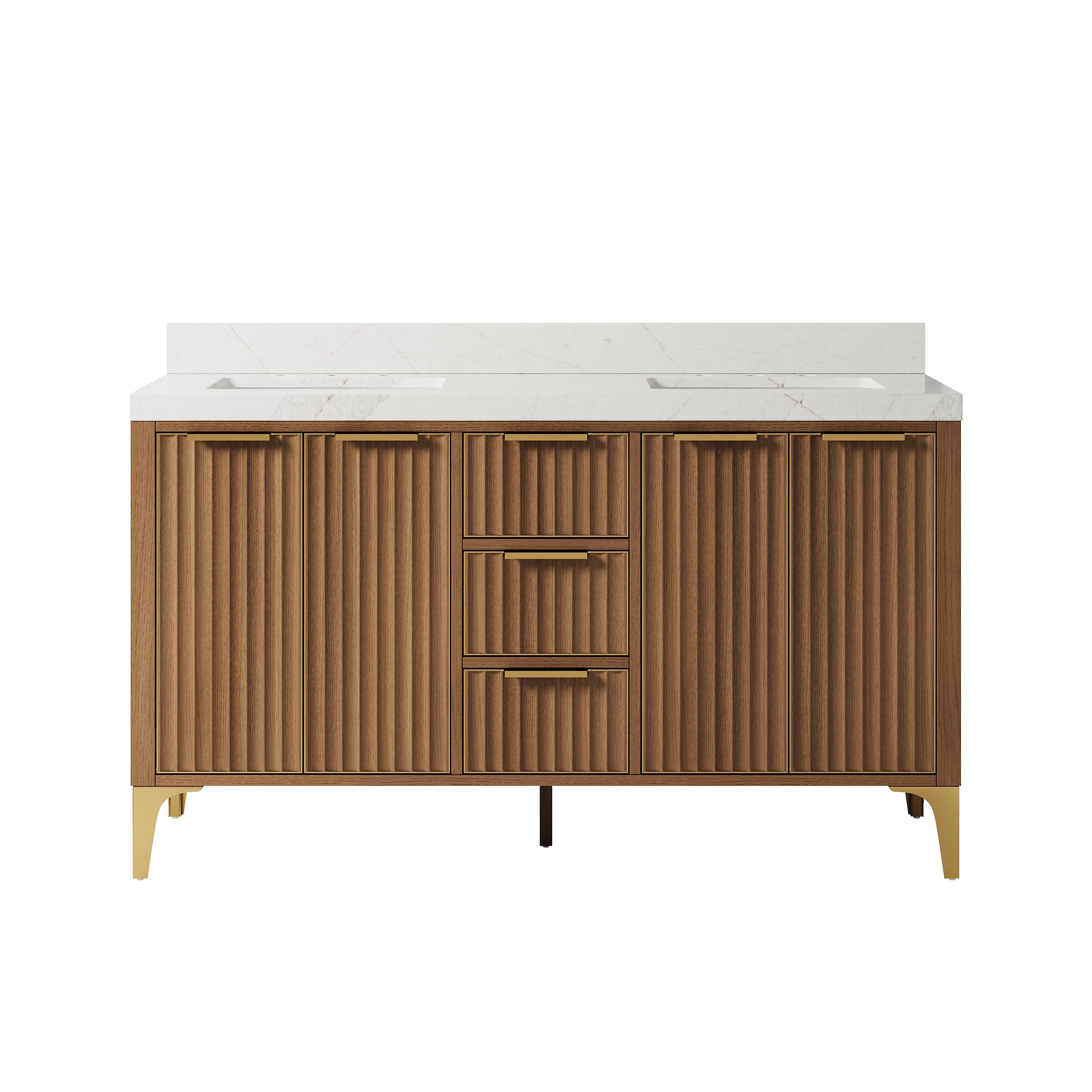
When comparing Wellfor options, focus first on dimensions, storage layout, construction quality, plumbing compatibility, and countertop pairing. Then choose the shade of white that suits the room. A white bathroom vanity remains classic because it gives homeowners room to change hardware, tile, mirrors, and accessories over time without forcing the cabinet itself to become the next thing that needs replacing.

















Leave a comment
This site is protected by hCaptcha and the hCaptcha Privacy Policy and Terms of Service apply.