














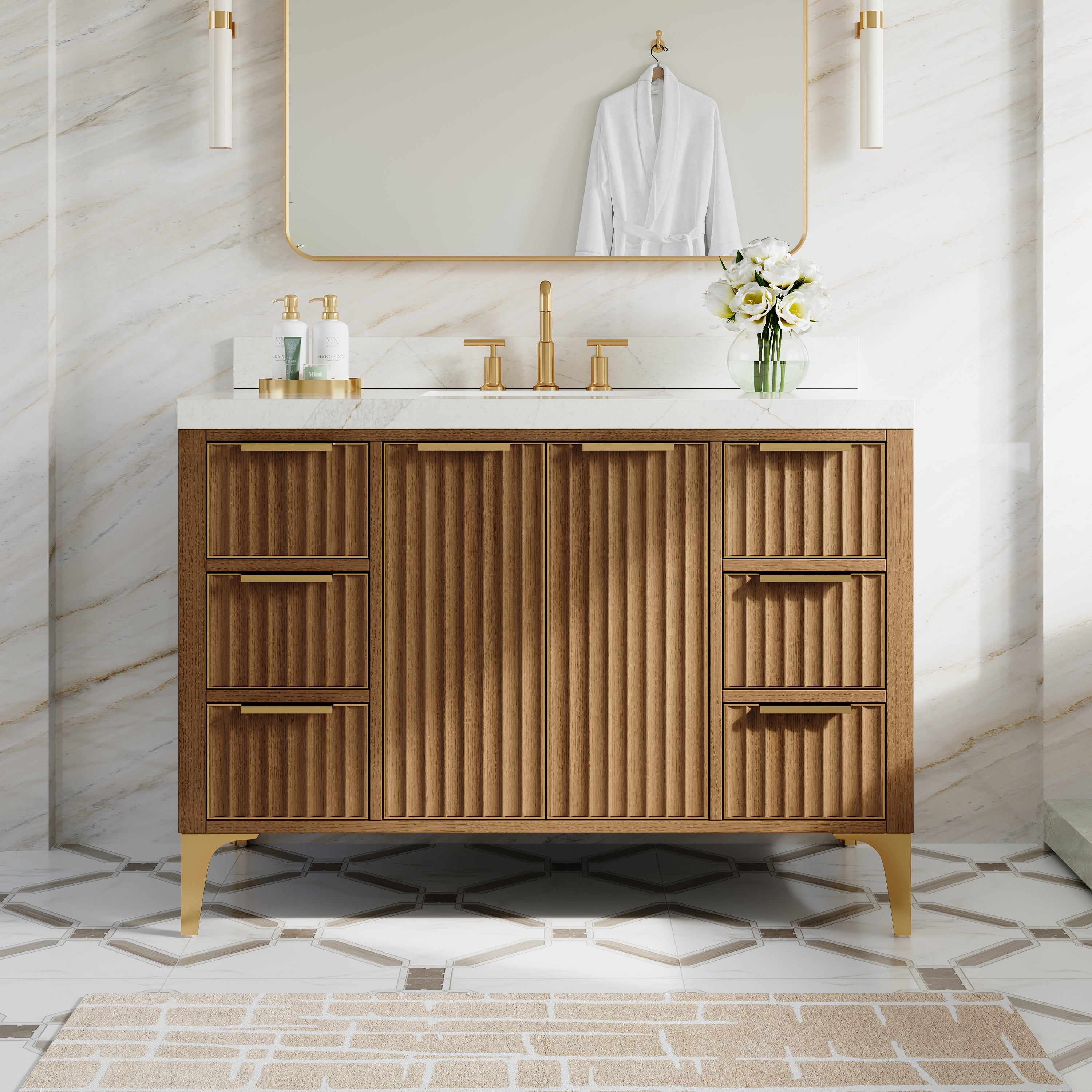
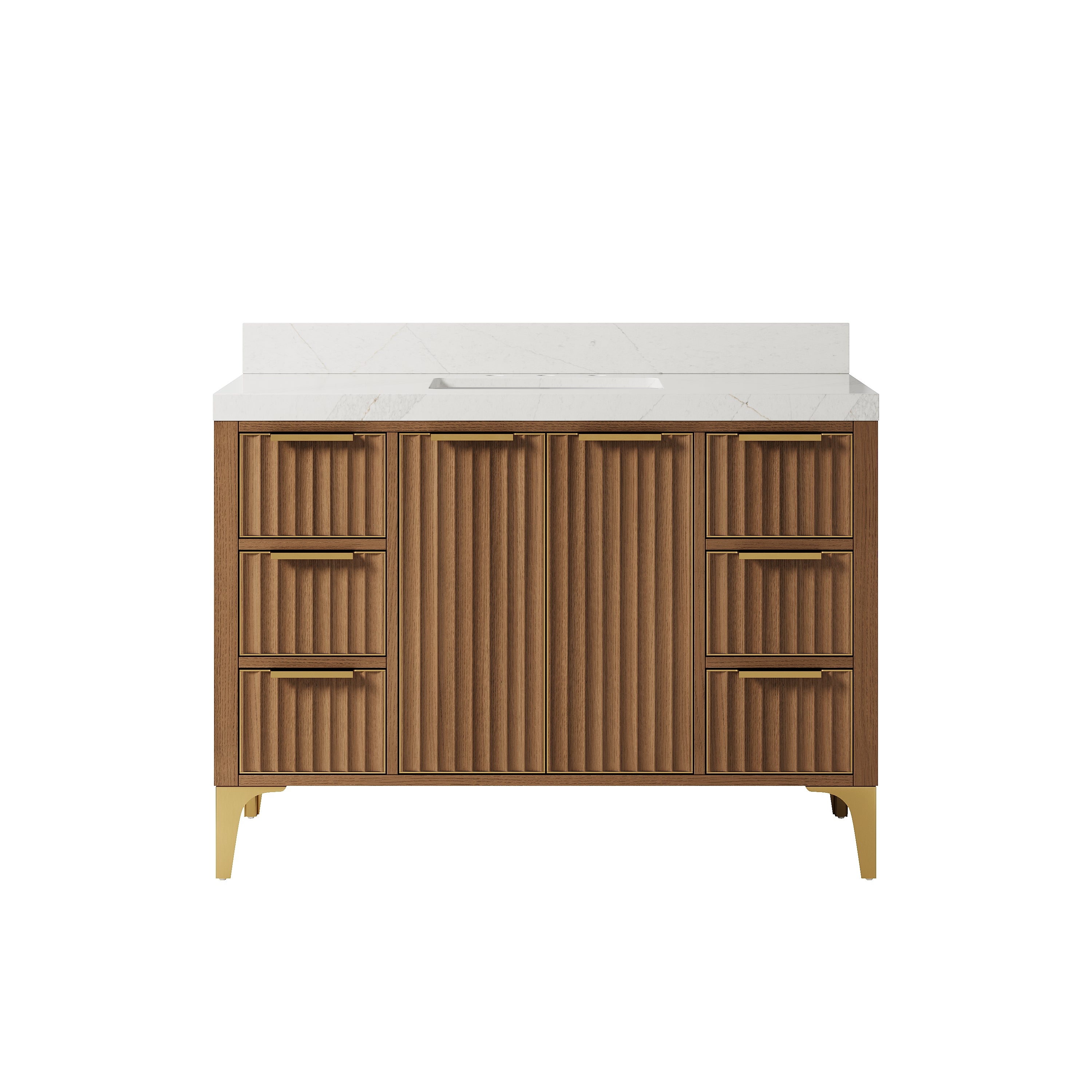


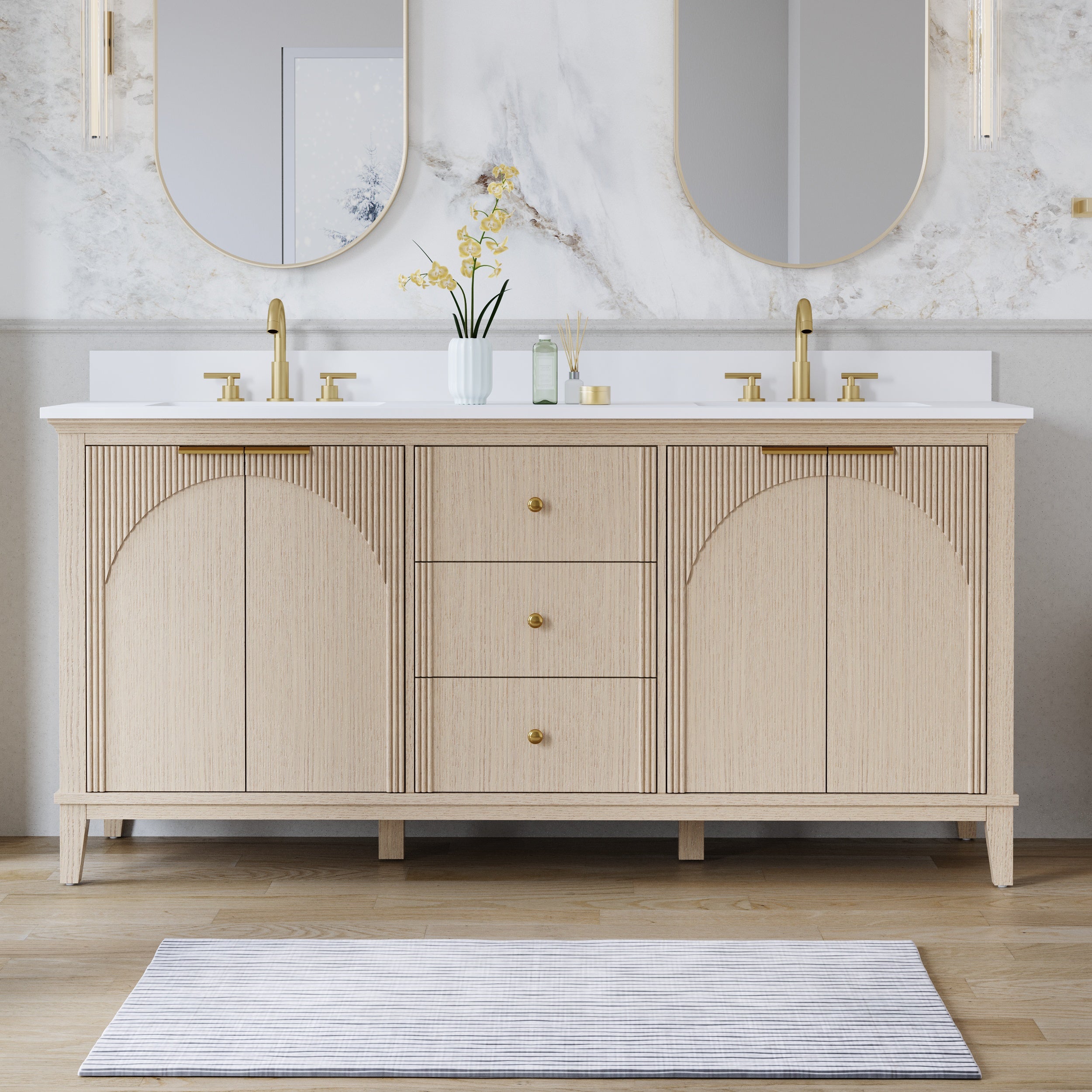
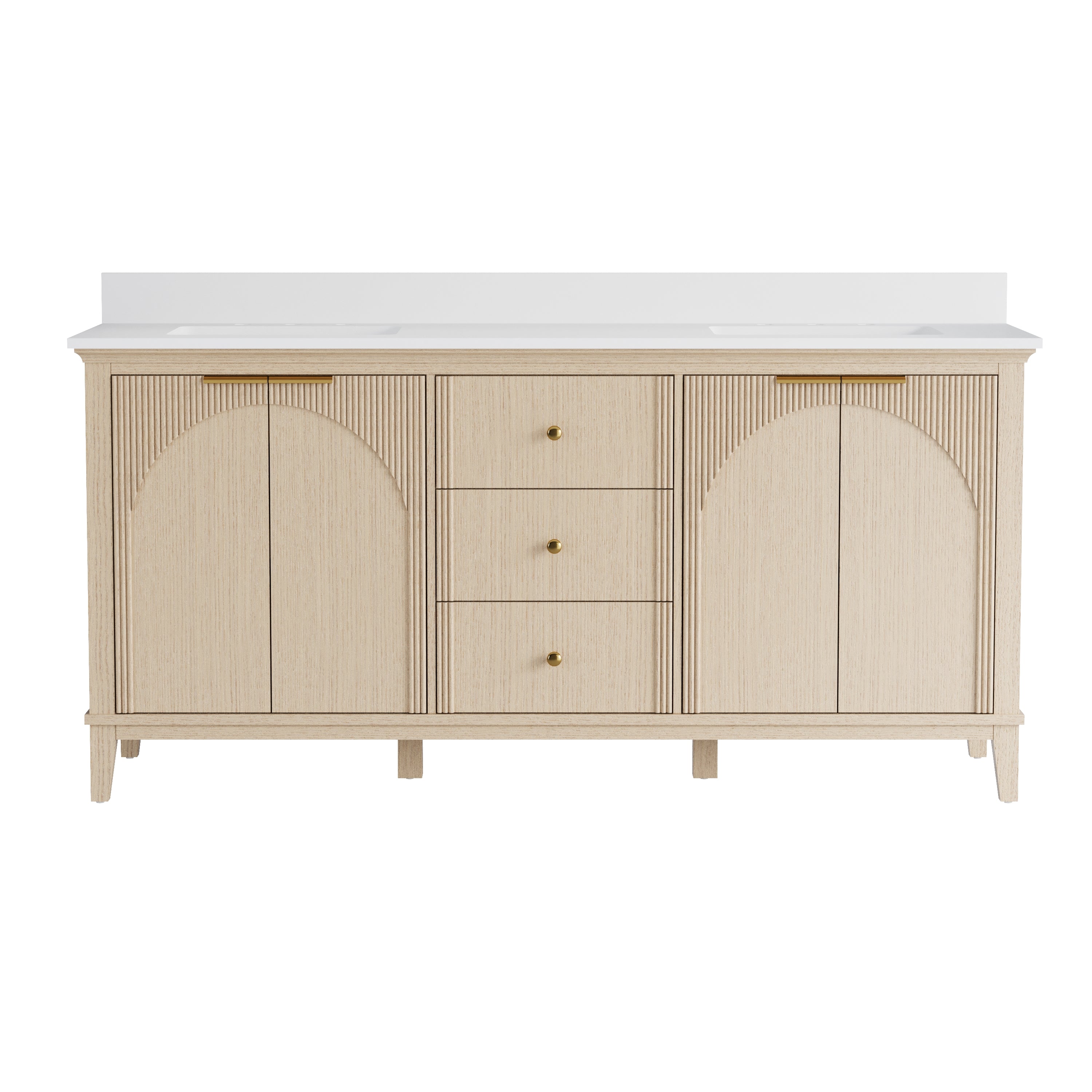
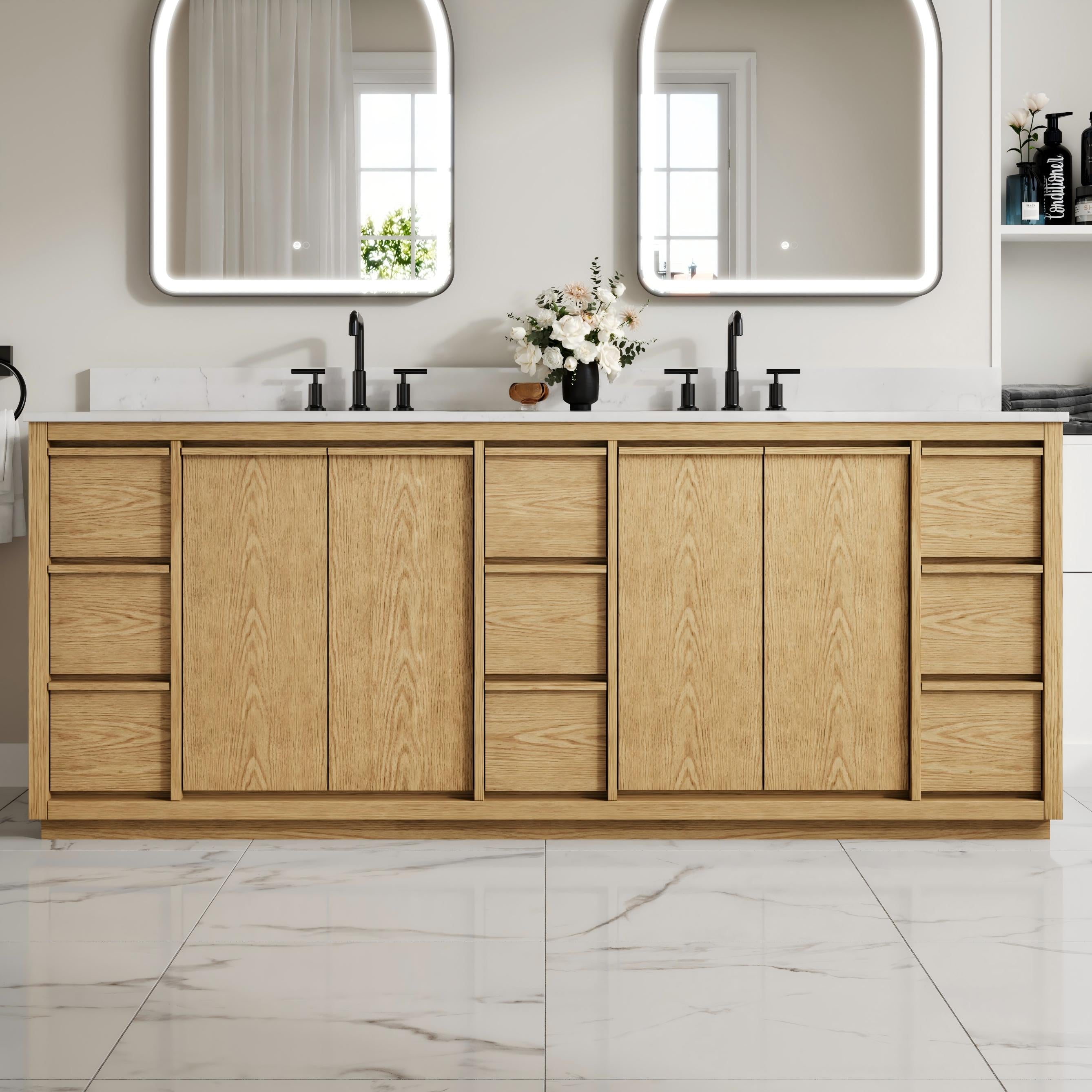

Choosing the best white bathroom vanity with sink is not simply a matter of finding the right width and a bright white finish. The cabinet has to work with the room, existing plumbing, storage habits, countertop material, and the people who use it every day. White remains a dependable choice because it adapts easily to changing bathroom styles. Houzz's 2025 Bathroom Trends Study found that white accounted for 20% of upgraded vanity colors, while white and off-white together represented 68% of countertop color choices. Nearly half of upgraded vanities, 47%, measured 48 inches or less, showing how important compact and midsize designs remain in remodeling.
Start With the Right Vanity Width
The best vanity begins with a size that fits the room comfortably. A cabinet that looks impressive online can quickly become inconvenient if it narrows the walkway or interferes with the bathroom door.
Common sizes include:
l 24 inches for compact powder rooms
l 30 to 36 inches for guest bathrooms
l 48 inches for larger single-sink layouts
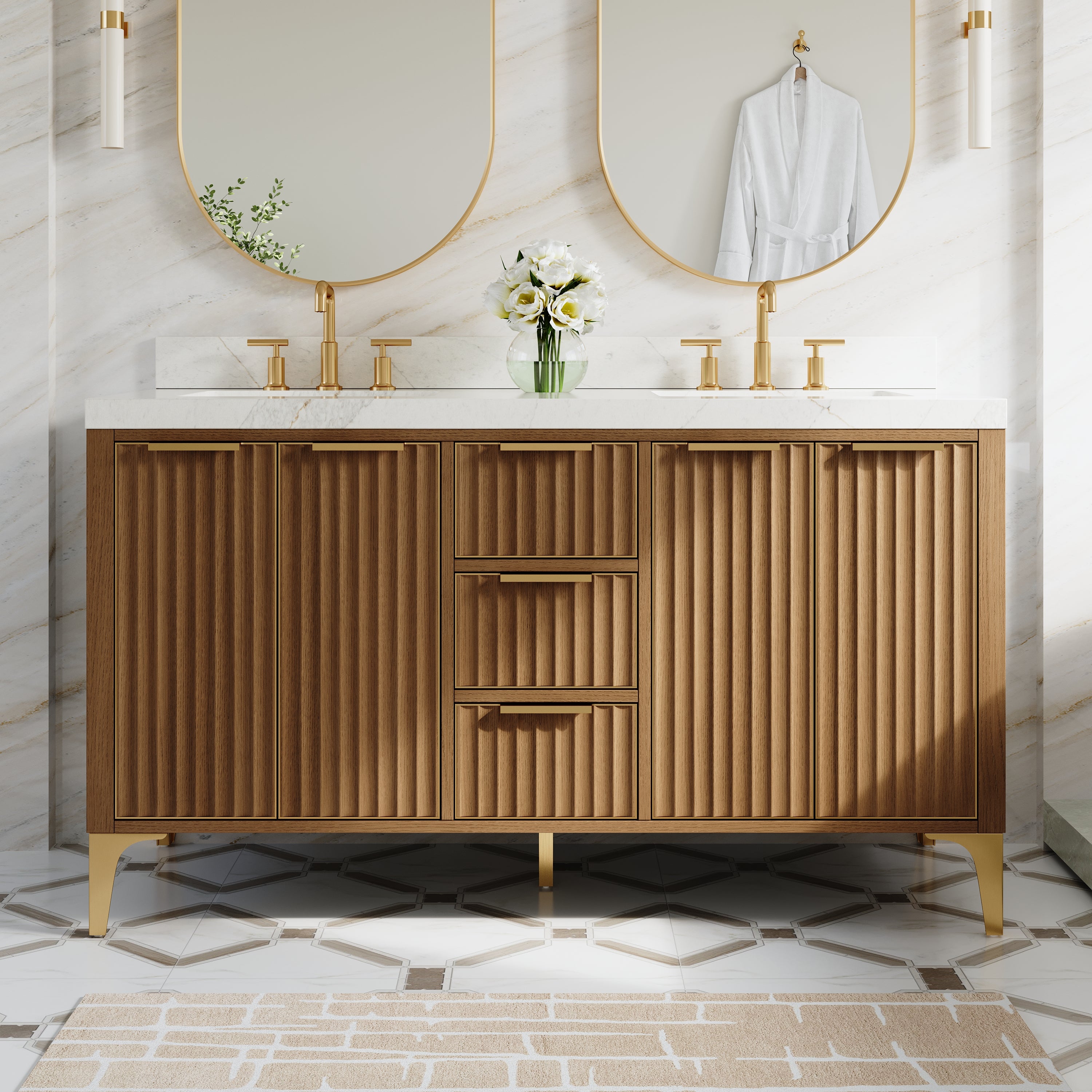
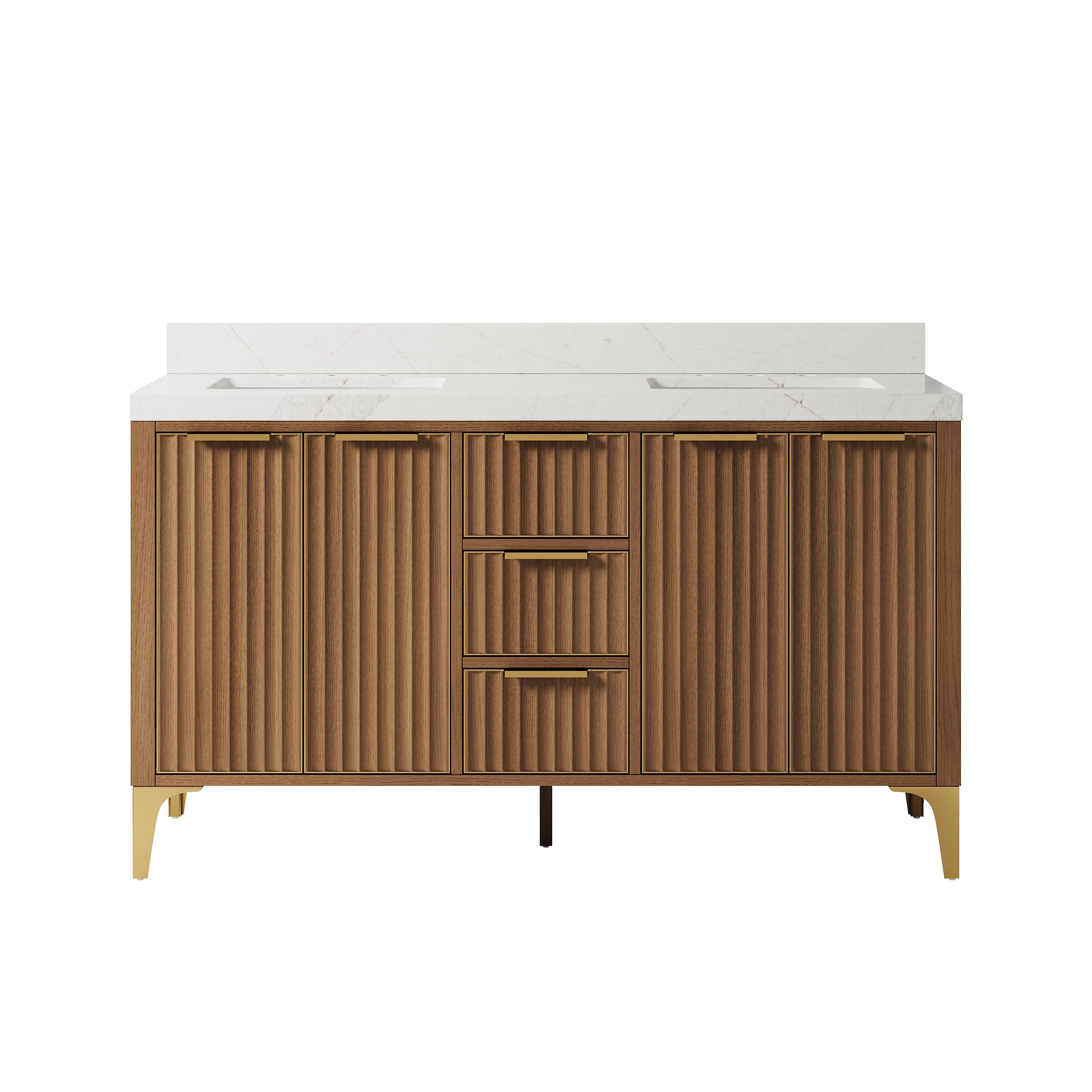
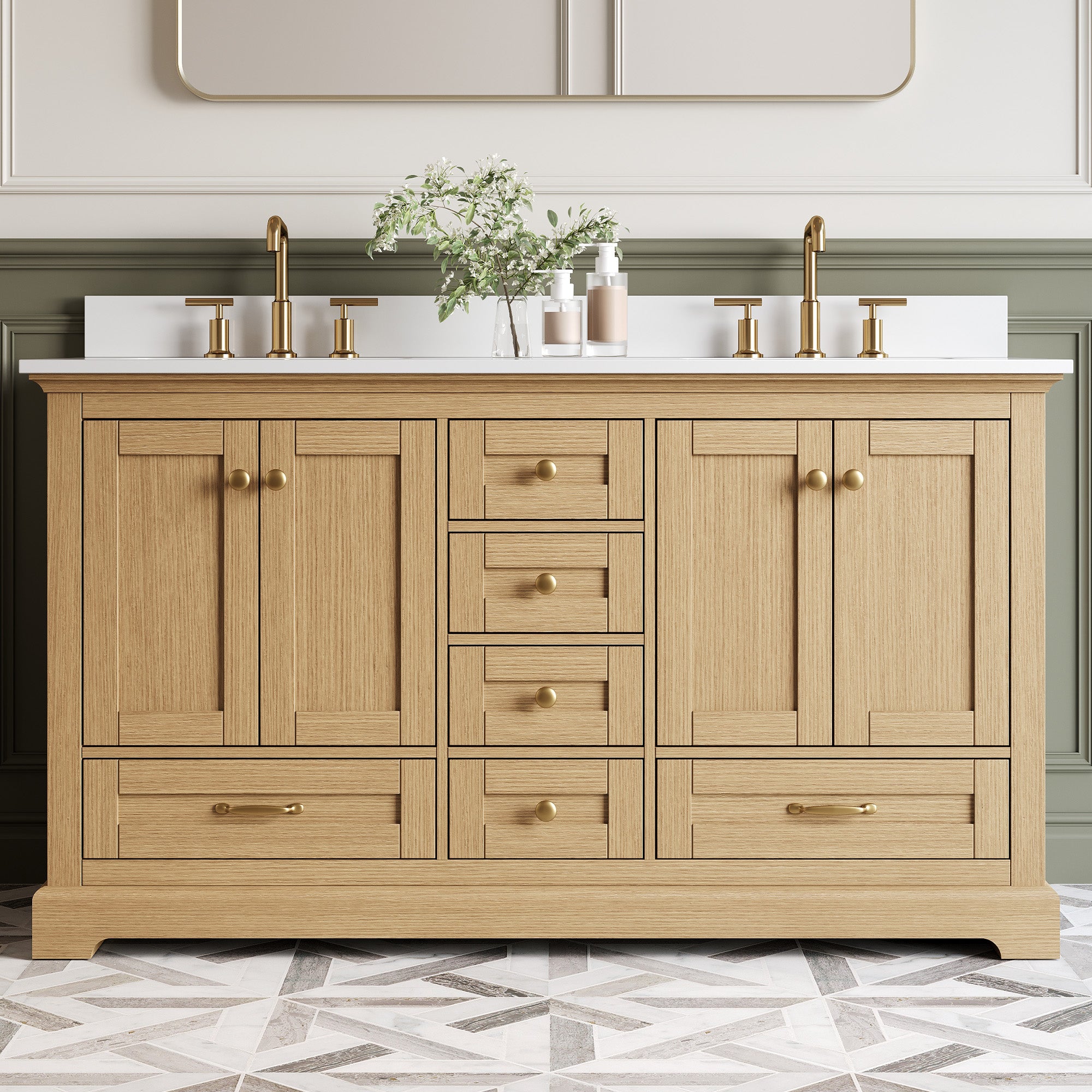
l 60 inches for generous storage or some double-sink configurations
l 72 inches and above for larger primary bathrooms
Houzz found that 19% of upgraded vanities measured 60 inches, 14% measured 72 inches, and 13% were even larger. The data shows that there is no universal "best" size. The correct width depends on how much wall and circulation space the room can actually support.
Measure the countertop as well as the cabinet. A vanity described as 36 inches wide may have a top that projects slightly beyond the cabinet sides.
Choose the Sink Based on Daily Use
The sink is one of the biggest differences between vanity sets.
An undermount sink remains a practical choice because there is no raised rim around the countertop. Water and small spills can be wiped directly toward the basin, and the clean edge suits both modern and transitional bathrooms.
An integrated sink provides an even simpler surface, particularly when the basin and countertop are molded as one piece.
A vessel sink creates more visual impact but raises the washing level several inches above the countertop. That can be useful in the right installation, but cabinet height has to be considered carefully.
The sink should also leave enough counter space for everyday products. A very large basin on a 30-inch cabinet may look generous but leave almost nowhere to place soap, a toothbrush, or skin-care products.
Pay Attention to Storage Around the Plumbing
Storage is where two white vanities of the same size can feel completely different.
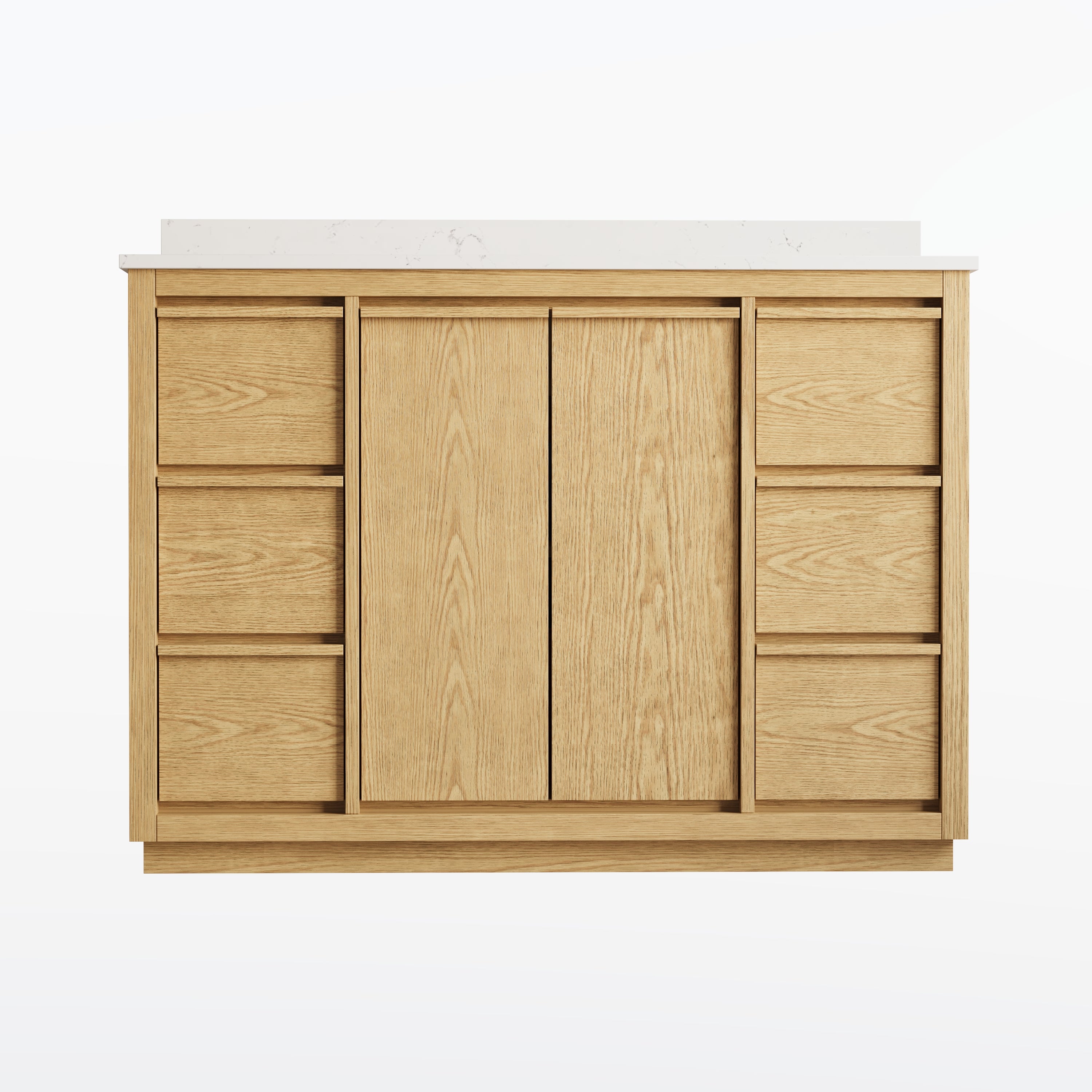
A centered sink usually places the drain and P-trap through the middle of the cabinet. Traditional door cabinets accommodate this easily, but drawers require more careful engineering.
Useful configurations include:
l U-shaped drawers around the plumbing
l An offset sink with a drawer bank beside it
l Adjustable shelves beneath the basin
l One shallow drawer above deeper storage
l Full-extension drawers for easier access
Current bath design is moving toward more specific storage rather than simply larger cabinets. NKBA's 2026 Bath Trends Report highlights configurable vanity storage for makeup, hair tools, medications, charging devices, and other daily items.
Industry judgment: The best vanity is not necessarily the one with the most storage space. It is the one that wastes the least storage around the sink and plumbing.
Decide Whether You Want Freestanding, Built-In, or Floating
Mounting style changes both appearance and practicality.
Freestanding vanities are easy to understand visually and often provide generous storage. They accounted for 30% of upgraded vanity installations in Houzz's 2025 study.
Built-in vanities remain the leading choice at 58%. They can make good use of wall-to-wall space and are especially suitable for custom bathroom layouts.
Floating models accounted for 11%. They expose the floor underneath, helping a smaller room feel lighter and making floor cleaning easier.
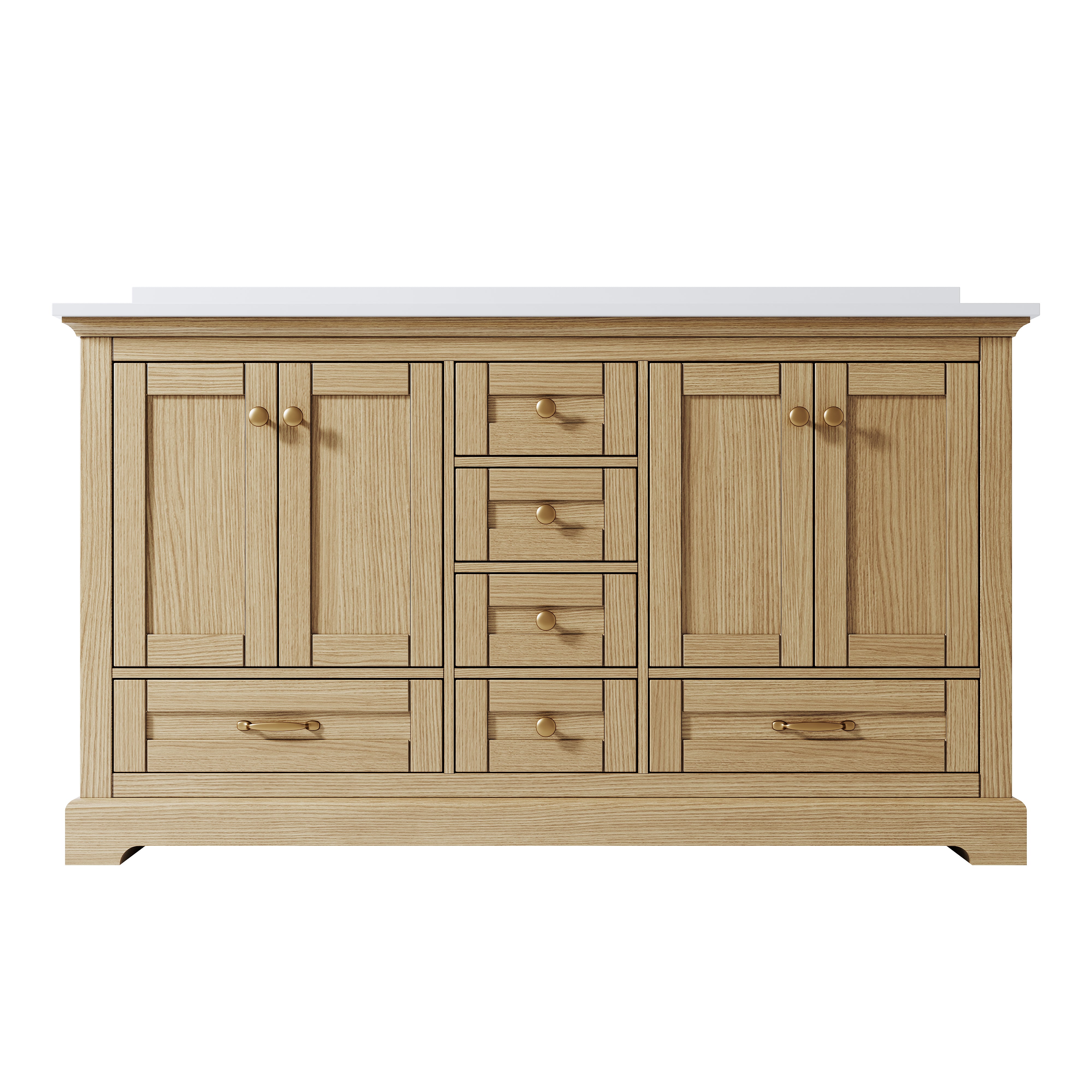
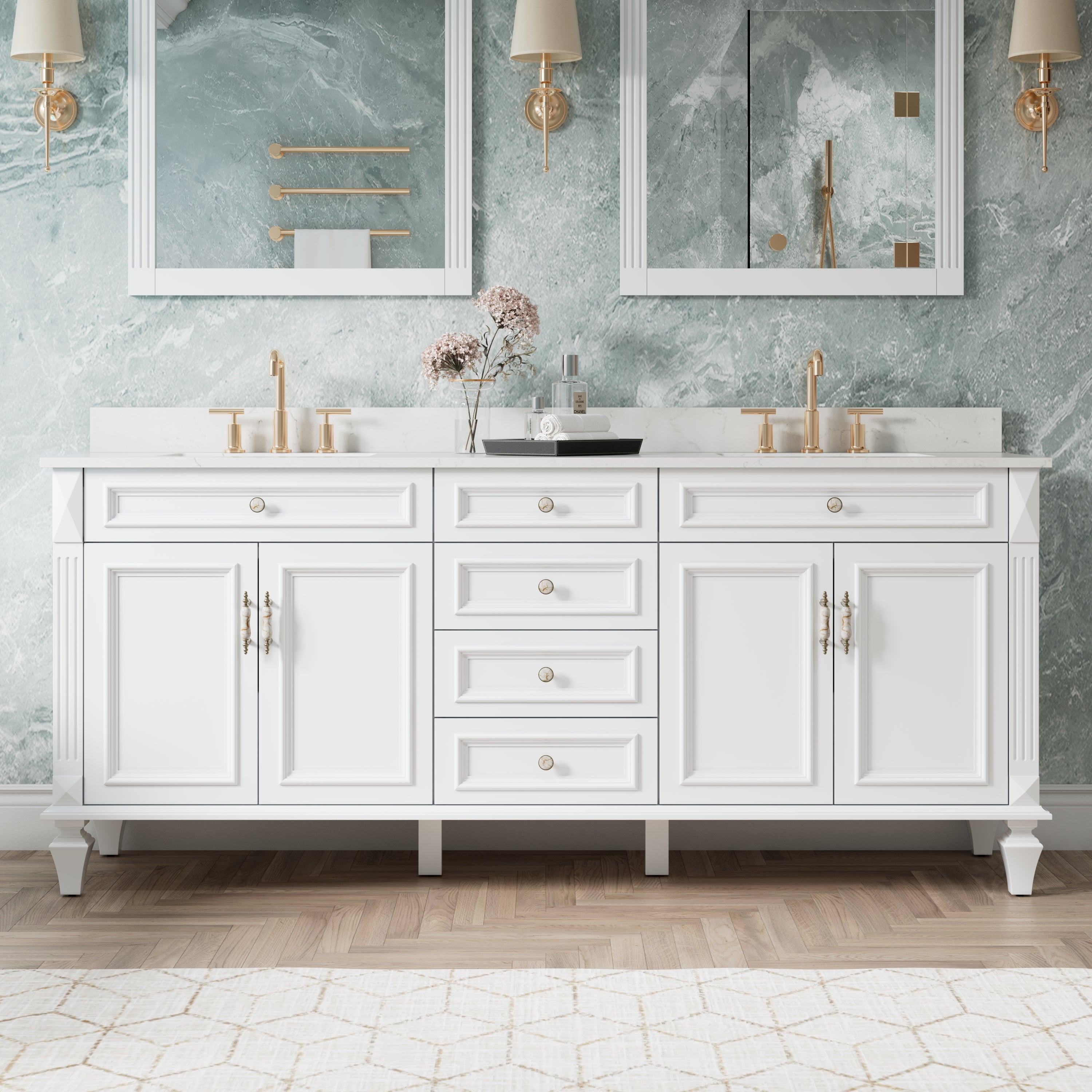
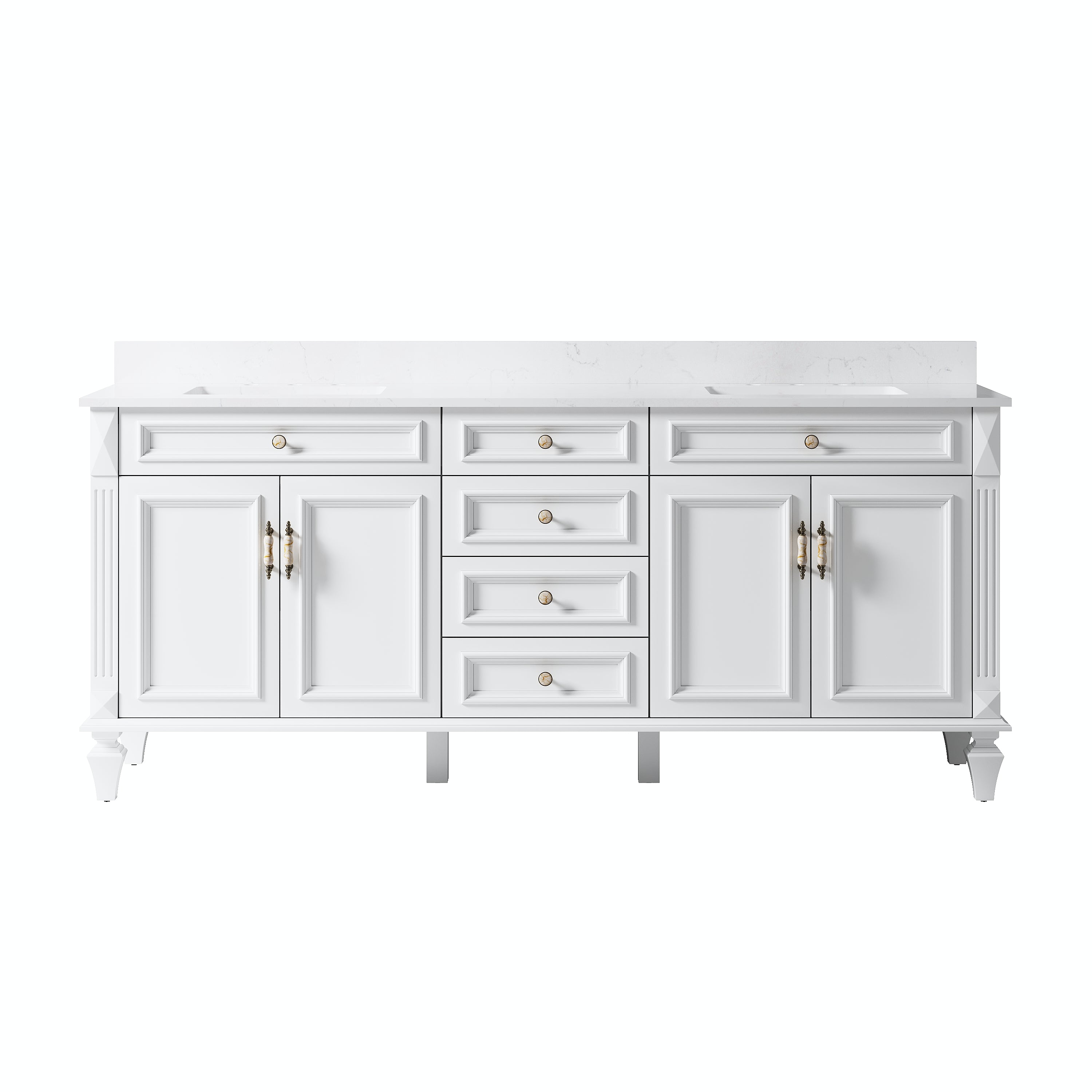
A white floating vanity can be particularly effective in a compact contemporary bathroom because both the color and mounting style reduce visual weight. A freestanding white Shaker vanity, meanwhile, may work better when storage and a furniture-like appearance are priorities.

Check What the Vanity Set Actually Includes
"Vanity with sink" does not always describe the same package.
Some sets include the cabinet, countertop, sink, backsplash, and hardware. Others may include only the cabinet, top, and basin.
Before purchasing, confirm:
l Whether the sink is included
l Whether it is already attached
l Whether a backsplash is included
l Whether side splashes are available
l Faucet-hole spacing
l Drain and overflow configuration
l Cabinet hardware
l Whether the faucet and drain are sold separately
This matters because bathroom renovations frequently replace several connected components at once. Houzz found that 87% of remodels upgraded faucets, 76% replaced countertops, and 73% upgraded sinks.
Buying compatible components from the beginning can save substantial installation trouble later.
Quartz Is a Strong Choice for the Vanity Top
White cabinetry works with almost every countertop color, but white and off-white tops remain especially easy to coordinate.
Houzz found that white accounted for 48% of upgraded bathroom countertops, followed by off-white at 20%. Engineered quartz was the leading countertop material at 45%, followed by quartzite at 20%, granite at 14%, and marble at 13%.
Quartz is attractive for a frequently used bathroom because it offers consistent color and relatively straightforward maintenance.
A softly veined white quartz top can keep the vanity bright without making it look completely plain. Black or dark gray tops create stronger contrast, while beige veining pairs naturally with warmer white cabinetry.
Look Beyond the White Finish to Cabinet Construction
Paint can hide the structure underneath, so a white cabinet should not be judged by color alone.
Check the manufacturer's specifications for:
l Cabinet-box material
l Door and drawer-front construction
l Drawer-box material
l Back-panel thickness
l Edge finishing
l Moisture-resistant coatings
Solid wood remains important in vanity construction. Houzz found it was used in 74% of upgraded vanities, with maple at 29% and white oak at 23% among solid-wood choices.
That does not mean every panel must be solid timber. A well-built cabinet can combine solid wood in structural or decorative areas with quality plywood in larger panels.
What matters is that the materials are appropriate for a humid bathroom and that exposed edges are properly protected.













Leave a comment
This site is protected by hCaptcha and the hCaptcha Privacy Policy and Terms of Service apply.