






















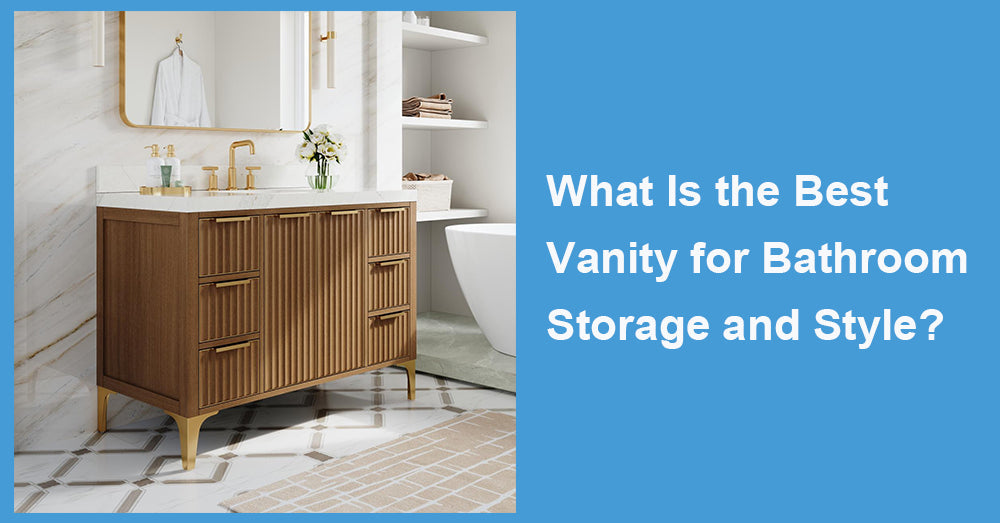
Choosing the right vanity for bathroom storage and style means balancing appearance with the way the room actually functions every day. After more than 20 years of working with bathroom cabinetry, I have seen beautiful vanities become frustrating because the drawers were shallow, plumbing consumed half the cabinet, or the unit simply overwhelmed the room. The best vanity should organize daily essentials, fit comfortably around nearby fixtures, and support the design without becoming a short-lived statement.
1. Start With the Bathroom, Not the Vanity
Before comparing finishes, measure the room.
Record the available wall width, cabinet depth, countertop overhang, and distance to the toilet, shower door, and bathroom entrance. A vanity can fit along the wall yet still make circulation uncomfortable.
This happens frequently when homeowners focus only on width. Depth matters just as much, particularly in a narrow guest bathroom.
Use painter's tape to mark the proposed footprint on the floor. Then open every nearby door and stand where the sink will be. If the layout already feels crowded, a smaller or shallower cabinet is usually the better choice.
2. Choose a Vanity for Bathroom Storage Based on Daily Habits
Good storage is not simply about having the largest cabinet.
Think about what needs to live inside it. A guest bath may need hand towels, toilet paper, cleaning products, and a few spare toiletries. A family bathroom may need hair tools, skincare, cosmetics, medicine, children's products, and backup supplies.
Drawers Often Beat One Large Cabinet
Deep drawers are particularly useful because smaller products remain visible. You can reach items at the back without moving everything in front.
Cabinet space beneath the sink is still useful for tall bottles and cleaning supplies, but plumbing often reduces the available area.
One common misconception is that five visible drawer fronts mean five useful drawers. Some are fixed because the basin occupies the space behind them. Always check interior photographs or cabinet drawings.
3. Match the Size to the Number of Users
For a powder room, a compact 24- or 30-inch vanity may be enough. A 36-inch cabinet often works well in guest baths and medium-sized bathrooms because it provides a comfortable single sink and useful storage.
A 48-inch vanity gives one user generous counter space and can support more drawers.
In a primary bathroom shared by two adults, 60- or 72-inch models may make more sense, especially when both people get ready at the same time.
Bigger is not automatically better. If a wider vanity reduces walking space or forces the toilet into an uncomfortable relationship with the cabinet, the extra storage is not worth it.
4. Decide Between Floating and Freestanding Designs
Floating vanities work especially well in modern bathrooms. Because the cabinet is mounted above the floor, more tile remains visible, which can make a compact room feel lighter.
They are also easier to clean underneath.
Floating Storage Has a Tradeoff
The open space below the cabinet usually reduces total storage capacity. Wall-mounted vanities also require secure structural support and more careful plumbing placement.
Freestanding models typically provide more storage and are easier to install around existing drain and supply lines. They suit traditional and transitional bathrooms naturally.
Their disadvantage is visual weight. A deep floor-standing vanity can feel bulky in a narrow room.
Choose based on the room's needs rather than style alone.
5. Let the Finish Support the Design
White cabinetry remains useful because it brightens the sink area and works with many countertops and hardware finishes.
Natural wood brings warmth and visible texture. Light oak suits modern, Scandinavian, and organic interiors, while walnut can anchor a larger bathroom. Medium wood tones tend to hide ordinary fingerprints and water marks better than very light or very dark finishes.
Painted colors can create personality, but highly specific shades may feel dated sooner.
I usually advise homeowners to let permanent materials—flooring, shower tile, and countertops—guide the vanity finish rather than choosing the cabinet in isolation.
6. Check the Construction Before Falling for the Style
A good-looking cabinet with weak construction rarely feels like a good purchase after several years.
Solid wood components can provide strength and repairability. Quality plywood is often a practical material for cabinet boxes because it remains relatively stable in changing humidity.
Well-sealed engineered materials can also perform successfully.
Pay attention to the less visible areas: drawer bottoms, cabinet edges, plumbing cutouts, hinges, and slides. Exposed material around a sink opening or cabinet base is more concerning than whether the door has a fashionable profile.
7. Choose the Sink and Countertop Carefully
Sink size directly affects counter space and storage.
A large basin can look luxurious but leave almost nowhere to place soap, skincare, or grooming products. For many medium-sized vanities, a moderately sized undermount sink provides a better balance.
Integrated sinks are easy to clean because there are fewer seams. Vessel sinks create a stronger design statement but add height and can reduce usable countertop area.
Quartz is practical for busy households. Natural stone offers unique character but may require more maintenance. Whatever you choose, make sure the countertop suits your actual cleaning habits.
8. Consider the Honest Downsides
No vanity style solves every problem.
Floating units may sacrifice storage and require additional wall reinforcement. Freestanding models can appear heavy. White finishes show makeup and hair dye easily. Dark wood reveals dust and dried water droplets.
Natural wood also requires protection from persistent moisture.
The best choice is the one whose disadvantages you can comfortably live with.
A household that needs maximum storage should not sacrifice half the cabinet simply to achieve a floating look. Likewise, someone who dislikes frequent spot cleaning may be happier with medium-toned wood than bright white.

9. Install and Maintain It Correctly
Install the cabinet level so doors and drawers stay aligned. Check the plumbing location before cutting into the back or drawers, and keep shutoff valves accessible.
Seal the sink, faucet openings, countertop, and backsplash joints carefully. Test every connection before filling the cabinet.
For maintenance, use a mild, non-abrasive cleaner and wipe standing water promptly. Run the exhaust fan after showers and inspect beneath the sink several times a year for slow leaks.
When comparing Wellfor models, start with room dimensions, usable storage, construction, sink size, and plumbing compatibility. Then choose the finish and mounting style that support the bathroom's character. The best vanity for bathroom storage and style is not the one with the most drawers or the strongest visual impact; it is the one that keeps daily routines organized while leaving the room comfortable, balanced, and easy to maintain.











































Leave a comment
This site is protected by hCaptcha and the hCaptcha Privacy Policy and Terms of Service apply.