




















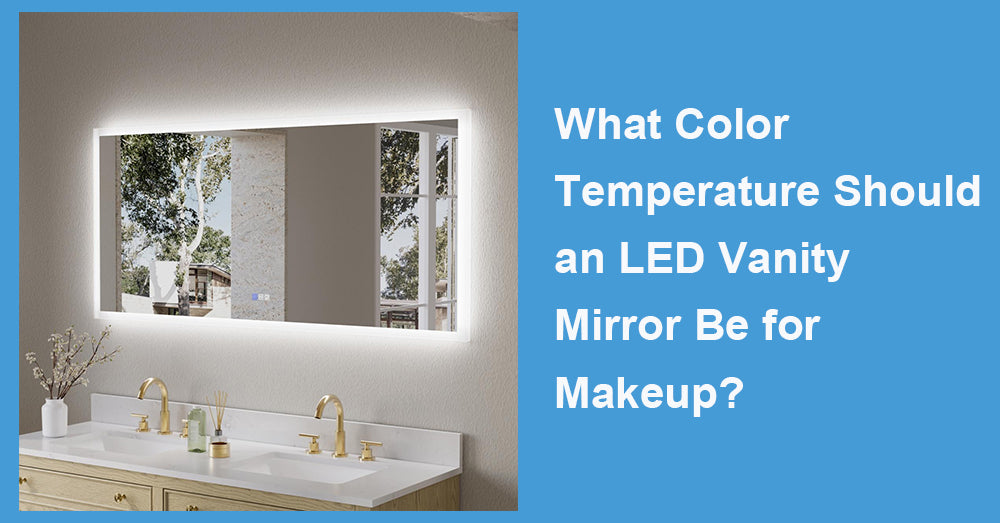
An LED vanity mirror should usually provide light between 4000K and 5000K for makeup application. This neutral-to-daylight range makes it easier to judge foundation, concealer, blush, and eye makeup without adding too much yellow or blue to the skin. Still, color temperature alone does not guarantee good results. Brightness, color accuracy, light direction, and the bathroom itself all influence what you see.
1. Understand What Color Temperature Changes
Color temperature is measured in Kelvin, shown as K. Lower values produce warmer, more yellow light, while higher values create cooler, whiter light.
Bathroom mirror lighting commonly falls into three groups:
2700K to 3000K: warm white
3500K to 4500K: neutral white
5000K to 6500K: cool white or daylight
Warm light tends to make skin look softer and slightly more golden. Cool light reveals more texture but may leave the face looking pale or overly sharp. Neutral light sits between the two and is usually the most dependable choice for everyday makeup.
The goal is not to find the most flattering light. It is to find light that lets you see color accurately before stepping outdoors, entering an office, or moving into another room.
2. Choose 4000K to 5000K for Everyday Makeup
For most users, 4000K to 5000K offers the best working range. It is bright enough for detailed tasks without feeling excessively clinical.
A setting near 4000K feels comfortable in a residential bathroom and works well for daily routines. It shows skin tone more honestly than warm lighting while remaining pleasant early in the morning.
At 5000K, the light resembles clear daylight. Fine details become easier to see, which helps with eyebrow shaping, eyeliner, concealer placement, and foundation blending. Some people find this setting too crisp for casual use, especially in a white bathroom with reflective tile.
From practical experience, 4500K is a strong middle ground. It provides clarity without making the room feel like a commercial dressing area.
3. Pick an Adjustable LED Vanity Mirror When Possible
An adjustable LED vanity mirror is more useful than a fixed-temperature model when the bathroom serves several purposes.
You might use neutral light for morning makeup, cooler light for detailed grooming, and warm light before going out in the evening. Adjustable models also help when daylight changes throughout the year or when several people share the same mirror.
When a Fixed Color Temperature Is Enough
A fixed 4000K mirror can be a sensible choice for a guest bathroom, powder room, or simple renovation. It costs less in many cases and avoids controls that may rarely be used.
A fixed 3000K mirror is less suitable as the only makeup light. It may look elegant, but it can distort foundation and concealer shades. A fixed 6000K mirror has the opposite problem: it can feel harsh and encourage the user to apply more warm-toned makeup than necessary.
Adjustability is useful, but it should not become a distraction. Three clear settings are often easier to use than a complicated control system with dozens of minor variations.
4. Do Not Ignore Color Rendering
Color temperature tells you whether light appears warm or cool. It does not tell you how accurately that light displays color.
For makeup, look for a Color Rendering Index, or CRI, of at least 90. A high-CRI light makes it easier to distinguish subtle differences between foundation shades, skin undertones, lipstick colors, and areas that need more blending.
Two mirrors can both be rated at 4000K yet produce noticeably different results. A lower-quality LED may make reds appear muted or cause beige tones to look flat. The mirror seems bright, but the makeup changes once you leave the bathroom.
This is a common purchasing mistake. Buyers compare brightness and color temperature but never check CRI.
5. Make Sure the Light Reaches the Face Evenly
Light direction matters almost as much as color.
A ceiling fixture or light mounted only above the mirror can cast shadows under the eyes, nose, and chin. Those shadows make blending harder and may lead to too much concealer or contour.
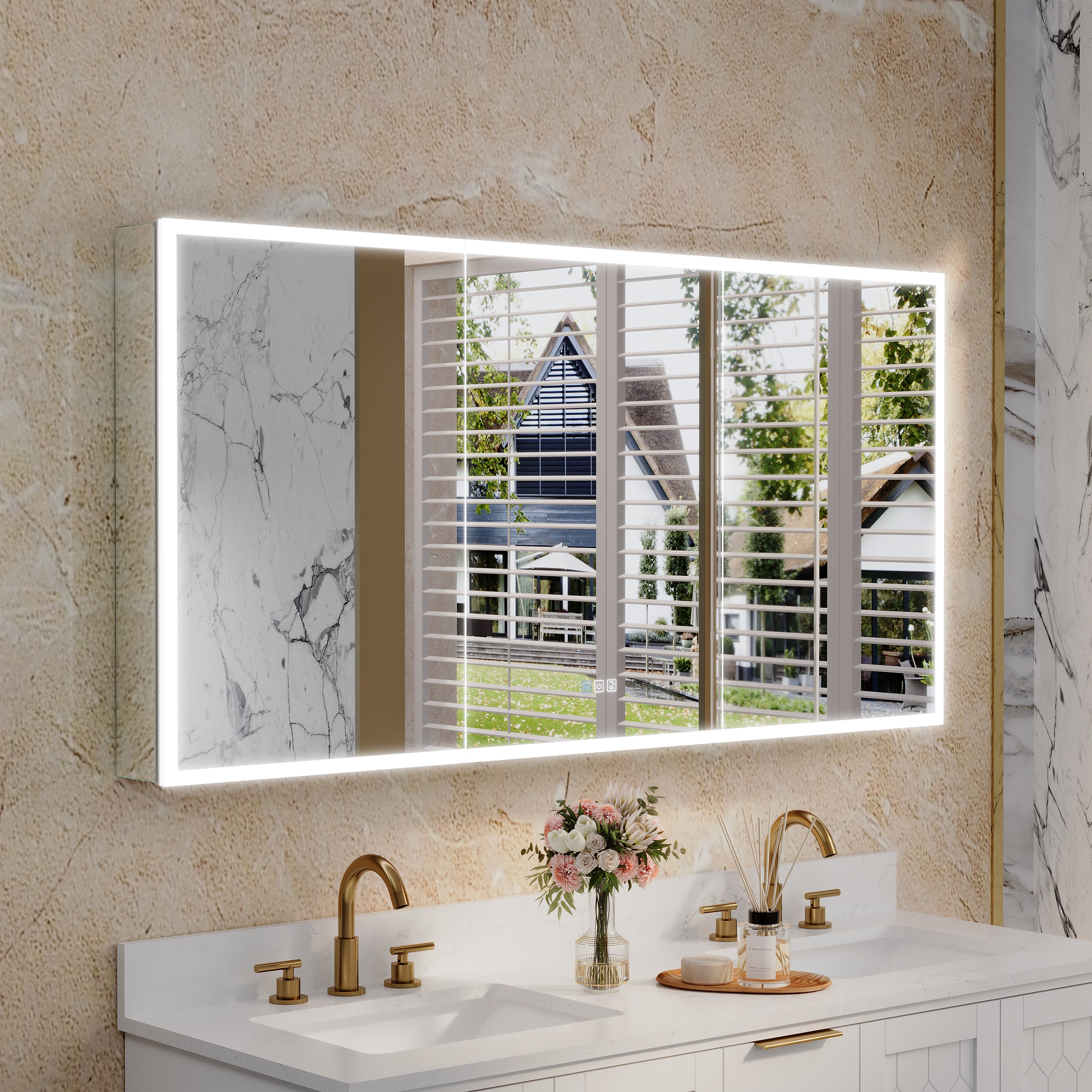
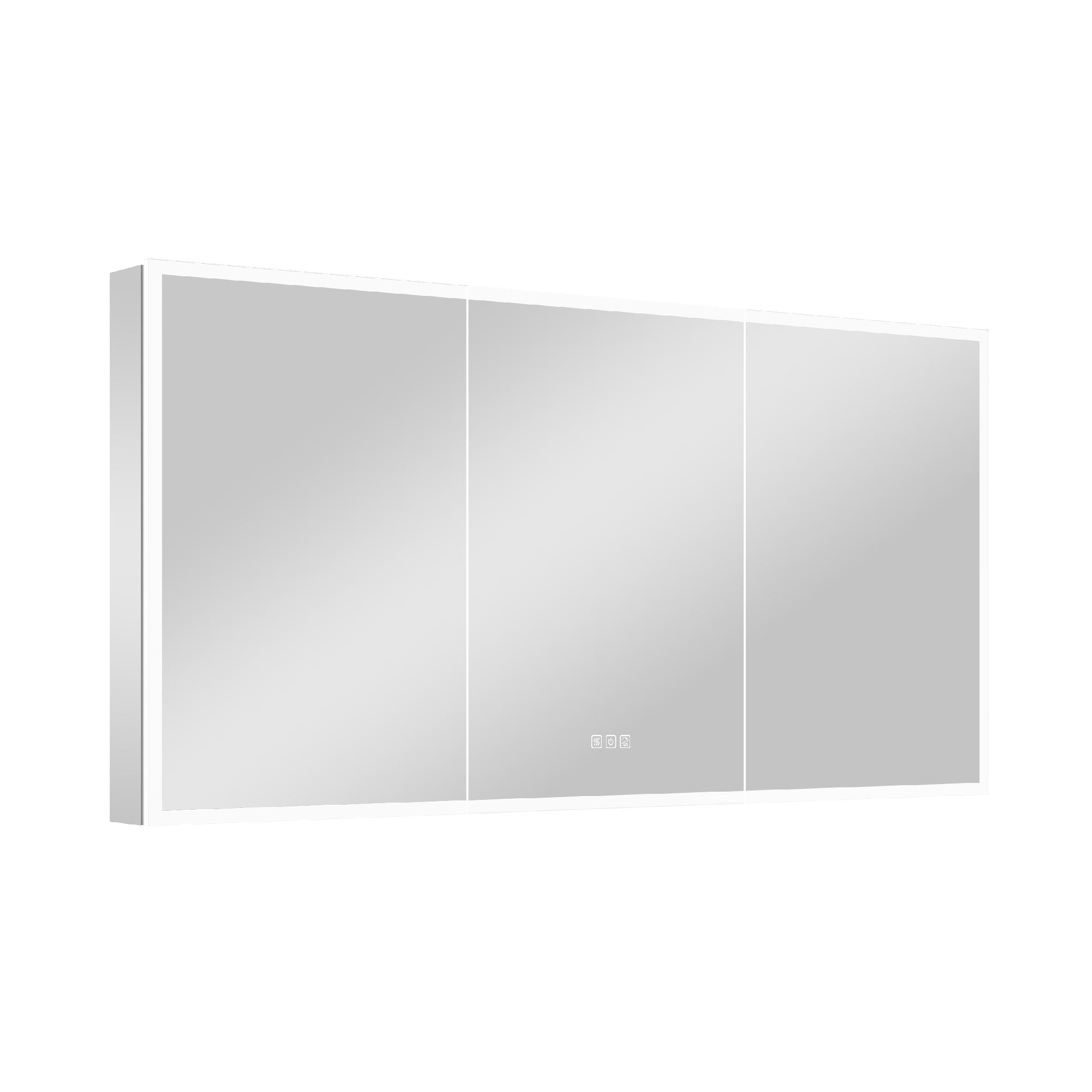
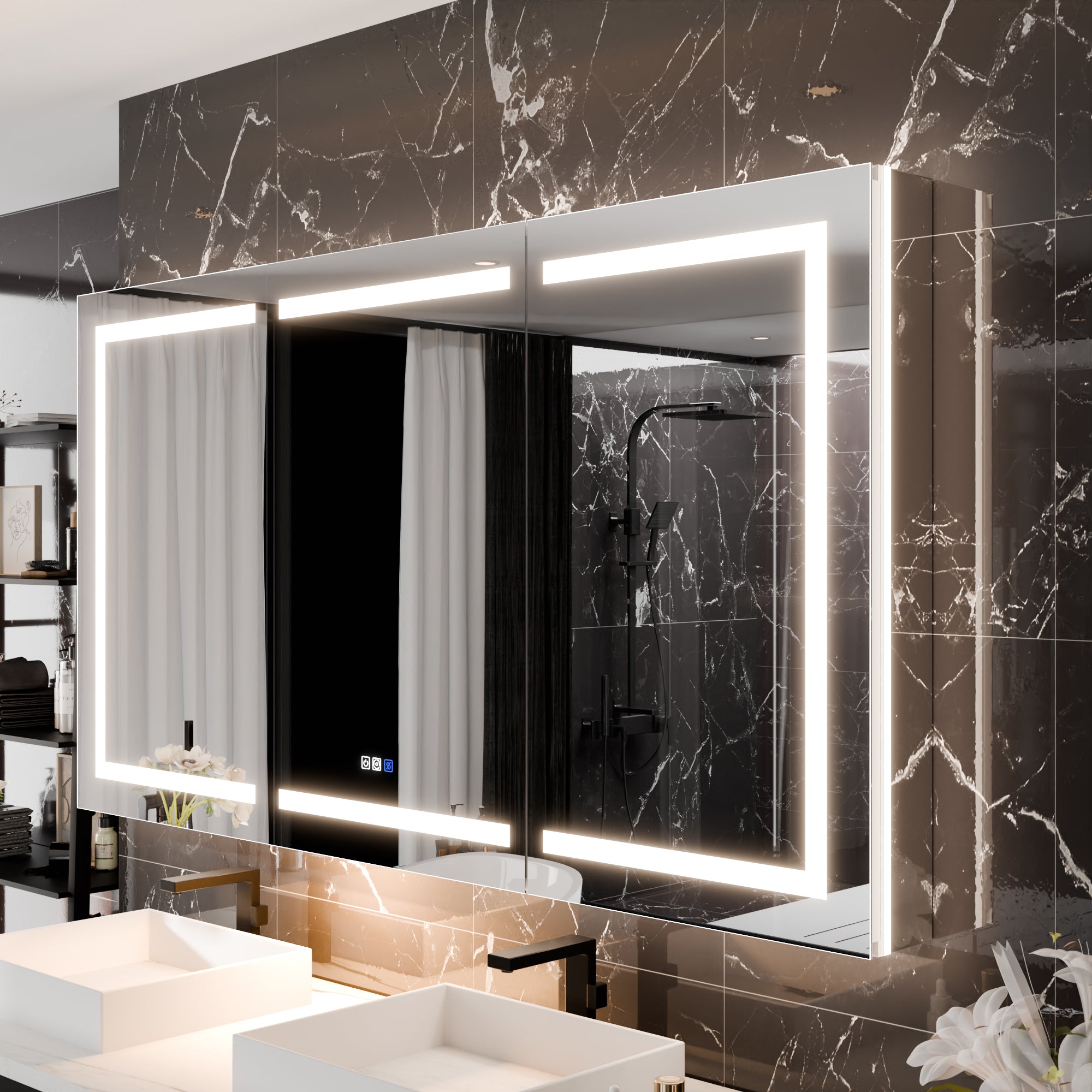
Front-facing light around the sides or perimeter of the mirror is usually better for makeup. It illuminates both sides of the face and reduces dark areas.
Backlit mirrors create an attractive glow on the wall, but backlighting alone may not provide enough task lighting. They work well for atmosphere and general bathroom use. For precise makeup, choose a model that also directs light forward.
At Wellfor, this distinction is worth considering when comparing decorative mirrors with mirrors designed for grooming. A visually striking model is not automatically the most functional one.
6. Match Brightness to the Bathroom
A mirror can have the correct color temperature and still be uncomfortable if it is too bright or too dim.
Dark bathrooms with limited daylight need stronger illumination. Rooms with glossy tile, white countertops, large windows, and glass shower doors may reflect enough light to create glare.
Dimming control is valuable because it allows the mirror to adapt to the room. Use brighter light for detailed makeup and reduce it for casual grooming or nighttime visits.
Do not place the mirror where strong sunlight hits the glass directly. Uneven natural light can make one side of the face appear brighter than the other. If the bathroom has a window on one side, front-facing mirror lighting can help balance the effect.
7. Know When Warm or Cool Light Is Useful
Warm light between 2700K and 3000K is not useless. It can help you preview makeup for restaurants, bedrooms, or evening events where the lighting will be softer.
The limitation is color accuracy. Foundation may appear warmer, and uneven blending can be harder to see.
Cool light around 5000K works well for close detail, skincare checks, brow shaping, and contact lenses. Once the temperature rises toward 6000K or 6500K, many users find it too blue for comfortable daily use.
The best makeup mirror is not necessarily the coolest one. More blue light does not always mean more accurate light.
8. Avoid Common Buying Mistakes
One mistake is choosing a mirror based only on the number of lighting modes. A model with three well-calibrated settings may perform better than one offering many poorly balanced options.
Another is assuming a large mirror will automatically light the face evenly. The location of the LED strips matters more than mirror size.
Buyers also overlook wall color. Dark paint absorbs light, while white tile reflects it. A setting that looks balanced in one bathroom may feel harsh in another.
Built-in technology has drawbacks as well. Touch controls collect fingerprints, electronic components may eventually need service, and hardwired models require more planning than standard mirrors. A simple high-CRI mirror can sometimes be the better purchase.
9. Plan Installation for Better Makeup Lighting
Install the mirror so the center aligns comfortably with the regular users. If it sits too high or low, the light may hit the forehead or chin rather than the full face.
For double vanities, confirm that a single wide mirror provides equal light at both sinks. Two separate mirrors may offer better coverage in some layouts.
Check whether the model is plug-in or hardwired before purchase. Hardwired installation creates a cleaner appearance but may require a qualified electrician, especially when a new connection is needed near a wet area.
Follow the manufacturer’s spacing and electrical requirements. Do not position touch controls where they will receive frequent water splashes.

10. Clean and Use the Mirror Correctly
Use a microfiber cloth and a mild glass cleaner. Spray the cleaner onto the cloth rather than directly onto the glass, since excess liquid can reach the edges, controls, or electrical seams.
Avoid abrasive pads and strong chemicals. Fine scratches become more visible when the LEDs are turned on.
For everyday makeup, begin around 4000K or 4500K. Use 5000K when you need a closer look, then check the finished makeup near a window before leaving home. No bathroom light can reproduce every office, restaurant, or outdoor condition perfectly.
When choosing an LED vanity mirror, prioritize a 4000K to 5000K range, CRI 90 or higher, front-facing illumination, and reliable dimming. Those features will improve makeup accuracy more than decorative effects or an unusually long list of lighting modes.

































Leave a comment
This site is protected by hCaptcha and the hCaptcha Privacy Policy and Terms of Service apply.