














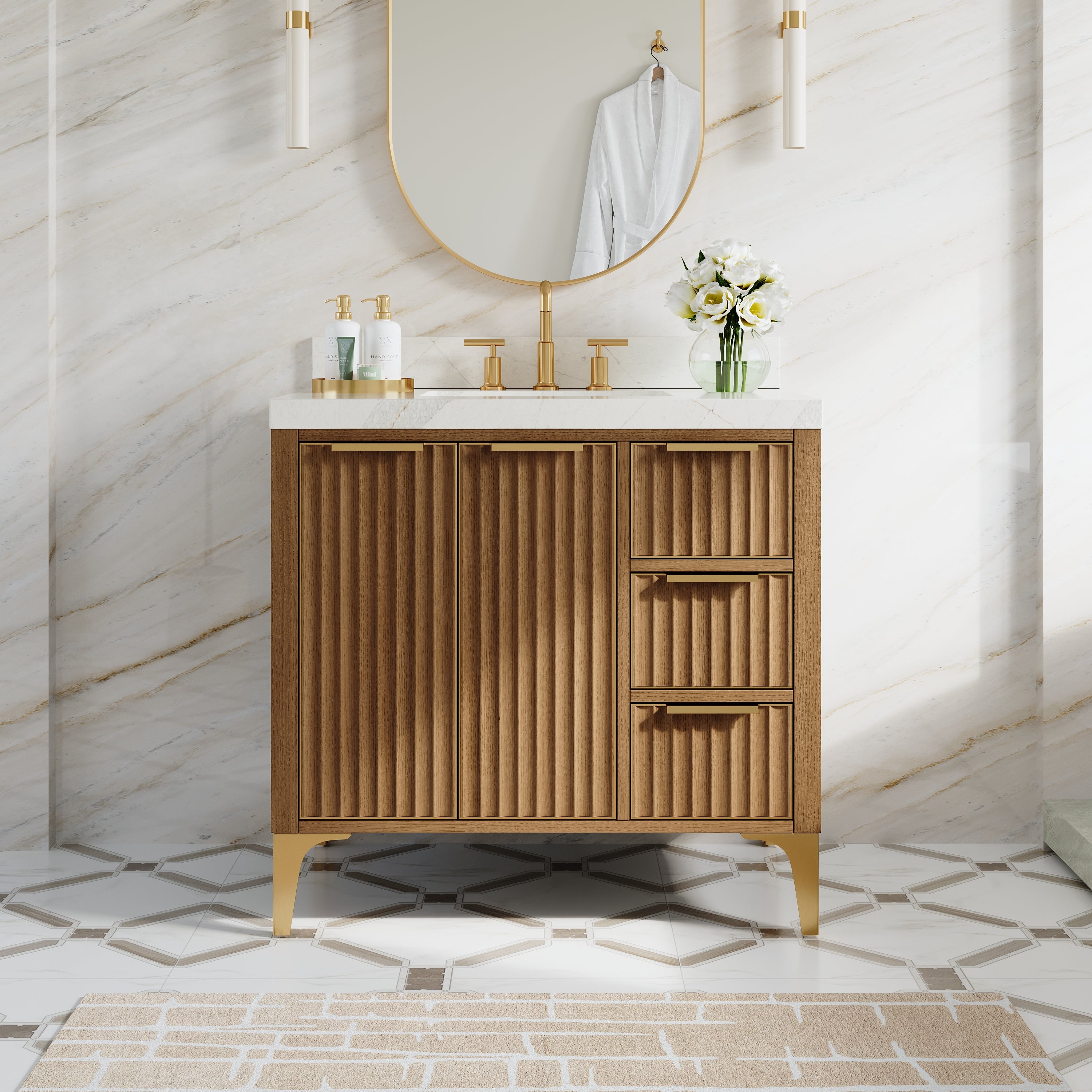
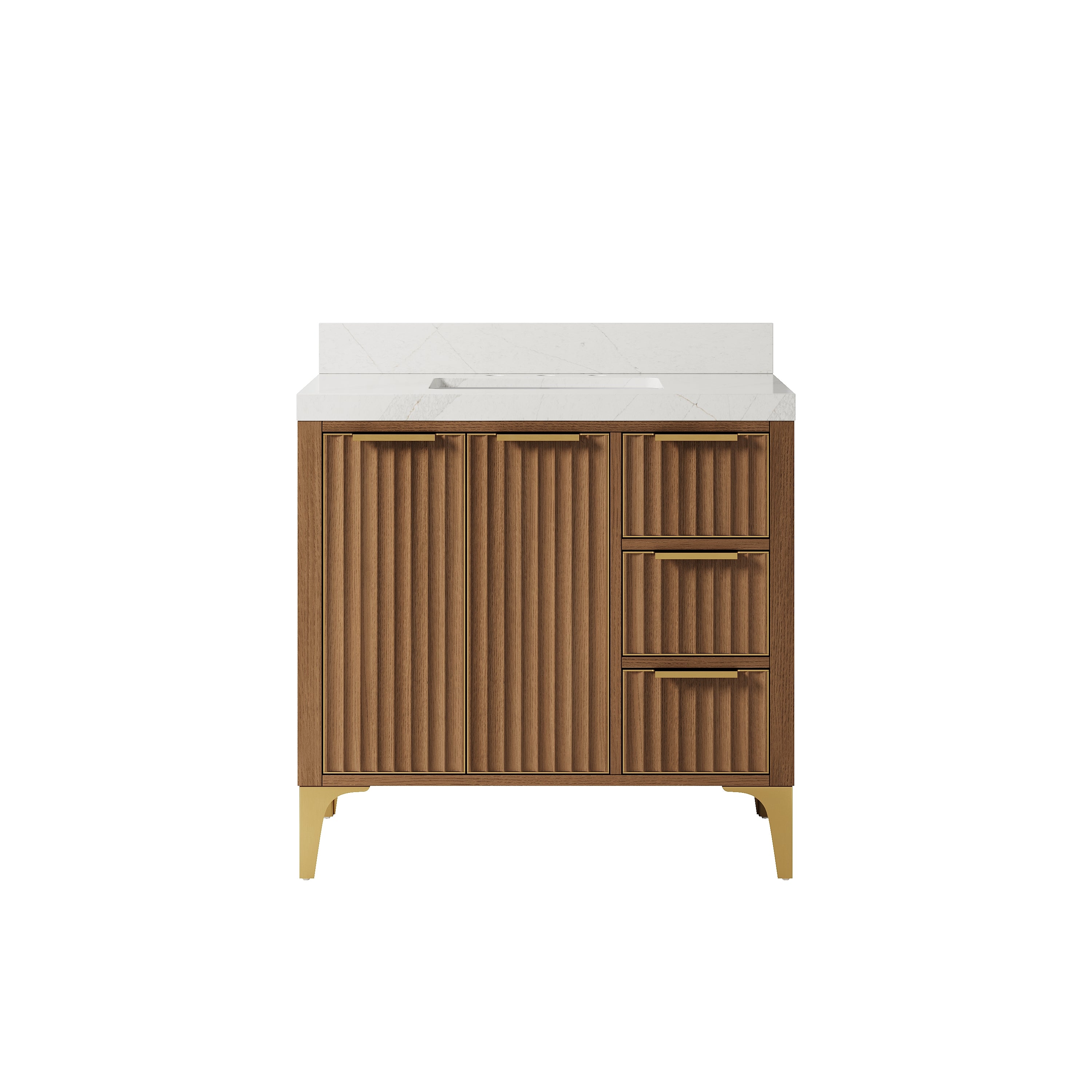


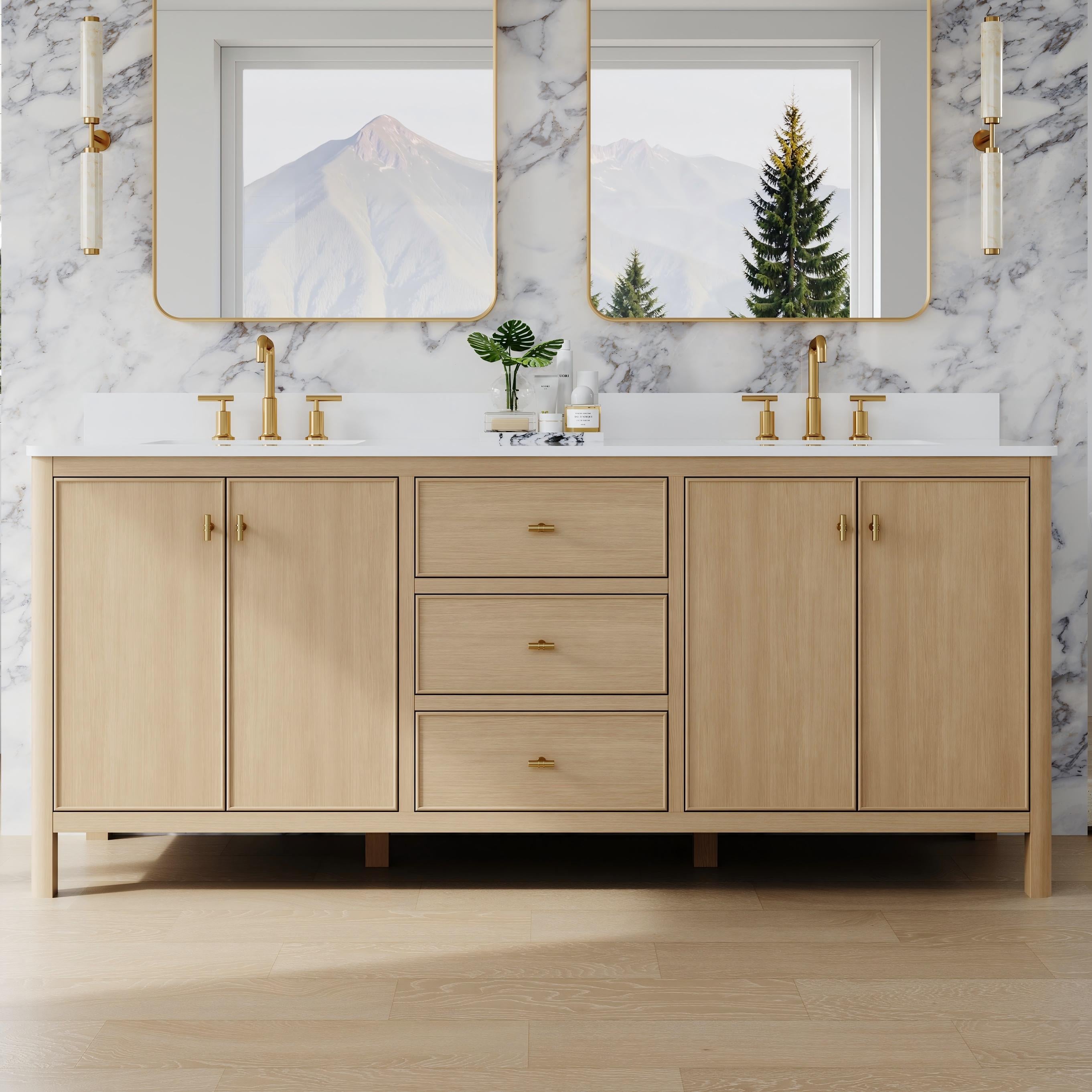
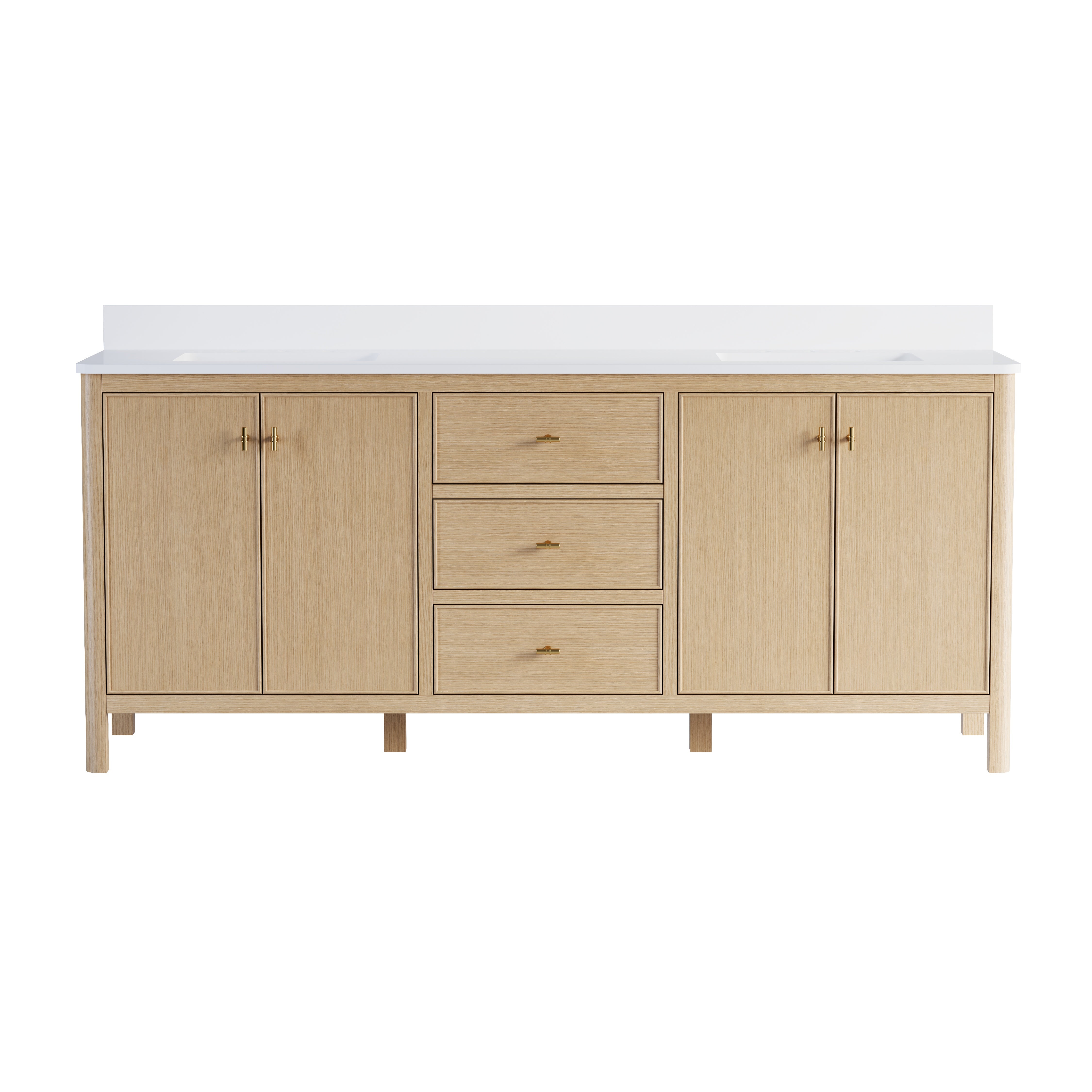


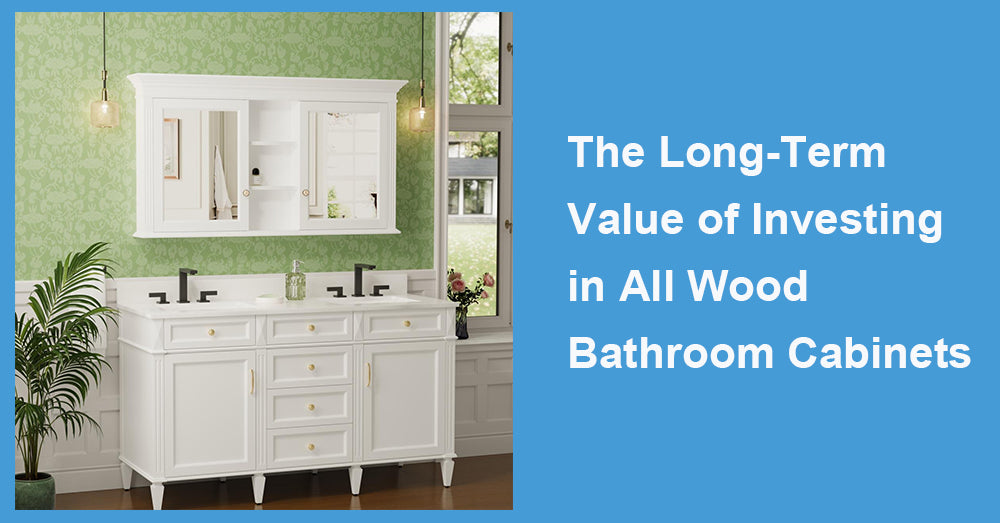
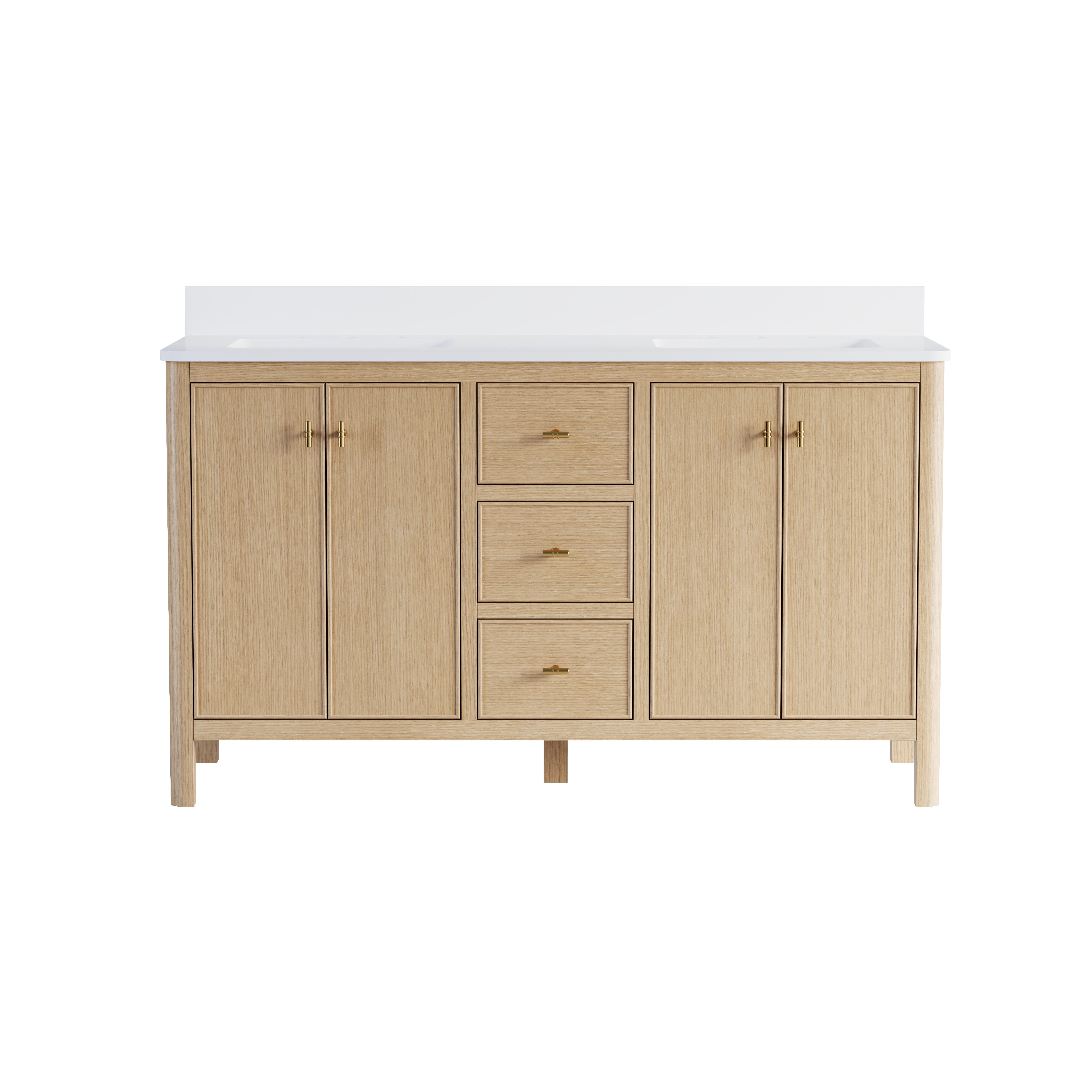
In residential renovation and new construction projects, all wood bathroom cabinets are increasingly the mainstream choice for mid- to high-end bathroom spaces. Compared to MDF or particleboard structures, solid wood cabinets offer greater structural strength, longer service life, and lower long-term maintenance costs.
Industry data shows that in the budget composition of bathroom renovation, cabinet and basin systems usually account for 25% -35% of the overall cost, and material differences will directly affect the stability and asset value over a period of more than 10 years.
1. Structural stability: Thickness and connection method determine durability
Solid wood bathroom cabinets typically use 0.5-0.75-inch-thick solid wood door panels and frame structures, with side panel thicknesses often exceeding 0.5 inch. Compared to this, common MDF boards are about 0.5-0.625 inches thick, but their internal structure is made of compressed fibers, which limits their ability to resist moisture-induced expansion.
In bathroom environments with long-term humidity above 60%, moisture absorption and board expansion are the main risks. Solid wood has natural fiber directionality and can maintain stability within a reasonable range of moisture content; MDF is prone to edge foaming or surface film peeling after absorbing water.
Industry maintenance statistics show that in bathroom cabinet samples that have been in use for more than 8 years, the proportion of non-solid-wood cabinets with structural looseness or board deformation is about 32%, while the proportion of all solid-wood structures is about 15%.
2. Load bearing capacity and hardware stability
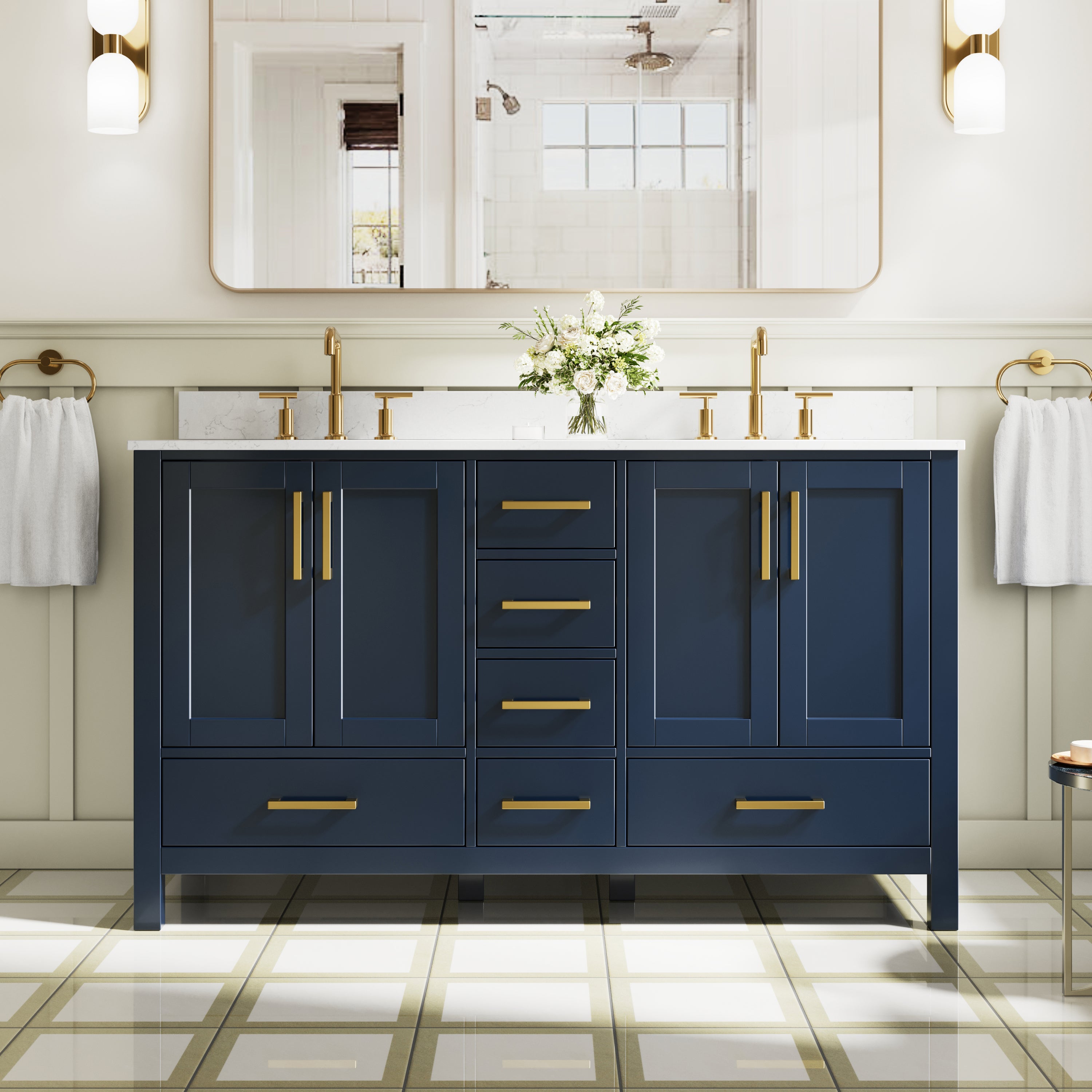
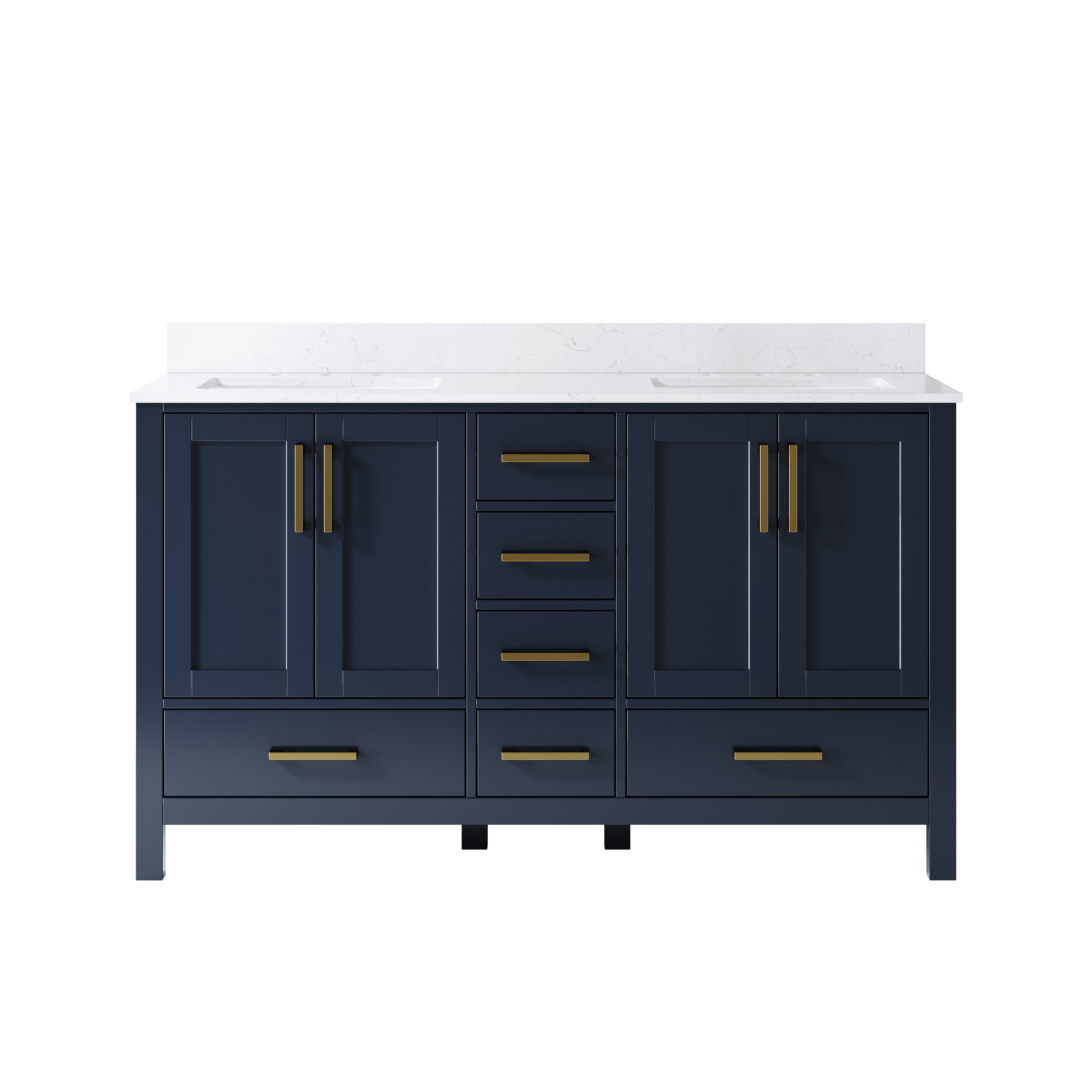
A standard 36-inch wide bathroom cabinet typically weighs between 150 and 250 pounds when installed with stone or quartz countertops. When paired with a double-basin design (60-72 inches wide), the overall weight may exceed 350 lbs.
The all-solid wood frame structure performs better in terms of screw grip force. Research shows that the nail-holding force of solid wood materials is typically 30% or more than that of particleboard, making drawer slides and door hinges less likely to loosen under long-term, frequent use.
For standard bathroom cabinets with a depth of 21-24 inches, the drawer extension length is typically 16-20 inches. Under frequent opening and closing conditions, the strength of the cabinet side panel directly affects the stability of the sliding rail. The all-solid wood structure can effectively reduce track deviation caused by side-panel deformation.
3. Moisture resistance and environmental adaptability
The bathroom is a high-humidity space. The peak humidity in the shower area can exceed 70%, and even in dry areas, it remains in the range of 50% -60% throughout the year.
After kiln-drying, the moisture content of solid wood materials is usually controlled between 6% and 8%. Under normal ventilation conditions, the structural expansion rate remains within a reasonable range.
In contrast, MDF can expand by more than 5% when moisture is applied to its edges, making it more difficult to repair if the edges are damaged.
In cases where the cabinet needs to be replaced due to wet expansion deformation within a 10-year service life, the proportion of composite panels is significantly higher than that of solid wood structures.
4. Service life and full lifecycle cost
From a long-term investment perspective, material lifespan is a key indicator.
The average service life of solid-wood bathroom cabinets is usually 15-20 years or more.
The average lifespan of composite panel structures is about 8-12 years.
In terms of initial procurement costs, solid wood cabinets are usually 15% -30% higher. But if calculated over a 20-year cycle, the long-term difference tends to narrow after the costs of replacement and maintenance are added.
In the secondary renovation market, well-preserved solid wood cabinets are usually more valuable for preservation. Data show that when high-quality wooden cabinets are retained in renovation projects, the overall space valuation increase is higher than that with ordinary panel systems.
5. Surface repair and reprocessing capability
All solid-wood bathroom cabinets are suitable for reprocessing and renovation. If there are scratches or wear on the surface, the appearance can be restored by polishing 0.02-0.05 inches of the surface and repainting or sealing it with oil.
Composite panels usually rely on veneer or film coating. Once the surface is damaged, it is difficult to repair locally, and the door panel can only be replaced as a whole.
For high-frequency use of home or commercial spaces, maintainability directly affects operating costs.
6. Structural design and process differences
High-quality all-wood bathroom cabinets typically use mortise-and-tenon or reinforced frame construction rather than simply glued-together construction. The door panels are mostly designed with solid wood frames and solid wood middle panels to reduce overall deformation caused by temperature and humidity changes.
If the thickness of the cabinet back panel reaches 0.375-0.5 inches, it can significantly improve the overall torsional strength. Some low-end products have a back panel thickness of less than 0.25 inches, which can easily cause structural shaking under long-term load.
In terms of drawer structure, the thickness of solid-wood drawer side panels is typically around 0.5 inches. Combined with a metal slide rail system, the service life can exceed 100000 opening and closing cycles.
7. Environmental Protection and Indoor Air Quality
Solid wood structures typically use fewer synthetic adhesives and emit lower levels of volatile organic compounds. In contrast, some composite panels may contain a higher proportion of adhesive.
In a bathroom environment with a closed space area of approximately 40-80 square feet, the level of material release has a more direct impact on air quality. Therefore, material selection is not only about durability but also about a healthy environment.
8. Applicable scenario analysis
For budget-constrained, short-term, or rental property projects, composite panel bathroom cabinets have certain cost advantages.
In master bedroom suites, long-term self-occupied residences, or high-end projects, all solid-wood structures have greater long-term value. Especially for cabinet systems with a width exceeding 48 inches and equipped with double basins, the structural stability requirements are higher, and the advantages of solid wood frames are more obvious.
If the project's target usage period exceeds 15 years, the investment logic for solid wood is more reasonable.

Conclusion
In the process of upgrading bathroom space, the cabinet system is the core component of the structure and vision. Although there is a significant difference in initial investment, from the perspectives of durability, moisture resistance, maintenance costs, and asset value, all wood bathroom cabinets offer a more stable long-term investment return.
The size standard (inch), load-bearing capacity, humidity adaptability, and repairability are key indicators for determining its value.
Material differences may not be easily apparent in the short term, but over a usage period of more than 10 years, they will gradually translate into significant performance and cost differences.





































Leave a comment
This site is protected by hCaptcha and the hCaptcha Privacy Policy and Terms of Service apply.