






















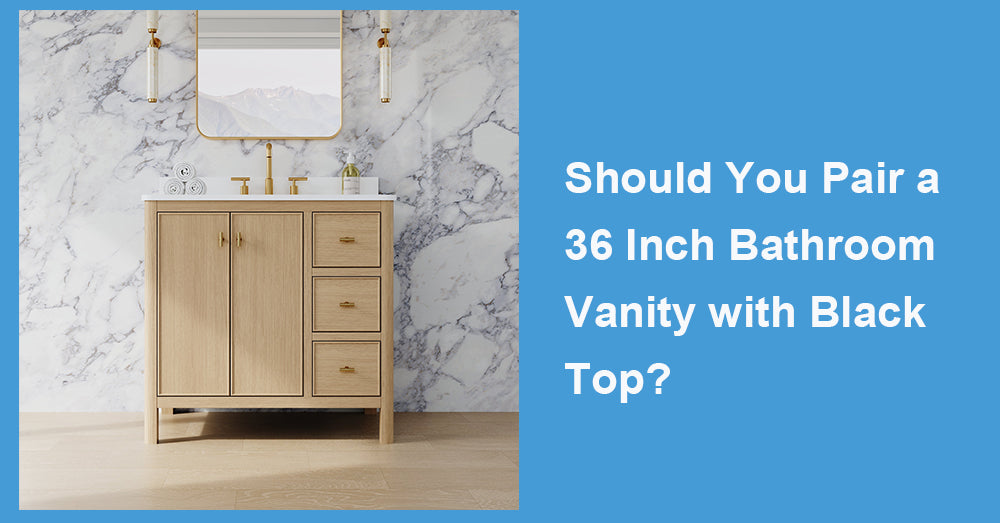
A 36 inch bathroom vanity with black top can give a compact bathroom stronger definition without requiring an oversized cabinet. The dark surface creates a clear focal point, while the 36-inch width still leaves room for practical storage and comfortable movement. Yet black is not the automatic choice for every renovation. Lighting, cabinet color, countertop material, water quality, and the surrounding tile all determine whether the combination feels refined or unnecessarily heavy.
Recent renovation data shows that black countertops remain a selective choice rather than a mainstream default. Houzz reports that black accounted for 4% of upgraded bathroom countertops, compared with 48% for white and 20% for off-white. At the same time, 76% of bathroom renovators replaced their countertops, showing how strongly this surface influences the finished room.
Black Creates More Impact at a 36-Inch Width
A 36-inch vanity sits between compact powder-room cabinetry and the wider units commonly used in primary bathrooms. It has enough surface area for a black top to look intentional, but not so much that the dark material dominates the entire wall.
The proportion works particularly well when:
· The vanity is the main dark element in the room.
· The surrounding walls and floor are lighter.
· The sink is centered and visually balanced.
· The countertop has a clean, simple edge profile.
· The bathroom includes adequate mirror and ceiling lighting.
Houzz found that 47% of upgraded vanities measured 48 inches or less. This confirms the continued relevance of moderately sized vanities in renovation projects where storage and circulation must share limited space.
Industry judgment: On a 36-inch vanity, a black countertop works best as controlled contrast, not as part of an all-dark color scheme.
White Cabinets Produce the Sharpest Contrast
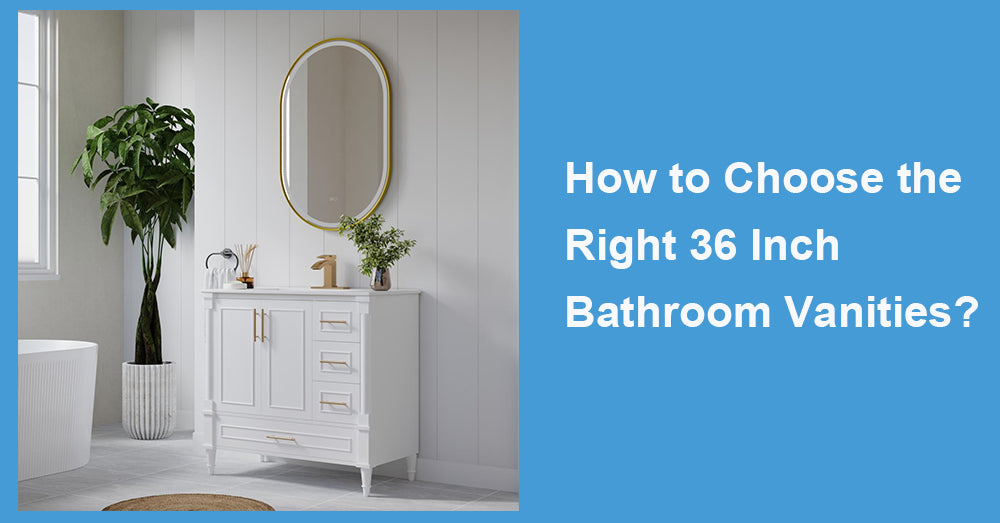
A white cabinet with a black top creates the clearest visual separation. The combination can suit modern, transitional, farmhouse, and graphic monochrome interiors, depending on the door style and hardware.
For a cleaner result:
· Use Shaker doors for a transitional or farmhouse direction.
· Choose flat-panel doors for a contemporary bathroom.
· Add brushed nickel hardware for a softer contrast.
· Use matte black hardware for a more coordinated look.
· Introduce wood through flooring, shelves, or mirror framing to reduce the starkness.
The black top also outlines the cabinet and makes a 36-inch vanity feel more substantial. However, too many repeated black elements can make a small bathroom look fragmented. Matching the faucet, mirror, light fixture, shower frame, handles, and accessories in black is not always necessary.
One or two repeated finishes usually create enough connection.
Light Wood Makes the Combination Warmer
A light oak or natural wood vanity can make a black countertop feel less severe. The wood grain adds movement and warmth, while the dark top gives the cabinet a more architectural profile.
This pairing works well with:
· Off-white wall tile.
· Beige or greige flooring.
· Brushed gold or bronze hardware.
· Organic textures such as woven baskets.
· Warm lighting and softly veined stone.
Wood tones led vanity colors in Houzz’s 2025 findings at 28%, while NKBA’s 2026 Bath Trends Report identified light neutrals as the dominant color direction. NKBA also found black among the preferred darker accents, selected by 18% of surveyed design professionals.
A black countertop can therefore provide contrast without moving the entire room away from the warmer, nature-led direction influencing current bathroom design.
Countertop Material Matters More Than Color Alone
Black is a color description, not a performance specification. A black quartz top, black granite top, and black marble top can look similar in a product image but require different levels of care.
Houzz reports that engineered quartz accounted for 45% of upgraded bathroom countertops. Quartzite followed at 20%, granite at 14%, and marble at 13%.
For a 36-inch vanity, the main choices include:
· Black quartz: Offers consistent color, low porosity, and relatively easy maintenance. It does not usually require sealing.
· Black granite: Provides natural variation and strong durability, although sealing needs depend on the specific stone.
· Black marble: Creates a high-end appearance but is more sensitive to etching, scratching, and some bathroom products.
· Porcelain: Offers a thin, contemporary profile with strong stain resistance.
· Cultured stone: Can provide an affordable integrated appearance with controlled color.
For a frequently used bathroom, quartz is generally the most practical balance of appearance and maintenance. Natural stone is better suited to buyers who accept variation and material-specific care.

Polished and Honed Black Surfaces Behave Differently
Finish sheen changes how a black countertop looks and how easily it shows daily use.
A polished surface reflects more light, making the top appear deeper and more formal. It is usually easier to wipe clean, but fingerprints and dried water marks may remain visible under direct lighting.
A honed or matte surface produces a softer appearance. It works particularly well with natural wood cabinetry, but it may show oils, soap film, and handling marks more readily. Caesarstone’s care guidance notes that honed, concrete, natural, and textured finishes may display everyday marks more visibly and require more routine cleaning than polished finishes.
Before selecting the finish:
· View the sample under bathroom lighting.
· Place water droplets on it and let them dry.
· Handle the surface to test fingerprint visibility.
· Compare the sample beside the cabinet finish.
· Confirm the manufacturer’s cleaning instructions.
A sample test reveals more than a digitally enhanced product image.
A White Sink Keeps the Top Visually Balanced
A white undermount sink creates a crisp opening within a black countertop. It prevents the vanity from appearing like one uninterrupted dark block and connects naturally with white toilets, tubs, and shower bases.
An integrated black sink creates a more dramatic look, but it may make soap residue and mineral deposits more visible. Vessel sinks can add height and sculptural interest, although they reduce the open countertop area available on a 36-inch vanity.
Confirm the following before ordering:
· Sink width and depth.
· Drain placement.
· Faucet reach.
· Countertop thickness.
· Overflow design.
· Drawer clearance beneath the basin.
A deep sink may interfere with the upper drawer, while an oversized basin can leave little landing space for soap, grooming products, or a small tray.
Faucet and Backsplash Details Shape the Final Look
A black countertop provides a strong background for several faucet finishes.
Brushed gold adds warmth and works especially well with oak or walnut cabinets. Brushed nickel offers a quieter, adaptable appearance. Matte black creates a seamless palette, but the faucet can visually disappear against the top unless the sink provides enough contrast.
Faucet drilling must match the selected fixture. A single-hole faucet creates a streamlined appearance, while an 8-inch widespread configuration feels more traditional and uses more countertop space.
A 4-inch backsplash can help protect the wall and continue the black surface vertically. However, in smaller bathrooms, a full-height tile backsplash may feel lighter and more decorative than a dark stone strip.










































Leave a comment
This site is protected by hCaptcha and the hCaptcha Privacy Policy and Terms of Service apply.