














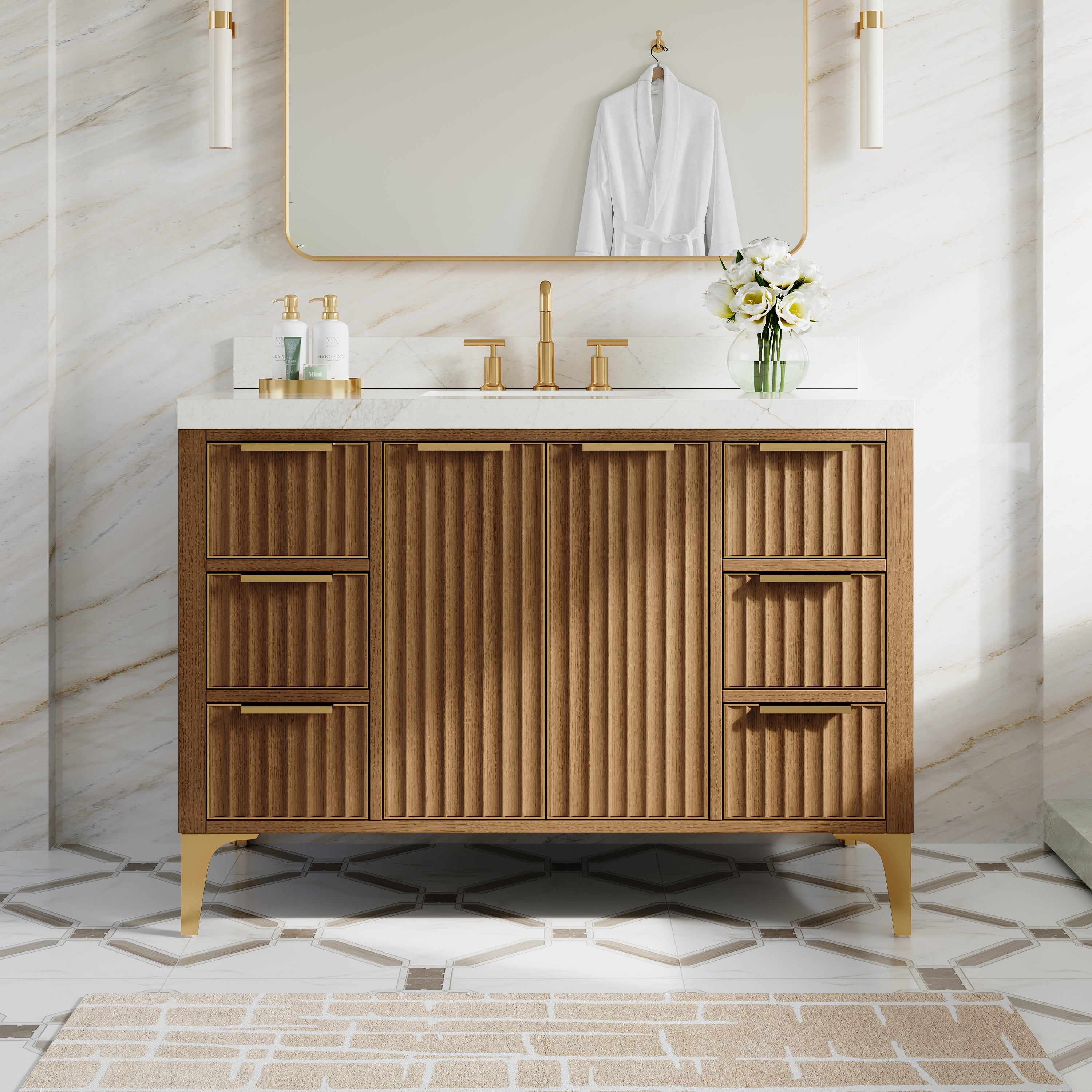
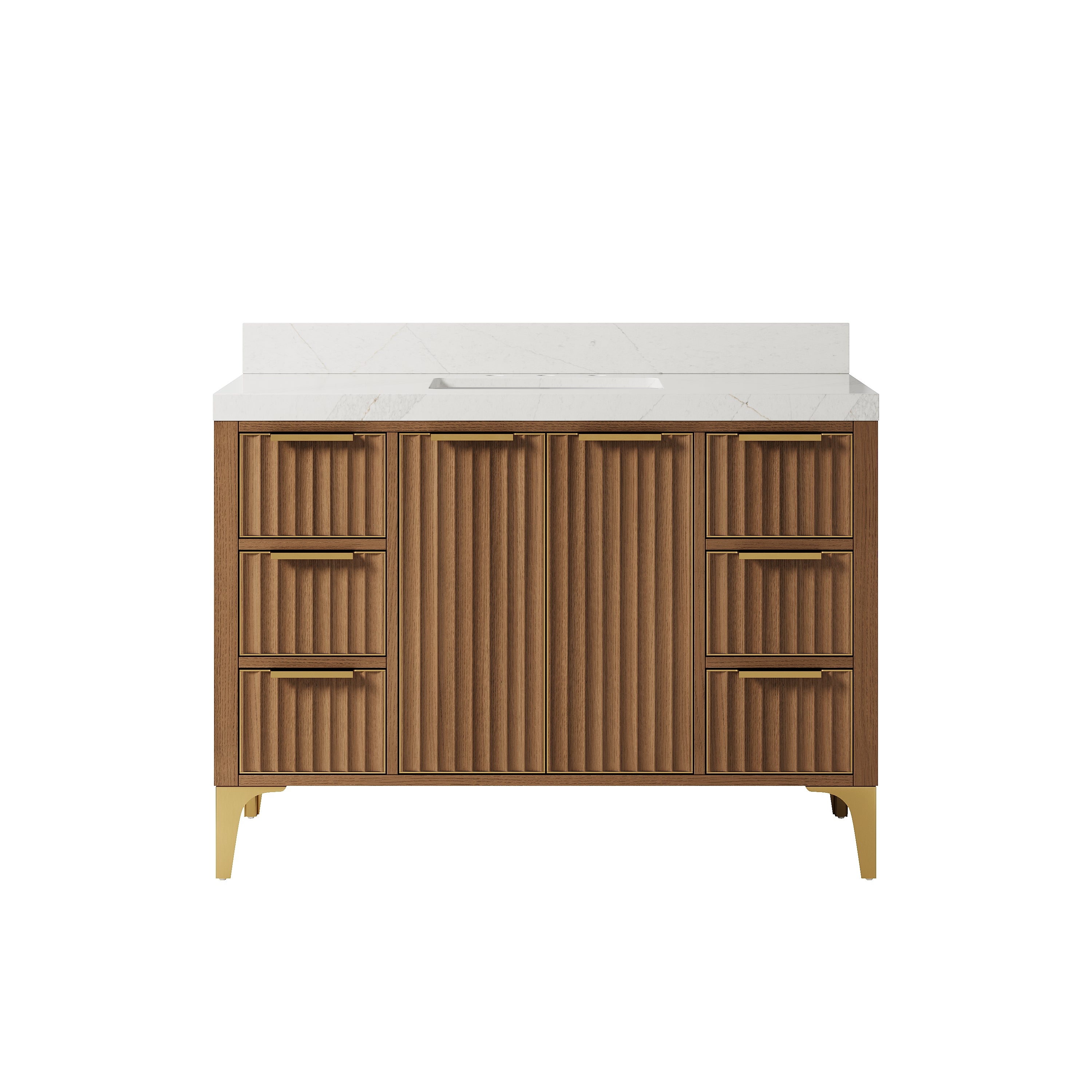


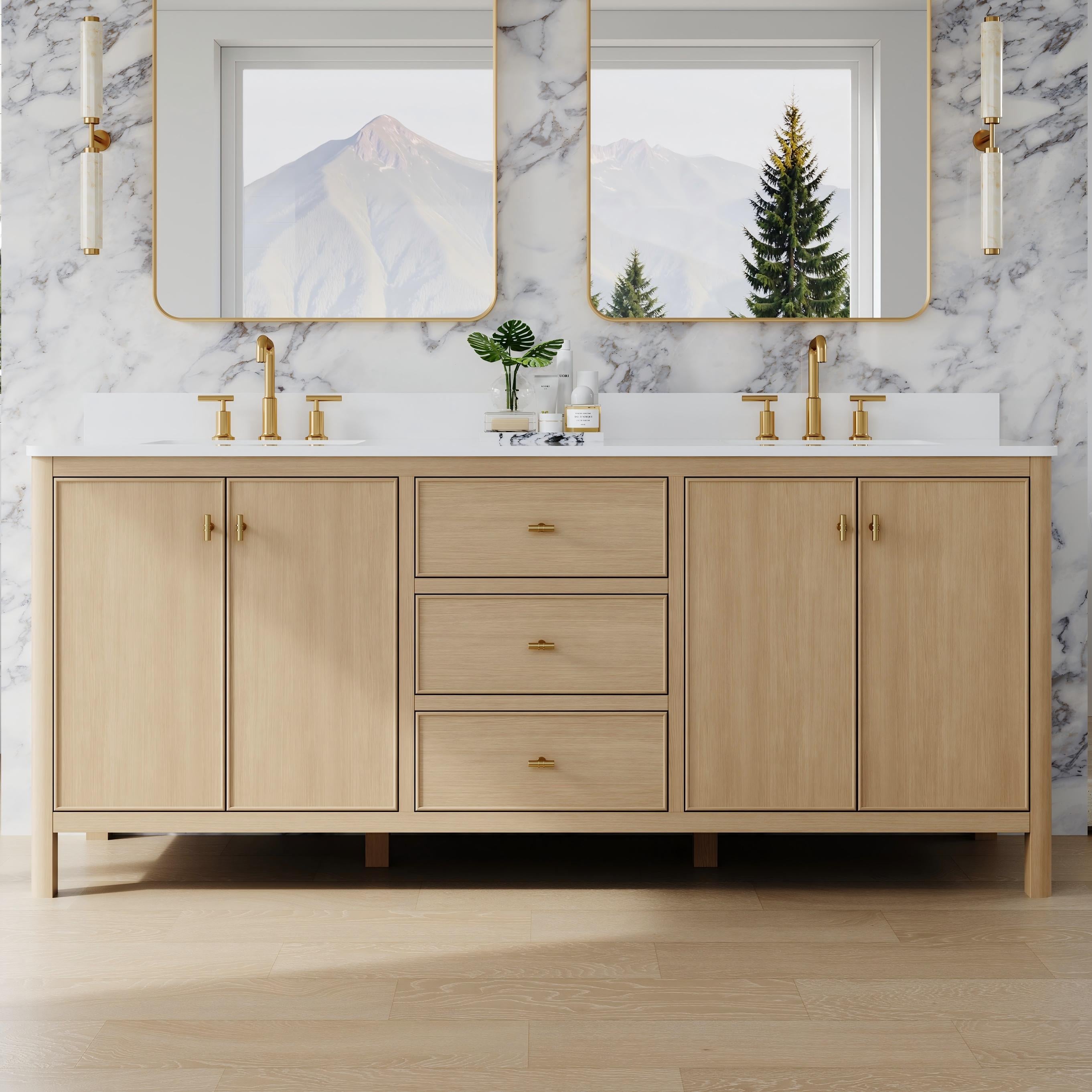
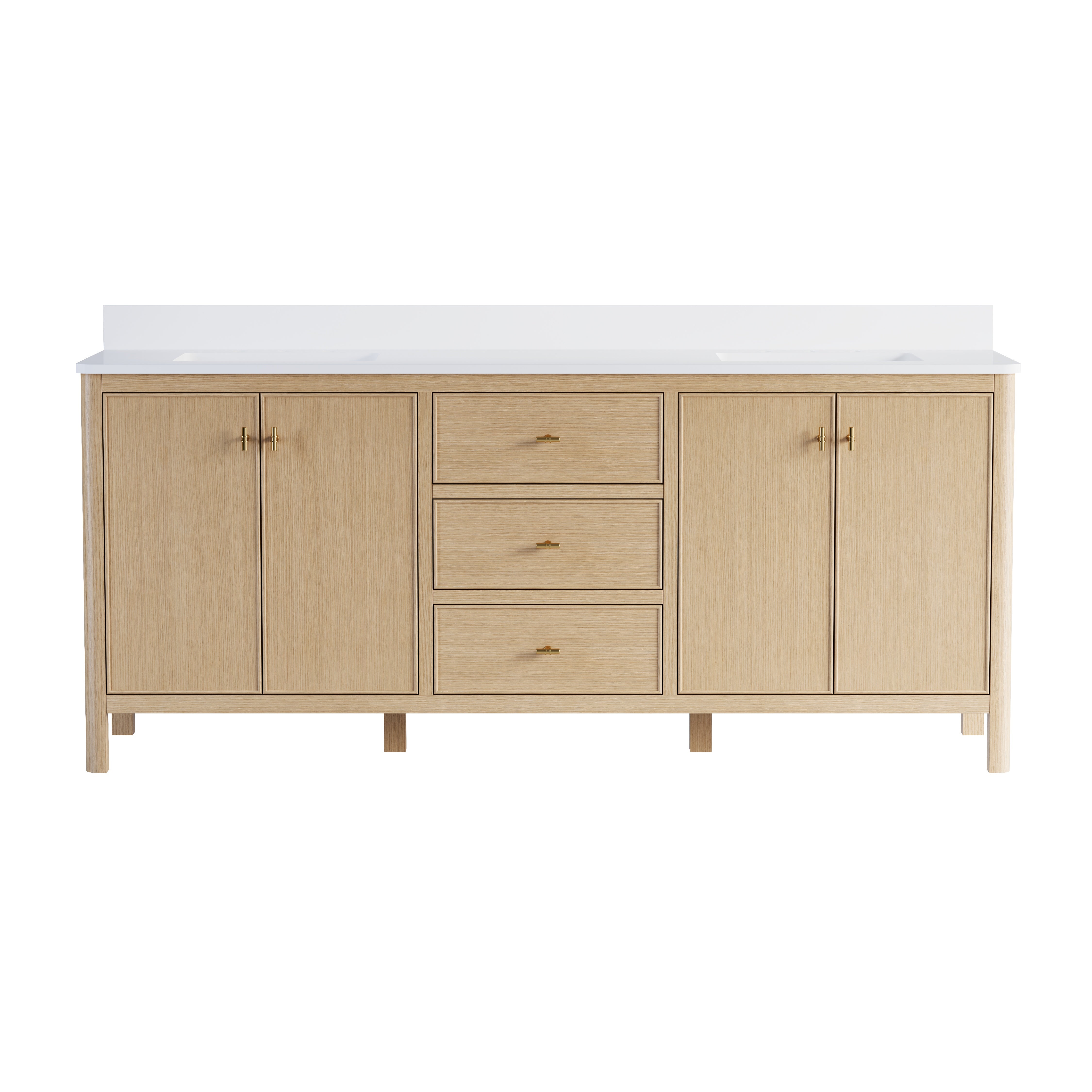
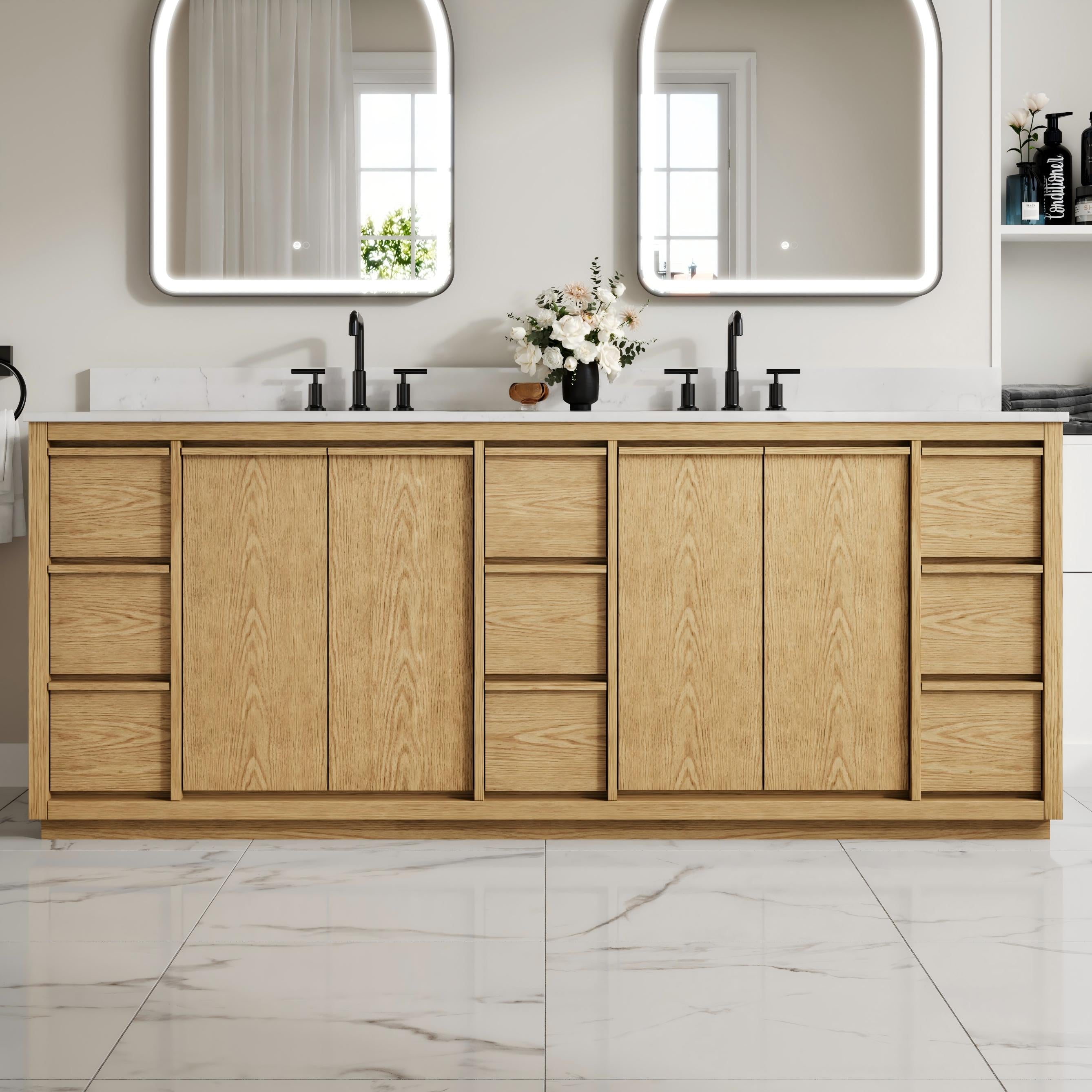
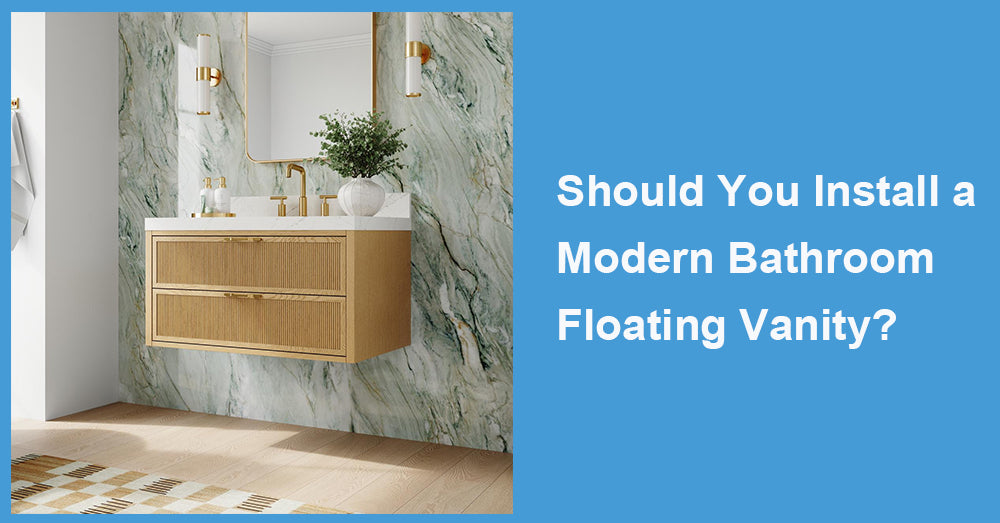
A bathroom floating vanity can make a room feel lighter, cleaner, and more contemporary by lifting the cabinet away from the floor. After more than 20 years of working with bathroom cabinetry, I have seen wall-mounted vanities perform especially well in compact bathrooms, modern primary suites, and renovations where visual openness matters. They can improve floor access and create flexible mounting heights, but installation is less forgiving than with a freestanding cabinet. Wall strength, plumbing, storage, and daily use all deserve attention before buying.
1. Why a Bathroom Floating Vanity Changes the Room Visually
The biggest difference is what happens beneath the cabinet.
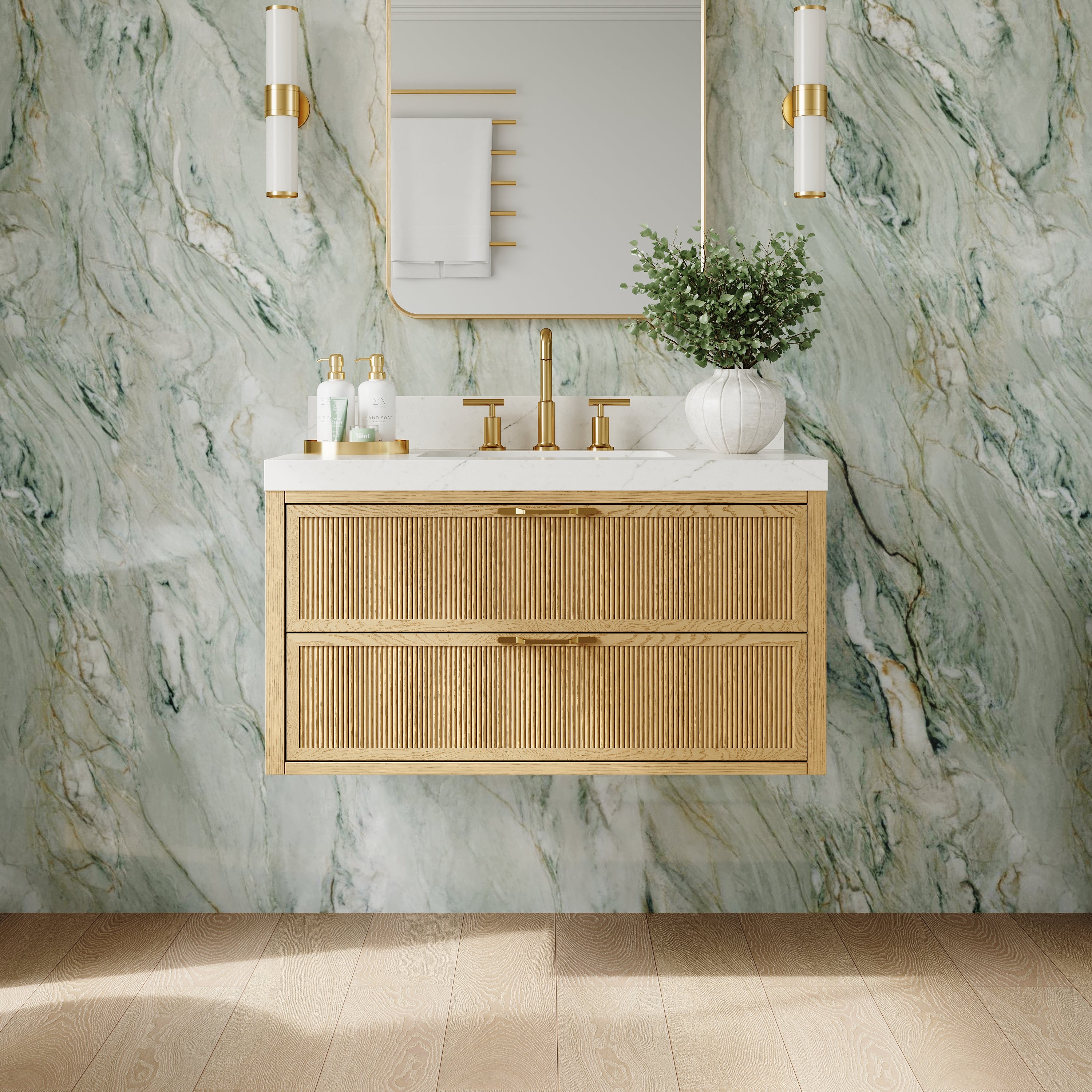
Because the vanity does not touch the floor, more flooring remains visible. That continuous floor line makes the room appear less crowded, particularly in a small guest bath or narrow apartment bathroom.
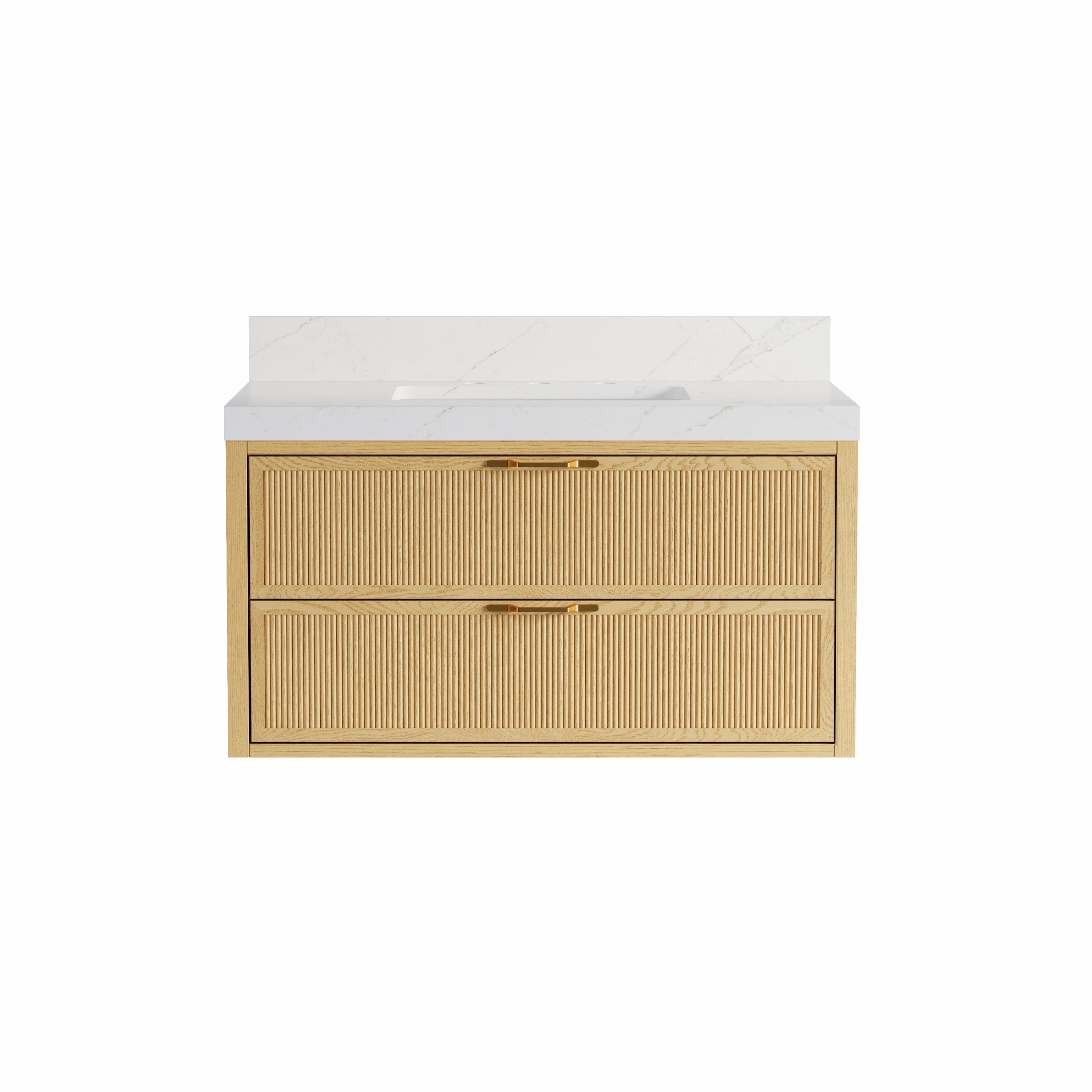
The effect is even stronger when the vanity has simple slab-front drawers and a restrained countertop. Instead of seeing a large block of cabinetry, the eye moves underneath and around it.
This does not physically increase floor area. It changes how the space is perceived, which can still make a noticeable difference.
2. Floating Vanities Make Cleaning Easier
One practical advantage is access to the floor.
With no cabinet legs or toe kick in the way, a mop, vacuum, or cleaning cloth can move beneath the vanity without difficulty. In bathrooms where dust and hair tend to collect along cabinet edges, this can simplify routine maintenance.
Floor Appearance Matters More
There is a tradeoff. Once the floor beneath the cabinet becomes visible, uneven tile, old stains, mismatched flooring, or unfinished areas are harder to hide.
During a renovation, I recommend completing the flooring before installing the vanity whenever possible. A floating model should look intentional from every angle, including underneath.
3. Installation Height Can Be Adjusted
A freestanding vanity usually determines its own countertop height. A wall-mounted model gives the installer more flexibility.
That can be helpful for taller users or households with specific accessibility needs. The sink height can be planned around the people who use the bathroom rather than accepted as fixed.
Still, height should be chosen carefully.
Mounting the cabinet too high can make the sink uncomfortable for children or shorter adults. Installing it too low reduces the visual benefit and can leave an awkward gap beneath the cabinet.
Before installation, mark the proposed countertop and sink height on the wall and test how it feels.
4. Wall Construction Becomes Critical
This is where floating vanities differ most from freestanding models.
The wall must support the cabinet, countertop, sink, stored products, and the forces created during everyday use. A heavy countertop and full drawers can place substantial stress on the mounting points.
Drywall Alone Is Not Enough
One common misconception is that strong anchors can solve every installation problem.
They cannot.
Secure attachment to structural framing, blocking, masonry, or an approved mounting system is essential. During a full renovation, adding blocking inside the wall before it is closed is usually the cleanest approach.
If the existing wall cannot provide adequate support, a freestanding vanity may be the safer and more economical option.
5. Storage Is Often More Limited
Floating vanities usually sacrifice some cabinet height to create open space underneath. That can reduce storage compared with a similarly wide floor-mounted cabinet.
A good drawer layout can compensate.
Deep drawers are useful for skincare, cosmetics, brushes, and grooming tools. U-shaped drawers may fit around plumbing while preserving storage near the sink. Full-extension slides make the back of each drawer easier to reach.
Check the interior rather than judging capacity from the exterior.
For a guest bath, reduced storage may not matter. In a family bathroom holding towels, cleaning supplies, hair tools, and backup toiletries, it can become a real limitation.
6. Plumbing Needs More Careful Planning
Wall-mounted cabinetry often puts plumbing on display if pipes extend below the vanity or enter the cabinet awkwardly.
Record the drain and supply-line locations before ordering. Compare them with the drawer layout and the open space beneath the cabinet.
Moving plumbing inside the wall can create a cleaner result, but it increases renovation cost. If you are replacing an existing freestanding vanity, this is worth discussing with the installer before purchasing the new cabinet.
A beautiful floating vanity loses much of its effect when visible pipes appear beneath it unexpectedly.
7. Know Where Floating Vanities Work Best
A floating vanity is particularly effective in modern bathrooms, compact guest baths, condos, and primary suites where clean lines are part of the design.
It also suits bathrooms with attractive continuous flooring, since the floor becomes part of the composition.
It may not be the best choice for a highly traditional bathroom where furniture-style cabinetry feels more appropriate. It can also be less practical for households needing maximum storage.
In an older home with difficult wall construction and plumbing, installation costs may outweigh the visual benefit.
8. Choose Materials for Bathroom Conditions
Wall-mounted construction does not protect cabinetry from moisture.
Water can still collect around the sink, run down drawer fronts, or reach exposed edges. Look for properly sealed cabinet surfaces and moisture-resistant construction.
Wood finishes add warmth to a floating design, while white or light-toned cabinets emphasize visual openness. Dark finishes can create a strong architectural effect, though they may feel heavier in a narrow room.
The countertop should also be considered as part of the load. Heavy natural stone may require more structural preparation than a lighter surface.

9. Installation Precision Is Easy to Notice
A floating vanity creates strong horizontal lines, so even small installation errors stand out.
The cabinet must be perfectly level. Drawer gaps should remain even, and the countertop should sit square to the wall. Seal the sink, faucet openings, backsplash, and countertop joints carefully.
Test the drain and supply connections before filling the drawers.
Routine maintenance is simple: wipe standing water promptly, use mild non-abrasive cleaners, and run the exhaust fan after showers. Check plumbing connections periodically because a hidden leak can damage the cabinet before the problem becomes visible.
When comparing Wellfor options, consider wall construction, plumbing location, storage needs, countertop weight, and mounting height before focusing on appearance. A bathroom floating vanity is a strong choice when you want visual openness and easier floor cleaning, but it works best when the wall is properly prepared and the reduced storage fits your routine. Choose it because the architecture supports it—not simply because it looks good in a photograph.






















Leave a comment
This site is protected by hCaptcha and the hCaptcha Privacy Policy and Terms of Service apply.