
















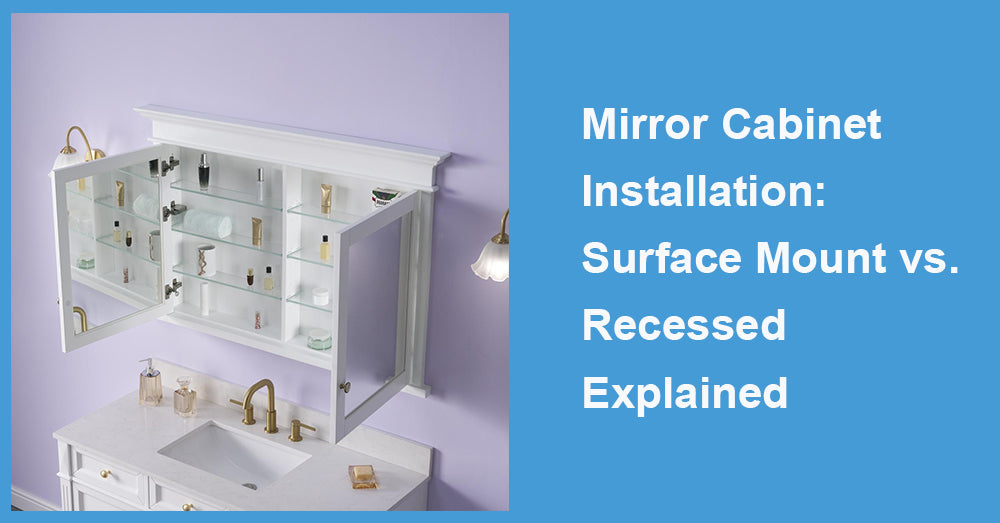
In modern bathroom space design, the mirror cabinet not only serves as a mirror but also serves as an important module for optimizing storage and wall utilization. In terms of installation methods, Surface Mount and Recessed are the two most common methods. There are significant differences in space occupation, construction complexity, load-bearing requirements, and visual effects among different methods. Industry data shows that about 55% of embedded structures are selected in renovation projects. At the same time, surface installation still plays an important role in rapid renovations that do not require wall opening construction. Understanding the advantages and disadvantages of two installation methods can help achieve a balance between functionality and construction costs.
1. Surface Mount: Flexible installation and simple construction
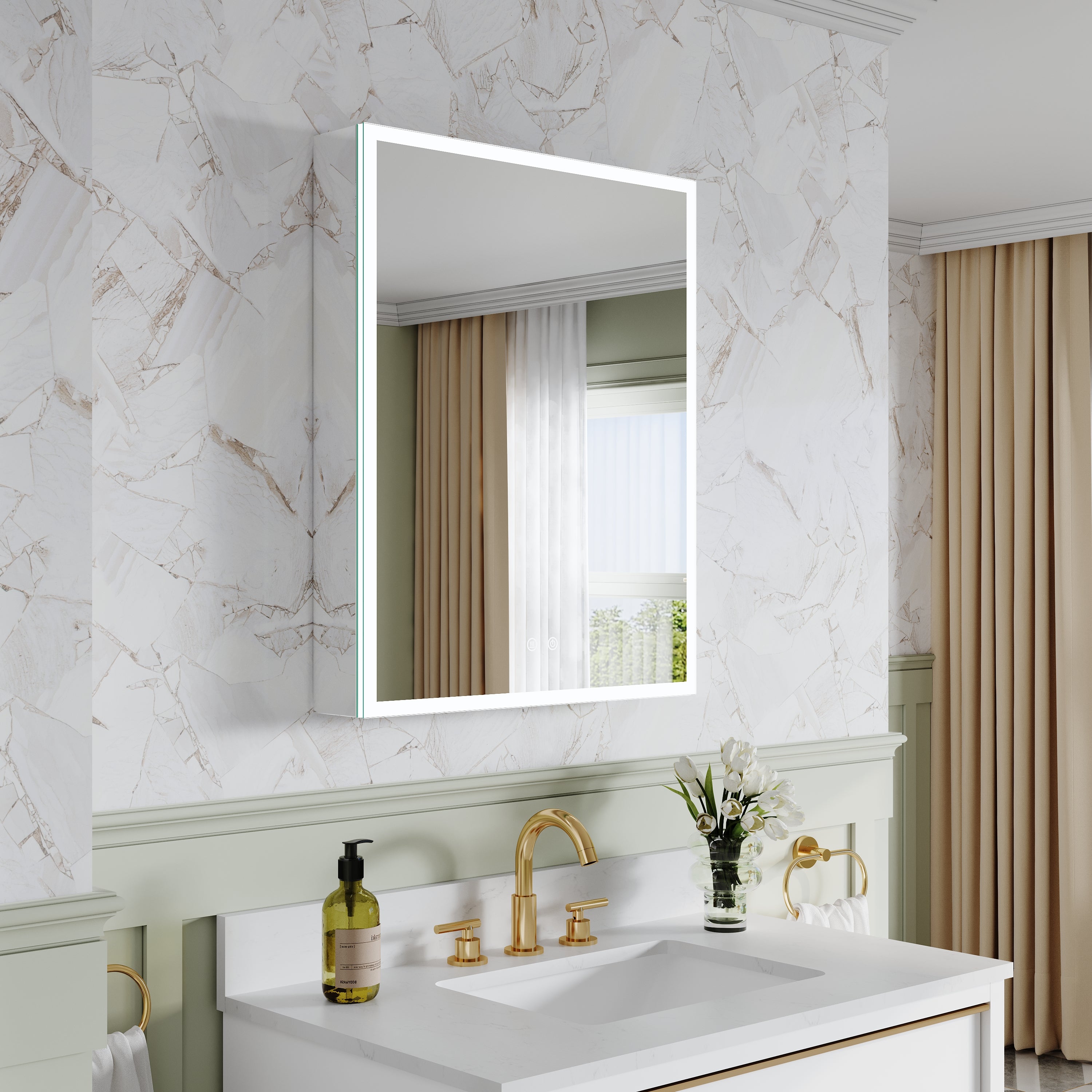
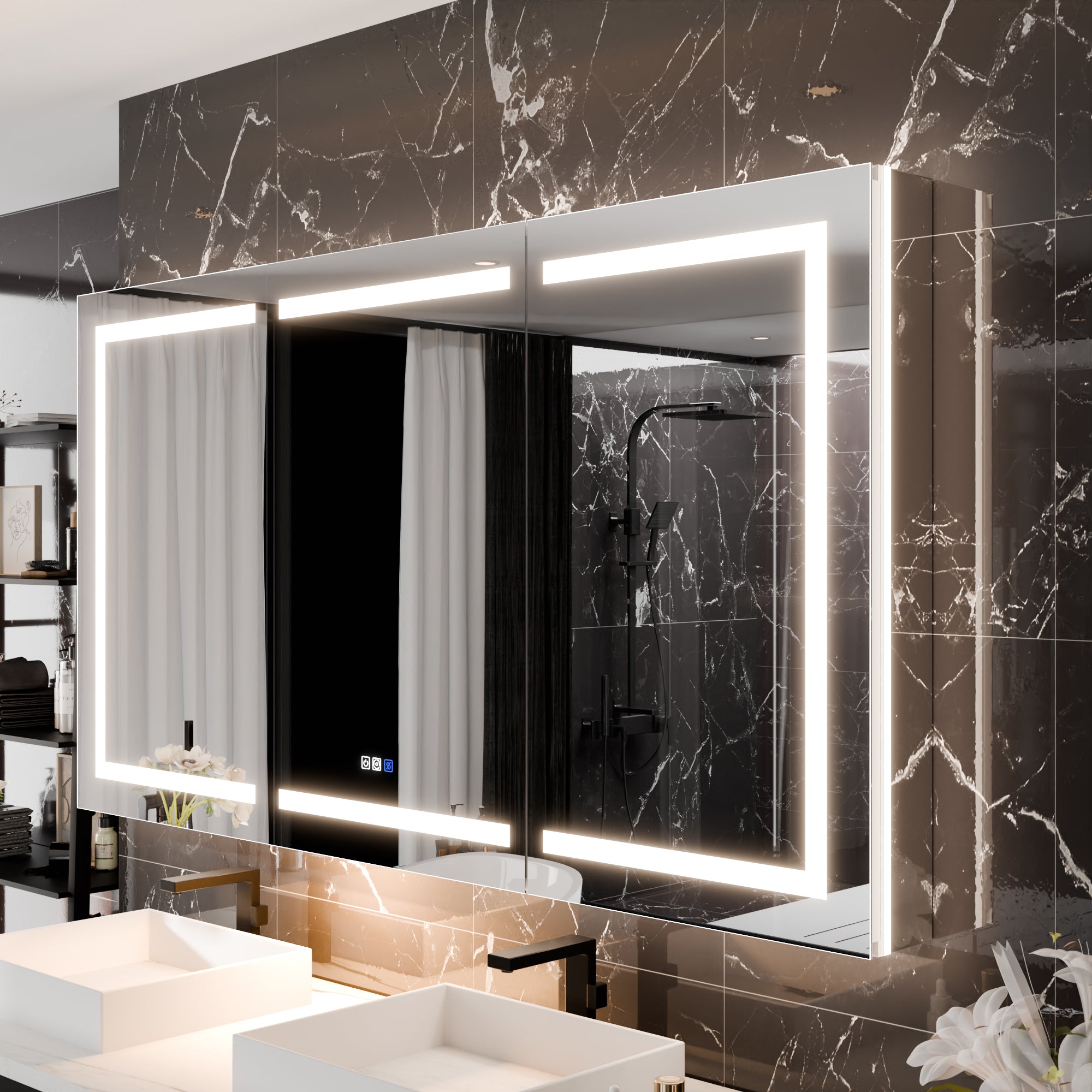
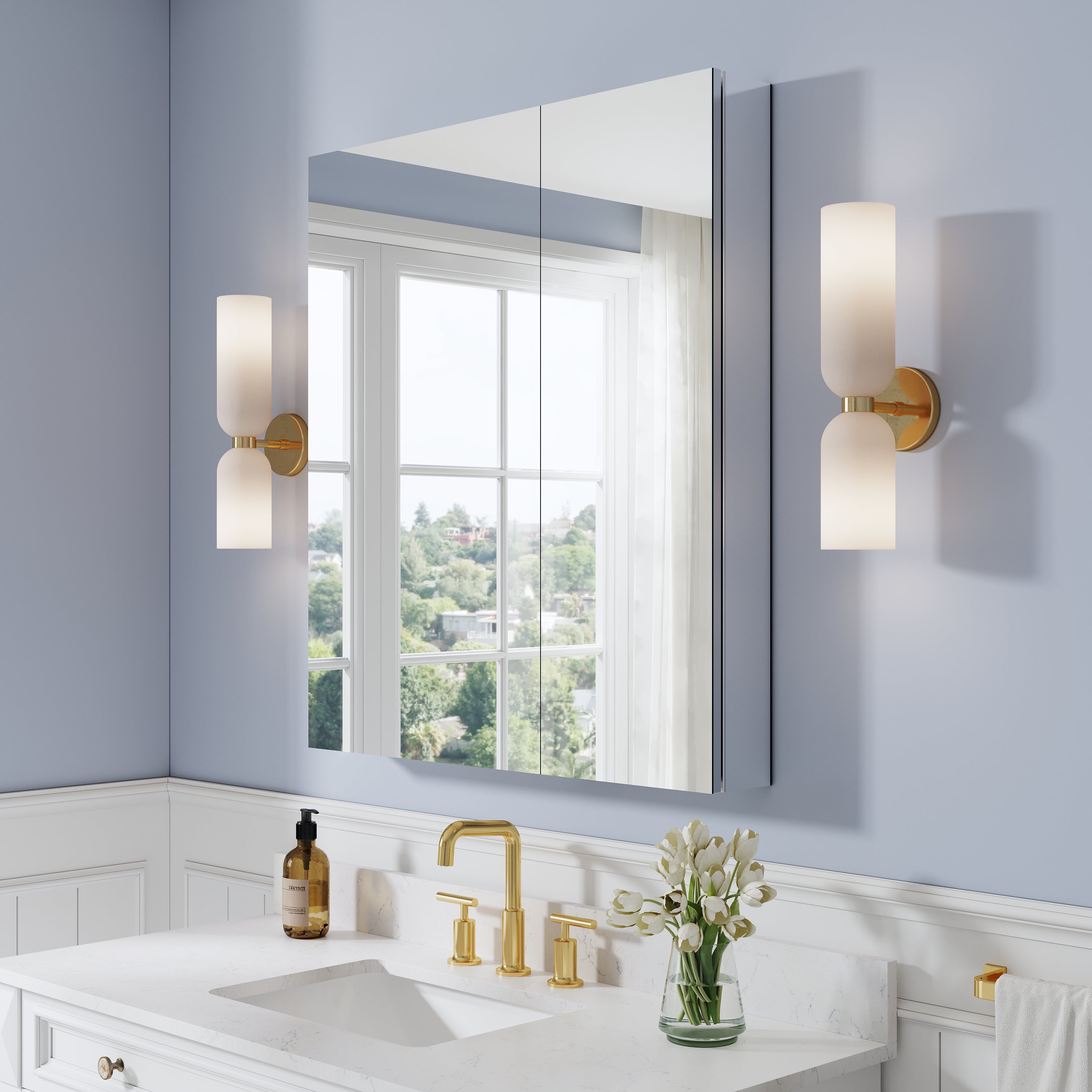
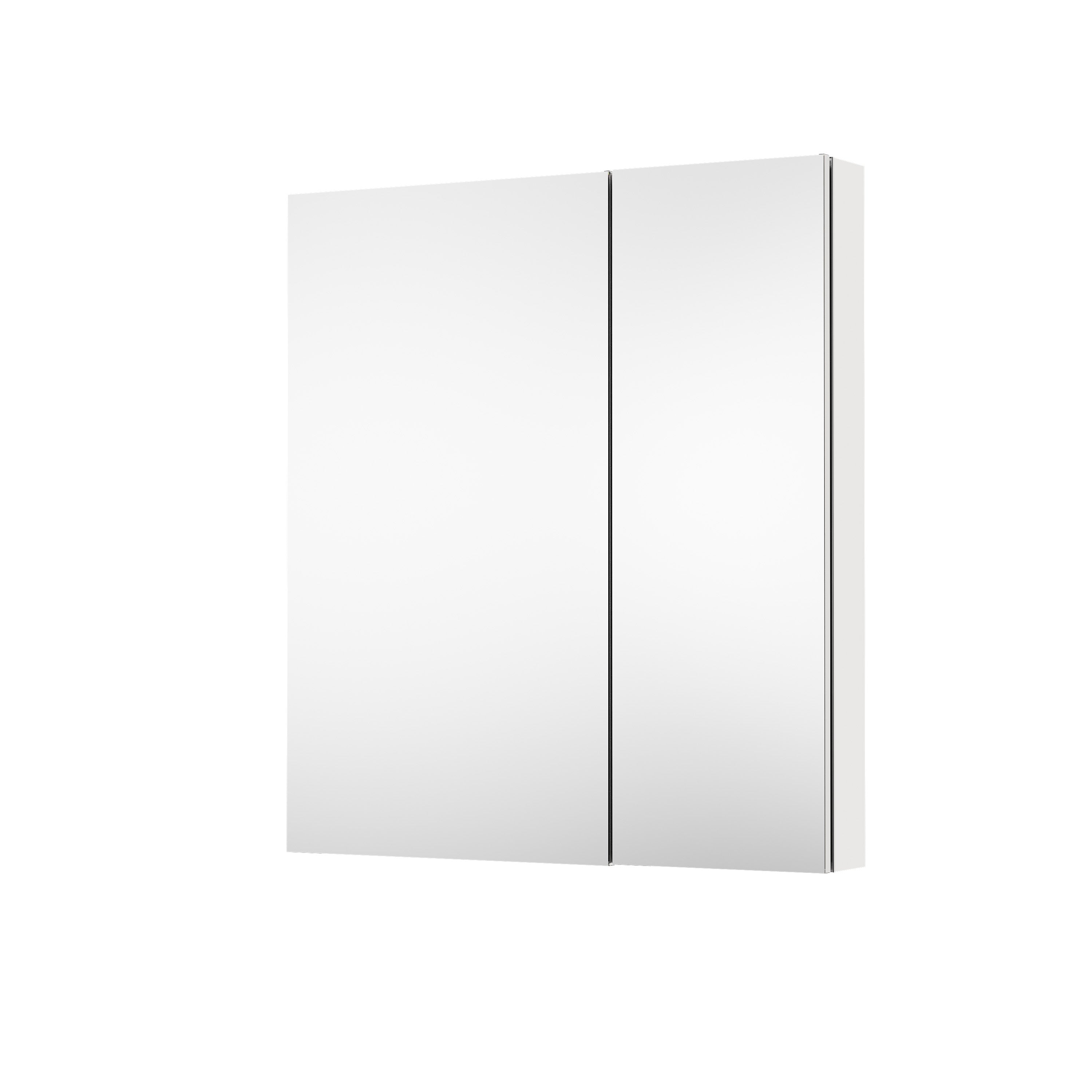
Surface installation is the direct fixation of the mirror cabinet to the wall surface, typically achieved by bolting it to the wall keel. The standard depth of the mirror cabinet is 4-6 inches, so after installation, it will extend outward by an equal distance.
Advantage:
Easy construction: No need to open walls or modify structures, suitable for renovation projects.
Strong applicability: Almost all walls can be installed, including load-bearing walls.
Short installation cycle: usually completed within a few hours.
Data shows that in bathroom upgrades that do not involve structural modifications, over 60% of projects choose surface-mounted structures due to lower construction risks.
Limitations:
An outward protrusion of 4-6 inches may create a slight sense of pressure in spaces less than 60 square feet.
Visually, it is not as concise as embedded structures.
For small basin spaces with a width of 24 inches or 30 inches, if the passage distance is limited, the door opening angle and wall spacing should be measured in advance.
2. Recessed: Space saving, visually simpler
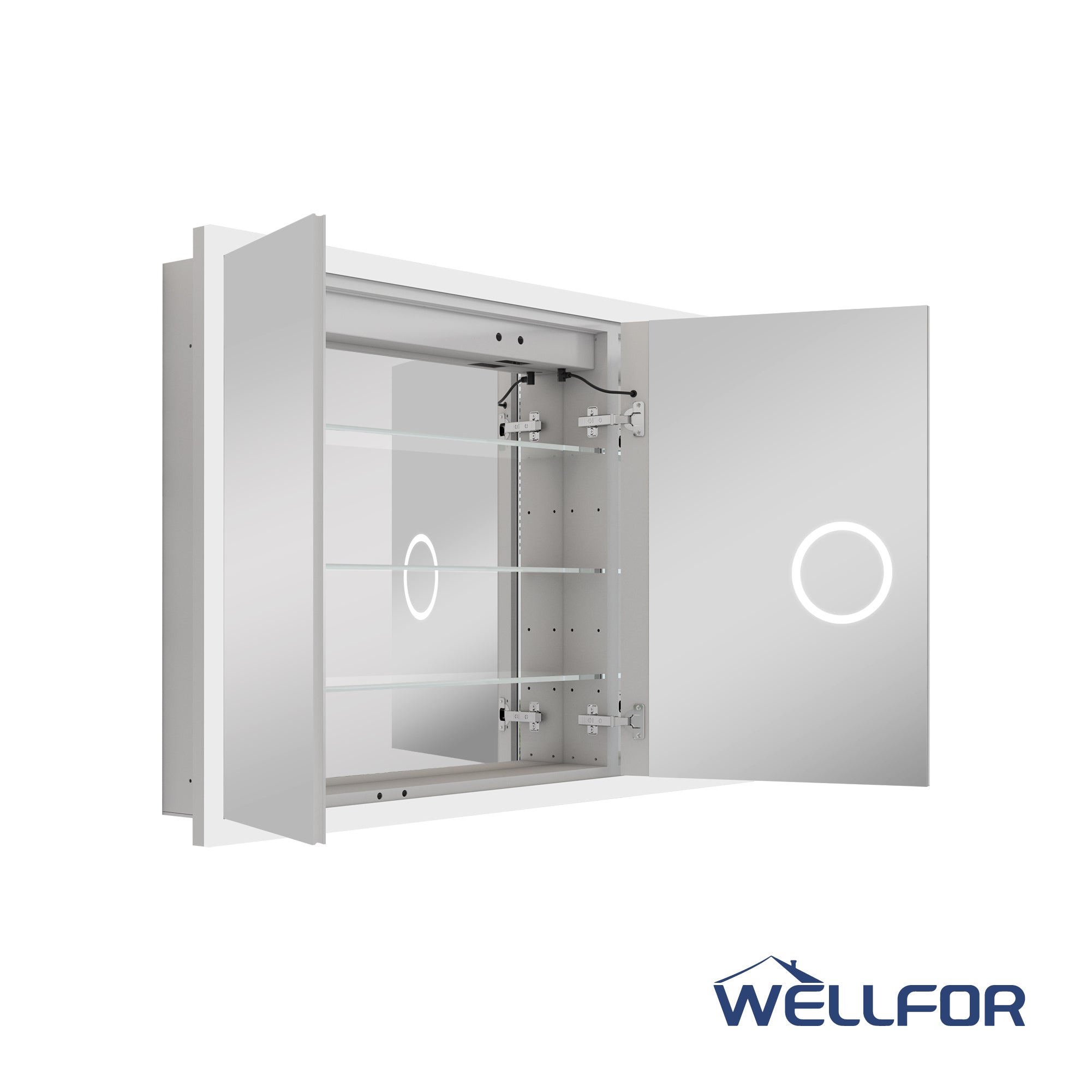
Embedded installation requires reserving openings in the wall to accommodate the mirror cabinet's main body, leaving only the door frame partially exposed. The standard spacing between wall studs is usually 16 inches from the center, so the width of the mirror cabinet is commonly specified as 14, 16, 20, 24, or 30 inches to accommodate the structural spacing.
Advantage:
Space saving: Only about 1 inch of border thickness protrudes after embedding.
Visual neatness: flush with the wall, more in line with modern minimalist style.
More comfortable passage: Especially suitable for compact bathrooms with a width of less than 70 square feet.
Industry data shows that embedded mirror cabinets can increase the perceived activity space by about 10%-15% when the structure allows.
Limitations:
The construction is complex and requires opening walls and checking for the presence of pipelines inside.
The installation time and cost are about 20%-30% higher than for surface installation.
If there are water pipes or wires inside the wall, embedded construction may be restricted.
3. Consideration of size and proportion
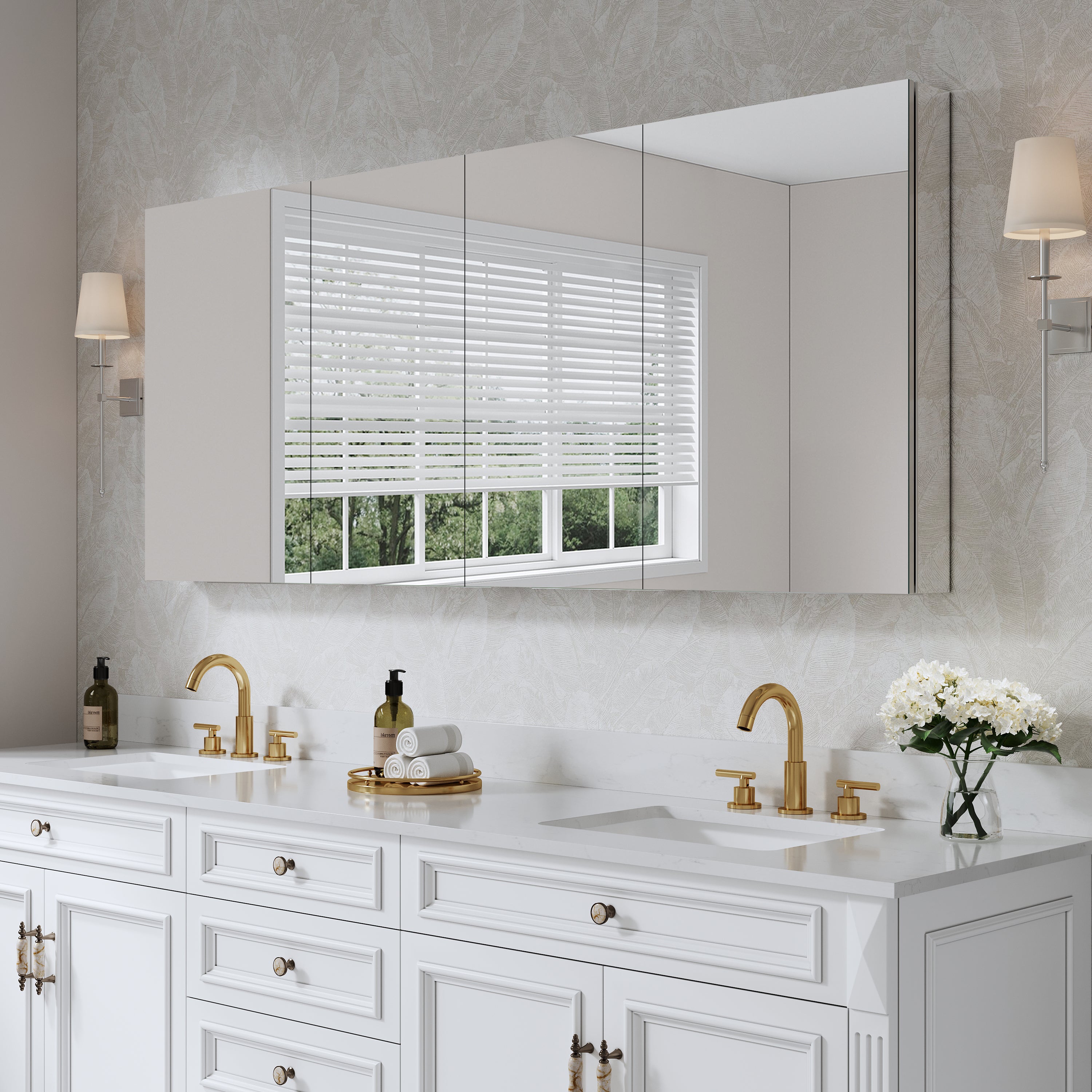
Regardless of the chosen installation method, the mirror cabinet should be the same width as the countertop. The common proportion principle is that the width of the mirror cabinet accounts for 80%-100% of the countertop width.
For example:
30-inch countertop → 24-30-inch mirror cabinet
36-inch countertop → 28-36-inch mirror cabinet
48-inch countertop → 40-48-inch mirror cabinet
It is recommended to keep the distance between the bottom of the mirror and the tabletop at 5-10 inches, and the distance between the top of the mirror and the ceiling at least 6 inches. The mirror centerline is usually installed 60-65 inches above the ground to cover most adult line-of-sight heights.
4. Differences in storage capacity
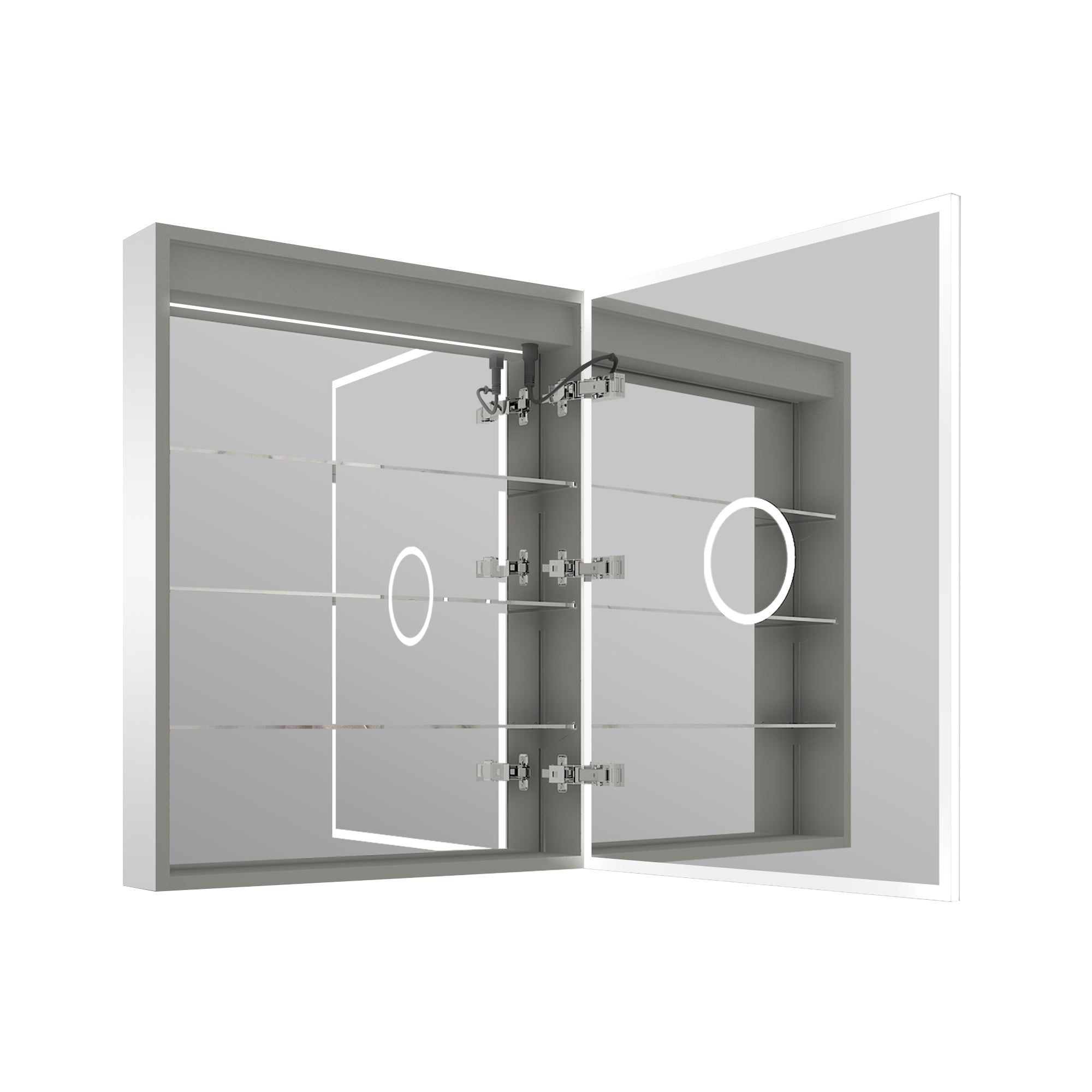
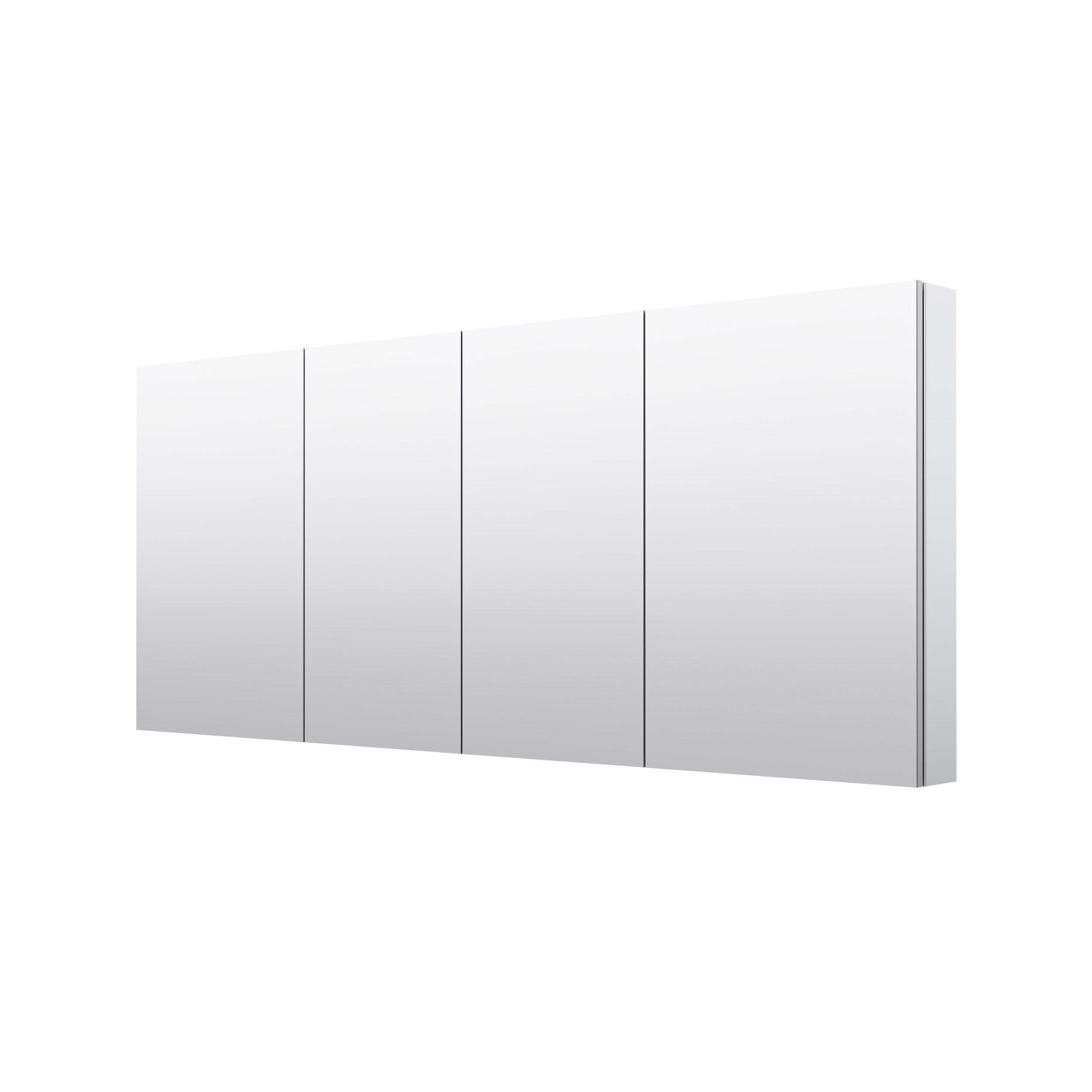
Under the same width and height conditions, the internal capacity of embedded and surface-mounted mirror cabinets is basically the same. The common depth is 4-6 inches, the height is 24-30 inches, and 3-4 adjustable partitions can be set.
The data shows that after reasonable layering, the effective capacity can be increased by about 60% compared to single-layer countertop storage.
5. Structural load-bearing capacity and safety
Surface-mounted mirror cabinets must be fixed to the wall keel or use heavy-duty expansion bolts. The embedded structure relies on the stability of the wall frame.
In terms of weight, standard 30-inch mirror cabinets typically weigh between 25 and 40 lbs, while models with LED and anti-fog features may weigh up to around 45 lbs. During installation, it should be ensured that the wall structure can withstand at least twice the static load.
6. Installation differences of mirror cabinets with lights
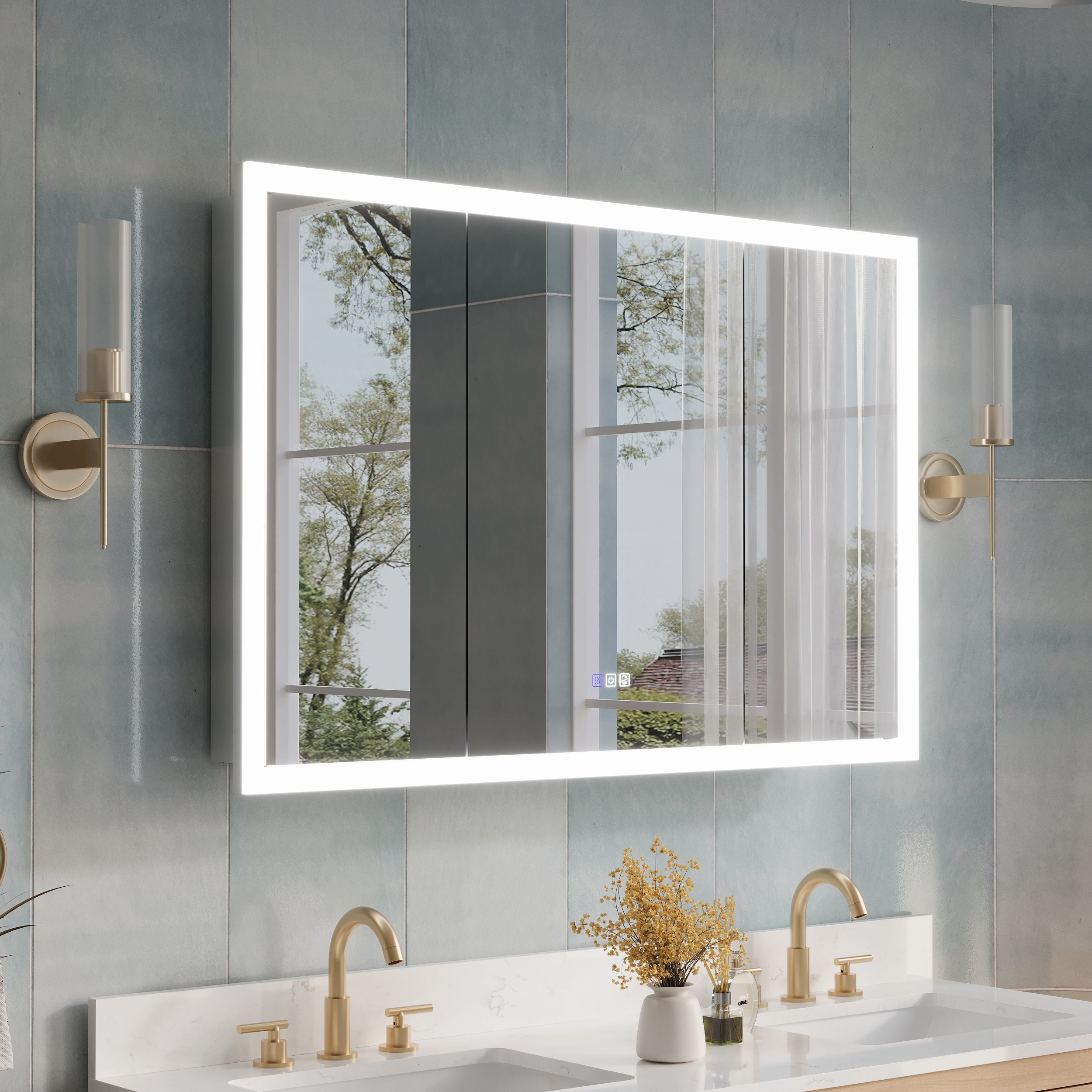
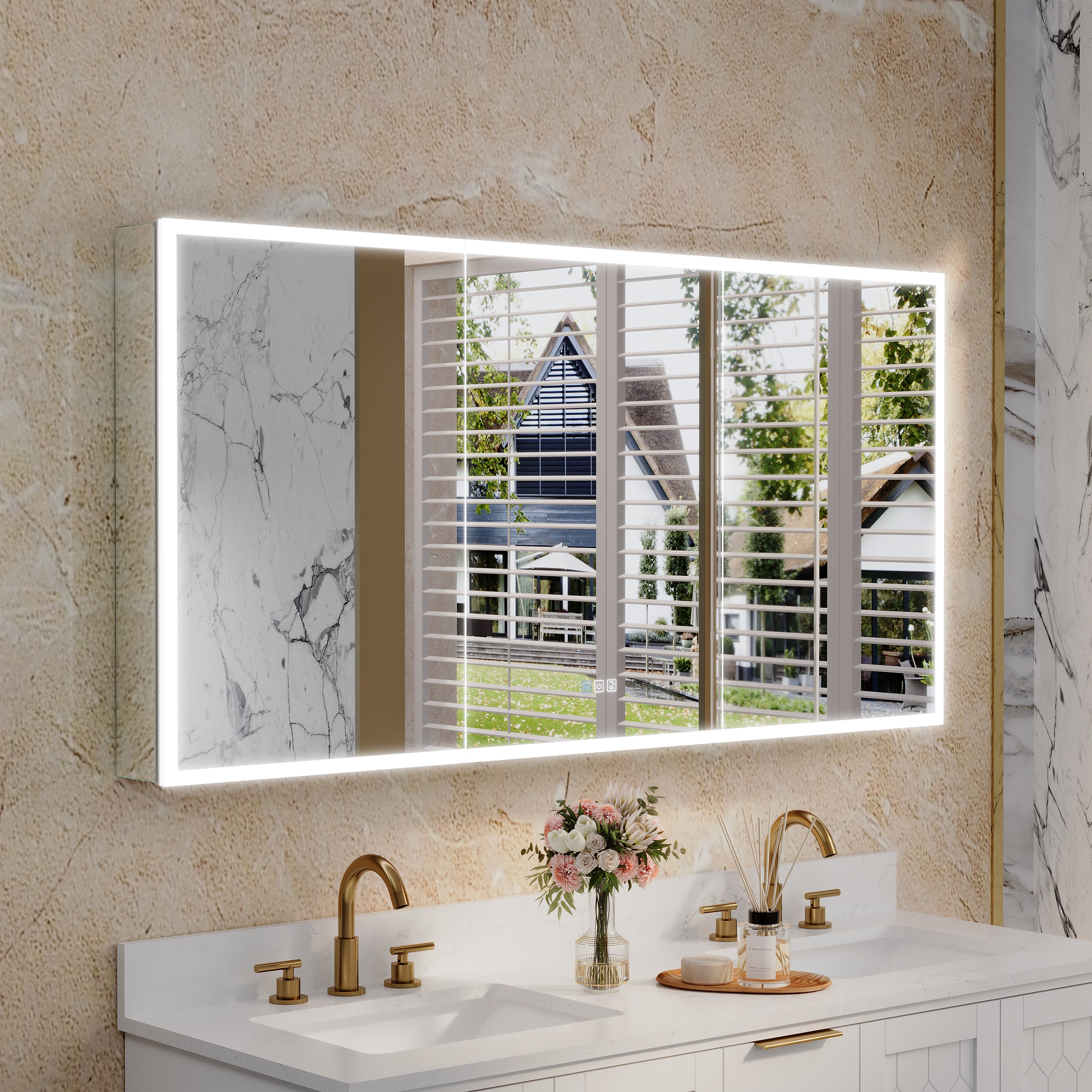
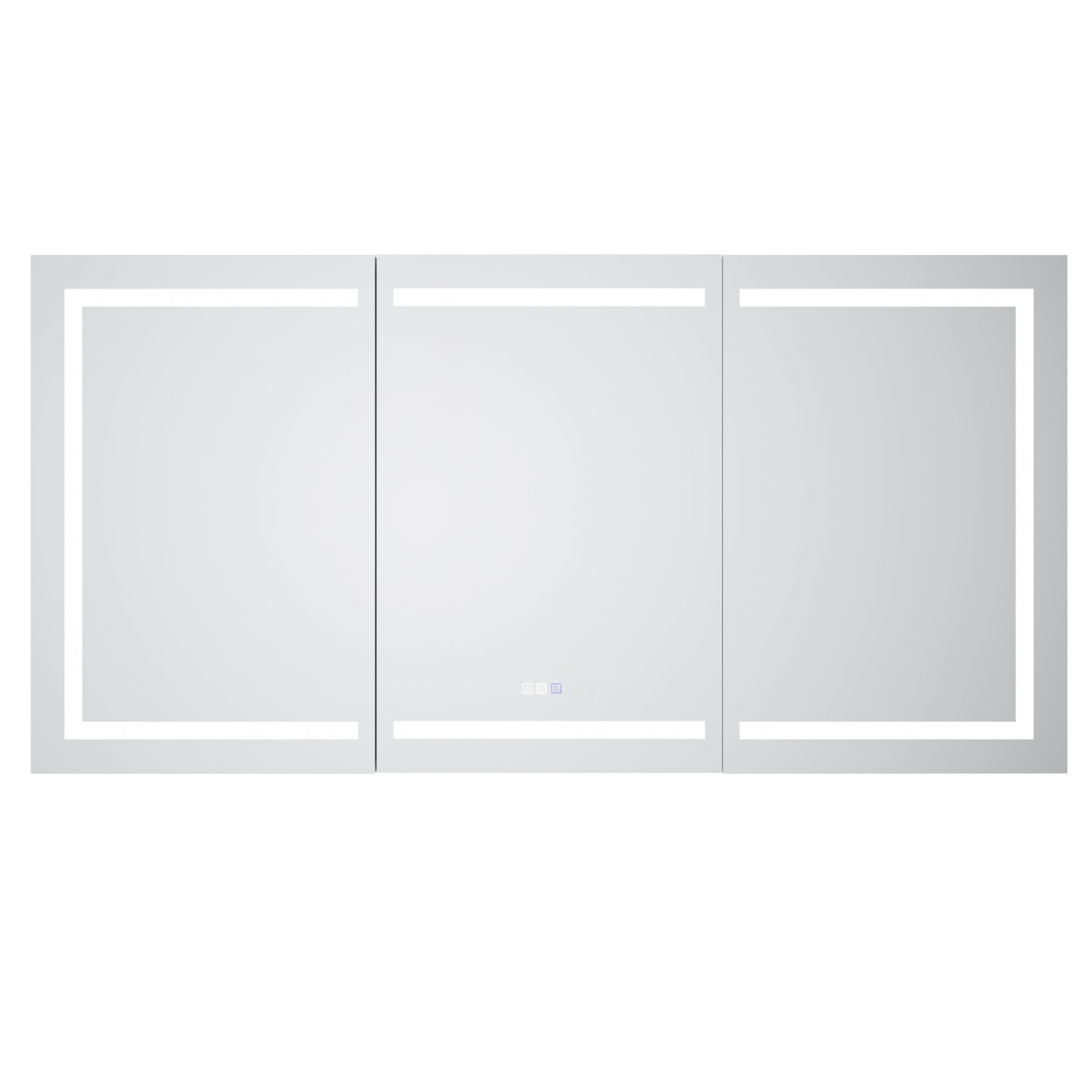
If the mirror cabinet integrates LED lighting and anti-fog functions, both installation methods require reserved power interfaces. During embedded installation, the power cord needs to be planned in synchrony with the wall-opening phase.
Data shows that reserving power supply positions in advance for mirror cabinet installations can reduce construction time by about 15%.
7. Style and Design Trends
In recent years, minimalism and borderless design have driven demand for embedded structures. The embedded mirror cabinet is flush with the wall, suitable for modern and transitional style spaces.
In industrial or light luxury styles, surface-mounted mirror cabinets with metal frames also have a sense of design.
8. How to choose a suitable installation method?
When selecting, the following conditions can be considered:
Does the wall structure allow slotting?
Whether to carry out an overall renovation
Is the space compact?
Budget and construction period requirements
If the space is small and undergoing an overall renovation, embedded systems offer greater advantages; if it is a local upgrade or there are obvious wall restrictions, surface installation is more convenient.

9. Conclusion
The installation method of the mirror cabinet directly affects the sense of space and construction complexity. Surface installation emphasizes flexibility and low construction costs, while embedded installation emphasizes space utilization and visual cleanliness.
In practical planning, a comprehensive judgment should be made based on the wall structure, spatial area (such as compact spaces of 60 square feet or less), budget, and design style. By choosing a reasonable installation method, not only can storage efficiency be improved, but overall space quality can also be enhanced, achieving a more efficient and coordinated bathroom layout.











Leave a comment
This site is protected by hCaptcha and the hCaptcha Privacy Policy and Terms of Service apply.