























In modern bathroom space planning, the medicine cabinet not only serves basic storage functions but also acts as a core module that affects the cleanliness and daily efficiency of countertops. With increasing demand for residential renovations and space optimization, the use of mirror cabinet storage systems continues to grow. Industry data shows that in bathroom spaces with an area of less than 70 square feet, over 45% of upgrade projects will prioritize mirror cabinet structures with storage functions to enhance vertical storage capacity and reduce countertop clutter. Scientifically planning the internal space of the mirror cabinet has become an important issue for improving usage efficiency and spatial order.
1. Understand the size and capacity logic of mirror cabinets
Common mirror cabinet widths include 20, 24, 30, 36, and 48 inches. The depth is usually 4-6 inches, and the embedded structure can be flush with the wall, while the surface-mounted type protrudes slightly.
Taking a 30-inch-wide and 5-inch-deep mirror cabinet as an example, three or four adjustable partitions can be formed inside, increasing the total storage volume by about 60% compared to a single-layer countertop storage. Industry research suggests that after reasonable stratification, the search time for daily necessities can be reduced by about 30%.
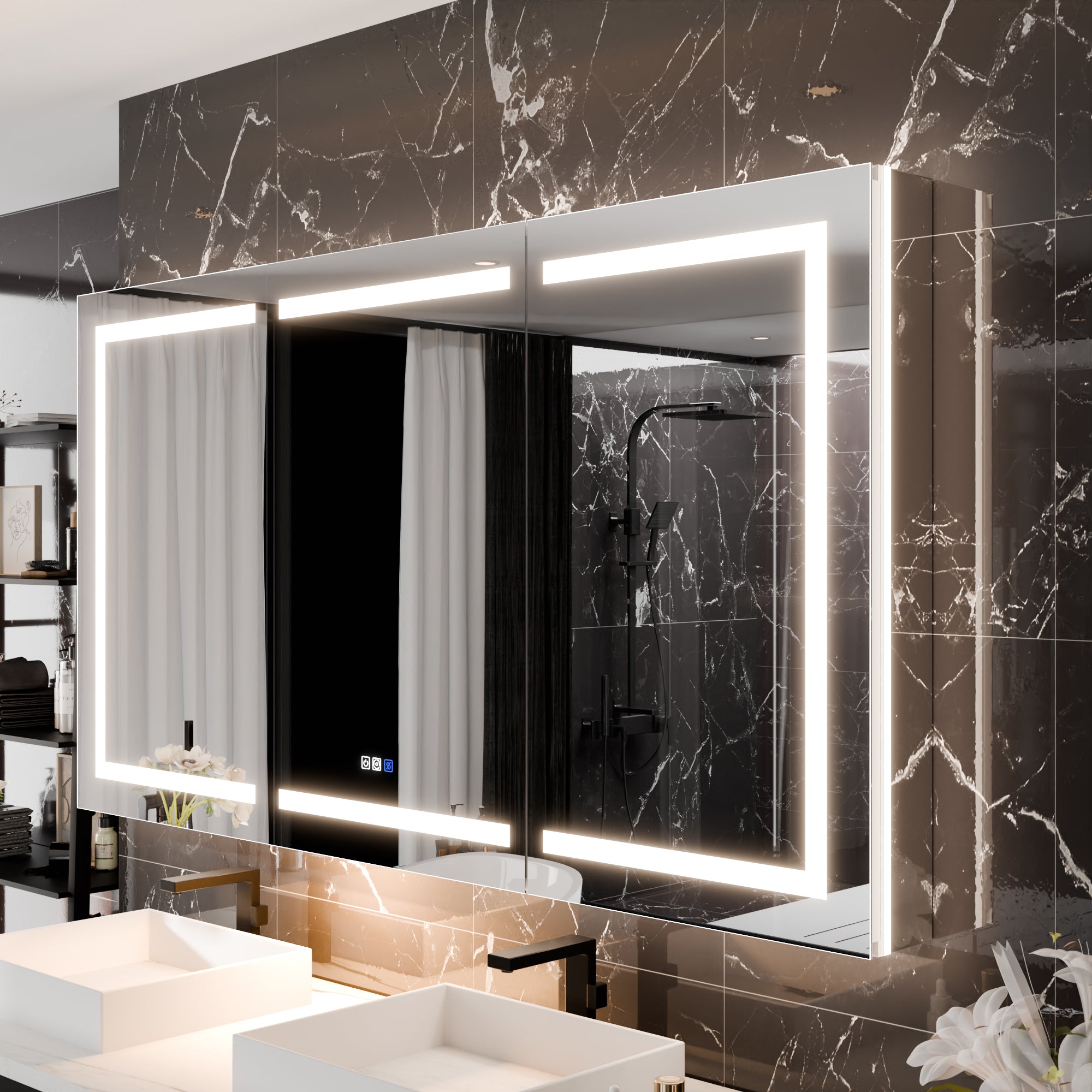
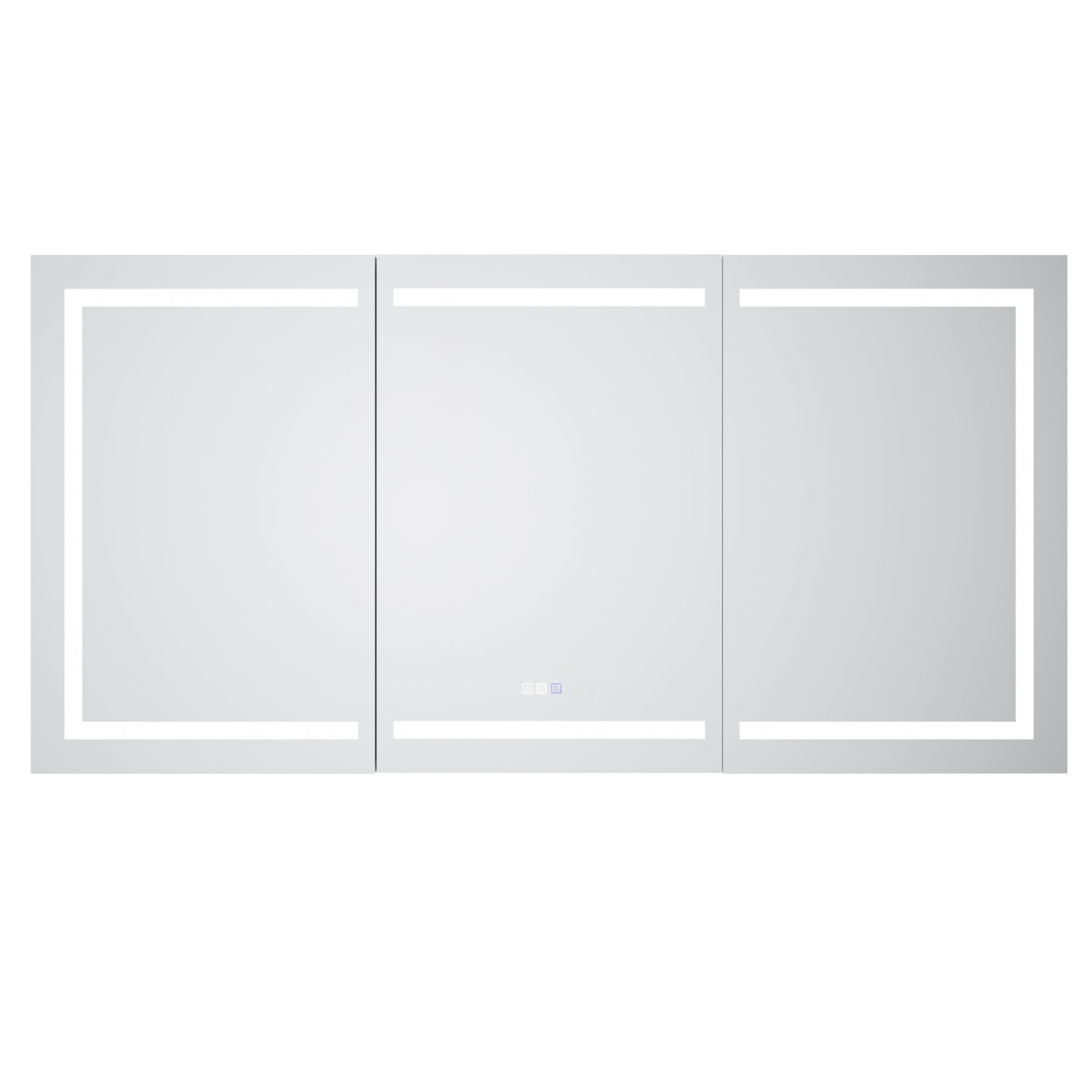
For double-basin spaces, mirror cabinets with widths of 60 or 72 inches can adopt a double-door structure, with independent internal partitions that are more conducive to separate use by family members.
2. Partition storage: the key to improving efficiency
Scientific mirror cabinet organization should follow the principle of "frequency of use first":
Upper level: infrequently used drugs or spare supplies
Middle level: Daily skincare and shaving products
Lower layer: high-frequency items such as toothbrushes and electric toothbrush bases
Data shows that after adopting functional partitioning, over 70% of users reported a significant reduction in their daily organization time. Transparent partition boxes or small storage boxes (4-6 inches wide) can be used to divide space and prevent small items from getting mixed up.
3. Maximizing Capacity through Vertical Space Utilization
The internal height of the mirror cabinet is typically 24 to 30 inches. The partition can be flexibly adjusted to the height of the bottle body. For example:
The height of the skincare bottle is about 6-8 inches.
About 8-10 inches for spray products
Conventional medicine bottles are approximately 4-5 inches in size.
After reasonable adjustment, 3-4 independent layers of space can be achieved internally, which increases the effective utilization rate by about 25% compared to fixed-layer board structures.
4. Hidden storage inside the door panel
Some high-end mirror cabinets feature shallow storage shelves inside the door panels, measuring about 2-3 inches deep, which can hold toothpaste, cotton swabs, or small skincare products. Industry data shows that mirror cabinets with inner storage designs have about 15% more available space than traditional structures.
In addition, magnetic strips or small hooks can also be installed on the inside of the door for storing lightweight tools such as tweezers and scissors.
5. Wet area environment and moisture-proof management
Due to the high humidity in the bathroom, attention should be paid to ventilation and moisture prevention for internal storage. High-quality mirror cabinets usually use anti-rust aluminum alloy or stainless steel frame structures, which can improve durability.
Data shows that mirror cabinets with moisture-resistant structures used in high-humidity environments have an average lifespan extension of about 30%. It is recommended to place items that are prone to moisture in sealed boxes to avoid direct exposure to steam environments.
6. Lighting and Visualization Management
The mirror cabinet with LED lighting not only enhances facial illumination but also improves internal visibility. Some mirror cabinets have integrated induction lights that automatically illuminate when the door opens, improving the efficiency of picking up items.
Data shows that in mirror cabinets with internal lighting, the average time for users to search for small items is reduced by about 20%. In mirror cabinets with a width exceeding 30 inches, internal lighting is particularly practical.
7. Selection of Embedded and Surface Mount
Embedded mirror cabinets can save 4-6 inches of external space, making the overall visual experience more concise. Suitable for situations where slotted installation is allowed on the wall. Surface installation is more flexible and suitable for structurally confined spaces.
In small bathrooms, embedded structures are more popular because they can preserve more activity space and reduce visual pressure.
8. Regular organization and expiration inspection
Medicine and skincare products are often stored in the mirror cabinet, so it is recommended to tidy them up every 6 months. Data shows that more than 20% of items in home mirror cabinets are expired or idle.
Regular cleaning not only releases space but also avoids safety hazards. It is recommended to place drugs and skincare products in separate areas to avoid mixing and stacking.
9. Space allocation strategy for double occupancy
Mirror cabinets with widths of 60 or 72 inches can be divided into left- and right-hand zones for use. Each side features 2-3 independent partitions that can be adjusted to accommodate the height of personal items.
Industry surveys show that with clear dual-person zoning, daily organization conflicts are reduced by about 40%, and space utilization is significantly improved.
10. Conclusion

A mirror cabinet is not only a storage tool, but also a core component for optimizing the order of bathroom space. By selecting reasonable sizes, implementing scientific zoning, optimizing vertical space utilization, and implementing moisture-proof management, storage efficiency and daily use experience can be significantly improved.
Whether it is a 24-inch small mirror cabinet or a 72-inch double-door structure, as long as the principles of layering, zoning, and high-frequency priority are followed, the internal capacity can be maximized, resulting in clean, orderly, and efficient bathroom space management.







































Leave a comment
This site is protected by hCaptcha and the hCaptcha Privacy Policy and Terms of Service apply.