
















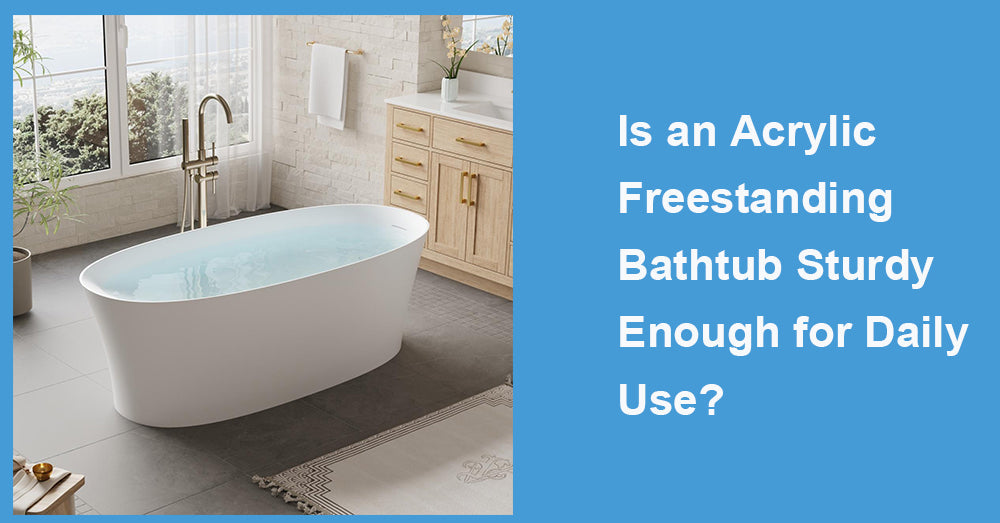
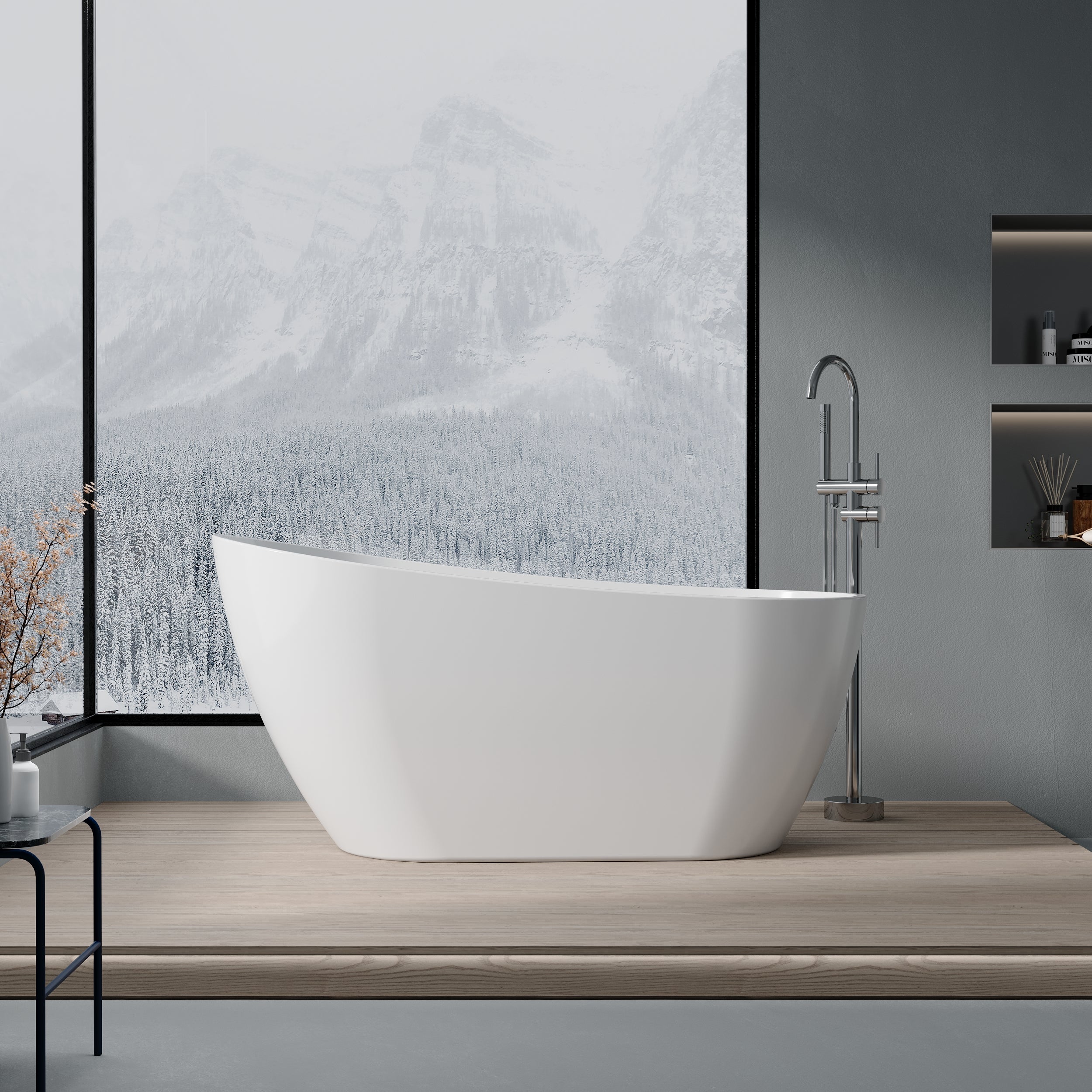
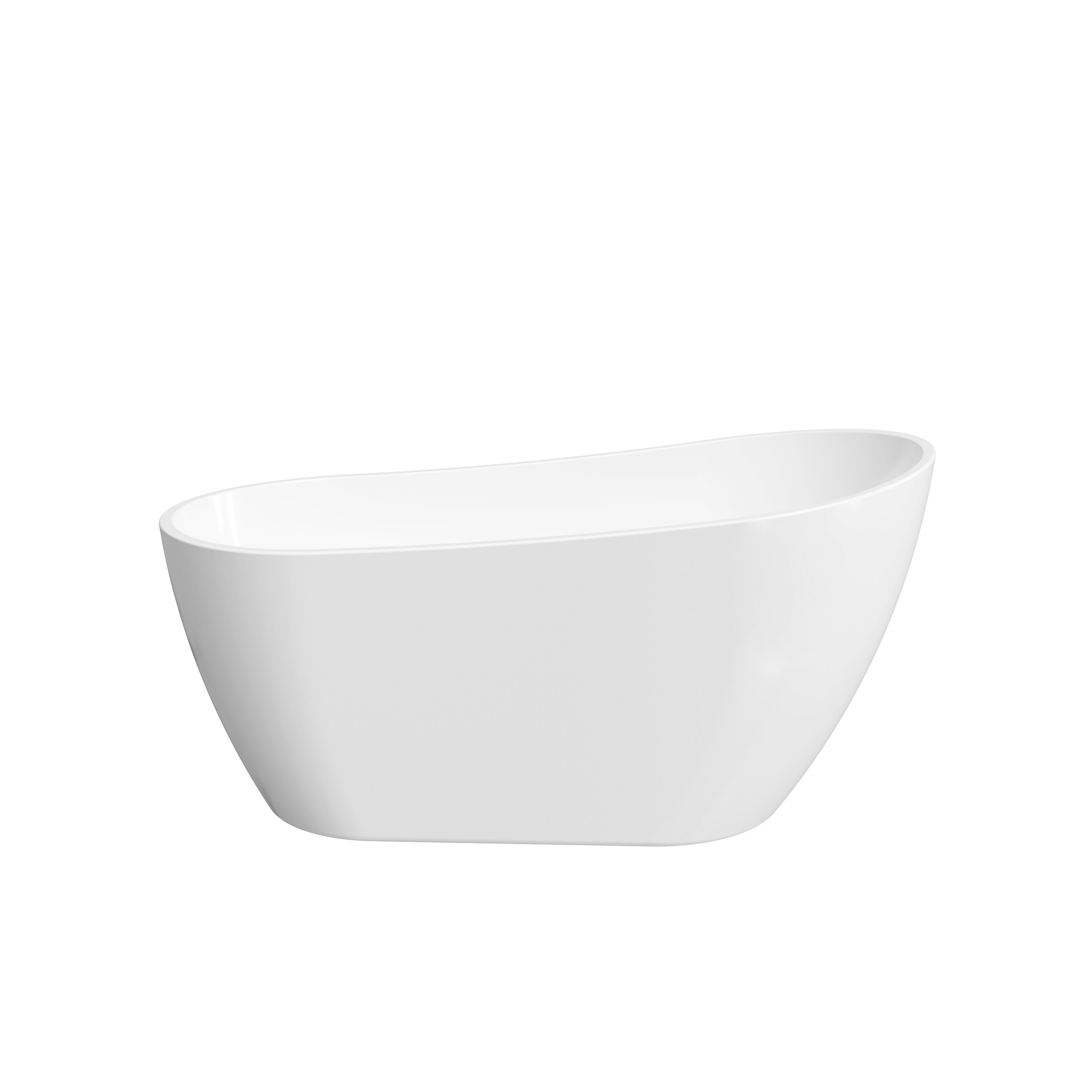
An acrylic freestanding bathtub is now a common choice in modern bathroom upgrades, especially where visual openness and easier installation matter. But one question comes up repeatedly during selection: is it actually sturdy enough for daily use, or just a lightweight design compromise?
The short answer is that modern acrylic freestanding tubs are engineered for everyday structural performance. The real difference is not whether they are strong enough, but how their internal reinforcement systems are built and installed.
From an industry standpoint, acrylic tubs have shifted from “lightweight alternative” to “mainstream structural fixture,” especially as resin reinforcement and fiberglass layering techniques have improved over the last decade.
1. Weight alone does not define strength
A common misunderstanding is that heavier materials automatically mean stronger products. Cast iron tubs can weigh over 300 lb before installation, while acrylic freestanding tubs typically range from 70 lb to 120 lb depending on size and reinforcement.
Once filled with water and a user, both types often reach a total load exceeding 800 lb in standard 60 in to 72 in bathtub formats.
According to general plumbing fixture load expectations referenced in residential construction guidelines, bathroom floors are typically designed to support at least 40 lb per sq ft in live load conditions.
That means both acrylic and cast iron tubs are within engineered structural limits when installed correctly.
2. The real strength comes from reinforcement layers
Modern acrylic freestanding tubs are not “pure acrylic shells.” They are multi-layer structures.
A typical construction includes:
· acrylic top layer for surface finish
· fiberglass reinforcement layer for rigidity
· resin or composite backing for structural support
· sometimes metal or wood framing for base stabilization
This layered system distributes weight across the entire shell rather than concentrating stress in one area.
Industry observation: most structural failures in acrylic tubs are not material failures—they are installation leveling issues.
3. Floor leveling matters more than material choice
One of the most important but overlooked factors is floor contact.
A freestanding tub must sit evenly across its base. If the floor is uneven by even 0.25 in to 0.5 in, stress points can develop over time.
Professional installers often use leveling compounds or adjustable feet systems to ensure full base contact.
In real-world renovation work, improper leveling is a more common cause of long-term instability than material fatigue itself.
Industry judgment: acrylic tubs are structurally reliable only when installation load is evenly distributed.
4. Heat and long-term durability performance
Acrylic performs differently than metal-based tubs in thermal behavior.
It does not retain heat as long as cast iron, but it warms up faster and maintains a stable bathing temperature for typical use cycles.
DOE material efficiency studies highlight that lower thermal conductivity materials like acrylic reduce heat loss rate at the surface level, which contributes to user comfort during shorter bathing durations (Source: U.S. Department of Energy).
From a durability standpoint, acrylic does not rust or corrode, which gives it an advantage in long-term moisture exposure environments.

5. Scratch resistance and surface wear expectations
Acrylic is softer than enamel-coated cast iron, which means it can scratch more easily under abrasive contact.
However, in practical household use, most surface wear comes from cleaning habits rather than normal bathing use.
Light scratches can often be buffed or polished out, especially in mid- to high-grade acrylic formulations.
Industry observation: surface wear is more about maintenance behavior than daily structural stress.
6. Structural stability in daily use conditions
In real-world daily use scenarios, acrylic freestanding tubs handle:
· full water load cycles
· repeated temperature changes
· body weight distribution across the base
· normal cleaning and maintenance routines
Testing standards for plumbing fixtures typically simulate repeated load cycles and water exposure conditions to ensure long-term durability under residential usage patterns.
A properly installed acrylic tub does not flex noticeably during use when supported evenly.
The key phrase here is “properly installed.” Without correct leveling and support, even the strongest material will underperform.
7. When acrylic tubs can feel less stable
There are specific cases where users may perceive instability:
· uneven flooring under the tub base
· insufficient reinforcement layer in low-cost models
· improper installation without full base support
· movement caused by loose plumbing connections
These issues are not material limitations—they are system installation problems.
Industry takeaway: perceived instability is usually installation-related, not structural weakness.
8. Where acrylic freestanding tubs actually win
Despite being lighter, acrylic tubs offer several structural and practical advantages:
· easier installation due to lower weight
· reduced floor load stress in upper-floor bathrooms
· more design flexibility in shape and curvature
· easier repair for minor surface damage
· better adaptability in renovation projects
Houzz remodeling trend data consistently shows freestanding acrylic tubs remain one of the most selected upgrade fixtures in mid-range bathroom renovations, largely due to installation flexibility and design variety.
Final takeaway
An acrylic freestanding bathtub is sturdy enough for daily use when properly engineered and installed. Its strength does not come from mass like cast iron, but from layered reinforcement systems and load distribution design, which work together to maintain stability and long-term structural reliability under regular household use.
In real-world performance, acrylic tubs are not “lighter and weaker”—they are lighter and differently engineered. The structural reliability depends far more on installation quality, leveling precision, and reinforcement design than on material weight alone.
Industry judgment is straightforward: for modern bathroom use, acrylic freestanding tubs are not a compromise—they are a redesigned structural system optimized for both durability and installation efficiency.















Leave a comment
This site is protected by hCaptcha and the hCaptcha Privacy Policy and Terms of Service apply.