
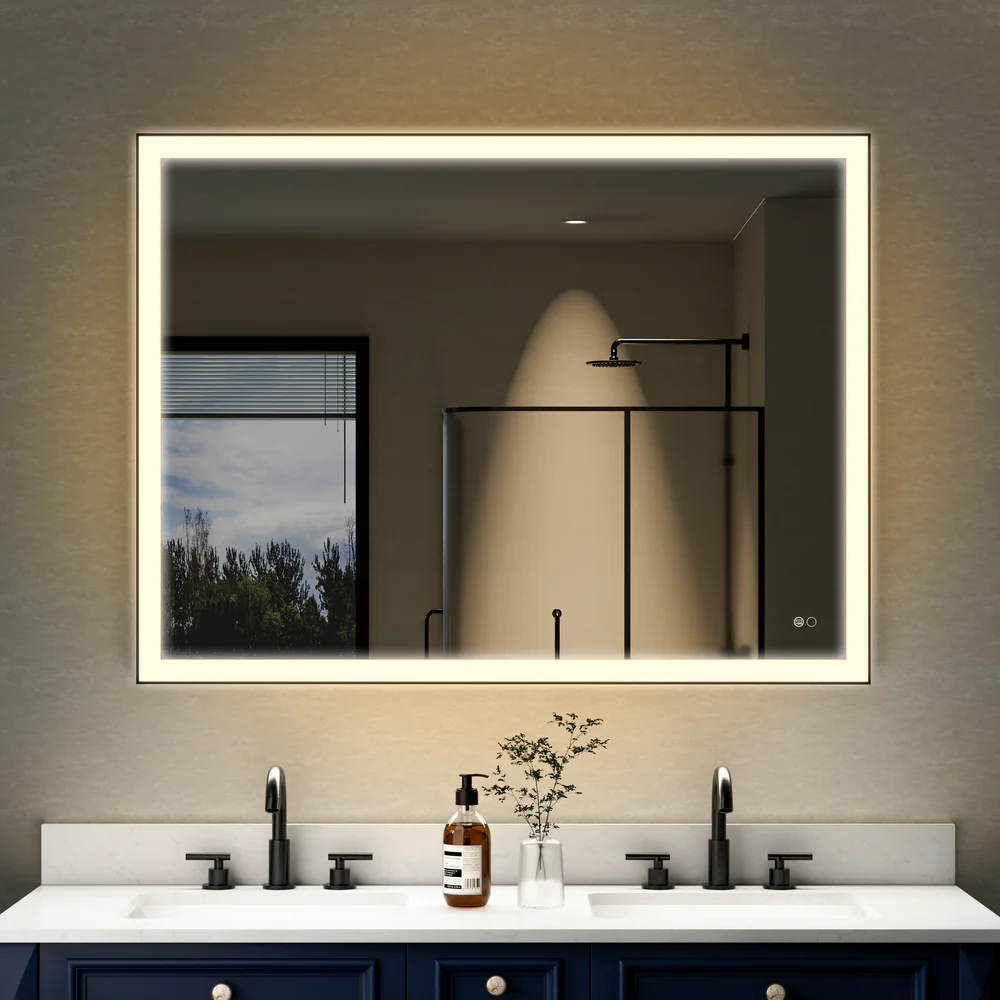
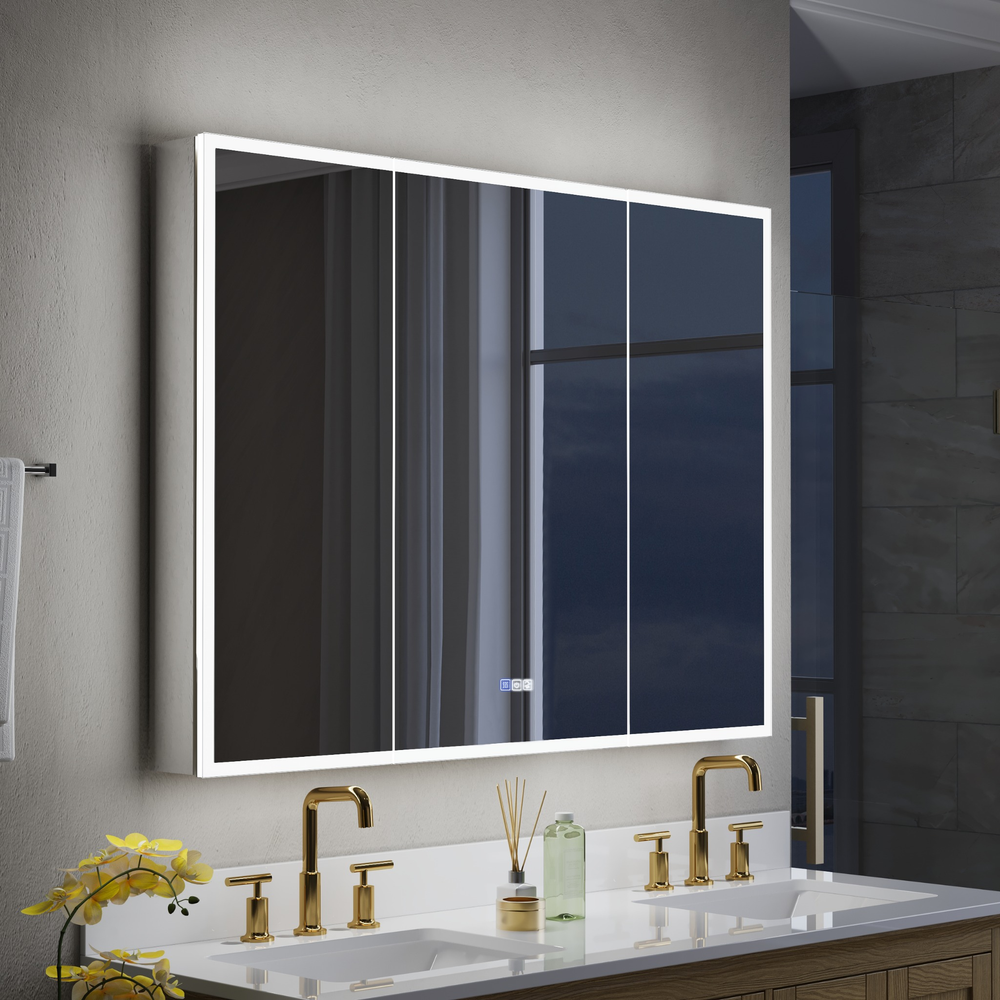
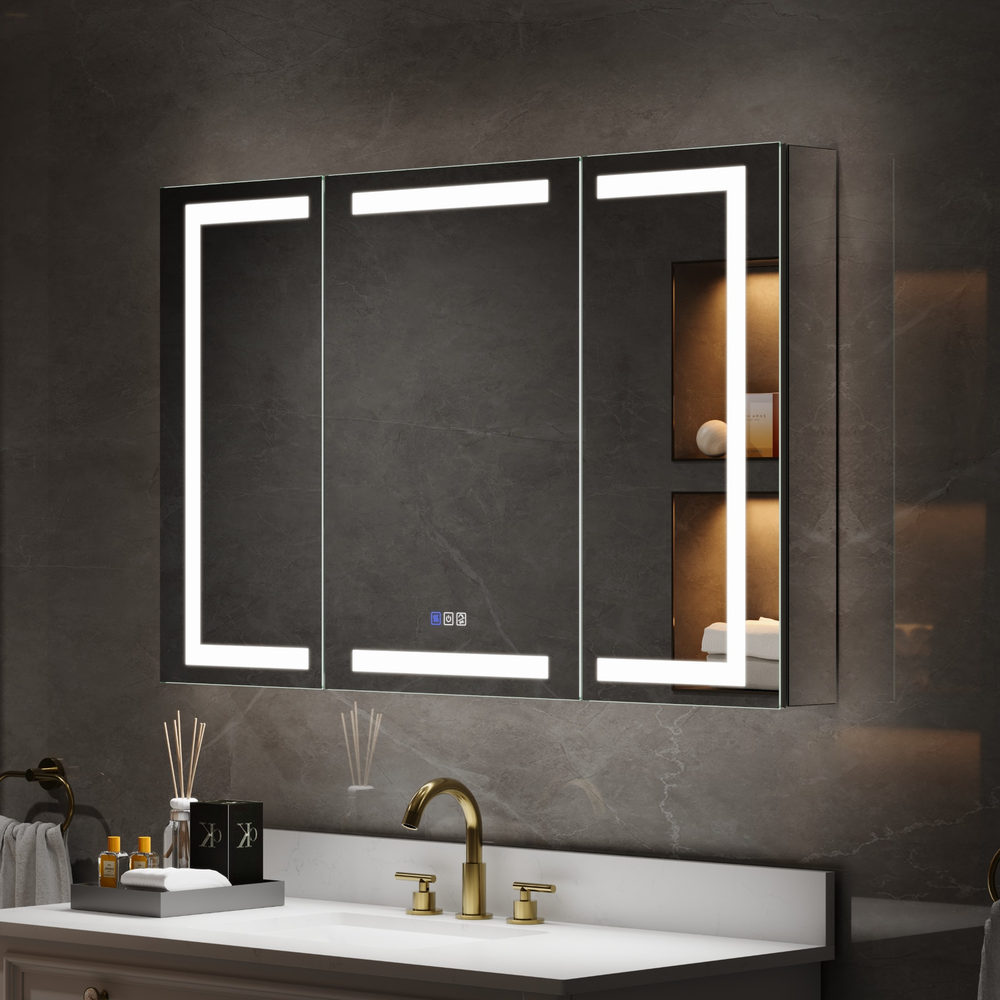

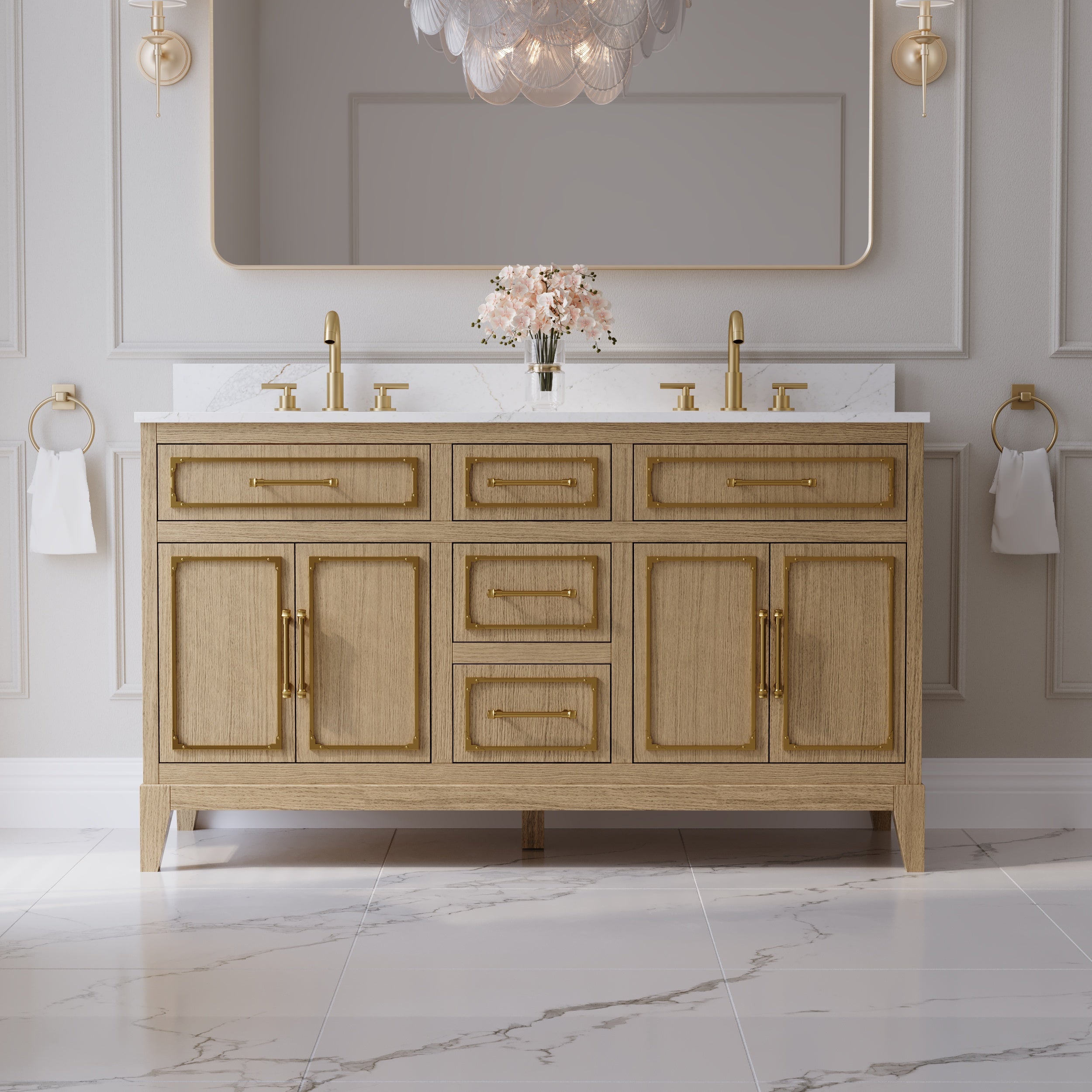
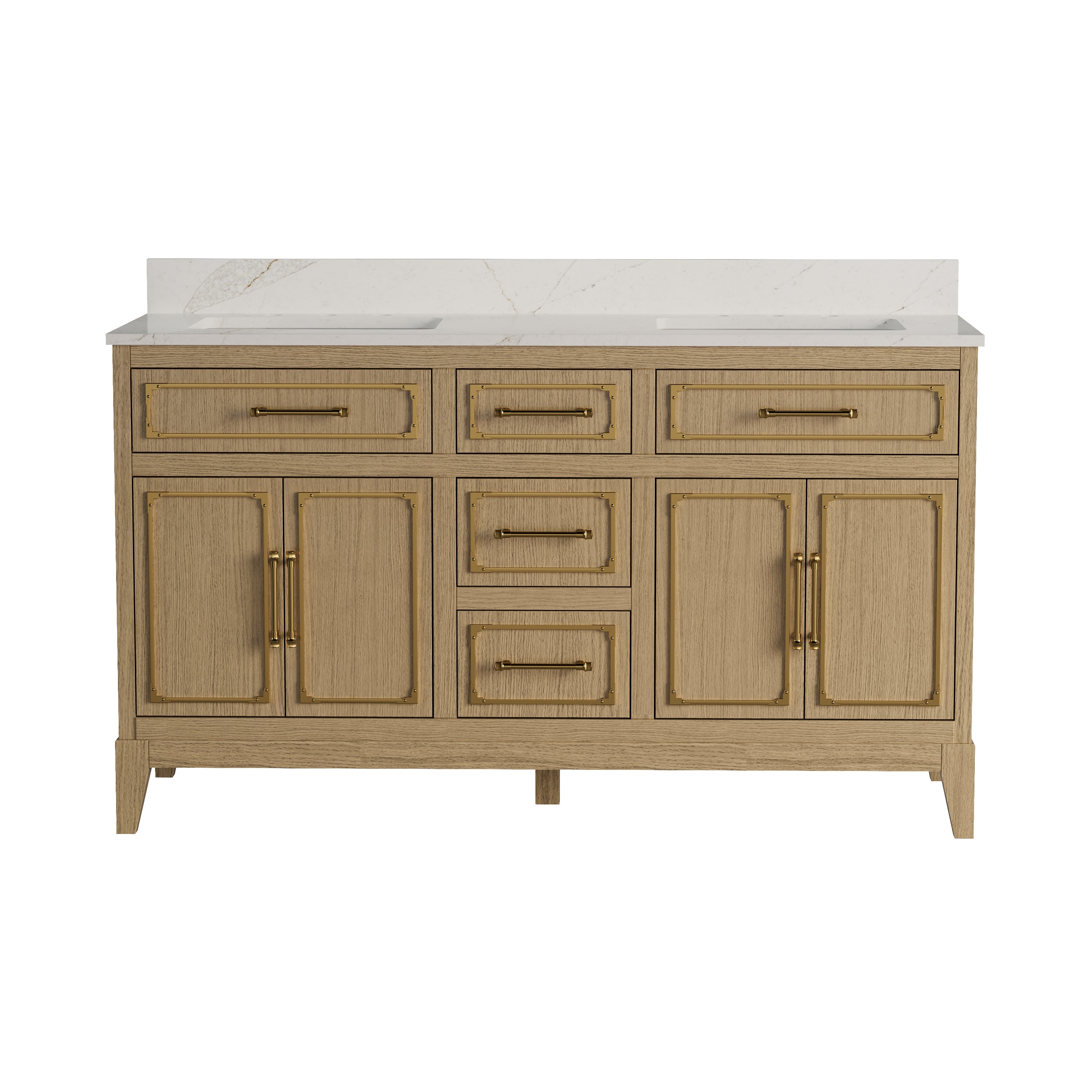
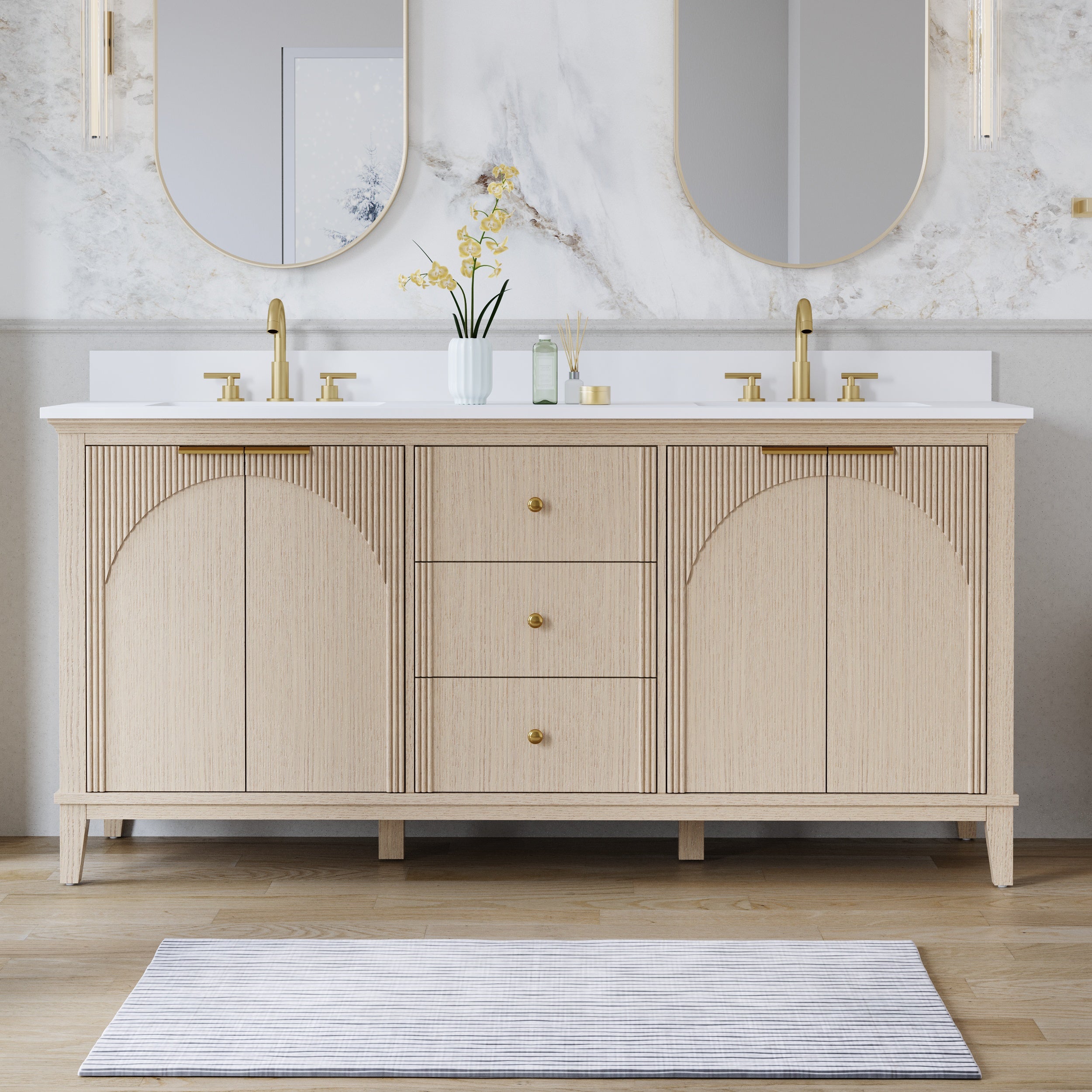
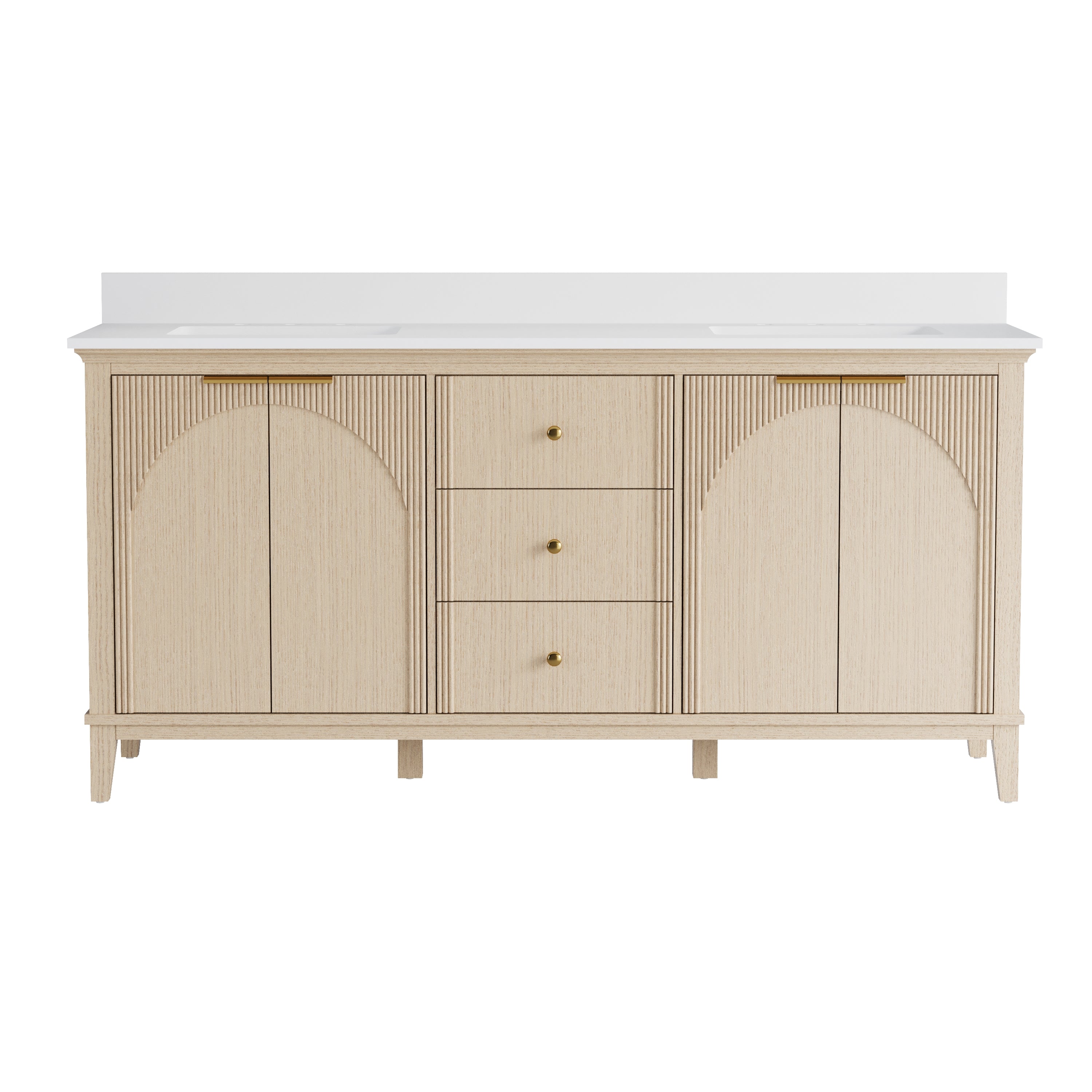
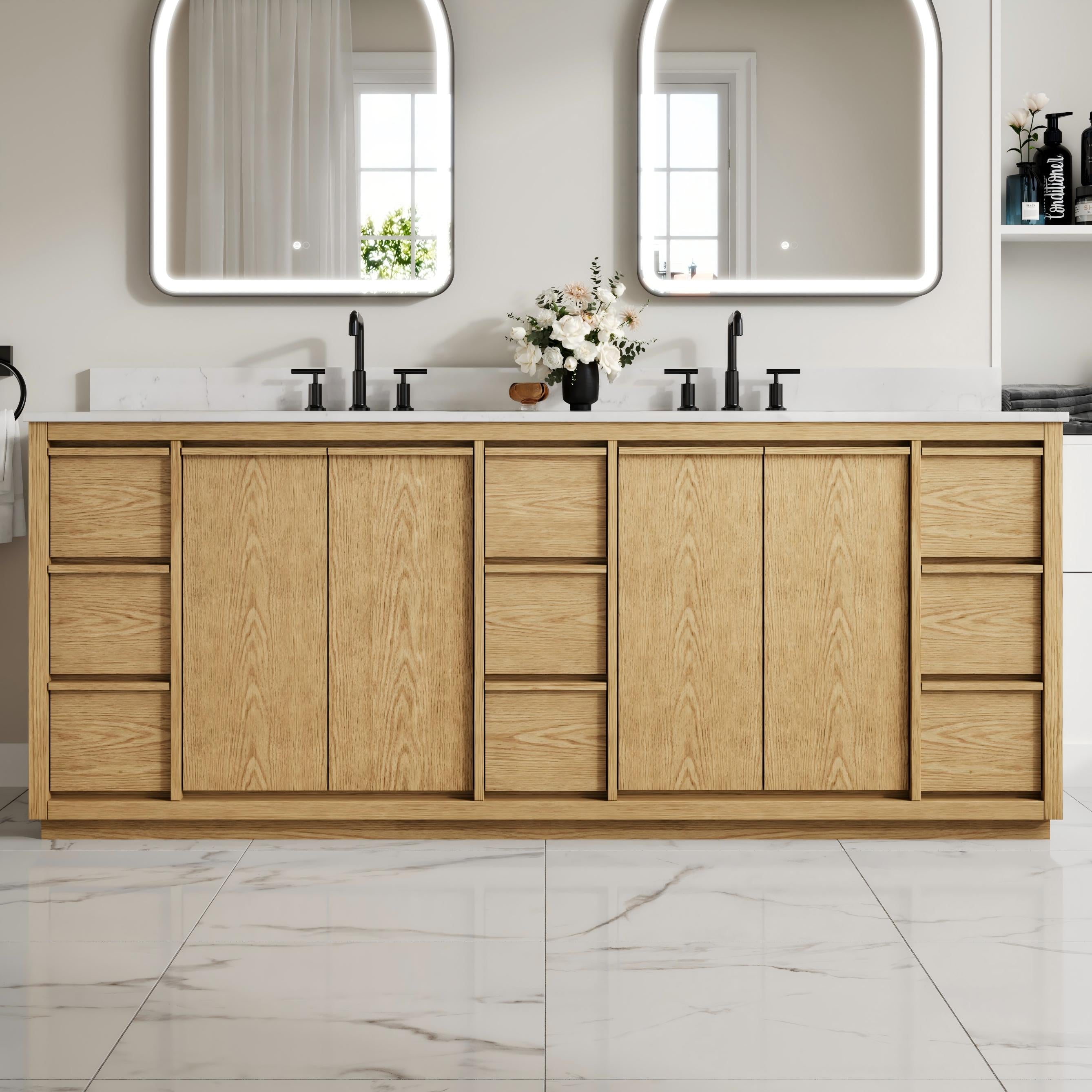
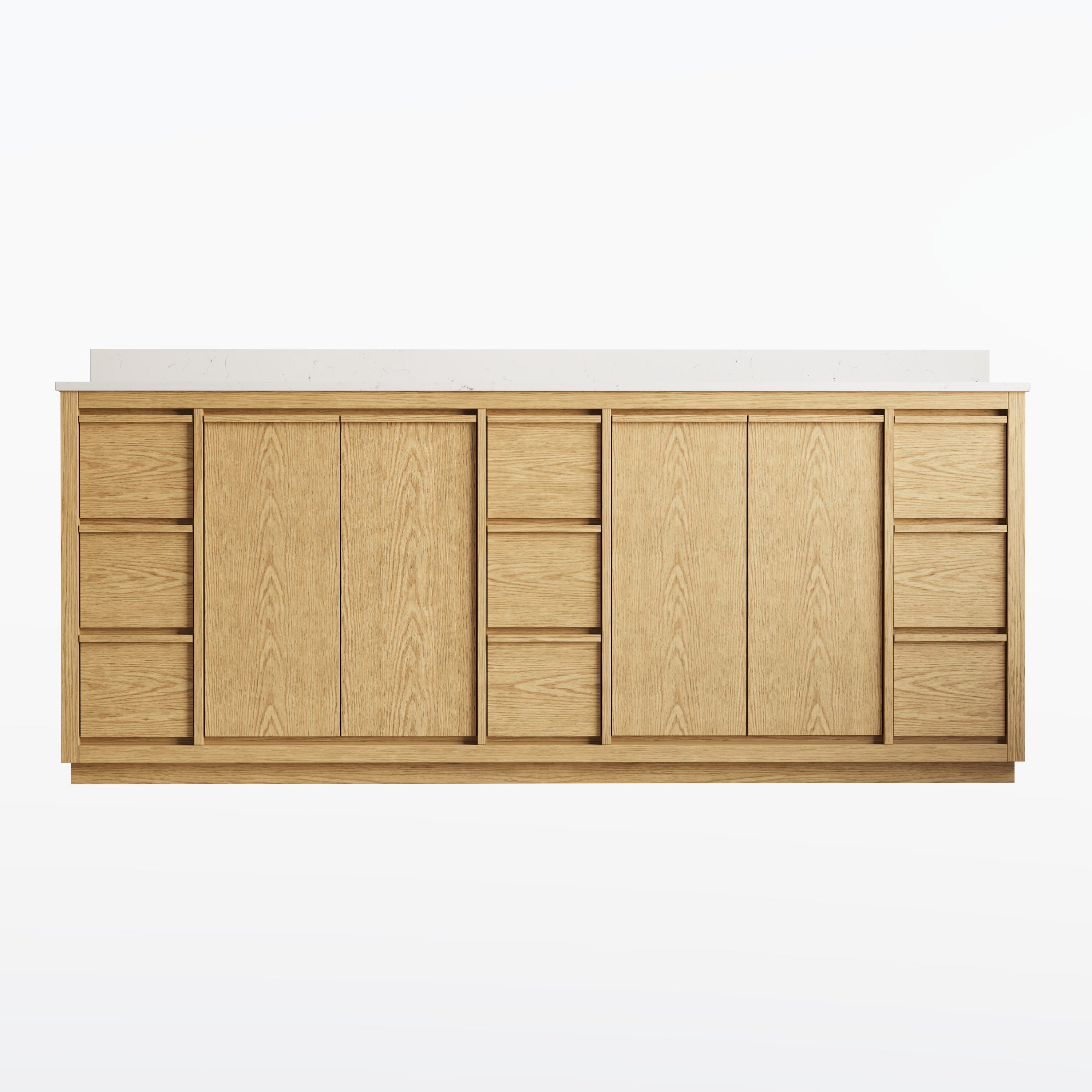

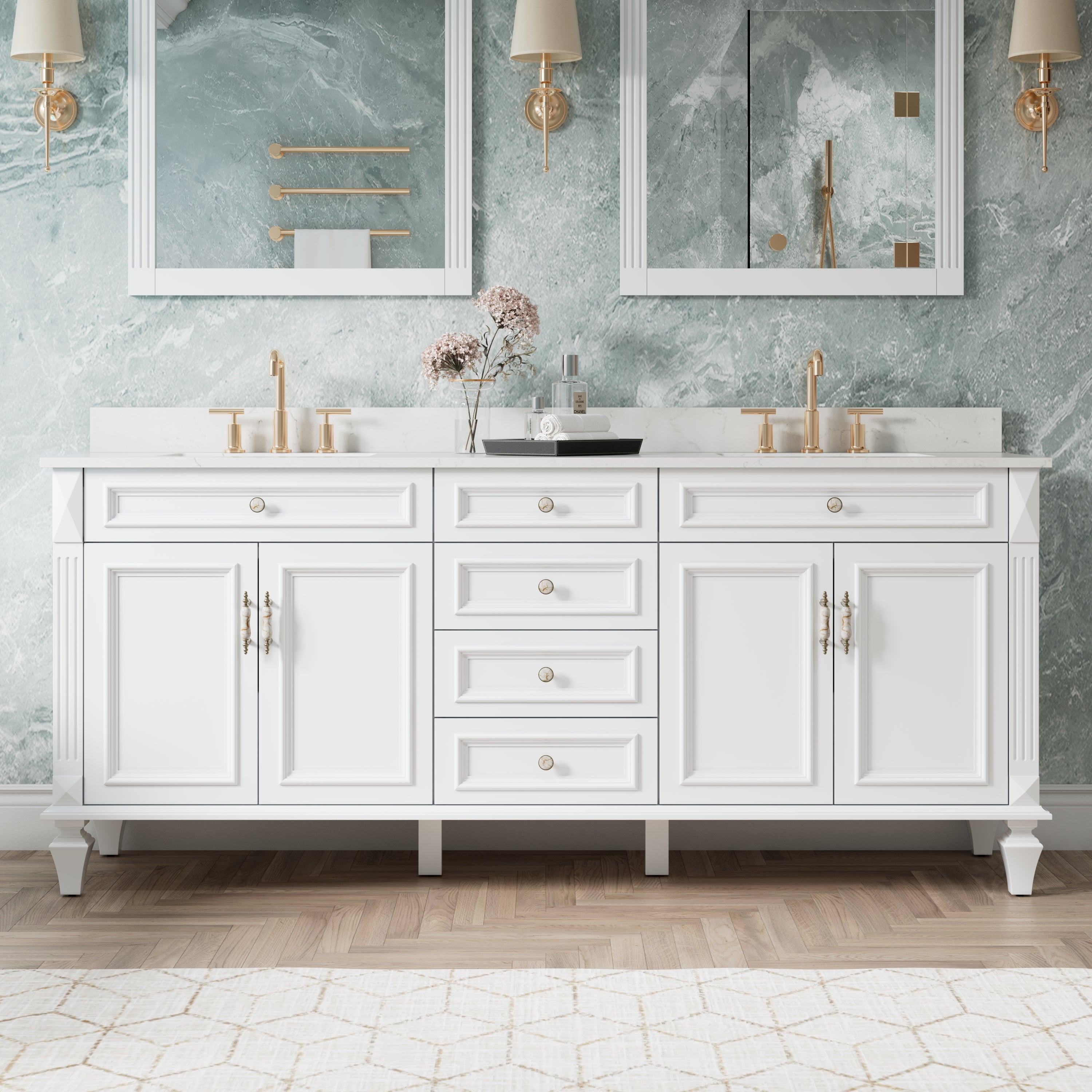
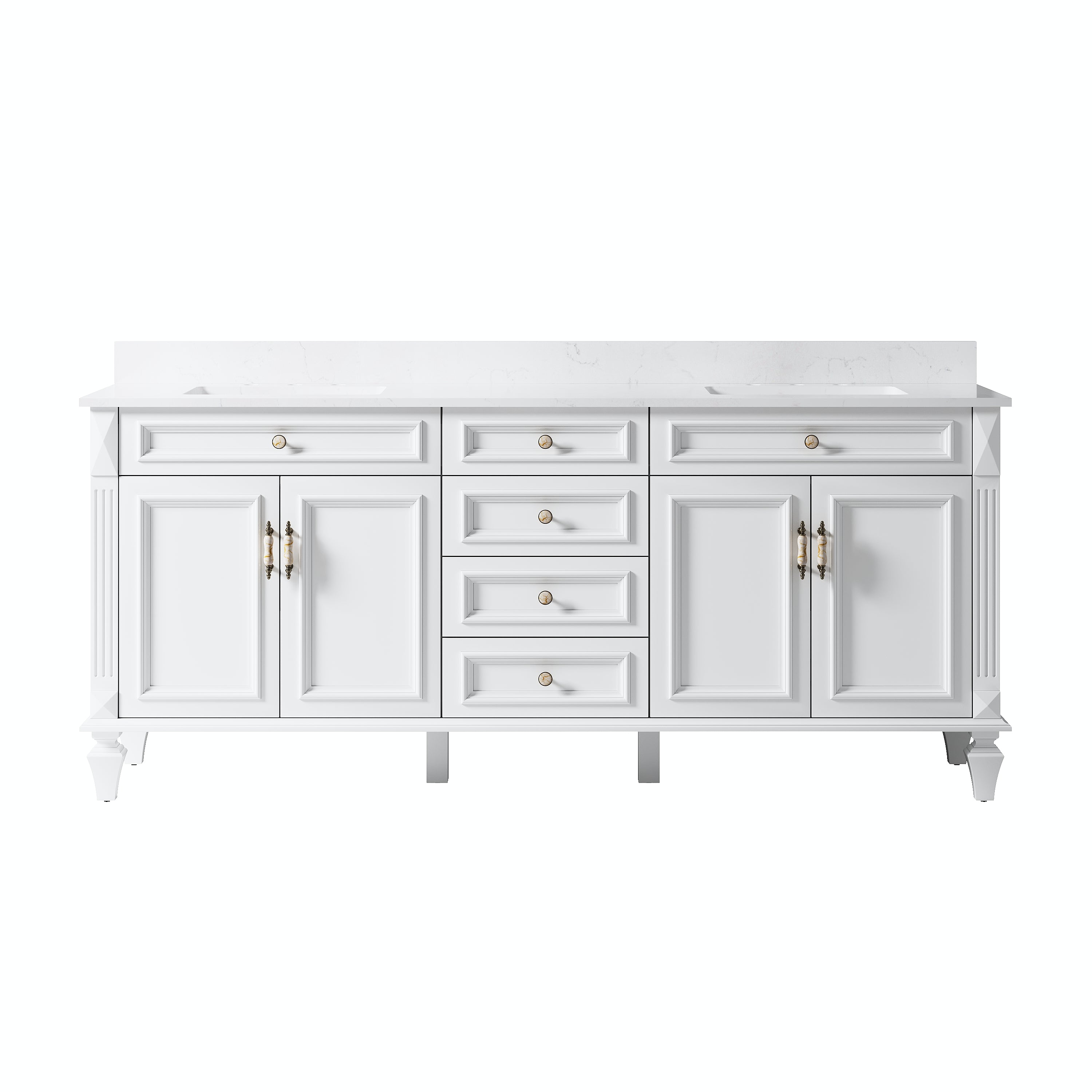
A white bath vanity can be a smart starting point when a remodel needs more light, visual calm, and flexibility. It is not automatically the safest choice, however. The right result depends on the white you select, the cabinet construction, the countertop, and the way the room is used. Before ordering, compare the finish with your tile and lighting, then look past the color to the details that determine whether the vanity will still look good years from now.
Why White Works in So Many Bathrooms
White reflects more available light than a dark cabinet and can make the vanity area feel less visually heavy. That matters in a powder room without a window or where a 36 in. or 48 in. cabinet occupies much of one wall. The effect is perceptual rather than a promise that the room will become physically larger.
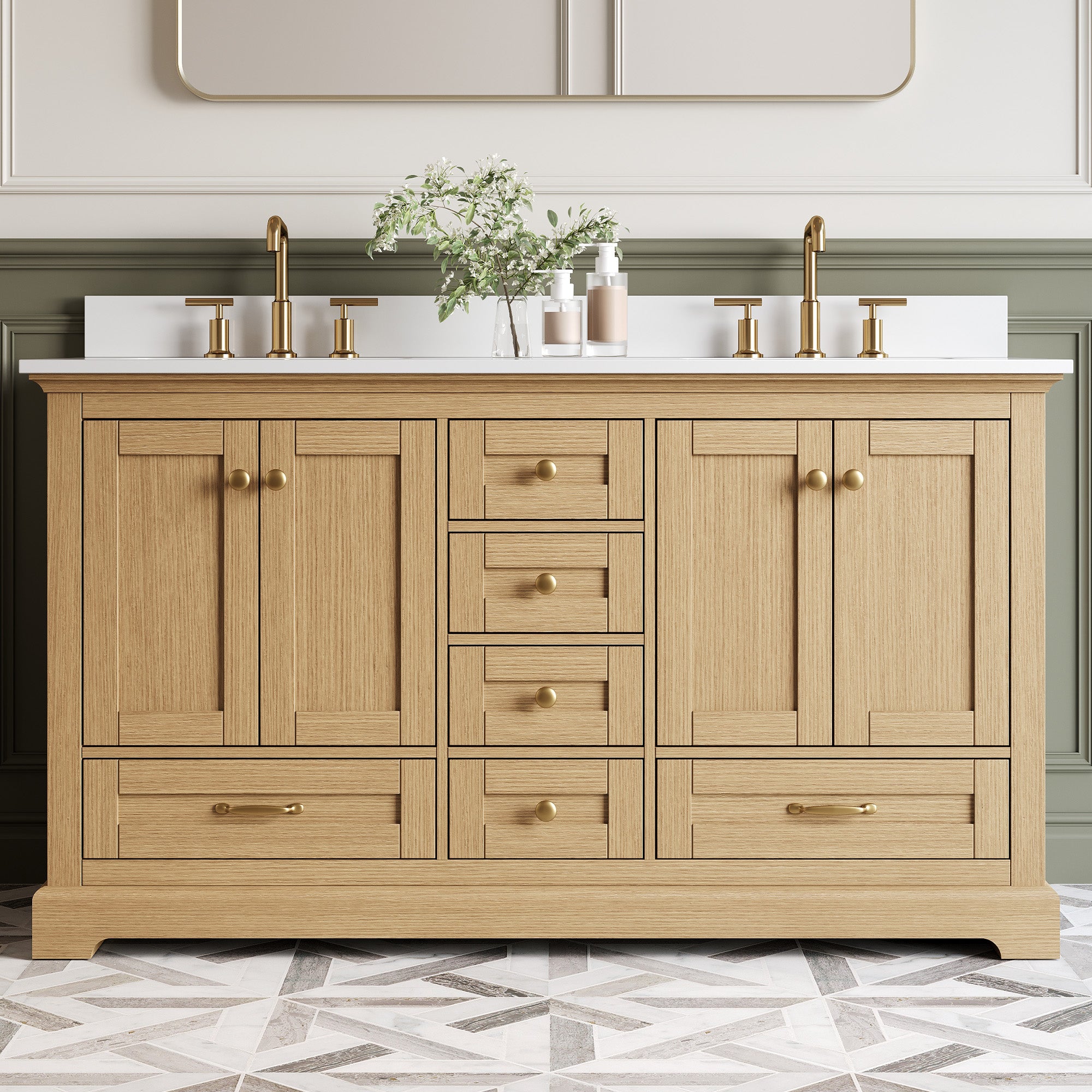
A white cabinet is also adaptable. Brushed nickel can keep it quiet; matte black adds definition; brass introduces warmth. The same cabinet can support pale quartz, veined stone, or a darker top. This flexibility helps the vanity connect existing floor tile with new fixtures.
Choose the White Before You Choose the Style
The word white covers a surprisingly wide range. A blue-white cabinet beside creamy tile may make the tile appear yellow. A warm ivory can look dingy against a crisp white tub. Bring a finish sample into the room and view it in daylight, with the vanity lights on, and after dark. Place it beside the countertop, wall paint, toilet, and shower tile rather than judging it alone in a showroom.
Sheen changes the reading too. A satin finish is forgiving. High gloss looks sharper, but fingerprints and surface waviness may be more apparent. Matte finishes feel softer, although textured versions can require more effort to wipe clean. Read the manufacturer’s care instructions before using abrasive pads, bleach, or solvents.
Construction Matters More Than Color
A durable white vanity may be solid wood, plywood, medium-density fiberboard, or a thoughtful combination. Solid wood frames offer strength, while stable panel materials can provide smooth painted doors that are less likely to reveal grain movement. Material names alone do not establish quality. Inspect joinery, drawer-box construction, back-panel thickness, hinge adjustment, edge sealing, and the finish warranty.
Wood naturally exchanges moisture with the surrounding air, and moisture changes can cause dimensional movement. A sound finish, sealed edges, quick cleanup of standing water, and working ventilation therefore matter even when the cabinet is marketed as moisture resistant. The USDA Forest Products Laboratory explains this relationship between wood, humidity, and dimensional change in its Wood Handbook. (Source: USDA Forest Products Laboratory, Wood Handbook: Wood as an Engineering Material, 2021)
If the vanity contains hardwood plywood, particleboard, or MDF, look for a label or documentation showing compliance with the U.S. EPA’s TSCA Title VI formaldehyde standards. Covered composite wood products manufactured in or imported into the United States must meet certification and labeling requirements. Compliance is a useful baseline for emissions; it is not, by itself, proof that a cabinet will resist water or withstand rough hardware use. (Source: U.S. Environmental Protection Agency, Formaldehyde Emission Standards for Composite Wood Products)

Pair the Cabinet with the Right Top
White-on-white can be clean and cohesive, but exact matching is rarely necessary. In fact, a small contrast often looks more intentional. A warm white cabinet with lightly veined quartz suits a classic room, while a charcoal top gives a modern vanity a clear outline. Wood-framed mirrors, woven baskets, or warm metal hardware can prevent an all-white scheme from feeling flat.
Evaluate maintenance as carefully as appearance. Confirm whether the top is engineered quartz, natural stone, cultured marble, porcelain, or another material; each has different care instructions. Check whether the backsplash is included, whether the sink is integral or undermounted, and whether the faucet drilling is single-hole, 4 in. centerset, or 8 in. widespread. Product photos are not a substitute for the specification sheet.
Plan for Real-World Use
White surfaces do not hide every sign of use. Dark hair, makeup pigments, rusty water marks, and gaps around aging caulk may be easy to see. On the other hand, pale dust and minor water spotting may be less obvious than on a dark, glossy finish. Households that wipe splashes promptly usually find white manageable; a busy shared bathroom may benefit from a satin finish, durable paint system, and simple door profile with fewer grooves.
Ventilation protects both the cabinet and the room. ENERGY STAR advises running the bathroom ventilating fan during a bath or shower and for 15 minutes afterward to help avoid moisture problems. Confirm that the fan actually exhausts outdoors and follow the fan manufacturer’s guidance if it specifies a longer run time. (Source: ENERGY STAR, Low to No Cost Tips for Saving Energy at Home)
Measure the installation area at the floor, middle, and countertop height because walls are not always square. Record the vanity’s actual top width and depth, including overhang, rather than relying on a nominal cabinet size. Check baseboards, door swing, drawer clearance, supply lines, drain location, outlets, and the path from the delivery entrance to the bathroom. A beautiful cabinet that blocks a doorway or requires unexpected plumbing changes is not a space-saving purchase.
When Another Finish May Be Better
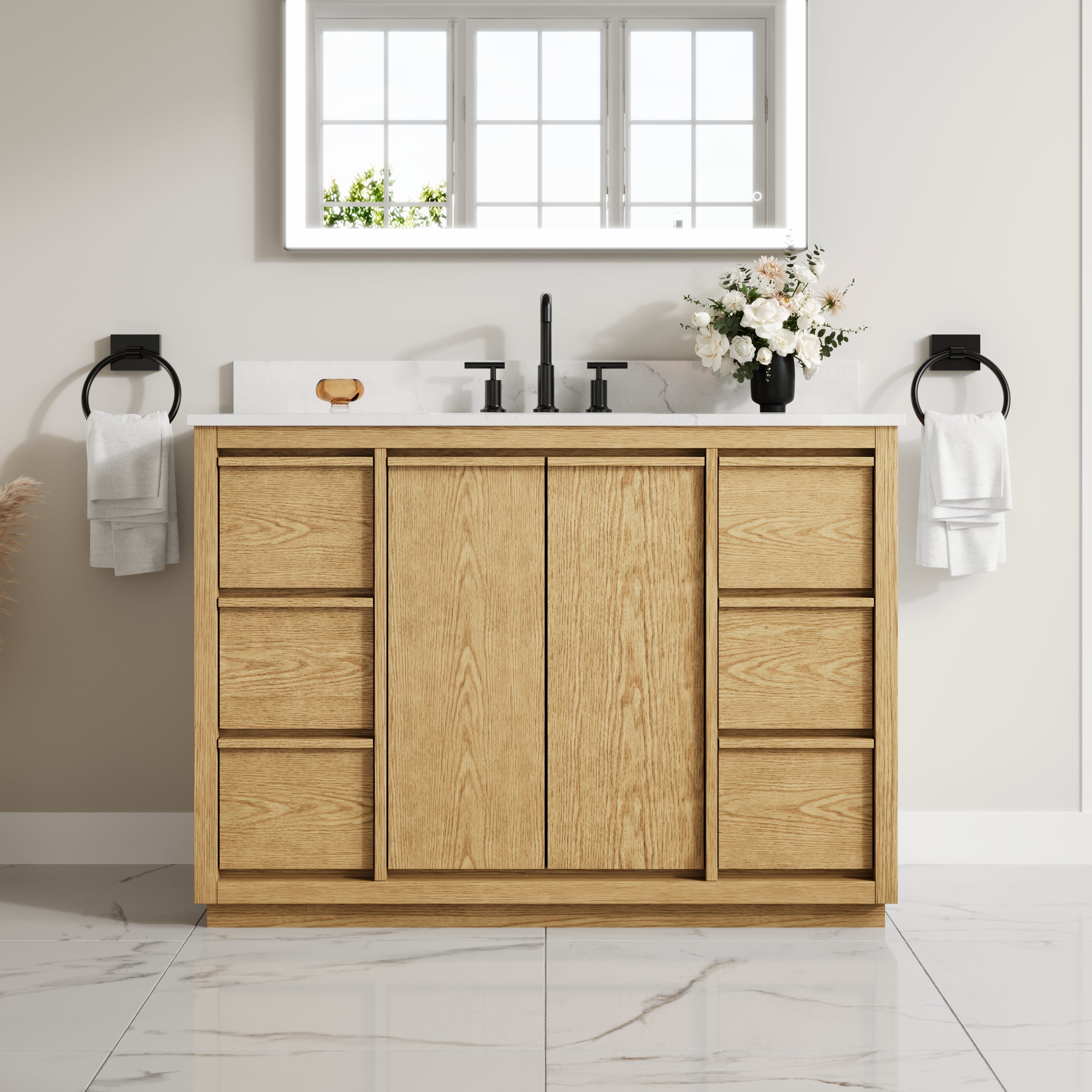
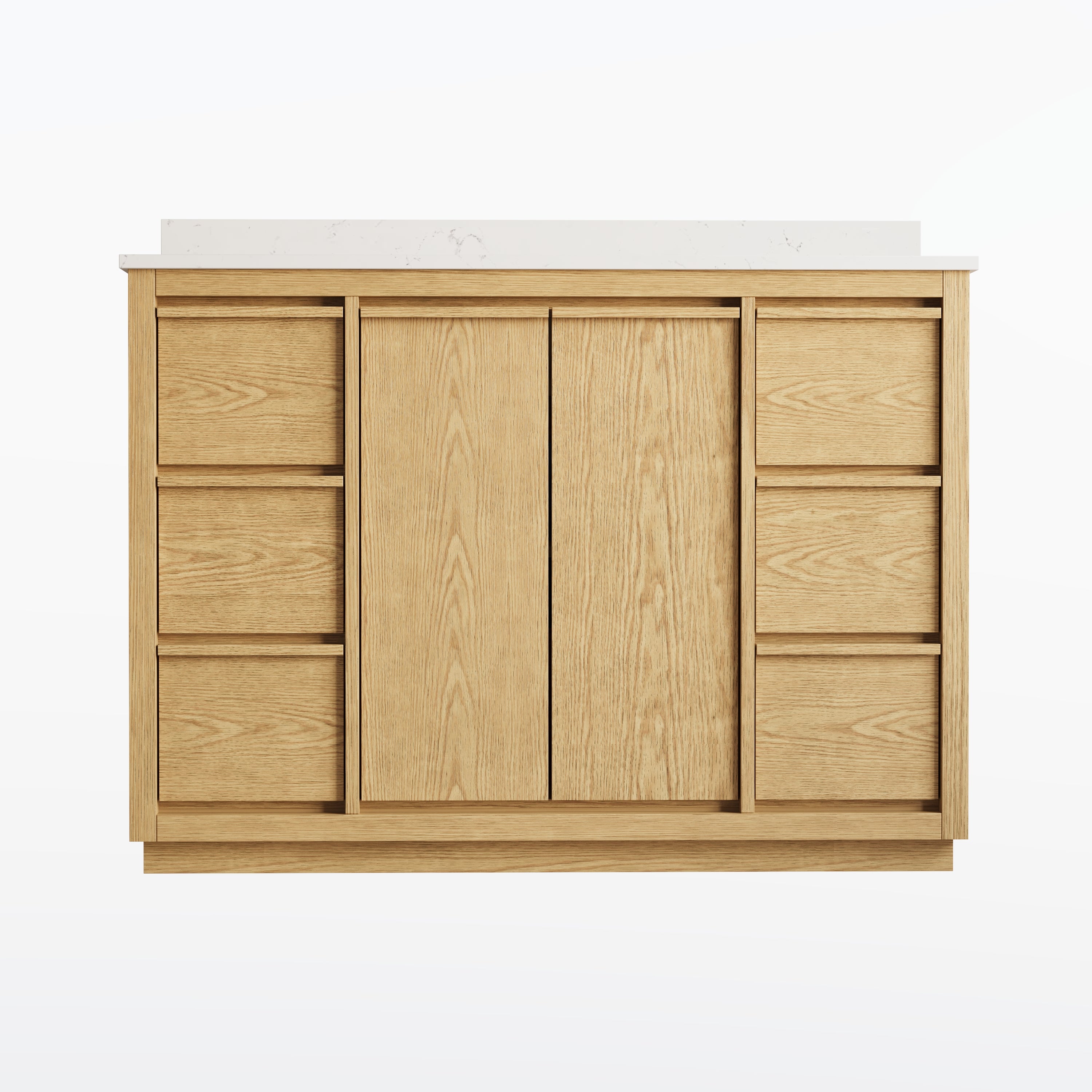
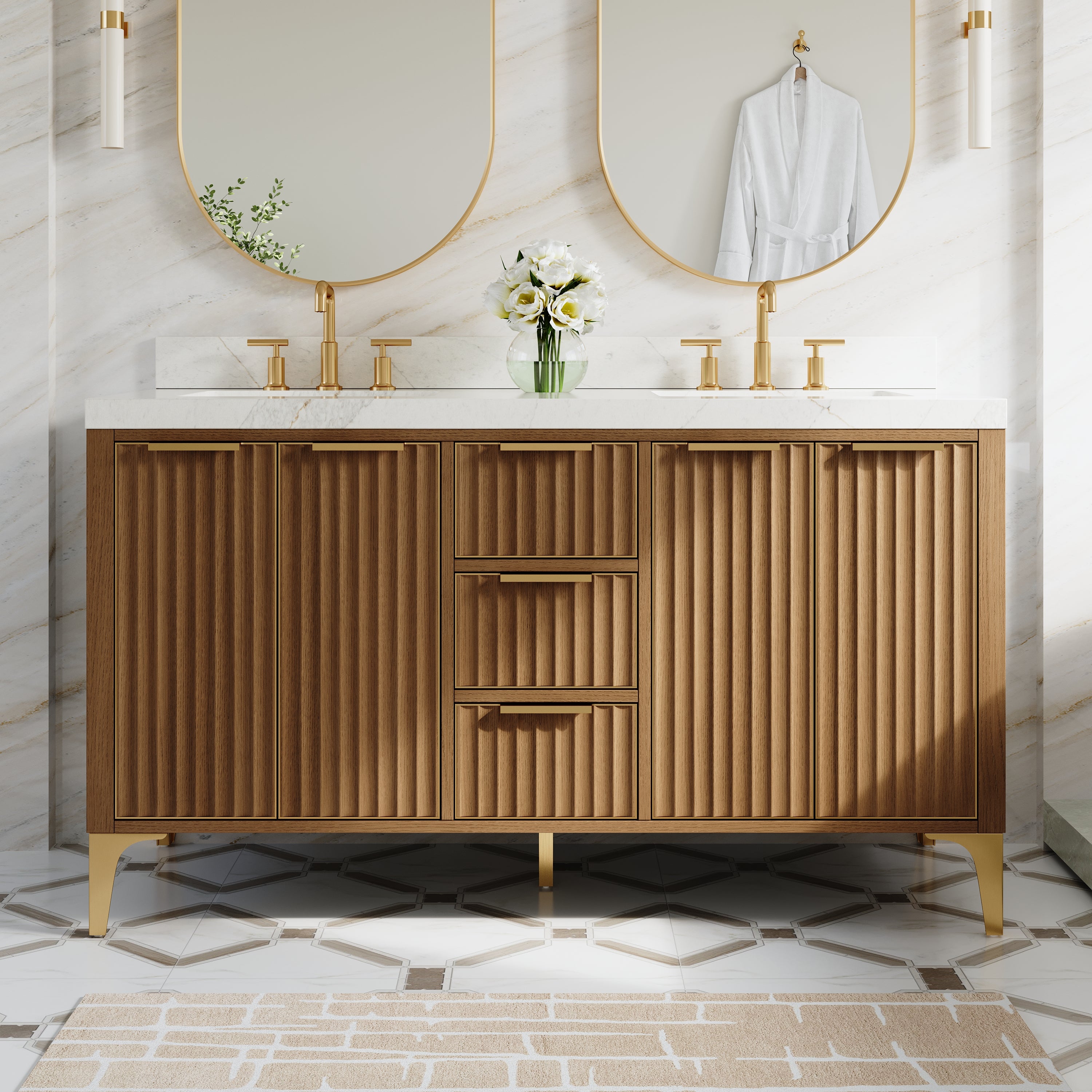
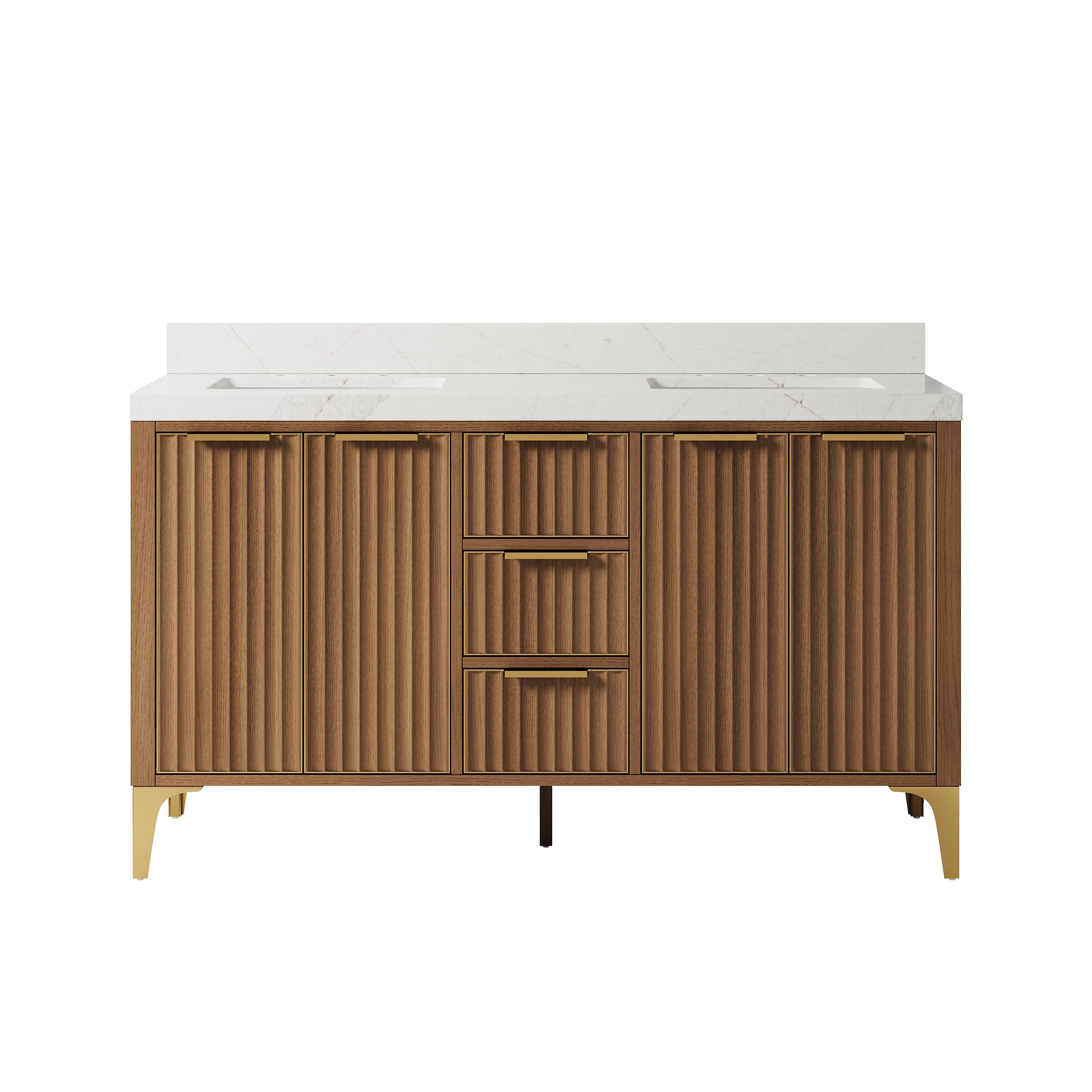
White is less convincing when the room needs a strong focal point or existing tile clashes with available cabinet samples. Natural wood can add depth; navy, charcoal, or green can anchor a large bath. A household unwilling to follow finish-specific cleaning directions may prefer a forgiving midtone with visible grain.
The Bottom Line
A white vanity is the right choice when its undertone belongs with the room, its construction suits a humid setting, and its dimensions work with the plumbing and circulation. Treat white as a design tool, not a quality grade. Compare physical samples, read the component list, verify composite-wood compliance where applicable, and inspect the warranty for the cabinet, hardware, top, and sink. That short review turns a familiar color choice into a remodel decision grounded in everyday use.















Leave a comment
This site is protected by hCaptcha and the hCaptcha Privacy Policy and Terms of Service apply.