














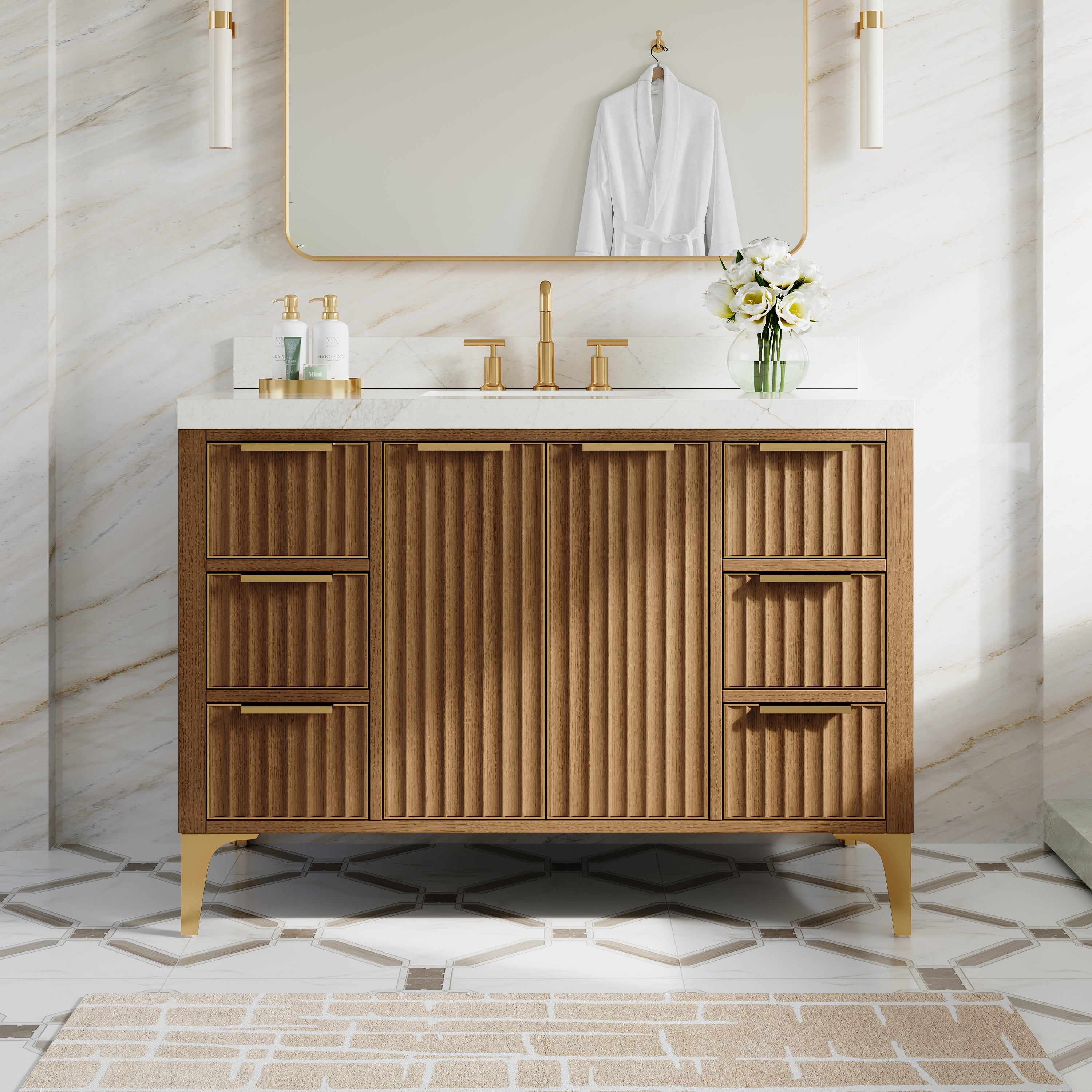
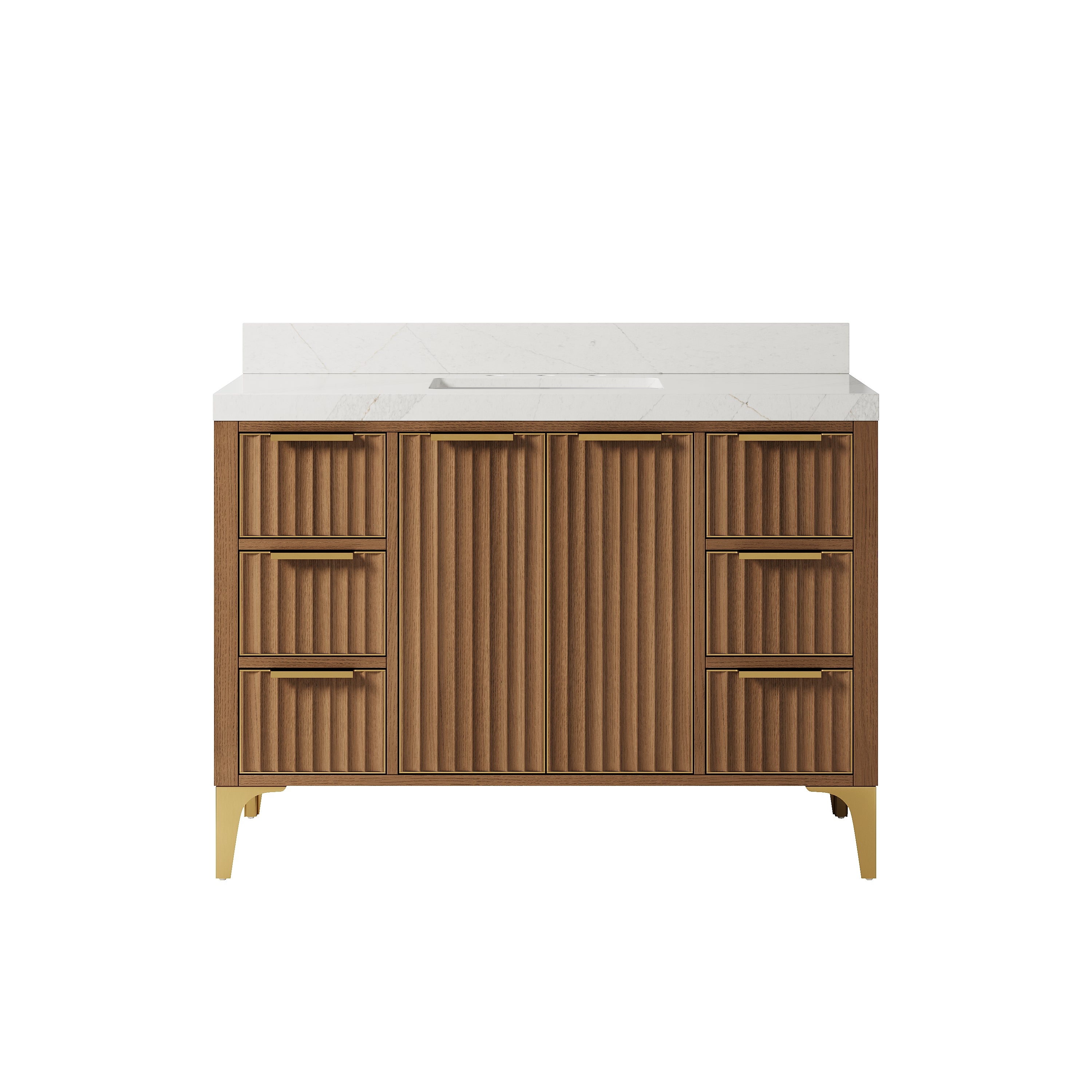


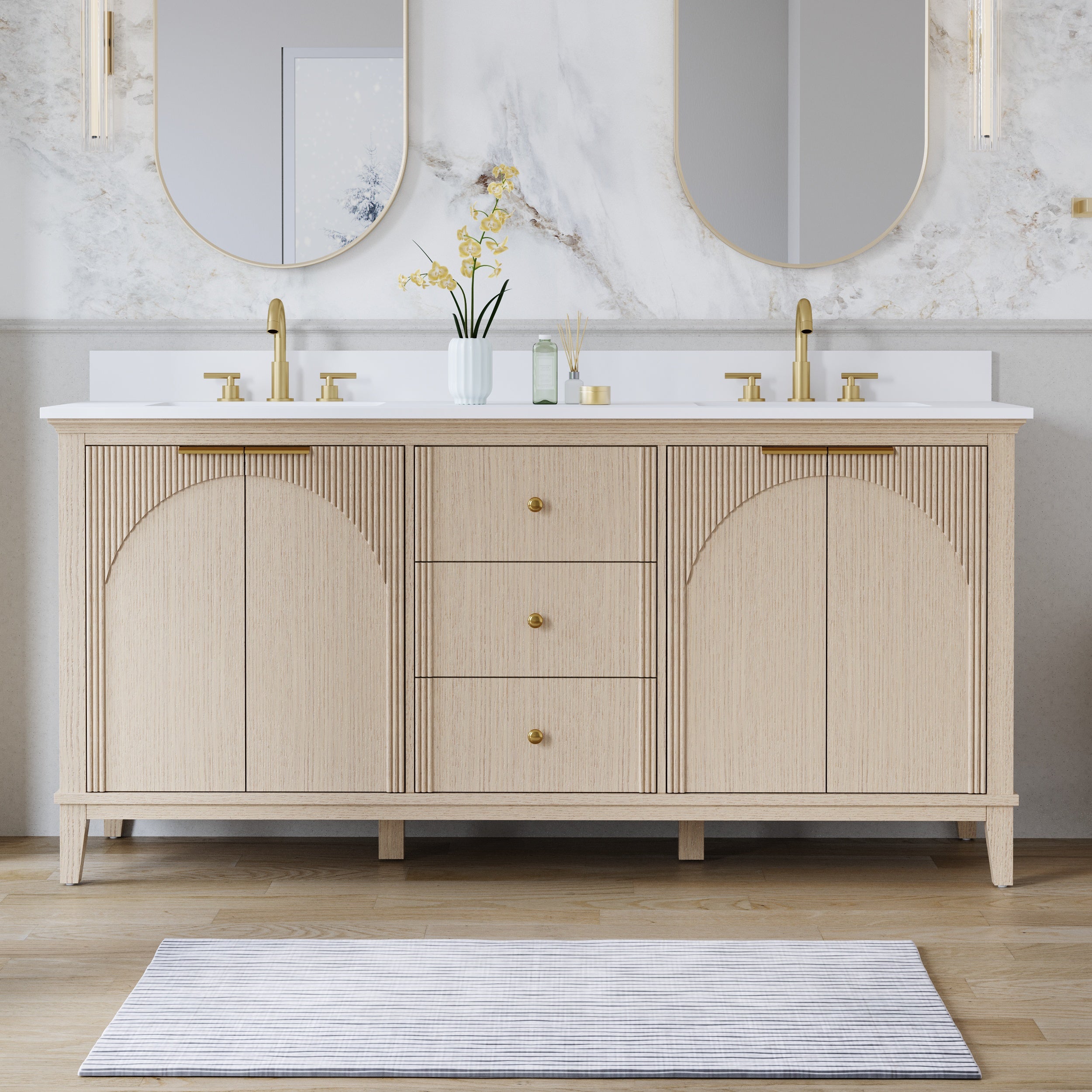
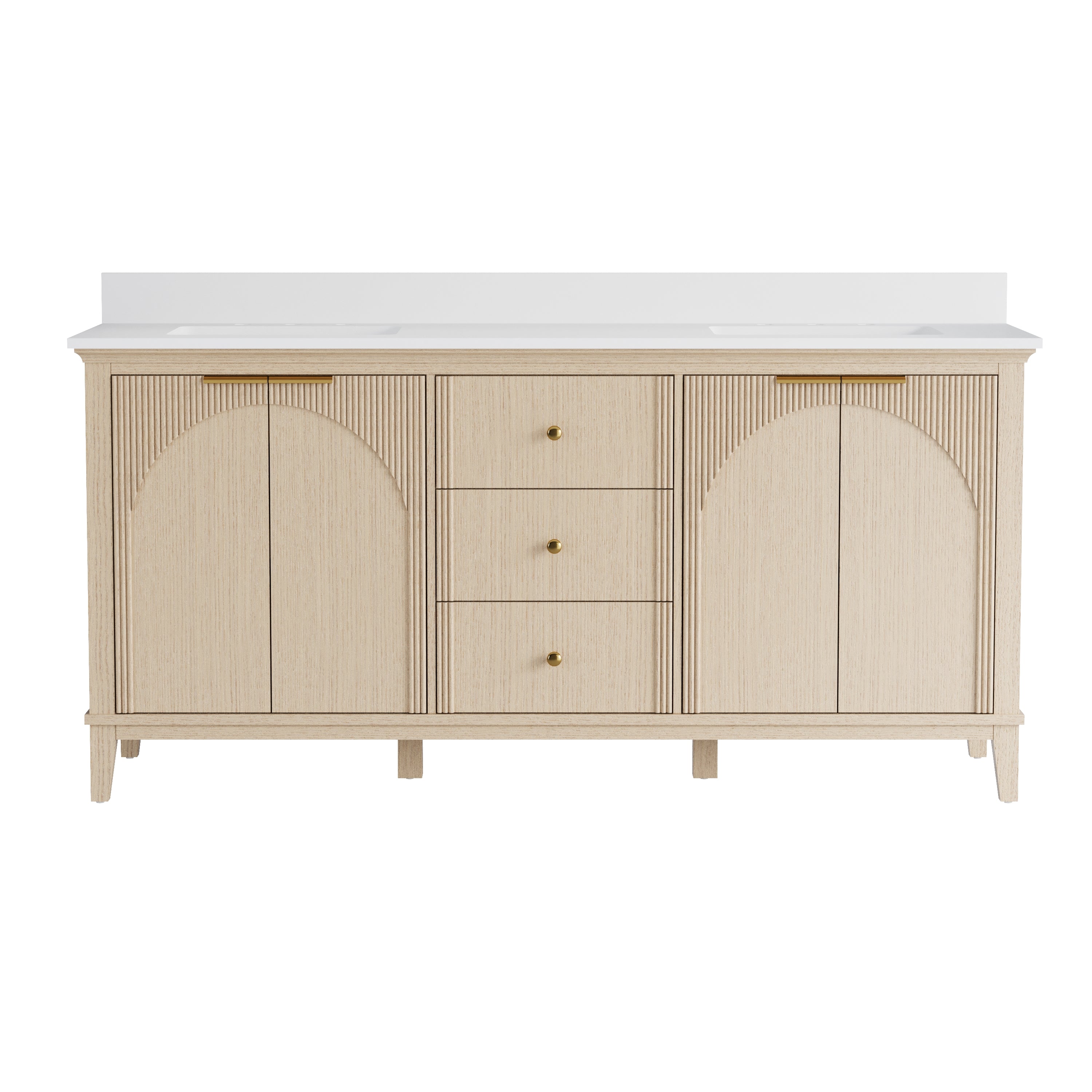


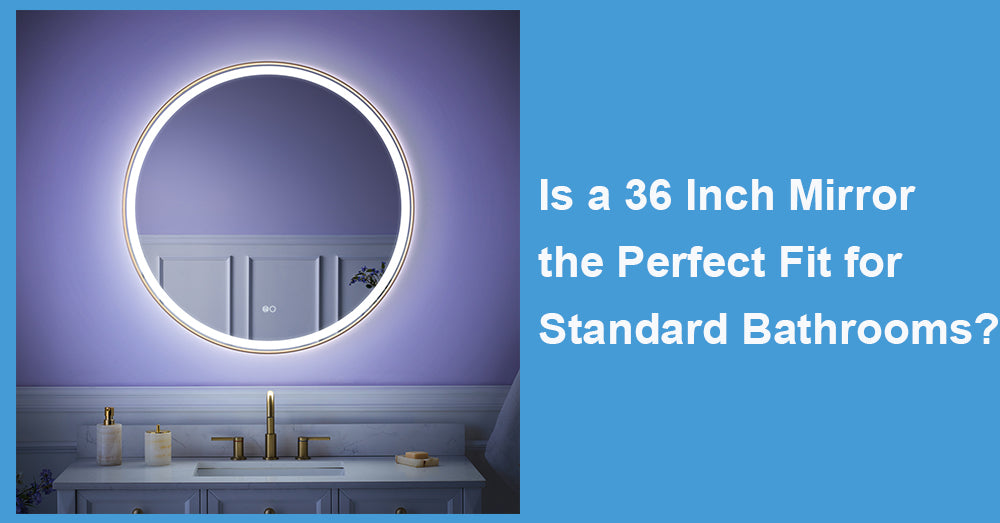
In the trend of constantly pursuing simplicity, functionality, and space efficiency in bathroom design, the size of mirrors has become an important factor shaping the overall experience. The 36 inch mirror has attracted much attention for its moderate size, flexible installation, and wide adaptability to various scenarios, but is it really suitable for a standard bathroom? This article will analyze from multiple aspects, such as spatial proportion, basin matching, installation method, lighting integration, and future trends, to explore whether 36-inch mirrors can meet the functional and aesthetic needs of mainstream bathrooms.
1. What does the size of a 36-inch mirror mean?
The 36-inch width (approximately 3 feet) falls within the moderately extensive range of bathroom mirrors, making it neither cramped nor difficult to install. According to conventional design parameters in the residential decoration industry, the width of a single basin in a standard bathroom usually falls between 24 and 36 inches, while the width of a double basin combination is typically 48 to 72 inches (source: HousingDesignData.com).
Therefore, from the perspective of size matching:
For a single basin bathroom, a 36-inch mirror can provide a more expansive visual space than a basin.
For smaller double-basin areas, it can also be selected as a mirror option.
For long wall single mirror layout: can be used as a medium focus mirror
This size already covers the mirror requirements of most ordinary bathrooms.
2. Spatial proportion analysis: Is 36 inches coordinated?
In interior design, it is often emphasized that "mirrors should not be smaller than the width of the basin, but should not exceed 75% -85% of the wall width" (source: InteriorFitGuide.org). Based on this experience, a 36-inch mirror can achieve a relatively harmonious proportion in most bathroom sizes.
If we take the mainstream wall width as an example:
48-inch wall width → 36-inch mirror accounts for 75%, proportion standard
60-inch wall width → accounts for 60%, with moderate white space
72 inch wall width → accounts for 50%, visually balanced
Compared to smaller 24-30-inch mirrors, 36-inch mirrors offer a greater visual extension, enhancing the sense of space in narrow bathrooms.
3. Compatibility with basin size
One of the key factors determining whether a mirror is suitable for practical use is its relationship with the basin.
Industry standards recommend mirrors be slightly wider than the basin or equal in width to ensure they cover the main usage area and provide a sufficient reflection angle (source: BathFurnishingReport.com).
Matching method between 36 36-inch mirror and a standard basin:
Equipped with a 24-30 inch single basin, the mirror can provide a wider "margin" on both sides, making it look more atmospheric
Equipped with a 36-inch single basin, creating a neat edge effect with simple lines
Equipped with dual basins: It is recommended to use one of the left and right basins, or combine it with the other mirror to form a symmetrical layout
That is to say, whether it is a miniature or standard bathroom, the 36-inch mirror is well-suited to practical use.
4. Installation method: What are the possibilities of a 36-inch size?
The size of the 36-inch mirror makes its installation more flexible, including:
4.1. Wall-mounted installation
The most common installation method usually requires 2-4 hanging points to complete fixation, with controllable weight and easy maintenance.
4.2. Embedded installation
If an embedded space is reserved, a 36-inch mirror can create a smoother wall effect, but it needs to be planned.
4.3. With or without lighting
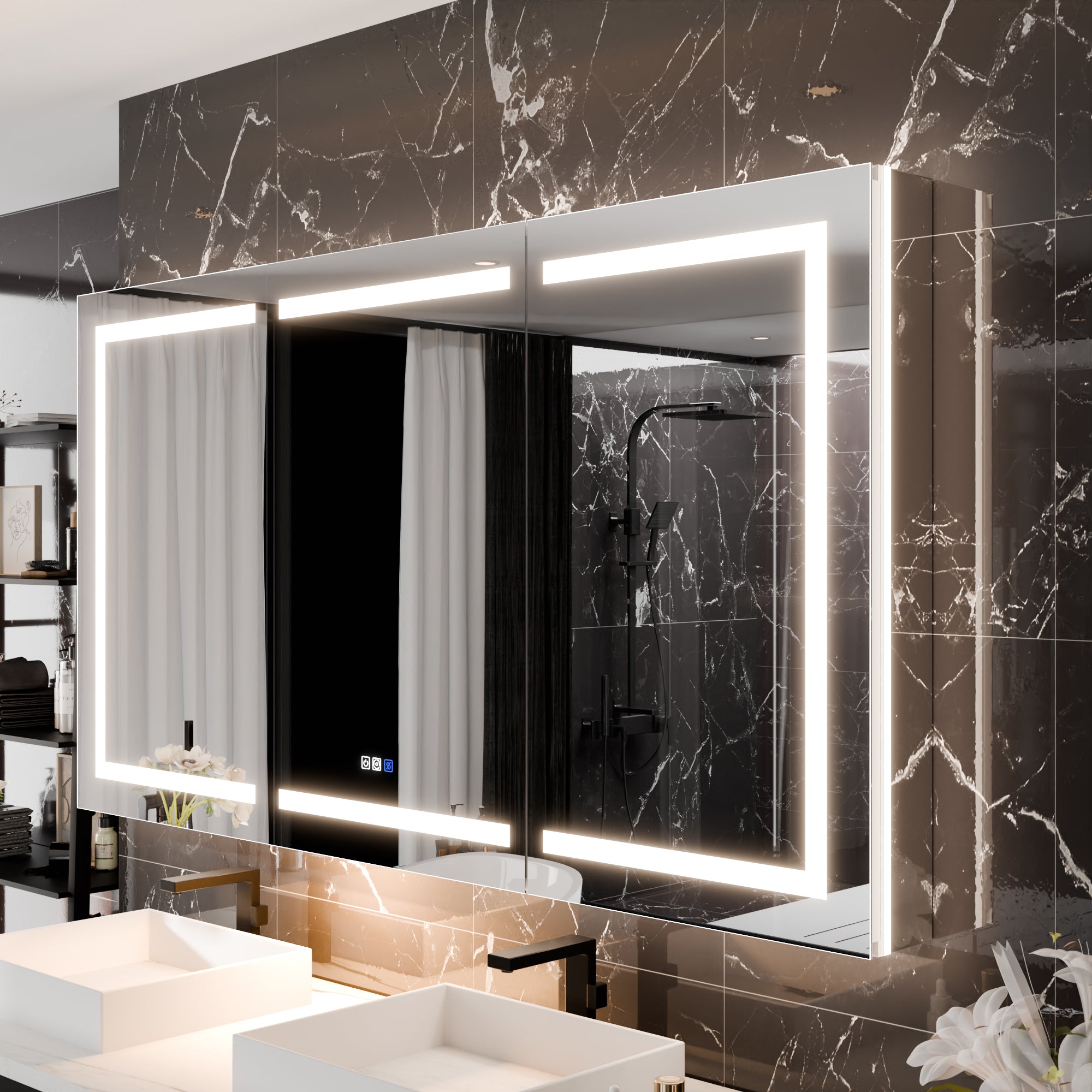
A width of 36 inches is the mainstream specification for many LED mirror brands; therefore:
Good uniformity of lighting performance
Reasonable power configuration
Cost is easier to control than larger-sized LED mirrors
Compared to lenses with a width of 48-60 inches, the 36-inch power supply, driver, and backlight layout are more stable
5. Lighting integration: 36 inches is a range that is easier to achieve "professional lighting effects"
In recent years, the trend of using LED makeup lights, backlit mirrors, and edge lights in bathrooms has continued to grow. According to LightingEngineeringLab.org, the brightness uniformity, power utilization, and illumination coverage of LED mirrors are at an optimal balance within a width range of 30-40 inches (source: LightingEngineeringLab.org).
This means:
36 36-inch mirror makes it easier to achieve uniform facial lighting
The length of the light strip is moderate, and the voltage attenuation is low
The anti-fog function covers just the right area and does not generate high power consumption
From a lighting technology perspective, this size can better achieve the design goal of "light effect comfort."
6. The bonus effect of 36 36-inch mirror on small bathrooms
Although the analysis focuses on the "standard bathroom", if the bathroom is smaller, a 36-inch mirror can have a particularly significant spatial amplification effect.
For example:
Wall width of only 40-50 inches: The mirror covers most of the wall, providing a wider visual experience
Low-light bathroom: mirror reflection can increase brightness
Narrow hand washing area: can make the sense of depth stronger
Many interior design-related data indicate that large-area mirrors can increase spatial brightness by about 30% (source: InteriorLightStats.com). This is particularly evident in small bathrooms.
7. Safety and installation requirements: The risk of 36 36-inch size is more controllable
Compared to larger mirrors (48-72 inches), the 36-inch installation is safer, mainly reflected in:
lighter in weight
The force points are easier to distribute evenly
Lower demand for wall reinforcement
One or two people can complete the installation
Low transportation and handling risks
Overall, this is one of the key reasons many families choose a 36-inch36-inch size: it's "big enough but not troublesome".

8. Future Trends: Why will 36-inch still be mainstream?
In the trend of bathroom design, 36 inches has enduring appeal. The reasons include:
Can adapt to multiple styles
From minimalism to modernity, from black gold to wood grain, it can all be adapted.
High cost-effectiveness
On the premise of not sacrificing visual effects, the cost and installation difficulty are relatively friendly.
More adaptable to the LED trend
It strikes a balance between technology and aesthetics.
Rich specifications of mainstream products
Almost all mirror manufacturers offer the 36-inch series, with a wide selection and price range.
Conclusion: A 36-inch mirror is highly suitable for standard bathrooms
Based on the comprehensive space ratio, installation requirements, basin matching degree, and lighting performance, it can be concluded that:
The 36-inch mirror is one of the most versatile, secure, and coordinated sizes for a standard bathroom.
Whether it's visual performance, daily functionality, safety, or lighting compatibility, 36 inches is highly advantageous, making it an almost error-free size choice for most bathrooms.
If the space is larger, you can choose 40-48 inches. But if you want to balance aesthetics, ease of installation, and daily user experience, a 36-inch mirror is worth considering as a priority.































Leave a comment
This site is protected by hCaptcha and the hCaptcha Privacy Policy and Terms of Service apply.