






















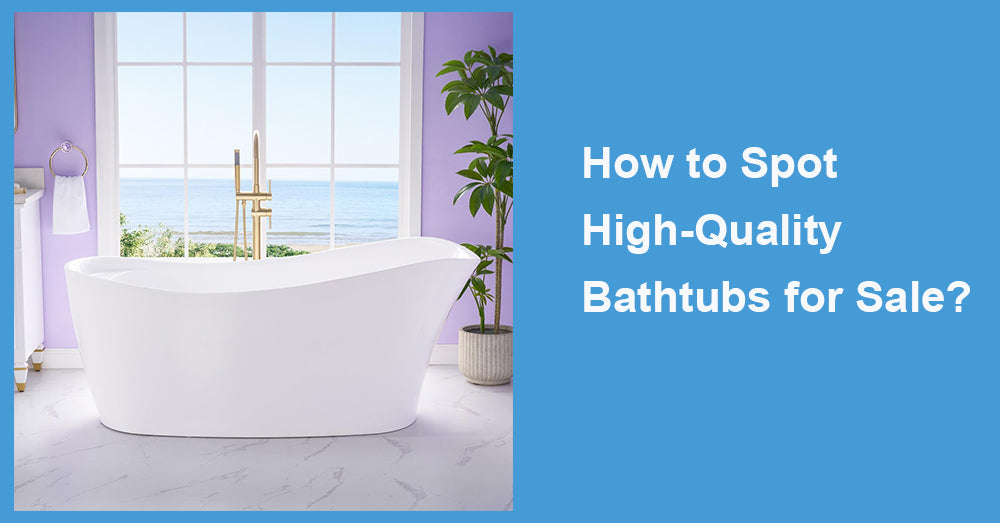
In modern home life, bathtubs are not only a basic piece of bathroom equipment but also a symbol of a comfortable and high-quality lifestyle. A high-quality bathtub can not only improve the comfort of daily use but also add a sense of luxury to the entire bathroom space. However, there are many brands of bathtubs and different materials on the market, and consumers can easily fall into "difficulty in choice". So, how do you judge the quality of the bathtubs for sale? This article will help you make an informed choice based on five key dimensions: materials, craftsmanship, structural design, practicality, and after-sales service.
1. The quality of materials determines the service life
Material is the primary factor in evaluating the quality of bathtubs, and the performance and durability of different materials vary significantly.
v Acrylic
Acrylic is popular due to its lightness and good thermal insulation properties. High-quality acrylic has a smooth surface, moderate thickness (usually 4-6mm), and good touch and gloss. Poor-quality acrylic may exhibit problems such as a rough surface, easy scratches, and discolouration.
Evaluation suggestion: Touch the surface with your hand; it should not feel prickly; observe whether the colour is pure and whether there are ripples or bubbles.
v Cast Iron
Cast iron bathtubs are durable and have a long heat retention time, making them often used in high-end bathrooms. Its surface is covered with a thick glaze layer, with uniform colour and heavy texture. Although the installation is more complicated, the service life typically exceeds 20 years.
Evaluation suggestion: Check whether the glaze is smooth, cracked, or has pores. Try knocking on the surface; the sound should be crisp.
v Composite materials and artificial stone (Solid Surface)
Composite bathtubs offer a combination of strength and beauty, making them a popular choice for modern minimalist styles. The surface has high hardness, a uniform colour, and a soft texture. Suitable for consumers who pursue texture and environmental protection.
Evaluation suggestion: Confirm whether it has passed the environmental certification (such as no formaldehyde release) and check the material composition description.
2. The craftsmanship level reflects the quality of details
Even if good materials are selected, if the craftsmanship is not up to standard, the product quality cannot be guaranteed.
Joint treatment and polishing process
The joints of high-quality bathtubs should be flat and smooth, without burrs or gaps. Especially the joints and overflow areas, if not handled properly, are prone to water seepage or dirt.
Evaluation suggestions: Gently touch the joints with your hands to assess their flatness and tightness.

Surface coating and glaze
Whether it is acrylic, ceramic, or cast iron bathtubs, their surface treatment process directly affects stain resistance and aesthetics. High-quality products typically utilise high-temperature firing or multi-layer spraying to create a uniform and firm glaze which is less prone to colour changes or chipping.
Evaluation suggestion: If water can quickly form water droplets and slide down when poured on the surface, it means that the surface is dense and not easily absorbent to stains.
3. Structure and design determine the use experience
Design is not only about appearance and beauty but also about the comfort and safety of daily use.
n Ergonomic design
High-quality bathtubs are typically designed concerning ergonomic principles, featuring smooth internal lines and a well-organised layout of backrests, armrests, and leg space. Especially when taking a bath, the support effect on the back and neck significantly affects the experience.
Evaluation suggestion: You can try sitting in the bathtub in person to experience whether it fits your body curve and whether it is easy to slide or feel oppressive.
n Anti-slip and safety configuration
High-quality bathtubs are usually designed with anti-slip textures on the bottom or equipped with anti-slip coatings. At the same time, the edges are rounded and have no sharp corners to avoid bumps during use.
Evaluation suggestion: Observe whether the anti-slip design on the bottom is visible and verify whether it meets the relevant safety standards.
n Drainage system design
Whether the drainage is fast, easy to clean, and odour-proof is an essential factor in judging the functionality of the bathtub. The drainage system of high-quality bathtubs typically utilises stainless steel or high-quality PVC with a strong seal.
Evaluation suggestion: Check the location and slope design of the drain port to ensure smooth drainage.
4. Brand and after-sales are guarantees
A good bathtub cannot be separated from the support of professional brands and perfect after-sales service.
l Choose a reputable brand
Well-known brands like Wellfor in the industry often have mature R&D systems, strict quality control processes and reliable supply chains. The product boasts higher stability and consistency, and its comprehensive after-sales service system is a key advantage.
Evaluation suggestions: Check whether the brand holds industry certifications (such as ISO 9001, CE, CUPC, etc.) and consider user reputation.
l After-sales service and warranty policy
Technical problems are inevitable during installation and use. A responsible brand should provide one-stop services, including delivery, installation, and maintenance, and have a clear and transparent warranty policy.
Evaluation suggestions: Ask about details such as warranty period, maintenance response time, and whether door-to-door service is offered.
5. Practical suggestions for smart purchases
To avoid pitfalls, consumers are advised to pay attention to the following points before purchasing:
1) Visit offline exhibition halls more often: personal observation, touch, and trial sitting are the most intuitive;
2) Take an exemplary bathroom size diagram: make sure the bathtub matches the space size;
3) Don't unthinkingly pursue functions: basic quality takes precedence over complex functions;
4) Understand the installation conditions, such as whether the drainage height, water pipe interface, power wiring, etc., are suitable;
5) Pay attention to environmental protection and health: choose low-VOC material products to avoid the release of harmful gases.
Conclusion
Choosing a high-quality bathtub is an investment in the quality of life. Among the dazzling array of products, only by truly understanding the key points of materials, structure, craftsmanship and service can you accurately avoid mistakes and choose the product that suits you. Whether from the perspective of comfort, beauty, or durability, a high-quality bathtub will bring new enjoyment to your bathroom space. The evaluation ideas and professional suggestions provided in this article can serve as a powerful reference in your purchasing process.









































Leave a comment
This site is protected by hCaptcha and the hCaptcha Privacy Policy and Terms of Service apply.