






















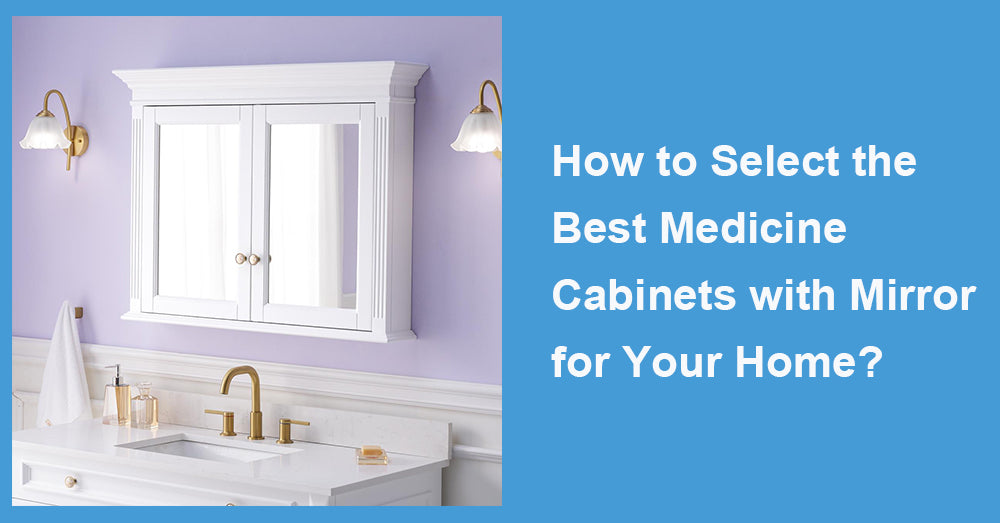
In the process of upgrading and renovating home bathrooms, medicine cabinets with mirror are often among the most underestimated yet most impactful configurations for long-term use. They integrate the mirror and storage in the exact location, improving storage efficiency, visual order, and daily flow without occupying additional ground space. From an industry perspective, choosing the right mirror cabinet is not just about "appropriate size"; it requires a comprehensive assessment of space conditions, usage habits, and structural details.
1. Start with bathroom conditions first, not style
The first step in choosing a mirror cabinet is not to look at its appearance, but to evaluate the condition of the bathroom itself. The width of the hand washing area, the wall structure, and the height at which mirrors can be installed will directly affect the adaptability of the mirror cabinet.
The width of standard washbasins is typically 30-48 inches, and the matching mirror cabinet is usually slightly narrower or close to the countertop width, which visually coordinates better. In terms of height, the mirror cabinet's overall height is concentrated chiefly between 26 and 32 inches, which is more in line with the line of sight for standing use and also convenient for picking up and placing items. Ignoring these basic conditions often leads to inconvenience later, and even if the appearance is good, it is difficult to remain satisfied in the long run.
2. Surface mount or embedded? Depends on spatial priority
The installation method of the mirror cabinet directly determines the efficiency of space utilization. Surface-mounted mirror cabinets have relatively simple construction and require minimal wall modifications, making them suitable for upgrading bathrooms that have already been renovated.
The embedded mirror cabinet hides the cabinet body inside the wall, with the front almost flush with the wall, and the overall depth is usually around 4-5 inches, without occupying the washing area outward. For bathrooms with limited clear distance in front, this "borrowing space inward" approach can significantly improve user comfort. Industry case studies show that embedded solutions generally provide better spatial feedback in small- and medium-sized bathrooms.
3. The storage structure determines its long-term usability
The practicality of a mirror cabinet depends on its internal structure, not just its capacity. Adjustable shelves are an essential feature that can accommodate bottles and other supplies of varying heights, preventing wasted space.
From a daily usage perspective, a reasonable depth inside the mirror cabinet is usually between 4 and 6 inches, which can accommodate standard cleaning and care products without causing inconvenience in retrieving items due to excessive depth. Industry observations have found that the clearer the internal structure and zoning of the mirror cabinet, the easier it is to maintain cleanliness over the long term.
4. Mirror quality is not just about being able to see oneself
As a high-frequency component, the clarity and stability of the mirror surface are crucial. High-quality mirror cabinets typically use a moisture-resistant mirror structure, reducing fogging and edge corrosion in humid environments.
In addition, the opening method of the mirror door can also affect the user experience. Double doors are more convenient for multiple people to use simultaneously in wider hand-washing areas, while single-door structures are more suitable for spaces with limited width. When making a choice, it should be judged based on the width of the handwashing area and the number of users.
5. Whether the lighting function is needed depends on usage habits
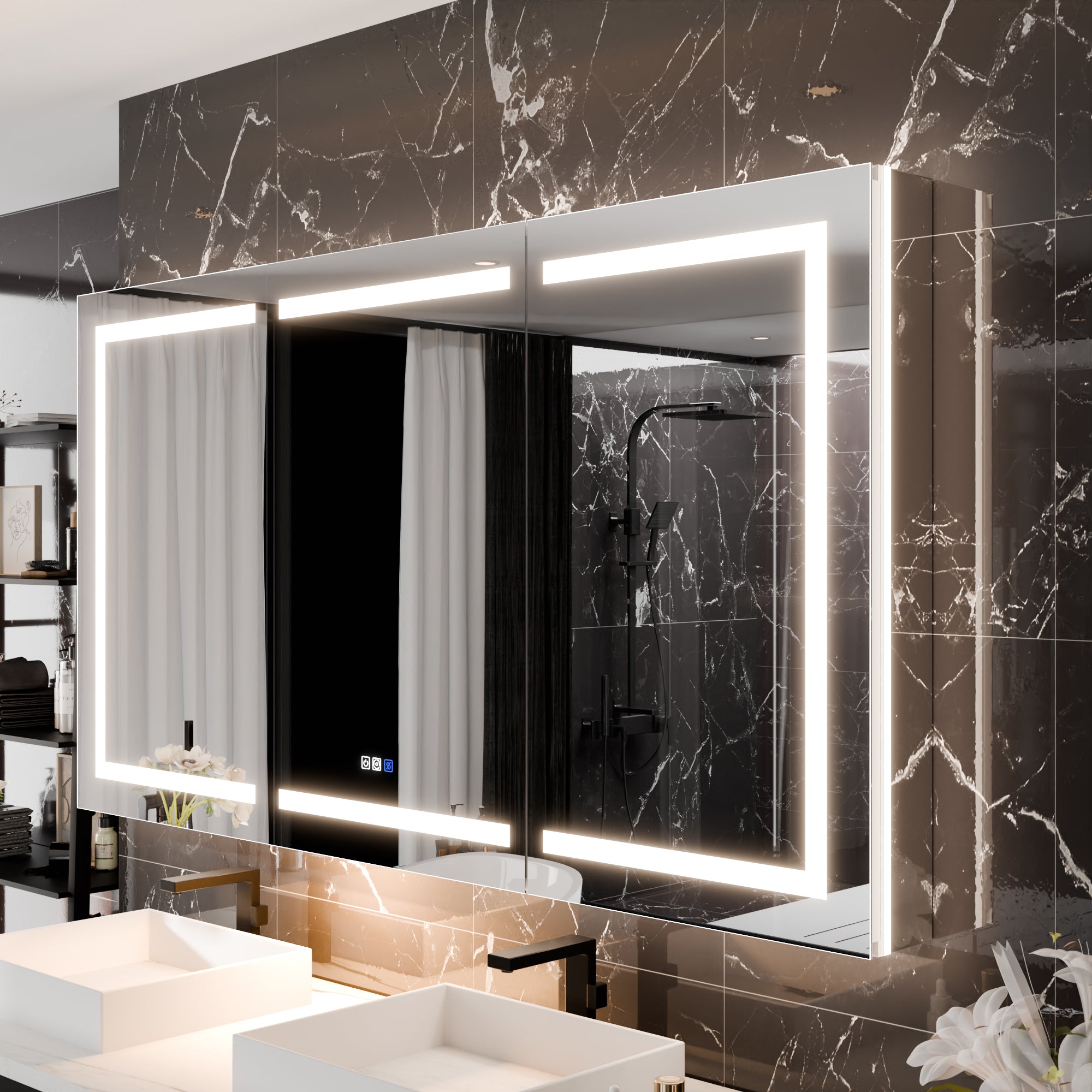
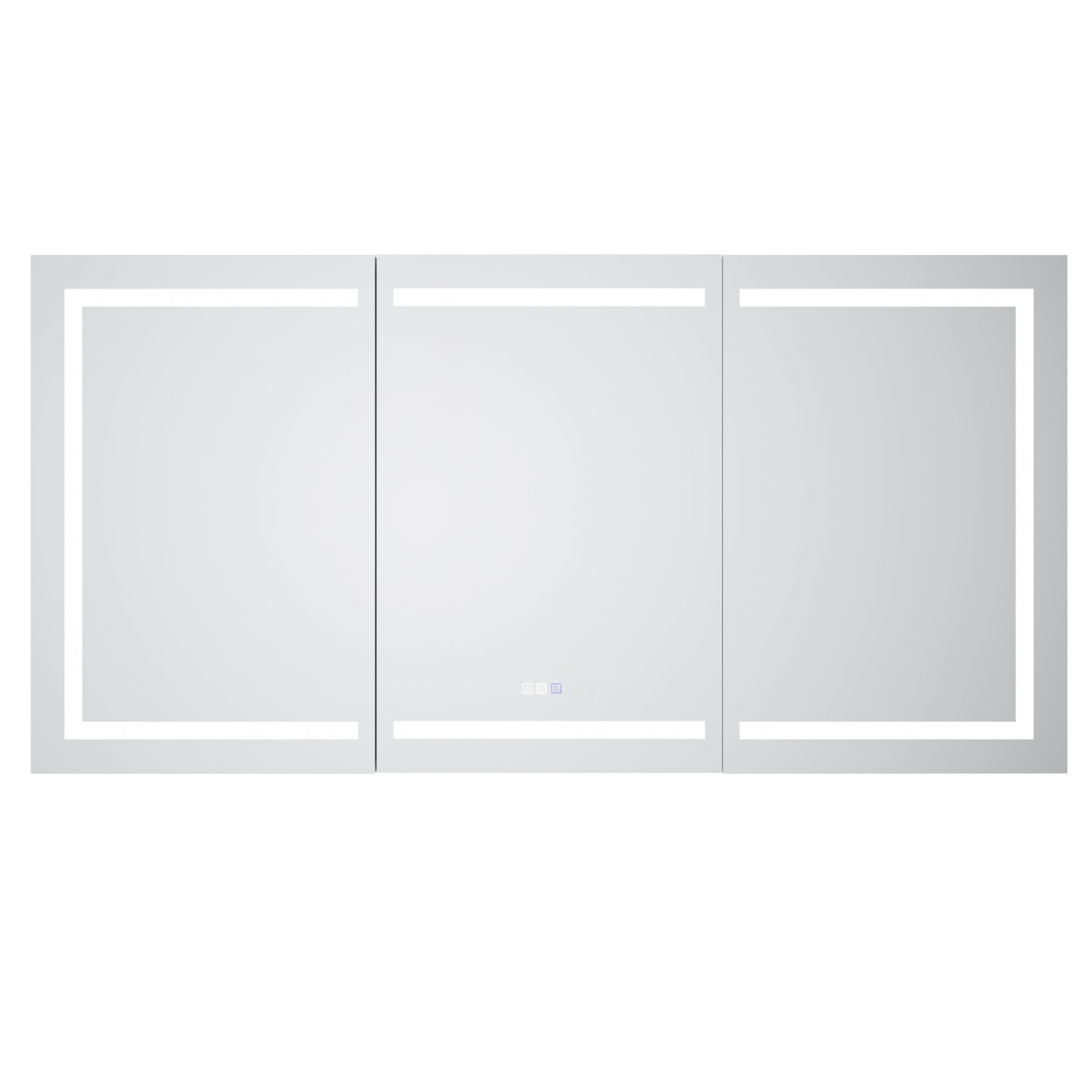
Light mirror cabinets have become increasingly common in bathroom upgrades in recent years, but whether they are needed depends on the existing lighting conditions. If the hand-washing area lacks a front light source, the mirror cabinet's built-in lighting can significantly improve the experience of fine operations such as shaving and makeup.
From a design logic perspective, when the width of the mirror cabinet is between 24 and 36 inches, uniform forward lighting can effectively reduce facial shadows and improve clarity. For families pursuing functional integration, a mirror cabinet with lights can reduce the need for additional lighting fixtures and simplify the design.
6. Coordination with the proportion of washbasins
The mirror cabinet is not a standalone item, but a part of the overall handwashing area. The proportional relationship between it and the washbasin directly affects visual balance.
Industry experience shows that when the width of the mirror cabinet is close to or slightly smaller than the width of the washbasin, the overall appearance is more stable; If the mirror cabinet is significantly smaller than the countertop, it will appear "suspended" visually. This imbalance in proportions is often only realized after a period of use, so it is imperative to consider it in the selection stage.
7. Durability and maintenance costs are equally important
Mirror cabinets are fixed configurations for long-term use, and durability is more important than short-term appearance. Door hinges, opening structures, and internal supports all affect the service life.
Mirror cabinets with a simple structure and highly standardized components offer greater advantages in later maintenance and replacement. Industry feedback shows that well-designed mirror cabinets often have a significantly longer lifespan than other bathroom furniture.
8. Whether aesthetics are enduring determines whether they are easily outdated
In terms of style, mirror cabinets are best suited for designs with simple lines and restrained decoration. Compared with products with complex shapes and an emphasis on decoration, function-driven mirror cabinets are less likely to appear outdated as aesthetic trends change.
Many bathrooms, after undergoing multiple partial renovations, still retain mirror cabinets for continued use, reflecting their design maturity.

9. Conclusion: Choosing the right mirror cabinet is a long-term investment in daily life
The mirror cabinet is not the most prominent element in the bathroom. Still, it is one of the configurations with an extremely high frequency of use and profound impact on the experience. A suitable mirror cabinet can make the handwashing area cleaner, easier to pick up items, and make the entire bathroom look more orderly.
When you systematically consider factors such as spatial conditions, structural design, usage habits, and long-term maintenance before choosing medicine cabinets with mirrors, it is no longer just a "seemingly suitable product" but a reliable configuration that truly serves daily life. This is the ultimate goal of choosing a mirror cabinet.







































Leave a comment
This site is protected by hCaptcha and the hCaptcha Privacy Policy and Terms of Service apply.