






















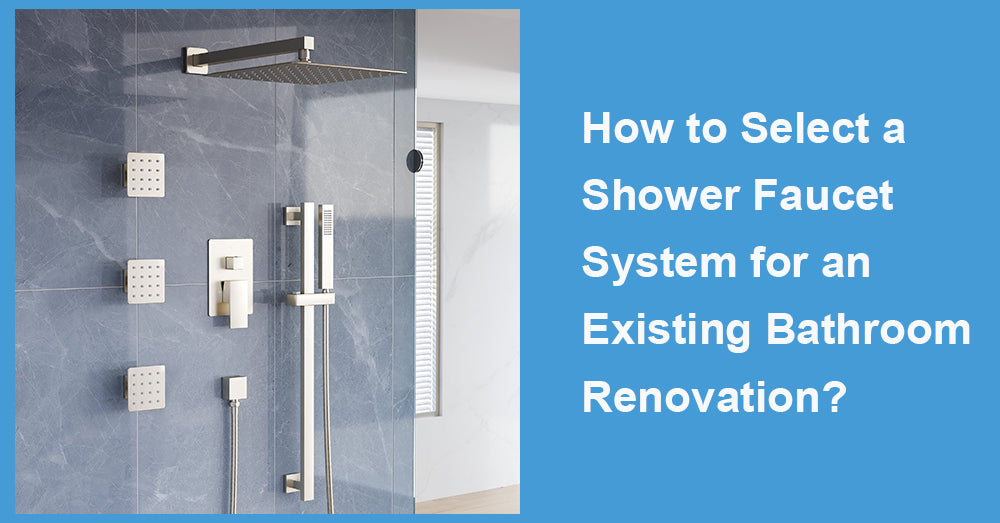
In the trend of modern home renovation, bathroom upgrades are not just about replacing tiles or bathtubs; they are also about enhancing the overall aesthetic of the space.Shower faucet systems have become a key component in improving bathroom comfort, functionality, and aesthetics.
However, choosing a suitable shower faucet system is not an easy task for renovating existing bathrooms.Size matching, installation method, water pressure adaptation, design style, water-saving performance... every aspect directly affects the user experience and decoration budget.
This industry news article will provide consumers with a comprehensive reference guide, covering market trends, functional features, design choices, installation, and maintenance, to help them make informed decisions when renovating existing bathrooms.
Shower faucet system becomes a new focus of bathroom upgrade
In the past, bathroom shower systems primarily focused on basic functions, including a water outlet, temperature control, and nozzle adjustment.
Nowadays, consumers have increasingly high demands for the shower experience - they not only want to enjoy a stable water flow, but also hope to achieve multifunctionality, water conservation, and personalization through systematic design.
Market data indicate that in recent years, sales of shower faucet systems have exhibited a continuous upward trend, particularly for products featuring temperature control, handheld showerhead combinations, and multi-outlet modes, which have become the preferred choice for high-end bathroom renovations.
Industry designers note that shower systems are no longer just pipe fittings, but rather a core element of bathroom design, having a significant impact on overall style and comfort.
Understand the types and functions of shower faucet systems
To choose a suitable shower faucet system, the first step is to understand the common types in the market:
Single-handle control system
Easy to operate, control water temperature and flow rate through knobs, suitable for budget-limited or small bathrooms.
Constant temperature mixing system
Equipped with temperature control valves, it can maintain a stable water temperature and prevent sudden temperature fluctuations, making it particularly suitable for families with elderly members or children.
Handheld showerhead combination system
The combination of a handheld showerhead and a fixed showerhead can not only meet daily flushing needs but also facilitate cleaning the bathroom or bathing pets.
Multifunctional water outlet system
It features multiple modes, including rain shower, massage, and mist spray, providing an intense experience, and is commonly found in mid- to high-end bathrooms.
Each type has different installation methods and space requirements, so it is essential to measure the bathroom size before purchasing to ensure compatibility with existing pipelines.
Size and installation requirements: The importance of customization
For the renovation of existing bathrooms, pipeline layout and wall load-bearing are essential factors that must be considered.
There are usually two installation methods for shower faucet systems:
Surface Mounted
Easy to install, this solution is suitable for bathrooms where the original wall cannot be easily removed or modified. Still, the pipelines will be exposed, requiring consideration for both aesthetics and waterproof treatment.
Concealed/Wall Embedded
The pipeline is hidden inside the wall, with a clean and modern appearance, but the construction difficulty is high, requiring advanced planning of wall slotting and water pressure requirements.
Industry engineers recommend confirming the water pressure, pipe diameter, and pipeline layout before renovation, and then determining the appropriate installation method. Otherwise, problems may arise, including unstable water flow, uneven mixing of hot and cold water, and even wall leakage.

Material and Durability: Long-Term Considerations for Bathroom Upgrades
The material of the shower faucet system directly affects its service life and the difficulty of cleaning.
Common materials include:
Copper material
Corrosion-resistant and durable, with even thermal conductivity, but the price is relatively high.
Stainless steel
Wear-resistant and corrosion-resistant, this material is suitable for modern minimalist-style bathrooms.
Alloy or chrome plating
The appearance is bright, and the cost is low; however, long-term use is prone to scratches or discoloration.
Additionally, when purchasing, pay attention to the material of the valve core and the design of the sealing ring, as these factors directly impact the risk of water leakage and the accuracy of temperature regulation.
High-quality systems typically offer a five-year or even a ten-year warranty, which serves as a reliable indicator for measuring product quality.
Design style and overall coordination
In addition to its functionality, the design style of the shower faucet system also impacts the overall aesthetic of the bathroom.
Currently, there are several popular styles in the market:
Modern minimalism: black or brushed metal texture, rugged lines, suitable for small apartments or Nordic style.
Classic Retro: Copper or gold-plated elements, curved shower bar, commonly used in neoclassical or retro style bathrooms.
High-tech intelligence: equipped with an LED temperature display screen, constant temperature control, and intelligent memory mode, to meet the demand for technological sense.
When renovating an existing bathroom, it is recommended to combine the original tiles, bathtub, and overall color scheme to ensure that the system is not only user-friendly but also visually pleasing.
Water conservation and environmental protection: intelligent control becomes a trend
Modern shower faucet systems are increasingly emphasizing water conservation and environmental protection, such as:
Low flow design: Reduce water usage and lower water expenses while maintaining a comfortable water experience.
Constant temperature control: Prevent waste caused by frequent adjustments to water temperature.
Intelligent metering: Some systems can record water usage to help households manage water resources.
For consumers, choosing a water-saving shower system not only conforms to environmental protection concepts, but also can long-term reduce household water costs.
Price range and cost-effectiveness analysis
The price range of shower faucet systems on the market is relatively large:
Entry level: $100- $300, basic single-handle or simple handheld showerhead, suitable for budget-limited renovation projects.
Mid-end level: $300- $700, constant temperature mixing, handheld combination, comprehensive and durable functions.
High-end level: above $700, multifunctional rain shower, intelligent temperature control system, suitable for high-end bathrooms or families pursuing a luxury experience.
From a cost-performance perspective, mid-range products are typically the ideal choice for renovating existing bathrooms, as they strike a balance between functionality, lifespan, and price.
Consumer Guide: How to Choose the Most Suitable Shower System
In the renovation of existing bathrooms, it is recommended to start from the following aspects when choosing a shower faucet system:
Measure bathroom space and piping: Ensure Size matching to avoid rework in the future.
Precise usage requirements: The choice of system type is determined by daily bathing, family and child care, pet cleaning, or massage experiences.
Pay attention to materials and durability: The quality and anti-corrosion performance of copper materials and valve cores directly affect their lifespan.
Combining decoration style: Coordinate the shower system with the overall bathroom style.
Budget and cost-effectiveness: Select the system with the most suitable functions within your budget.
Consider water-saving and intelligent functions to enhance user experience while also prioritizing environmental protection.
Conclusion: Making the shower experience a highlight of bathroom renovation
Renovating a bathroom is not just about updating the hard furnishings, but also an opportunity to enhance the quality of life.Choosing the appropriate shower faucet systems not only enhances comfort but also optimizes aesthetics and energy efficiency.
Expert reminder: When renovating existing bathrooms, it is essential to plan the piping, clarify functional requirements, and select suitable materials and styles to make the shower system a true highlight of the bathroom upgrade. A scientifically selected shower system not only makes every shower more comfortable, but also makes the bathroom a "private space" in home life, reflecting the perfect combination of design and practicality.










































Leave a comment
This site is protected by hCaptcha and the hCaptcha Privacy Policy and Terms of Service apply.