















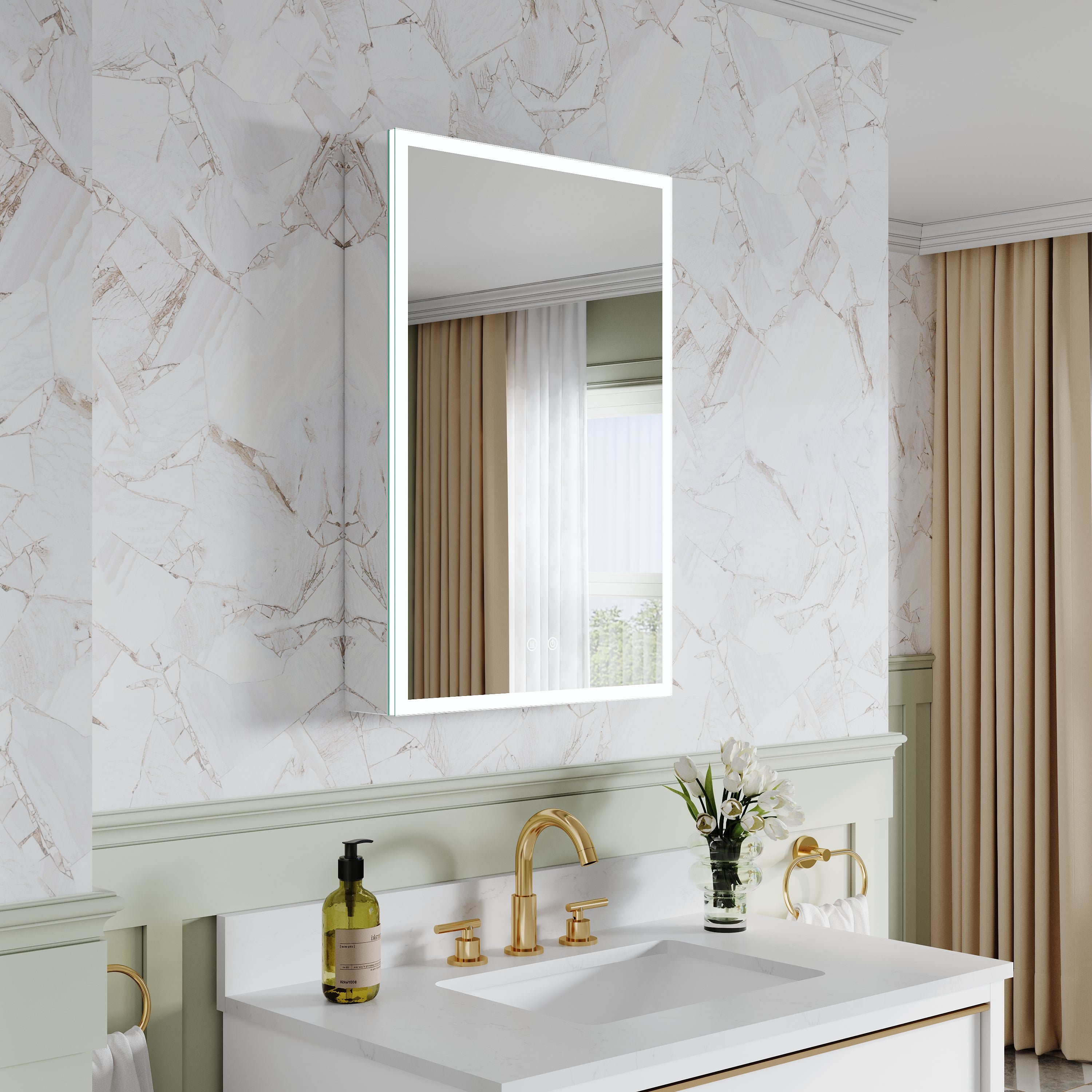
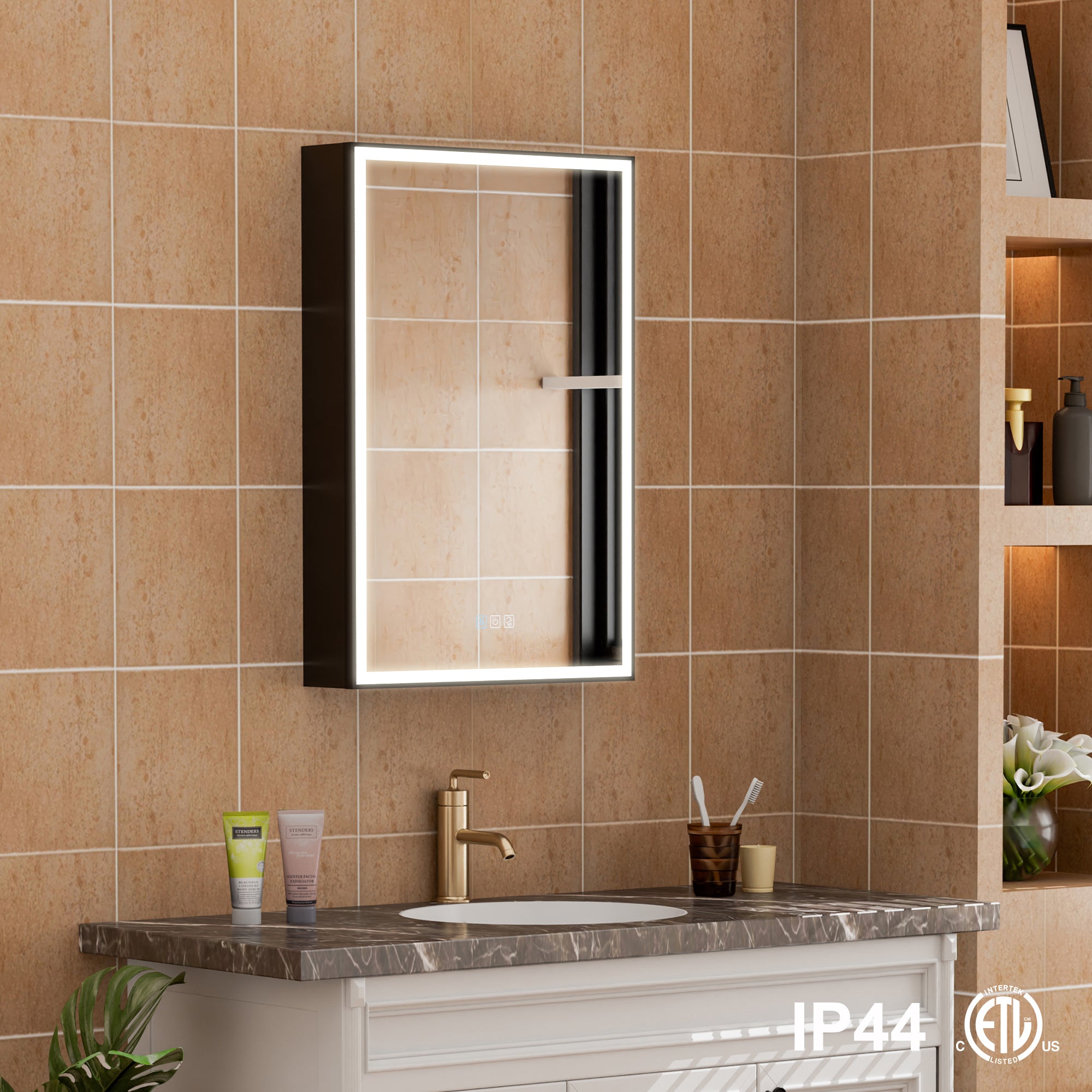










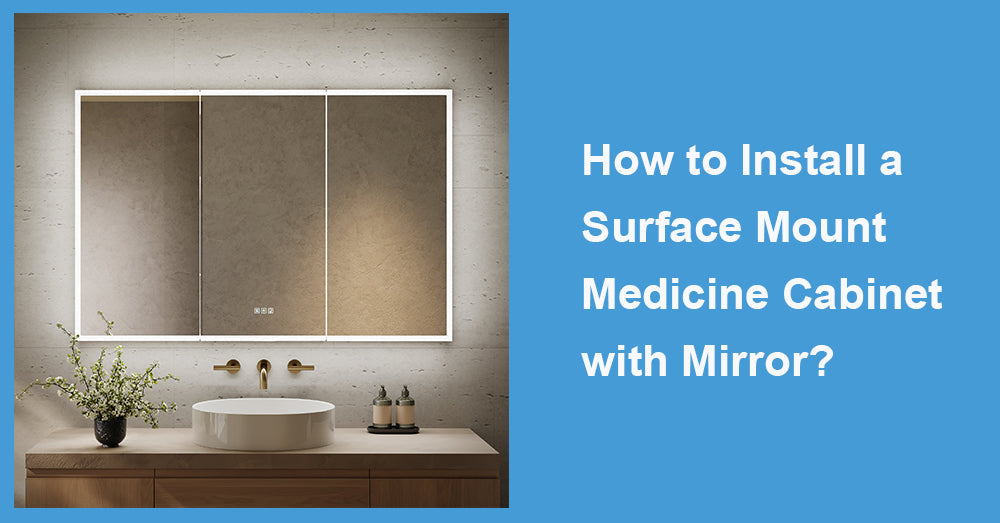
A surface-mount medicine cabinet with mirror is a practical upgrade when a bathroom needs more storage without opening the wall for a recessed cabinet. Because the cabinet sits on the finished surface, installation is usually more predictable in remodels where plumbing, wiring, or framing may be difficult to move. Houzz reports that medicine cabinets are upgraded in 32% of bathroom renovations, up 3 percentage points year over year. The value is simple: more storage with less disruption, provided the wall support and mounting hardware are handled correctly.
1. Measure the Entire Vanity Wall
Start with the vanity centerline, then measure the wall rather than choosing the cabinet by width alone. A 20- to 24-inch cabinet often works above a compact vanity, while 30- to 36-inch models suit larger single-sink layouts.
Check the faucet height, backsplash, outlets, sconces, side walls, and ceiling. Kohler guidance calls for at least 3 inches of clearance between the door and nearby objects such as a faucet or light fixture.
Good proportion matters more than squeezing the largest possible cabinet onto the wall.
2. Find the Studs Before Drilling
A mirrored cabinet carries more weight than a flat mirror because it also supports shelves, doors, bottles, and grooming products. Use a stud finder before settling on the final position.
Kohler’s surface-mount instructions for one current system require at least one mounting-bar hole to align with a wall stud. Other locations may use appropriate anchors where the instructions allow them.
This is one place where shortcuts rarely pay off. A cabinet can look aligned on day one and still loosen later if most of its load is carried by weak drywall anchors.
3. Level the Mounting Bar Carefully
Many surface-mount medicine cabinets use a horizontal mounting bar or hanger. If that piece is off level, the cabinet and mirrored doors will follow it.
Mark the centerline, hold the bar in position, and check it with a level before drilling. One current Kohler system specifies three 2-inch screws for the mounting bar, including the stud connection.
Don't rely on a grout line or vanity countertop as the only reference. Older walls may be slightly uneven, and a large mirror makes small errors easy to see.
4. Get Help With Larger Cabinets
Small single-door cabinets may be manageable for one experienced installer, but larger mirrored models are safer with two people. Current Kohler instructions for heavier surface-mount cabinets specifically warn installers to get assistance when lifting the product.
Lift the cabinet onto the mounting system, secure it as directed, and check the level again. Then open each door slowly and make sure it clears sconces, the faucet, side walls, and trim.
For larger mirror cabinets, careful handling is part of the installation steps, not just a safety precaution.

5. Adjust the Doors After Mounting
Once the cabinet is secure, inspect the mirrored doors and adjust the hinges if necessary.
On a double-door cabinet, the center gap should remain consistent from top to bottom. The doors should close without rubbing the cabinet edge or one another.
This small finishing step has a large effect on perceived quality. Clean alignment is one of the details that separates a professional-looking installation from a cabinet that merely functions.
Do the final adjustment only after the cabinet is firmly attached to the wall, since mounting can slightly change door alignment.
6. Plan for Lighting and Power
A basic surface-mounted cabinet is mainly a mounting job. A cabinet with LED lighting, internal outlets, USB charging, or defogging adds electrical coordination.
If power is required, decide where wiring will enter before the cabinet covers the wall. Hardwired products may require a qualified electrician.
NKBA’s 2026 Bath Trends Report, based on responses from nearly 700 industry professionals, found that 91% consider lighting quality a top bathroom priority. The other 47% favor integrated lighting in mirrors over the next three years.
From an industry standpoint, integrated features are raising the value of medicine cabinets beyond basic storage.
7. Surface Mounting Works Well in Remodels
The strongest advantage of surface mounting is what it avoids. A recessed cabinet may require cutting drywall or tile and then dealing with studs, pipes, or wiring inside the wall. A surface-mounted model can often be added after the vanity and backsplash are already in place.
That makes it particularly useful for a bathroom refresh that does not involve opening every wall.
NKBA also reports that 72% of surveyed professionals expect bathroom footprints to evolve partly to support more efficient storage solutions.
Products that improve function without expanding the renovation scope have a practical edge.
8. Inspect Before Loading the Shelves
Once installation is finished, check the mounting points, hinges, shelves, clips, and door movement before filling the cabinet.
Open and close the doors several times. Make sure glass shelves are fully seated and distribute heavier bottles rather than placing them all on one side. If the cabinet shifts or pulls away from the wall, stop using it until the mounting is fixed.
A successful installation should feel stable before the cabinet starts carrying everyday products. This quick check is especially worthwhile with larger cabinets that combine mirrors, lighting, and storage in one fixture.
9. Conclusion
Installing a surface-mount medicine cabinet with a mirror is generally easier than recessing a cabinet into the wall, but accurate measuring, solid attachment, a level mounting bar, proper door clearance, and careful lifting still matter.
For compact bathrooms, a 20- to 24-inch model can add useful storage with little visual weight. Wider 30- to 36-inch cabinets can create a stronger mirror and storage zone above midsize vanities.
The best results come from choosing the cabinet early, checking wall conditions, and planning electrical features before installation day. When those details are resolved first, surface mounting delivers added storage, a cleaner vanity area, and less disruption to the finished bathroom.




































Leave a comment
This site is protected by hCaptcha and the hCaptcha Privacy Policy and Terms of Service apply.