


















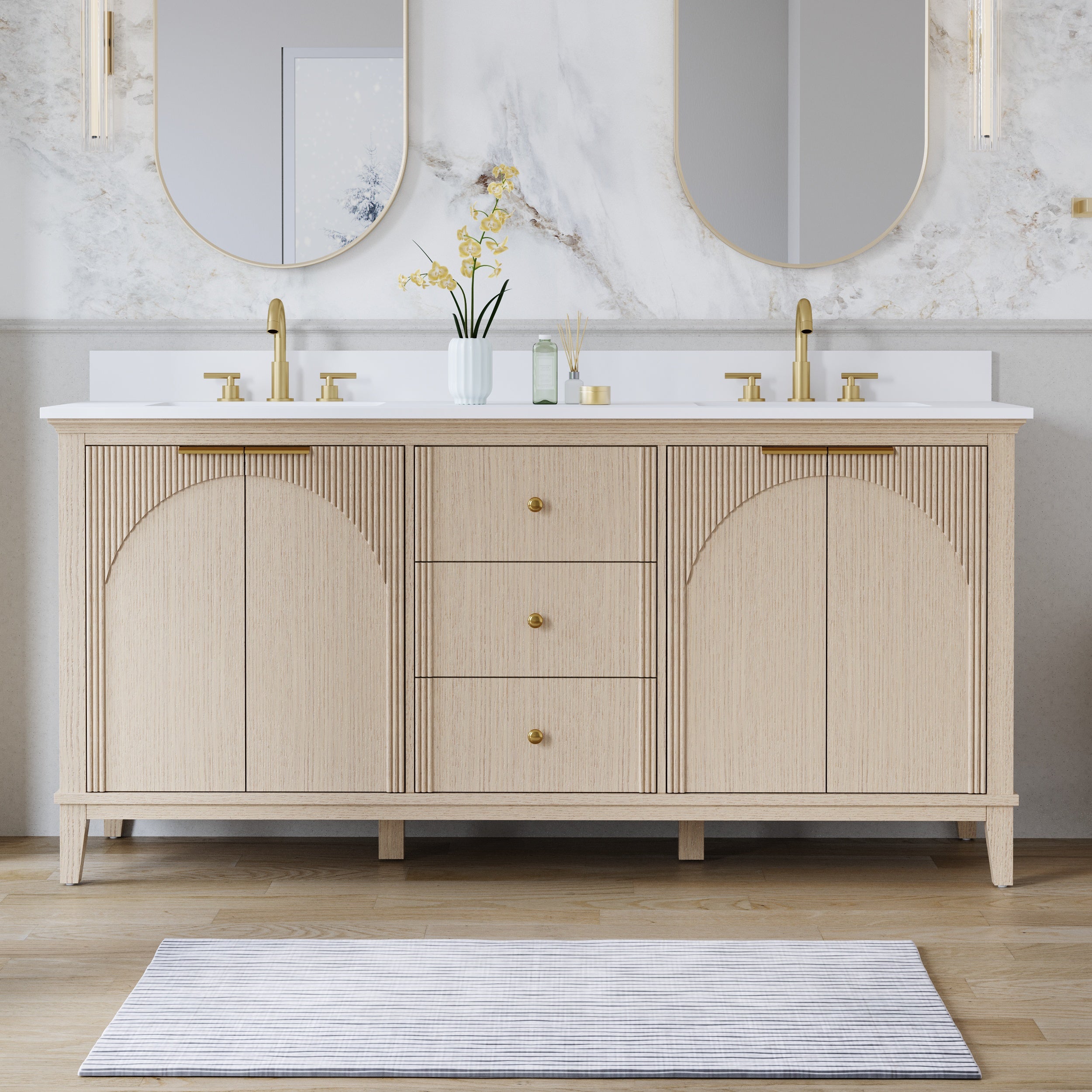
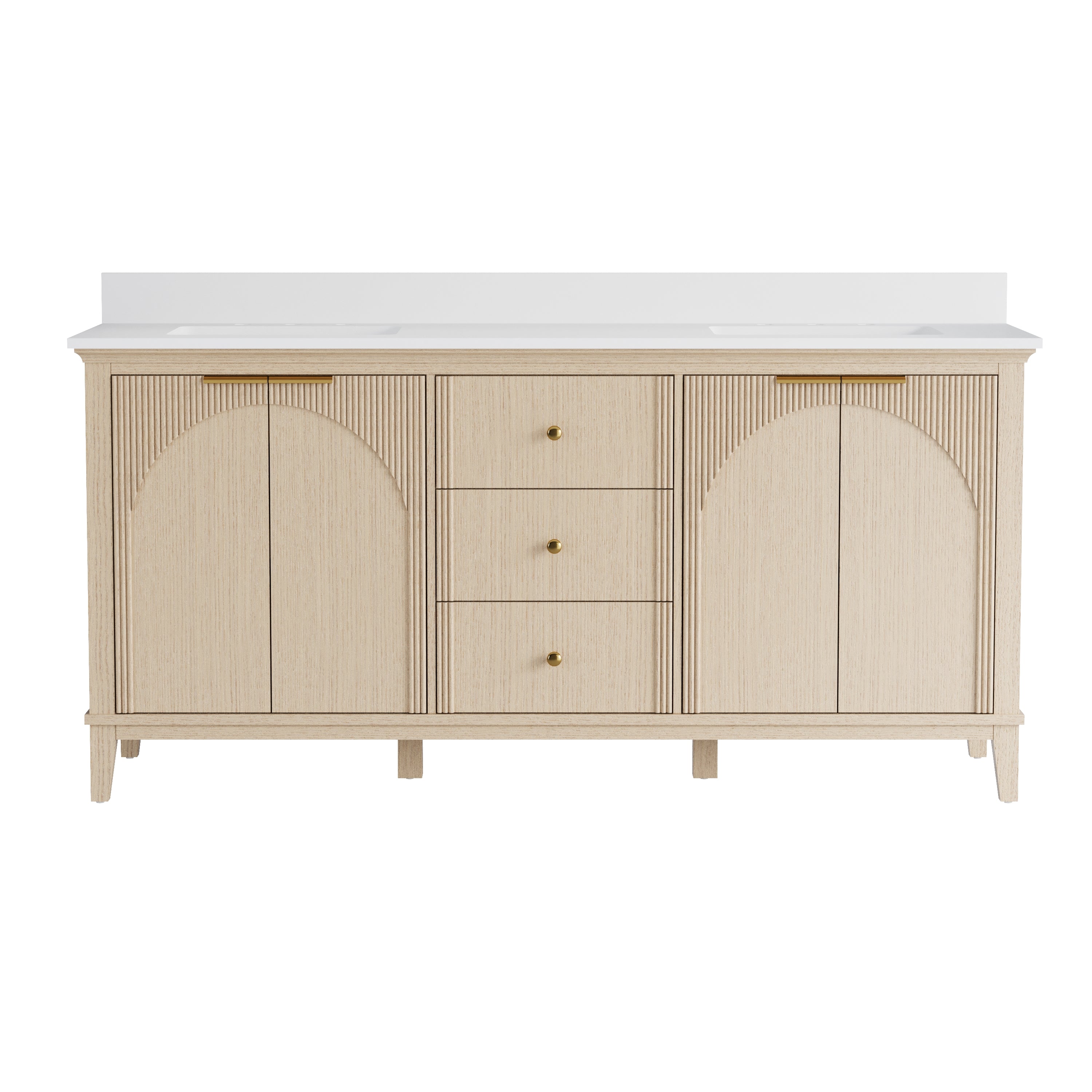


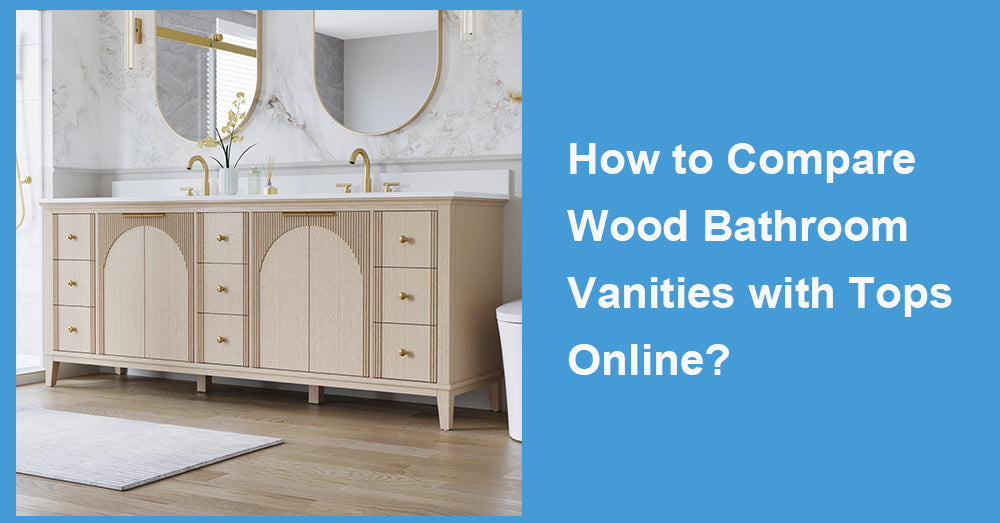
Buying a vanity from a screen is convenient, but similar-looking products can be very different once they arrive. The best way to compare wood bathroom vanities with tops is to move past color and price and examine cabinet construction, moisture protection, countertop material, dimensions, and included parts. Here is how to read a listing like a careful buyer.
1. Confirm What “Wood” Actually Means
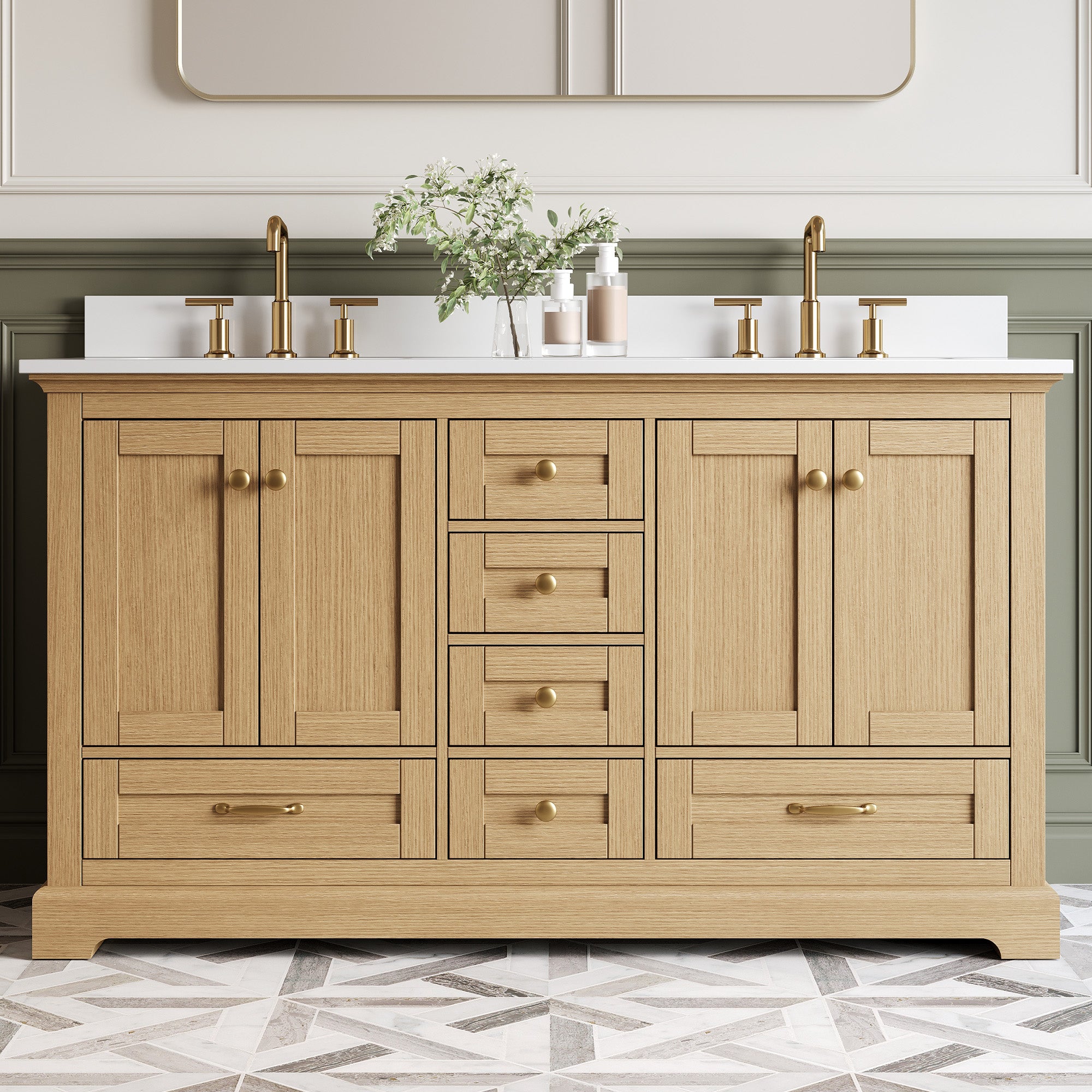
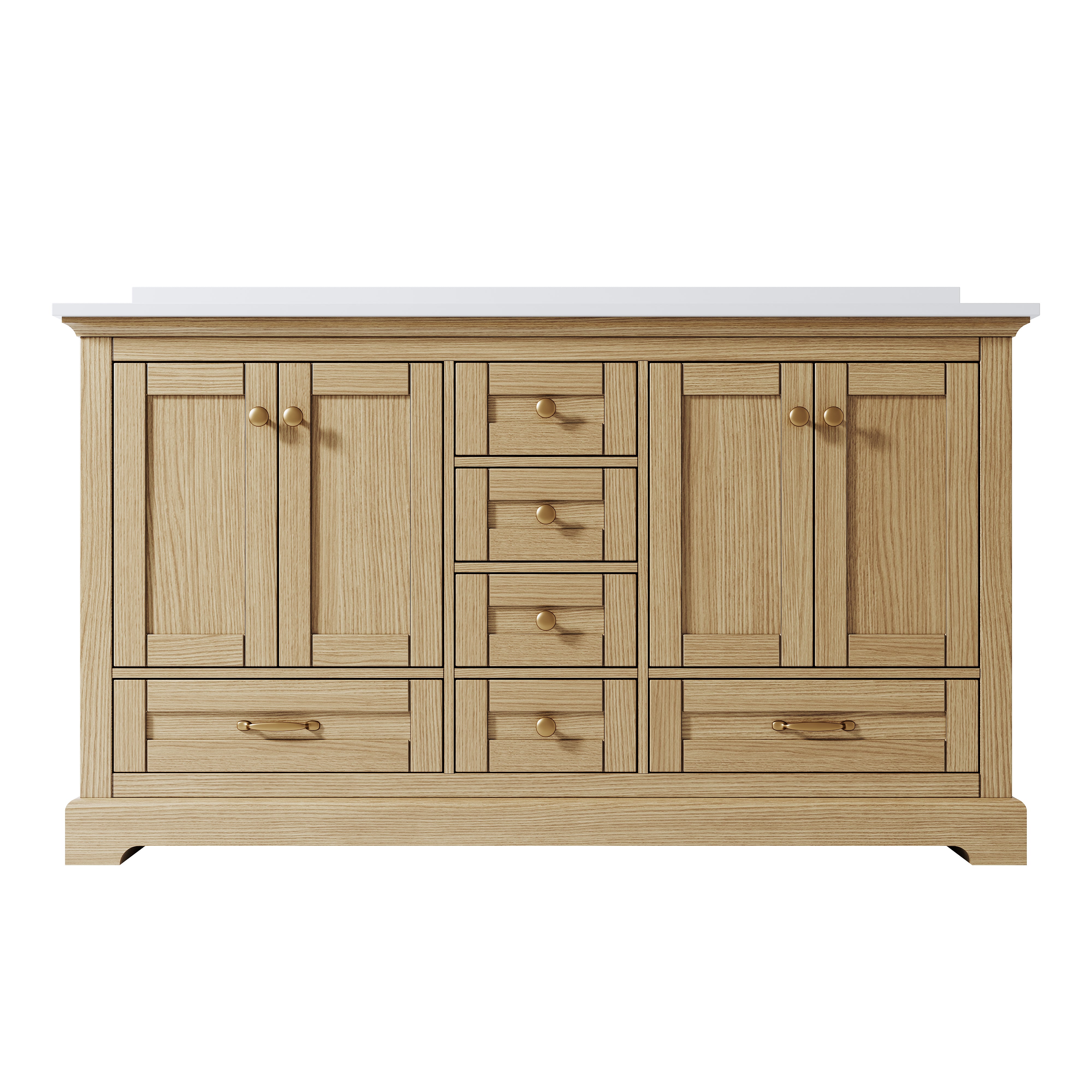
"Wood vanity" is a widely used commercial term referring to cabinets. One cabinet can have a solid wood frame combined with plywood side panels, while another cabinet may be made of different materials like MDF or particle board covered with wood veneer. While one option cannot be categorized as "better" than the other, each material has its usage.
Solid wood constructions are very hard to break and simple to repair, but they may need more thorough protective treatment because of their interaction with humidity. According to the US Forest Service, wood is hygroscopic, which means that the wood absorbs and releases moisture depending on the changes in relative humidity and temperature. This fact proves that joinery, sealing, and ventilation are as essential as the choice of trees to be used.
Plywood is a good choice for cabinet boxes because its construction makes it very durable. MDF may give you a flat painted surface, but if sealed improperly, water can damage its edges. Always look at what materials you are getting your frame from.
For vanities containing hardwood plywood, MDF, or particleboard, also look for TSCA Title VI compliance. The U.S. Environmental Protection Agency requires regulated composite wood products sold in the United States to meet formaldehyde-emission standards and carry compliant labeling. (Source: U.S. EPA, Formaldehyde Emission Standards for Composite Wood Products.)
2. Evaluate the Finish for a Wet Room
A vanity should tolerate normal splashes and changing humidity. Compare whether the finish is painted, stained, veneered, or sealed and described as moisture-resistant. Pay attention to sink cutouts, cabinet feet, door edges, and backsplash joints, where water can linger.
The EPA recommends using a bathroom exhaust fan vented outdoors to remove moisture. Ventilation protects the cabinet and helps discourage mold and mildew. (Source: U.S. EPA, Remodeling Your Home and Indoor Air Quality.) Wipe up puddles promptly; “moisture-resistant” does not mean “waterproof.”
3. Compare the Top, Not Just the Cabinet
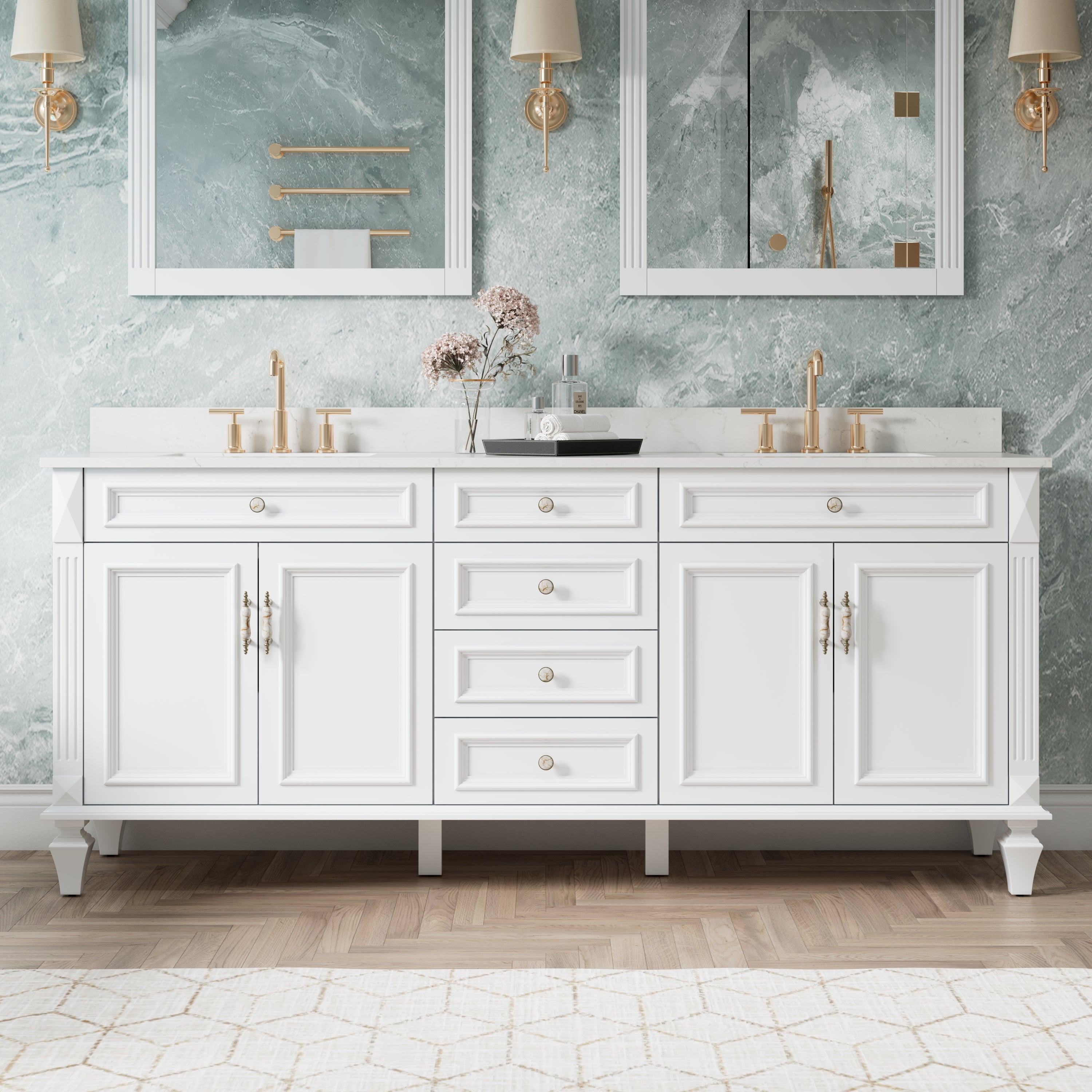
The countertop affects appearance, maintenance, weight, and installation. Product titles may use “marble,” “cultured marble,” “quartz,” or “engineered stone” loosely, so verify the specification sheet.
Natural marble offers unique veining, but it can stain or etch and may require sealing. The Natural Stone Institute advises blotting spills promptly, cleaning with mild soap and water, and drying thoroughly. (Source: Natural Stone Institute, Natural Stone Care & Cleaning.)

Engineered quartz usually delivers consistent color and lower routine maintenance, while cultured marble provides a uniform look at a budget-friendly price. Ceramic or vitreous china is easy to clean but may offer fewer choices. Request a sample when color matching matters because screens, lighting, and natural veining change what you see.
4. Check Every Dimension—and the Plumbing
Start with width, depth, and overall height, normally listed in inches in the U.S. Check whether the width includes the top and its overhang. Measure wall space at floor and counter level; baseboards, trim, outlets, and uneven walls reduce usable space.
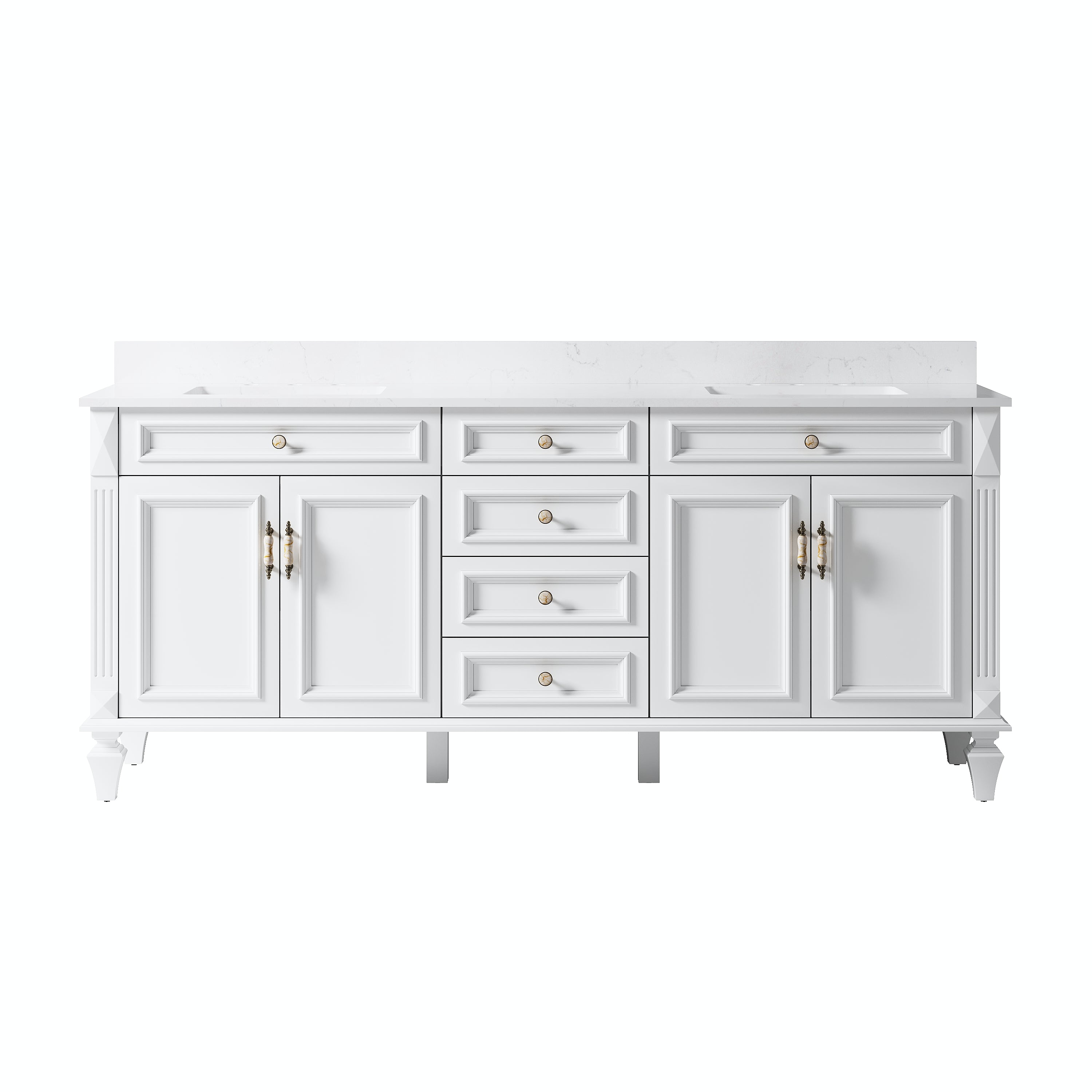
Compare sink position with your drain and supply lines. Find a diagram showing the open back, drawer depth, shelves, and each sink centerline. In a double vanity, drawers or dividers may conflict with plumbing.
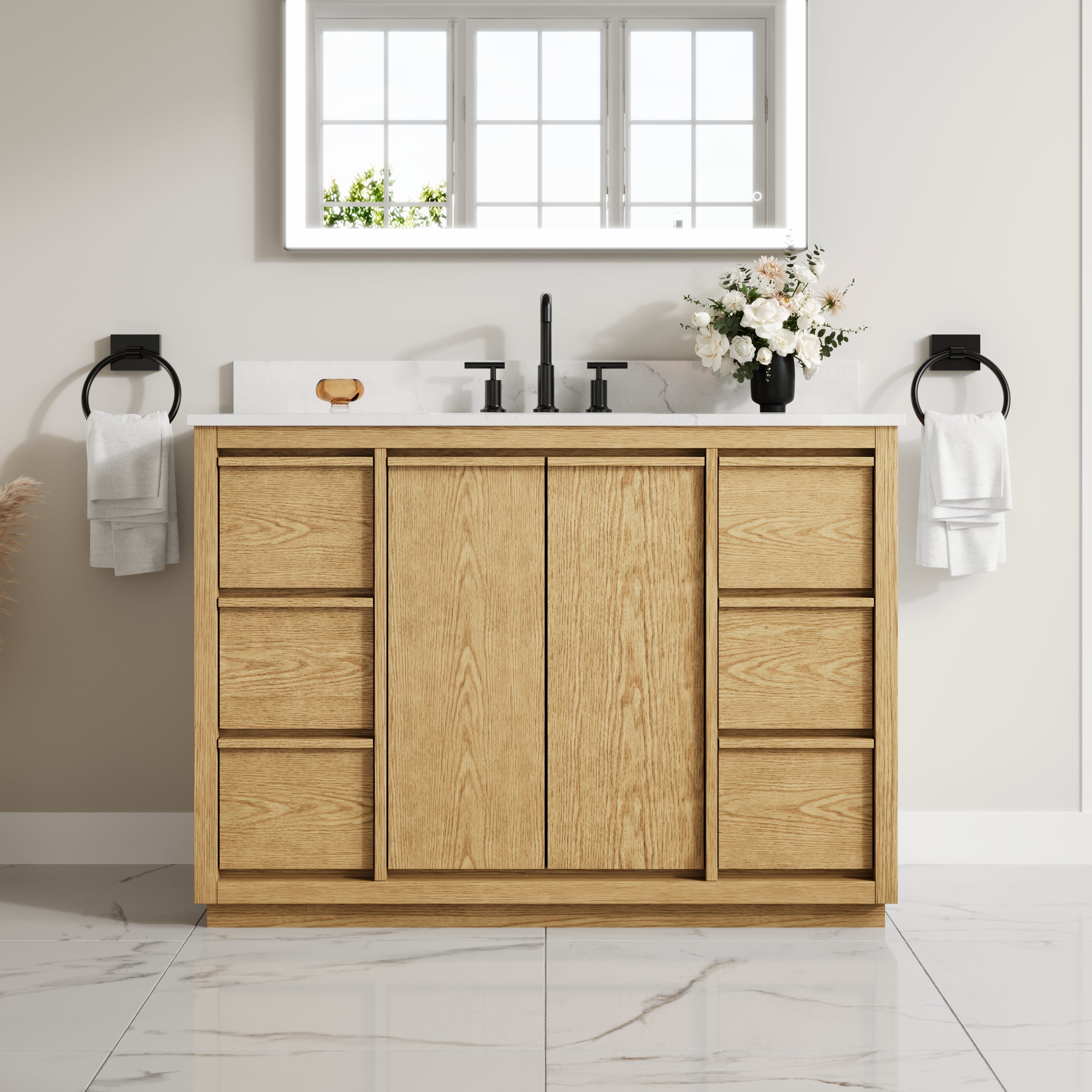
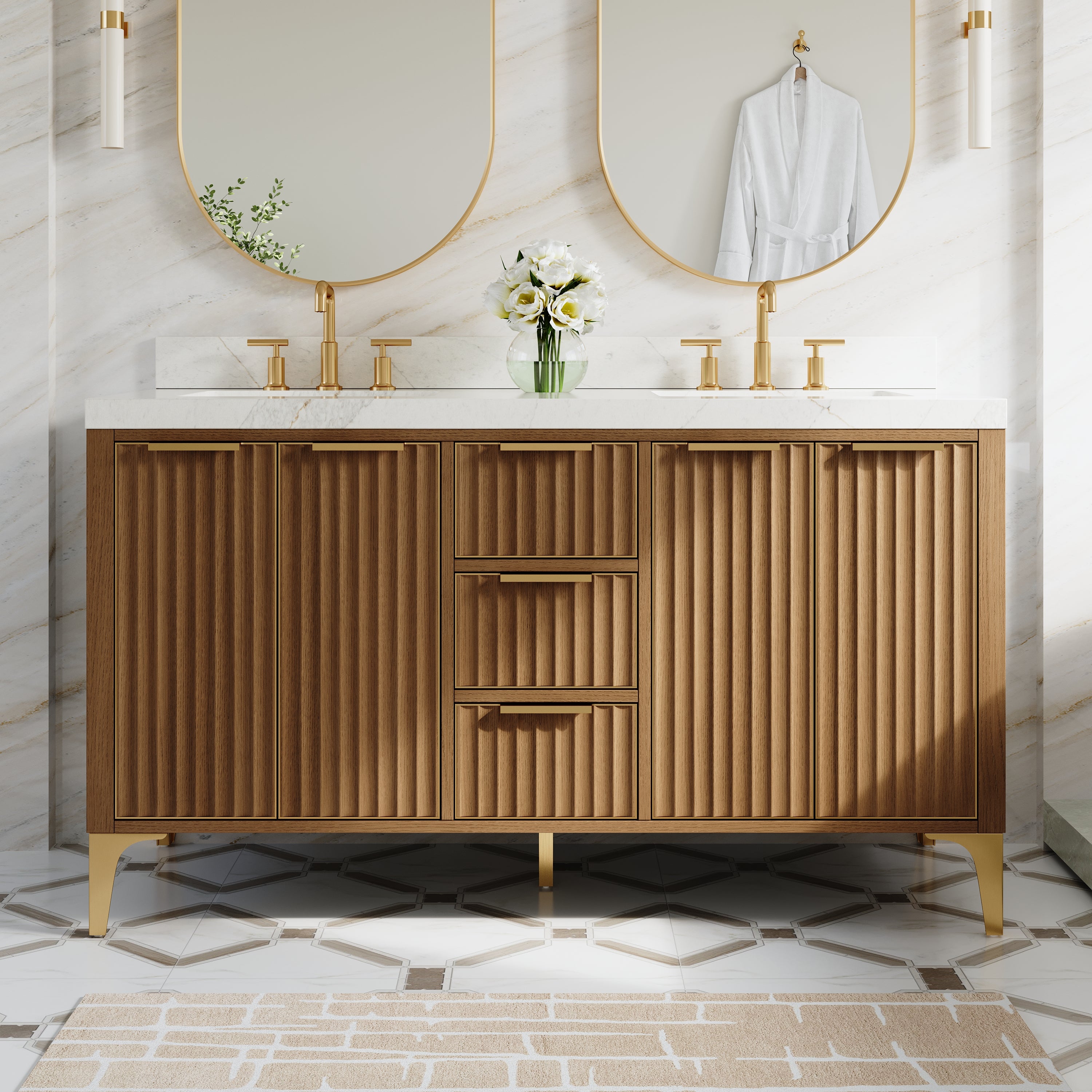
Confirm the faucet drilling as well: single-hole, 4-in. centerset, or 8-in. widespread are not interchangeable without changing the faucet or top. Check whether a backsplash and side splash are included, optional, or unavailable. A product photo may show accessories that are staging only.
If accessibility is part of the project, do not assume a standard cabinet-style vanity qualifies. The 2010 ADA Standards specify a maximum lavatory or counter height of 34 in. above the finished floor and require applicable knee and toe clearance. Residential needs and local codes can vary, so review the layout with a qualified contractor. (Source: U.S. Department of Justice, 2010 ADA Standards for Accessible Design, Sections 306 and 606.)
5. Inspect Hardware and Storage Details
Good listings show the cabinet open. Compare full- versus partial-extension slides, soft-close hardware, adjustable shelves, drawer-box joinery, and adjustable hinges. Count usable drawers, not decorative fronts; drawers may be shortened around the basin.
Check whether handles are installed, packed separately, or simply predrilled. Clear details prevent extra holes in new doors.
6. Calculate the Complete Delivered Cost
Compare the full package price, not the headline price. Determine whether the vanity includes the cabinet, top, sink, backsplash, faucet, drain, mirror, and mounting hardware. Add sales tax, upgraded delivery, installation, plumbing changes, sealant, and disposal of the old vanity.
Heavy vanities may arrive by freight with curbside delivery. Read the delivery terms before ordering: Will the carrier schedule an appointment? Is inside delivery offered? Must visible damage be noted before signing? Review the inspection window, return freight responsibility, restocking fees, parts support, and warranty exclusions. Save the listing, specification sheet, and order confirmation in case the page changes later.
A Simple Final Check
Before clicking “Buy,” compare your finalists using the same checklist: exact cabinet materials, finish protection, top material, overall dimensions, plumbing clearance, faucet drilling, included parts, delivery method, return policy, and warranty. If a seller cannot answer a basic construction or dimension question, treat that uncertainty as part of the product’s cost.
The best vanity is not necessarily the one with the most solid wood or the lowest price. It is the one whose materials suit a humid room, whose top fits your maintenance habits, and whose dimensions and delivery terms match the project you actually have.






























Leave a comment
This site is protected by hCaptcha and the hCaptcha Privacy Policy and Terms of Service apply.