
















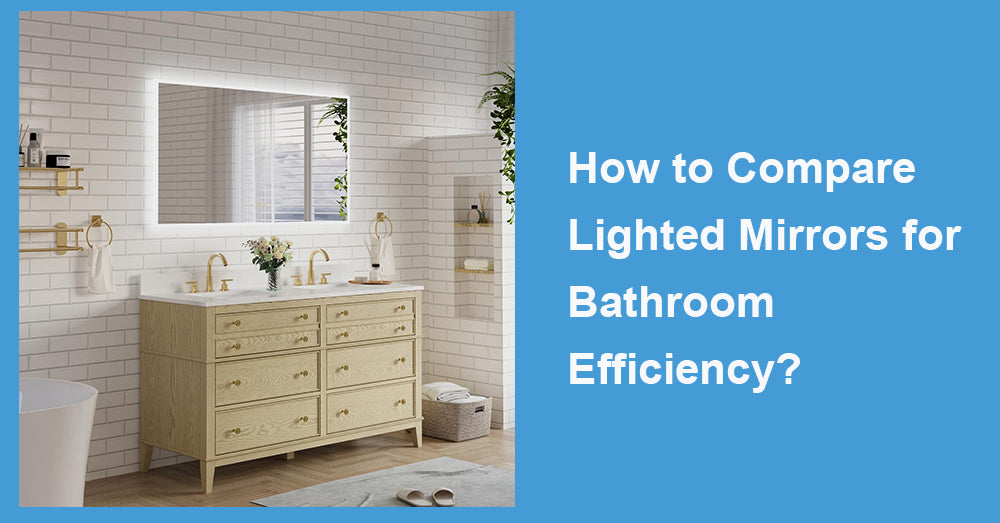
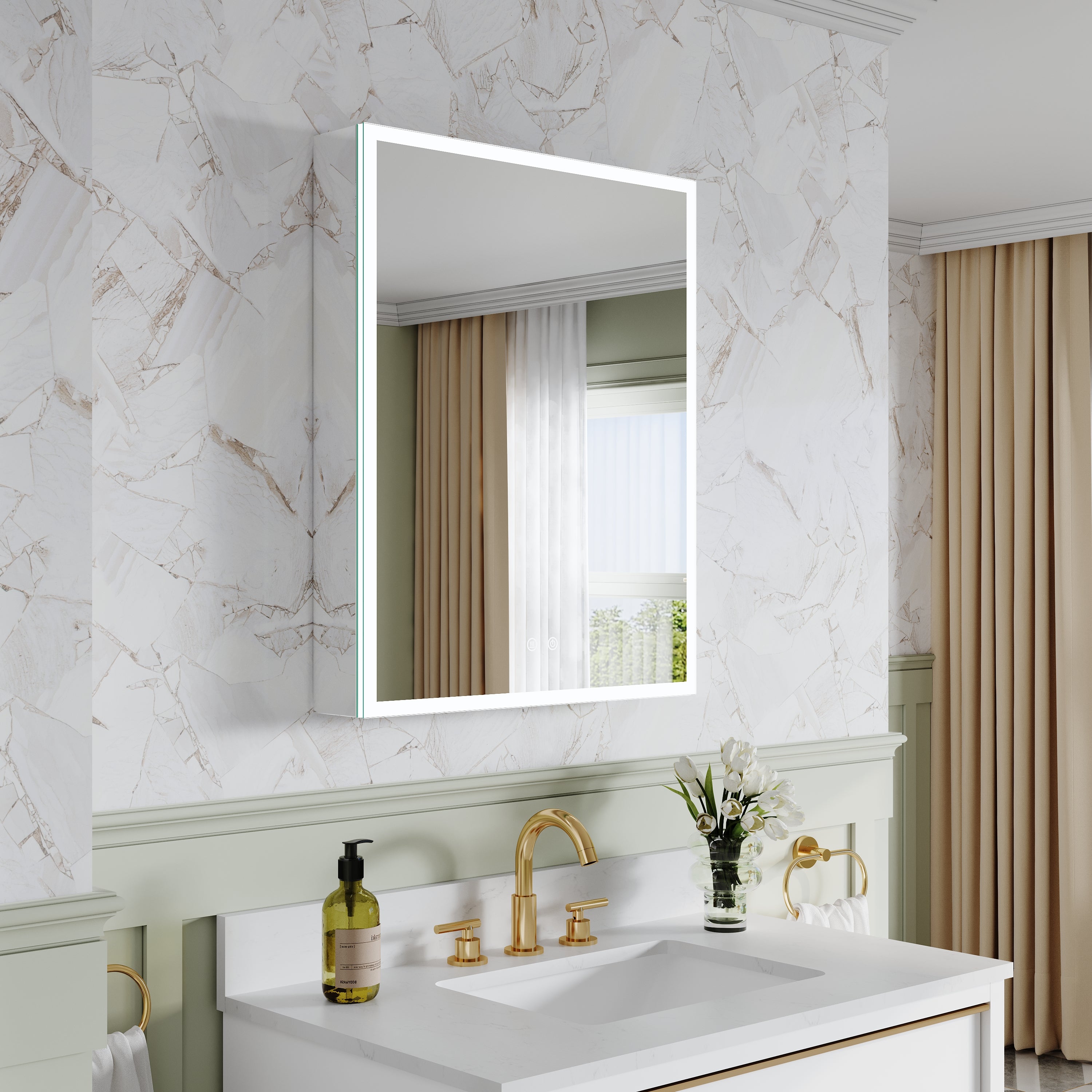
With consumers' increasing demands for lighting experience, energy efficiency, and overall home quality in bathroom spaces, the lighted mirror is becoming the mainstream choice in the home decoration and renovation market. In the past year, retail channels for building materials and home furnishings (including Home Depot, Lowe's, Wayfair, and Amazon) have seen significant growth in sales of illuminated bathroom mirrors, and "efficiency" has become a core indicator for users evaluating product performance. This article will analyze how to compare the efficiency of different bathroom lighting mirrors across light efficiency, energy consumption, color temperature, color rendering, intelligent control, durability, and other factors, providing a reliable reference for consumers and industry practitioners.
1. Light effect performance: Brightness is not only "bright", but also more uniform and practical
In the evaluation system of bathroom lighting products, Luminous Efficiency is usually measured by the ratio of lumens (lm) to watts (W) (lm/W). High luminous efficiency means providing higher brightness while consuming less energy.
1. Check if the lumen value is practical enough
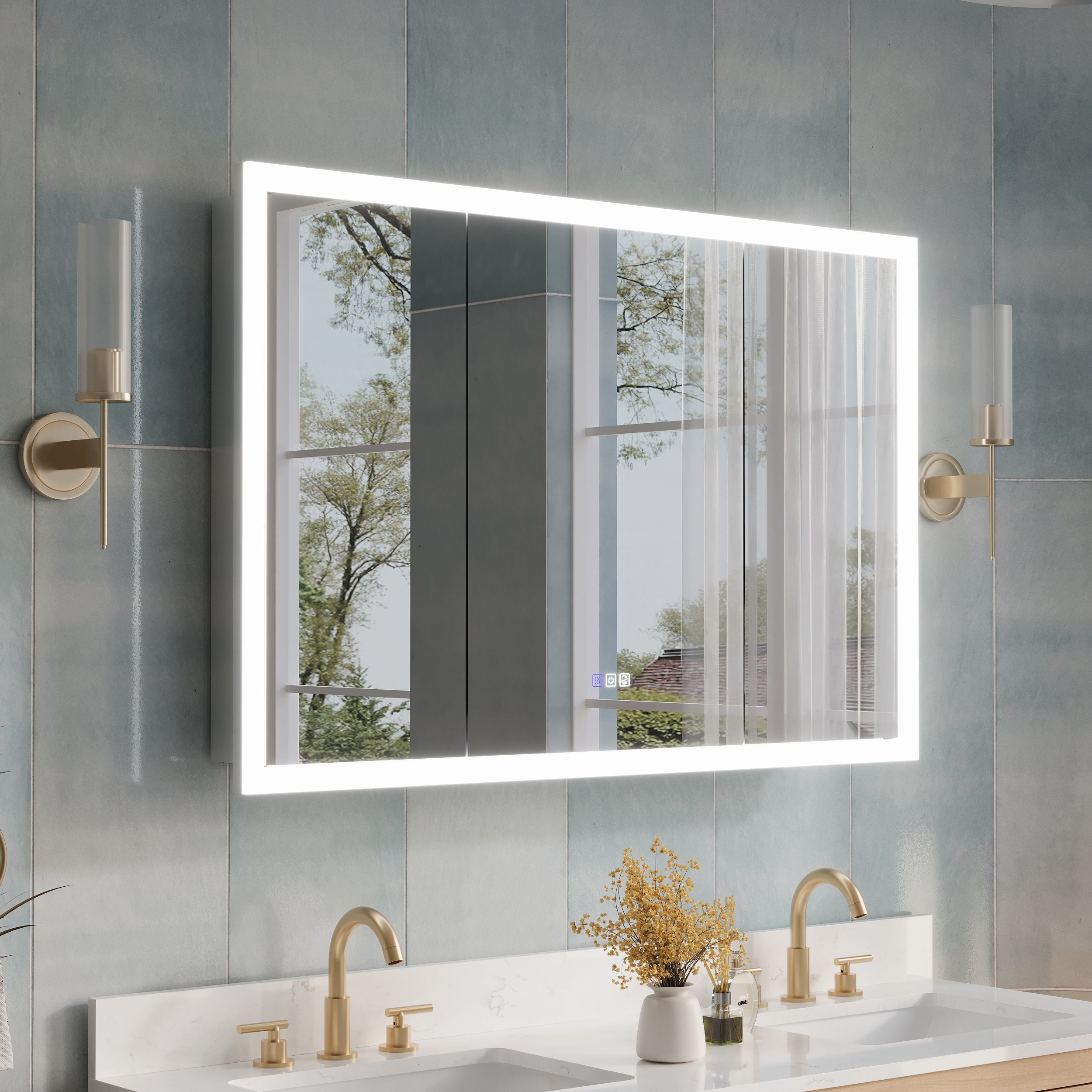
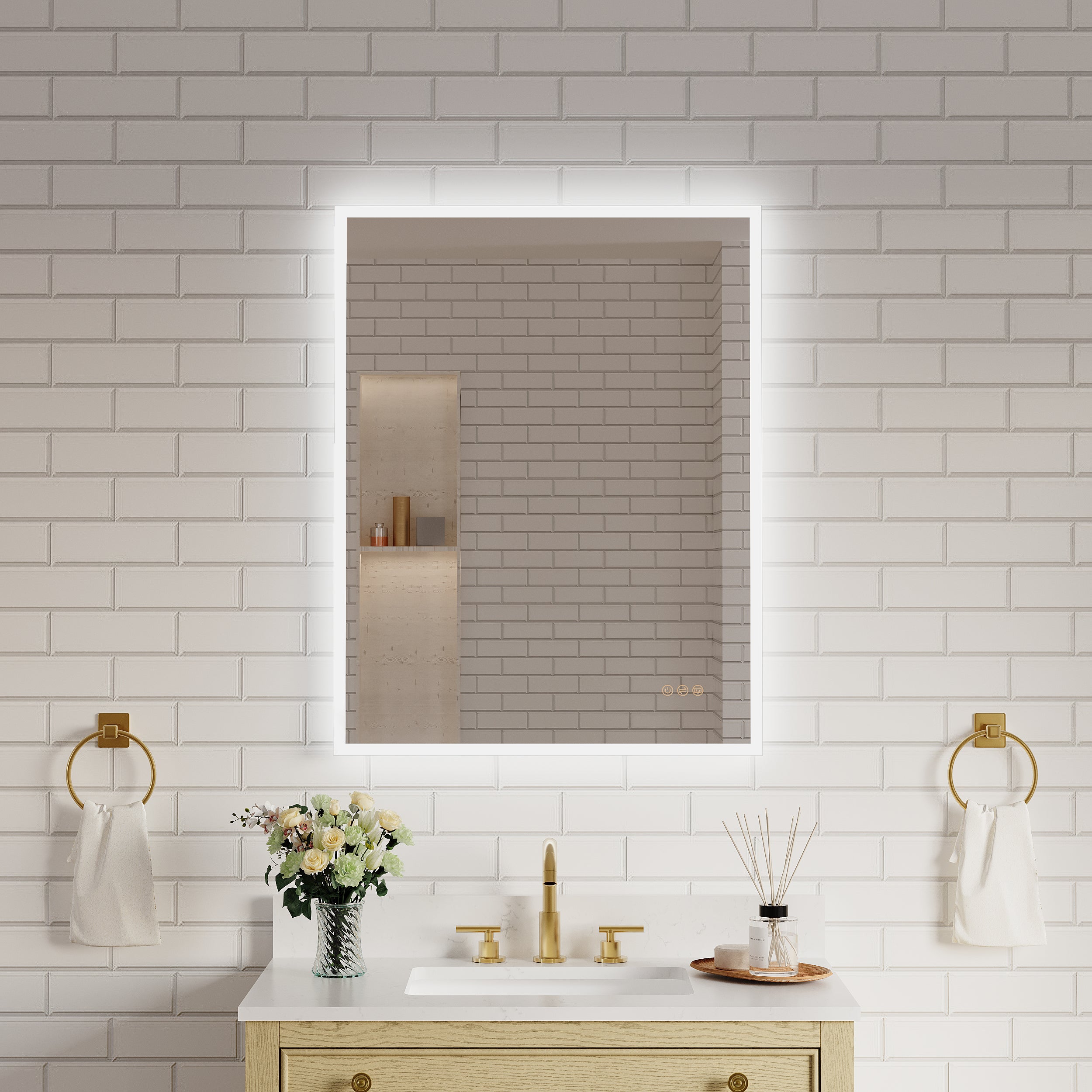
2. Whether it has uniform lighting technology (Edge lit, Back lit)
3. Is there an anti-glare design
Consumers often mistakenly believe that "brighter is better", but industry experts remind that fine operations such as makeup and shaving rely more on "even and shadow-free" lighting effects. Mainstream brands are adopting more advanced edge light guide plates and backlight technology to enhance overall light efficiency and reduce heat waste.

2. Energy efficiency: Energy Star and LED quality are key factors
To compare the efficiency of bathroom lighting mirrors, energy consumption performance is an unavoidable standard.
Many families will pay attention to:
Whether to use high-efficiency LED chips
Does it have ENERGY STAR certification
Is the power reasonable (commonly 18W-40W)
ENERGY STAR certification means the product meets high industry standards for light efficiency, power factor, and low light attenuation. Even at the same brightness, the energy consumption difference between brands can exceed 30%.
In addition, high-quality LED chips not only have higher energy efficiency but also reduce long-term light decay and improve the overall lifespan of lighting mirrors.
3. Adjustable color temperature and color reproduction: Efficiency is not only about energy consumption, but also about usage efficiency
In the evaluation of bathroom lighting mirrors, “color temperature (CCT) and color rendering index (CRI)” are also included in the consideration of "efficiency" because they directly affect the accuracy of the user experience.
Adjustable color temperature (3000K-6500K)>Fixed color temperature
Lighting mirrors with three color temperatures or infinite dimming can better adapt to different situations, such as morning makeup and night skincare, and also avoid visual fatigue caused by inaccurate light colors.
CRI ≥ 90 is the basic standard for "high-efficiency visual experience."
A high color rendering index means a more realistic color presentation, especially suitable for tasks such as makeup, shaving, and skincare. The growing consumer attention to CRI has also driven manufacturers to focus more on the quality of light sources rather than simply pursuing brightness.
4. Intelligent control efficiency: Touch, memory functions, and anti fog technology are reshaping market competition
Nowadays, bathroom lighting mirrors are no longer just lighting tools, but an essential extension of smart homes, so "Smart Efficiency" has become a key focus.
The key functions include:
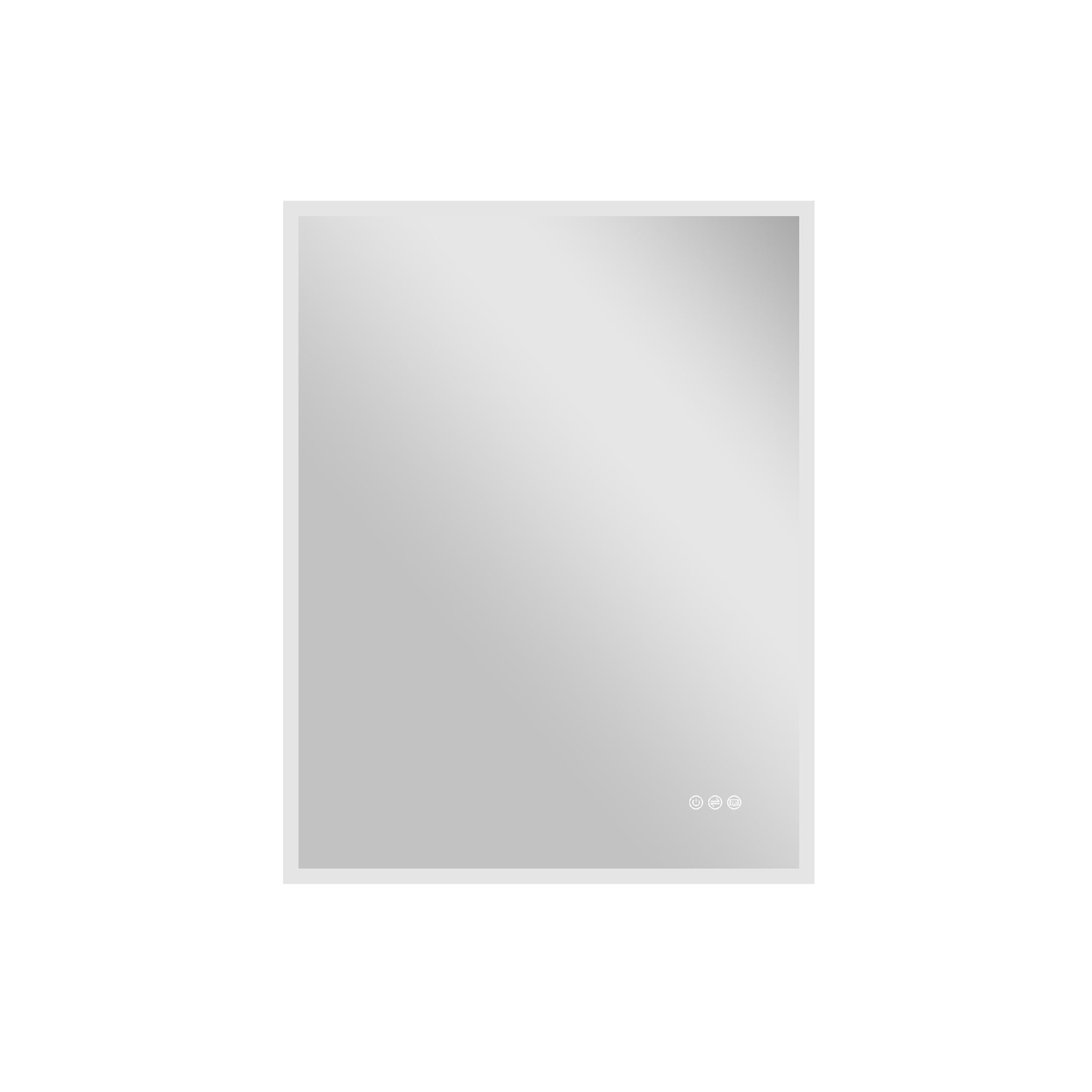
Touch switch and touch sensitivity
Power off Memory Function
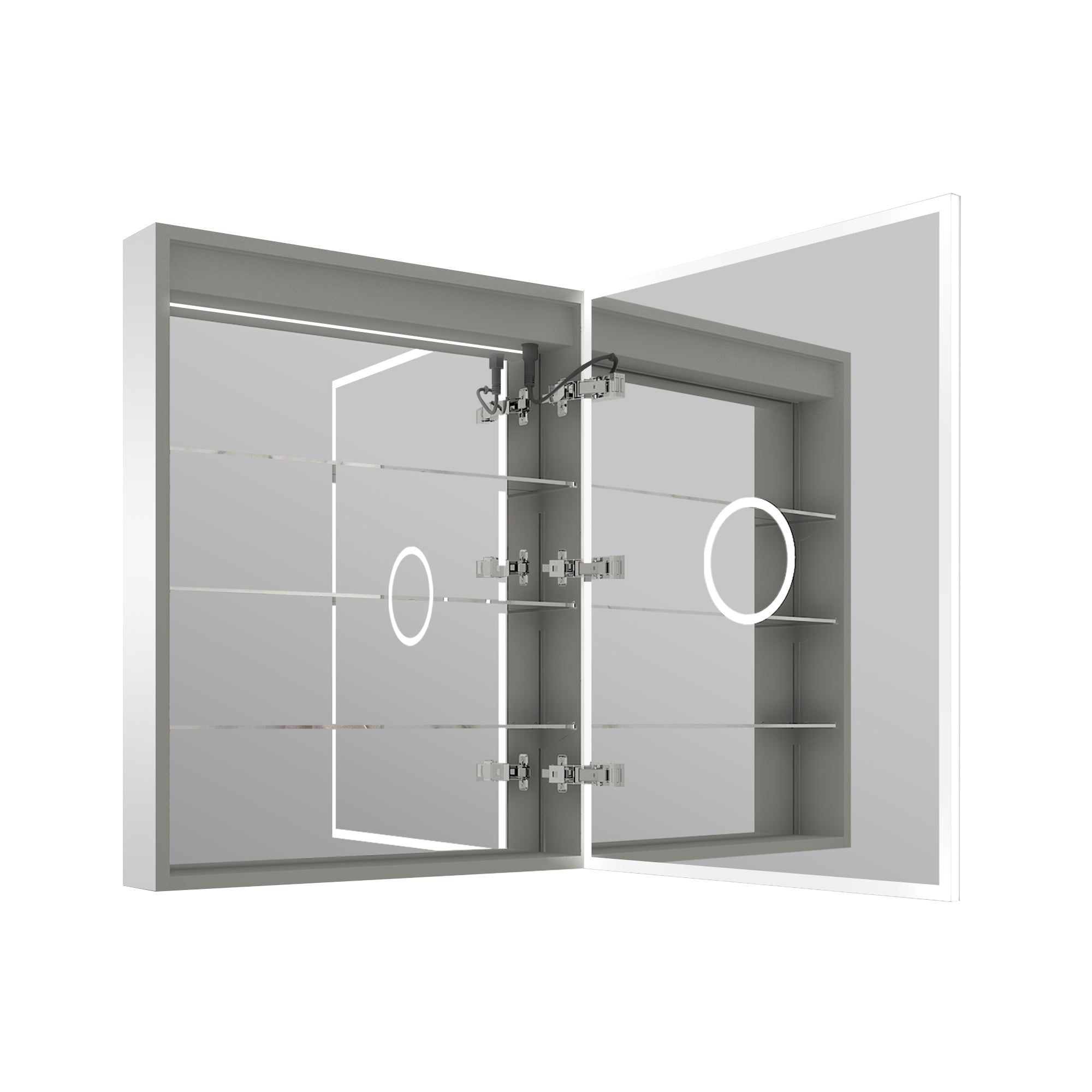
Independent anti-fog switch (Anti-fog)
Continuous brightness adjustment
Intelligent connectivity (supported by some brands)
An efficient control system not only makes it easier for users to use, but also reduces unnecessary energy consumption. For example, the independent anti-fog function can prevent additional power waste caused by heating the entire mirror.
It is worth noting that some high-end brands have begun incorporating automatic ambient light sensors to enable more intelligent energy-saving modes while maintaining lighting effects.
5. Structural reliability and waterproofing capability: long-term cost reflection of efficiency
The efficiency of bathroom lighting mirrors is reflected not only in daily use but also in long-term maintenance costs and lifespan.
In the market, consumers tend to pay attention to:
• IP rating (recommended IP44 and above)
Copper, silver, mirror, or low lead silver mirror
• Quality and stability of power drivers
• Anti-corrosion structural materials
If the driver's quality is poor, even with the same initial power, the light decay rate is faster, resulting in a significant decrease in long-term efficiency. Industry insiders point out that an efficient illumination mirror must perform reliably across all three dimensions: optics, electronics, and structure.
6. Comprehensive Efficiency Rating: The Key Metrics Consumers Care About
In U.S. retail platforms and customer reviews, consumers typically evaluate the efficiency of lighted bathroom mirrors based on several core factors:
|
Comparison Category |
Key Focus |
Efficiency Meaning |
|
Luminous Performance |
Lumens, light uniformity, glare control |
Determines whether the lighting truly enhances everyday use |
|
Energy Consumption |
LED chip quality, wattage, certifications |
Indicates long-term energy savings and product durability |
|
Color Temperature & CRI |
Adjustability, color accuracy |
Ensures proper lighting for makeup, grooming, and skincare |
|
Smart Controls |
Touch sensitivity, anti-fog function, memory function |
Reduces unnecessary energy waste and improves user convenience |
|
Lifecycle Durability |
Driver quality, IP rating, mirror material |
Reflects long-term maintenance costs and overall longevity |
Industry analysts note that the future competitiveness of lighted bathroom mirrors will shift from “brighter and cheaper” to “more efficient, more intelligent, and more visually accurate.”
Conclusion: Efficiency will become a new watershed in the bathroom lighting mirror market
As consumers' demand for energy efficiency, optical quality, and intelligent experience continues to rise, the bathroom lighting mirror market is rapidly transitioning towards "efficiency products". The focus of future competition will shift from traditional exterior design to the comprehensive strength of light efficiency, intelligent control, and energy-saving technologies.
For users who want to purchase or upgrade bathroom lighting mirrors, understanding and comparing these efficiency indicators is the key to selecting high-quality products. For brands and suppliers, whoever can establish an advantage in efficiency will win the next round of market growth.











Leave a comment
This site is protected by hCaptcha and the hCaptcha Privacy Policy and Terms of Service apply.