






















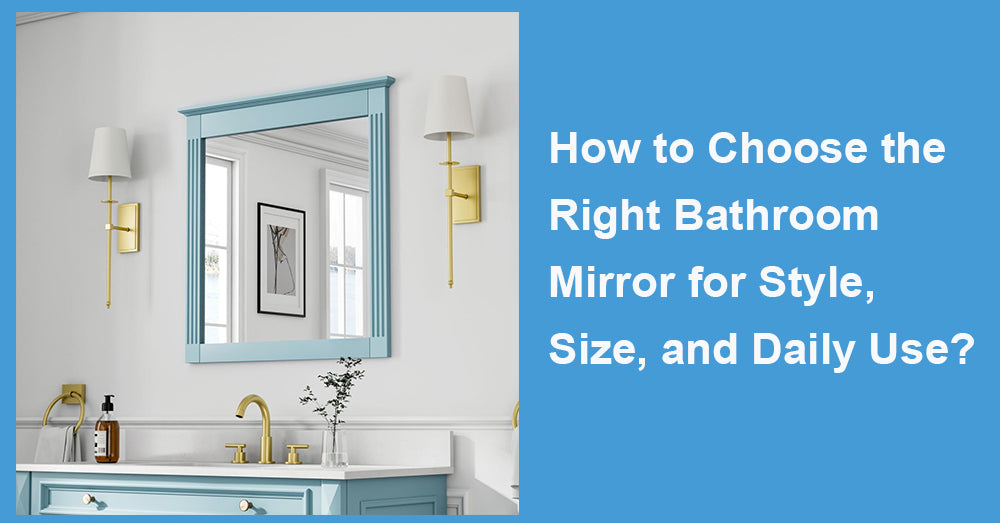
A bathroom mirror is a key daily fixture, so selection is about more than style. The mirror should fit the vanity and wall, support daily tasks with good lighting, and resist humidity. This guide offers practical sizing, placement, lighting, material, and feature advice—using measurable references—so your mirror both looks good and functions well.
1. Define the “Job” Before You Pick the Style
Start with the function. A decorative mirror can be smaller or more sculptural. A mirror that supports grooming needs should offer better coverage, better lighting, and better placement.
Quick self-check
· Who uses it daily? One person vs. multiple heights.
· What happens at the vanity? Quick checks vs. shaving, skincare, contacts, makeup.
· How is the room used? Primary bath vs. powder room.
Choosing a practical mirror can have long-term value. Many midrange bathroom remodels recoup meaningful costs at resale (Source: JLC “2025 Cost vs. Value Report”).
2. Size It First: Mirror Width and Height That Look Balanced
2.1 The width rule that works in most bathrooms
A mirror typically looks best at 70%–90% of the vanity width (Source: Edward Martin mirror sizing guidance).
Examples
· 36" vanity → mirror width roughly 25"–32"
· 48" vanity → mirror width roughly 34"–43"
· 60" vanity → mirror width roughly 42"–54"
Many designers keep mirrors 2"–4" narrower than the vanity on each side for a fitted look (especially without sconces).
2.2 Height: prioritize real coverage
For grooming, taller mirrors reduce “leaning and guessing.” In shared bathrooms, height is often more useful than a trendy shape that sacrifices reflection area.
A good practical goal: ensure the mirror comfortably reflects from below the chin to above the hairline for the tallest frequent user, with an extra buffer if multiple people share the space.
3. Mounting Height That Feels Right (Not Just “Centered on the Wall”)
A great-looking mirror still feels off if mounted too high. Accessibility guidelines for reflective surfaces offer a helpful check:
· For mirrors above a lavatory/countertop, the bottom edge of the reflecting surface is commonly set at 40" max above the finished floor (Source: 2010 ADA Standards, Section 603.3, as published by Corada).
· For mirrors not above a lavatory/countertop, the bottom edge is 35" max (same source).
Even in private homes, these numbers help prevent the “floating too seriously” problem.
Practical home method
1. Stand at the vanity.
2. Mark your eye level.
Your eye level should be near the upper-middle of the mirror, not the bottom edge.
4. Choose a Shape That Matches the Room’s Geometry
Shape affects how the room feels, especially in smaller bathrooms.
· Rectangular: maximum usable reflection, easiest to pair with sconces, best for shared daily routines.
Round/oval: softer and less angular; best in powder rooms but usually offers less width at the edges.
· Arched: adds height and a focal point; works well in traditional or transitional spaces.
If daily grooming matters most, favor coverage over novelty.
5. Framed vs. Frameless: What Changes in Real Use?
5.1 Frameless
· Clean, modern, and flexible with mixed finishes.
· Pairs nicely with tile feature walls.
· Edges matter: polished edges look more finished than raw edges.
5.2 Framed
· Adds contrast and structure.
· Can tie the mirror to faucet finish, cabinet hardware, or lighting.
Humidity note: In damp bathrooms, avoid cheap plated frames, as they can deteriorate. Choose finishes suited for wet areas.
6. Lighting: The Biggest Difference Between “Looks Nice” and “Works Daily.”
Most “bad mirror reflections” are actually caused by poor lighting. Overhead light creates shadows under facial features.
6.1 Use targets, not guesses
Bathroom light levels are often referenced in foot-candles, and a commonly cited range for bathrooms is 20–50 foot-candles, depending on the task (Source: IES recommended light levels compilation referencing the IES Lighting Handbook, published by Waypoint Lighting).
For precision grooming, use the higher end of that range and diffuse to reduce glare.
6.2 The most reliable face-lighting setups
· Two sconces placed left and right of the mirror (at face height) reduce shadows.
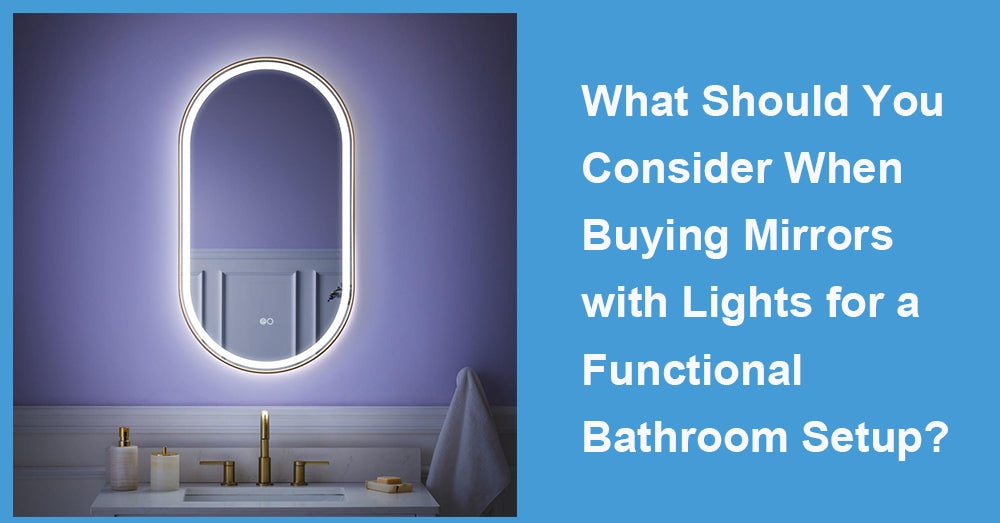
LED mirrors can be effective, but output and diffusion quality are key.
6.3 LED efficiency (why it’s often a smart upgrade)
High-quality LED lighting can greatly cut energy use while lasting much longer. The U.S. Department of Energy notes that LEDs use at least 75% less energy and last up to 25 times longer than incandescent bulbs (Source: U.S. Department of Energy, Energy Saver – LED Lighting).
6.4 CRI matters more than marketing suggests
For grooming, color quality matters. If a mirror light lists CRI with credible testing, trust this over vague claims.
7. Humidity, Fogging, and When Anti-Fog Is Worth It
Fogging occurs when warm, moist air hits a cooler mirror and condenses. Ventilation is the first defense.
A common indoor comfort range is 30%–60% relative humidity (Source: ASHRAE).
When anti-fog is worth paying for
Anti-fog is most useful when:
· Showers are taken daily,
· the mirror is close to the shower zone,
· ventilation is limited, or
· multiple people share tight morning schedules.
If humidity clears quickly, anti-fog features may be optional.

8. Safety and Installation: Don’t Treat It Like “Just Decor.”
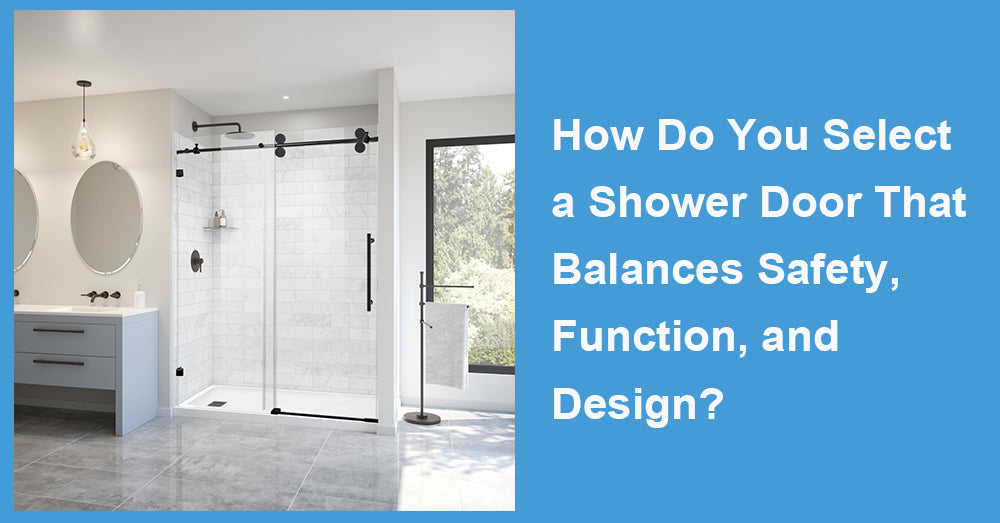
Bathrooms have a higher slip-and-impact risk. Safety standards apply to glass in these settings (Source: U.S. eCFR, 16 CFR Part 1201). While wall mirrors differ from shower doors, secure mounting and safe glass matter.
Installation fundamentals
· Use anchors rated for the wall type (drywall vs. tile vs. plaster).
· Mount into studs when possible.
· Use appropriate adhesives only when recommended for wet areas.
· Plan tile drilling carefully to avoid cracks.
For homes with kids, pets, or high traffic, use mirrors with safety backing/film to reduce injury risk if broken.









































Leave a comment
This site is protected by hCaptcha and the hCaptcha Privacy Policy and Terms of Service apply.