

















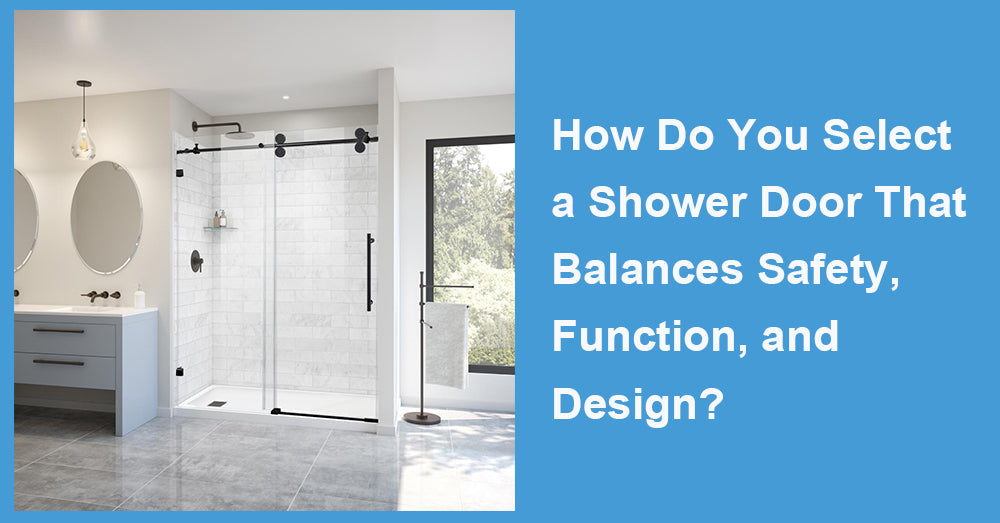
A shower door is more than a “pretty piece of glass.” It’s a daily-use barrier that must manage water, handle repeated opening/closing forces, and reduce injury risk in a wet environment. The best shower door choice balances three things at the same time: safety glazing and secure installation, function (leak control, access, cleaning), and design (layout, hardware, sightlines). This guide walks through a practical selection process using measurable criteria and widely recognized standards.
1. Start With Safety: Verify the Glass Is Truly Safety Glazing
1.1 Know what the main safety rule covers
For bathtub and shower doors/enclosures, federal safety requirements exist for architectural glazing. The safety standard explicitly includes “bathtub doors and enclosures” and “shower doors and enclosures” in its scope (Source: U.S. eCFR, 16 CFR Part 1201).
What to do with this information:
· Treat “safety glass” as non-negotiable.
· Look for labeling/markings that indicate compliance and traceability (more below).
1.2 Tempered vs. laminated: what changes in break behavior
Tempered glass is designed to reduce severe laceration risk compared with ordinary annealed glass. A classic explainer notes tempered glass is about four times stronger than annealed glass and fractures into small, relatively harmless pieces rather than jagged shards (Source: Scientific American).
Why this matters for your selection:
· Tempered is common for shower doors because it’s strong and breaks into smaller pieces.
· Laminated can hold together after impact (useful where glass retention is a priority), but it’s less common in standard shower-door packages and may cost more (Source: General Glass on laminated glass meeting safety glazing requirements when tested).
1.3 Confirm labeling, not just marketing claims
Safety glazing standards are tied to testing and labeling practices. The regulation includes certification and labeling requirements (Source: Cornell Law School version of 16 CFR 1201.5).
In addition, industry certification programs specify what compliant permanent labels typically include (e.g., references to ANSI Z97.1 and 16 CFR 1201 categories) (Source: SGCC Label Requirements PDF).
Practical tip: When you receive the door, inspect the glass corners/edges for etched markings (often subtle). If markings are missing or unclear, ask the seller for documentation that references the applicable safety glazing standard(s).
2. Match the Door Type to Your Layout and Daily Routine
2.1 Sliding vs. hinged/pivot: choose by space and behavior
Sliding (bypass) doors
· Best when the bathroom is tight and a swinging door would hit a toilet/vanity.
· Trade-off: tracks and overlapping panels can trap soap scum.
Hinged/pivot doors
· Best for easier cleaning and wider opening.
· Trade-off: needs clearance for the swing and stronger anchoring for hinges.
2.2 “Frameless” isn’t only about looks—it changes the engineering
Frameless systems rely on thicker glass and robust hardware because there is no full metal frame carrying loads. Many frameless doors commonly use 3/8" to 1/2" tempered glass depending on panel size and design (Source: Home Depot product specification listing 3/8" thickness; also commonly cited thickness ranges for frameless enclosures).
How to decide thickness pragmatically
· 3/8" often works well for standard-size doors with quality hinges and correct wall support.
· 1/2" can feel more rigid and premium (less flex), but it adds weight and may require upgraded hardware and sturdier mounting surfaces.
3. Plan for Water Control: Leaks Are Usually a Design/Install Issue
A beautiful door that drips water onto the floor becomes a safety hazard fast. Leak control comes from the whole system, not one feature.
Key leak-control elements to evaluate
· Sweep and seals: bottom sweeps and vertical seals reduce splash-out at gaps.
· Threshold/curb details: even low thresholds can improve water retention, but entry comfort matters.
· Showerhead direction: aim the spray away from the door seam when possible.
If accessibility or easy entry is a priority, threshold height matters. Guidance for bathing rooms notes thresholds are limited to 1/2" in accessible design contexts (Source: U.S. Access Board, ADA guide—Chapter 6 Bathing Rooms).
Even if you’re not building to an accessibility spec, this number is a useful reference point when balancing water retention vs. step-over comfort.
4. Make Cleaning a First-Class Requirement (Not an Afterthought)
Most buyers underestimate cleaning effort. The wrong design can turn into weekly frustration.
4.1 Framed vs. semi-frameless vs. frameless: cleaning reality
· Fully framed: more metal edges and channels → more places for buildup.
· Semi-frameless: fewer channels but still some framing.
· Frameless: fewer crevices; typically easiest to wipe down.
4.2 Coatings can help, but habits matter more
Water-repellent or “easy clean” coatings can reduce spotting, but they don’t eliminate maintenance. Daily squeegee use and good ventilation still do the heavy lifting.
A smart selection habit: prioritize designs with fewer horizontal ledges and fewer track corners. Those are the areas that collect residue.
5. Hardware and Installation: Where Safety and Longevity Are Won (or Lost)
A shower door is a moving glass assembly. Long-term reliability depends on the wall structure, anchors, and alignment.
5.1 Verify wall readiness (especially for heavy doors)
If you’re installing a hinged/pivot door, hinges transmit repeated torque into the wall. If the wall is tile over drywall with no reinforcement, you may need proper backing and professional installation planning.
5.2 Look for robust hinge/roller construction
Instead of focusing only on finish color, examine:
· hinge thickness and adjustment capability
· roller quality (for sliders)
· anti-jump mechanisms (for some slider systems)
· included gaskets and seal design
5.3 Confirm the product documentation references real standards
A strong sign of credibility is documentation that references recognized safety glazing requirements like ANSI Z97.1 and/or 16 CFR 1201 (Source: ANSI overview of Z97.1 safety glazing markings; Delta Shower Doors safety page referencing ANSI Z97.1).
6. Design That Still Serves Function
A door can look minimal and still be practical—if you design around the room’s geometry.
Design decisions that affect day-to-day use
· Clear vs. patterned glass: clear feels open; patterned can hide spotting and add privacy.
· Door height: taller panels can reduce spray escape but may increase cost and weight.
· Handle style: choose a grip that’s easy with wet hands; avoid sharp edges.
A high-function “clean look” combo
· frameless hinged door (if you have swing clearance)
· minimal metal hardware
· quality seals and a well-defined curb/threshold detail
7. A Simple Buying Checklist (Copy/Paste Friendly)
Use this as your decision filter before you purchase:
Safety
· Glass documentation references applicable safety glazing rules (Source: U.S. eCFR 16 CFR Part 1201).
· Tempered glass understanding: stronger and breaks into small pieces (Source: Scientific American).
· Glass markings/labels are present and traceable (Sources: SGCC label requirements; ANSI Z97.1 markings overview).
Function
· Door type matches space: sliding for tight clearances, hinged/pivot for wider access.
· Leak-control details included: sweeps, seals, threshold strategy.
· Threshold height considered; 1/2" is a useful reference point where low entry matters (Source: U.S. Access Board ADA guide).
Design + Maintenance
· Fewer tracks/ledges if you want easy cleaning.
· Hardware finish matches fixtures, but build quality is prioritized over color.
· Glass thickness makes sense for the design (3/8"–1/2" commonly used in frameless systems; verify product specs) (Sources: Home Depot product specs; enclosure guidance noting 3/8"–1/2").

Closing Thought
The right shower door is the one you stop thinking about: it opens smoothly, stays aligned, keeps water where it belongs, and feels safe in a slippery environment. If you anchor your decision in verified safety glazing, choose a door type that fits your layout, and prioritize easy-clean geometry plus robust hardware, you’ll end up with a door that looks good and holds up to real daily use.


















Leave a comment
This site is protected by hCaptcha and the hCaptcha Privacy Policy and Terms of Service apply.