






















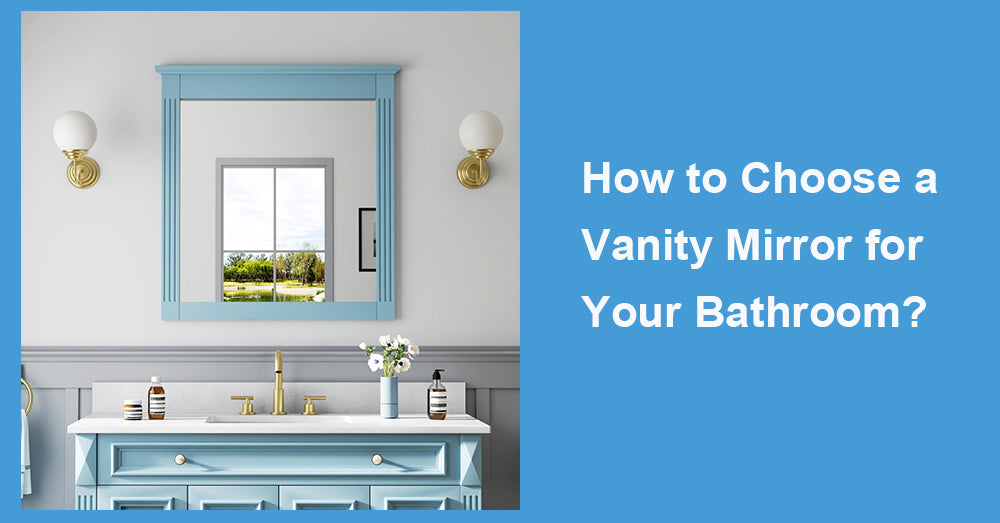
In the process of bathroom renovation or upgrade, a vanity mirror is often seen as a "seemingly simple" configuration. Still, from an industry perspective, it is one of the core components that directly affects the user experience and spatial perception. The size, position, proportion, and relationship with light of mirrors are repeatedly perceived during daily washing, care, and organization processes. Industry research shows that the frequency of issues related to the area in front of the mirror remains high in user feedback on bathroom usage experience, indicating that the choice of vanity mirror is far from just an aesthetic issue.
1. First, clarify the mirror's primary functions
Before choosing a bathroom vanity mirror, clarify its primary purpose. Is basic grooming the main focus, or frequent shaving, skincare, or makeup operations? Different usage scenarios have different requirements for mirror size, position, and coordination with lighting.
Industry experience shows that when a vanity mirror performs more delicate operational functions, clarity, visual range, and the synergistic effect with the light source on the mirror surface are more important than styling.
2. The size ratio is a key factor determining success or failure
The size of the vanity mirror should always be planned around the washbasin. The width of standard washbasins is usually concentrated in the range of 30-48 inches. If the mirror's width matches or closely matches the countertop's width, or is slightly smaller, the overall proportion is more coordinated and better aligned with daily use intuition.
In terms of height, vanity mirrors are usually located in the 24-36-inch range, which covers the line of sight of most users. A mirror that is too small will limit the visible area; If it is too large, it may amplify the sense of spatial pressure in the vertical direction. The core of size selection is not "bigger is better", but "whether the proportion is correct".
3. The position of the mirror directly affects the comfort of use
The position of the dressing mirror determines the degree of naturalness when used. Usually, installing the mirror directly above the washbasin and keeping it horizontally centered is the most mature and least risky solution. This layout aligns with most people's usage habits and is also easy to coordinate with the lighting system.
Industry data shows that mirror position deviation or improper height setting is one of the main reasons for user inconvenience. Once these problems are installed, the cost of later adjustment is often high.
4. Mirror quality determines long-term visual experience
A mirror is not just a flat surface that can reflect a person's shadow. Mirror technology directly affects reflection clarity, color authenticity, and long-term stability. Multilayer silver-plated mirror surfaces exhibit greater oxidation resistance and more consistent reflection, and are less prone to edge problems in high-humidity environments.
From a long-term use perspective, poor mirror quality often shows significant differences within a few years, and this problem cannot be fully compensated for by later maintenance.
5. The presence or absence of borders affects spatial perception differently
The border design will significantly influence the bathroom's visual style. A borderless or extremely narrow-framed vanity mirror is easier to integrate into different design languages and helps maintain a sense of transparency in the space. Mirrors with borders have a clearer style expression but also require higher proportions and greater detail.
Industry experience shows that in small- to medium-sized bathrooms, a simple mirror design is less likely to amplify the sense of cramped space.
6. The synergistic relationship between dressing mirrors and lighting
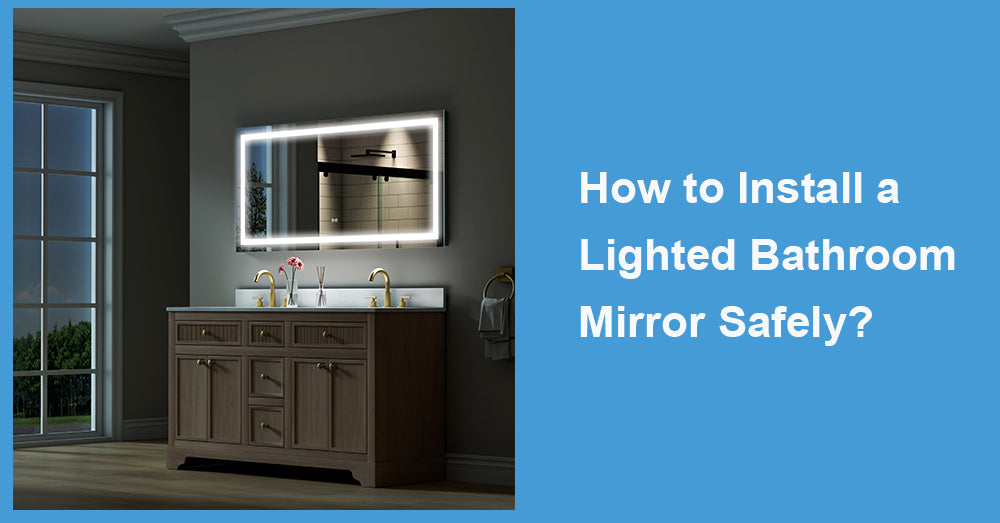
Discussing mirrors alone and neglecting lighting are common planning misconceptions. Even if the mirror size and quality are ideal, if the lighting arrangement is not reasonable, the user experience will still be significantly reduced.
In most bathrooms, top lighting can easily create shadows on the face. Therefore, whether there is a supplementary light source around the mirror or whether it cooperates with the side lights and mirror headlights is a factor to consider when choosing a dressing mirror. Industry research shows that the more uniform the light in front of the mirror, the higher the satisfaction with use.
7. The choice between a single mirror and a combination scheme
In a dual-washbasin or multi-person bathroom, whether to choose a full-length mirror or to equip each basin with an independent vanity mirror often depends on the available space. The overall mirror is visually more unified but requires greater precision in lighting and installation; independent mirrors are more flexible in use.
From an industry perspective, there is no absolute superiority or inferiority; the key lies in whether it matches the overall layout and usage.
8. The impact of installation methods on long-term maintenance
Dressing mirrors are usually fixed components with low replacement frequency. Once installed, their position and installation method will have a long-term impact on maintenance difficulty. A stable, fixed structure, a reasonable installation height, and compatibility with wall materials will all show differences over the years of use.
Industry data shows that the impact of installation quality on the service life of mirrors is not lower than that of the product itself.

9. Re-examine the selection logic from a long-term usage perspective
The bathroom vanity mirror is not a short-term decoration, but a long-term high-frequency infrastructure. Instead of pursuing short-term visual impact, it is better to prioritize the size ratio, mirror quality, lighting coordination, and rational installation.
From an industry perspective, choosing the appropriate vanity mirror is a comprehensive assessment of space, lighting, and usage habits. The details taken seriously during the planning phase often continue to provide a stable, comfortable user experience years later.









































Leave a comment
This site is protected by hCaptcha and the hCaptcha Privacy Policy and Terms of Service apply.