






















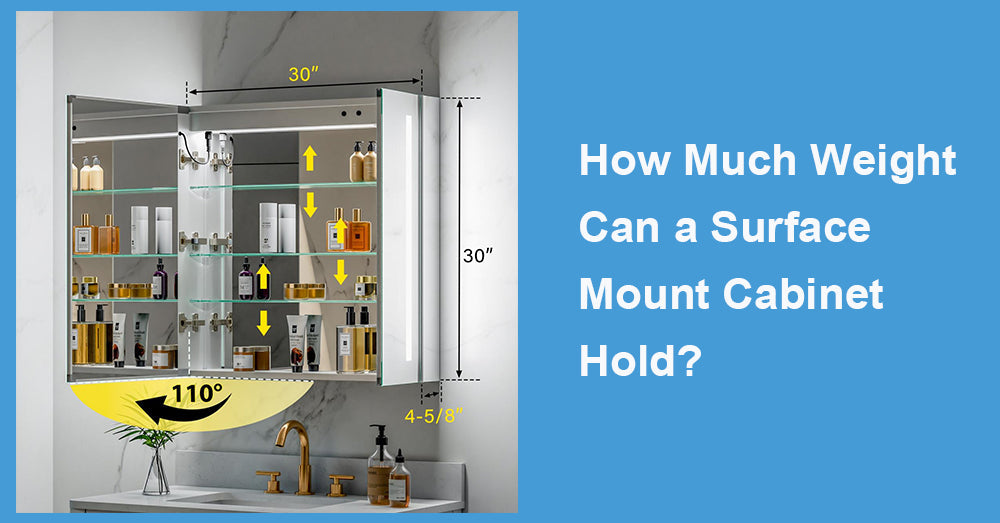
Surface-mount medicine cabinets have become one of the most practical and stylish bathroom storage solutions for American homes. Whether you’re renovating your primary bathroom, updating a guest bath, or installing a quick storage fix in a kids’ bathroom, you’re probably asking one big question:
How much weight can a surface mount cabinet hold?
In this detailed guide, we’ll help you understand the real-world weight capacity of surface mount medicine cabinet—how it’s determined, what affects it, and how to choose a cabinet that not only looks great but also performs reliably.
What Is a Surface Mount Medicine Cabinet?
Before we dive into weight capacity, let’s establish what we mean by a surface mount medicine cabinet.
A surface mount cabinet is:
· Mounted on the surface of a wall (typically drywall or tile)
· Installed using a frame, bracket, or screws that secure it directly to the wall stud or anchor
· Often chosen for bathrooms without existing recessed space
· A popular pick for modern homes due to easy installation and a clean aesthetic
These cabinets provide both mirror functionality and internal storage, making them a dual-purpose fixture in everyday life.
Now let’s talk about how much weight they can safely hold.
Surface Mount Cabinet Weight Capacity: The Basics
There’s no single number that applies to all surface mount medicine cabinets. Weight capacity depends on several variables:
· Cabinet size and construction
· Material quality (wood, metal, glass)
· Mounting hardware and method
· Wall type and reinforcement
· How is the weight distributed inside the cabinet?
Generally, surface mount medicine cabinets can hold somewhere between 75 and 250 pounds of total internal weight when installed properly. Some heavy-duty models—even those with tempered glass shelves—can support more.
But what determines where a particular cabinet falls within this range?
Let’s break it down.
What Affects a Surface Mount Cabinet’s Weight Capacity?
1. Cabinet Size and Construction Materials
Surface mount cabinets come in a wide range of sizes—from narrow 16-inch options to wide 36-inch double-door units.
Heavier, larger cabinets with more shelves and doors:
· Usually have more structural support
· Can handle more internal weight
· May require stronger wall anchors or studs
Smaller cabinets with thin metal or composite construction typically support less.
Materials matter too:
· Solid-wood or plywood cabinets tend to be more robust than particleboard cabinets.
· Metal-framed cabinets can also be strong, but the shelf material (glass vs metal) affects load limits.
· Tempered glass shelves are strong but have specific weight ratings (often listed by the manufacturer).
2. Mounting Type: Studs vs. Anchors
The way your cabinet is attached to the wall is one of the most critical factors for weight capacity.
Stud Mounting
If screws go directly into wood studs behind the wall:
· You maximize strength
· Weight capacity improves significantly
· You reduce reliance on wall anchors
Stud-mounted cabinets can easily support 150–250+ pounds total—especially if the manufacturer designed them for stud installation.
Drywall Anchors or Toggle Bolts
If you can’t hit studs and rely on drywall anchors:
· The weight capacity is lower
· Anchors vary (plastic, metal toggle, molly bolts)
· Some anchors can support 50+ pounds, but the overall system (cabinet + items) must be carefully assessed
Pro tip: For heavy cabinets or those holding lots of toiletries, it’s best to mount them into studs whenever possible.
3. Shelf Material and Internal Storage Design

Inside the cabinet, shelves vary:
· Tempered glass shelves – strong but have a weight limit (often 15–30 lbs per shelf)
· Metal shelves – usually stronger (20–40+ lbs per shelf)
· Wood or composite shelves – capacity depends on thickness and quality
Remember: Shelf weight capacity is different from total cabinet capacity. Even if a cabinet can support 200 pounds total, each shelf may have a lower limit.
4. Wall Type: Drywall, Tile, Plaster, or Cement
The wall surface affects how well your cabinet stays secure:
· Drywall over studs – best-case scenario for secure mounting
· Tile over drywall – still good, but drilling requires care and proper anchors
· Plaster walls – older, may need special anchors
· Cement or brick – requires masonry anchors, but can be very secure
Strong walls, combined with solid mount points, create a reliable support system.
Understanding Manufacturer Weight Ratings
When shopping for a surface-mount medicine cabinet, look for:
· A published weight capacity
· Load limits for each shelf
· Installation instructions with hardware
· Notes on whether stud mounting is required
Manufacturers often test cabinets and provide a recommended weight range. Treat this as a guideline, not an optional suggestion.
Typical Weight Ranges by Cabinet Type
Below is a general guide. Your specific cabinet may vary.
Small Single-Door Cabinets
· Typical overall capacity: 75–100 lbs
· Shelf capacity: 15–25 lbs
Medium Cabinets (24–30 inches)
· Typical overall capacity: 100–175 lbs
· Shelf capacity: 20–30 lbs
Large Cabinets or Double-Door Units
· Typical overall capacity: 175–250+ lbs
· Shelf capacity: 25–40+ lbs
These are starting points. Always check the unit's actual specifications before installing.
How to Install for Maximum Strength
To ensure your surface mount medicine cabinet reaches its full weight potential:
Step 1: Locate the Wall Studs
Use a stud finder to locate wood studs and anchor the cabinet to them.
Step 2: Use High-Quality Hardware
Even if the cabinet comes with screws, consider upgrading to heavy-duty screws or bolts when mounting into studs.
Step 3: Level Before Tightening
Make sure the cabinet is perfectly plumb and level before tightening hardware.
Step 4: Distribute Weight Evenly
Place heavier items on lower shelves and closer to the cabinet’s support points.
What to Store in a Surface Mount Medicine Cabinet
Now that we know how much weight these cabinets can support, let’s talk about practical usage.
Here are items commonly stored:
· Toothpaste and toothbrushes
· Shaving supplies
· Small skincare bottles
· Prescription medications
· Haircare accessories
· Perfumes and colognes
· First-aid kits
Even a large collection of bottles and accessories rarely exceeds 30–50 pounds total—well within most cabinets’ safe limits.
Safety Tips and Best Practices
Don’t Overload Shelves
Even if the total cabinet capacity is high, individual shelves may have lower limits.
Store Heavy Items Low
Keep heavier goods on lower shelves to reduce strain on top mounts.
Periodically Check Mountings
A cabinet that was secure at installation may loosen over time with use—especially in humid bathrooms.
Consider Professional Installation
If you’re unsure about studs, anchors, or load calculations, hiring a handyman or electrician ensures safe installation.
FAQs About Surface Mount Cabinet Weight Capacity
Q: Can a surface mount cabinet support heavy toiletries?
A: Yes—most can support typical bathroom items. The key is proper mounting and not overloading shelves.
Q: Does a surface mount cabinet need wall reinforcement?
A: Not usually, as long as you mount into studs. For extra-heavy loads, reinforcement (like plywood backing) improves strength.
Q: Why do different cabinets have different weight limits?
A: It depends on materials, size, design, and how they’re installed.
So, How Much Weight Can a Surface Mount Cabinet Hold?
There’s no universal answer, but with proper installation:
A well-mounted surface-mount medicine cabinet can safely hold 75- 250+ pounds, with individual shelves typically supporting 15–40+ pounds each.
The exact capacity depends on cabinet design, mounting method, wall type, and materials.
When choosing a surface mount medicine cabinet—whether from the Wellfor collection or another quality brand—pay attention to published weight ratings, mount into studs when possible, and distribute weight carefully.
With the right installation and usage habits, a surface mount medicine cabinet can give you reliable storage that’s both functional and beautiful for years to come.









































Leave a comment
This site is protected by hCaptcha and the hCaptcha Privacy Policy and Terms of Service apply.