






















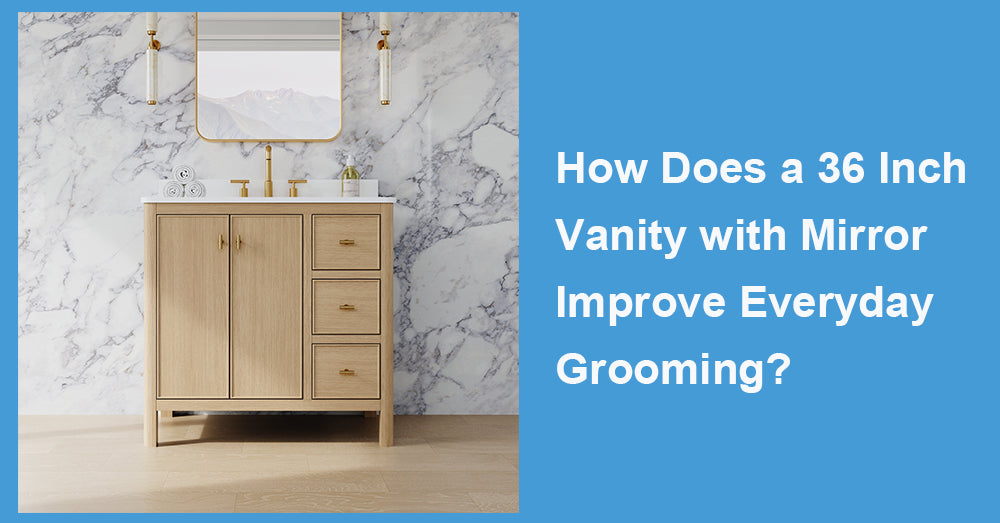
A 36 inch vanity with mirror gives a bathroom enough width for a practical sink, useful countertop space, organized storage, and a comfortable grooming area without requiring the footprint of a 48-inch or 60-inch cabinet. That balance matters because compact and midsize vanities remain a major part of renovation projects. Houzz's 2025 Bathroom Trends Study found that 47% of upgraded vanities measure 48 inches or less. The study also reported that 24% of respondents use the primary bathroom for beauty and pampering routines, showing that the vanity area is increasingly being treated as a daily personal-care station rather than simply a place to wash hands.
A 36-Inch Width Provides Useful Counter Space
A 24-inch vanity can feel tight once the sink is installed. Moving to 36 inches gives grooming products more breathing room without taking over a compact bathroom.
· Better landing space: There is usually room beside the basin for skin-care products, razors, soap, or a toothbrush holder.
· Less countertop crowding: Products can be placed temporarily during use instead of stacked around the faucet.
· More balanced sink proportions: A moderately sized basin leaves more usable surface than an oversized sink.
For everyday grooming, the goal is not to fill every inch of the countertop. The best layout leaves part of the surface open for temporary use.
The Mirror Creates a Dedicated Grooming Zone
The mirror turns the vanity into a functional workstation rather than just a sink cabinet.
· Comfortable viewing area: A mirror around 30 to 36 inches wide often pairs well with a 36-inch vanity.
· Better visual balance: A mirror that is too narrow can make the cabinet look heavy.
· More usable reflection: A wider mirror makes shaving, hair styling, skin care, and makeup easier.
The exact size should still depend on the wall width, faucet placement, lighting, and any nearby medicine cabinet.
A slightly larger mirror can also help a compact bathroom feel deeper by reflecting more of the surrounding room.
Task Lighting Improves Grooming Accuracy
Lighting may matter more than the mirror itself when detailed grooming is involved.
NKBA's 2026 Bath Trends Report found that 91% of surveyed professionals consider lighting quality a top bathroom design priority. Ninety-two percent said task lighting should always be included in the primary bath, while 88% identified natural lighting as important.
Three lighting details deserve attention:
· Face-level lighting: Helps reduce shadows while shaving or applying makeup.
· Balanced brightness: Prevents one side of the face from appearing much darker than the other.
· Appropriate color temperature: Makes skin tone and cosmetic colors easier to judge.
A ceiling fixture alone often creates shadows around the eyes, chin, and neck.

A Lighted Mirror Can Save Valuable Wall Space
A 36-inch vanity is often used where wall space is limited, so integrated lighting can be especially practical.
Houzz found that lighted mirrors reached 22% of renovated bathrooms in its 2025 study, while NKBA reported that 47% of professionals favor integrated mirror lighting over the next three years.
A lighted mirror can offer several benefits:
· No side sconces required: Useful when the vanity is close to a wall or shower.
· Cleaner appearance: Fewer visible fixtures keep a compact wall from feeling busy.
· Direct grooming light: Illumination is positioned closer to the face.
· Optional anti-fog function: Some models keep part of the mirror clear after a shower.
This makes the mirror part of the functional design rather than simply decoration.
Drawer Layout Can Make the Morning Routine Faster
The most attractive mirror does little to improve the routine if every product is buried inside one large cabinet.
A 36-inch vanity can still provide useful drawer organization.
· Shallow drawers: Good for razors, cosmetics, toothbrushes, and skin-care products.
· Deep drawers: Useful for towels, refill bottles, and larger grooming tools.
· U-shaped drawers: Fit around the drain and recover space that would otherwise be lost.
· Offset sink layouts: Can leave room for a full drawer bank on one side.
NKBA's current bath research highlights custom dividers, makeup storage, hair-tool compartments, medication organization, charging stations, and electrical integration as growing vanity features.
A Clear Countertop Improves Everyday Efficiency
A vanity works better when the countertop is used as workspace rather than permanent storage.
A simple routine might involve taking several products from a drawer, using them in sequence, and putting them away afterward.
That requires a clear surface.
Useful habits include:
· Keeping only hand soap or one daily item permanently on the counter.
· Storing hair tools inside drawers.
· Using drawer organizers instead of countertop containers.
· Moving refill products to lower storage.
Industry judgment: A grooming vanity works best when the countertop functions as temporary workspace, not as an open storage shelf.
That also makes the bathroom easier to clean.
Mirror Height Should Match the Users
The correct mirror height depends on more than vanity width.
Before installation, consider:
· Finished countertop height.
· Faucet height.
· Backsplash height.
· Mirror height.
· Height range of the people using the bathroom.
A mirror installed too high forces shorter users to stretch, while one positioned too low may be uncomfortable for taller users.
Accessibility also requires separate planning. The U.S. Access Board specifies a maximum height of 34 inches to the higher of the lavatory rim or counter surface for covered accessible installations.
A standard residential vanity does not automatically need to follow this requirement, but it is a useful reminder that user height should influence the final setup.
Sink Choice Changes the Grooming Experience
The sink can affect how close a person can stand to the mirror.
An undermount sink is often practical for a 36-inch vanity because it keeps the countertop edge clean and does not add height above the surface.
Consider three factors:
· Sink width: An oversized basin reduces usable counter space.
· Sink depth: A very deep top can place the user farther from the mirror.
· Sink height: Vessel sinks can raise the washing surface by several inches.
For detailed tasks such as shaving, inserting contact lenses, or applying eyeliner, being able to stand naturally close to the mirror can make a noticeable difference.
Electrical Storage Is Becoming More Important
Modern grooming routines often involve several powered devices.
Common examples include:
· Electric toothbrushes.
· Shavers.
· Hair dryers.
· Curling or styling tools.
· Rechargeable skin-care devices.
NKBA's 2026 research specifically highlights charging stations and electrical integration inside vanity cabinetry.
For a 36-inch vanity, an interior outlet can help keep cords and chargers off the limited countertop.
It can also allow devices to remain plugged in while stored, provided the vanity is designed and wired appropriately.
The Mirror Can Make the Bathroom Feel More Open
The mirror improves grooming, but it also affects how the entire room feels.
A wider reflective surface can:
· Bounce natural light deeper into the bathroom.
· Reflect wall and floor finishes.
· Make a narrow vanity wall feel less enclosed.
· Reduce the visual weight of the cabinet below.
This becomes particularly effective with a white, light gray, or light wood vanity.
A 36-inch light oak cabinet with a 34-inch mirror, for example, can provide warmth while keeping the wall visually open.









































Leave a comment
This site is protected by hCaptcha and the hCaptcha Privacy Policy and Terms of Service apply.