






















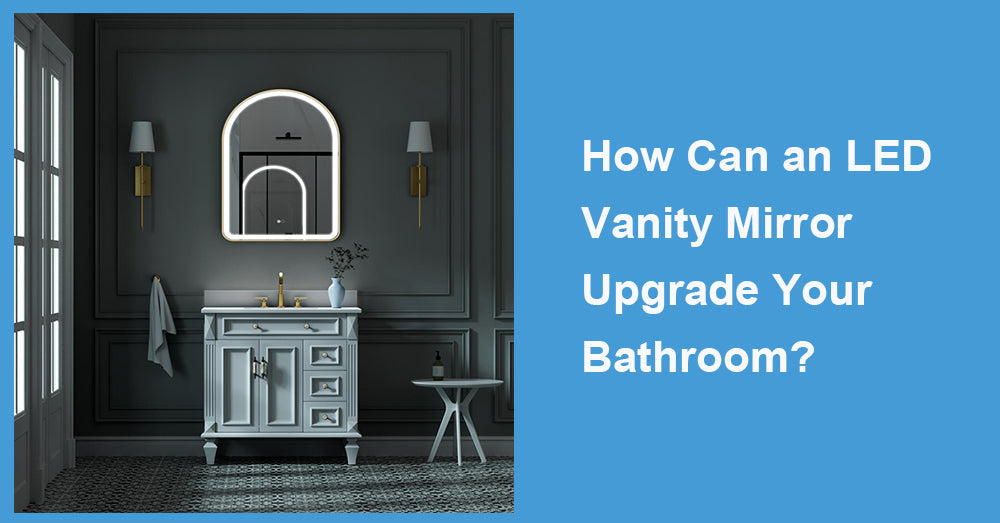
In discussions of bathroom renovations and functional upgrades, LED vanity mirror are gradually evolving from a "design bonus" to an important feature that affects the overall experience. Compared to traditional unlit mirrors or single overhead lighting, LED bathroom mirrors systematically improve lighting quality, spatial perception, and daily efficiency through a lighting layout closer to the user's perspective. From an industry perspective, the value of LED bathroom mirrors lies not in their brightness, but in whether they truly make the bathroom more user-friendly.
1. The key to upgrading a bathroom is often not about making significant changes
In many renovation projects, people often focus their attention on bathtubs, shower systems, or bathroom cabinets, but overlook the combination of mirrors and lighting. In fact, the washing area where the mirror is located is one of the most frequently used and longest-lasting areas in the bathroom.
Industry research shows that the lighting quality of the washing area directly affects the comfort of use and the brightness of the space. LED bathroom mirrors have become a relatively cost-effective and controllable upgrade option by redistributing light without altering the original structure.
2. How LED bathroom mirrors change lighting logic
Traditional bathroom lighting usually relies on ceiling lights or wall sconces, which are often located above the head or behind the body and can easily cast shadows on the face. Even if the overall brightness is sufficient, users may still feel that the washing area is "not clear enough.
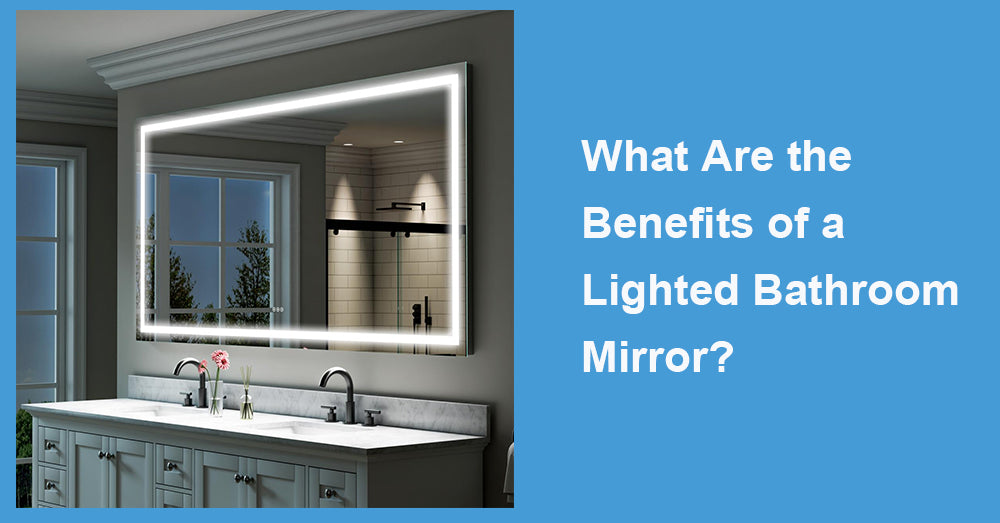
The core advantage of LED bathroom mirrors is that the light source is arranged around the mirror surface or at the back of the mirror, evenly illuminating the face from the front. This lighting method can significantly reduce shadows, improve detail visibility, and make washing, shaving, and tidying smoother.
3. The mirror size determines the upper limit of the upgrade effect
Whether LED bathroom mirrors can truly "upgrade" the bathroom experience depends on the size of the mirror.
In practical applications, the standard mirror width in the washing area is concentrated at 30-48 inches, and the height is mostly between 26 and 32 inches. This size range can cover the main line of sight area of standing users and provide stable light diffusion in both horizontal and vertical directions.
If the mirror size is too small, even with LED lights, its illumination and reflection range will be limited, and the upgrade effect will naturally be limited.
4. The flexibility improvement brought by color temperature and brightness control
Another significant advantage of LED bathroom mirrors is their controllability of color temperature and brightness.
Different color temperatures will directly affect the atmosphere and user experience of the bathroom. Warmer light is more suitable for relaxing environments in the morning and evening, while cooler light has advantages in clarity and detail presentation. The adjustable color temperature range is usually between 3000K and 6000K, which covers most daily use scenarios.
Brightness adjustment is equally essential. In high-reflectivity bathroom spaces, fixed high-brightness light sources can easily cause glare. In contrast, adjustable brightness LED mirrors can be flexibly switched according to time and needs, improving overall comfort.
5. The improvement effect of LED bathroom mirrors on spatial perception
In addition to lighting itself, LED bathroom mirrors also visually affect spatial scale.
Uniform mirror illumination can enhance the reflection effect of mirrors, making the space appear more open and tidy. Especially in bathrooms with limited natural lighting, LED mirrors can amplify the overall brightness by reflecting and diffusing existing light.
The improvement of this sense of space does not rely on increasing the area or dismantling the structure, but on the "perception upgrade" achieved through the organization of light.
6. Collaborative upgrade with the overall lighting system
Installing LED bathroom mirrors does not mean that other lighting fixtures become redundant. A more mature approach is to create a clear division of labor among different light sources.
In a reasonable lighting scheme, the ceiling light is responsible for providing basic ambient brightness, while the LED bathroom mirror is responsible for the functional lighting of the washing area. The synergy between the two can reduce pressure on a single light source, making light distribution more balanced and better aligned with practical usage logic.
This collaborative upgrade is more effective than simply increasing the number of lighting fixtures.
7. The impact of structure and design details on long-term experience
The structural design of LED bathroom mirrors also affects their upgrade value. Borderless or extremely narrow border design helps reduce light obstruction and make the lighting effect more complete.
High-quality mirrors perform better in terms of reflection, realism, and long-term stability, and are less prone to darkening or edge corrosion issues. These details, although not immediately noticeable, will continue to affect the experience over the long term.
8. Practical considerations of energy efficiency and service life
According to industry data, LED light sources offer significant advantages in energy efficiency and lifespan. Under normal usage conditions, its service life can reach 10-15 years, and brightness attenuation is relatively slow.
This means that LED bathroom mirrors not only enhance lighting and spatial awareness in the early stages but also maintain relatively stable performance over the long term, reducing maintenance and replacement frequency.

9. The upgrade value of LED bathroom mirrors from the perspective of the renovation cycle
Bathroom renovation is usually an important decision that takes 10-15 years to redo. During this cycle, lighting and mirrors are used almost every day.
Under such usage intensity, the convenience and comfort provided by LED bathroom mirrors will continue to be amplified. Instead of enduring insufficient lighting for a long time after renovation, it is better to choose a more practical mirror solution during the planning stage.
10. Conclusion
LED bathroom mirrors are not simply "adding lights to the mirror", but instead bringing an overall upgrade to the bathroom by reorganizing light, enhancing controllability, and improving spatial sense. Through front lighting, adjustable brightness and color temperature, and synergy with the overall lighting system, LED vanity mirrors can significantly enhance the practicality, comfort, and long-term value of bathrooms without adding complex structures. In rational planning for bathroom renovation, it is often an upgrade option with a high return on investment.








































Leave a comment
This site is protected by hCaptcha and the hCaptcha Privacy Policy and Terms of Service apply.