























In the current bathroom decoration field, the LED Vanity Mirror has evolved from a simple functional accessory to an important design element that affects spatial temperament and user experience. Especially in small and medium-sized units and high-end renovation projects, a suitable LED mirror can often significantly improve the comfort and visual quality of the bathroom without changing the structure. However, in the specific selection process, a seemingly simple yet highly professional choice frequently appears - is it more suitable to choose the horizontal LED bathroom vanity mirror or the vertical one?
There is no universal answer to this question, as it involves multiple factors such as spatial proportion, lighting logic, user base, and overall decoration strategy.
1. The direction selection of the LED Vanity Mirror is becoming a part of design decisions
From the perspective of industry trends, the form selection of bathroom mirrors is gradually shifting from "aesthetic preferences" to "design strategies". The difference between horizontal and vertical LED Vanity Mirrors is not only reflected in their appearance, but also in their impact on spatial perception.
In modern bathroom design, mirrors play multiple roles in enlarging space, guiding vision, and integrating lighting. The different directions of the mirror directly affect the horizontal extension or vertical height of the bathroom. Therefore, this choice is no longer simply about "liking which one", but requires rational judgment based on spatial conditions.
2. Horizontal LED Vanity Mirror: emphasizes stability and lateral extension
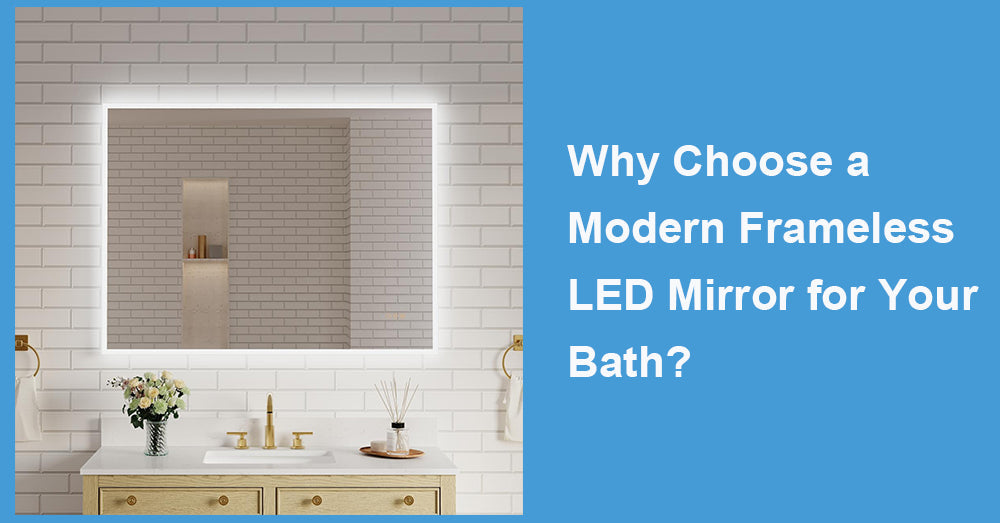
Horizontal LED Vanity Mirrors typically exhibit a width ratio that is consistent with the height of the bathroom countertop. This type of mirror has a clear sense of stability visually, which can enhance the horizontal lines of the wall, making the space appear more spacious and balanced.
In practical applications, horizontal LED mirrors are very suitable for the following scenarios:
One is the main bathroom space with a wide countertop or dual basins, where the mirror can be horizontally extended to cover multiple usage positions.
Secondly, in bathroom environments with a large number of family members, horizontal mirrors are more conducive to multiple people using them simultaneously;
The third is a space with an overall style that leans towards modernity, minimalism, or light luxury design, with horizontal mirrors highly compatible with linear elements.
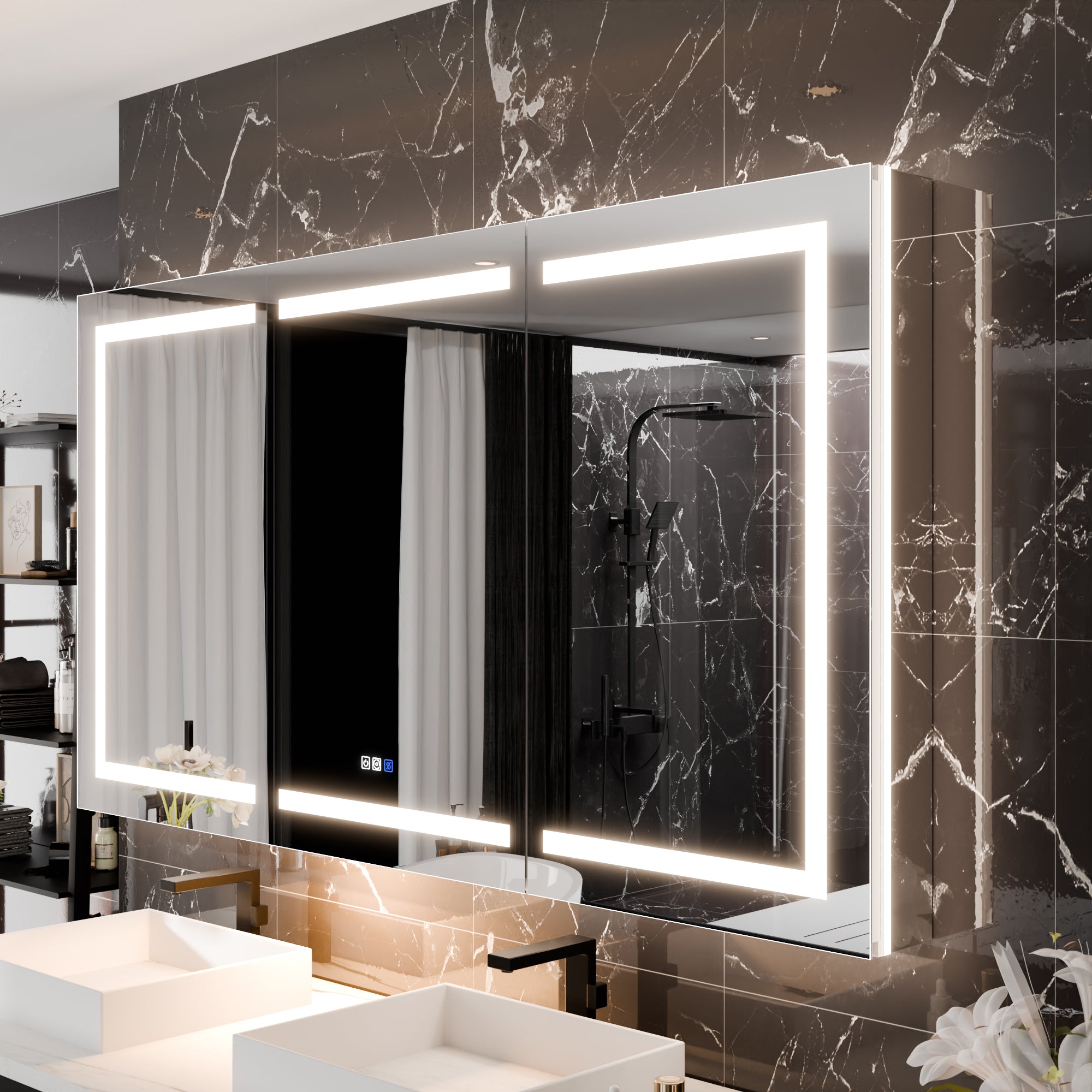
From a lighting perspective, horizontal LED Vanity Mirrors often adopt top, bottom, or backlit light strip designs, emphasizing ambient light and overall uniformity, which can reduce strong shadows and create a soft and comfortable washing atmosphere.
3. Potential limitations of the horizontal mirror type
Although horizontal LED mirrors perform stably in many scenarios, their advantages may also translate into limitations under certain conditions. For example, in situations where the wall height is limited, or the bathroom itself is relatively narrow, overly broad mirrors may compress the sense of vertical space, making the bathroom appear more "flat.
In addition, if the bathroom cabinet is small in size but forcibly paired with a large-sized horizontal mirror, it is also prone to the problem of proportion imbalance. Therefore, the horizontal LED Vanity Mirror is more suitable for bathrooms with relatively spacious conditions and a complete overall layout.
4. Vertical LED Vanity Mirror: Enhancing Height Perception and Visual Focus
Compared to a horizontal LED, a vertical LED Vanity Mirror emphasizes vertical lines more. Visually, this type of mirror can effectively "raise" the spatial proportion, making the ceiling appear higher, especially suitable for bathrooms with limited floor height or compact areas.
Vertical LED mirrors are often more advantageous in small bathrooms, single basin layouts, or guest bathrooms. Its mirror ratio is closer to the natural line of sight of the human body when standing, which can present the facial area more concentratedly, making it particularly friendly for fine operations such as shaving, skincare, and makeup.
At the design level, a vertical LED Vanity Mirror is more likely to become the focal point of the space. It often breaks the repetitive horizontal elements in the bathroom with its simple, upright shape, making the overall design feel more layered.
5. Characteristics of Vertical Mirror Type in Illumination Performance
Vertical LED mirrors have greater flexibility in lighting layout. Many products use left, right surround, or fully enclosed LED light strips, which concentrate the light more on the facial area, reducing shadows and local dark regions.
This lighting method emphasizes functionality while enhancing the mirror's presence, making it not only a practical device but also a decorative design element. However, this type of mirror has relatively limited coverage when used by multiple people, making it more suitable for single or part-time bathroom environments.

6. Comprehensive consideration of spatial proportion and overall matching
In actual decoration projects, the selection of mirror orientation often requires comprehensive judgment based on bathroom cabinets, wall proportions, and overall design language.
If the bathroom is mainly horizontally extended, the cabinet lines are simple, and the horizontal LED Vanity Mirror can enhance the overall sense of order.
If the bathroom emphasizes vertical vision or has a significant height advantage, the vertical mirror type can better unleash the spatial potential.
In addition, the relationship between mirrors and wall white space, lighting color temperature, and other hardware accessories should also be taken into consideration, rather than being selected in isolation.
7. Installation conditions and practical factors for later use
From a construction perspective, there is not much difference in installation complexity between the two types of mirrors, but the reserved power supply position, mirror height planning, and safe distance from the waterway will all affect the final presentation effect.
In renovation projects, the original lines often limit the selection of mirror shapes; In new decoration, the mirror orientation should be included in the design plan as early as possible to avoid additional costs caused by later adjustments.
Conclusion
Looking at industry practices, there is no absolute superiority or inferiority between horizontal and vertical LED Vanity Mirrors. They are more like two solutions tailored to different spatial conditions and usage needs. Horizontal mirrors emphasize stability, openness, and integrity, suitable for wide layout and multi-person use; Vertical mirrors highlight height, focus, and design sense, making them more appropriate for small spaces and personalized expression. The truly ideal LED Vanity Mirror is not about choosing which form, but about whether it is coordinated and unified with the bathroom space, usage habits, and overall design goals.









































Leave a comment
This site is protected by hCaptcha and the hCaptcha Privacy Policy and Terms of Service apply.