






















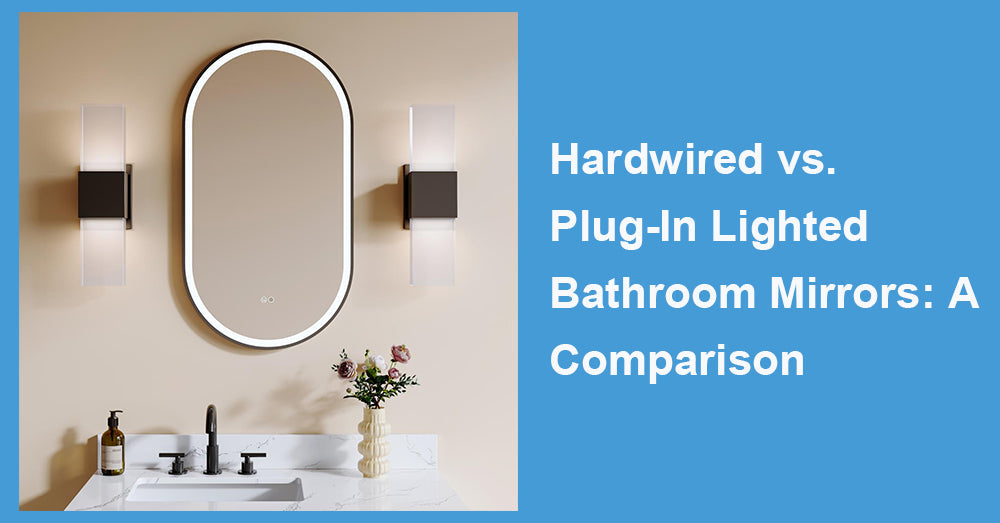
The bathroom lighting has been increasing far beyond the overhead lighting. Unlit bathroom mirrors are being replaced by lit bathroom mirrors as a recent home improvement, as they are single mirrors designed to serve both light and functionality in a sleek, elegant style. It could be make-up, shaving, or merely getting into dress-up and going to work; however, the right mirror lighting can make a difference.
The most common question homeowners face when purchasing lighted bathroom mirrors is whether to get a hardwired or a plug-in mirror. Both are excellent lighting sources and modern in design, but they differ in installation, flexibility, and lifespan.
This manual compares hardwired lighted mirrors and plug-in lighted mirrors to help you decide which to buy and install in your bathroom.
1. What is a Hardwired Lighted Mirror?
A hard-wired lighted mirror is wired into your home's electrical system. The mirror is not plugged into a wall outlet; it is plugged into the wall electrical system.
Key Characteristics
Mirrors that are hardwired usually:
· Directly connect with a wall switch.
· Conceal the electric wire behind the wall.
· Provide a clean, furnished look.
· They are put in when remodeling or renovating.
Because wiring is concealed, hardwired mirrors usually provide a smooth, more permanent finish.
Profits of Hardwired Mirrors.
1. Clean and Minimal Look
Because the wiring is behind the wall, hardwired mirrors have a smooth, cord-free look.
1. Controlled by Wall Switch
The majority of hardwired mirrors come with the same wall switch as the other bathroom lights, so they are easy to use.
1. Ideal for Renovations
When you are already remodeling your bathroom or replacing electrical fixtures, a hardwired mirror can be easily added.
1. Professional Finish
Hardwired mirrors can be considered more of a part of the bathroom design, creating the impression of a high-end, built-in look.
Potential Downsides
The major drawback is installation. The mirror itself is connected directly to house wiring, so an experienced licensed electrician may be required to install it, depending on your experience and local electrical standards.

2. What is a Plug-In Lighted Mirror?
The plug-in lighted mirror is similar to other small appliances; it simply fits into a normal wall outlet.
These mirrors are easy to install, flexible, and are thus popular among those who like to do it themselves, whether renters or homeowners.
Key Characteristics
Plug-in mirrors typically:
· Include a power cord.
· Plug into a nearby outlet.
· Does not require electrical installation.
· They are easier to move or replace
Plug-in mirrors tend to be faster to install because they do not require any wiring changes.
The benefits of Plug-In Mirrors.
1. Easy Installation
The majority of plug-in mirrors can be set up within minutes. All one needs is to mount the mirror and plug it into an outlet.
1. No Electrical Work Required
Because it does not require any wiring, it does not require the employment of an electrician.
1. Flexible Placement
Should you choose to change or redesign your bathroom, the plug-in mirror can be moved with less effort than a hardwired one.
1. Great for Renters
The reason why rentiers tend to use plug-in mirrors is that they do not need any electrical adjustments in the house.
Potential Downsides
The overpowering power wire may also have an influence on the general aesthetics, particularly in minimalist or luxury bathrooms.
3. Installation Comparison
Installation is one of the most significant factors when deciding on hardwired and plug-in mirrors.
Hardwired Installation
Hardwired mirrors require:
· Access to electrical wiring
· Proper wall mounting
· secure electricity connection.
· Professional installation is possible.
It is more complicated, but the effect is a very smooth appearance.
Plug-In Installation
Plug-in mirrors usually need:
· Wall mounting brackets
· A nearby electrical outlet
· Simple cord connection
This installation requires an average homeowner to do it.
4. Aesthetic and Design Disagreements.
Each of these mirrors can be seen as a contemporary and stylish one, but they have slightly different effects.
Mirrors that have wires are more custom-made and built-in, as the wire is hidden. This renders them attractive in luxurious bathrooms, new construction houses, or complete remodelling projects.
Plug-in mirrors, on the other hand, are simple to install but may expose the power cord unless one can conceal it underneath the carpet or behind the vanity.
However, it is now possible to find cord management in the majority of modern plug-in mirrors, which can minimize visual clutter.
5. Quality and Energy Efficiency of Lighting.
Platform mirrors are both plug-in and hardwired and are likely to be lit by LED technology.
LED lighting has several advantages:
· Long lifespan
· Low energy consumption
· Bright, even illumination
· Minimal heat output
The common lighting elements of the two types of mirrors make the efficiency of the mirrors similar to each other.
6. Which One Best Fits in Your Bathroom?
Which option is best will always remain the one that is determined by what your home is, how you want to be installed, and how you plan to go long-term.
Choose a Hardwired Mirror If:
You are reorganizing your bathroom.
· You like a neat built in look.
You want the mirror to be put on the wall and to be controlled by a wall switch.
· Professional installation is not of concern.
Choose a Plug-In Mirror If:
· You desire a fast news-of-the-week installation.
· You are leasing or evading electrical job.
You can change or change the mirror later.
· A nearby outlet is available
The hardwired and plug-in lighted bathroom mirrors are both modernized and have enhanced functionality as well as a sleek design. The primary disparity is installation and flexibility in general.
Mirrors made by hardwiring are smooth, built-in, and look especially well in remodeled bathrooms. Plug-in mirrors, on the other hand, are fast to install and versatile, thus suitable for DIY upgrades or rental spaces.
By understanding the advantages of each option, you can choose the mirror that best fits your bathroom layout, lighting needs, and installation preferences.







































Leave a comment
This site is protected by hCaptcha and the hCaptcha Privacy Policy and Terms of Service apply.