




















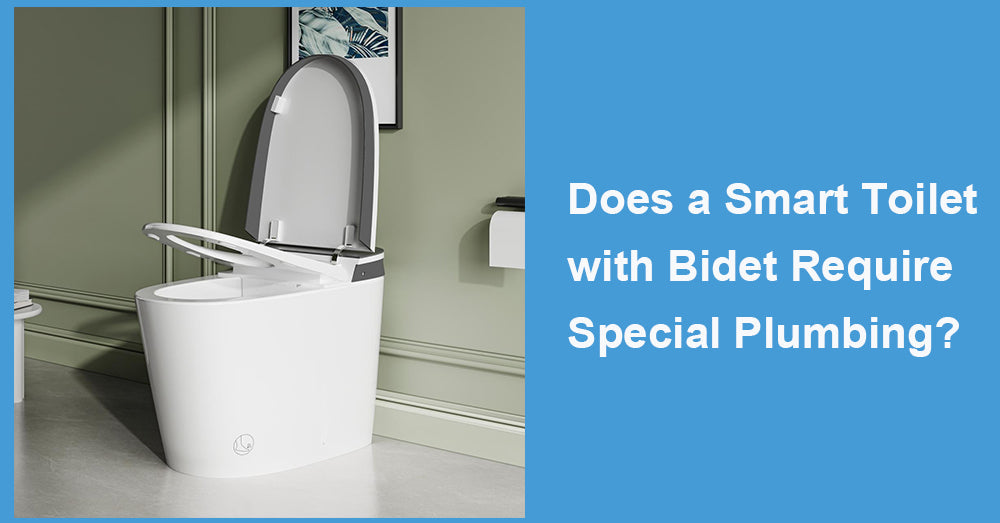
A smart toilet with bidet usually does not require exotic plumbing, but it does ask for more planning than a standard toilet. That difference catches a lot of homeowners off guard. After seeing these products installed in remodels, new builds, and everyday family bathrooms, I would say the plumbing side is often simpler than people fear. The bigger issue is whether the bathroom has the right water supply location, enough clearance, and a practical electrical setup to support the features people are paying for.
1. What changes when you install a smart toilet with bidet
A regular toilet is straightforward. Water comes in, waste goes out, and most of the decisions were settled years ago. A smart toilet with bidet adds more functions to that same footprint: washing, drying, seat heating, auto flush, sometimes deodorizing and remote controls too.
That does not mean the whole bathroom has to be replumbed. In many cases, the drain line and basic water supply setup can stay largely the same. What changes is the level of precision required. Placement matters more. Access matters more. And if the model is an all-in-one unit rather than a simple bidet seat attachment, the installation has less room for improvisation.
This is where homeowners make their first mistake. They hear “smart toilet” and assume they need special pipes in the wall. Most do not. Then another group goes too far the other way and assumes it installs exactly like any cheap toilet off the shelf. That is not quite true either.
2. Does a smart toilet with bidet need special plumbing?
In most homes, no special plumbing system is required. What it does need is a compatible cold-water supply, the correct rough-in size, and a clean, well-positioned shutoff valve. If those basics are in place, many models install without major plumbing changes.
That said, “no special plumbing” does not mean “no preparation.” Some bathrooms have older shutoff valves in awkward positions. Some have supply lines that interfere with the toilet body skirt. Some have rough-in measurements that are technically close but not ideal for the model being purchased.
A standard floor drain is still standard. The toilet still connects to the waste line in a familiar way. The bidet washing function typically pulls from the cold-water line and heats the water internally if the model includes warm water. So you are usually not running a separate hot-water pipe to the toilet.
That is a common misconception, and I hear it often. People assume warm-water bidet features must mean a hot-water plumbing connection. With most modern integrated units, that is not how it works.
What usually needs attention before installation
The water shutoff valve location is a big one. Many smart toilets have a more enclosed base than traditional toilets, so the supply connection needs to be placed where it will not interfere with the body of the unit.
You also want to confirm the rough-in measurement before buying. Ten-inch, twelve-inch, and fourteen-inch rough-ins are not interchangeable just because the toilet looks compact online. If the sizing is wrong, the problem is not subtle.
Where plumbing becomes more complicated
Complications show up more often in older homes, tight powder rooms, and remodels where the original plumbing was never updated properly. I have seen cases where the toilet technically fit, but the supply valve ended up trapped behind the unit or the wall clearance made servicing harder than it should have been.
In those situations, a minor plumbing adjustment is not unusual. It is not a full redesign, but it is still more than a basic swap.
3. The real wildcard is often electrical, not plumbing
This is the part many buyers overlook. A smart toilet with bidet may not need special plumbing, but it almost always needs more thought on the electrical side than a regular toilet ever would.
Heated seats, warm water washing, warm air drying, automatic lids, night lights, and touch controls all rely on power. If there is no nearby GFCI outlet, the project becomes more involved. Running an extension cord across a bathroom is not a serious solution, yet people still ask if they can get away with it.
They should not.
From an installation perspective, I usually tell homeowners to think of plumbing and electrical as a package. The plumbing may be manageable, but if the power source is missing or badly placed, the install stops being simple.
Why this matters in real homes
In a newer primary bathroom, the setup is often fairly easy. The room may already have accessible power, updated shutoff valves, and enough space around the toilet to work comfortably.
In an older guest bathroom, it can be a different story. The plumbing may be fine, but the electrical is missing, the side clearance is tight, and the supply valve is sitting exactly where the toilet skirt wants to be.
That is why blanket advice is not very useful here.

4. Who should buy one, and who should pause first
A smart toilet with bidet makes sense for homeowners who value comfort, hygiene, and a more upgraded daily routine. It works especially well in primary bathrooms, aging-in-place renovations, and homes where the bathroom is already being updated anyway. If the walls are open and the flooring is changing, this is the right time to get the details right.
It is less ideal for people who want a completely casual swap with no planning at all. I would also be cautious in older bathrooms where every fixture replacement turns into a surprise, or in rental properties where service access and long-term care may be inconsistent.
There is also a buying issue I see often: people choose the model with the longest feature list rather than the model that best matches their bathroom. That can backfire. A well-supported unit with sensible features is usually a better investment than an overly complicated one from an unknown seller.
For that reason, brand support matters. With a company like Wellfor, the product itself is only part of the value. Clear specifications, practical sizing, and dependable support make installation and later maintenance much less stressful.
Installation and maintenance advice before you commit
Before ordering, measure the rough-in, locate the shutoff valve, check side clearances, and confirm there is a properly placed GFCI outlet. Do not assume the plumber or electrician will “figure it out later” without extra cost.
After installation, maintenance is usually manageable. Keep the nozzle area clean, descale if you have hard water, inspect the supply connection occasionally, and avoid harsh chemical cleaners on sensors and controls. Most ownership problems I see come from bad prep or poor product choice, not from the idea of the toilet itself.
If your bathroom has a standard drain, a workable water line, and room for proper power access, a smart toilet with bidet probably does not need special plumbing. It needs accurate planning, a realistic installer, and a model that fits the room instead of just looking impressive on a product page. That is usually the difference between a smooth upgrade and a frustrating one.



































Leave a comment
This site is protected by hCaptcha and the hCaptcha Privacy Policy and Terms of Service apply.