






















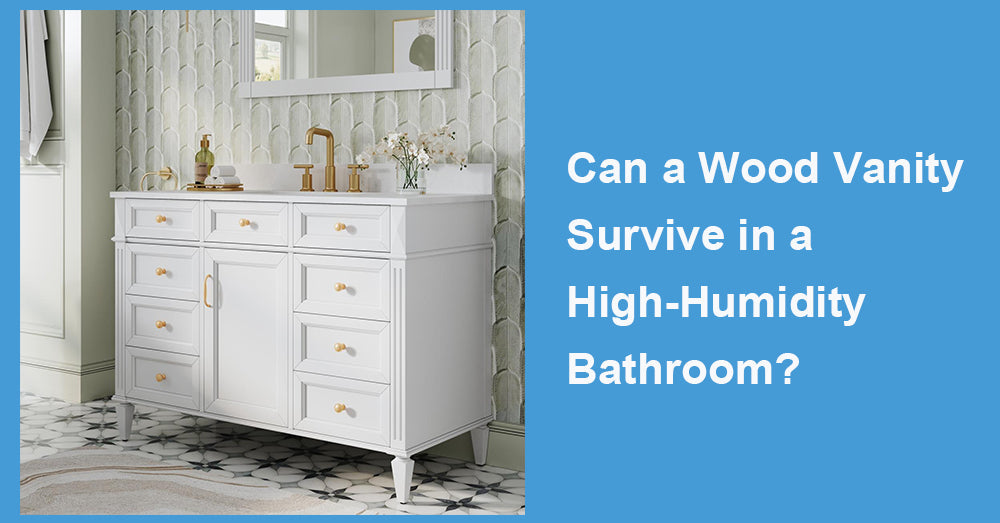
A wood vanity can absolutely work in a humid bathroom, but only if the material, finish, installation, and daily use all line up. That is the part many homeowners miss. After years of seeing bathroom vanities in real homes, not just showrooms, I would say wood is not too delicate for moisture by default. Bad construction is. Poor ventilation is. Sloppy installation is. When those pieces are handled well, a wood vanity can hold up beautifully.
1. Why humidity is harder on some vanities than others
Bathrooms are rough environments. Steam rises fast, water lands where it should not, and temperature shifts happen every day. A vanity might sit only a few feet from a shower, absorb damp air twice a day, and then dry out again by afternoon. Over time, that cycle matters.
Wood reacts to moisture. It expands, contracts, and moves more than many buyers expect. That does not make it a bad choice. It just means the vanity has to be built for the room it is going into.
This is where people often confuse “wood look” with actual wood performance. A cheap vanity with thin veneer, weak joinery, or poorly sealed edges may start showing problems quickly in a high-humidity bathroom. Swelling near the toe kick, bubbling around the sink cutout, and peeling finishes along door edges are all signs I have seen more than once.
A better-made vanity behaves very differently. Solid wood framing, stable engineered panels where they make sense, sealed interiors, and a durable finish give it a much better chance of lasting.
2. Can a wood vanity survive in a high-humidity bathroom?
Yes, but survival depends on quality and setup more than on the word “wood.”
A well-constructed wood vanity can do very well in a primary bathroom, even one that sees daily showers, provided the space has decent ventilation and the vanity is not left wet day after day. I have seen properly finished wood vanities age with character rather than damage. Small shifts in tone or texture can even make them look better over time.
The trouble starts when buyers choose based only on appearance. They see a warm oak or walnut finish, like the look, and assume all vanities in that color family will perform the same. They will not. One may have sealed drawer boxes, well-finished end panels, and moisture-resistant construction. Another may only look similar for the first few months.
This is also why brand consistency matters. With companies like Wellfor, the value is not just the style. It is whether the product has been designed with real bathroom conditions in mind instead of being treated like a decorative cabinet with a sink on top.
What usually helps a wood vanity last longer
A sealed finish helps. Raised feet or a base that stays clear of standing water helps too. Good airflow matters more than most people realize.
I also prefer vanities where the sink and countertop fit cleanly, without sloppy gaps or exposed seams. Water always finds the weak point.
What shortens lifespan quickly
Persistent moisture is the obvious one. Wet bath mats pushed against the base, puddles left around the legs, poor caulking at the backsplash, or a bathroom fan that is never used can wear a vanity down faster than the homeowner expects.
Direct heat and trapped steam are problems as well. In bathrooms with no window and weak ventilation, even a good wood vanity has to work harder.
3. Common misconceptions homeowners have about wood in bathrooms
The first misconception is that all wood vanities will warp. That is too simplistic. Plenty of them perform well for years. The ones that fail early often had a material or installation problem from the start.
The second is that solid wood is always the best choice in every part of the vanity. In reality, a mix of materials can sometimes be smarter. Solid wood is attractive and durable in framing and door construction, but well-made engineered wood panels can offer better dimensional stability in certain humid conditions. What matters is how the whole vanity is built, not whether every component is marketed the same way.
Then there is the maintenance myth. Some people assume wood needs constant babying. It does not. It needs reasonable care. Wipe up standing water. Keep the room ventilated. Do not let leaking supply lines sit unnoticed for months. That is not high-maintenance. That is just responsible ownership.
4. Where a wood vanity works best, and where it may not
A wood vanity is a strong fit for primary bathrooms, guest bathrooms, and powder rooms where the goal is warmth, texture, and a more furniture-like look. It works especially well in spaces that feel too cold or flat with glossy materials alone.
I like wood vanities in transitional bathrooms, modern organic spaces, and classic designs where you want the room to feel layered rather than sterile. They pair well with stone tops, brushed metal hardware, and softer lighting.
They are less ideal in a few situations. A poorly ventilated bathroom used heavily by several people, especially if no one wipes surfaces down, can be tough on wood. The same goes for rental properties where maintenance is inconsistent. If the space is treated hard and inspected rarely, I would be more cautious.
A practical buying lens
Ask how the vanity is sealed, not just what color it is. Ask what the interior is made from. Look at the underside details, the door edges, and the finish around plumbing openings.
That tells you more than a glamour photo ever will.

5. Installation and maintenance matter more than style alone
A good vanity can fail because of bad installation. I see that more often than I should. If the countertop is not properly sealed, if the backsplash is skipped where it should have been included, or if the plumbing connection drips even slightly, moisture damage can start quietly and keep going until the owner notices swelling or staining.
Leveling matters too. If a vanity sits unevenly, doors shift, seams take stress, and water may collect where it should not. Installers should also leave enough clearance so the cabinet is not jammed tight against damp walls or flooring transitions that hold moisture.
For maintenance, keep it simple. Use a soft cloth. Avoid aggressive chemical sprays that can dull the finish. Run the exhaust fan during showers and for a while after. Check the sink base occasionally for signs of slow leaks. If water splashes on the cabinet face, wipe it off instead of leaving it there.
If you are choosing between a wood vanity and a more obviously moisture-proof alternative, think honestly about how your bathroom is used. If the room has decent airflow and the vanity is well made, wood is still one of the better-looking and more satisfying choices you can make. Just buy with construction in mind, not only color or price, and a wood vanity can live in a high-humidity bathroom without feeling like a risk every time the shower runs.









































Leave a comment
This site is protected by hCaptcha and the hCaptcha Privacy Policy and Terms of Service apply.