
















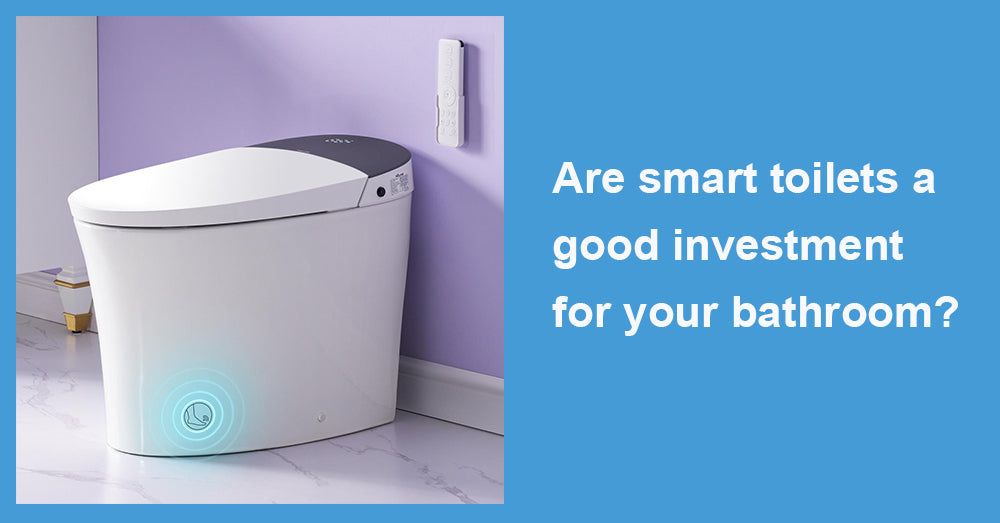
In recent years, as bathroom products have advanced from basic functions to intelligence, Smart Toilet have gradually become a focus of attention in bathroom renovation projects. From automatic flushing and seat heating to more precise water-saving modes and antibacterial systems, the core value of these products is shifting from "freshness" to "whether long-term investment is worth it". Whether a Smart Toilet is a worthwhile facility for those undergoing bathroom upgrades has become a widely discussed topic in the industry.
1. The value of Smart Toilets is shifting from experiential products to long-term functional products
In the early stages of popularization, smart toilets drew attention for technological features such as automatic flip-up, nightlight illumination, warm-air drying, and other functions. However, as demand gradually matures, the industry's focus is shifting towards energy-saving performance, water efficiency, and sustainability. According to research from the global bathroom industry, smart toilets achieve 20%- 35% better long-term water savings than traditional toilets (source: EnergyStar.gov). This mainly comes from more precise flushing control, such as the standard 1.0-1.28 gallon per flush mode, which can reduce water waste without affecting cleanliness.
At the same time, many smart toilets use continuous antibacterial glaze or electrolytic water sterilization systems, making the toilet's inner walls less prone to long-term dirt buildup and thereby reducing cleaning frequency. The durability of such technology is an essential factor in enhancing the value of use for household users.
2. Water conservation and energy efficiency have become the core reasons for purchasing Smart Toilets
In the industry, water-saving performance has shifted from an added advantage to the most recognized key function of smart toilets. Standard toilets generally use 1.6 gallons per flush, while models with intelligent flushing systems automatically match the flush volume to usage, maintaining a range of 1.0-1.28 gallons. According to data from multiple water resource agencies, toilet water accounts for about 24% of a household's total daily water consumption (source: EPA.gov). If the main toilet is replaced with a smart device, the average annual water savings can reach thousands of gallons, and in the long run, the saved water costs can offset some of the product costs.
In terms of energy conservation, although the heating seat, instant cleaning water flow, and drying system of smart toilets require power support, many products already have "standby power saving mode" and "human body induction start mode". Industry data shows that instant electric systems consume about 15% -22% less energy than traditional water storage and heating systems (source: EnergyStar.gov).
3. Comfort experience remains an enhancement for consumers' choices, rather than the only reason
Although energy and water conservation have become central to smart toilets, advanced features remain an essential selling point for improving the user experience.
Standard comfort features include:
Seat heating is efficient in environments with significant temperature differences.
Multi-stage spray washing and massage water flow;
Warm air drying reduces tissue dependence.
Equipped with a deodorization and air circulation system;
Night light illumination and automatic flip cover.
According to a survey conducted by a bathroom product review platform, over 58% of households with smart toilets believe that "upgrading cleaning methods" is an essential factor in improving their quality of life (source: HomeAdvisor.com). Especially in larger main bathrooms, smart toilets often enhance the user experience, aligning the bathroom more closely with modern home standards overall.
4. Safety, durability, and maintenance costs are essential references for long-term investment returns
To determine whether smart toilets are worth a long-term investment, durability and maintenance costs need to be considered.
Durability:
High-quality smart toilets typically use antibacterial glaze, stainless steel nozzles, and reinforced plastic materials to maintain stability in humid environments. Many industry tests have shown that the average lifespan of nozzles in intelligent spray cleaning systems is significantly longer than that of general bathroom metal parts under standard use (source: NSF.org).
Maintenance cost:
Although smart devices require power and electronic control modules, most products adopt a modular design, making maintenance and replacement more convenient. For example, nozzle components, heating components, and control boards can be replaced separately to avoid the high costs of scrapping the entire machine.
Cleaning convenience:
The seamless design, hidden fixed structure, and automatic descaling mode commonly used in smart toilets make daily maintenance easier than traditional toilets. Especially during deep cleaning, antibacterial glaze can reduce the use of chemical cleaning agents.
From a long-term perspective, a reliable, high-quality smart toilet can deliver sustained returns through water conservation, energy efficiency, and improved cleaning convenience over its 8-10 year lifespan.
5. Bathroom space and installation requirements: Not all bathrooms are suitable for all models
The installation conditions for smart toilets are slightly higher than traditional toilets, and need to consider:
Whether there is a stable power socket (most products have 110V);
The compatibility between the sewage outlet position and the toilet bottom size; the standard discharge distance is 12 inches.
The safety of power lines and waterway routes;
Is the bathroom space sufficient to accommodate a wider toilet size? Some intelligent all-in-one machines are approximately 27-30 inches long and 16-18 inches wide.
For bathrooms with smaller spaces, it is necessary to prioritize more compact models. In contrast, environments with spacious, independent bathrooms or main bathrooms are more suitable for integrated designs with complete functional configurations.
6. From the perspective of industry trends, Smart Toilets are transitioning from "luxury upgrades" to "essential product evolution."
According to data from the bathroom product statistics platform, the smart toilet category has maintained an average annual growth rate of about 12% in the past three years (source: Statista.com). With the maturity of energy-saving technology, cost reduction, and increasing consumer attention to environmentally friendly products, smart toilets are gradually replacing traditional high-end toilets as the mainstream choice.
The following development trends are expected to emerge in the future industry:
A more precise water flow control system, improving flushing efficiency and further reducing water consumption;
Linkage with home systems, such as bright lighting, air detection, and voice control.
Antibacterial materials, deodorization technology, and automatic maintenance systems have become standard equipment.
The more compact, adaptable design will continue to increase in popularity.

7. Conclusion: Is a smart toilet a good investment?
From the perspectives of water-saving ability, long-term durability, hygiene, and improved living experience, the investment in Smart Toilet is not limited to the appearance of "technological products". Still, it can also bring sustained value to home upgrades. For those undergoing bathroom renovations, a smart toilet with excellent water-saving performance, a durable structure, and convenient cleaning can be a project worth investing in for the long term.
In the future of bathroom design, smart toilets will no longer be just a "bonus" for modern bathrooms. Still, they will gradually become an essential core facility for improving quality of life, optimizing resource use, and enhancing the user experience.














Leave a comment
This site is protected by hCaptcha and the hCaptcha Privacy Policy and Terms of Service apply.