
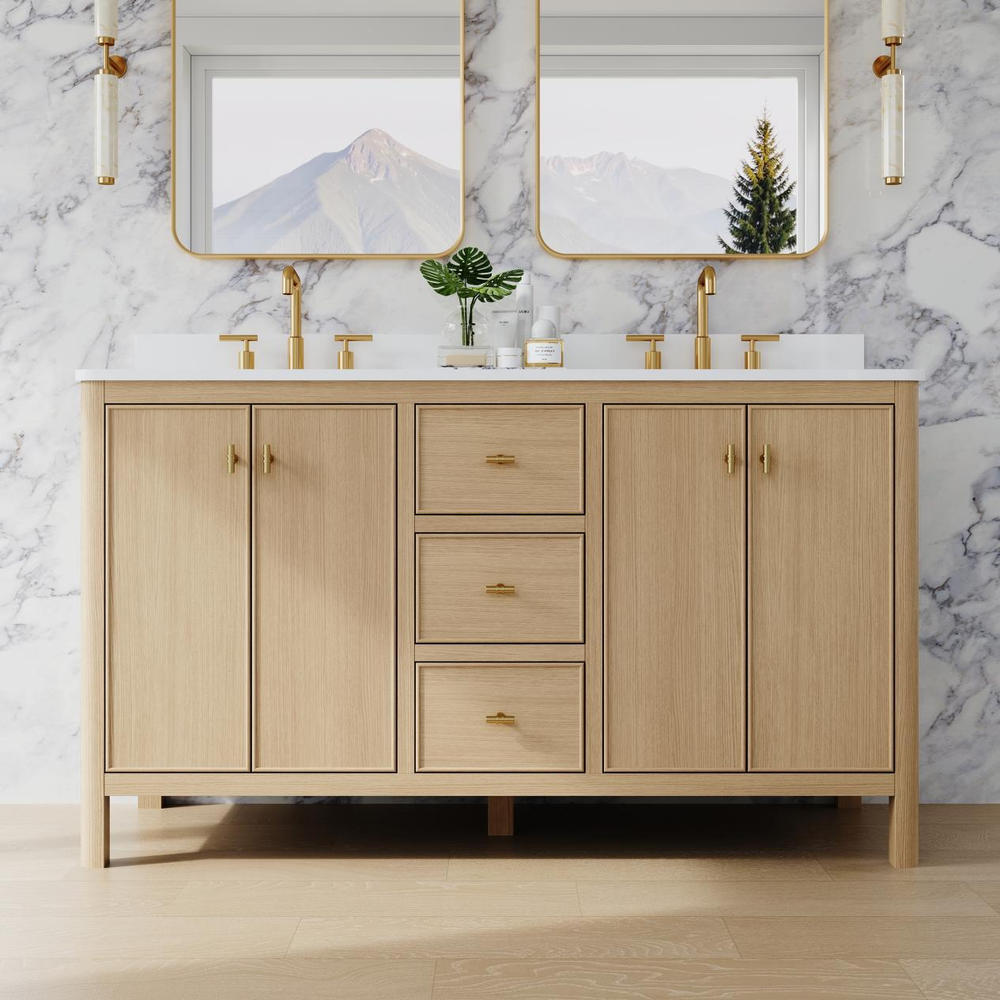
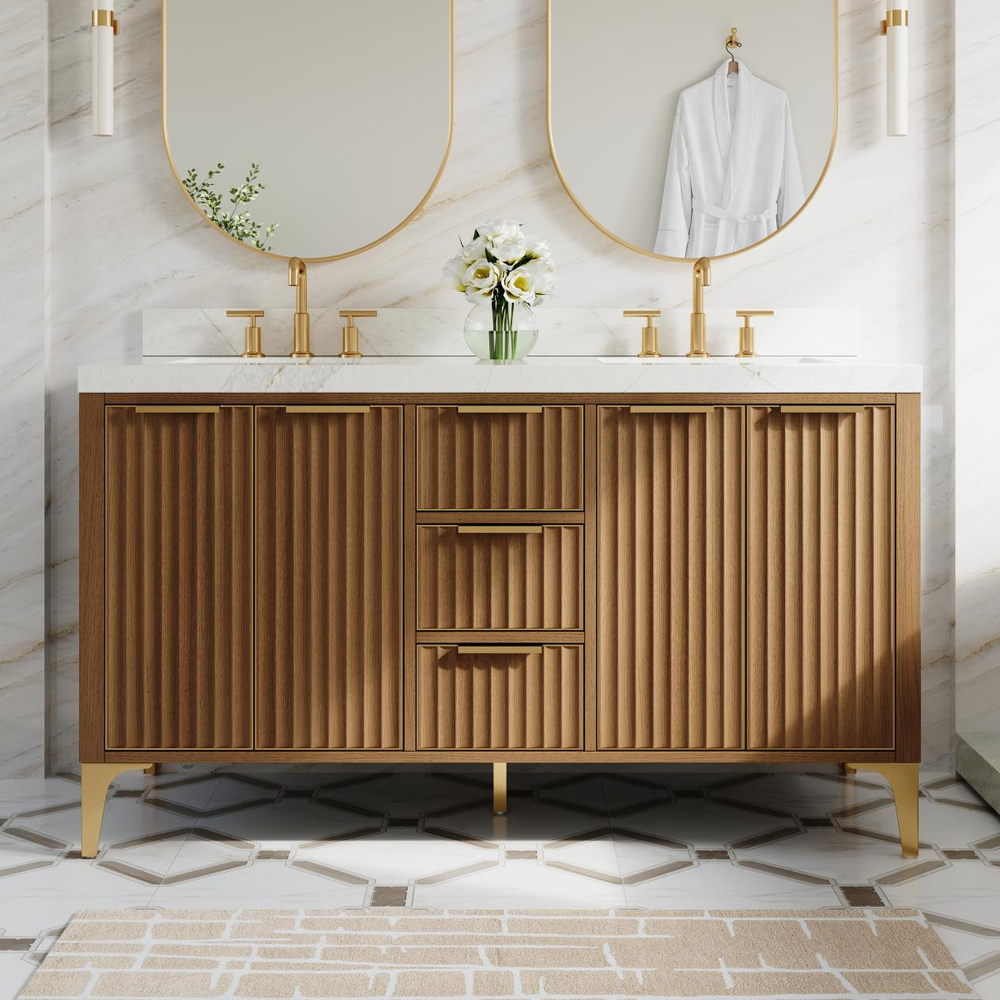
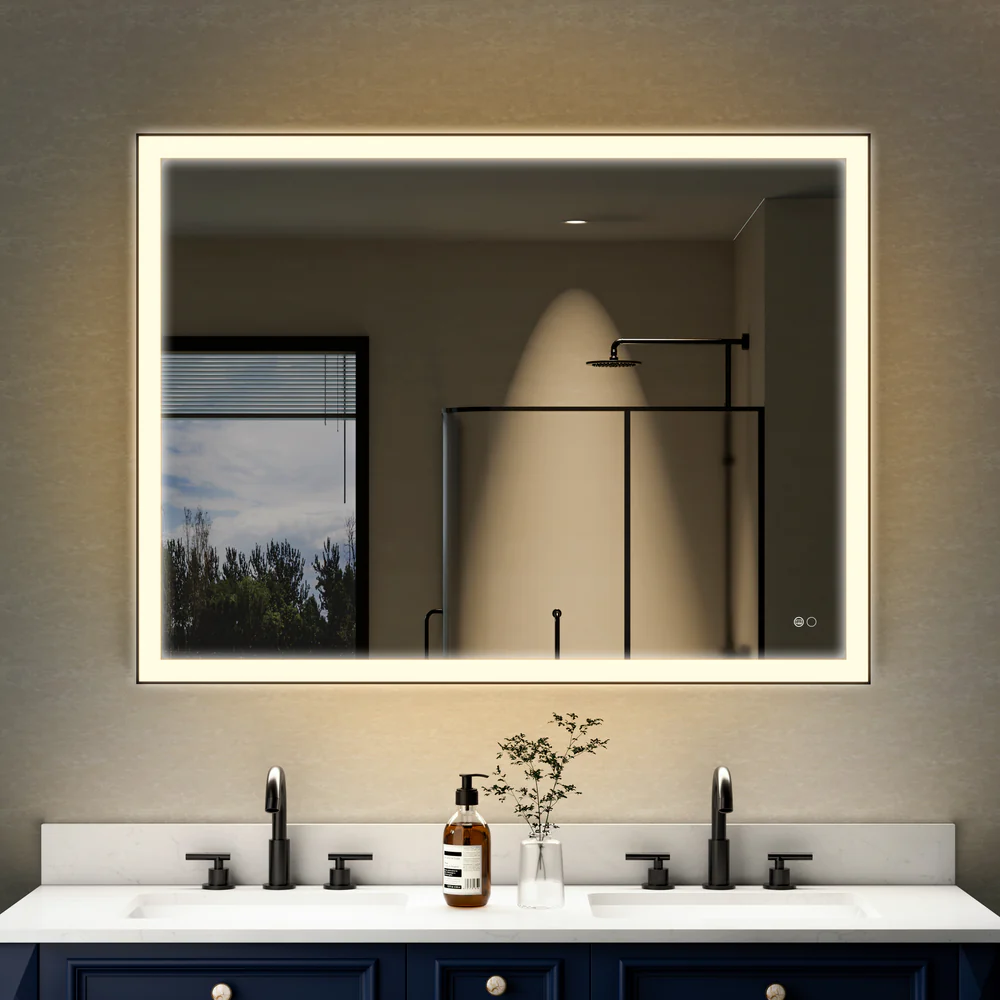
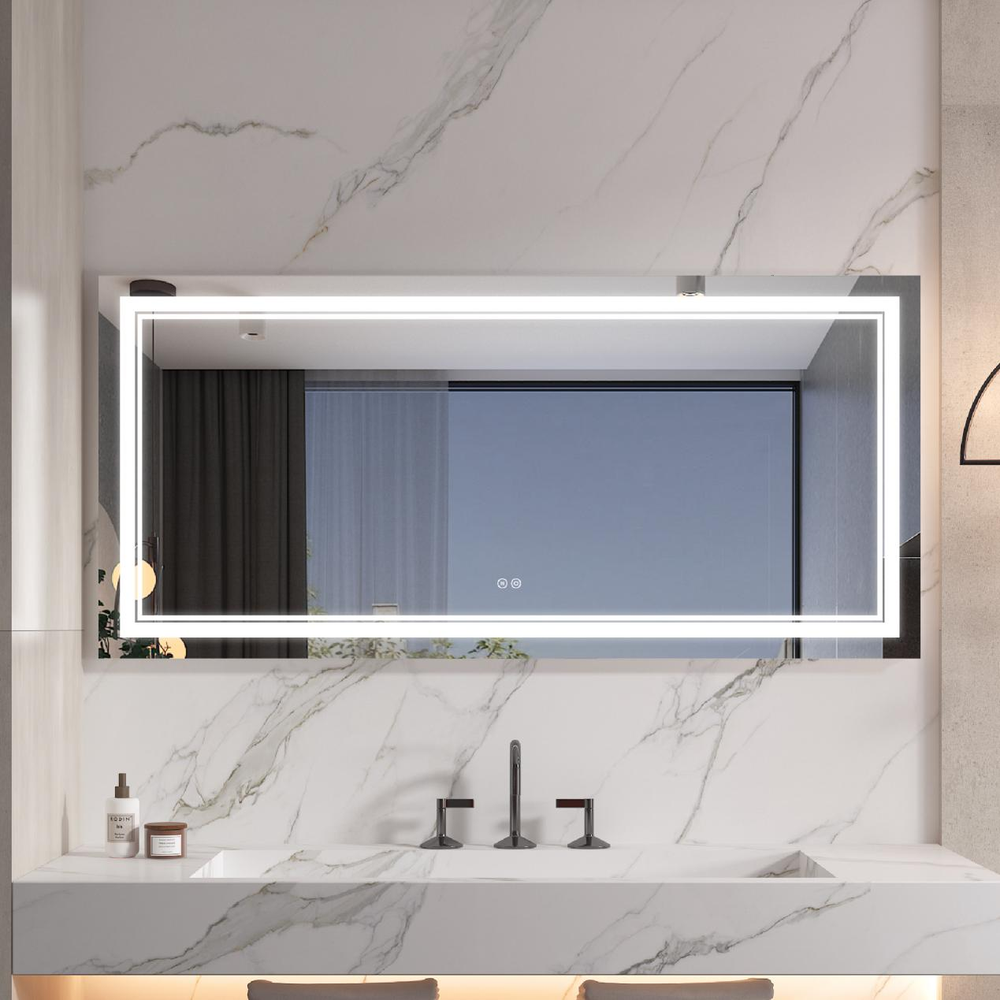
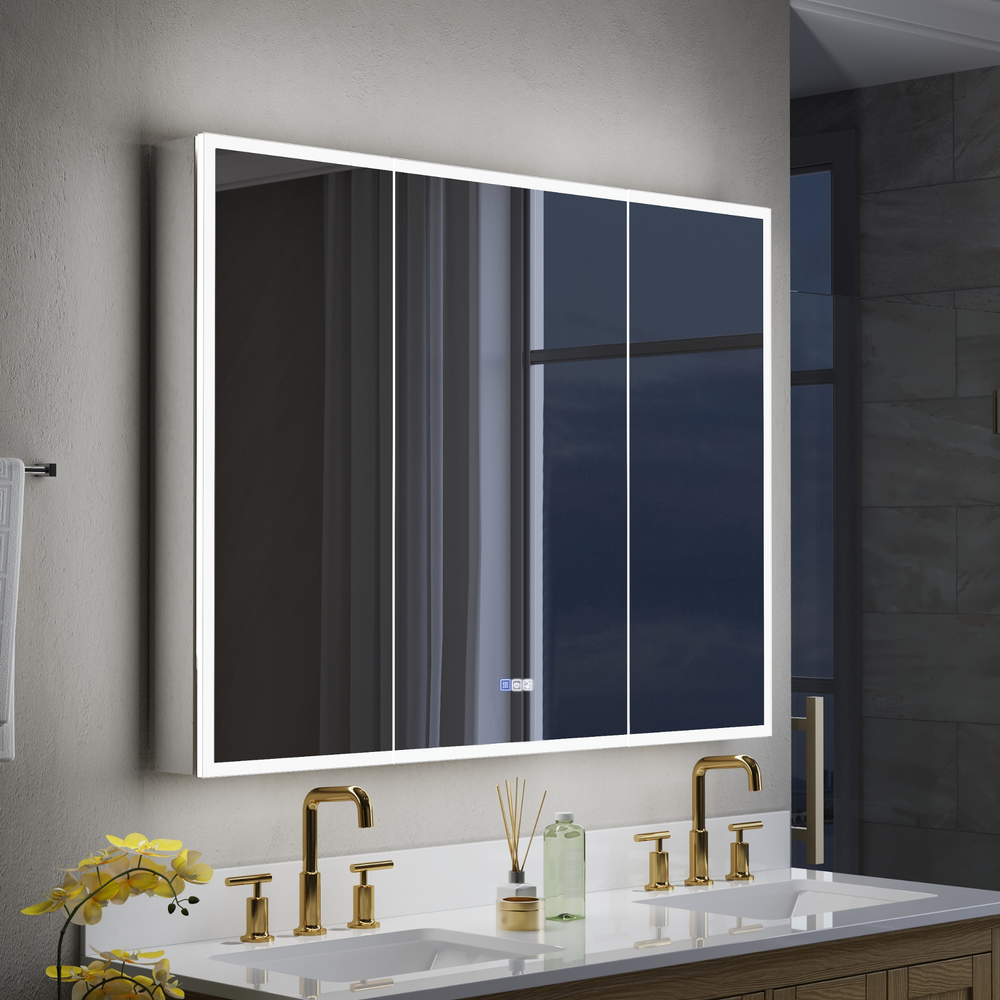
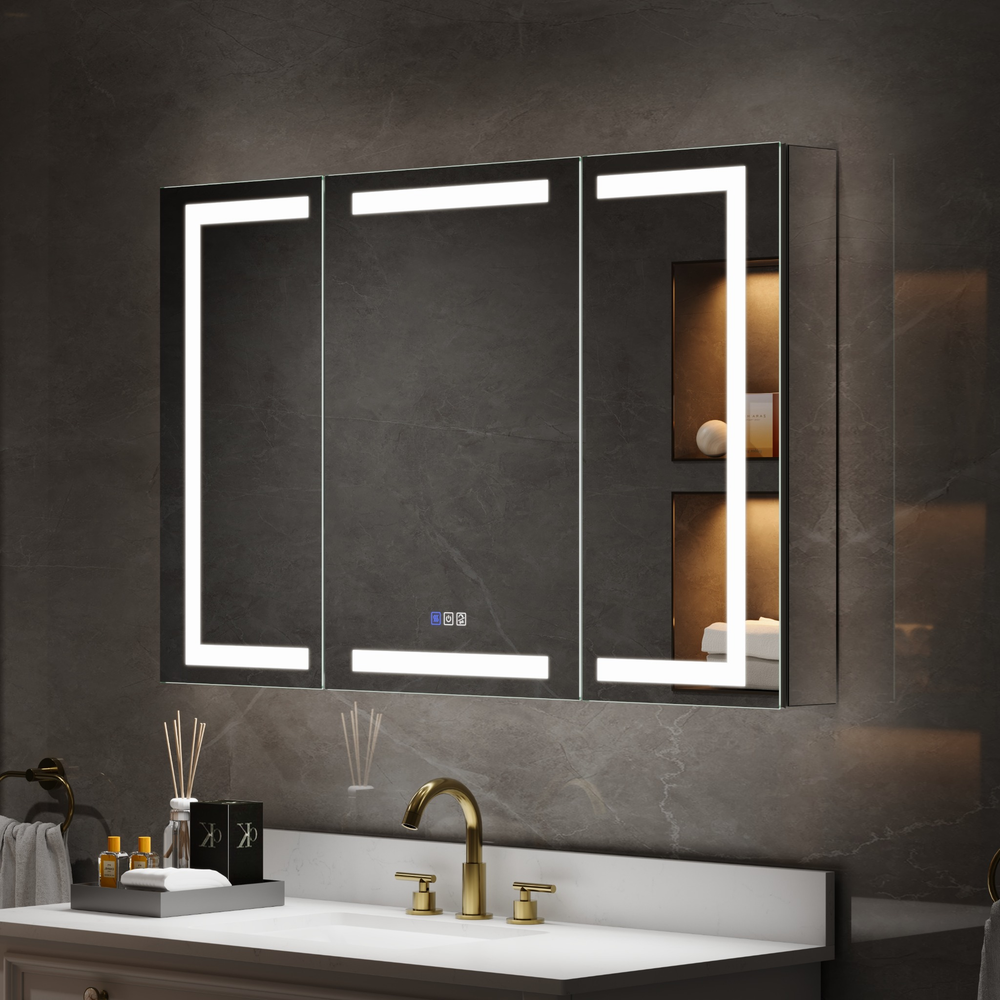

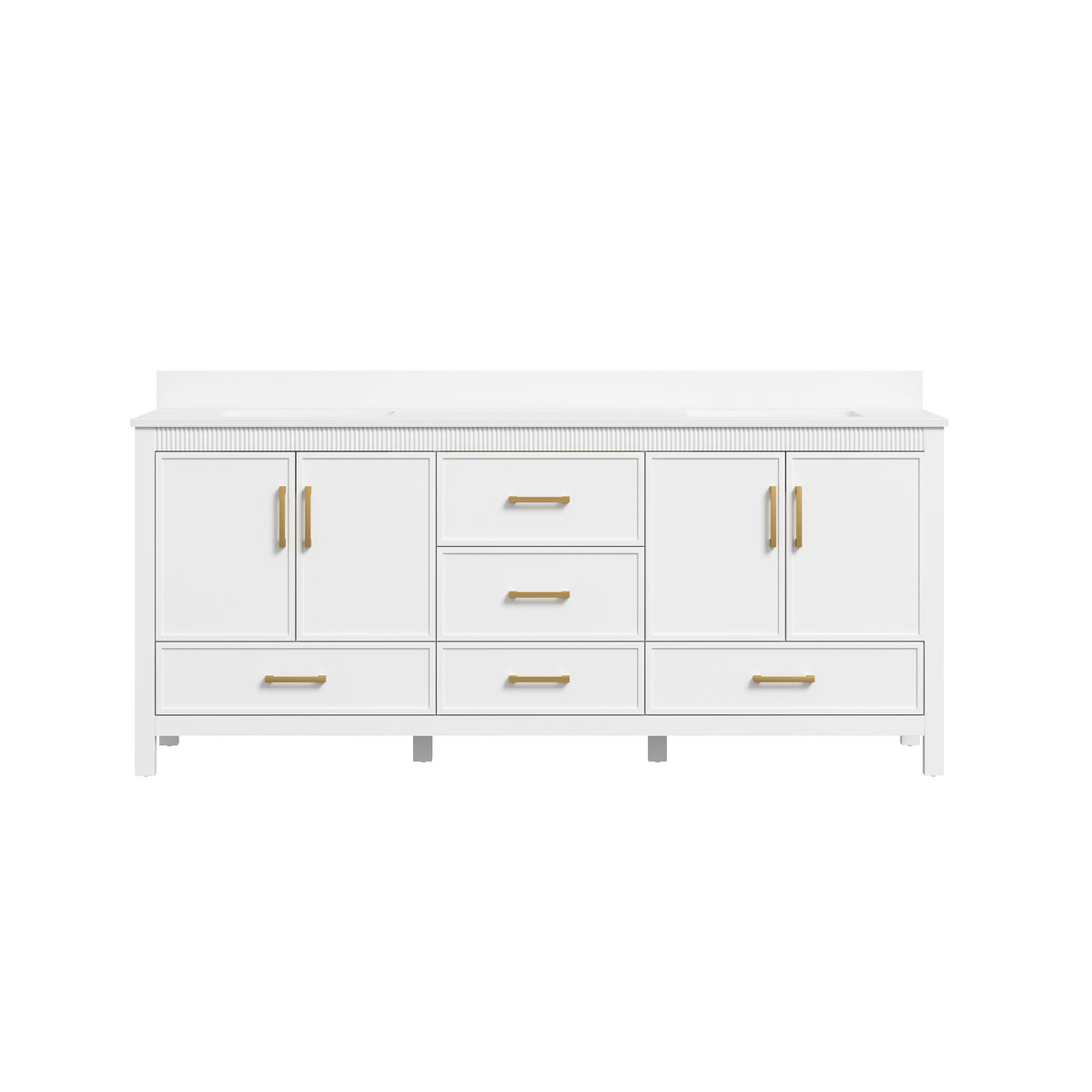

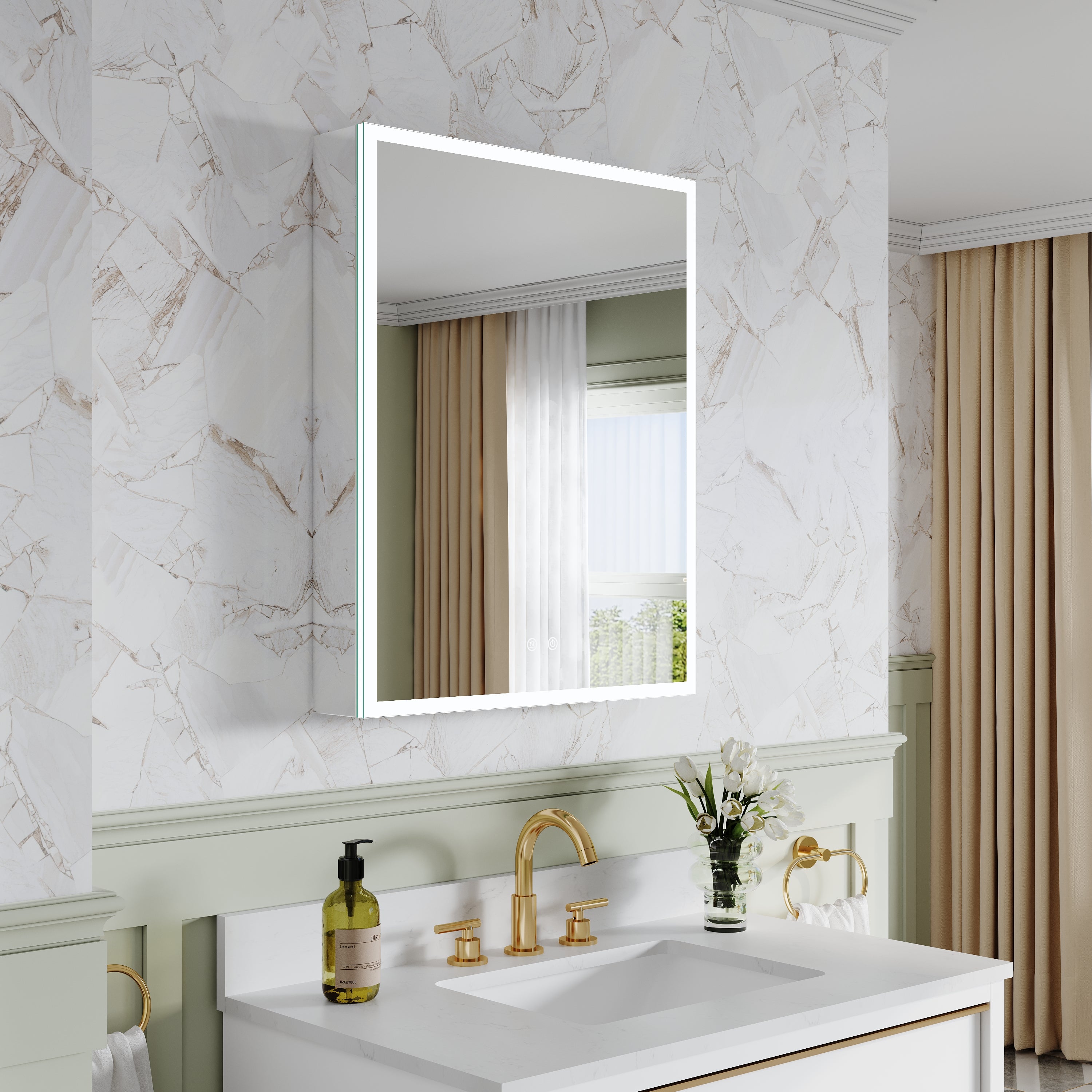
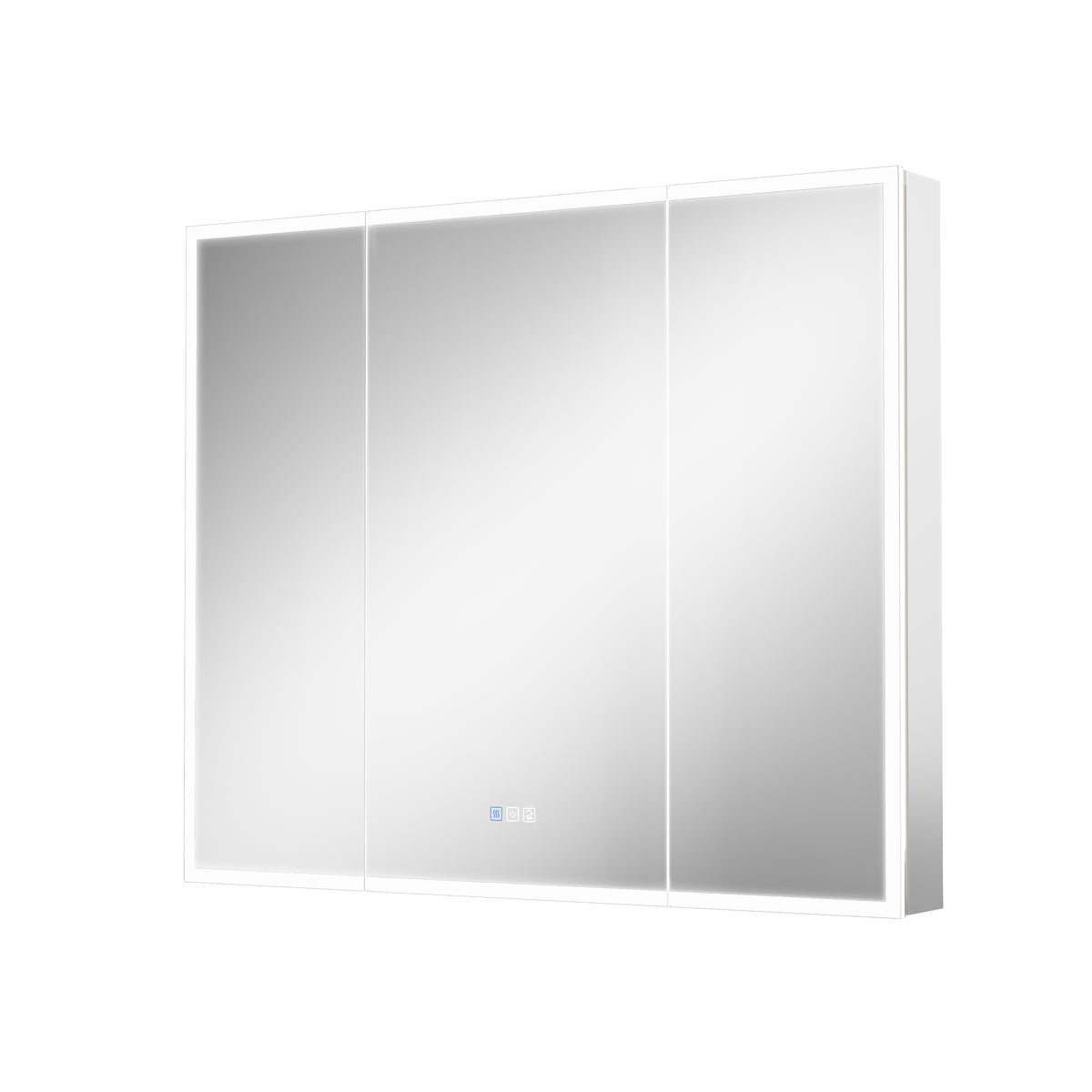
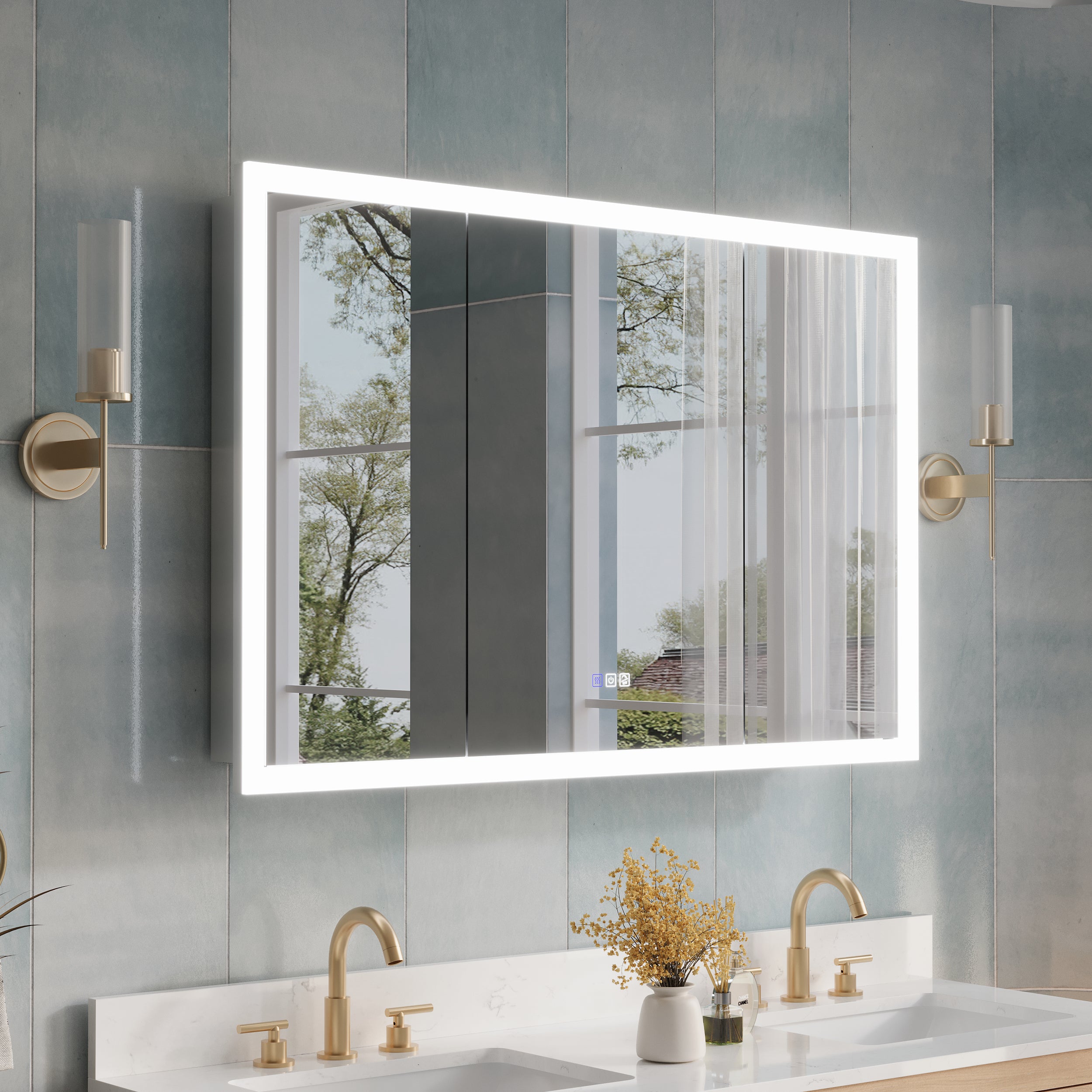
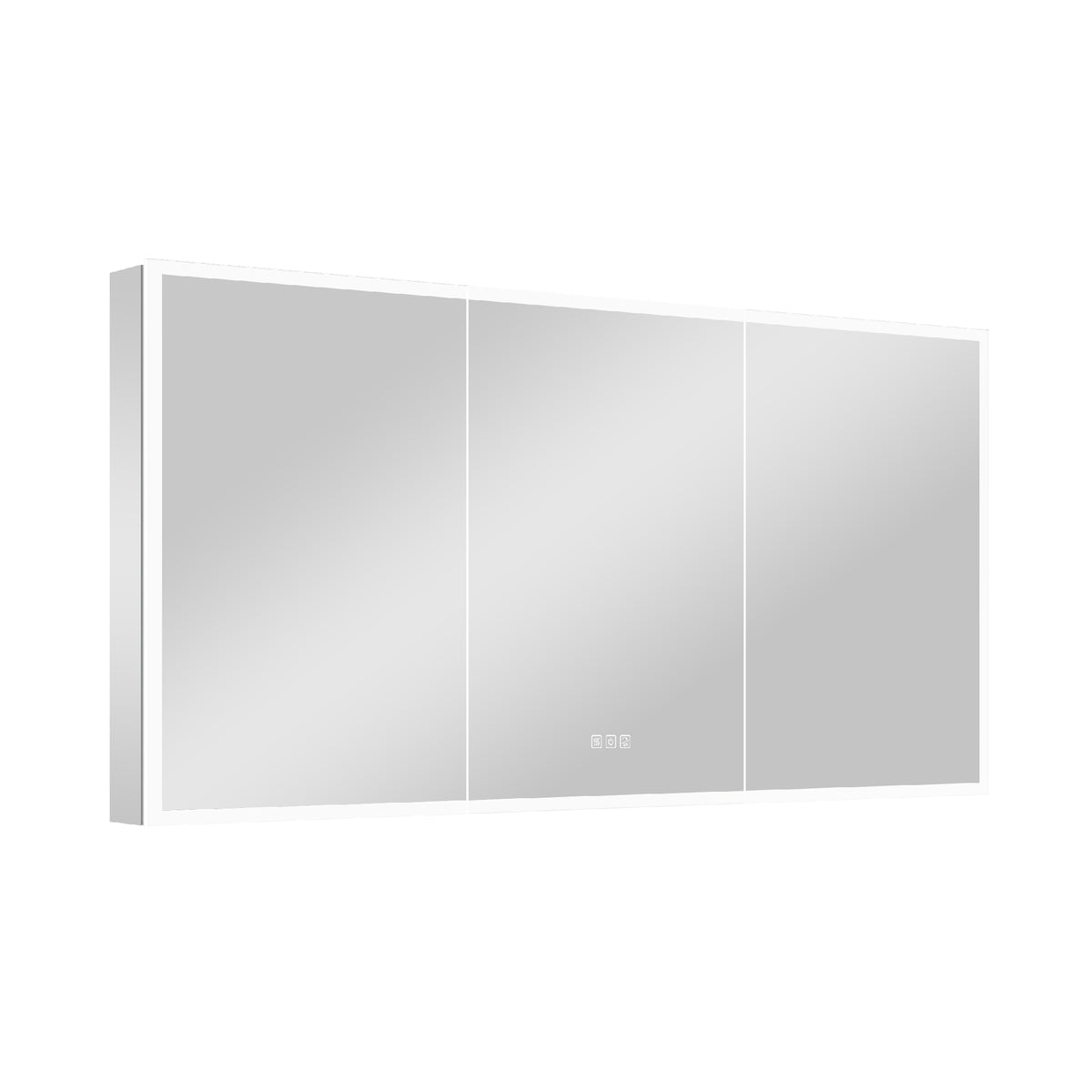
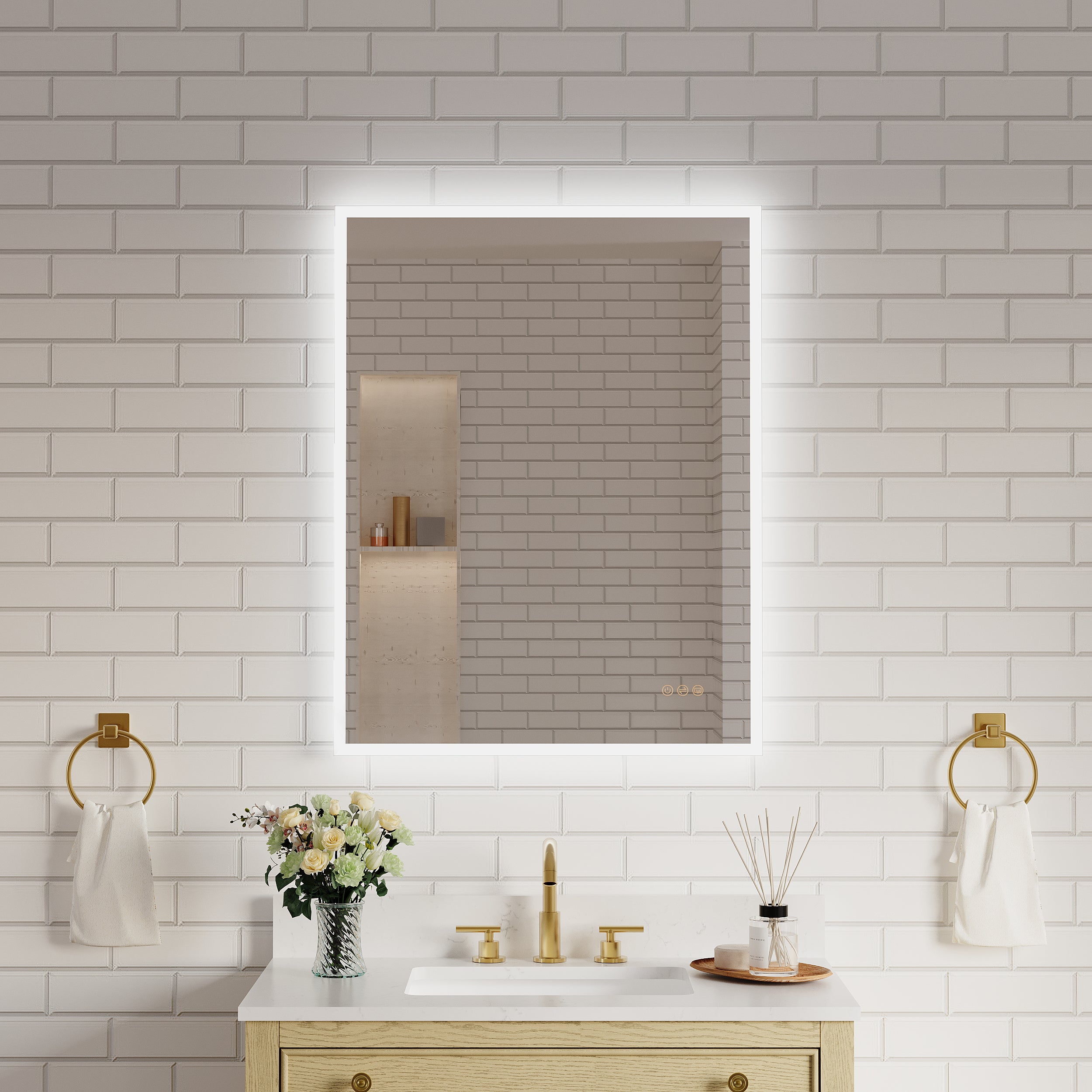
A large LED bathroom mirror is becoming a defining feature of luxury bathroom design because it combines visual scale, task lighting, and modern technology in one clean surface. Instead of treating the mirror as a finishing accessory, designers are increasingly using it as part of the room’s lighting architecture. Houzz reports that lighting is upgraded in 82% of bathroom renovations, while lighted mirrors have risen to 22%, up 3 percentage points from the previous year. As primary bathrooms become more wellness-focused, a larger illuminated mirror can support both daily grooming and the spacious, hotel-inspired appearance associated with premium interiors.
1. Large Mirrors Make the Vanity Area Feel More Expansive
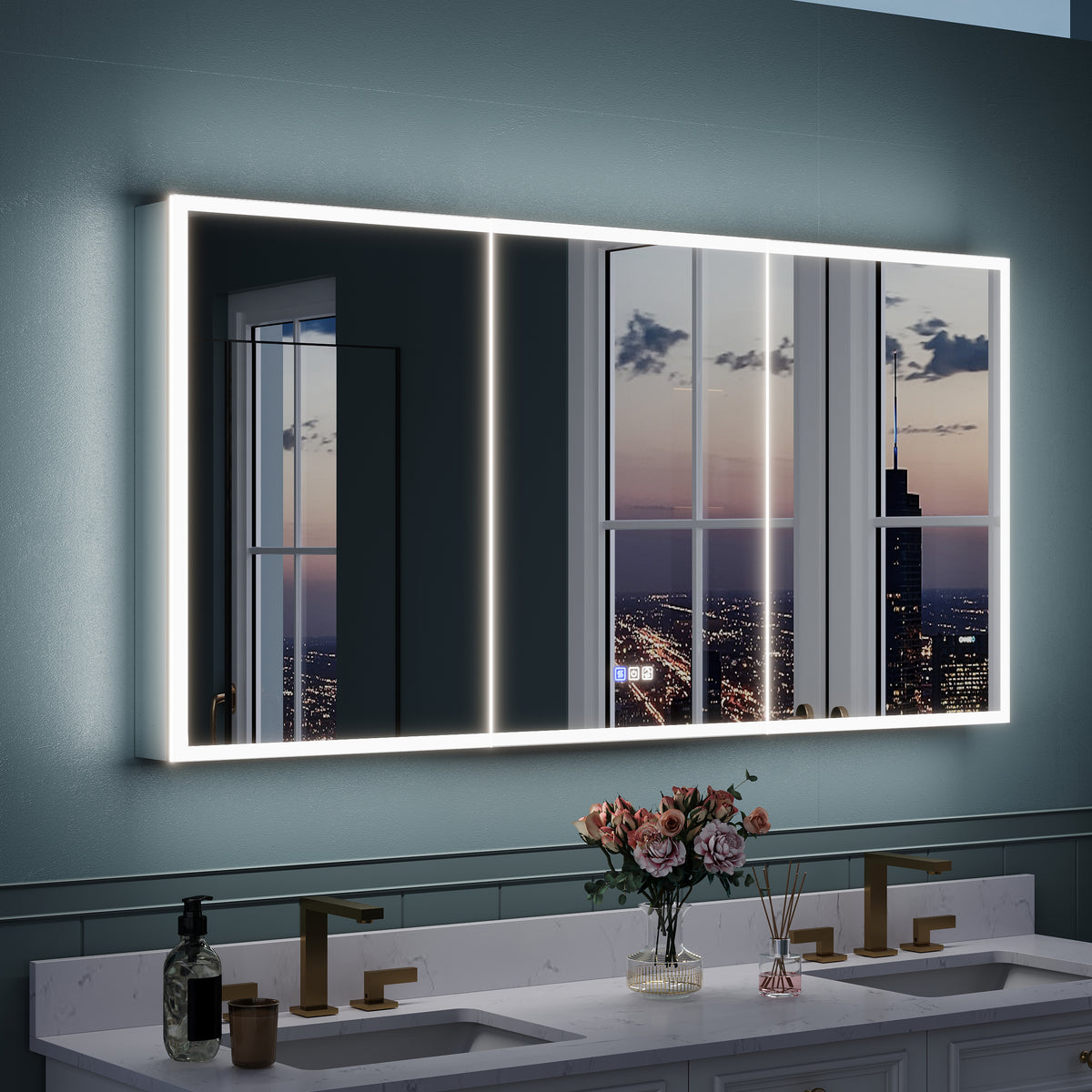
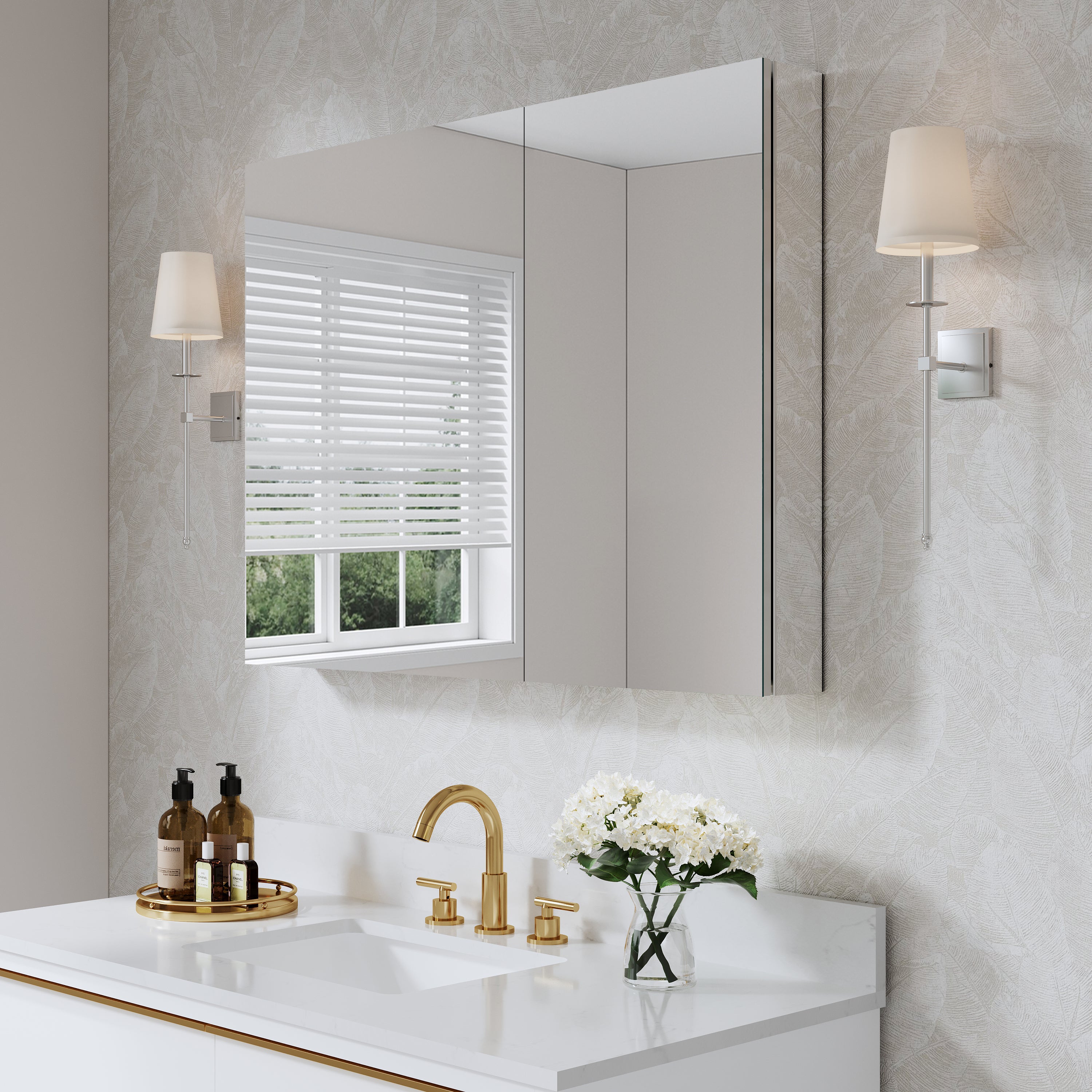
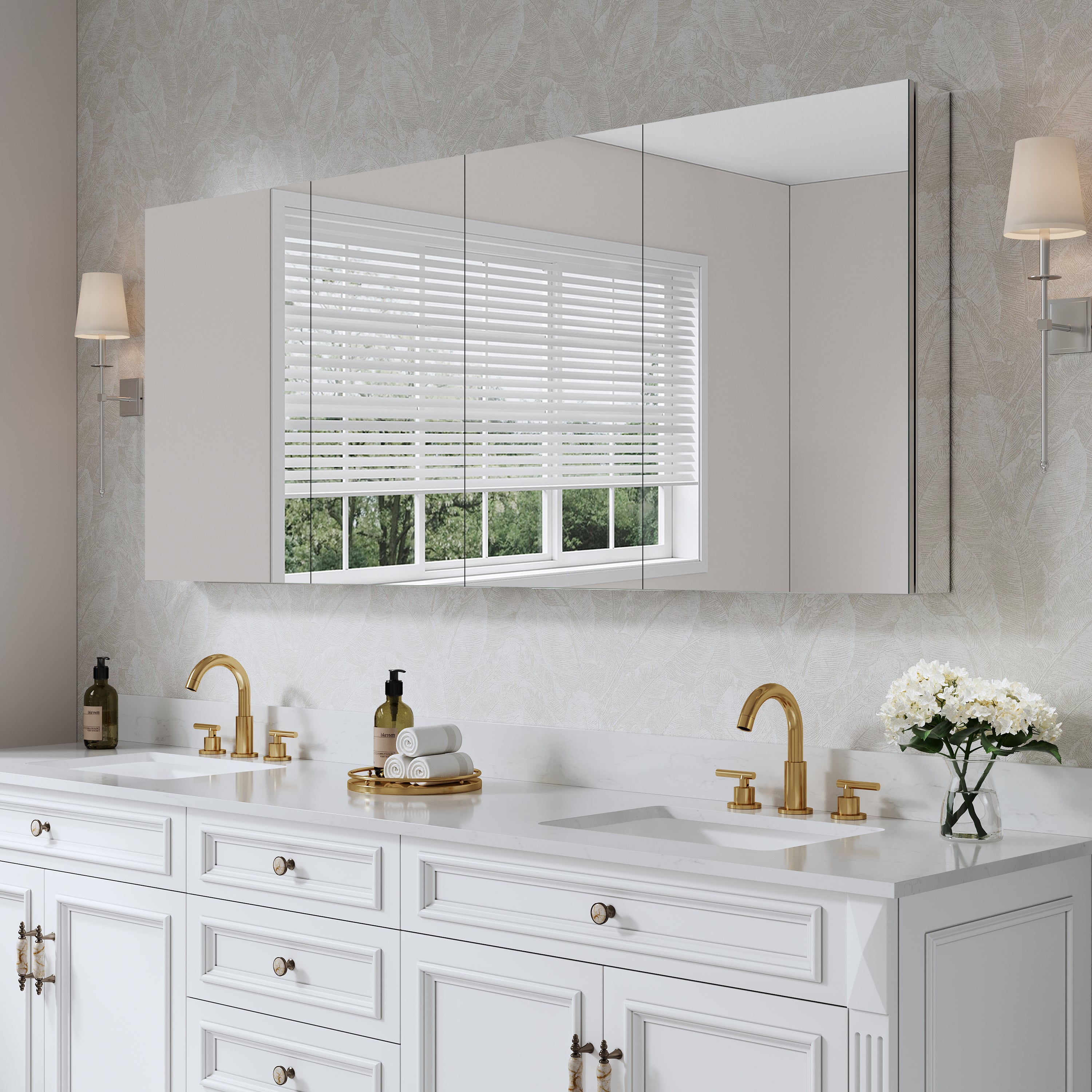
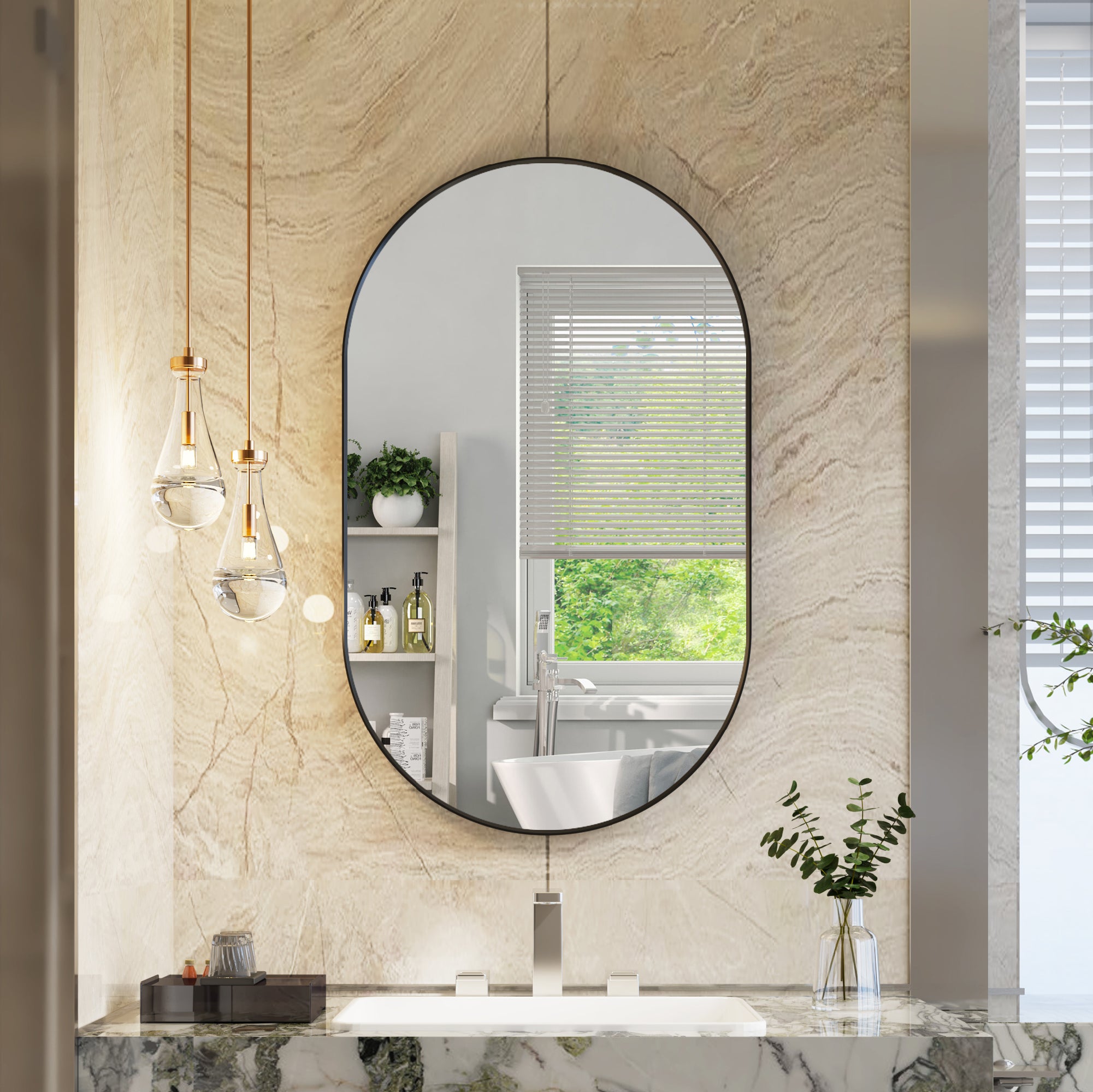
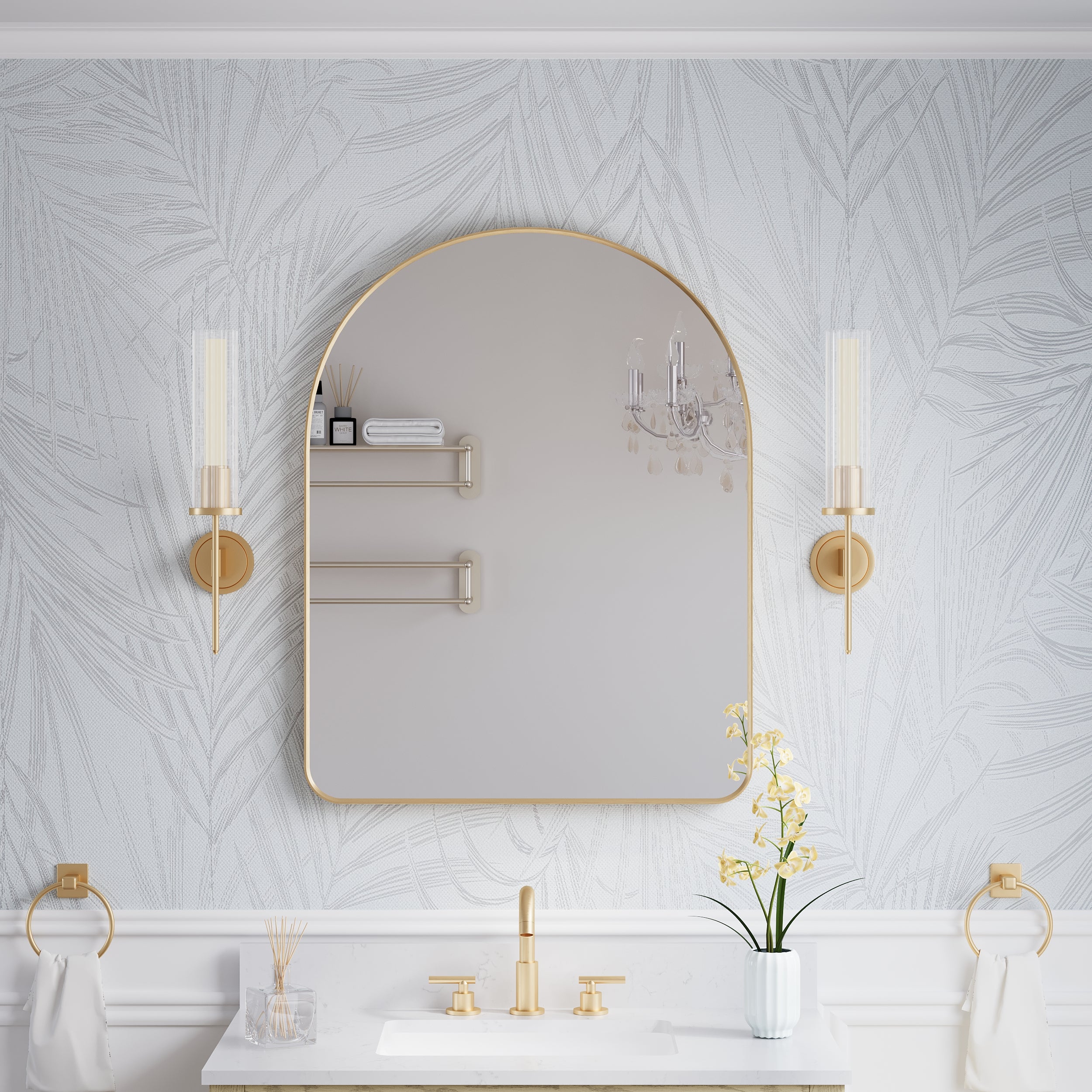
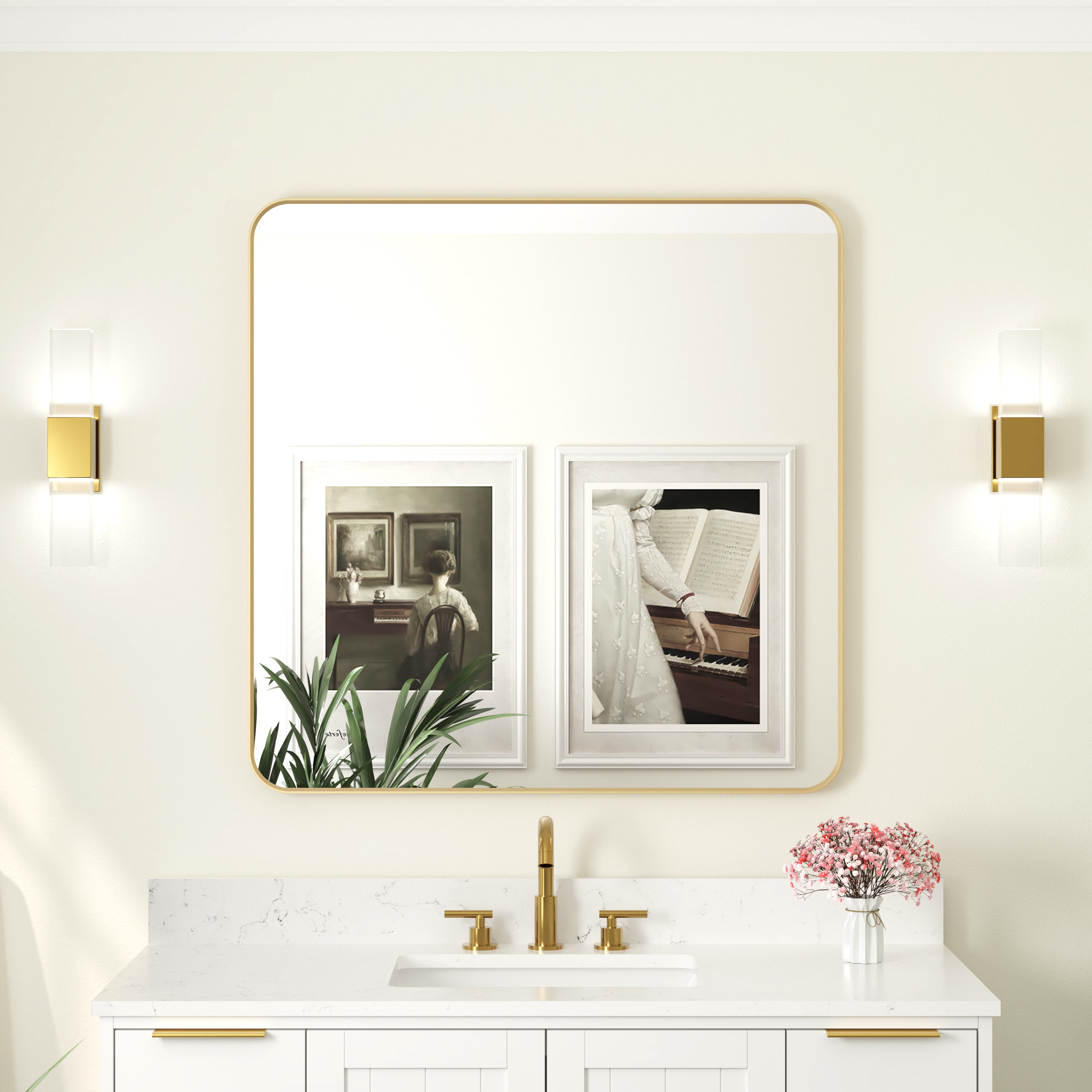
Scale has a major effect on how luxurious a bathroom feels. A wide mirror reflects more of the room, distributes light across a larger surface, and can visually extend the vanity wall.
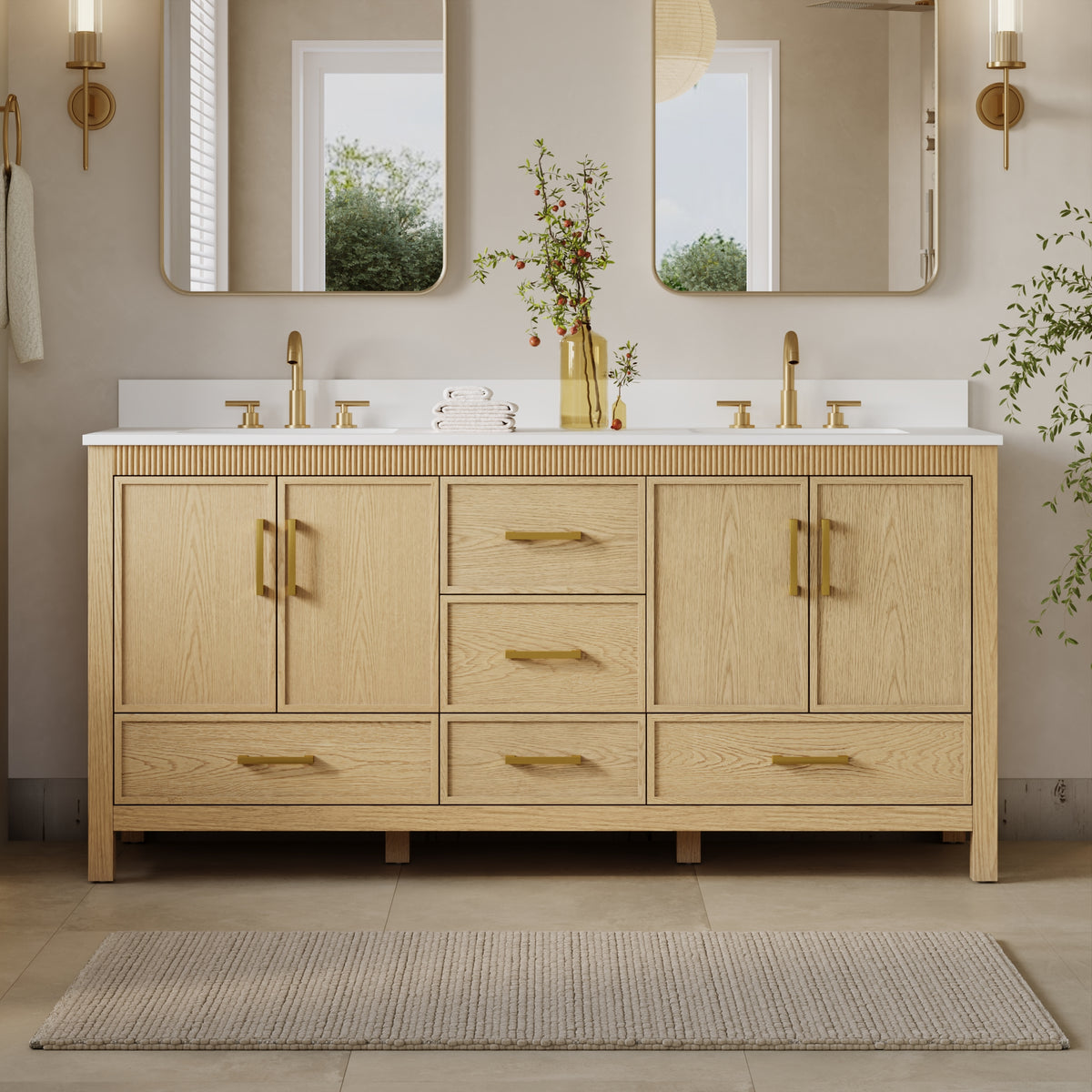
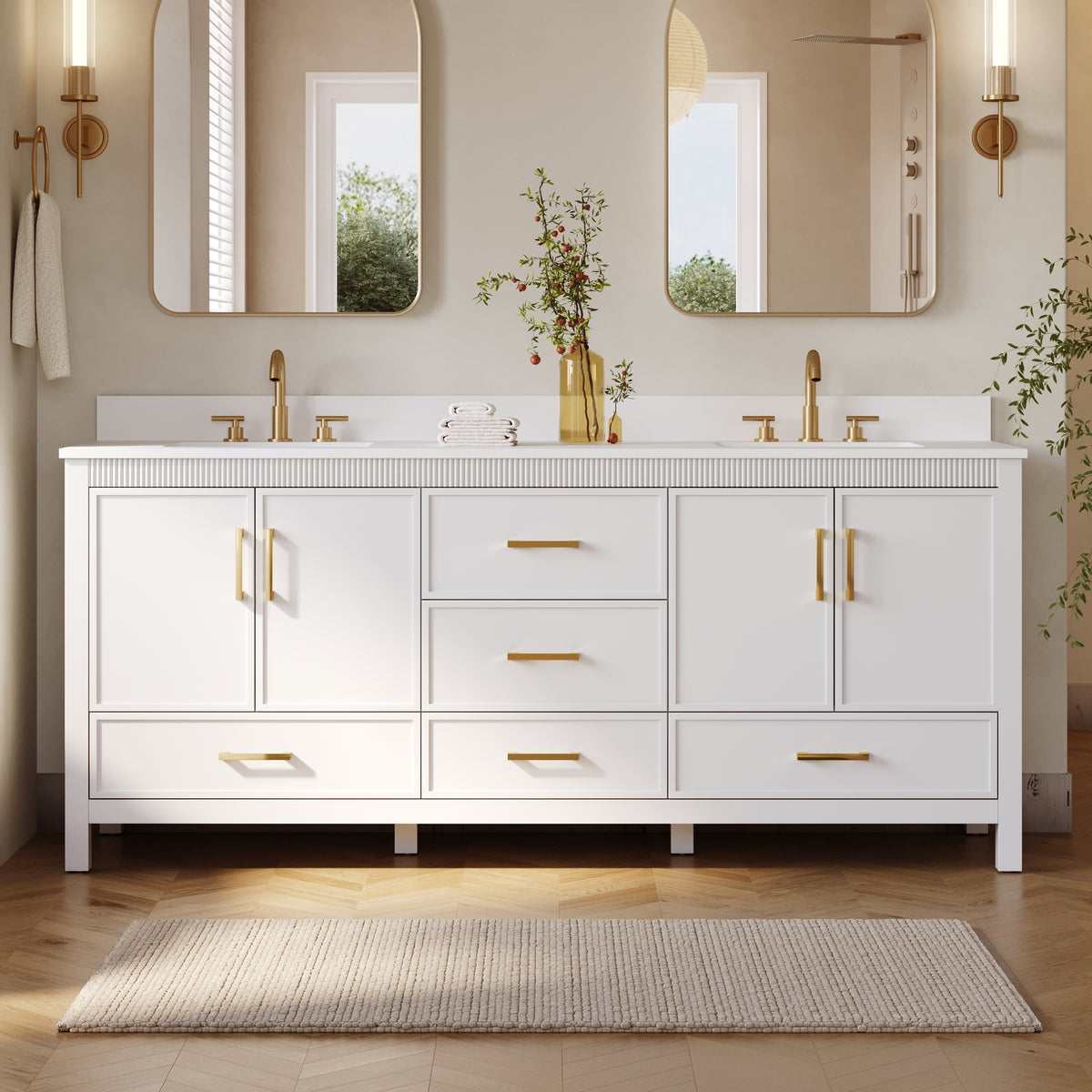
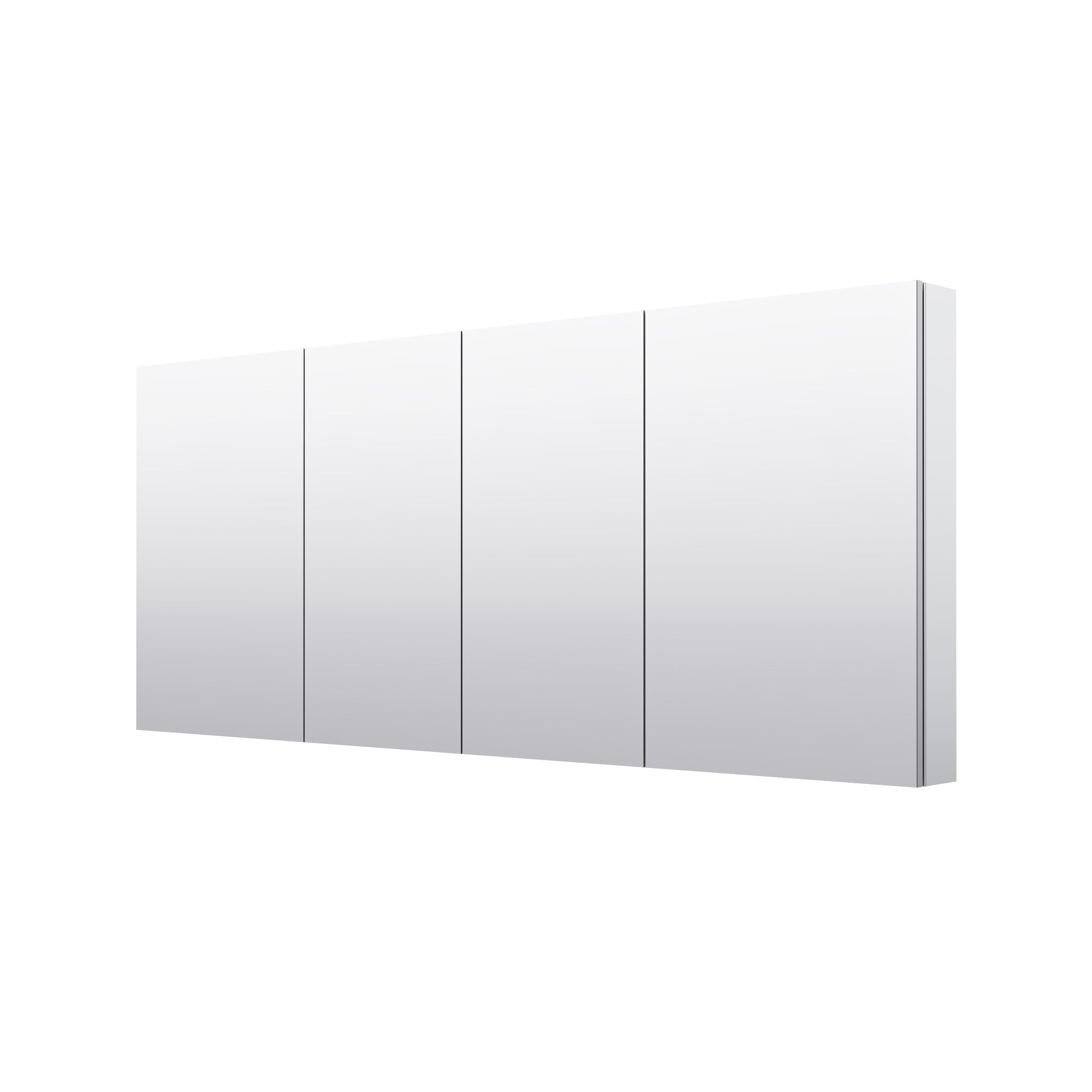
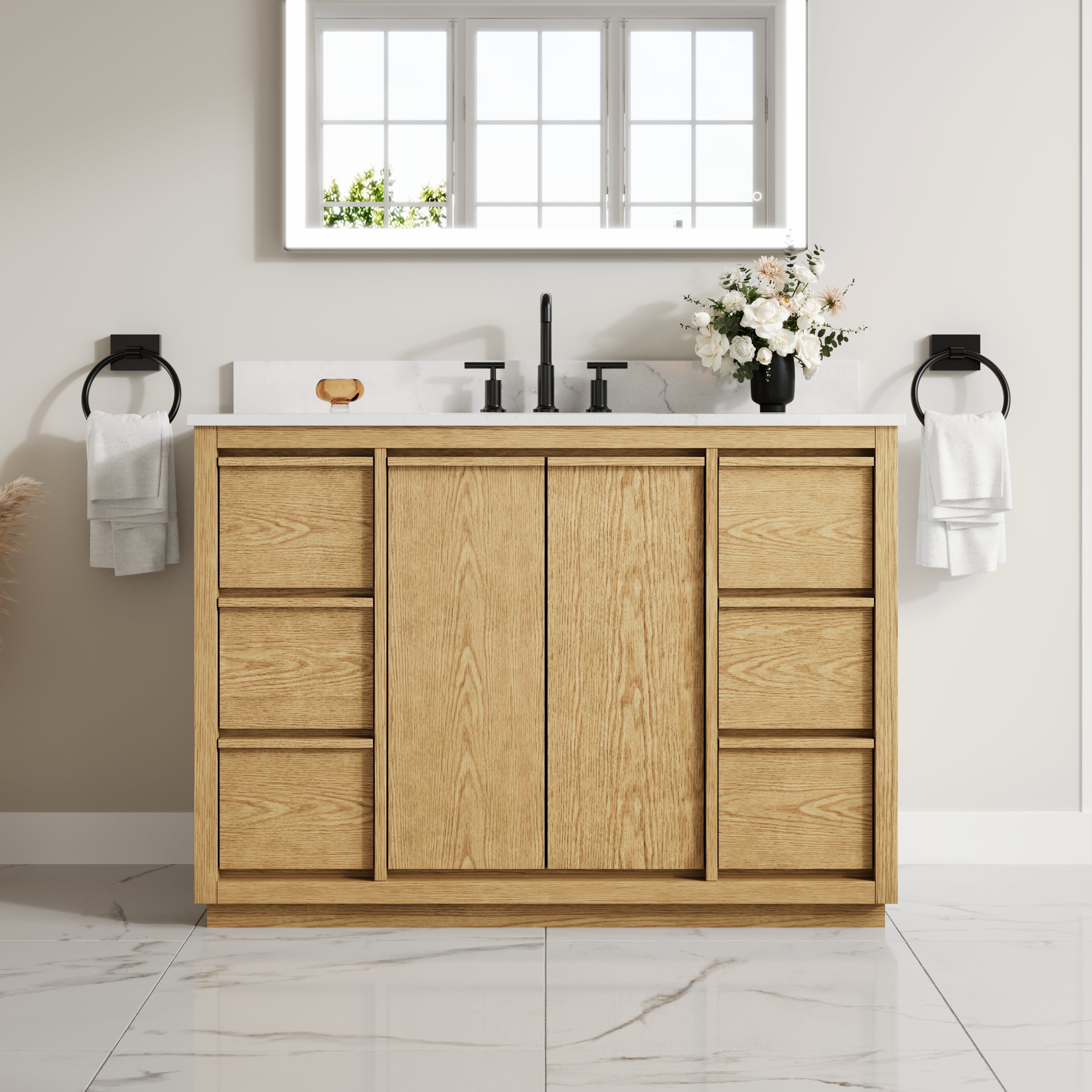
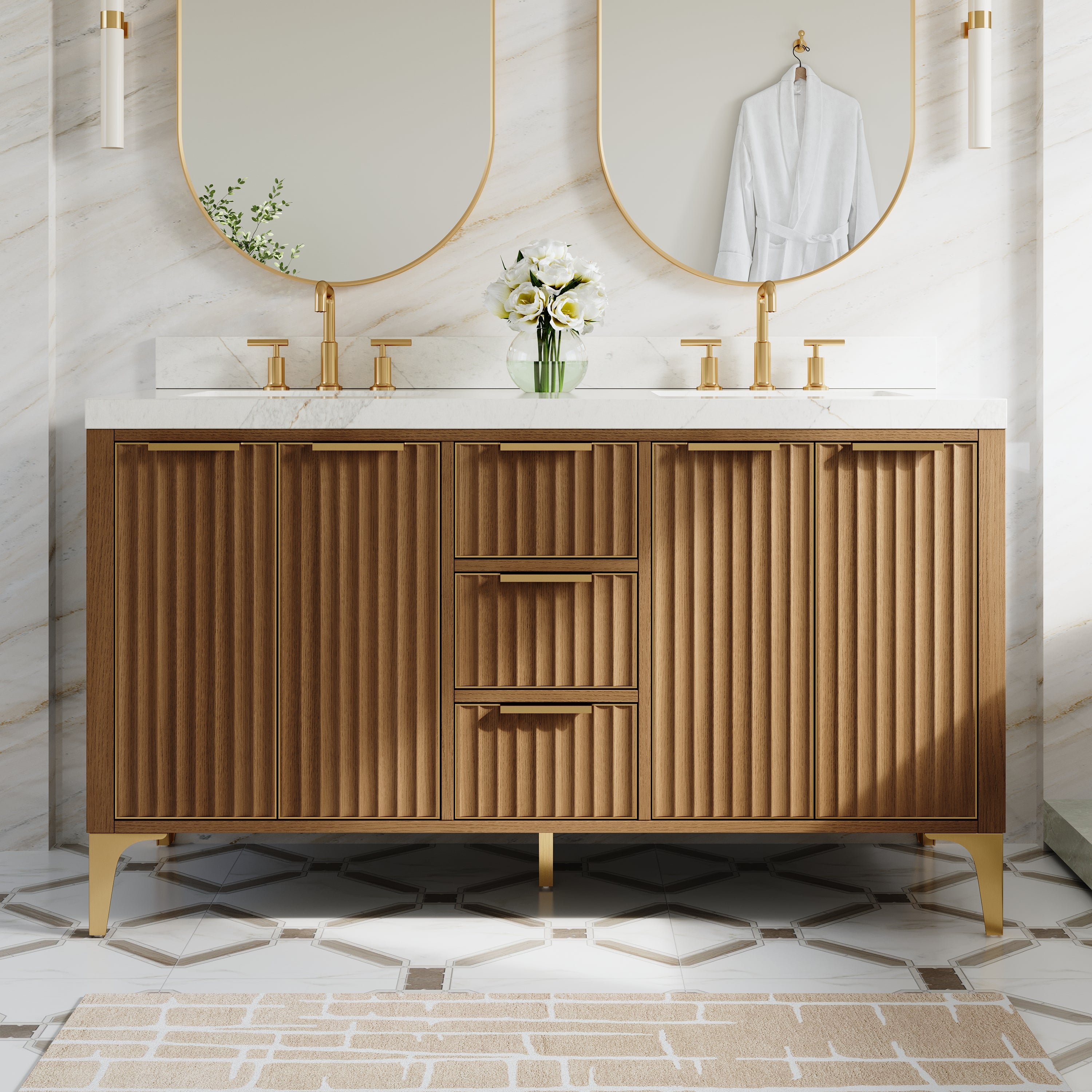
For a 48-inch vanity, a mirror around 40 to 48 inches wide can create a strong focal point. Larger double vanities may support mirrors around 60 inches wide. Current premium collections demonstrate this range: Robern offers illuminated mirrors in formats including 48 x 36 inches and 60 x 36 inches.
The goal is not simply to install the largest mirror possible. Enough wall space should remain for proportions, outlets, faucets, or adjacent lighting.
Industry judgment: luxury bathrooms are increasingly using mirror scale as architecture rather than decoration.
2. Integrated LEDs Improve Task Lighting
A beautiful bathroom can still perform poorly if the vanity lighting casts shadows across the face.
Integrated LEDs bring light closer to the user and distribute it more evenly than a ceiling fixture alone. NKBA’s 2026 Bath Trends research found that 91% of industry professionals consider lighting quality a top bathroom priority, while 92% say task lighting should always be included in the primary bath.
A large illuminated surface can be especially useful above a wide vanity because light reaches a broader grooming zone without requiring multiple decorative fixtures.
Industry judgment: premium mirror lighting is gaining importance because it improves function while reducing visual clutter.
3. High CRI Supports More Accurate Grooming
Luxury lighting is not only about brightness. Color quality matters for makeup, skincare, shaving, and evaluating skin tone.
Current premium lighted mirrors commonly target a CRI of at least 90. Kohler’s 40 x 33-inch Verdera lighted mirror, for example, specifies a minimum CRI of 90, approximately 3000K illumination, and 2,200 lumens. It is designed to provide consistent lighting without noticeable hot or dark spots.
That balance of brightness and color accuracy can make the vanity perform more like a dedicated grooming station.
Industry judgment: high-end mirrors are increasingly judged by light quality, not simply by how bright the LEDs appear in product photography.
4. Integrated Lighting Creates a Cleaner Wall
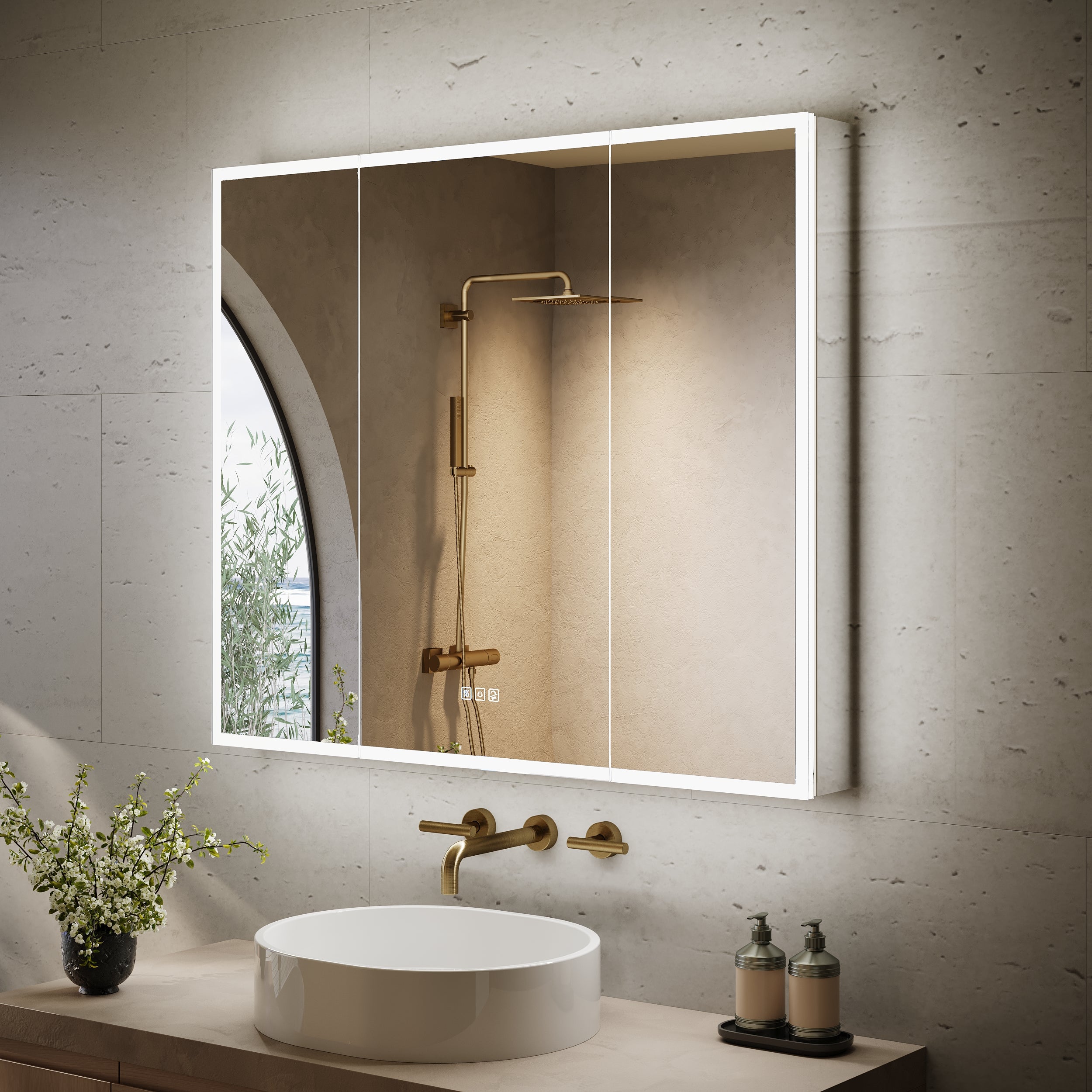
Traditional vanity lighting often requires a mirror plus two sconces or an overhead fixture. A large LED mirror can combine those visual elements into one streamlined installation.
This works particularly well in modern and transitional interiors, where fewer objects on the wall can make materials such as natural stone, wood cabinetry, and large-format tile feel more prominent.
NKBA reports that 47% of surveyed professionals favor integrated lighting in mirrors over the next three years. The same research shows contemporary, modern, and minimalist styles receiving 57% support.
Industry judgment: integrated mirror lighting fits the broader move toward bathrooms that deliver more functions with fewer visible components.

5. Dimming Adds a More Personalized Experience
Luxury bathrooms increasingly need different lighting levels throughout the day.
Bright illumination may be preferred for shaving or makeup in the morning, while softer lighting works better during evening skincare or a relaxing bath. Many premium LED mirrors support dimming; Kohler’s current Verdera lighted mirrors, for example, are compatible with wall-mounted LED dimmers.
NKBA reports that 80% of professionals are incorporating nighttime-specific lighting, showing how strongly time-of-day lighting is influencing bathroom design.
Industry judgment: adjustable lighting is moving from a premium extra toward an expected feature in higher-end bathrooms.
6. Large LED Mirrors Support Wellness-Oriented Design
The primary bathroom is increasingly treated as a personal retreat. Houzz reports that 25% of primary bathrooms are used for rest and relaxation, while 24% support beauty and pampering routines. More than one-third of renovated bathrooms, 36%, include wellness-oriented features, with upgraded lighting leading at 30%.
A large illuminated mirror supports this shift by improving grooming visibility while contributing to a brighter, more polished environment.
NKBA also reports that 77% of industry respondents expect hotel- or resort-inspired bathroom design to remain influential.
Industry judgment: the large LED mirror fits luxury design because it supports both performance and atmosphere.
7. LED Technology Supports Long-Term Efficiency
The larger the illuminated surface, the more important energy efficiency becomes.
Department of Energy guidance notes that LEDs can use at least 75% less energy than incandescent lighting and last up to 25 times longer. This makes integrated LED technology well suited to mirrors that may be used every morning and evening.
Current premium examples also demonstrate long service life. Kohler specifies an estimated LED life of 59,000 hours for its 40 x 33-inch lighted mirror.
Industry judgment: efficiency strengthens luxury positioning when better performance also reduces maintenance and replacement frequency.
8. Installation Planning Still Matters
A large mirror requires more planning than a small decorative model.
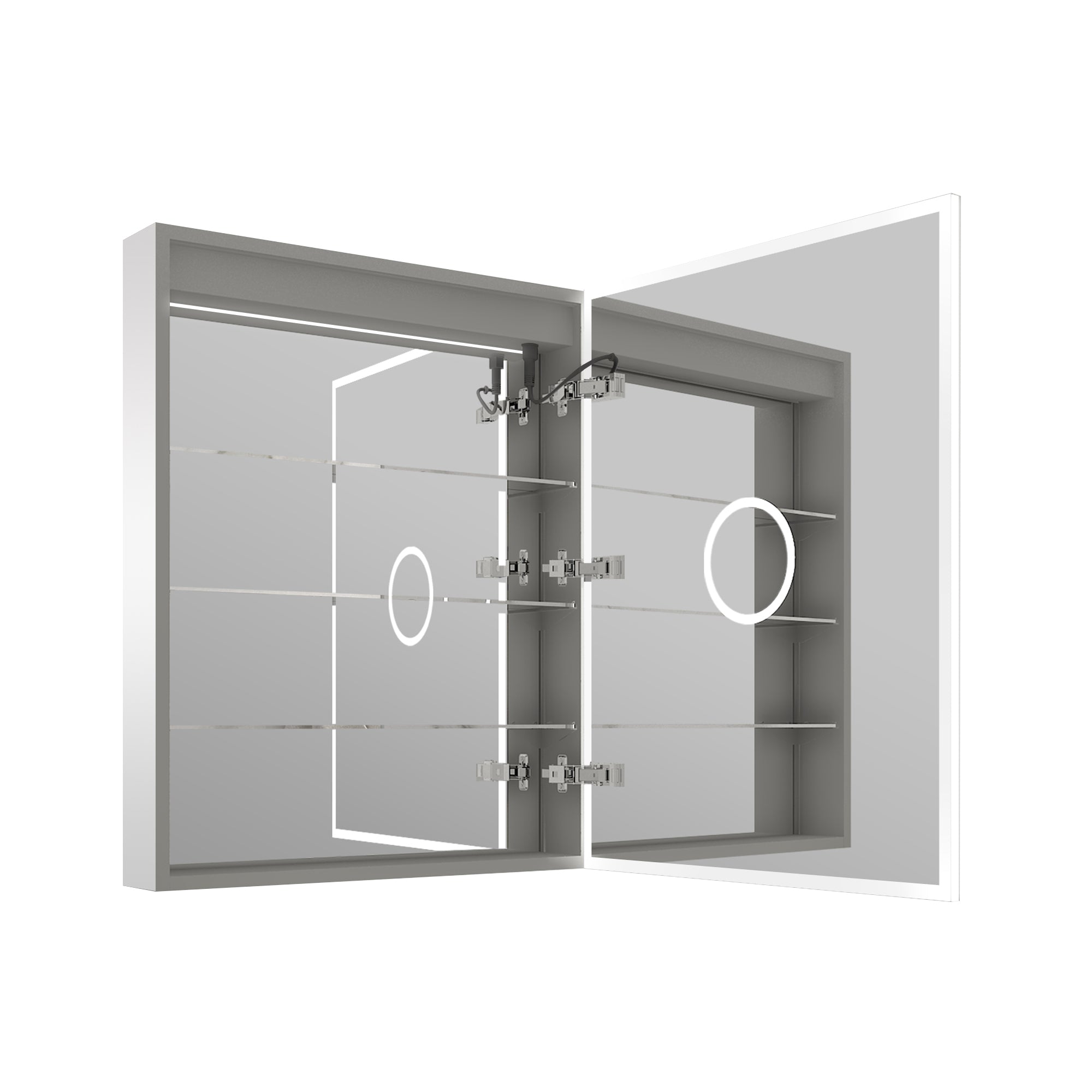
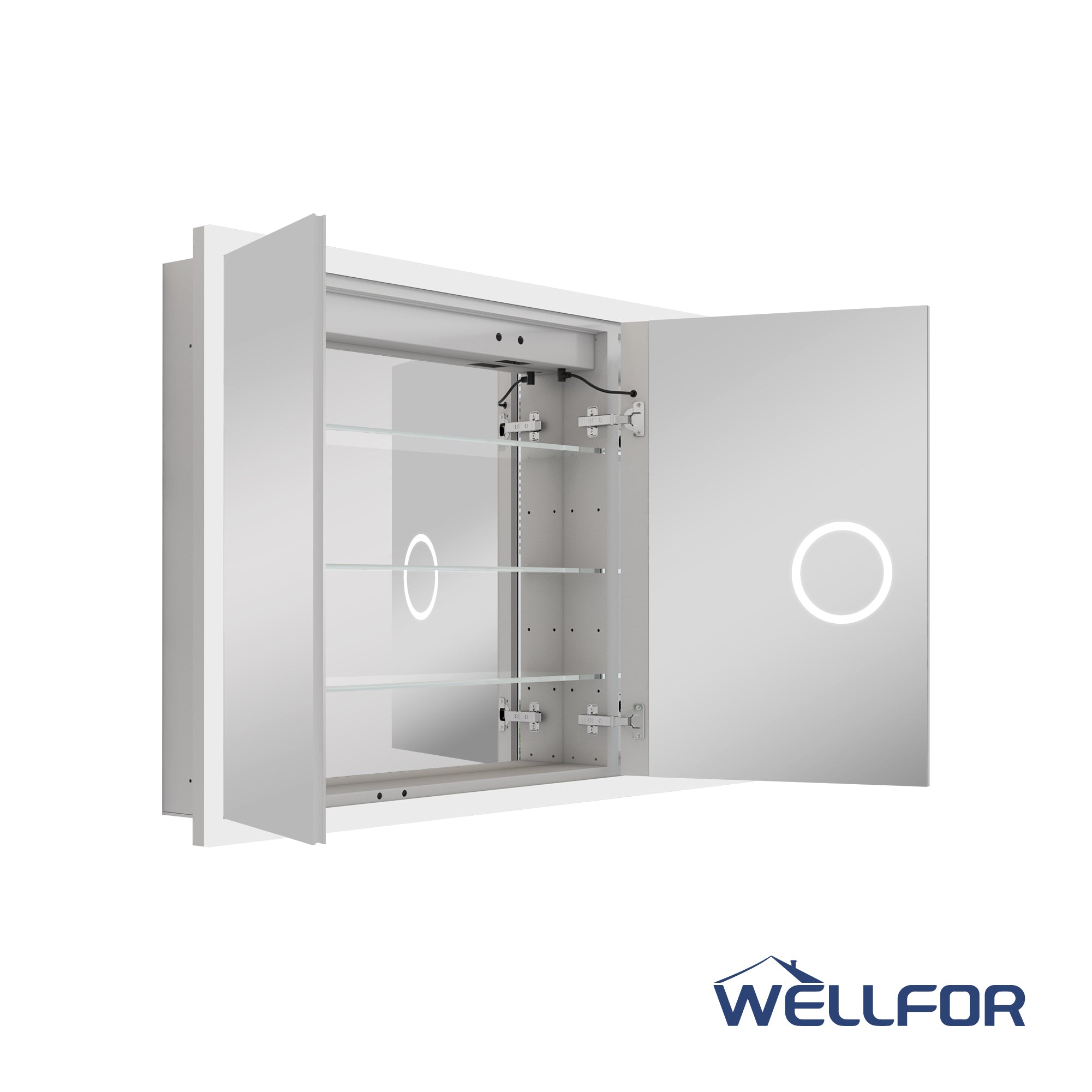
Check the total width, height, wall construction, electrical connection, faucet clearance, and mounting hardware before ordering. A 48- or 60-inch mirror may require two people for safe handling and careful alignment above the vanity.
Electrical wiring should also be planned before tile or wall finishes are completed. Current lighted mirror specifications may recommend professional electrician installation, especially when hardwired lighting and dimming are involved.
Industry judgment: premium appearance depends on precise installation; an oversized mirror that is poorly centered can weaken an otherwise high-end bathroom.
9. Conclusion
A large LED bathroom mirror is becoming essential in luxury home design because it does more than provide reflection. It expands the visual scale of the room, improves task lighting, supports accurate grooming, and replaces several separate wall fixtures with one cleaner architectural element.
Current remodeling and design data show growing interest in lighted mirrors, layered lighting, wellness features, and hotel-inspired bathrooms. For larger vanities, formats around 40, 48, or 60 inches wide can create a strong focal point when proportioned correctly.
The strongest models combine even illumination, at least 90 CRI, comfortable color temperature, dimming capability, durable construction, and dimensions suited to the vanity. When those details work together, the mirror becomes part of the bathroom’s architecture rather than an accessory added at the end.













Leave a comment
This site is protected by hCaptcha and the hCaptcha Privacy Policy and Terms of Service apply.