

















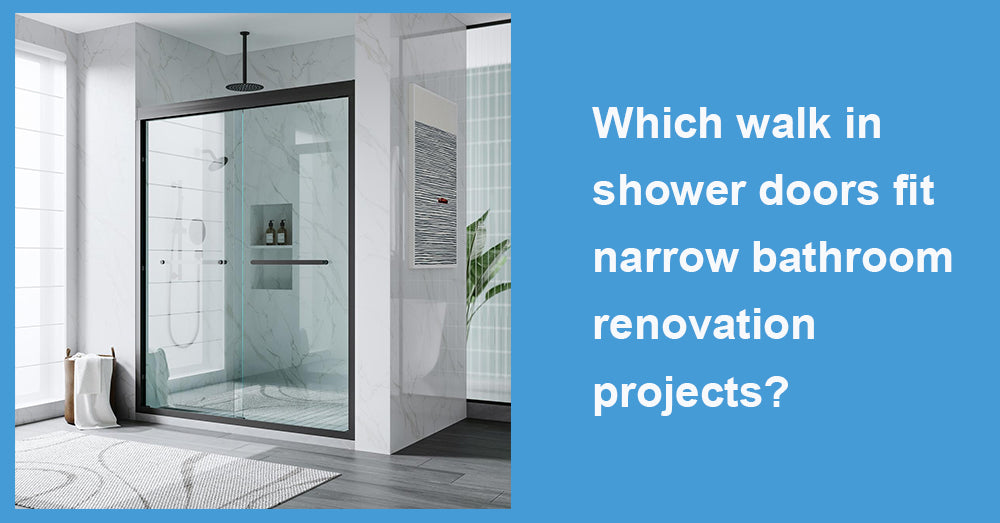
As the residential renovation market continues to rise, "how to create a comfortable and modern shower experience in limited bathroom space" has become a key theme of concern for many homeowners and designers. Especially in cities such as New York, San Francisco, and Boston, the average bathroom is often less than 45 square feet, making it crucial to choose a suitable walk in shower doors.
The trend in 2026 shows that shower doors are gradually evolving from traditional one-way opening and closing structures to space-saving, flexible installation, and more design-oriented directions. In this context, multiple brands and platforms have begun to launch shower doors that are more suitable for small bathrooms, and online home decoration platforms including wellfor.com have also continuously expanded their narrow shower door product lines to provide consumers with more professional and practical choices.

1. Typical pain points of narrow bathrooms: saving space and ensuring passage
In small-sized or old-fashioned residences, common bathroom structures include elongated layouts, limited shower area widths, irregular walls, and installation positions close to toilets or bathroom cabinets. These structural limitations often make it difficult to install traditional swing shower doors because their opening angle requires additional front space.
According to data from the National Kitchen and Bath Association (NKBA), in renovation projects with bathroom areas of less than 45 square feet (approximately 4.2 square meters), over 62% of homeowners choose to switch to space-saving walk-in shower doors or sliding door designs, prioritizing the following factors:
The door does not occupy external opening space.
Maximize internal channel width.
Glass is thinner, safer, and easier to clean.
Suitable for shower rooms of non-standard sizes.
Therefore, the selection of shower doors that are suitable for narrow bathrooms is gradually shifting from "aesthetics" to a direction that emphasizes both functionality and flexibility.
2. The four most popular space-saving shower door structures in the market
Single Sliding Door - King of Narrow Spaces
This structure is commonly found in linear shower rooms, where one side is fixed with glass and the other opens via a sliding rail.
Advantage:
Not occupying external space.
Easy to operate, suitable for areas with narrow passages or near toilets/bathroom cabinets.
Flexible installation, adaptable to various wall conditions.
In 2025, many brands will introduce lighter hidden tracks and soft closing mechanisms, making sliding smoother and reducing the need to clean dead corners.
Bi-Fold Shower Door - Maximizes Opening Width
Folding shower doors have grown rapidly in the market in recent years, with a large channel opening achieved through the inward folding of the middle hinge, without the need for external swing space.
Advantage:
Specially suitable for narrow shower rooms of 28-32 inches.
The opening and closing action is light and won't collide with nearby furniture.
Extremely low space requirements.
The key to folding doors lies in the quality of the hardware. The mainstream trend in 2026 is to use aluminum magnesium alloy and 304 stainless steel hinges to ensure greater durability.
"Walk In" open walk-in shower door - minimalist and modern
The Walk-In design does not have a completely enclosed door body, usually composed of fixed glass, leaving one side as an open entrance.
Advantage:
Visually transparent, making narrow bathrooms look bigger.
Simple structure and low installation difficulty.
Almost takes up no space.
This design has gradually become a popular choice for modern bathrooms in Europe in recent years, especially in hotel-style home decoration.
Pivot Door with 180 ° Swing - a flexible solution for narrow spaces
The pivot door adopts a central hinge, which can be opened in any direction, inside or outside.
Advantage:
Can be opened inward without occupying external aisle space
Provide wider entrances and exits than sliding doors.
Compatible with non-standard walls or old building structures that are not completely vertical
If the bathroom width is limited but still requires the complete airtightness of traditional doors, pivot doors are a compromise and practical choice.
3. The key indicator for choosing a narrow bathroom door is not only size, but also experience
Industry experts remind that choosing a shower door for a narrow bathroom should not only focus on size, but also pay attention to the following aspects:
Glass thickness and safety
The standard tends to use 5/16 "(8 mm) or 3/8" (10 mm) tempered glass.
In narrow spaces, thick glass is more stable, while explosion-proof film and copper-free glass improve safety and durability.
Hardware material
304 stainless steel and all aluminum alloy are mainstream, with anti-corrosion, moisture resistance, and high load-bearing performance, especially suitable for environments with high humidity in bathrooms.
Waterproof design
Water blocking strip
water trough
Bottom sealing strip
These designs are particularly important for preventing shower water from splashing onto the outside.
Installation flexibility
Due to the fact that narrow bathrooms are often accompanied by wall tilting or deviation, door frame structures that support "wall adjustment" have significant advantages.
4. Welfor.com accelerates the popularization of small space shower doors in the home decoration market
In the past two years, wellfor.com has rapidly become an important channel for many small-sized users to find shower space solutions by expanding its product lines, such as narrow sliding doors, open walk-in doors, and pivot doors.
The advantages of the platform include:
Provide products in multiple sizes and adjustable widths.
Multiple products support fast shipping.
High definition product images and a detailed installation guide.
Support professional clients (contractors, designers) to place bulk orders.
Strong price competitiveness and high cost-effectiveness.
Many consumers prioritize searching for keywords such as "Small Bathroom Shower Door," "Narrow Shower Door," and "Walk In Fixed Panel" when renovating their bathrooms on wellfor.com, indicating a steady growth in demand for small space solutions.
5. The future direction of the narrow bathroom market in 2026
Industry analysis predicts that narrow bathroom renovation projects will continue to grow in the next three years, especially with the following trends further driving innovation in small-sized shower doors:
Increased demand for urban apartment renovation.
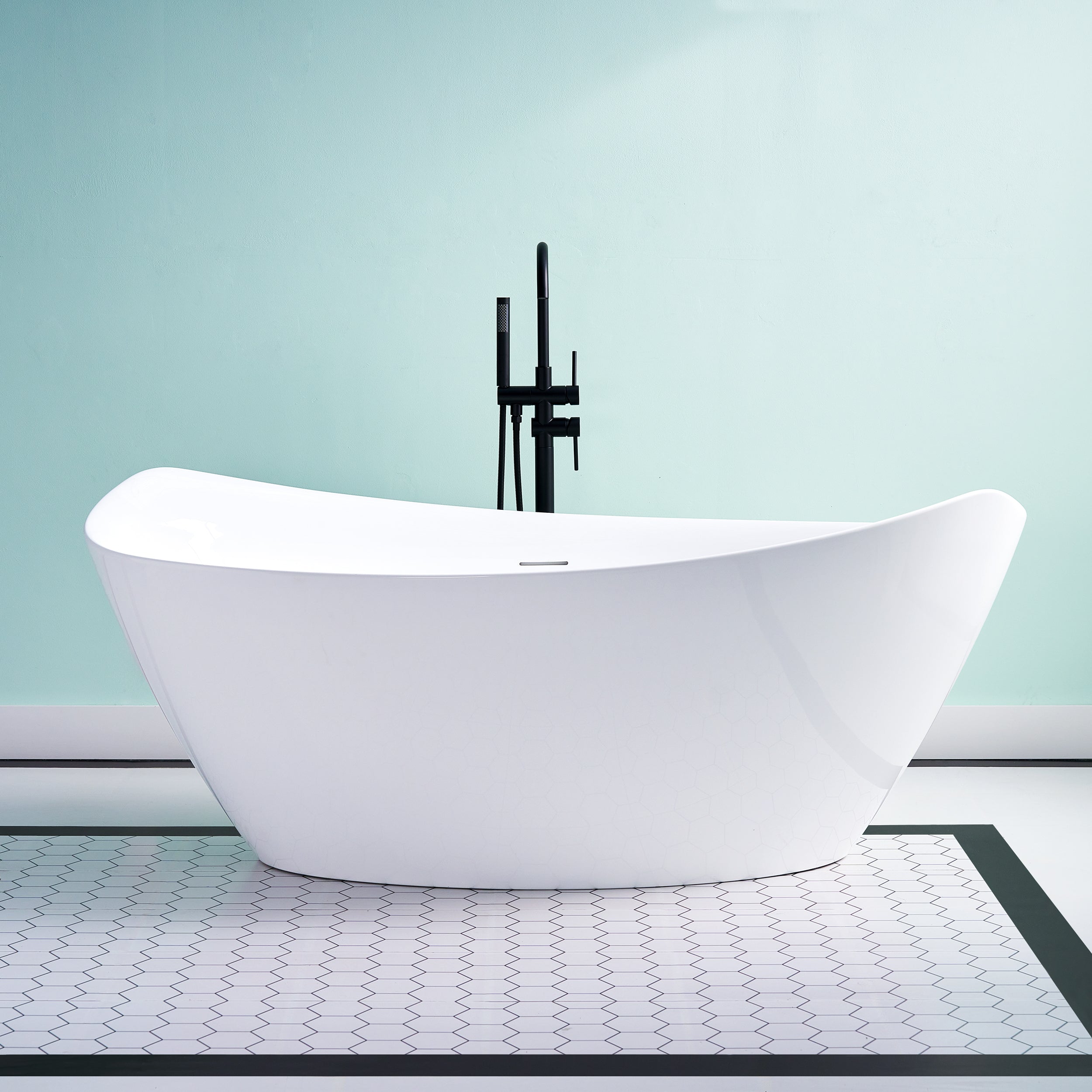
More homeowners choose to convert bathtubs into walk-in showers.
Cleanliness and convenience have become one of the most important factors for consumers.
Minimalist lines, frameless glass, and black hardware continue to be popular.
Therefore, small space shower doors will develop towards being lighter, brighter, and easier to install.
Conclusion: Find the best shower door suitable for narrow bathrooms
For any narrow bathroom renovation project, choosing the appropriate walk-in shower door is a key step in enhancing the value and user experience of the space. Sliding, folding, walk-in, or two-way revolving doors each have their own advantages, and the key is to make the best match based on bathroom size, usage habits, and design style.
With continuous innovation in the home market, consumers have more space-saving, aesthetically pleasing, and functional choices than ever before, creating a higher-quality, more modern user experience for narrow bathrooms.



















Leave a comment
This site is protected by hCaptcha and the hCaptcha Privacy Policy and Terms of Service apply.