














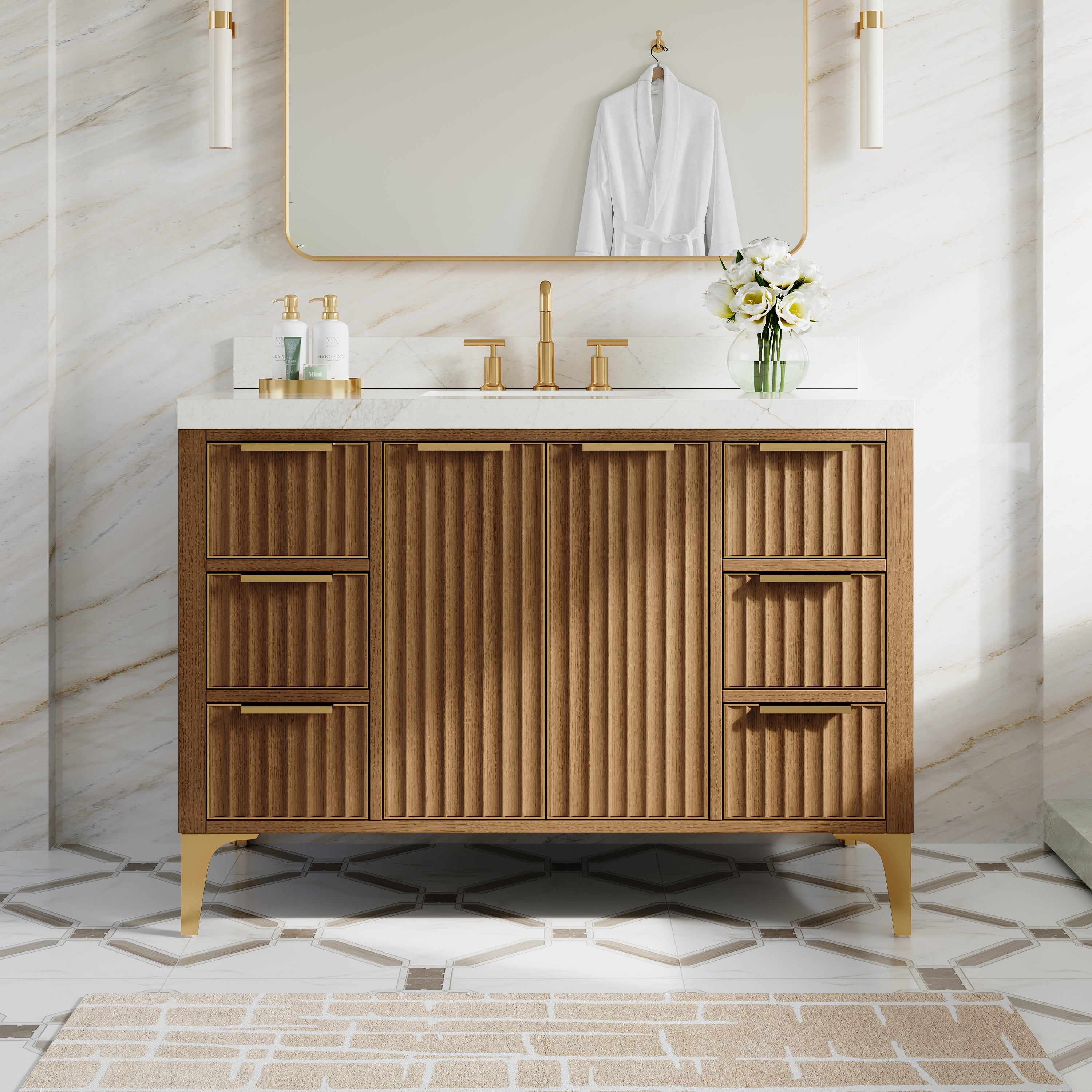
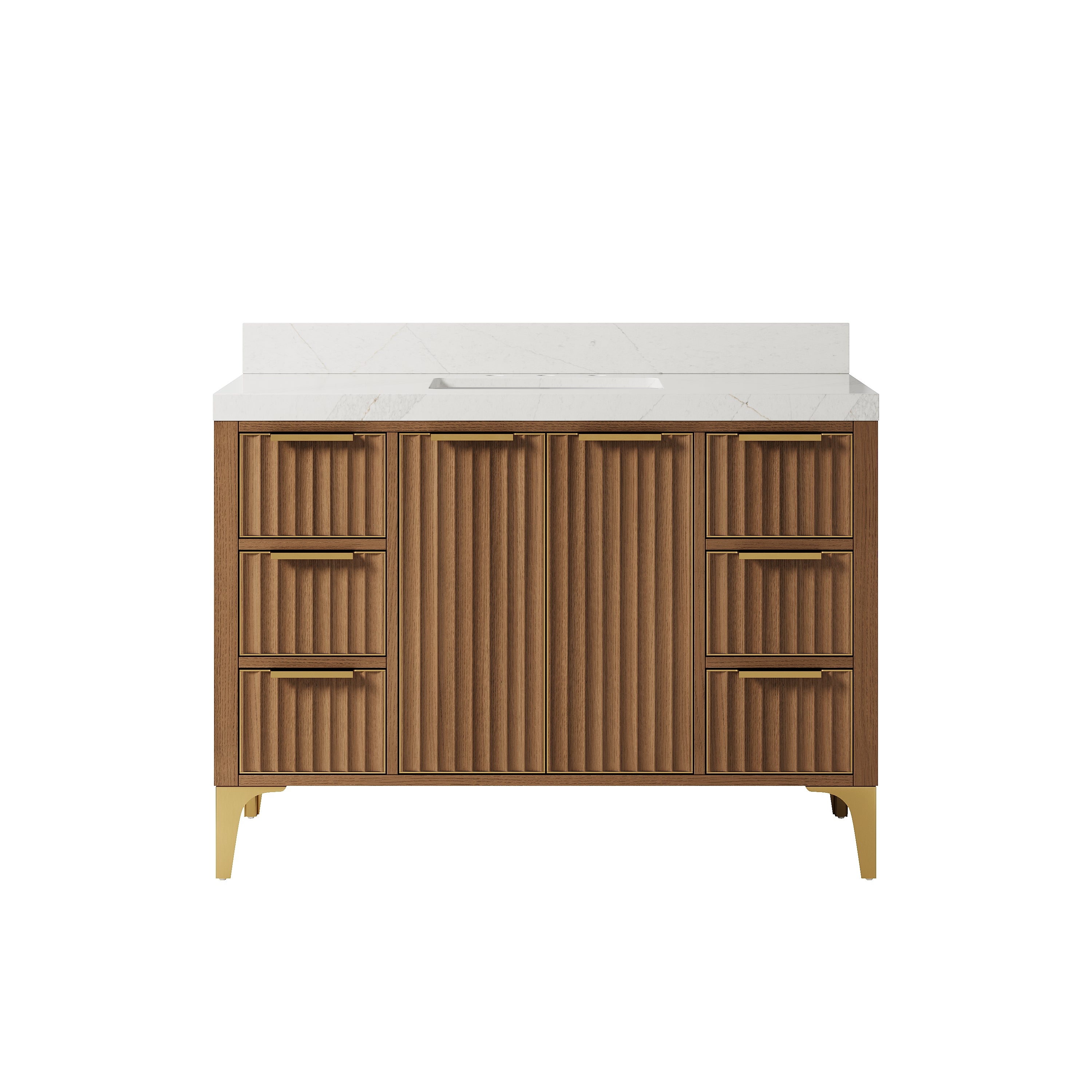


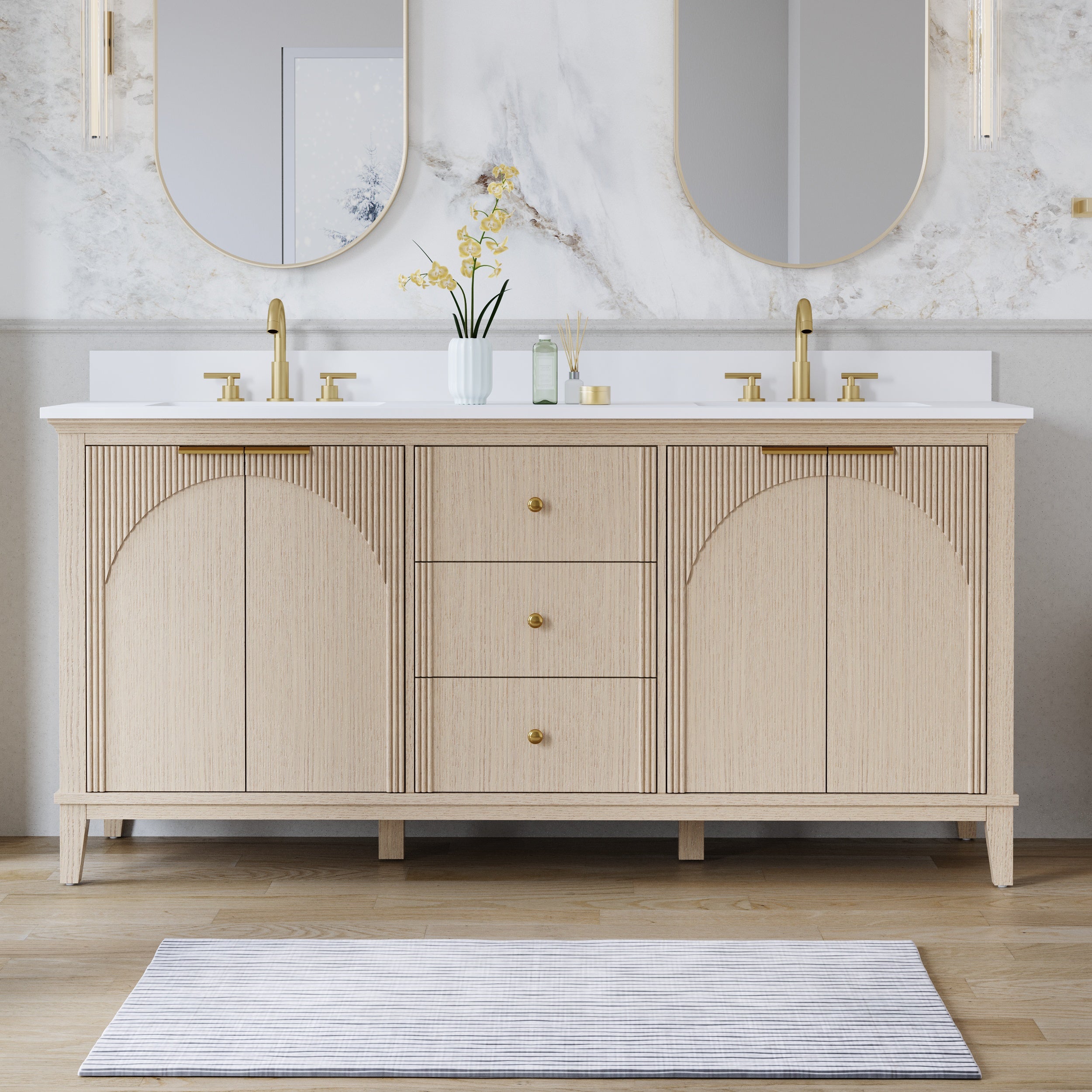
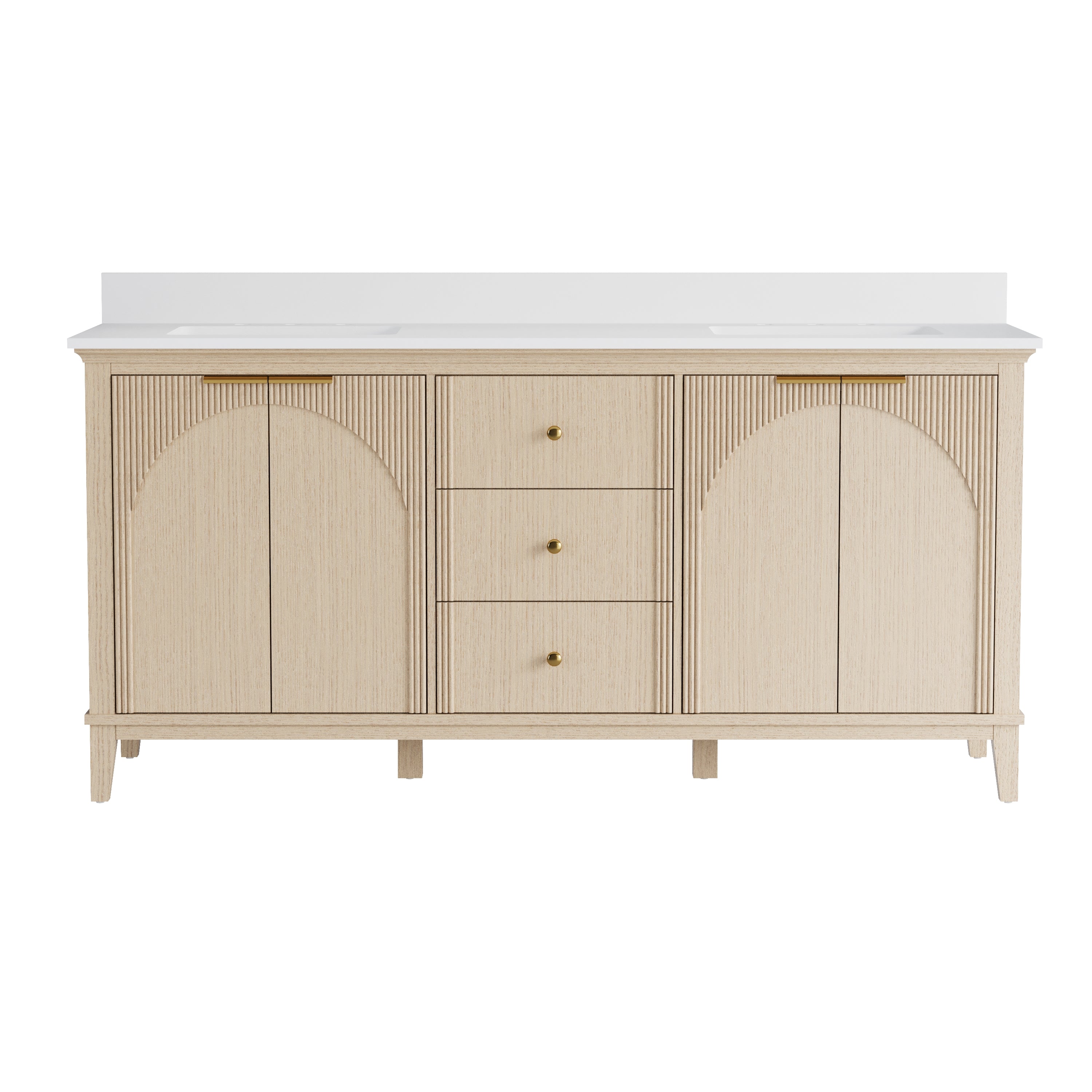
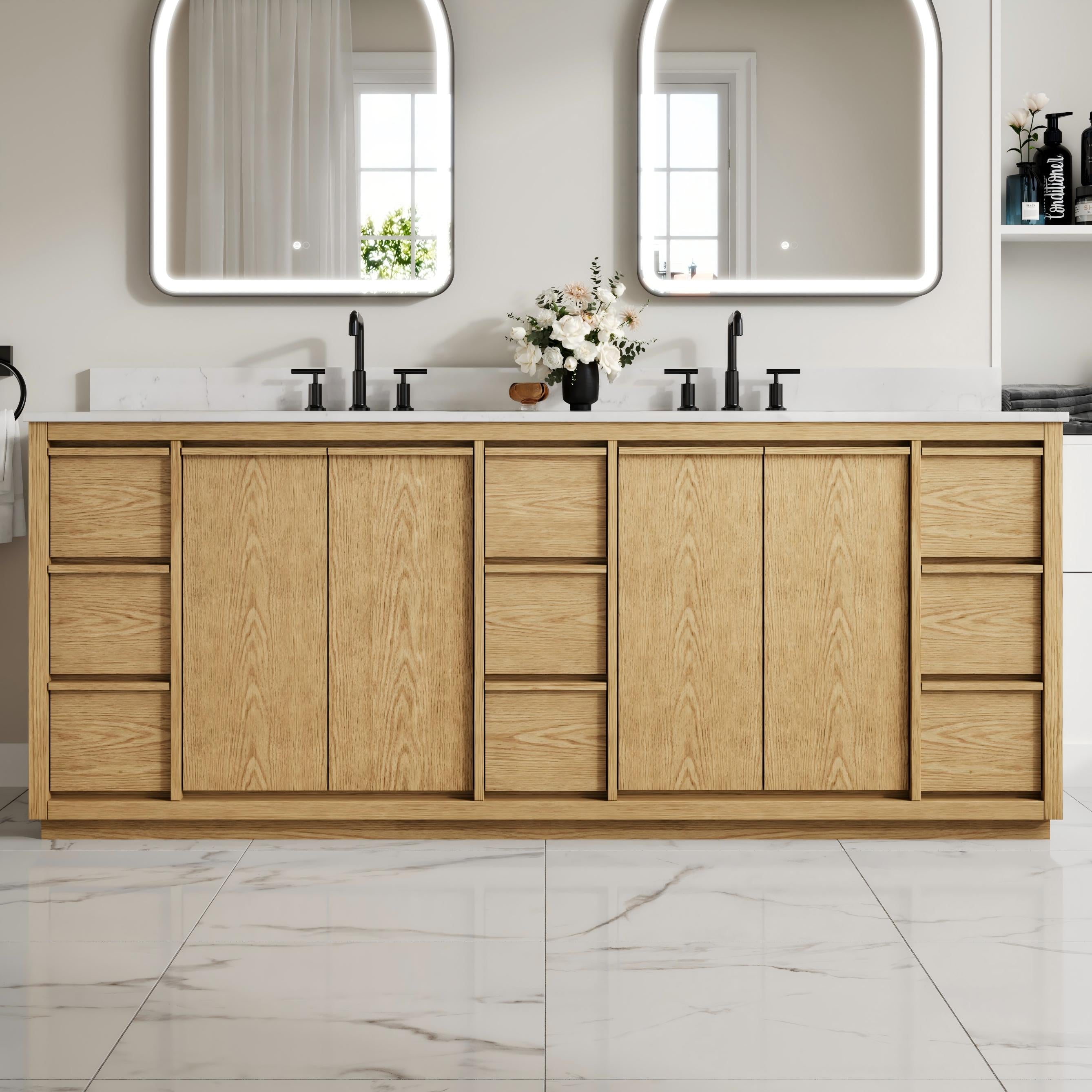
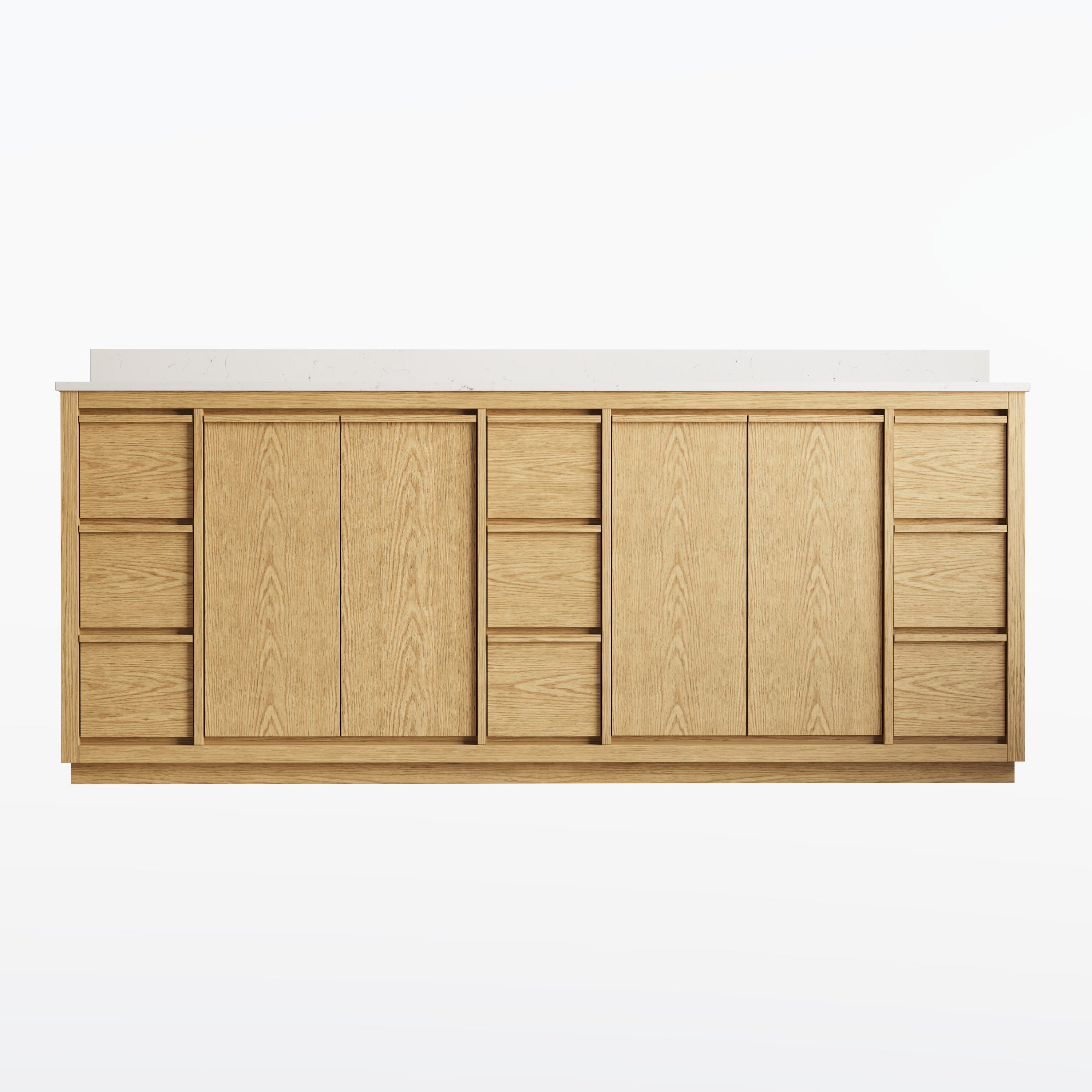
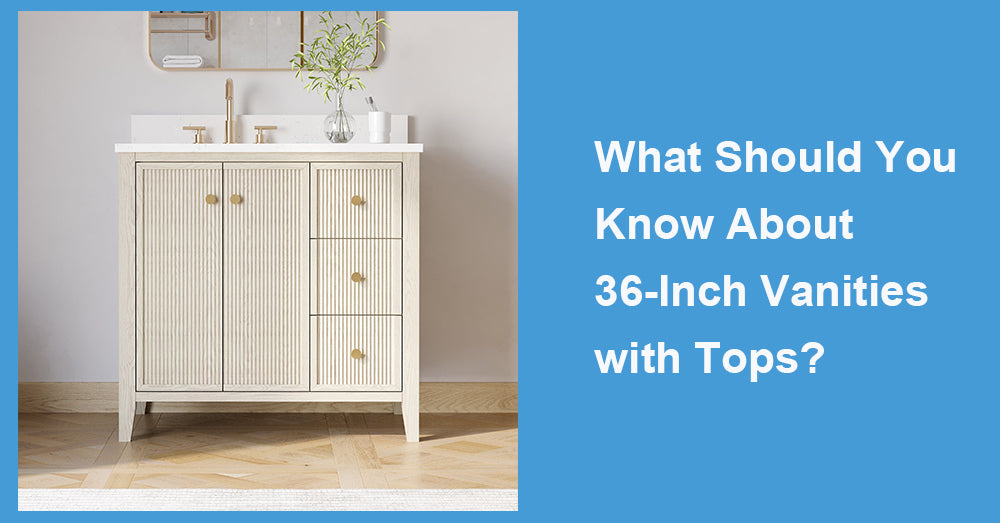
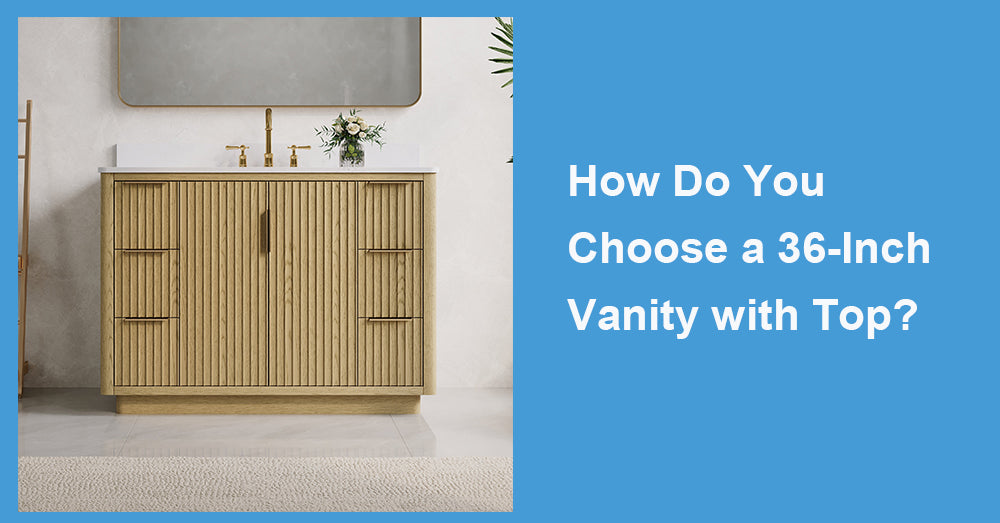
36-inch bathroom vanities with top packages have become a practical remodeling option for projects that need meaningful storage without giving up too much floor space. The 36-inch format sits comfortably between compact 24- or 30-inch models and larger 48-inch vanities, while an included countertop and sink can reduce several purchasing and installation decisions. Houzz’s latest bathroom research shows that 47% of upgraded vanities are 48 inches wide or smaller, confirming that compact and midsize cabinetry remains central to renovation planning. (Houzz)
1. The Cabinet and Countertop May Have Different Widths
The first detail to understand is that “36-inch vanity” usually describes the cabinet, not necessarily the finished countertop.
A countertop may extend beyond the cabinet edges. For example, current 36-inch vanity configurations from established bath suppliers commonly pair a 36-inch cabinet with a top approximately 37 inches wide and 22 inches deep. (Signature Hardware)
Measure from finished wall to finished wall, including baseboards, door casing, toilet clearance, electrical outlets, and nearby door swings. If the vanity sits in a corner, even a small countertop overhang can affect installation.
Industry judgment: buyers should shop by finished dimensions rather than relying on the nominal 36-inch product name.
2. A 36-Inch Width Offers a Useful Middle Ground
A 36-inch vanity provides enough room for a comfortable single sink while preserving valuable floor area.
Standard vanity depth is generally around 21 to 22 inches. Vanity cabinet heights commonly fall between 32 and 36 inches before the top is added. Shallower models at 20 inches or less can make sense where circulation is restricted. (Signature Hardware)
For many guest bathrooms and midsize full bathrooms, 36 inches provides enough width for drawers, countertop space, and enclosed plumbing without making the vanity wall feel crowded.
Houzz reports that 19% of upgraded vanities measure 60 inches and 14% measure 72 inches, but nearly half remain 48 inches or smaller. (Houzz)
Industry judgment: 36 inches works because it adds usable storage without pushing the bathroom automatically into a larger-cabinet layout.
3. Check What “With Top” Actually Includes
A vanity advertised with a top does not always include every component shown in the product photography.
Some packages include the countertop, sink, and backsplash. Others may require the backsplash, side splash, faucet, or drain to be purchased separately. Confirm whether the sink is already attached or needs to be installed at the jobsite.
This matters because countertops and sinks are frequently replaced during remodeling. Houzz reports that 76% of renovating projects upgrade countertops, while 73% replace sinks and 87% replace faucets. (Houzz)
Buying these components as a coordinated package can reduce measurement and compatibility problems.
Industry judgment: the real advantage of an all-in-one vanity is specification certainty, not simply having more parts inside one shipment.
4. Sink Size Can Change How the Vanity Feels
Not every sink paired with a 36-inch cabinet provides the same amount of usable counter space.
An undermount basin generally preserves a cleaner countertop line and leaves more visible surface around the sink. Integrated sinks can further reduce seams, while vessel sinks add height and require more careful faucet planning.
Current 36-inch vanity examples often use basins around 16 inches long and 12-1/2 inches wide, although rectangular models can be somewhat larger. (Signature Hardware)
Compare basin dimensions before ordering. An oversized sink can make a midsize vanity feel smaller than expected.
Industry judgment: on a 36-inch top, sink proportion has a direct effect on how much practical workspace remains.
5. Countertop Material Affects Both Style and Maintenance
Countertop selection is especially visible on a midsize vanity because the top becomes one of the main horizontal surfaces in the room.
Houzz reports that white leads upgraded bathroom countertop colors at 48%, followed by off-white at 20%. Engineered quartz leads material choices at 45%, ahead of quartzite at 20%, granite at 14%, and marble at 13%. (Houzz)
White or lightly veined quartz can coordinate easily with painted white, blue, green, gray, and natural wood cabinets. Marble creates more individual variation, while darker surfaces can give a 36-inch vanity stronger contrast.
Maintenance should be considered alongside appearance.
Industry judgment: the strongest countertop choice is usually one that still looks convincing after daily exposure to water, cosmetics, soap, and cleaning products.

6. Storage Layout Matters More Than Exterior Width
Two 36-inch vanities may occupy exactly the same wall space but offer very different storage.
One may have two doors and an adjustable shelf. Another may combine a smaller plumbing compartment with several drawers. Drawers can make toiletries, cosmetics, medications, and grooming tools easier to reach, but they require careful plumbing clearance.
NKBA’s 2026 Bath Trends research highlights custom dividers, configurable vanity modules, charging stations, electrical integration, and item-specific compartments as important directions in bathroom storage. The study draws on input from nearly 700 industry professionals. (NKBA)
Check drawer depth, full-extension capability, shelf adjustment, and the location of the drain before choosing a model.
Industry judgment: storage efficiency increasingly separates a well-designed 36-inch vanity from one that simply fills 36 inches of wall space.
7. Cabinet Material and Hardware Deserve Attention
The countertop may attract attention first, but cabinet construction determines how the vanity performs after years of opening, closing, and moisture exposure.
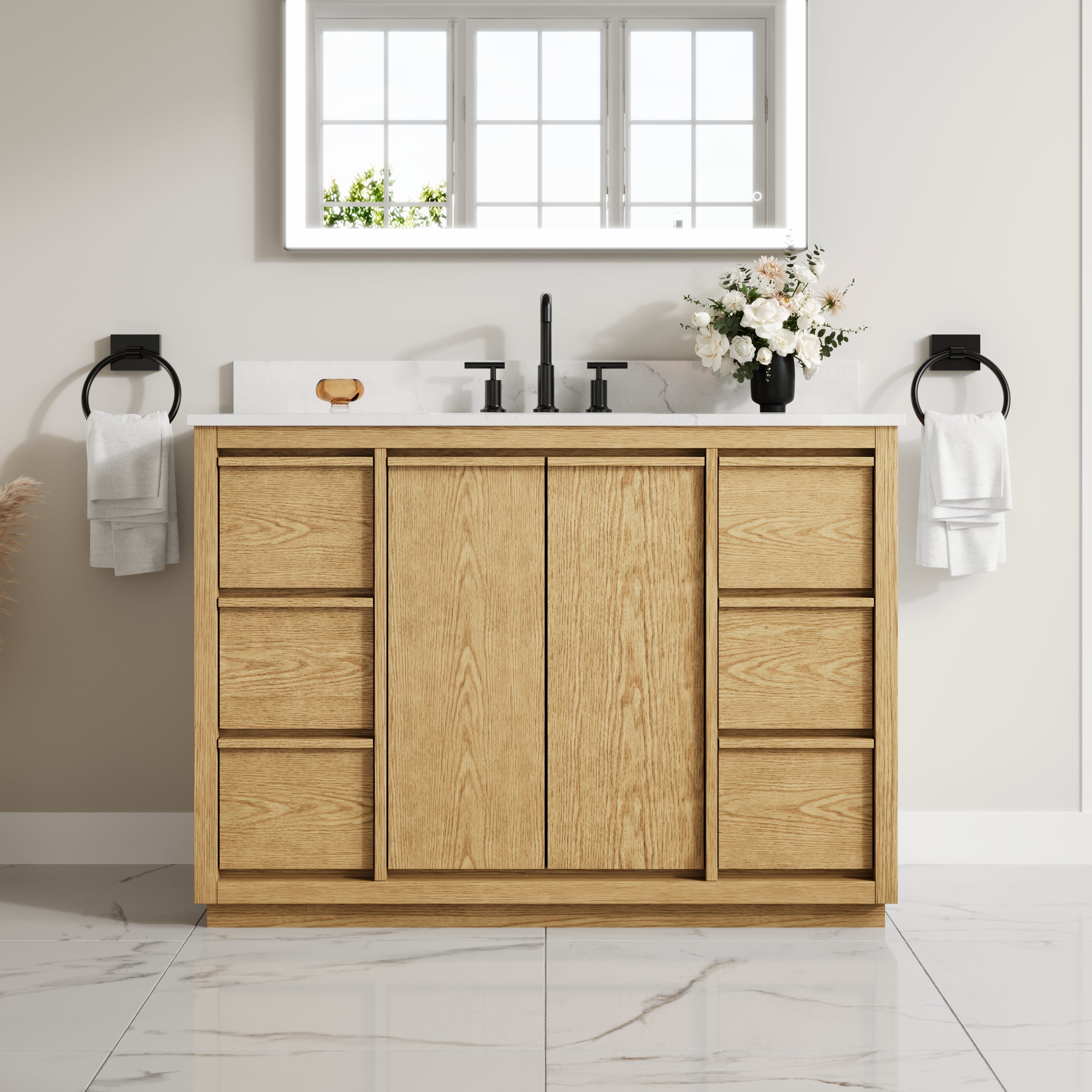
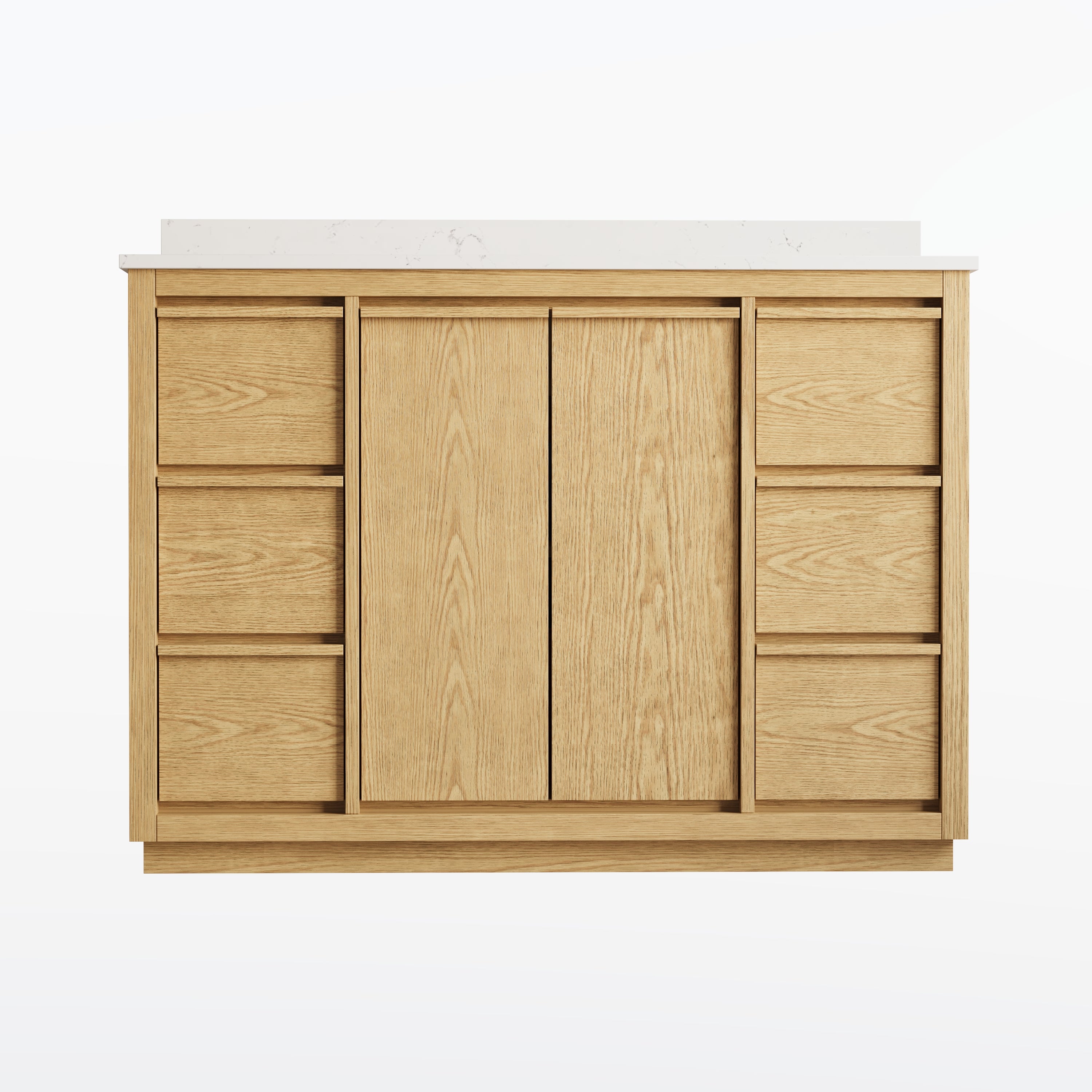
Houzz reports that solid wood is selected for 74% of upgraded vanities. Maple leads at 29%, followed by white oak at 23%, birch at 12%, and walnut at 9%. (Houzz)
NKBA also reports that wood-faced vanities receive 62% support among industry professionals, ahead of painted cabinetry at 53%. (NKBA)
Solid wood is not the only workable option. Quality plywood and moisture-resistant engineered panels can perform well when the cabinet has properly sealed edges and reliable hardware.
Look for soft-close hinges, stable drawer boxes, smooth slides, and adjustable doors.
Industry judgment: durable construction creates more long-term value than impressive material terminology alone.
8. Confirm Faucet Drilling Before Checkout
The countertop may already be drilled for a specific faucet configuration. Common arrangements include a single hole, a 4-inch centerset setup, or an 8-inch widespread faucet.
Choosing the faucet before checking the holes can create an unnecessary return or countertop problem.
Efficiency can also be considered at the same time. EPA states that WaterSense-labeled bathroom sink faucets use no more than 1.5 gallons per minute and can reduce flow by at least 30% compared with the standard 2.2-gallon-per-minute rate without sacrificing performance. (US EPA)
Also check spout reach so the water lands comfortably inside the basin.
Industry judgment: faucet compatibility is one of the smallest specifications on the product page and one of the easiest to regret overlooking.
9. Plan Installation Before the Vanity Arrives
Determine whether the cabinet arrives assembled and whether the top is attached or packaged separately.
A separate countertop can make a 36-inch cabinet easier to move through doorways and allows the installer to secure the vanity and adjust plumbing before setting the top. Preassembled packages may reduce on-site work but can be heavier to handle.
Check drain location, supply lines, wall condition, backsplash height, and whether the vanity is freestanding or floating. Houzz reports that built-in vanities account for 58% of upgraded installations, followed by freestanding models at 30% and floating designs at 11%. (Houzz)
Industry judgment: installation should be part of the buying decision rather than a problem left for the contractor after delivery.
10. Conclusion
36-inch bathroom vanities with top packages offer a practical balance of storage, countertop space, and manageable dimensions, but buyers should look beyond the advertised width.
Confirm the finished countertop dimensions, sink size, cabinet depth, storage configuration, countertop material, faucet drilling, plumbing clearance, hardware quality, and exactly which components are included.
A well-planned 36-inch vanity can work particularly well in guest bathrooms and midsize full baths, providing noticeably more function than smaller models without requiring the space of a 48-inch cabinet.
The strongest purchase is not simply the vanity with the most features. It is the one whose cabinet, top, sink, storage, and plumbing specifications already work together before installation begins. That coordination is what makes the 36-inch category such a dependable remodeling choice.













Leave a comment
This site is protected by hCaptcha and the hCaptcha Privacy Policy and Terms of Service apply.