




















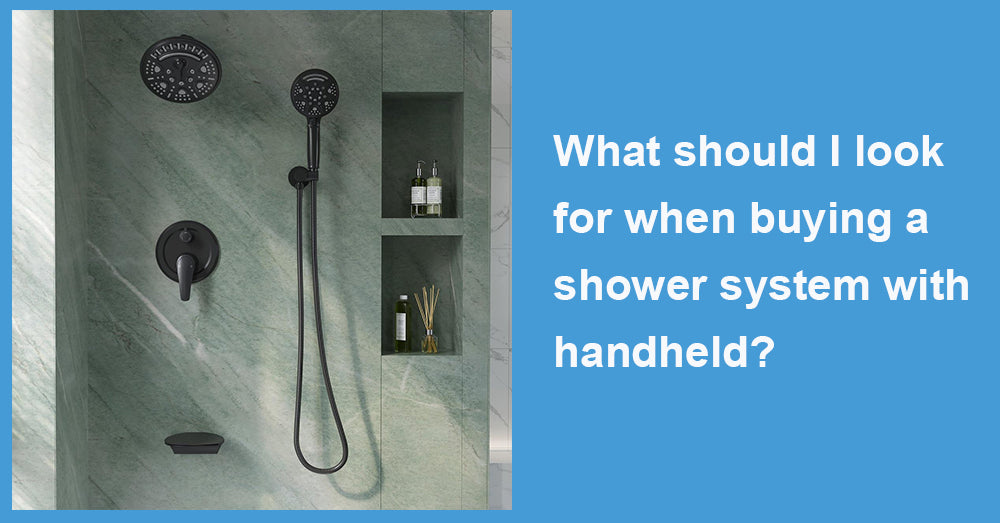
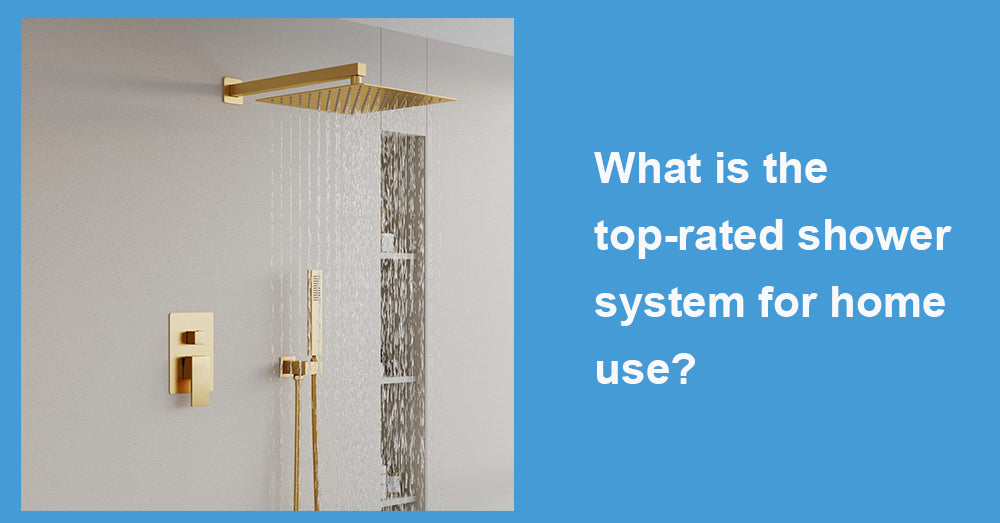
With the increasing trend of bathroom upgrades and residential renovations, the Shower System with Handheld is gradually becoming the main product in home bathroom configurations. Compared to a single shower device, this multifunctional combination offers significant advantages in flexibility, cleaning convenience, and adaptability for family members. However, there are numerous products on the market with different structures, materials, flow rates, and installation methods, and the factors to consider when choosing are also more comprehensive.
Based on industry reviews and platform data, the focus of purchasing handheld showerhead systems is on key factors such as water pressure performance, spray mode, hose length, durability, water-saving performance, installation method, and safety. The following provides an in-depth analysis of these factors to help consumers make more informed, stable decisions about bathroom upgrades.
1. Water pressure performance and spray coverage are the core of the user experience
One of the most critical evaluation criteria for the Shower System with Handheld is water pressure stability. According to statistics from multiple home furnishing platforms, over 60% of users list "whether the water pressure is sufficient" as their biggest concern when purchasing (source: HomeAdvisor.com).
When choosing, you can focus on the following aspects:
Handheld nozzle design: The nozzle with air-mixture pressurization or a fine nozzle structure can maintain a stable water flow impact, even in high-rise residential buildings or environments with low water pressure.
Pressure loss between the top spray and handheld: If the system is equipped with a Rain Shower, ensure the overall waterway design is balanced to avoid noticeable water pressure drop when switching to handheld mode.
Number of spray modes: High-rated products usually offer 3-6 spray modes, including rain shower, massage, water column flushing, etc., which can be adapted to different bathing needs.
The performance of water pressure and spray design often directly determines whether a shower system is worth purchasing.
2. The length of the hose must conform to human usage habits
When purchasing a handheld shower system, hose length is one of the overlooked but crucial indicators.
The industry recommended standard is:
60-inch hose: suitable for ordinary household bathrooms and is the most common size;
72-inch hose: ideal for households with larger spaces or for cleaning pets or bathroom walls.
A survey shows that short hoses are one of the most common issues in user complaints, accounting for approximately 27% (source: Wayfair.com).
The material of the hose also directly affects durability:
Stainless steel hoses have higher tensile resistance and are less prone to entanglement.
PVC inner pipes offer greater flexibility and better temperature resistance.
When choosing a hose, consider length, safety, and durability.
3. Thermostatic valve and anti-scald protection are essential guarantees for shower safety
With technological upgrades, more Shower Systems with handhelds now feature thermostatic valves. Industry data shows that constant-temperature control can stabilize temperature fluctuations to ±1.5 °F (source: Build.com), significantly reducing water temperature fluctuations.
The following features are considered core configurations of high-quality shower systems:
Thermostatic valve core: precise temperature adjustment to prevent a sudden increase in hot water;
Anti-scald lock: limits the maximum temperature, making it especially suitable for children and the elderly.
Cold and hot water balance system: When other water circuits are turned on, it does not affect the shower temperature.
In daily use, safety is often more critical than functional complexity, so constant-temperature performance is a prerequisite that must be confirmed before purchase.
4. Material and surface treatment determine product lifespan
The shower system is exposed to humid environments for a long time, so the material and surface treatment process directly affect durability and appearance maintenance.
The standard material expressions are as follows:
Brass valve body: Strong corrosion resistance, it is a standard configuration for high-end shower systems.
Stainless steel structure: Commonly used in components such as conduits and brackets, it can resist high-humidity environments.
ABS engineering plastic nozzle: Lightweight and heat-resistant, commonly found in handheld showerhead components.
In terms of surface treatment, high-quality products generally use PVD coating, which offers several times the scratch and wear resistance of traditional electroplating (source: MaterialsToday.com). Especially for non-traditional color schemes such as brushed gold and matte black, PVD can significantly extend the color life.
5. Water saving performance needs to strike a balance between experience and efficiency
Water conservation should not be equated with reduced comfort, but rather with using flow-control technology to minimize water waste while maintaining water pressure.
The current mainstream water-saving standards in the industry are:
1.75 GPM or 2.0 GPM
Compared to traditional 2.5 GPM nozzles, it is more water-saving and does not affect the user experience.
According to water-saving data, a household's shower water accounts for about 17% of the total daily water consumption (source: EPA.gov). Choosing water-saving models can reduce annual water consumption by thousands of gallons, lowering costs and reducing resource waste in the long run.
6. The compatibility between the installation method and the valve body is a key point that must be confirmed before purchasing
The installation of a handheld shower system needs to consider the existing wall structure and pipeline layout.
Important checkpoints include:
Is it a single-handle or dual-handle control? Different valve body structures require different wall reserved spaces.
Is the valve body compatible with existing pipelines? The standard size is usually 1/2 inch, and if the structure is special, additional accessories may be required.
Is it a hidden installation? Hidden design is more aesthetically pleasing but requires more complex maintenance, making it suitable for those renovating their bathrooms.
Height of bracket and sliding rod: The sliding rod is generally 24-30 inches long; confirm that the wall height is appropriate.
The convenience and compatibility of installation are directly related to maintenance costs and service life in the later stage and cannot be ignored.
7. The overall appearance design affects the coordination of the bathroom style
A shower system with a handheld showerhead not only requires excellent functionality, but also needs to match the overall bathroom style.
The current highly rated design trends include:
Matte black, brushed gold, and brushed nickel have become the mainstream color schemes.
The geometric design with simple lines is more in line with modern decorative styles.
The hidden pipeline and minimalist valve body make the visual neater.
According to platform data, matte black and brushed gold have seen a demand growth of over 20% in the past three years (source: Houzz.com) and have become the most eye-catching decorative styles in modern bathrooms.

8. Industry Summary: Key Indicators for Purchasing Shower System with Handheld
Based on industry data, user feedback, and product technology trends, when purchasing a Shower System with Handheld, the following eight elements should be given special attention:
Stable water pressure and multi-stage spraying mode;
The hose length should be at least 60 inches, and a larger 72-inch space can be selected.
Thermostatic valve and anti-scald protection;
High durability structures made of brass, stainless steel, and PVD surface treatment.
Water saving performance of 1.75-2.0 GPM;
Compatibility between the installation structure and the valve body;
Easy to maintain design, such as detachable filter screens and anti-blocking structures;
A modern appearance that matches the bathroom's overall style.
With bathrooms evolving from basic clean spaces to living spaces that combine comfort and design, the multifunctional Shower System with Handheld has become the core configuration for bathroom upgrades. In the future, shower systems will continue to be optimized in areas such as energy efficiency, intelligent control, and ergonomic design, bringing a more comprehensive experience improvement to home bathrooms.






























Leave a comment
This site is protected by hCaptcha and the hCaptcha Privacy Policy and Terms of Service apply.