






















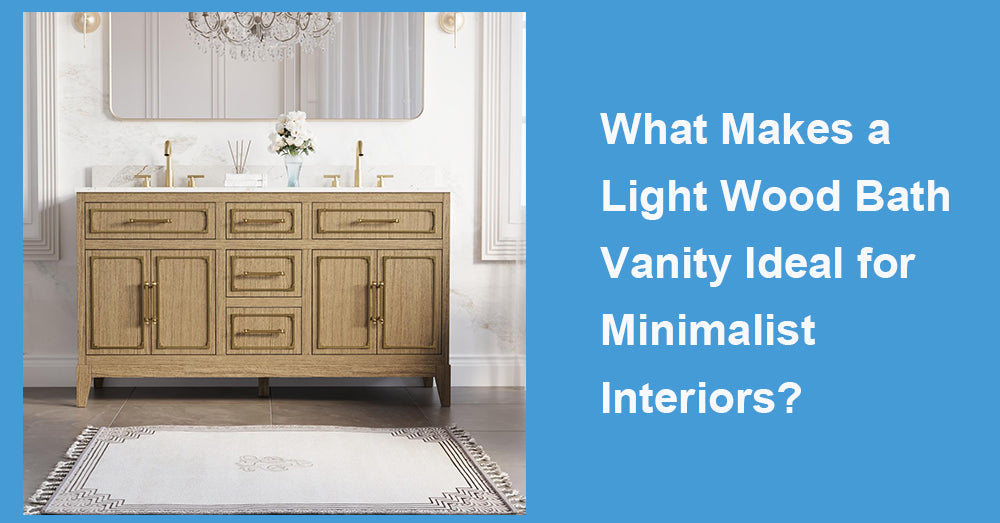
A light wood bath vanity is one of the most effective ways to bring warmth into a minimalist bathroom without making the space feel heavy or overdesigned. After more than 20 years of working with bathroom cabinetry and renovation projects, I have found that pale wood finishes work especially well when homeowners want clean lines but do not want an all-white room to feel sterile. The combination of simple cabinetry, visible grain, practical storage, and quiet color creates a bathroom that feels calm, useful, and easy to live with.
1. A Light Wood Bath Vanity Adds Warmth Without Visual Weight
Minimalist bathrooms often rely on white tile, pale stone, glass, and simple metal fixtures.
Those materials create a clean background, but too many hard surfaces can make the room feel cold.
Light oak, ash, maple, and similar wood tones introduce warmth without the strong visual presence of dark walnut or espresso finishes. The cabinet still feels substantial, yet it does not dominate the lower half of the bathroom.
That balance is particularly useful in small spaces.
A pale vanity can add texture while keeping the room bright and open.
2. Natural Grain Creates Interest Without Extra Decoration
Minimalist design does not mean eliminating all visual character.
It means choosing fewer elements and letting each one contribute something meaningful.
Natural wood grain does that very well. Subtle lines and tonal changes create depth without requiring decorative panels, bold paint colors, or patterned surfaces.
Quiet Grain Usually Works Best
For minimalist interiors, I tend to prefer wood with relatively restrained grain.
If the cabinet is highly figured and the countertop also has dramatic veining, the room can begin to feel busy.
A simple light wood vanity paired with quiet quartz or lightly textured stone usually creates a more balanced result.
The material itself becomes the decoration.
3. Flat-Front Cabinetry Supports the Minimal Look
Door and drawer style matters almost as much as color.
Flat-front drawers create long, uninterrupted lines and are easy to combine with simple mirrors, integrated lighting, and streamlined faucets.
Shaker-style doors can still work, but they introduce more visual structure.
For a truly minimal bathroom, fewer lines usually produce a calmer effect.
Hardware should follow the same idea.
Slim pulls, discreet knobs, or integrated handles help the vanity feel architectural rather than furniture-heavy.
4. Floating Designs Can Make the Bathroom Feel Even Lighter
A floating vanity strengthens the minimalist effect because the floor remains visible underneath.
This creates more negative space and can make a compact bathroom feel less crowded.
It also makes floor cleaning easier.
Floating Is Not Always the Better Choice
Wall-mounted vanities usually offer less storage than freestanding models and require secure structural support.
If the wall needs major reinforcement or the household stores a large number of bathroom products, a freestanding light wood vanity may be more practical.
Minimalism should simplify life.
If the design forces you to keep toiletries on the countertop because there is not enough storage, it has missed the point.
5. Good Storage Keeps Minimalism Practical
The cleanest-looking bathrooms usually have excellent hidden storage.
Deep drawers are useful for skincare, cosmetics, razors, brushes, and grooming tools. They keep frequently used products accessible while leaving the countertop clear.
Under-sink cabinets work better for cleaning supplies, tall bottles, and spare paper goods.
Do not judge storage by the number of drawer fronts.
The sink and plumbing can remove more space than expected.
I always recommend reviewing interior photos or cabinet diagrams before buying, especially for compact vanities.
6. Light Wood Pairs Well With Neutral Countertops
Countertop selection has a major influence on how minimalist the vanity feels.
White or lightly veined quartz creates a crisp, simple combination. Cream or beige stone makes the room warmer and more relaxed.
Dark countertops create stronger contrast, which can work, but they make the vanity more visually prominent.
For a quiet minimalist interior, I usually prefer low-contrast combinations.
The goal is not to make every surface identical. It is to make sure the materials relate naturally.
A little contrast adds depth. Too much becomes visual noise.
7. Hardware and Fixtures Should Stay Restrained
Light wood works with several metal finishes.
Matte black creates sharp definition. Brushed brass adds warmth. Polished nickel feels clean and refined.
Use one main finish and keep the rest of the room disciplined.
A common mistake is combining too many competing metals because each fixture looked good individually.
Minimal interiors are more convincing when repetition is controlled.
Choose hardware that supports the vanity rather than turning every handle into a focal point.
8. Light Wood Still Needs Protection From Moisture
The aesthetic may be soft and simple, but the bathroom environment is demanding.
Wood and wood-based cabinetry need protection from standing water, poor ventilation, and plumbing leaks.
Run the exhaust fan during and after showers.
Wipe water around the sink promptly. Avoid hanging damp towels against cabinet fronts.
Finish Quality Matters More Than Appearance Alone
Inspect edges, corners, drawer fronts, and plumbing cutouts.
These areas should be properly sealed.
A cabinet with attractive grain but exposed material around the sink area is not a good long-term purchase.
9. Know Where Light Wood Works Best
Light wood is particularly effective in smaller primary bathrooms, guest baths, apartments, and modern homes where natural materials are used sparingly.
It also works well when the room has limited daylight because pale cabinetry does not absorb as much visual light as darker finishes.
It may be less suitable when the bathroom already contains several unrelated wood tones.
Mixing oak flooring, walnut shelving, and another pale wood vanity can create more complexity than a minimalist room needs.
In that case, a white vanity may be easier to integrate.
10. Installation Should Preserve the Clean Lines
Minimalist cabinetry exposes poor installation quickly.
Set the vanity level so drawer gaps remain consistent. Check plumbing locations before cutting into the cabinet.
For floating models, make sure the wall can safely support the cabinet, countertop, sink, and stored items.
Seal the sink, faucet openings, countertop joints, and backsplash carefully.
Test every plumbing connection before filling the drawers.
Clean lines only look effortless when the hidden work behind them is precise.

11. Maintain the Vanity Without Overworking It
Use a soft cloth and mild, non-abrasive cleaner. Avoid soaking wood surfaces or spraying excessive cleaner into seams.
Check beneath the sink periodically for leaks or discoloration.
Keep the countertop relatively clear and use drawer organizers instead of adding more decorative containers.
When comparing Wellfor options, start with cabinet proportions, storage layout, construction quality, moisture protection, and plumbing compatibility. Then choose the exact wood tone and hardware. A light wood bath vanity works so well in minimalist interiors because it adds just enough natural texture to keep the room warm and inviting while allowing the architecture, light, and open space to remain the main focus.










































Leave a comment
This site is protected by hCaptcha and the hCaptcha Privacy Policy and Terms of Service apply.