
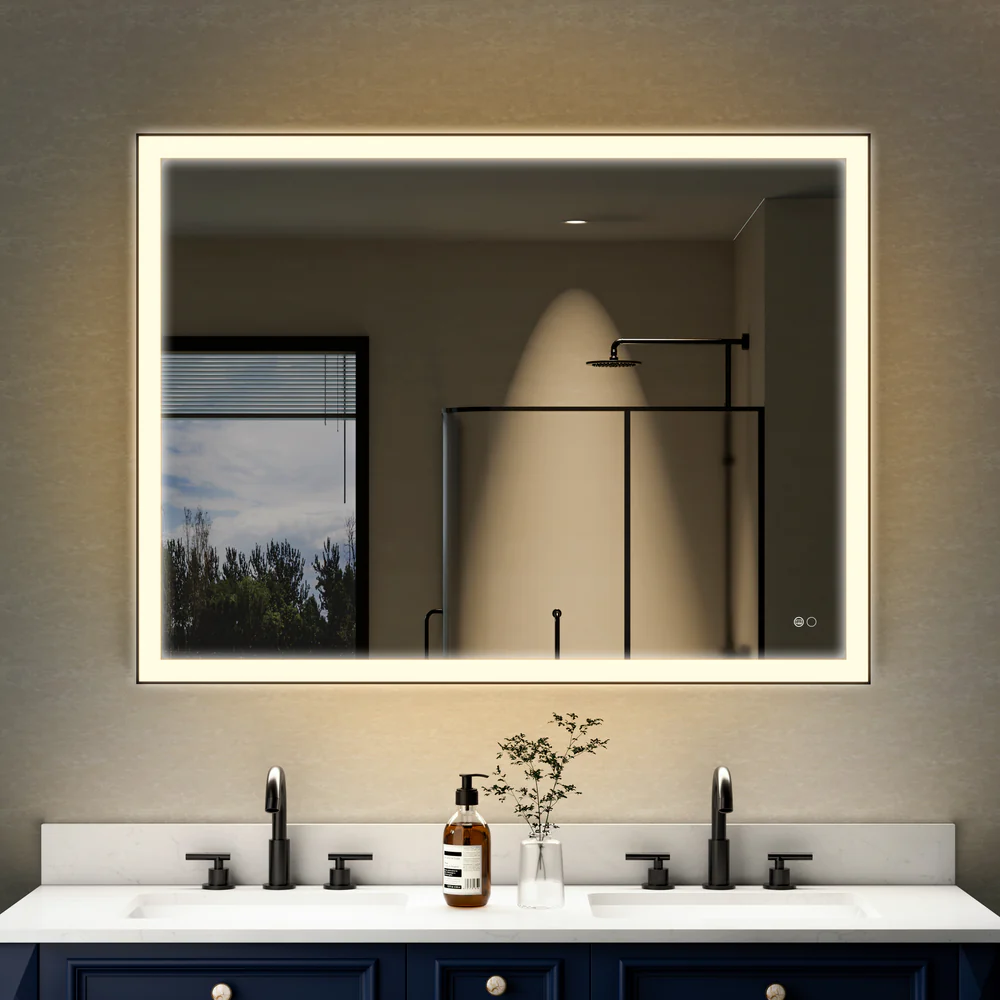
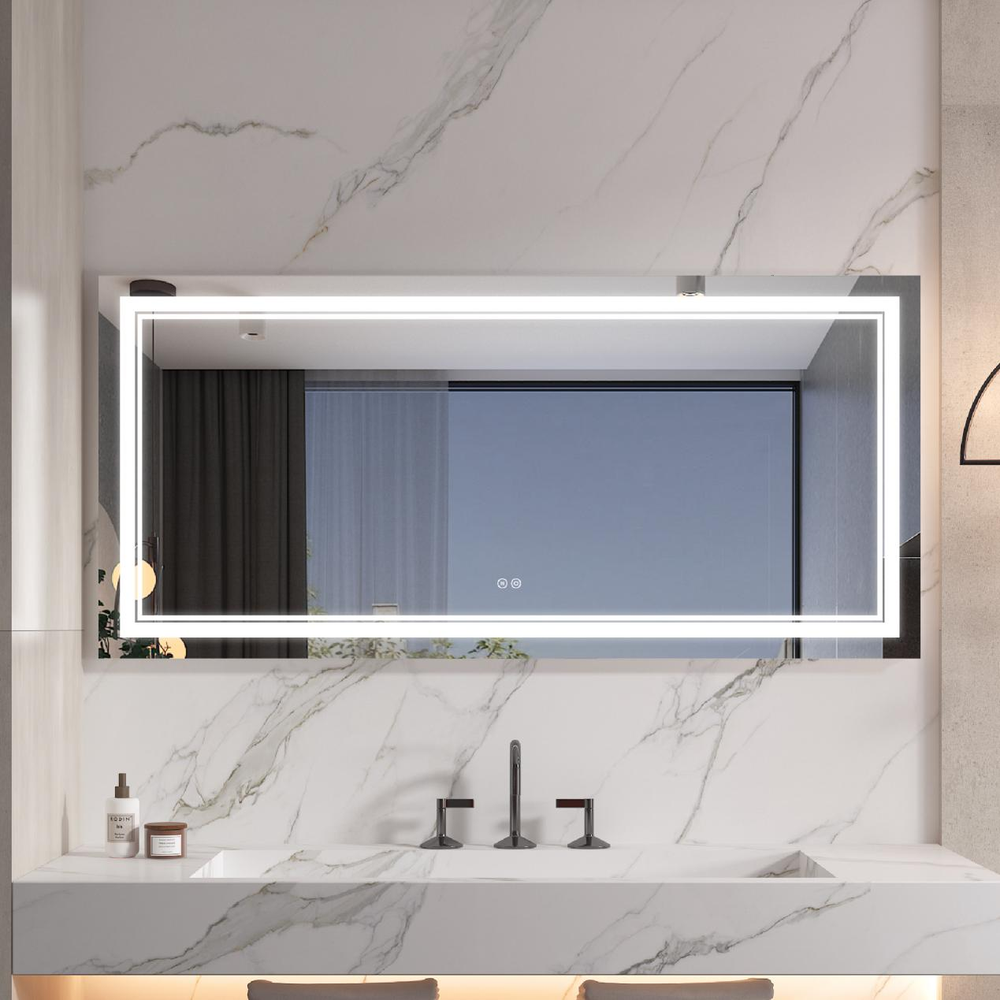
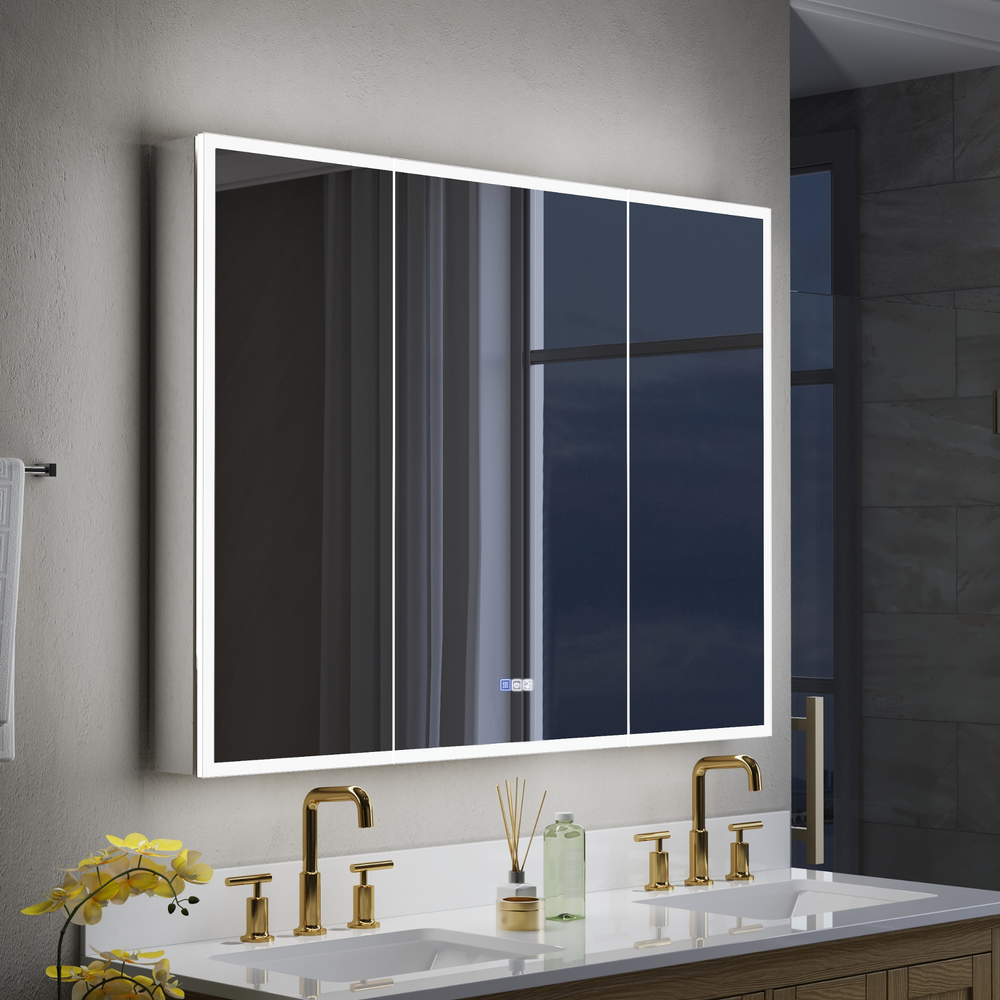
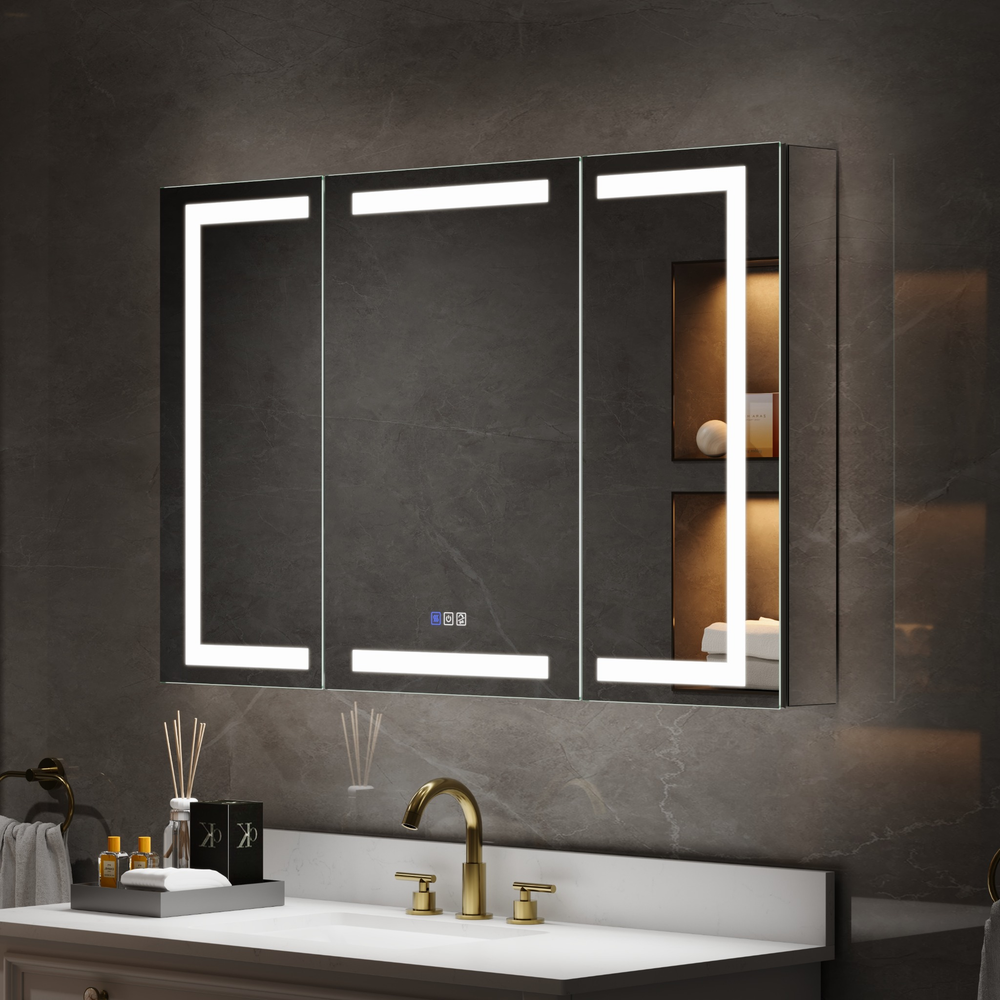
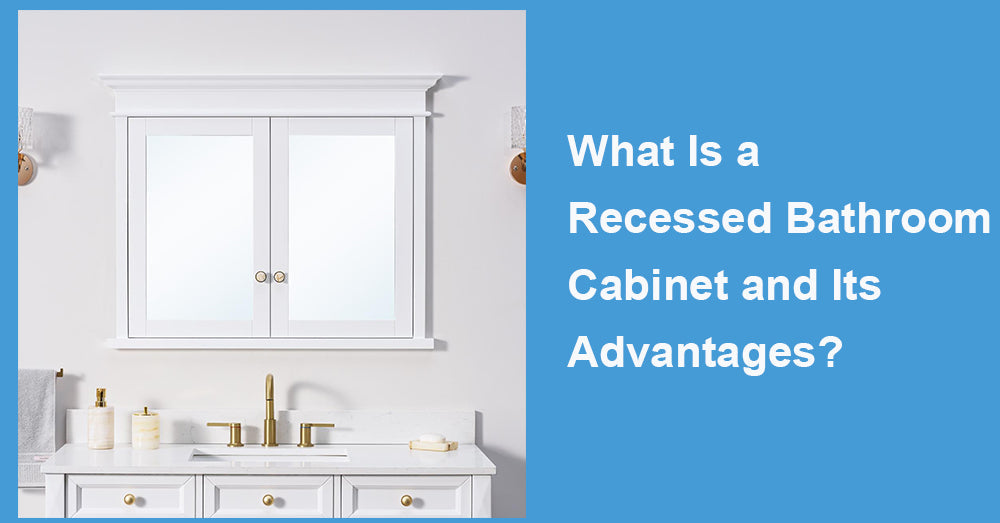
A recessed bathroom cabinet is a type of cabinet that goes inside the wall rather than sitting wholly on it. It often features a mirror door, making it convenient for keeping personal items, skin care, and daily-use products without occupying additional floor space. The idea is straightforward, but it solves an obvious concern that bathroom designs face – the problem of having enough storage and not making the room look overcrowded. In Houzz’s Bathroom Trends Survey for the year 2026, 67% of homeowners who are renovating their bathrooms indicated that organized storage is one of the most important elements of a soothing bathroom, while 15% said that lack of storage is the reason for renovating. This shows why built-in storage is gaining popularity.
1. What Makes a Recessed Bathroom Cabinet Different?
The key distinction is about installation. A cabinet is installed to the finished wall, extending inwards into the bathroom. A recessed cabinet, however, is either partially or completely embedded in the wall.
In the standard 2x4 wall frame, the hollow space between the surfaces makes the nominal cavity depth approximately 3.5 inches, minus the finishes and allowances for installation. This allows some cabinet configurations to be positioned flush with the wall and results in a more streamlined look.
Some cabinets are completely recessed, while others are semi-recessed, where only part of the cabinet protrudes from the wall. Both models provide concealed space for storage, although the amount of protrusion and space available inside the cabinet differs.
2. It Makes Better Use of Limited Bathroom Space
One of the biggest advantages is that storage moves into an area that would otherwise remain unused.
In smaller bathrooms, adding a freestanding organizer or another wall cabinet can make the space feel tighter. A recessed unit avoids much of that problem by using the existing wall depth.
This is particularly useful above a 24- or 30-inch vanity, where countertop space is already limited. Toothbrushes, facial cleansers, razors, and other daily essentials can be stored behind a closed door instead of occupying the area around the sink.
3. It Keeps the Bathroom Looking Less Cluttered
Storage capacity is important, but its visual impact matters too.
Open shelves and countertop organizers expose bottles, packaging, and grooming accessories. Even when everything is neatly arranged, too many visible objects can make a small bathroom feel busy.
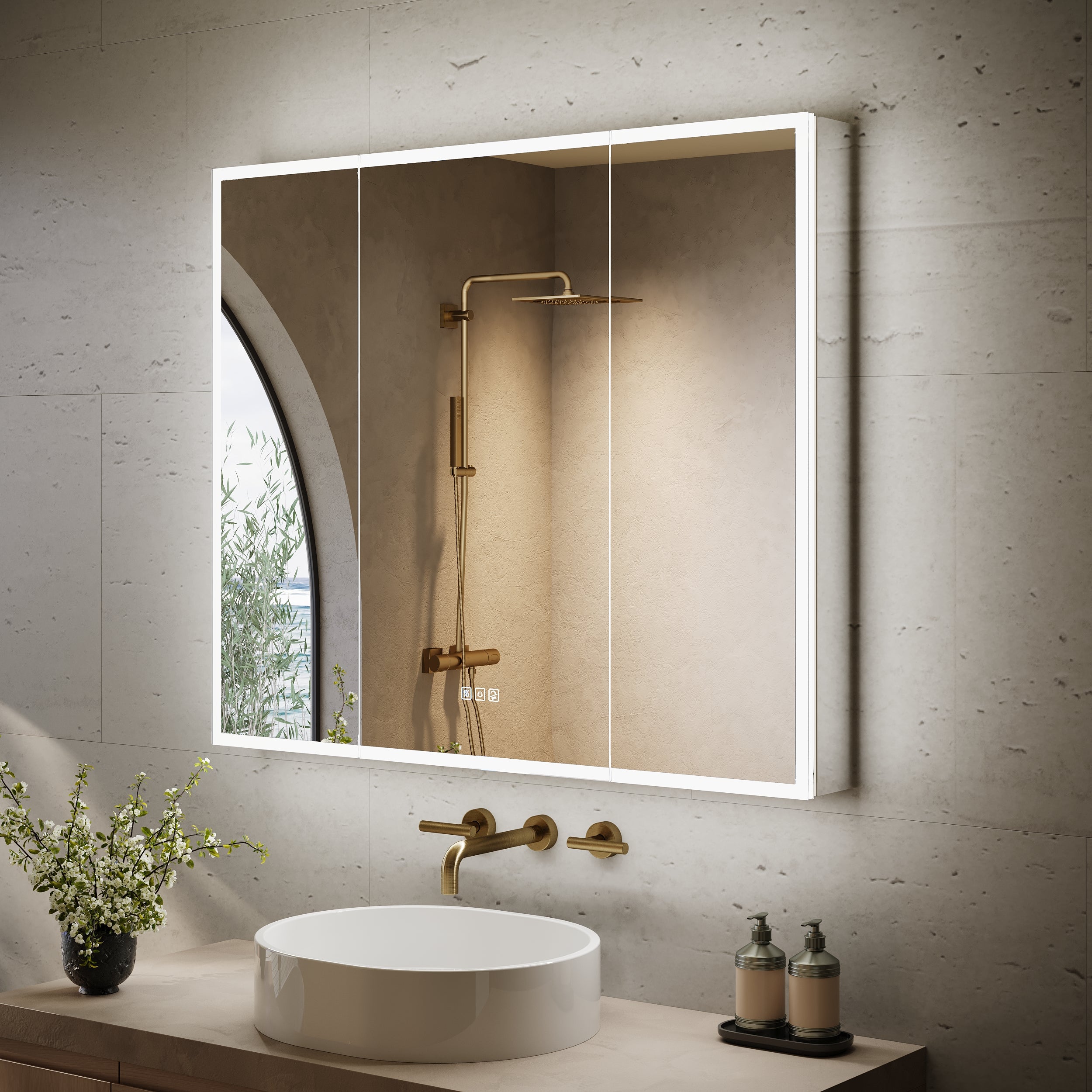
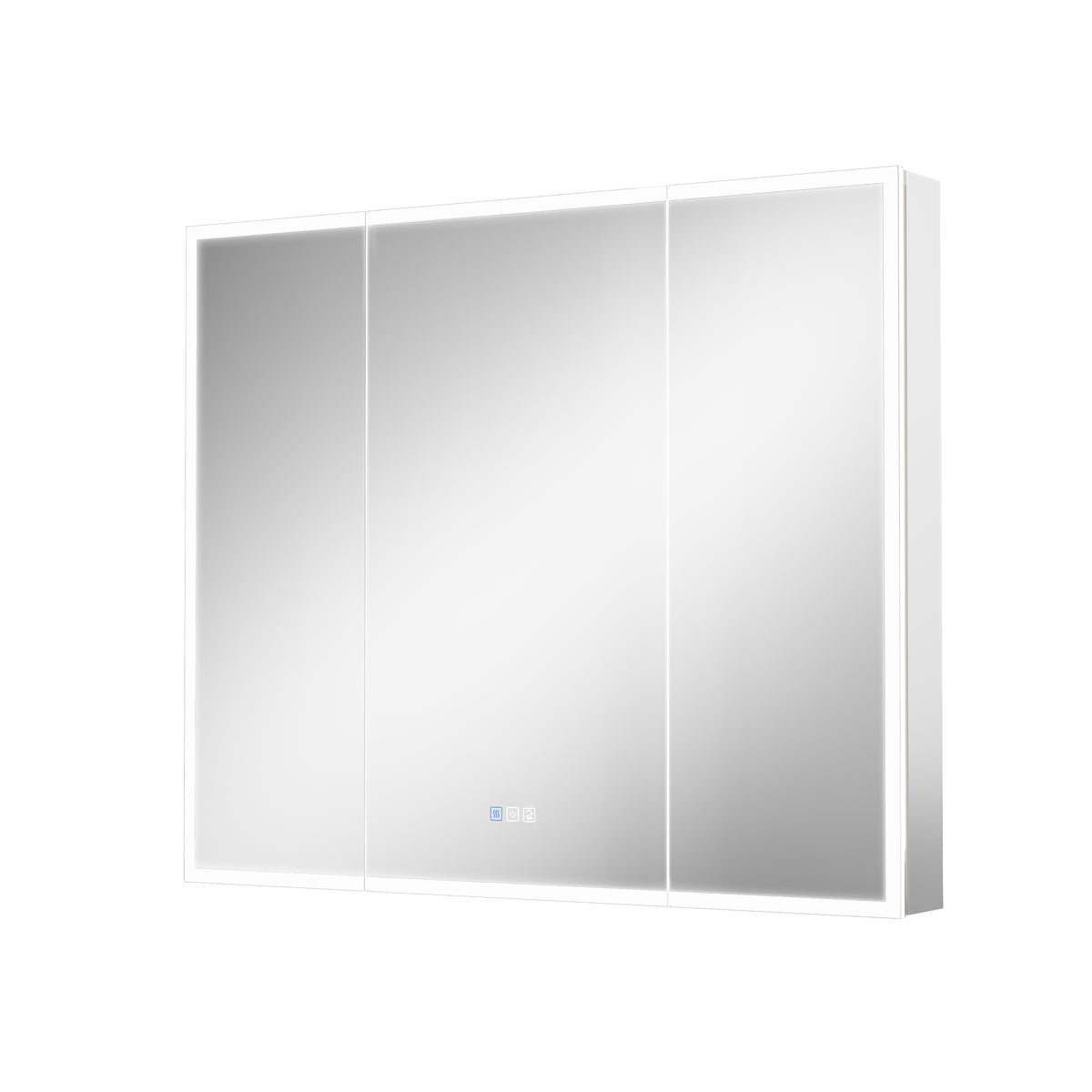
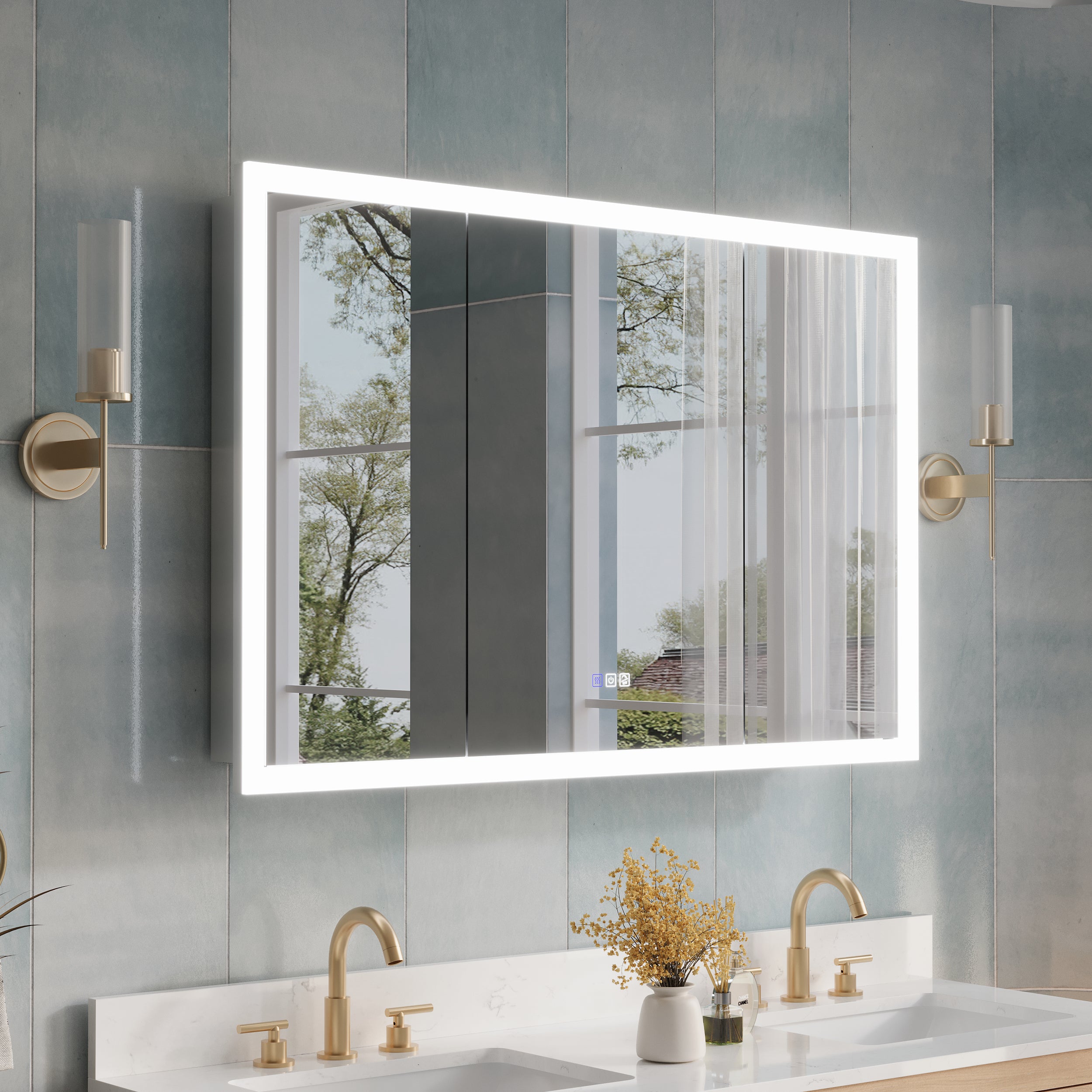
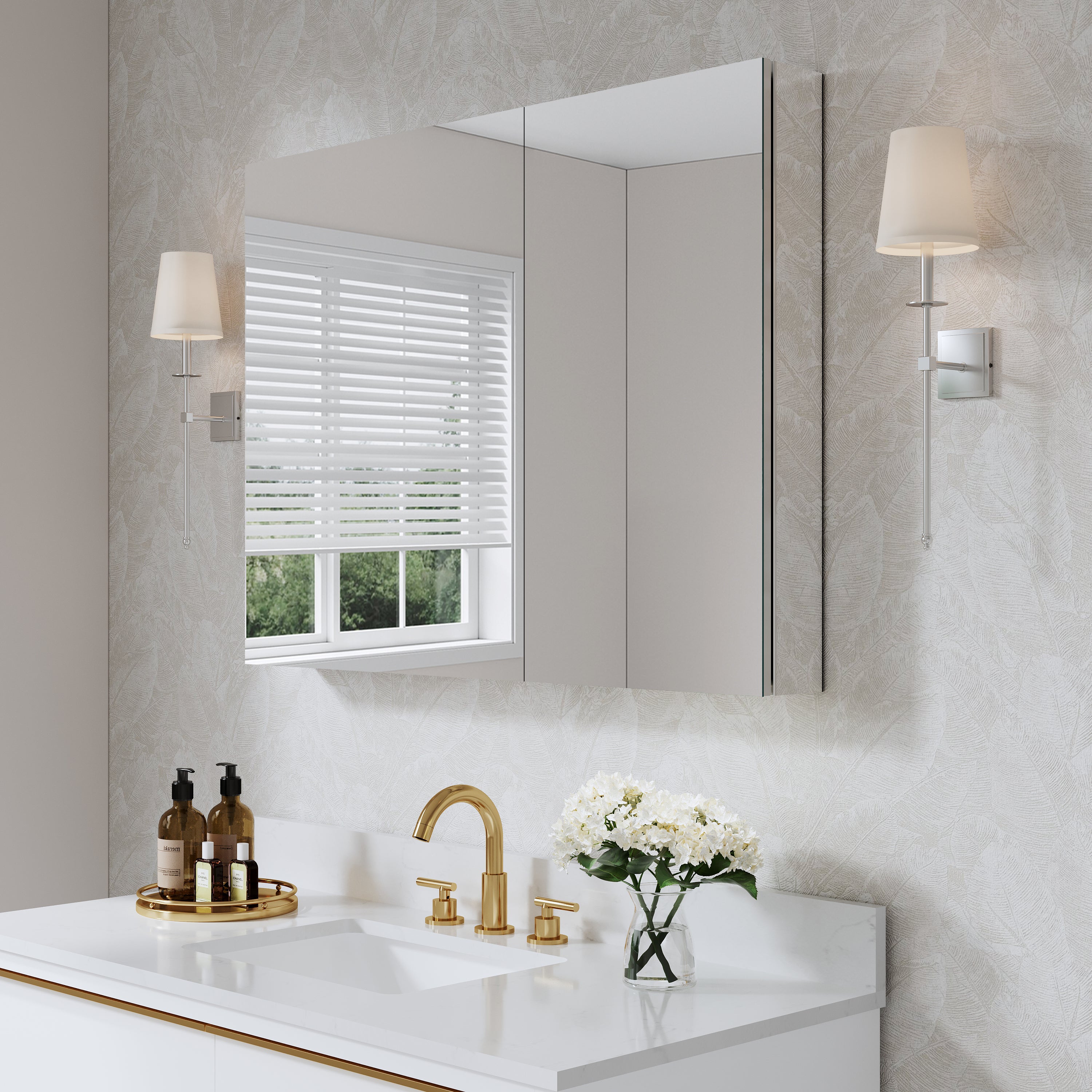
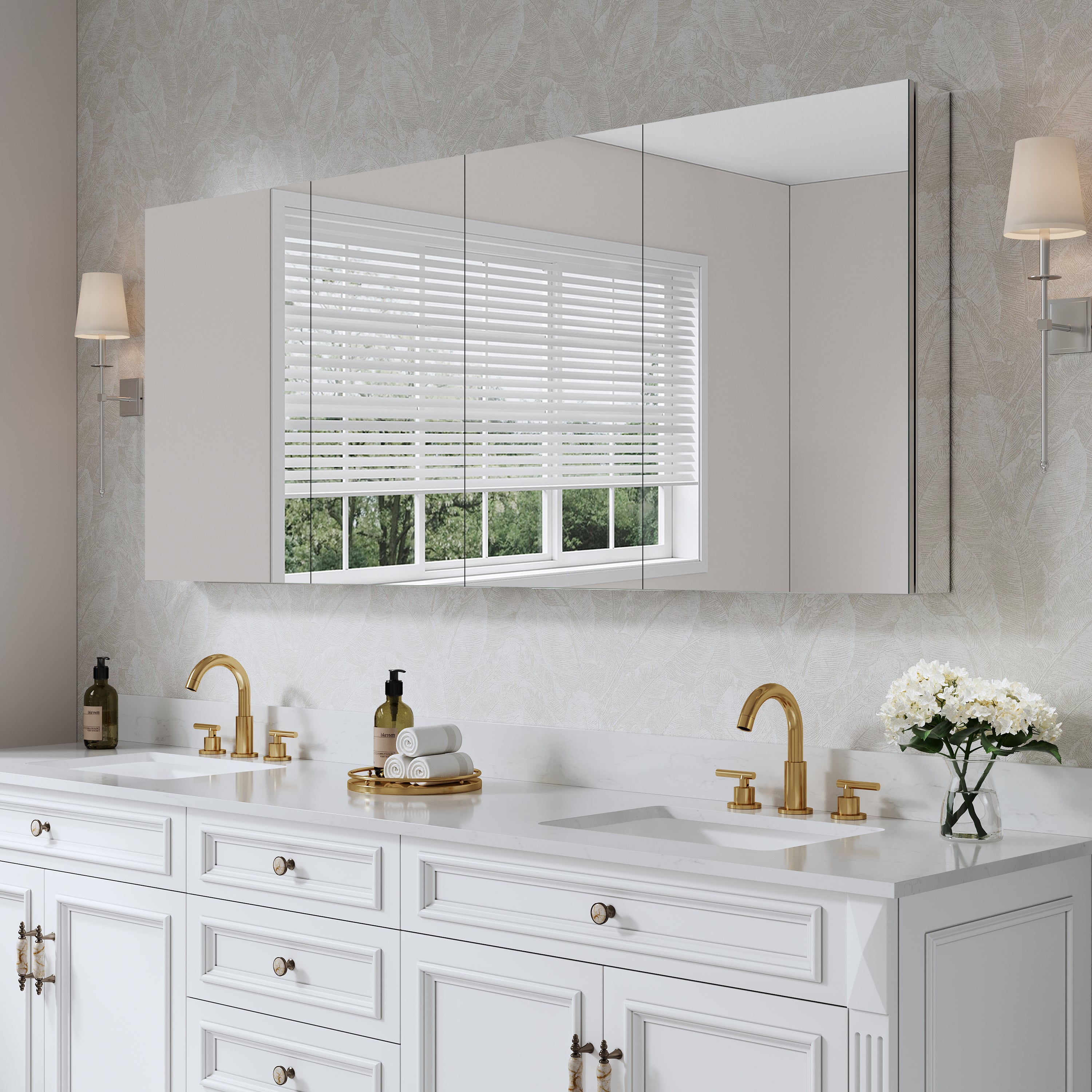
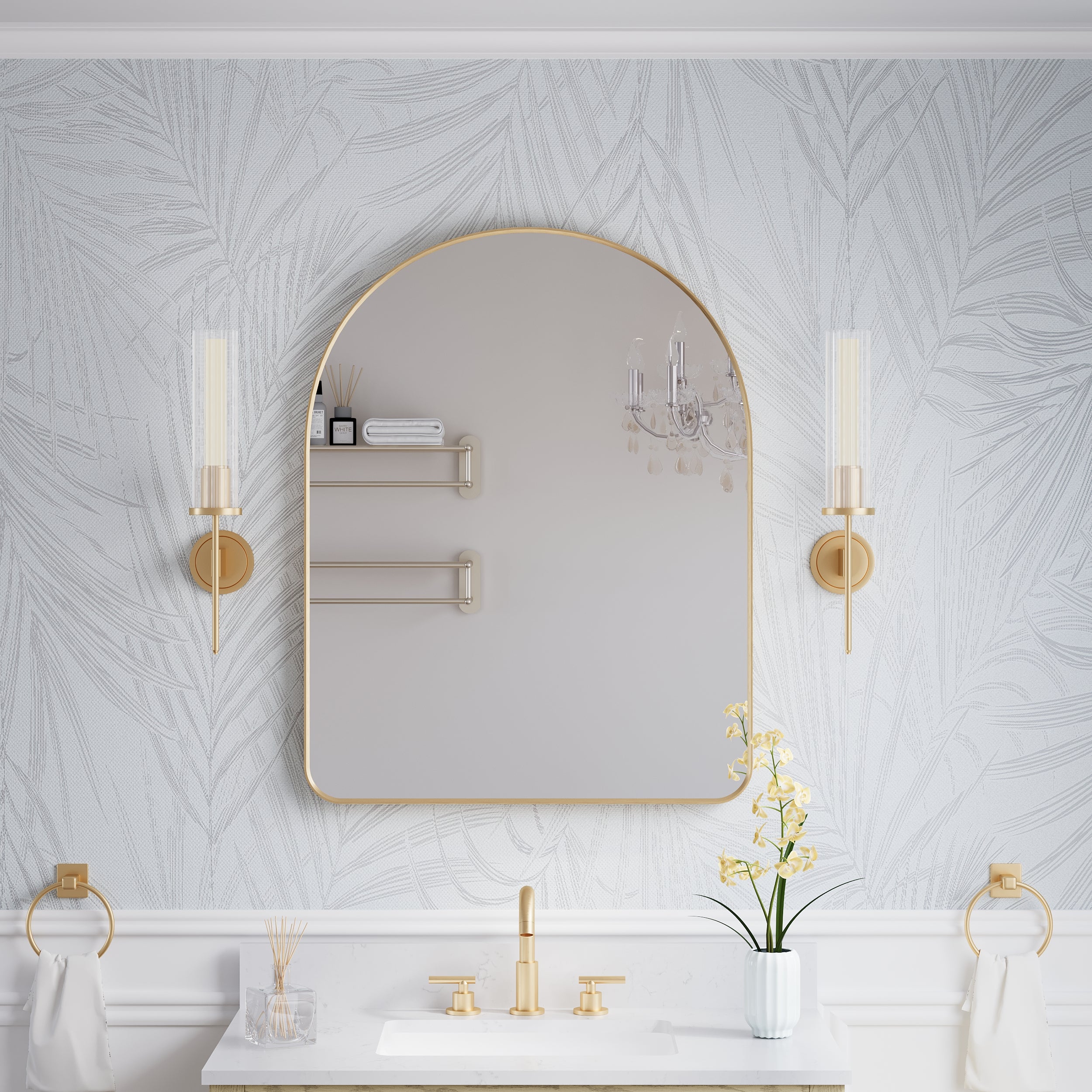
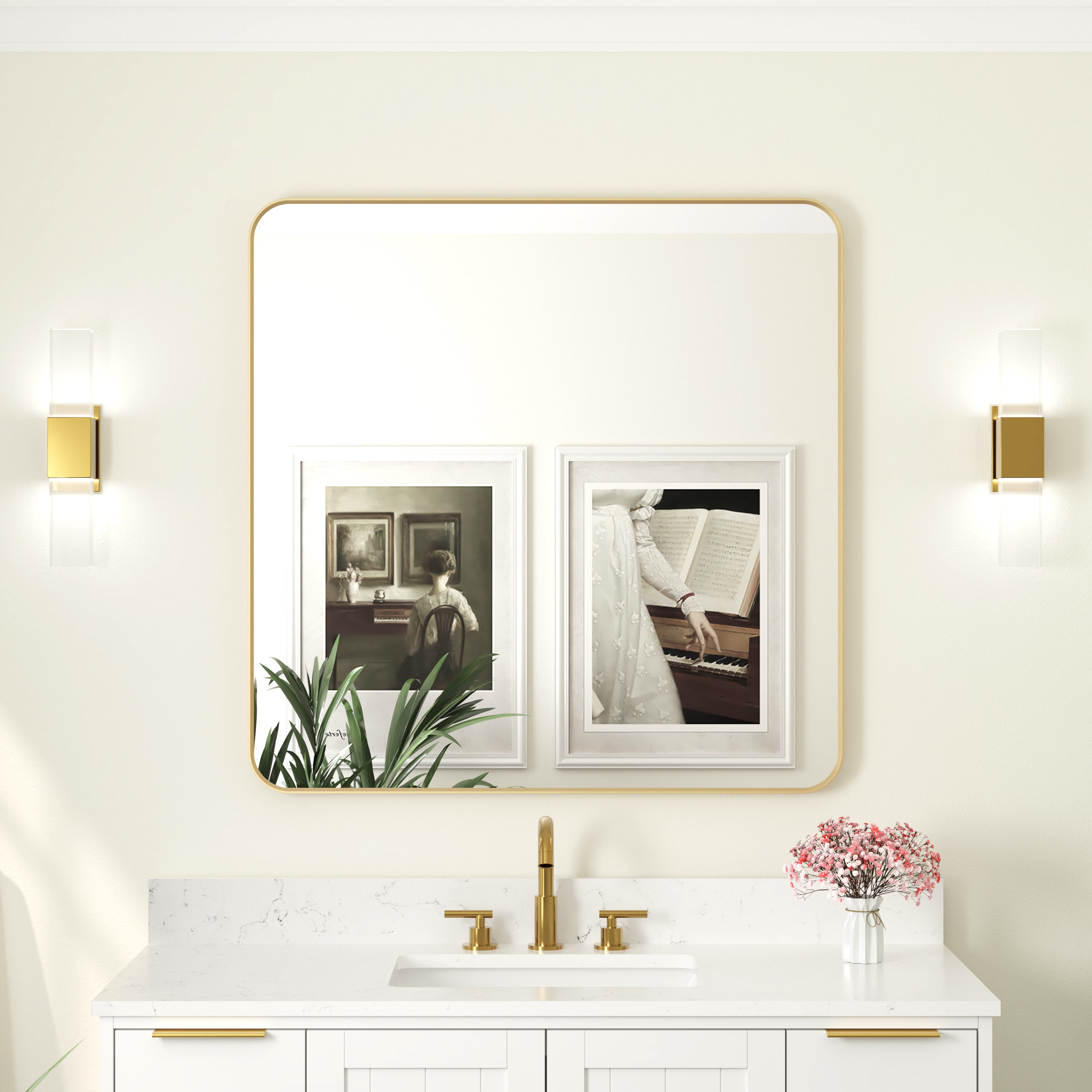
A recessed cabinet keeps those items out of sight. When fitted with a mirrored door, it also performs the job of a conventional bathroom mirror without introducing another bulky fixture.
This works particularly well in guest bathrooms, powder rooms, and compact primary bathrooms where a simple, uninterrupted wall can make the space feel more comfortable.
The mirror also reflects existing light, helping the vanity area feel brighter without requiring additional decorative elements.
4. Adjustable Shelves Make Storage More Flexible
Not every bathroom product has the same dimensions. Tall shampoo bottles, small skincare containers, electric toothbrushes, and grooming accessories all require different amounts of space.
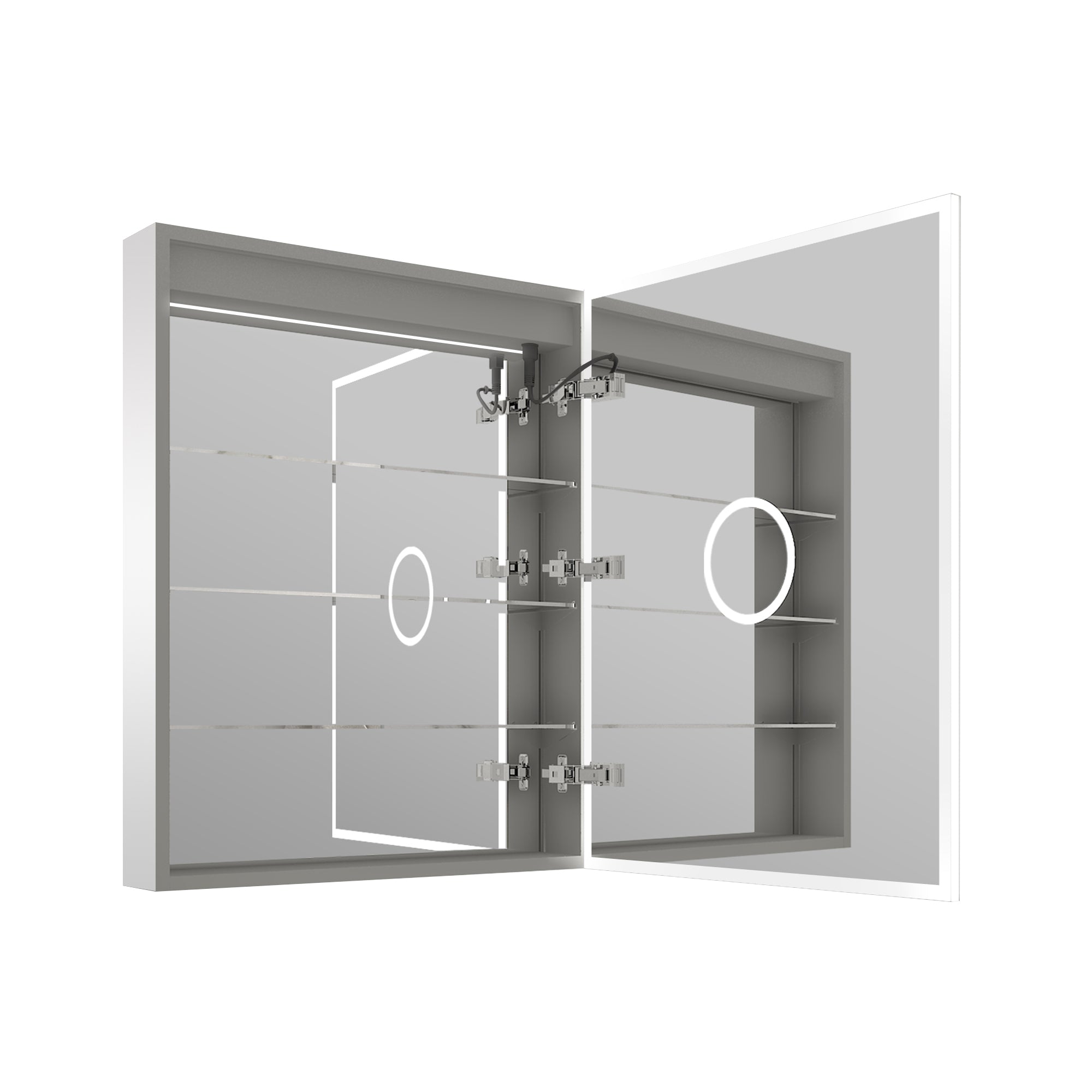
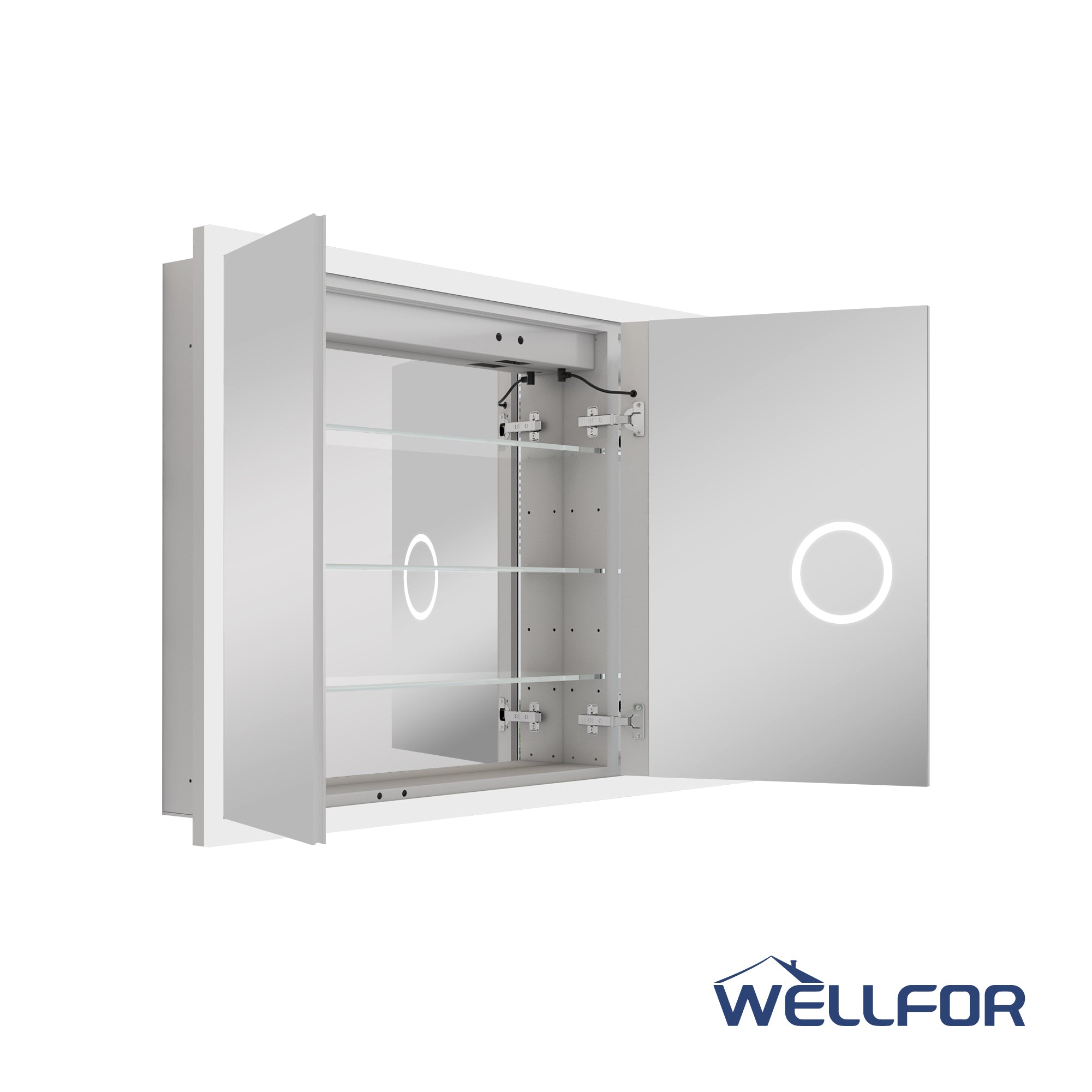
Adjustable glass shelves allow the interior to accommodate these different items. Rather than forcing everything into fixed compartments, users can change shelf positions as their storage needs evolve.
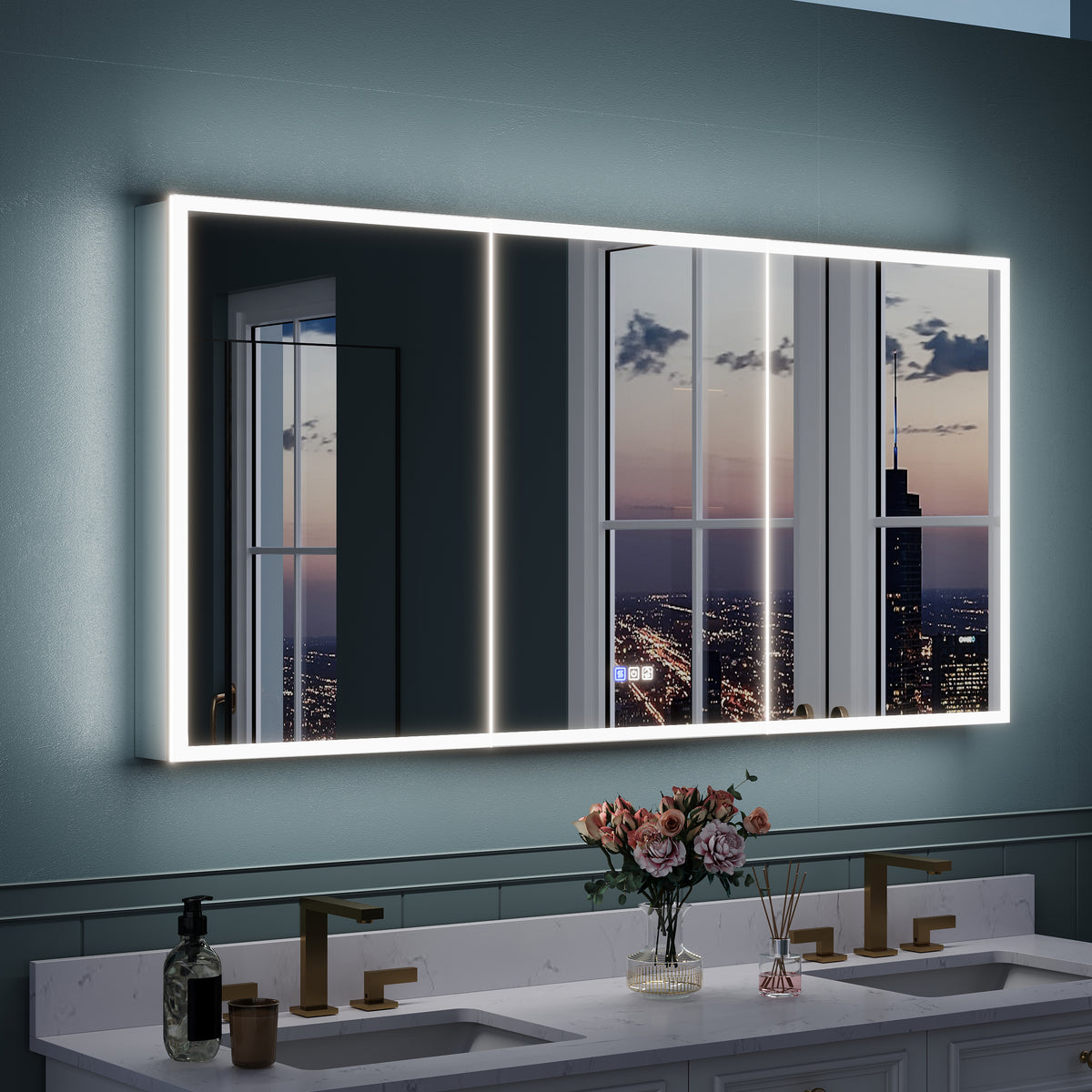
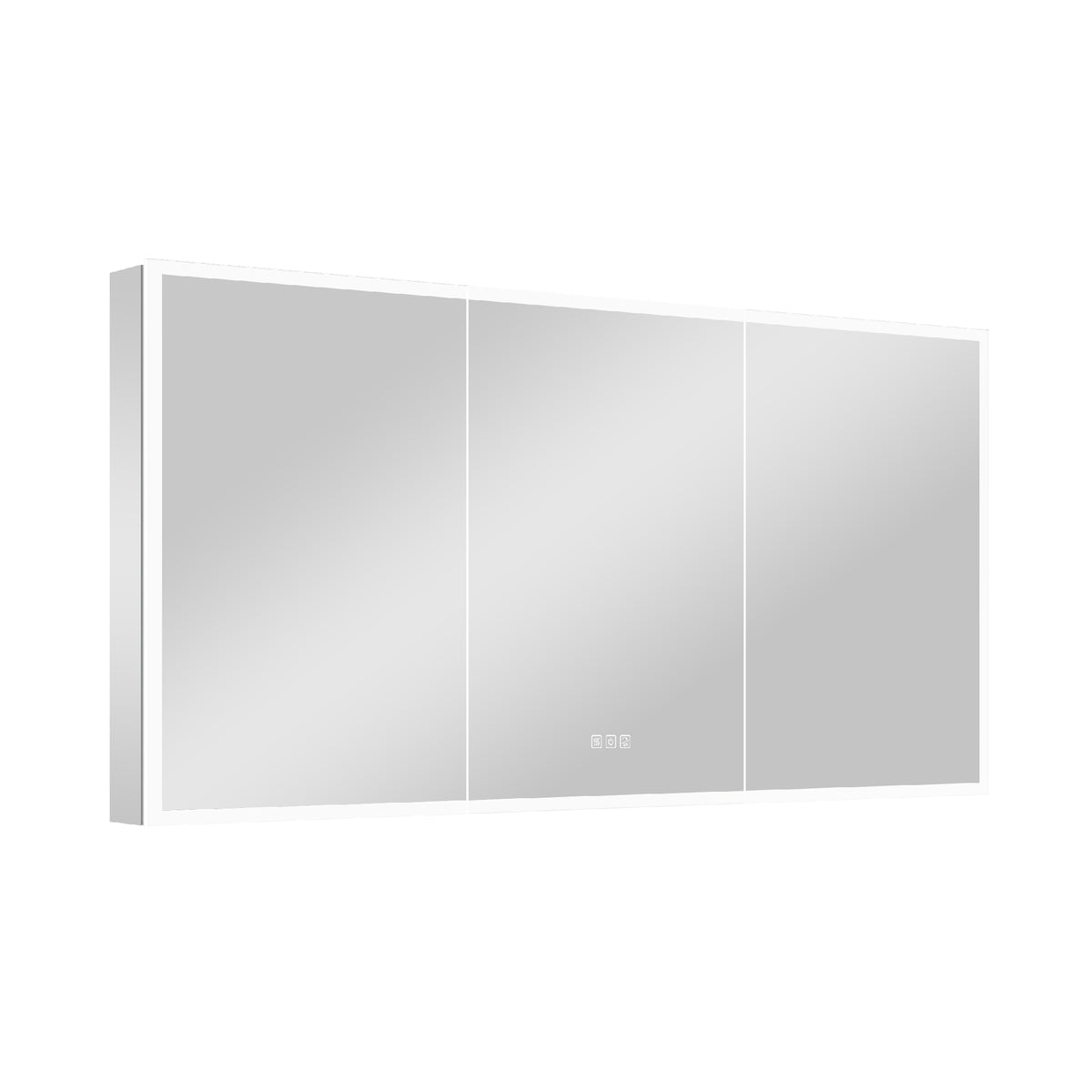
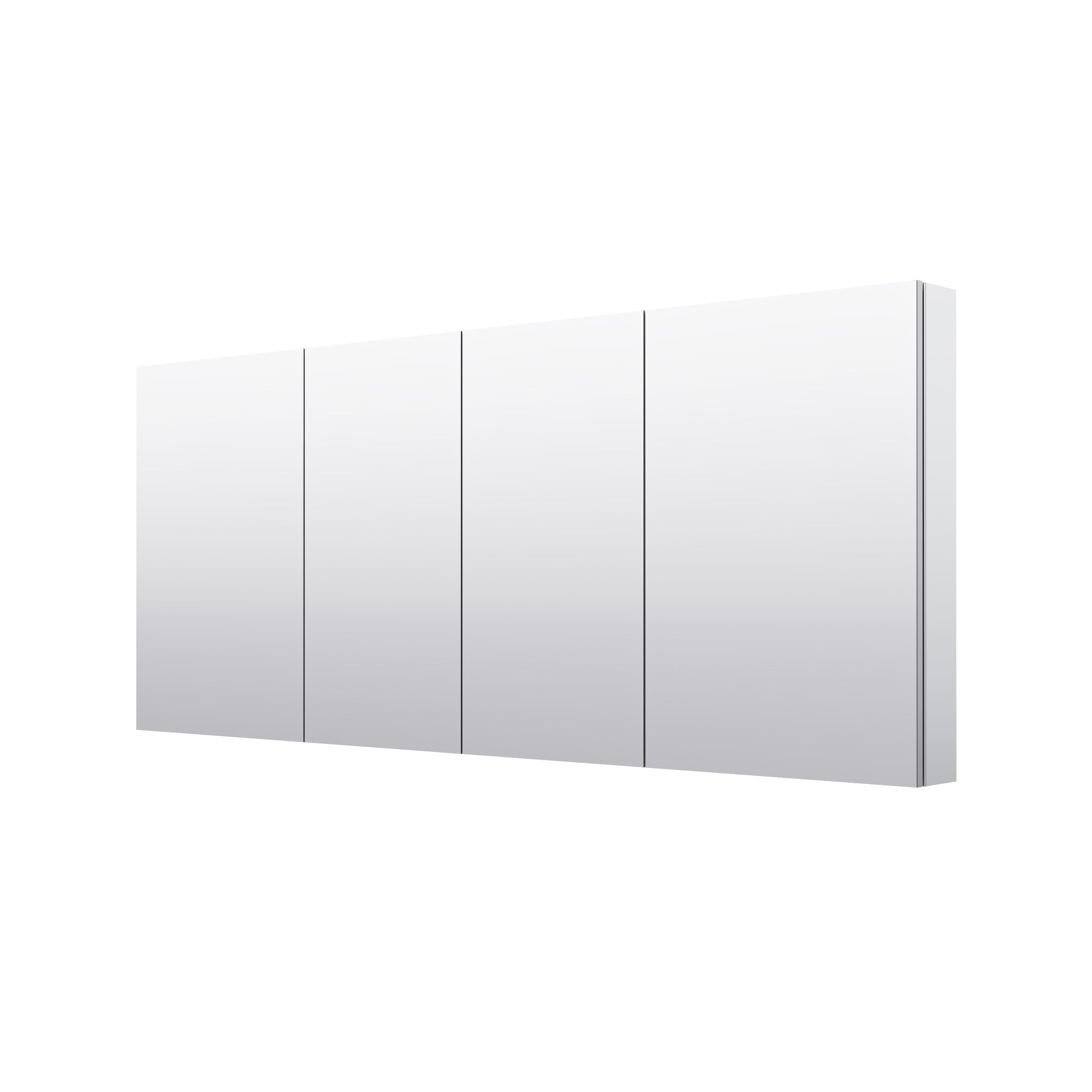
For wider vanities, larger recessed cabinets or multiple mirrored units can provide separate storage areas. A 36-inch vanity, for example, may accommodate a cabinet around 24 to 30 inches wide, depending on the wall layout and surrounding fixtures.
The important point is to balance interior capacity with the mirror’s proportions and the available installation space.
5. Installation Needs More Attention Than Surface Mounting
While recessed installations are visually preferable, they require more planning.
Use the wall behind the intended location of the cabinet as your starting point. Typically, two studs are spaced 16 inches apart, but behind the wall could be plumbing, electrical wiring, ductwork, or other structural components.
If your cabinet unit is larger than the space available between the studs, framing may need to be modified, which you should determine before wall cutting.
You should also check clearance for any other nearby elements. The opening of your cabinet may be blocked by nearby light fixtures, plumbing fixtures, adjacent walls, or other cabinets.
If the wall cannot fit the recessed design, it is advisable to consider a semi-recessed or surface-mounted option.

6. Modern Designs Offer More Than Basic Storage
Recessed bathroom cabinets have also evolved beyond simple mirrored storage boxes.
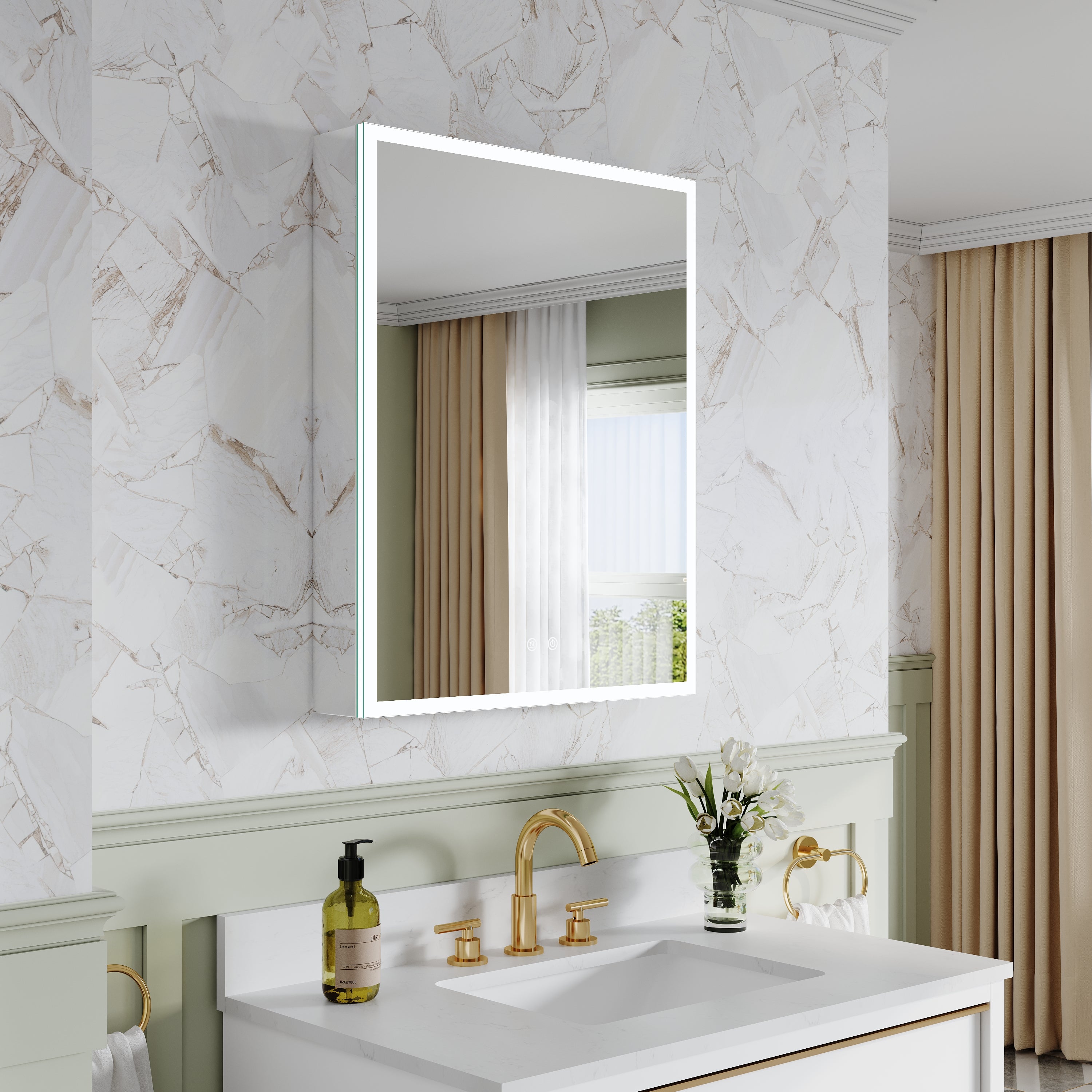
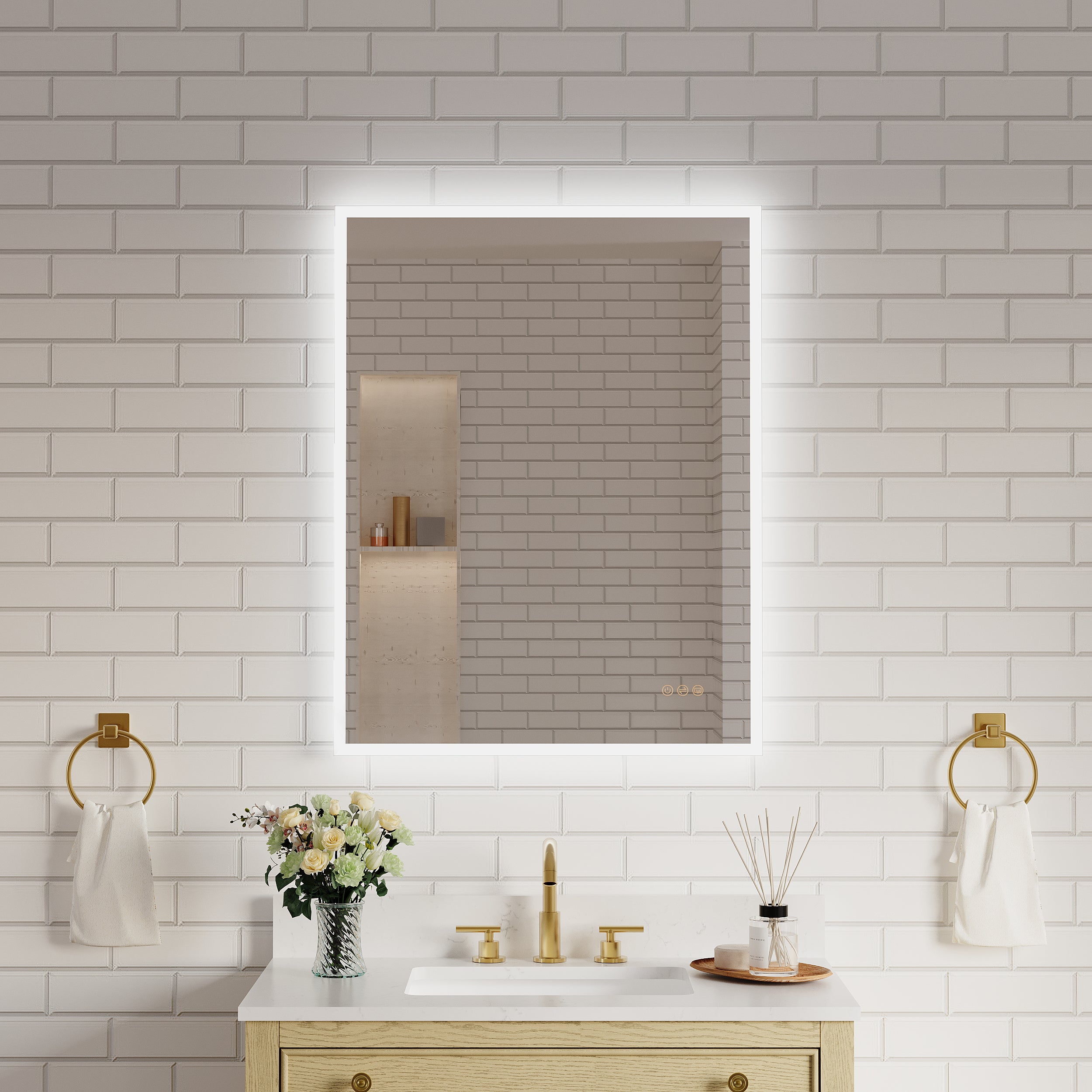
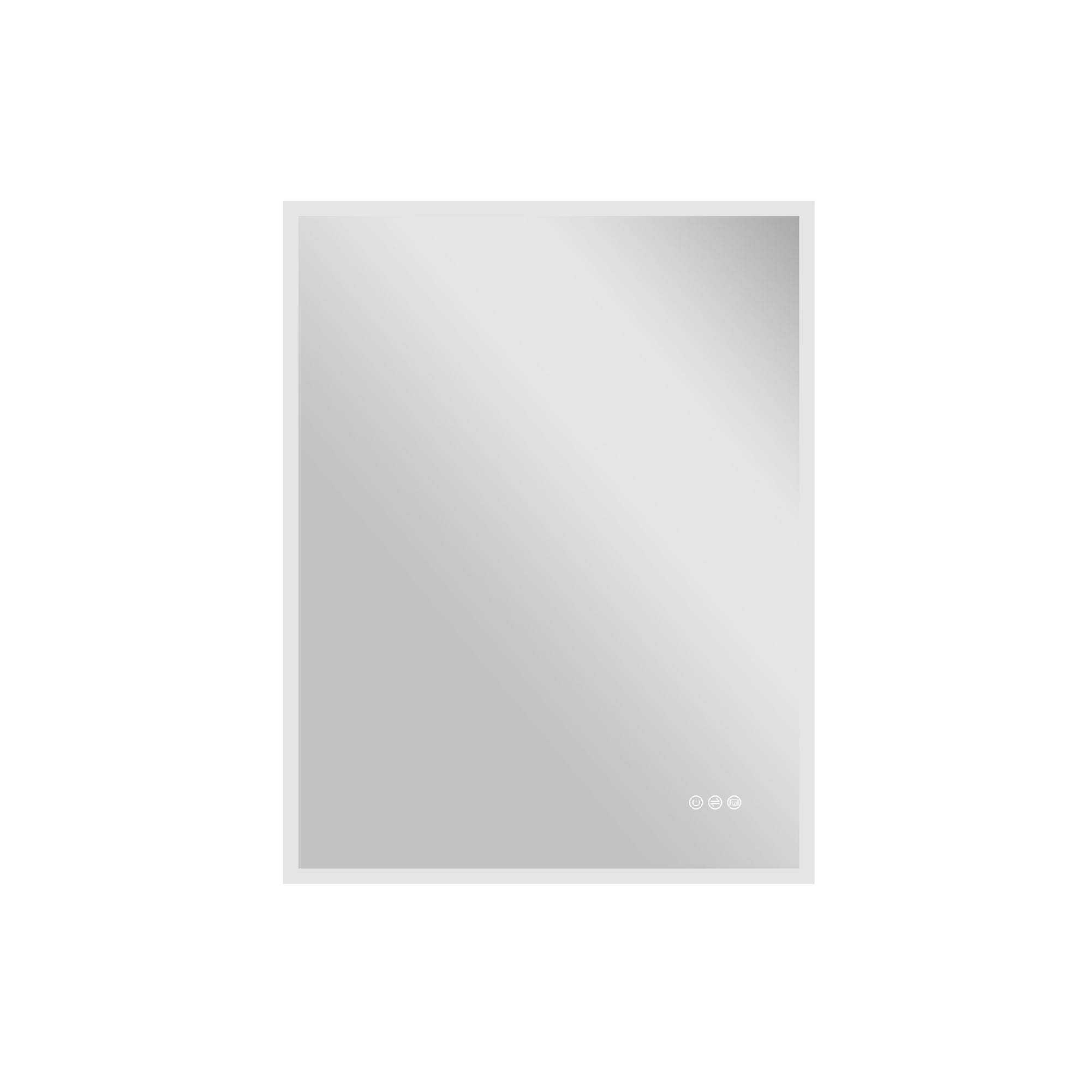
Some models incorporate LED lighting around the mirror, providing additional illumination for shaving, skincare, and makeup application. Others include anti-fog systems that help maintain a clear viewing area after hot showers.
Hidden electrical outlets are another useful addition, providing a designated place for compatible grooming devices. Adjustable shelving, soft-close hinges, and mirrored interiors can further improve everyday convenience.
These features reflect wider bathroom design priorities. NKBA’s 2026 Bath Trends Report found that 89% of surveyed industry professionals considered space allocation in the primary bathroom a top priority. The report also found that 72% expected bathroom footprints to evolve to accommodate wellness, universal design, and efficient storage solutions.
The emphasis is shifting toward fixtures that serve several purposes without creating unnecessary clutter.
7. Is a Recessed Cabinet Right for Every Bathroom?
A recessed bathroom cabinet is a type of cabinet that goes inside the wall rather than sitting on it wholly. It often features a mirror door, making it convenient for keeping personal items, skin care, and daily-use products without occupying an additional area of the floor. The idea is straightforward, but it solves an obvious concern that bathroom designs face – the problem of having enough storage and not making the room look overcrowded. In Houzz’s Bathroom Trends Survey for the year 2026, 67% of homeowners who are renovating their bathrooms indicated that organized storage is one of the most important elements of a soothing bathroom, while 15% said that lack of storage is the reason for renovating. This shows why built-in storage is gaining popularity.













Leave a comment
This site is protected by hCaptcha and the hCaptcha Privacy Policy and Terms of Service apply.