














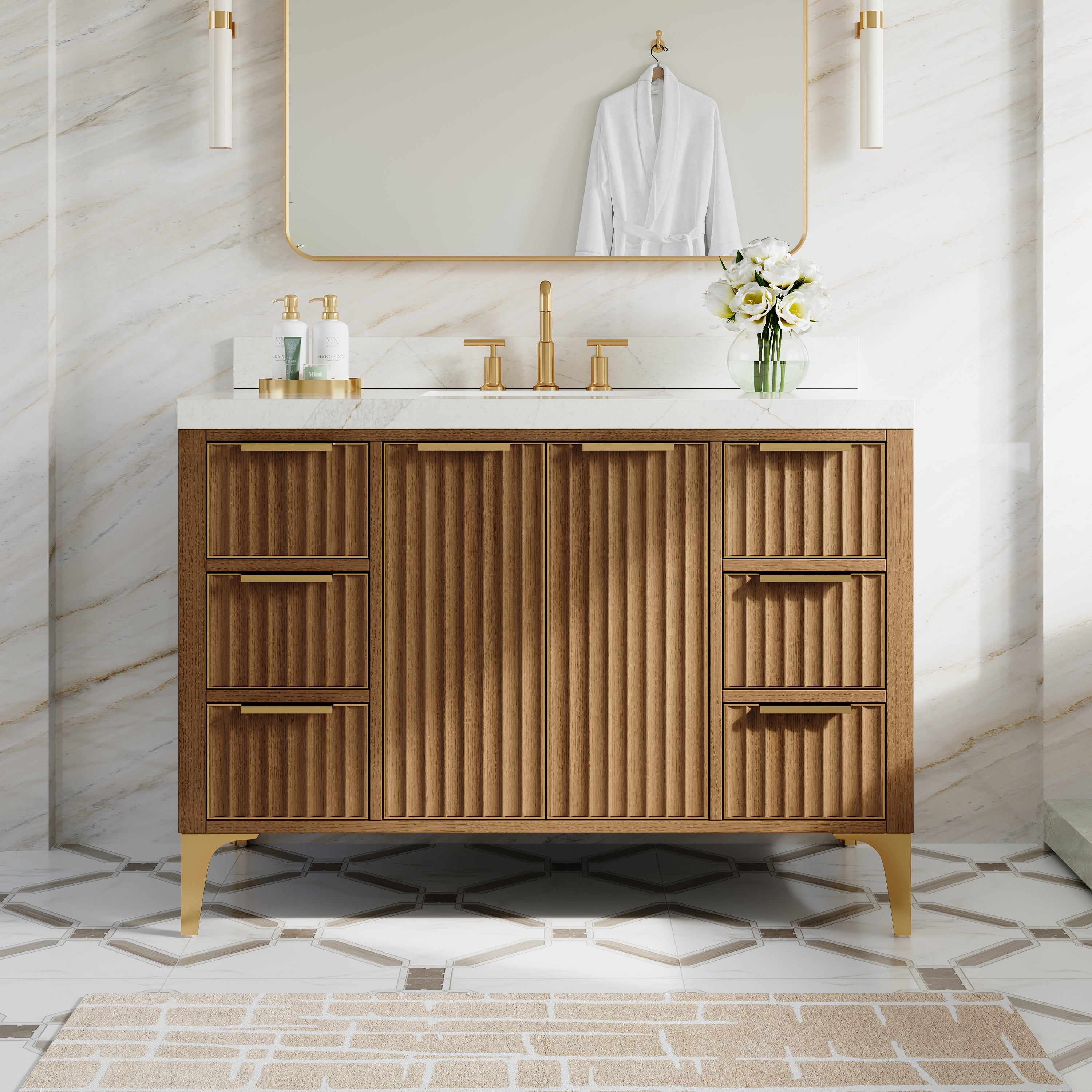
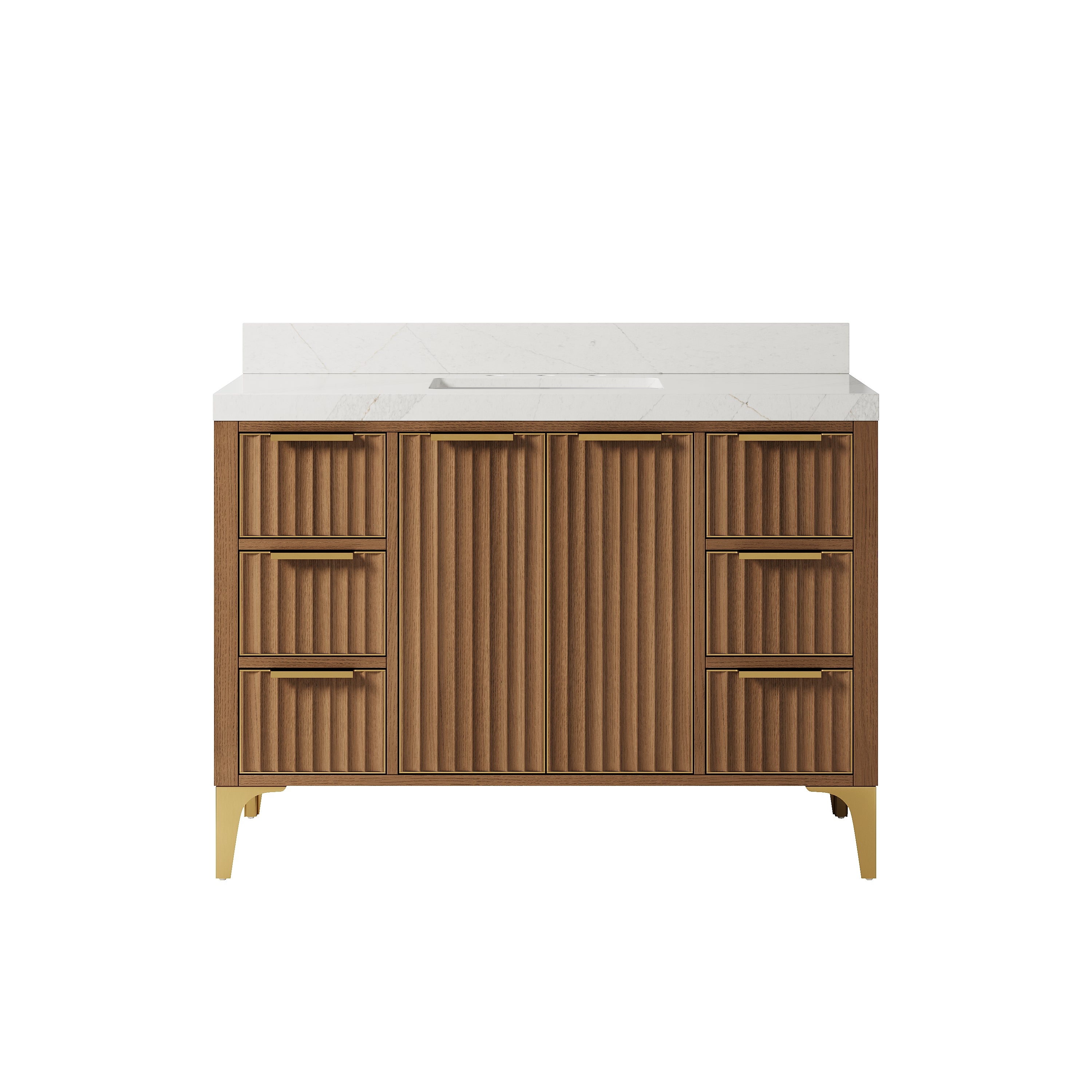


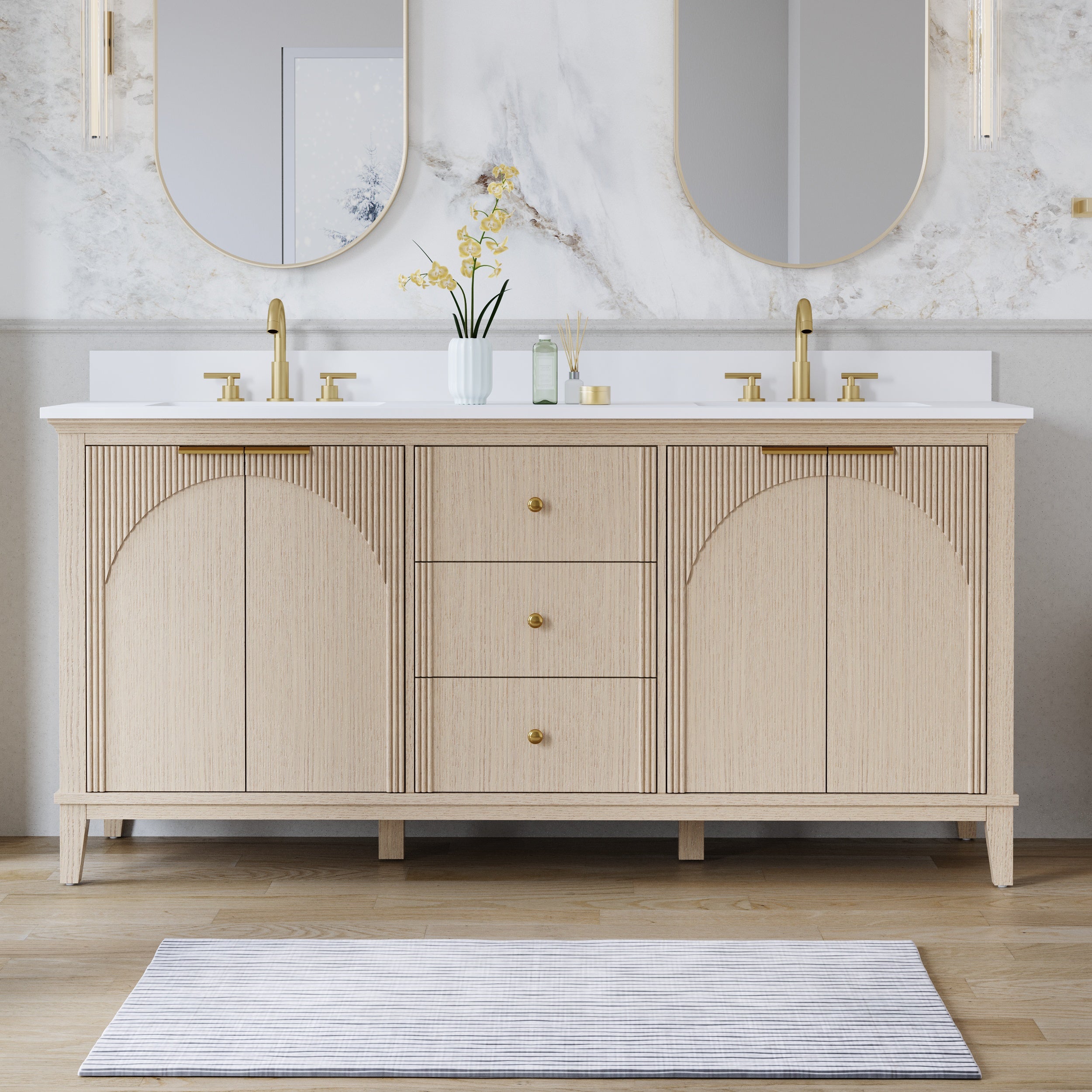
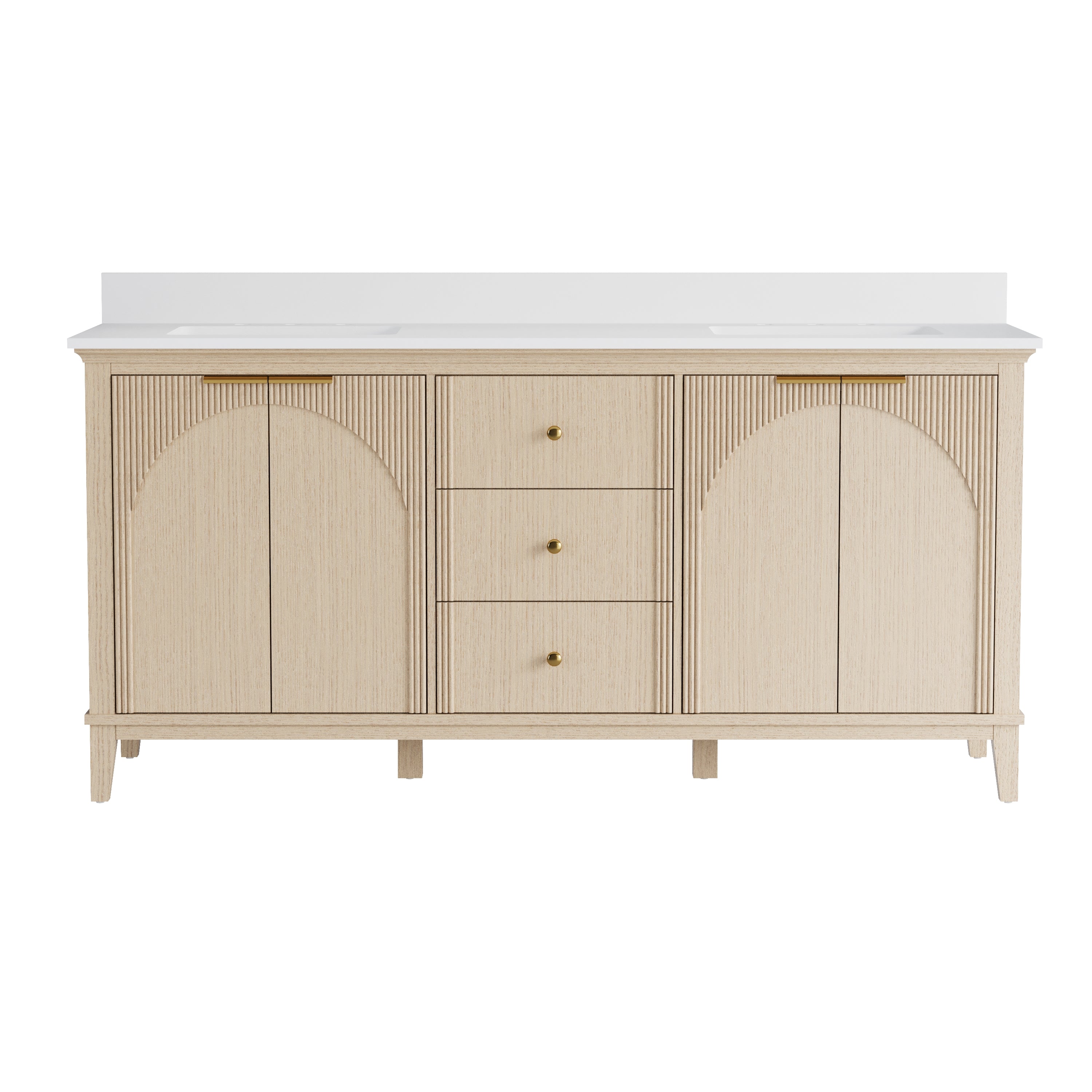
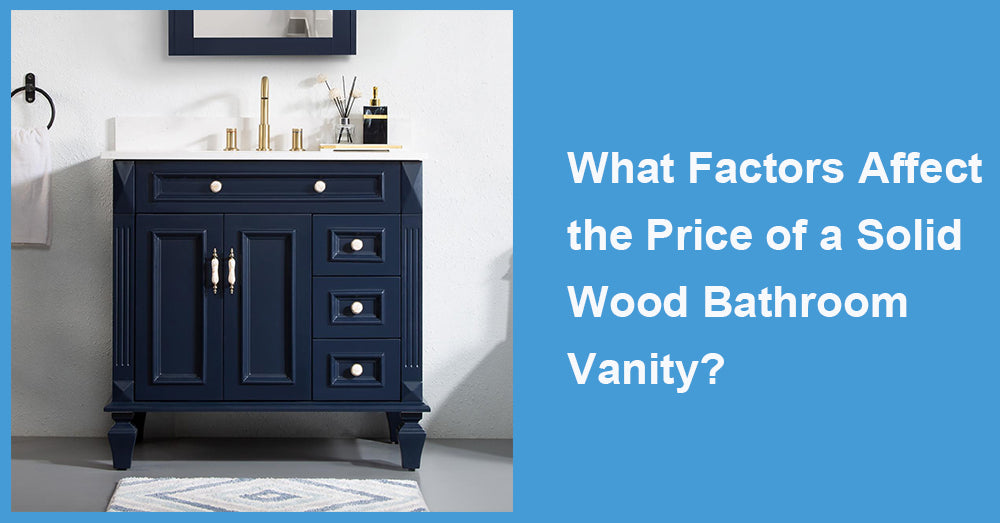
In modern home decoration, bathroom design is increasingly valued, and solid wood bathroom vanity, as a core element that combines functionality and beauty, are favoured by consumers. However, in the purchase process, many consumers will find that even if the appearance is similar, the prices of solid wood vanities from different brands or merchants vary significantly. This article will analyse the key factors that affect the price of solid wood bathroom vanities from multiple dimensions, helping consumers and purchasers make more informed decisions.
1. Wood type: the primary factor determining the price
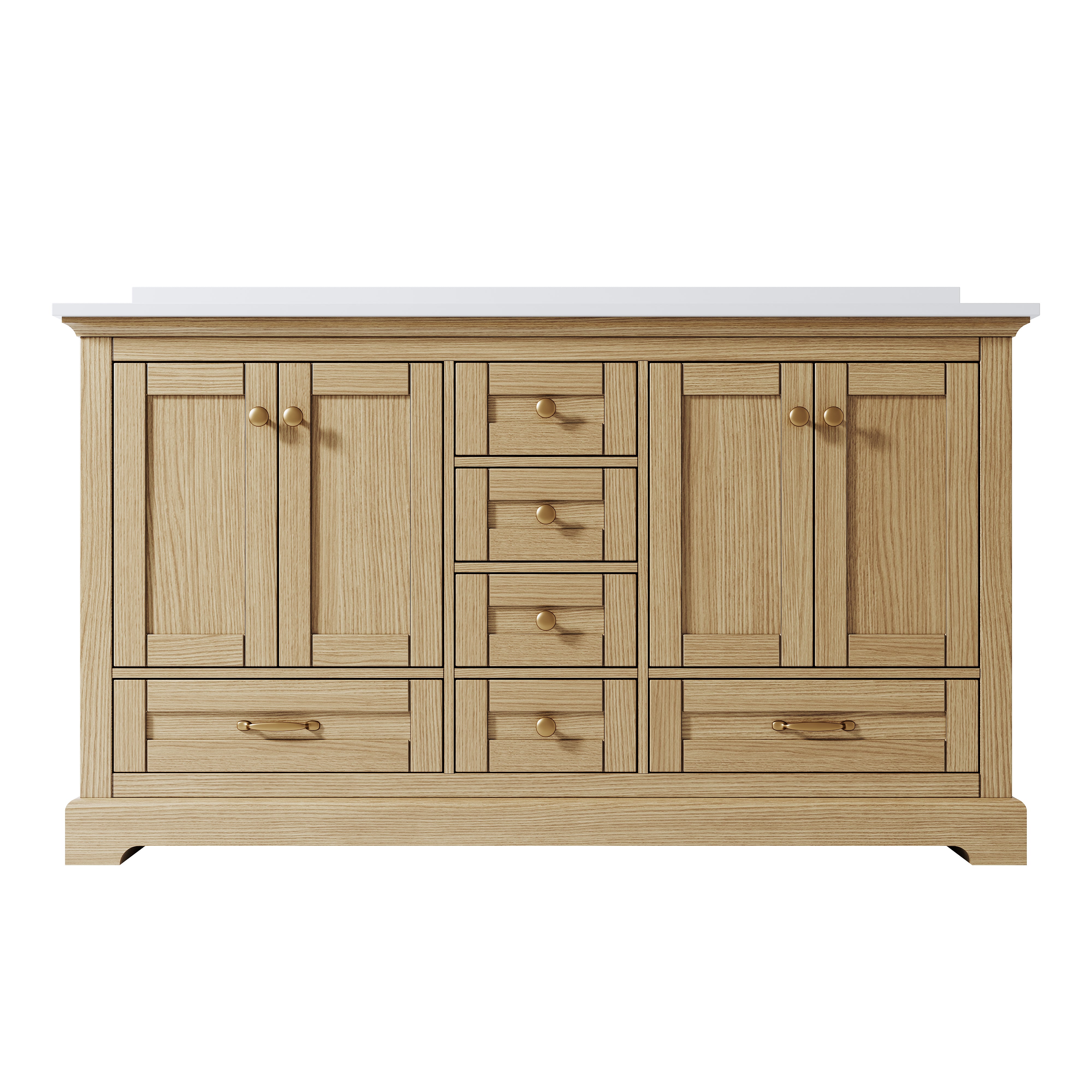
The core material of a solid wood vanity is wood, and the type of wood is one of the most important factors determining the price difference. Common solid wood materials include:
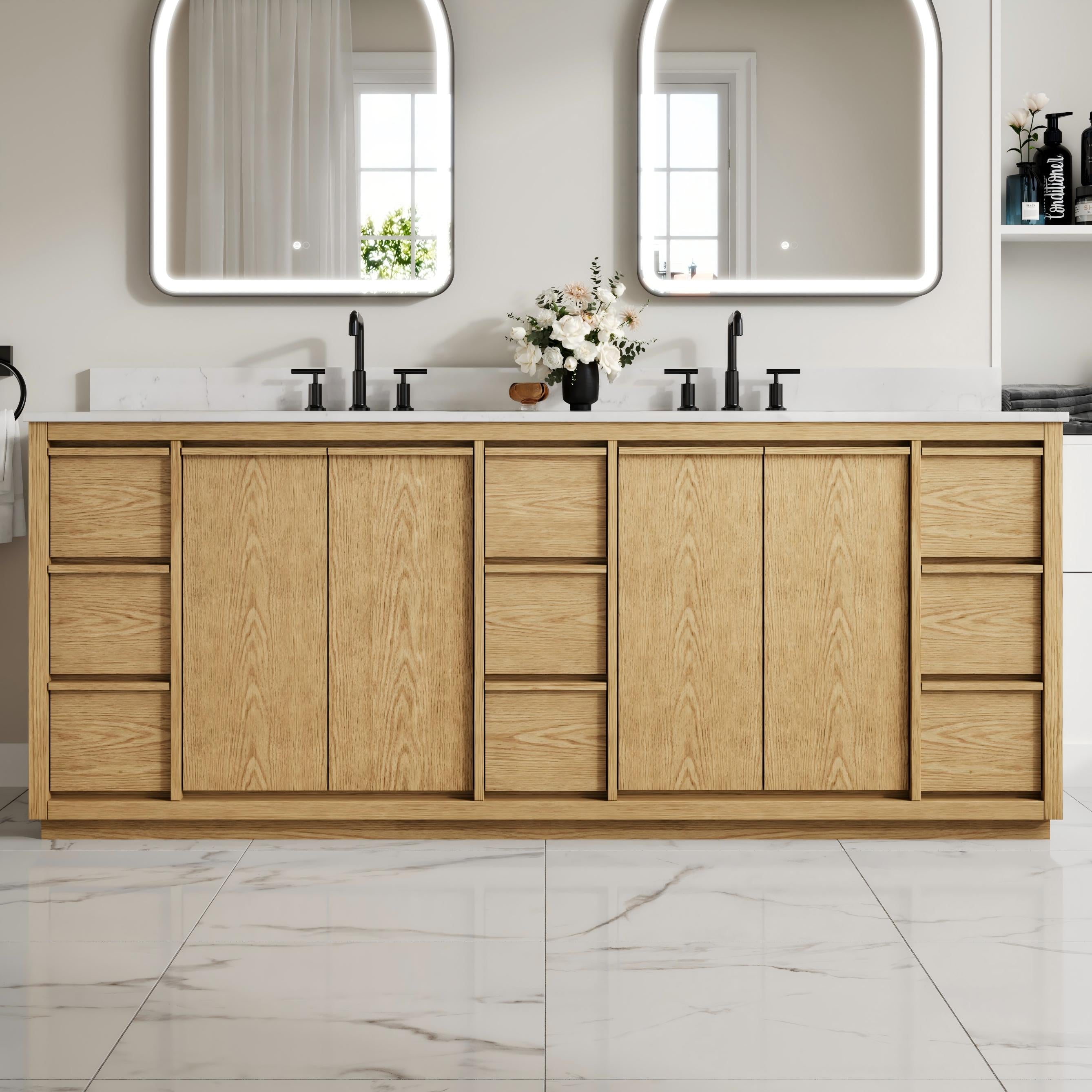
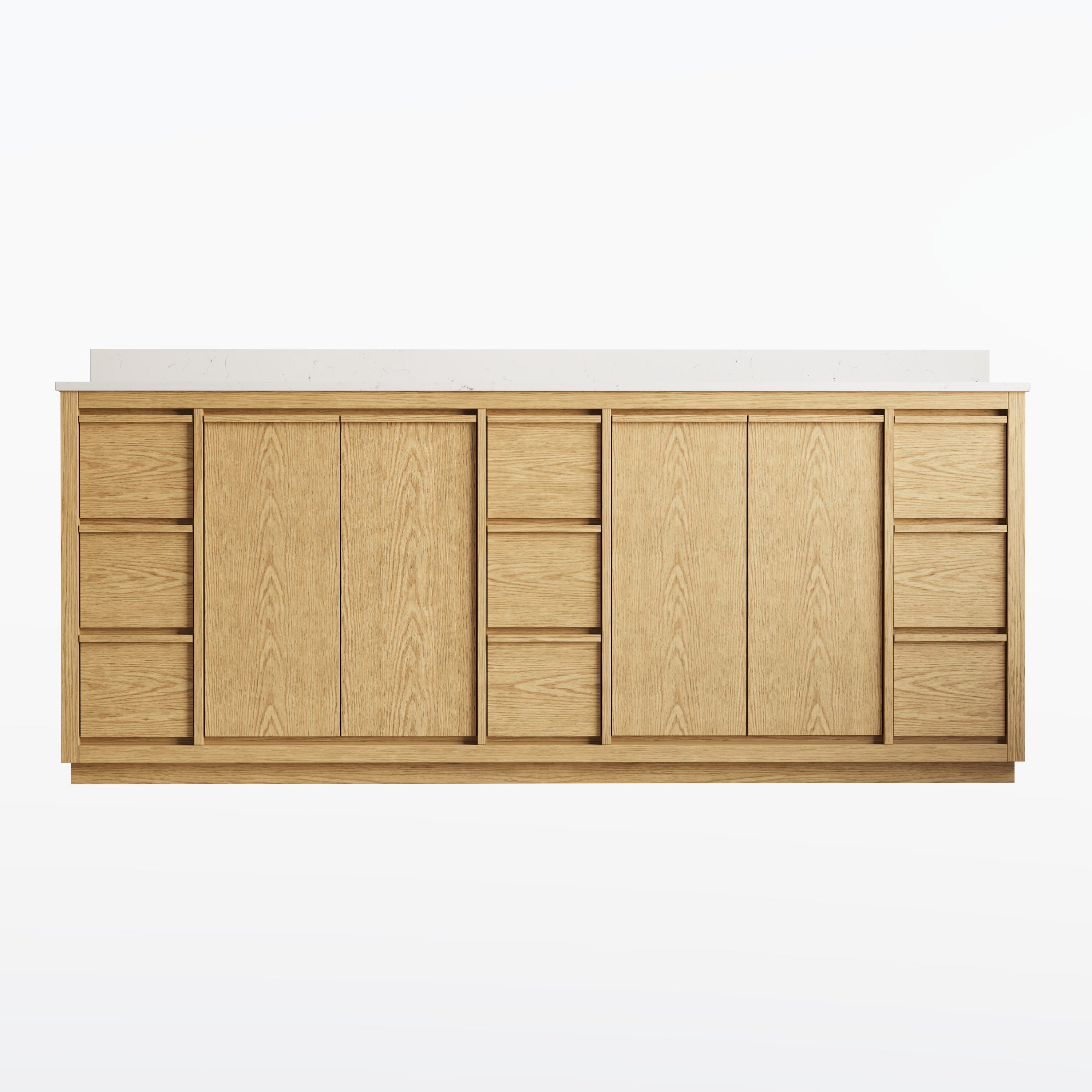
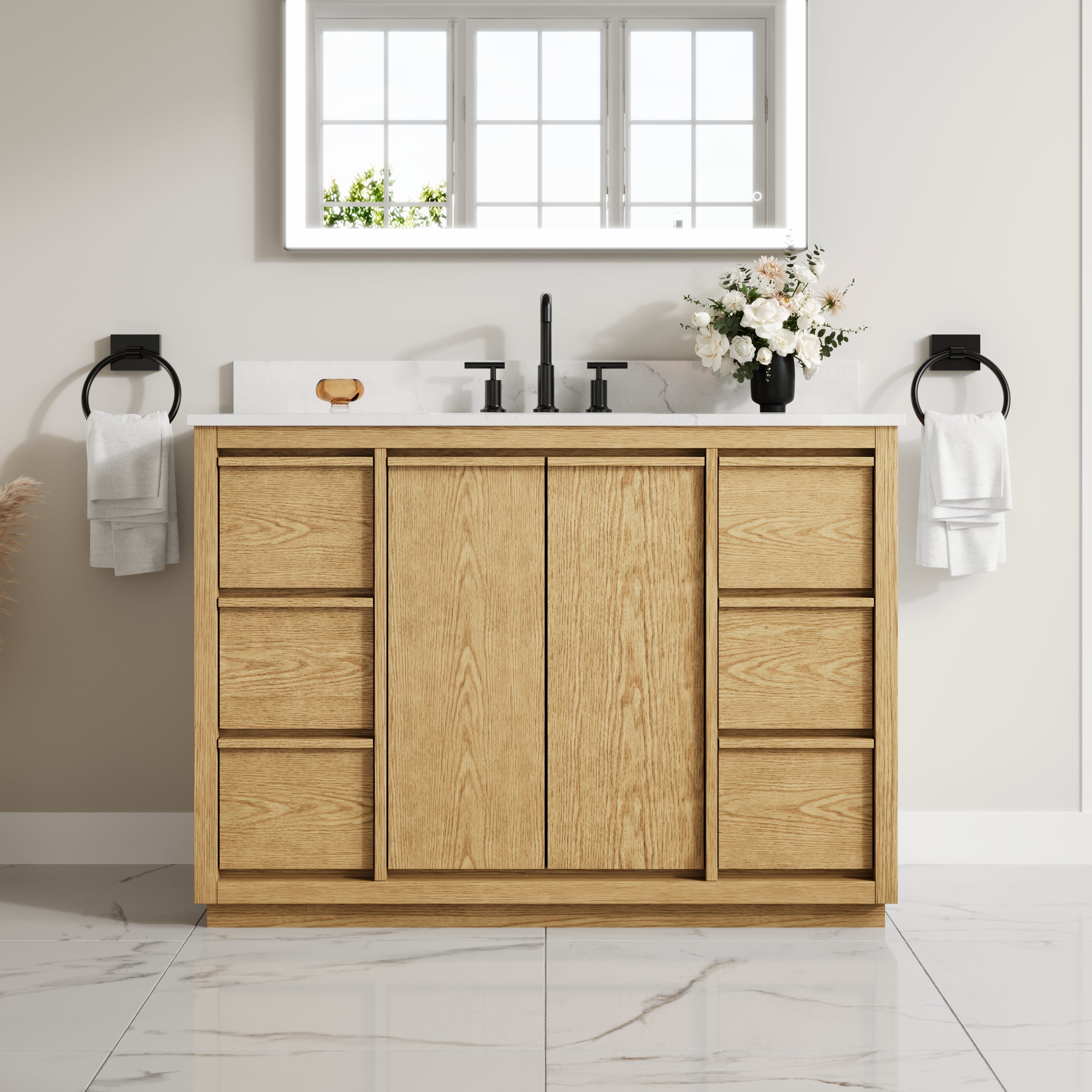
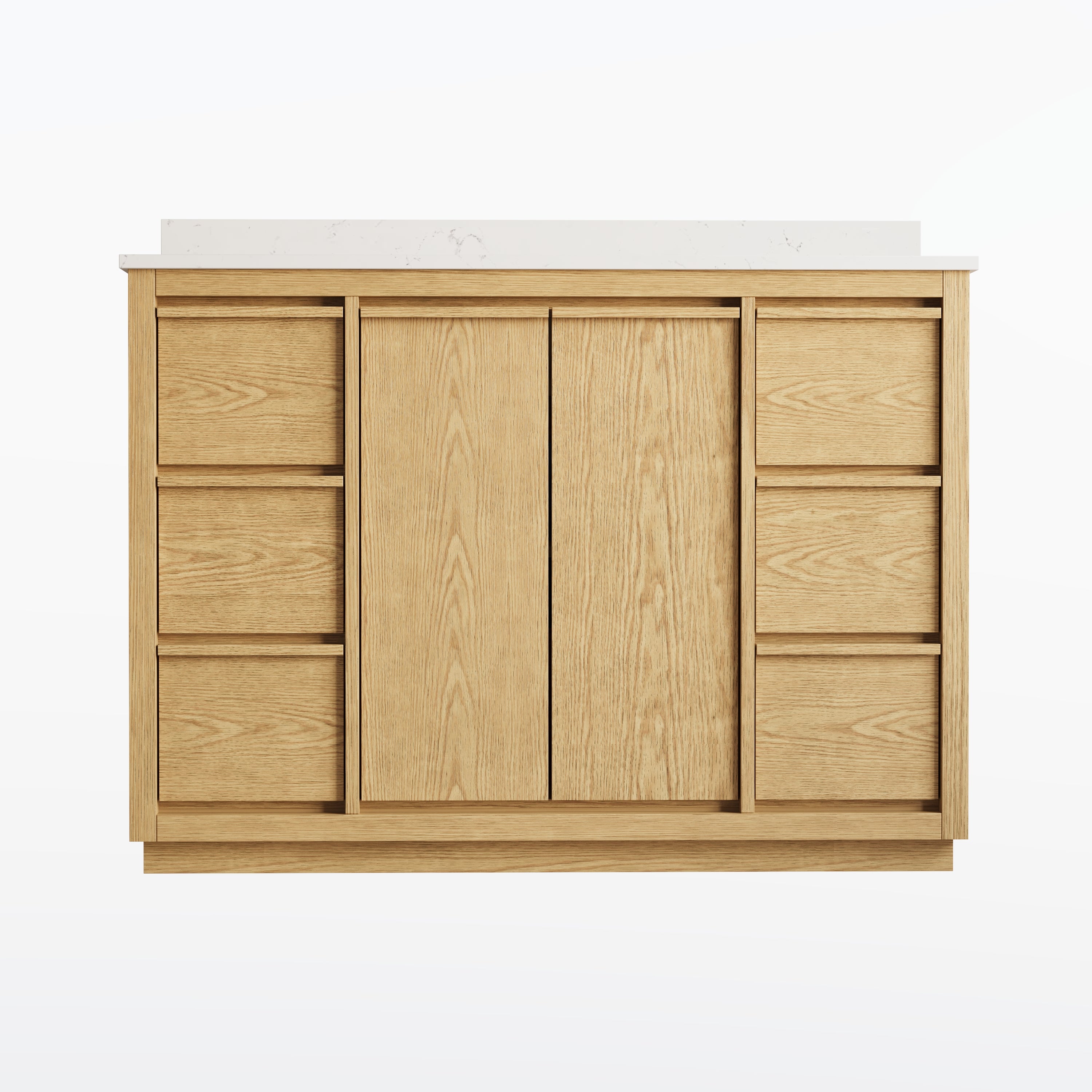
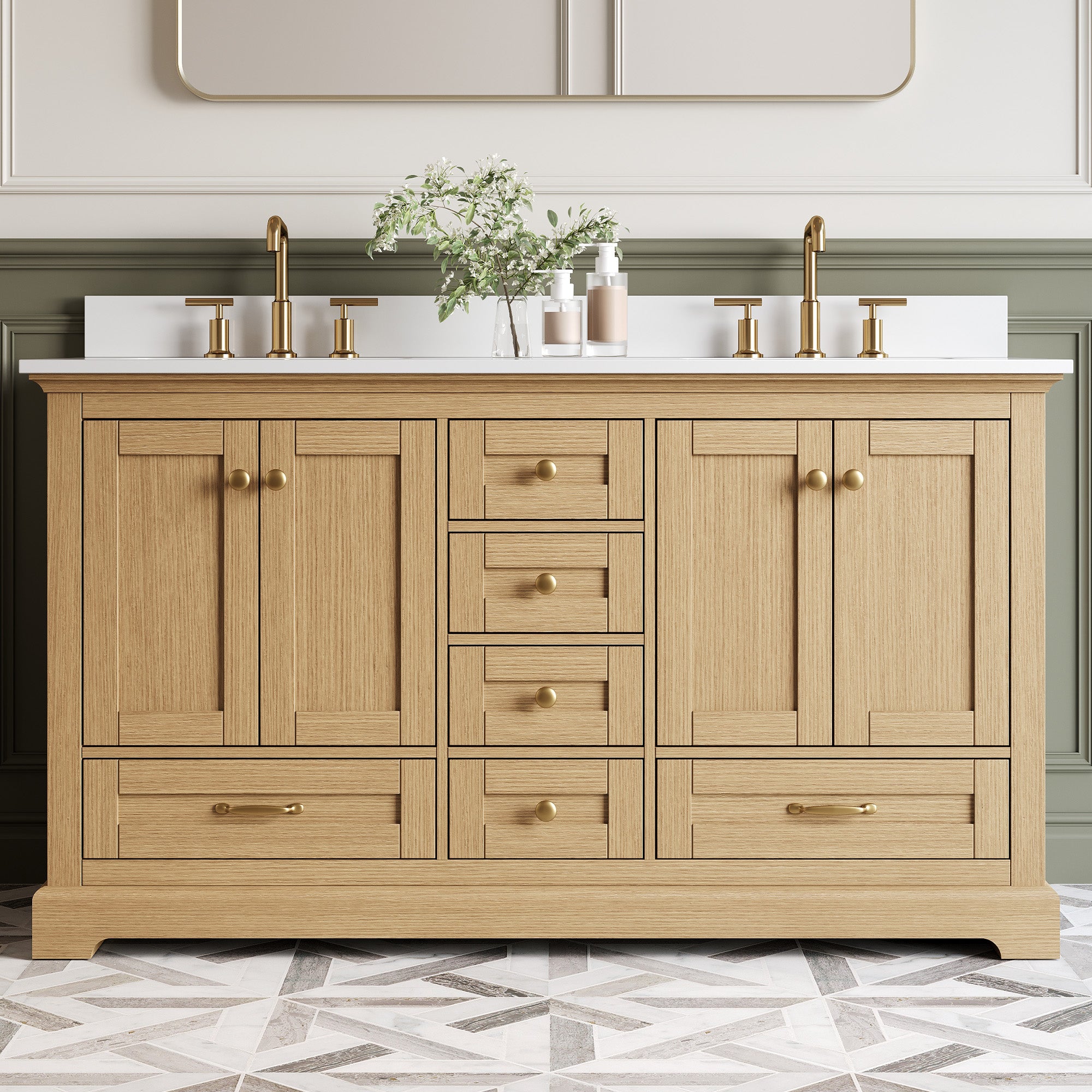
l Oak: Hard texture, clear texture, is a common material for mid-to-high-end vanities and is moderately priced.
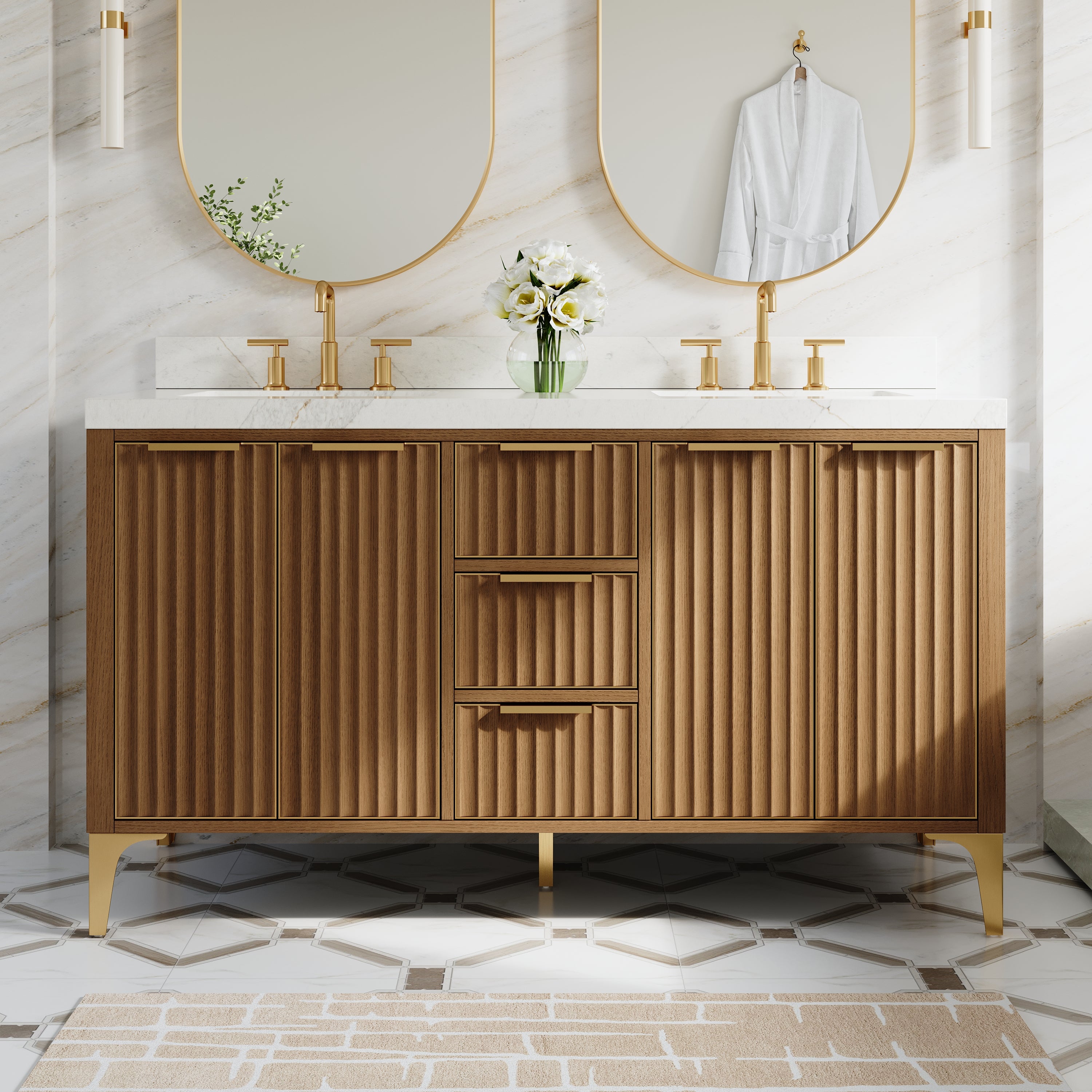
l Walnut: Deep colour, high-grade texture, belongs to the high-end solid wood type and is relatively expensive.
l Cherry: Fine texture, warm tone, often used in custom furniture, the price is higher.
l Pine: Soft texture, easy to process, low cost, suitable for users with limited budget.
The durability, moisture resistance, and aesthetic appeal of different wood species directly impact their market value. For example, the price of a North American black walnut dresser is usually more than 1.5 times that of an oak dresser.
2. Wood grade and source
Even if it is the same type of wood, its grade and origin will lead to price differences. Taking oak as an example, the stability and texture of North American white oak are better than domestic red oak, so the price of the former is naturally higher.
Additionally, the drying treatment method for wood will also impact the cost. Wood treated with Kiln Dry has a lower moisture content, is less prone to deformation, and is more expensive. Although inferior or untreated wood is cheap, it has a short service life and may crack, mould, and cause other problems in the later stage.
3. Process and structural design
The complexity of the manufacturing process directly affects the labour cost and product-added value.
l Tenon and mortise structure: Traditional craftsmanship, no metal connectors are required, the structure is stable, the production is complex, and the price is high.
l Patchwork process: Made of solid wood, it requires high splicing technology and the error must be controlled within millimetres.
l Hand-carved and polished: The time cost of manual carving and polishing is high, which reflects the craftsmanship level, and the price naturally rises.
Additionally, the brand and quality of hardware, such as drawer slides, door hinges, and concealed opening and closing devices, also directly impact product pricing. Some high-end brands will use hardware imported from Germany, such as Hettich and Blum, and the cost of a single set of hardware is several times higher than that of ordinary domestic accessories.

4. Waterproof and surface coating treatment
Due to the high humidity in the bathroom environment, the moisture-proof and waterproof performance of the dressing table is very important. High-quality products usually use multiple coating and edge-sealing technologies:
l PU coating: Transparent and glossy, with good waterproofness.
l UV coating: Strong wear resistance, environmentally friendly and odourless, suitable for families with children.
l Open paint: retains the texture of wood grain but has high requirements for construction technology and increases costs.
In addition, brand owners will perform special moisture-proof treatments at the joints, such as silicone edge sealing, waterproof strips, and moisture-proof aluminium foil on the back panel, which invisibly increase the manufacturing cost of the product.
5. Size specifications and customization degree
Standardised-size dressing tables are more efficient in the production process, resulting in a relatively stable price. Customised products are personalised according to the user's space, function, and style, involving one-to-one design, independent proofing, and non-standard accessory procurement, among other considerations. As a result, the cost is naturally higher.
For example, a customised dressing table measuring 1200mm in width, featuring a mirror cabinet and a basin, is often 30%-50% more expensive than a standard model of the same size. For larger models exceeding 1500mm in size, the price will also increase accordingly due to the rise in material and transportation costs.
6. Brand and after-sales service
Brand premium is a price component that cannot be ignored. Well-known brands invest more in material selection, craftsmanship, and quality control and provide comprehensive after-sales protection, such as:
l Free on-site installation
l Warranty period of up to 3-5 years
l Exclusive customer service connection
Although these additional services increase the price of the product, they also greatly enhance the consumer's experience and confidence. Some unbranded, low-priced products may have problems, such as a lack of after-sales service and no compensation for transportation damage.
7. Transportation and packaging costs
Solid wood furniture is typically large in size and heavy in weight, requiring higher transportation and packaging costs. To avoid moisture or bumps during transportation, manufacturers usually use:
l Multi-layer thickened corrugated paper boxes
l EPE pearl cotton wrapping
l Wooden frame reinforced transportation
Although these measures increase logistics costs, they also ensure that the product reaches the user safely and securely. Especially for long-distance transportation or export products, packaging standards are higher, and transportation costs account for 10%-20% of the selling price.
Conclusion: Balance between cost performance and demand
In summary, the price of a solid wood bathroom vanity is not arbitrarily set but is determined by several factors, including the type of wood, processing technology, waterproofing, size specifications, brand positioning, and transportation costs. When purchasing, consumers should weigh the cost-performance according to their budget, space, and usage needs, and should not judge the quality of the product solely based on the price.
For professionals engaged in building materials, home furnishings, decoration design, wholesale procurement, and other industries, a deep understanding of the logic behind these price formations will not only help provide professional advice to customers but also aid in grasping product selection strategies and enhancing business competitiveness.














Leave a comment
This site is protected by hCaptcha and the hCaptcha Privacy Policy and Terms of Service apply.