
















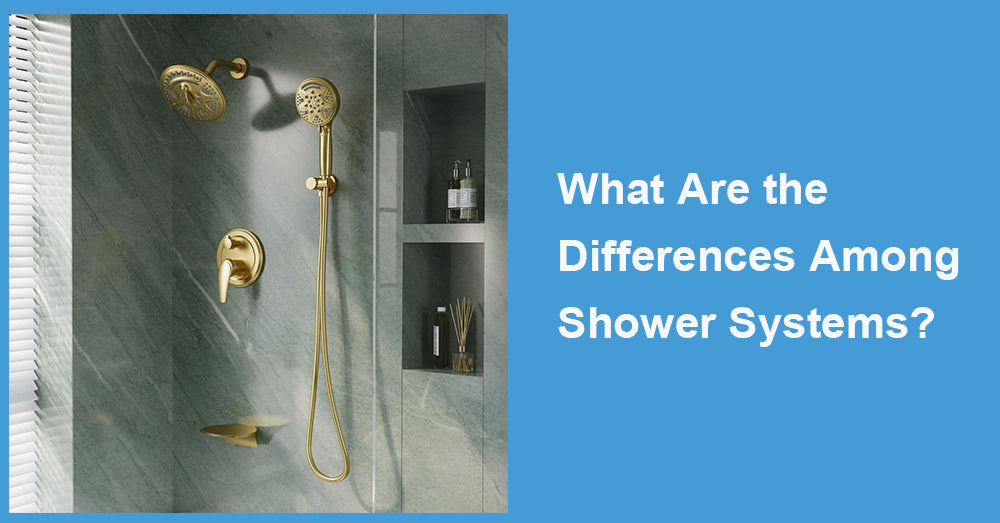
The bathroom design of modern families is no longer just practical, but more about comfort and a personalised experience. An ideal shower system can not only improve the comfort of bathing but also add a finishing touch to the overall decoration style. However, there are many types of shower systems on the market, with different functions and a wide price range. Many consumers often feel at a loss when making a purchase.
To make a wise choice, the first step is to understand the differences between various shower systems. Different types are suitable for other family structures, water pressure conditions and usage preferences. This article will help you systematically understand the characteristics, advantages, and disadvantages of several mainstream shower systems, as well as provide purchase recommendations to assist you in making more informed decisions when renovating or building a new bathroom.
1. Common shower system types
Shower systems can be mainly divided into the following types:
|
Type |
Features |
Suitable For |
Installation Complexity |
|
Thermostatic Shower |
Precise temperature control, adapts to water flow changes |
Families prioritizing comfort and safety |
Medium |
|
Handheld Shower |
Flexible, adjustable angles and positions |
Households with children or elderly |
Low |
|
Overhead (Rain) Shower |
Simulates rainfall, offers a luxurious experience |
Users seeking relaxation |
Medium to High |
|
Multi-Function System |
Combines overhead, handheld, body jets, etc. |
Those looking for a spa-like setup |
High |
|
Concealed Shower |
Hidden piping, clean aesthetics |
Minimalist or design-conscious users |
High |
2. Constant temperature shower system: a balance between safety and comfort
The core advantage of the constant temperature shower system is the stable water temperature control. Traditional shower systems often experience fluctuations in temperature during peak water usage, especially in households with multiple occupants. The constant temperature system can automatically adjust the ratio of hot and cold water through a built-in temperature control valve, maintaining a steady water temperature to prevent scalding or cold.
① Advantages:
Ø High safety, suitable for children and older people;
Ø Enhance the user experience and alleviate discomfort caused by fluctuations in water temperature.
Ø Generally excellent water-saving design.
② Disadvantages:
Ø High cost;
Ø There are specific requirements for water pressure.
3. Handheld shower system: strong flexibility and adaptability to multiple scenarios
Handheld shower heads are a standard feature in every family. Its most significant advantage is flexibility. It can freely adjust the angle, which is suitable for cleaning various parts of the body, and is also convenient for washing the bathroom floor or bathing pets.
① Advantages:
ü Affordable price;
ü Easy to install, does not damage the existing wall.
ü Wide range of use and practical functions.
② Disadvantages:
ü Lack of the overall bathing experience brought by the overhead shower;
ü Some inexpensive shower heads have uneven water discharge or are prone to clogging.
4. Overhead shower system: Create an immersive bathing experience
Overhead showers are also called "rain showers". They are usually installed at a higher position on the ceiling or wall. They sprinkle water over a large area, creating the sensation of natural rain and providing a deeply relaxing experience. Especially in high-end bathroom design, overhead showers are often combined with embedded lights, Bluetooth speakers and other elements to build a SPA-level space.
① Advantages:
² Strong sense of immersion;
² Good visual effect, enhancing the texture of space;
² It can be used in combination with a constant temperature system to enhance the overall experience.
② Disadvantages:
² Complicated installation, requiring pre-buried pipes;
² Not suitable for residences with low water pressure.

5. Multifunctional combination system: Meet comprehensive needs
The multifunctional system integrates multiple components, including handheld, overhead spray, side spray, and constant temperature, and is a popular choice for modern, high-end families. This type of system adjusts each water outlet through the control panel. It can set different modes, such as massage, water mist, and drizzle, which are suitable for people who enjoy a variety of bathing methods.
① Advantages:
l Rich functions;
l Strong personalised experience;
l Better effect with a smart home system.
② Disadvantages:
l High cost;
l Long installation period;
l There are specific requirements for space.
6. How to buy according to needs?
When choosing a shower system, you need to consider the following factors:
A. Bathroom size and structure
Small bathrooms are more suitable for handheld or simple overhead shower systems, while large spaces can opt for multifunctional combinations or embedded wall designs.
B. Family composition
Families with elderly members or children should prioritise constant-temperature systems to ensure safety.
C. Budget range
Ranging from a few hundred to a few thousand dollars, it is recommended to allocate a budget according to functional priorities.
D. Water pressure
Homes with low water pressure should avoid systems that require higher water flow support, such as large overhead showers.
E. Installation conditions
Are you willing to demolish walls or renovate waterways? This determines whether you can install embedded wall or multifunctional systems.
7. Installation suggestions and post-maintenance
Choosing professional installers is crucial for ensuring the system operates smoothly and efficiently. No matter how advanced the system is, if it is not installed correctly, it will not only have poor performance, but may also shorten its service life. Before installation, it should be clear:
v Whether the wall allows for grooving and pipe laying;
v Whether a booster device is required;
v Whether a hot water circulation system is equipped.
Additionally, post-maintenance should not be overlooked. Regular cleaning of the nozzle, checking the sealing of the interface, and timely replacement of wear parts can help extend the equipment's life.
8. Summary
Choosing a shower system may seem simple, but it is related to the comfort and convenience of daily life. From constant temperature control to multifunctional design, from water-saving efficiency to aesthetic appearance, different systems have their advantages. Understanding the difference between them is the first step in making the right choice.
Whether you are pursuing a minimalist design or creating a home SPA, as long as you master the key knowledge, it is not difficult to find a shower system that suits your lifestyle.














Leave a comment
This site is protected by hCaptcha and the hCaptcha Privacy Policy and Terms of Service apply.