






















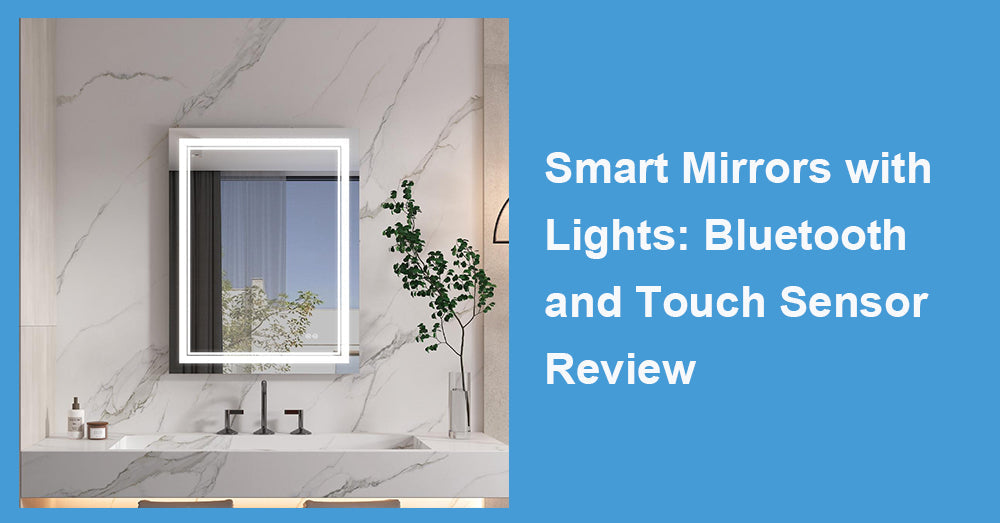
Mirrors with lights have moved well beyond simple task lighting. In today’s bath and dressing spaces, smart mirrors are increasingly expected to combine clean LED illumination with Bluetooth audio, touch sensor controls, anti-fog functions, and streamlined daily convenience. That shift is not just about style. Houzz reported in its 2025 Bathroom Trends Study that 59% of renovating homeowners upgraded their mirrors, and in its related bathroom features coverage, LED lighting ranked as the top upgraded mirror feature at 21%, with anti-fog close behind at 20%. Those numbers show that the category is no longer niche. It is becoming part of the mainstream conversation about premium bath upgrades.
1. Why Smart Lighted Mirrors Are Gaining Attention
The popularity of smart mirrors is tied to a wider move toward integrated, low-clutter products. Instead of adding separate vanity lights, a Bluetooth speaker, a wall switch dimmer, and a makeup mirror, buyers are looking for a single product that combines multiple functions in a clean, unified form. The timing also makes sense from a lighting standpoint. The U.S. Department of Energy says residential LEDs use at least 75% less energy and can last up to 25 times longer than incandescent lighting. DOE also notes that lighting accounts for about 15% of an average home’s electricity use, and that LED adoption saves the average household about $225 per year in energy costs. That energy case has helped push LED-integrated mirrors from decorative upgrade to practical specification.
2. What Bluetooth Adds to a Smart Mirror
Bluetooth is one of the features that most clearly separates a smart mirror from a standard lighted mirror. In product terms, Bluetooth means the mirror can pair with a phone or tablet so users can play music, podcasts, news, or guided routines through built-in speakers. In a bathroom, that may sound like a lifestyle extra, but it fits a larger connected-device trend. The Bluetooth SIG’s 2024 Market Update says Bluetooth smart home devices are expected to ship at about 675 million units in 2024, while Bluetooth smart appliances are expected to reach 203 million units. The same report also notes that Bluetooth is the radio of choice for commissioning in smart home devices and highlights continued growth in connected audio and device-network categories. In plain terms, Bluetooth has become a normal infrastructure for modern connected products, not a novelty feature.
For smart mirrors, the benefit of Bluetooth is convenience. It removes the need for a separate speaker on the counter, reduces visible clutter, and keeps audio closer to the user during grooming. The downside is that mirror speakers are rarely meant to replace dedicated premium audio systems. Most perform best for voice-forward content, casual music listening, and morning routines rather than deep bass or room-filling sound. That means Bluetooth in mirrors is useful, but buyers should judge it by convenience and integration first, not by the standards of a full entertainment speaker.
3. Are Touch Sensor Controls Actually Better Than Traditional Switches?
In most cases, yes. Touch sensors are one of the most practical upgrades in the category because they simplify the user interface without adding visible hardware. Instead of a wall switch, an external dimmer, and a separate anti-fog control, many smart mirrors now place brightness adjustment, color temperature control, and defogging under one or more illuminated touch points on the glass.
4. The Real Strength of Touch Sensors in Bathroom Use
The biggest advantage of touch sensors is not just appearance. It is environmental suitability. Bathrooms are humid, surfaces get splashed, and visible buttons can collect residue over time. A sealed touch interface behind glass is easier to wipe down and easier to integrate into a minimalist design.
That said, not all touch interfaces feel equally refined. Better systems respond quickly, remember preferred settings, and support logical control separation, such as one button for on/off, one for dimming, and one for anti-fog. Weaker designs often overload a single button with multiple press patterns, which can feel awkward in daily use. In other words, touch control is usually the right direction, but its success depends on interface design as much as on the sensor technology itself.

5. Lighting Quality Still Matters More Than Smart Features
One common mistake in the smart mirror category is overemphasizing Bluetooth and touch controls while ignoring lighting performance. A mirror can have excellent connectivity and still disappoint if the light output is uneven, too cool, too dim, or harsh on skin tones.
This is where LED fundamentals still matter. DOE points out that LEDs emit very little heat compared with older sources and offer long life and strong energy performance. For mirror products that support slimmer designs, stable operation, and lower maintenance expectations. The strongest products in the category usually combine dimmable output with tunable color temperature, giving users a warmer glow for evening routines and a brighter, crisper setting for shaving, skincare, or makeup. A smart interface is valuable, but only if the core lighting experience is solid.
6. How Smart Mirrors Fit into Current Bathroom Trends
Recent bathroom trend data helps explain why this category continues to expand. Houzz found that a majority of renovating homeowners upgrade their mirrors, and among upgraded mirror features, LED lighting leads the list. Houzz also reported that lighted mirrors were selected by 19% of renovating homeowners as part of broader bathroom lighting choices. That tells the industry something important: lighted mirrors are no longer only accent products for luxury projects. They are becoming part of the standard lighting mix, especially in spaces where users want layered illumination and cleaner walls around the vanity.
Bluetooth and touch controls fit naturally into that shift because they support the same overall goal: fewer separate devices, less countertop clutter, and more intuitive use. In that sense, smart mirrors are part of the broader movement toward integrated bath products rather than a standalone gadget trend.
7. The Limits Buyers Should Keep in Mind
Even strong, smart mirrors have limits. Bluetooth pairing can occasionally be less seamless than buyers expect, especially if multiple users try to connect from different devices. Touch sensors can also be overly sensitive or insufficiently responsive if the control logic is weak. And while built-in speakers are convenient, audio quality varies widely by product size, enclosure design, and speaker placement.
Another consideration is that smart features should not distract from installation quality, electrical safety, and moisture management. In real bathrooms, reliable anti-fog performance, durable LED drivers, and a clean mounting system usually have more long-term value than one extra smart feature on the spec sheet.
8. Final Review
So, are smart mirrors with Bluetooth and touch sensors worth serious attention? Yes, especially when they are treated as integrated lighting products first and smart devices second. Bluetooth adds practical convenience for everyday routines. Touch sensors improve visual simplicity and make sealed glass controls more suitable for humid environments. LED lighting remains the foundation of the category, supported by strong efficiency and longevity data from DOE. And Houzz trend data suggests that consumers are already voting with their renovation choices.
The best smart mirrors are not the ones with the longest feature list. They are the ones that balance lighting quality, usable controls, stable connectivity, and a clean installation profile. In this category, thoughtful integration matters more than flashy technology. That is what makes a smart mirror feel current instead of gimmicky.










































Leave a comment
This site is protected by hCaptcha and the hCaptcha Privacy Policy and Terms of Service apply.