






















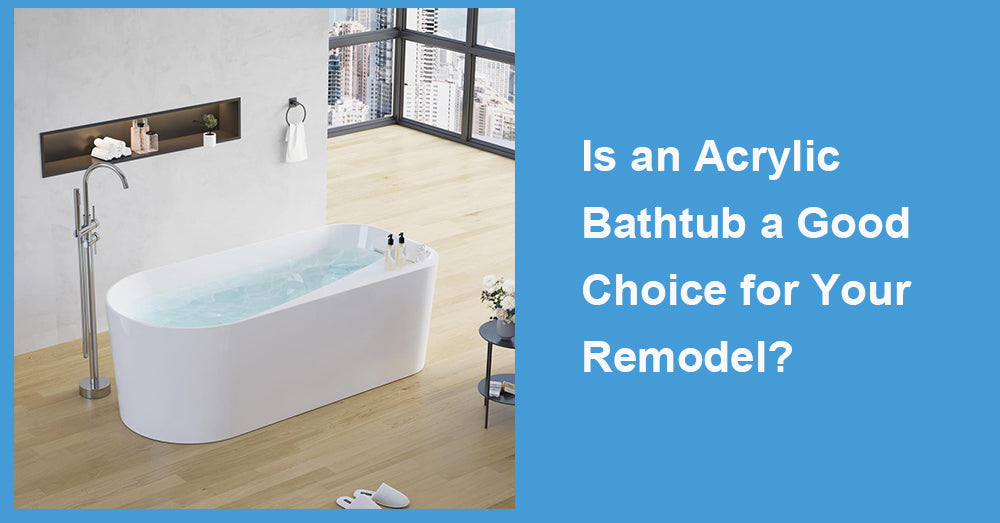
In the process of bathroom renovation or an overall space upgrade, the acrylic bathtub is among the most commonly mentioned yet easily underestimated types of bathtubs. Due to their simple appearance and wide price range, acrylic bathtubs are often considered a "universal choice". However, from an industry perspective, whether acrylic bathtubs are suitable for renovation projects cannot be judged solely by cost or design; they must be comprehensively evaluated based on multiple factors, including structural performance, usage habits, space conditions, and long-term maintenance.
1. In bathtub renovation, the influence of material selection far exceeds appearance
Among all bathroom equipment, the bathtub is a component with extremely low replacement frequency and high construction relevance. Once installed, its lifespan is usually 10-15 years or even longer. This means that material selection not only affects the initial experience but also amplifies the advantages and disadvantages over the long term.
Compared to cast iron, stone, or composite materials, the most prominent features of acrylic bathtubs are their inherent plasticity and lower weight. These features make it highly adaptable in renovation projects.
2. The structural characteristics and practical advantages of acrylic bathtubs
Acrylic bathtubs are usually formed from multiple layers of acrylic sheets and supported by fiberglass or other reinforced structures. This structure significantly reduces the overall weight of the bathtub while maintaining sufficient strength.
From a construction perspective, a lighter self-weight can reduce the for slab's load-bearing capacity requirements, especially in non-first-floor spaces or in old building renovations, which is particularly important. Industry practice has shown that under standard sizes, the installation flexibility of acrylic bathtubs is significantly higher than that of high-density material bathtubs.
3. Size selection and spatial adaptability
In renovation projects, the size of the bathtub is often limited by the existing space conditions. Everyday acrylic bathtubs range in length from 60 to 72 inches and in width from 30 to 32 inches, making them highly compatible with most bathroom layouts.
For bathrooms with relatively compact spaces, acrylic bathtubs can offer a larger internal soaking space through thinner edges. When space conditions permit, its flexibility also makes it easier to achieve customized styling.
4. Realistic performance of comfort and insulation performance
In terms of user experience, the surface of acrylic bathtubs is relatively gentle, unlike metal, which can produce a noticeable icy sensation upon initial contact. This is frequently perceived in daily use.
From an insulation perspective, the thermal conductivity of acrylic material itself is relatively low. With a reasonable structural design, it can delay the rate of water temperature drop to some extent. Although its insulation capacity may not reach the limit of thick materials, it can already meet most soaking needs in conventional household use scenarios.
5. Long-term consideration of cleaning and maintenance costs
In renovation decisions, maintenance costs often have more practical significance than initial costs.
Acrylic bathtubs usually have a smooth surface and are less prone to scaling, making daily cleaning relatively simple. As long as potent corrosive cleaning agents are avoided, their surface condition can be maintained stable for a long time.
In addition, acrylic material has a certain degree of repair space for slight scratches or wear, which is also one of the reasons it is considered to have a "high fault tolerance" in long-term use.
6. The key difference between durability and structural quality
It should be noted that not all acrylic bathtubs are equally durable. Industry experience shows that the long-term stability of a bathtub depends not only on the thickness of the surface acrylic but also on the back support structure and reinforcement process.
In renovation projects, choosing a structurally sound, evenly supported acrylic bathtub is often more important than focusing solely on appearance or price. Products with a well-designed structure are less likely to deform or produce abnormal noise over the years of use.
7. Applicability of Acrylic Bathtubs in Different Renovation Scenarios
In renovation projects that emphasize construction efficiency and overall coordination, the advantages of acrylic bathtubs are particularly evident. Its moderate weight and flexible installation make it better suited to various drainage and enclosure structure schemes.
For renovation plans that aim to improve comfort without significantly increasing construction complexity, acrylic bathtubs are often a well-balanced choice.
8. From the perspective of the overall bathroom system, the acrylic bathtub
The bathtub is not an isolated item; it needs to be coordinated with the shower system, wall materials, and floor structure.
The plasticity of acrylic bathtubs in appearance and shape makes them easier to integrate into various bathroom design styles. From minimalism to modern styling, it can maintain good overall consistency.
9. Is it suitable for your renovation project?
The key to determining whether an acrylic bathtub is suitable for a renovation project is to clarify the priority of use.
If you value installation flexibility, maintenance convenience, and overall cost-effectiveness, and want to strike a balance between structural safety and comfort, then acrylic bathtubs often offer greater adaptability. On the contrary, if the renovation goal is more inclined towards extreme heaviness or a highly customized experience, it is necessary to compare and evaluate it with other materials.

10. Conclusion
Acrylic bathtubs are not a compromise choice, but a mature solution that strikes a good balance between performance, construction, and long-term use. From structural characteristics to spatial adaptability to maintenance costs, acrylic bathtubs have demonstrated stable, pragmatic advantages in most renovation projects. Reasonably evaluating one's own spatial conditions and usage needs often reveals their actual value in bathroom renovation.










































Leave a comment
This site is protected by hCaptcha and the hCaptcha Privacy Policy and Terms of Service apply.