






















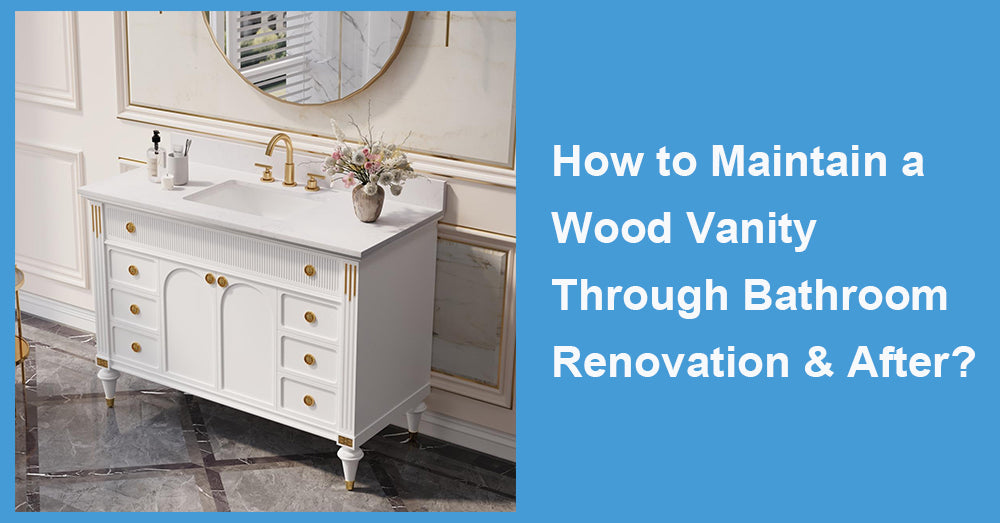
——A professional guide to ensuring the enduring beauty of nature
In modern bathroom design, Wood Vanity has become the preferred choice for more and more American home decoration due to its natural texture and warm appearance. It not only adds softness and warmth to the space, but also represents a return to simplicity in life aesthetics. Whether it's modern minimalism, Nordic wood style, or classic American style, wooden bathroom cabinets can blend in perfectly.
However, as a natural material, wood also requires more meticulous maintenance than metal or artificial boards. The bathroom is a special environment with high humidity and a high temperature difference. If not properly maintained, wooden materials are prone to problems such as expansion, deformation, mold, growth, or cracking.
This article will comprehensively analyze how to scientifically maintain a wood vanity and make its natural beauty shine in the bathroom, covering three aspects: protection during decoration, daily maintenance after decoration, and professional advice for long-term use.
1. Why do wooden bathroom cabinets need special maintenance?
1. High environmental sensitivity
Wood itself has hygroscopicity, and in humid environments such as bathrooms, changes in air humidity can cause wood fibers to expand or contract. If the moisture is not adequately controlled, the cabinet is prone to cracking or blistering on the paint surface.
2. Frequent fluctuations in temperature and humidity
The hot steam and bathroom heating system will constantly change the local temperature. When wood is in this state of "alternating cold and hot", structural fatigue is prone to occur, affecting its service life.
3. Corrosion risk of cleaning agents
Some cleaning agents containing ammonia or alcohol can damage the wood's surface coating, causing it to lose its luster or even fade.
Therefore, to keep wooden bathroom cabinets in good condition, it is necessary to implement scientific protection and maintenance measures during the decoration period.
2. Key maintenance points during the decoration period
During the construction and installation phase of the bathroom, protective measures for wooden dressing cabinets are particularly critical.
1. Before construction: moisture-proof and sealing treatment
Before installation, ensure that the walls and floors are completely dry and the humidity does not exceed 60%. At the same time, a moisture barrier or waterproof adhesive strip can be installed at the bottom of the wooden cabinet to prevent the ground from becoming damp again.
Suggested materials:
The base is made of PVC or rubber foot pads, raised by about 0.5–1 inch.
A ventilation gap of approximately 0.2 inches can be left between the backboard and the wall.
In addition, it is recommended to apply a sealing treatment to the cabinet's outer layer: polyurethane waterproof paint or a wood sealer can be evenly sprayed to enhance moisture resistance.
2. Installation phase: Avoid exposing construction damage
At the decoration site, wooden cabinets should be covered with dust-proof cloth or bubble wrap to prevent construction dust, paint, or glue from contaminating the surface.
Suppose it is necessary to cut holes on site (e.g., for installing water pipes or drainage systems). In that case, edge-sealing paint should be applied immediately to the cut edge to prevent moisture from seeping into the wood.
3. After installation: Stable period maintenance
Newly installed wooden cabinets should be left at normal room temperature for at least 48 hours to avoid immediate exposure to hot water vapor. This stage is a critical period for wood to "adapt to the environment", which can maintain its internal moisture balance and reduce the probability of subsequent deformation.
3. Daily maintenance after decoration
After the bathroom is used, maintaining wooden bathroom cabinets should become part of daily cleaning. The following points are key to maintaining its luster and structural stability:
1. Moisture prevention management
① Control ventilation and humidity
Maintaining air circulation in the bathroom is the first step in preventing moisture.
It is recommended to install an exhaust fan and turn it on for 15–20 minutes after showering to help reduce humidity. If environmental moisture remains above 70% for a long time, a small dehumidifier can be used.
② Prevent accumulated water from contacting the bottom of the cabinet
Whether it is splashing water on the sink or standing water on the ground, it may seep into the wooden structure.
It is recommended to install waterproof gaskets or silicone sealant along the bottom of the cabinet to prevent water leakage.
2. Cleaning and surface care
① Daily cleaning
Gently wipe the surface with a soft, damp cloth, and then dry it with a dry cloth.
Avoid using cleaning agents containing bleach, alcohol, ammonia, or abrasive particles.
② Regular waxing or polishing
Every 3–6 months, a thin layer of wood polish or beeswax oil can be applied to the surface to effectively enhance moisture resistance and shine.
③ Prevent direct sunlight exposure
If the bathroom has windows, avoid prolonged exposure of the cabinet to direct sunlight to prevent fading or wood-grain cracking.

4. Long-term maintenance of structure and accessories
1. Regularly inspect hardware components
The hinges, handles, drawer slides, and other metal components of wooden bathroom cabinets often rust or loosen due to moisture.
It is recommended to check every 6 months and add a small amount of lubricating oil (such as WD-40) if necessary to maintain smooth operation.
2. Sealing edge and silicone update
The waterproof silicone at the joints between the cabinet, wall, and countertop should be inspected once a year. If aging or cracking is found, it should be replaced promptly to prevent water vapor from seeping into the wood's interior.
3. Dry maintenance of internal space
Bamboo charcoal bags or silicone desiccants can be placed inside the cabinet to effectively absorb moisture and prevent mold.
If mold spots are found, they can be gently wiped with a 1:1 ratio of white vinegar and water, and then wiped clean with a dry cloth.
5. Key maintenance points for special wood
Different types of wood have slightly different maintenance requirements.
|
Wood species |
Characteristics and maintenance suggestions |
|
Oak |
Has a rough texture and a solid structure. Regular waxing can maintain its luster and prevent cracking |
|
Walnut |
Dark and elegant wood with strong bending resistance. Avoid direct sunlight and use specialized wood oil to maintain its color |
|
Maple |
Light and delicate color, easy to color, keep dry to prevent water stains on the surface |
|
Teak |
Moisture-proof and insect-resistant, suitable for humid environments. Apply teak oil once a year to maintain the natural oil protective layer |
|
Birch |
Light and soft, moderate price, average moisture resistance. Requires extra attention to ventilation and sealing |
Choosing high-quality wood species is undoubtedly essential, but later maintenance is the key to determining their service life.
6. Market Trends and Brand Insights in the United States
According to the NKBA (National Kitchen & Bath Association) 2025 annual report, approximately 45% of American households choose a wood vanity for bathroom decor, with significant growth particularly in the mid- to high-end market. Consumers tend to purchase environmentally friendly solid wood products, such as those made from FSC (Forest Stewardship Council) certified sustainable wood.
At the same time, the brand is constantly improving its surface treatment technology.
The Kohler, Wellfor, and Home Depot Premium series feature a multi-layer waterproof coating that helps wooden cabinets withstand bathroom humidity.
The IKEA GODMORGON series features a moisture-resistant, laminated wooden board design, making it more suitable for budget decoration.
High-end brands such as Native Trails focus on handmade teak and recycled-wood cabinets, combining the beauty of nature with craftsmanship.
It can be seen that, as environmental awareness and lifestyle aesthetics improve, wood vanities are not only bathroom furniture but also part of sustainable design.
7. Conclusion: The beauty of wood comes from continuous care
The charm of wooden bathroom cabinets lies in their "vitality" — the texture changes over time, and the color becomes more mellow during use.
It is not a cold, mechanical, artificial board, but a breathable, warm material.
But this natural beauty also requires the careful care of its owner.
From protection during the decoration stage to daily cleaning and regular maintenance, each step determines its service life and visual effect.
Properly maintained wood vanities can accompany a family for more than ten years and retain their warmth as before.
And what it brings is not only the convenience of functionality, but also a continuation of nature, texture, and attitude towards life.










































Leave a comment
This site is protected by hCaptcha and the hCaptcha Privacy Policy and Terms of Service apply.