






















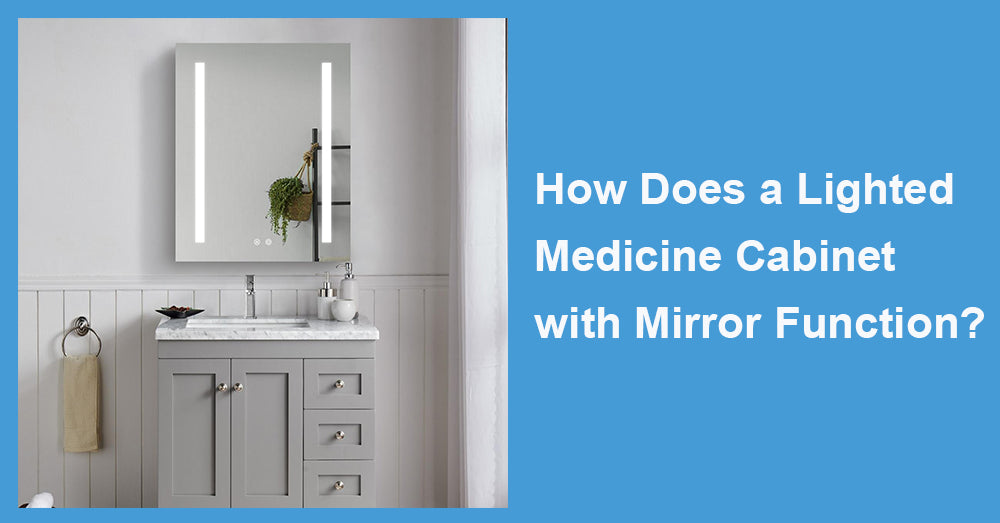
Tired of a cluttered bathroom counter? Discover how a lighted medicine cabinet with mirror functions, from internal LED wiring to anti-fog tech and installation specs.
Let’s face it: traditional bathroom lighting is usually terrible. You know the setup—one harsh overhead bulb that casts deep shadows across your face. Plus, your counter is probably covered in a mess of toothpaste, razors, and skincare bottles. This is exactly why upgrading to a lighted medicine cabinet with mirror is one of the smartest moves you can make.
But how does this thing actually work? Is it just a mirror with some glued-on LED strips? Not quite. As someone who has installed and wired dozens of these units, I can tell you there is a lot of tech packed into that sleek box. Here is the unfiltered, real-world breakdown of how they function and what you need to know before you buy one.
The Core Function: Storage Meets Illumination
Simply put, this is a two-in-one fixture. You get the concealed storage of a standard medicine cabinet (perfect for hiding all that counter clutter) combined with the task lighting of a high-end vanity fixture.
When you open the door, you have access to shelves for your medications and grooming tools. When you close it, you have a perfectly lit mirror. The magic happens in how the light is integrated.
Most models use "edge-lit" technology. The manufacturer bonds an LED strip to the inside edge of the glass or behind a frosted glass frame. When you flip the switch, the light shines through the diffuser, providing even, shadow-free illumination directly on your face. This is crucial for tasks like shaving or applying makeup, where harsh overhead shadows can lead to nicks and uneven blending.
The Anti-Fog Magic
Here is the biggest game-changer for daily comfort: anti-fog technology.
We’ve all been there—you step out of a hot, steamy shower, and the mirror is completely useless. You have to blindly wipe it with a towel, which just smears the condensation around. High-end lighted cabinets feature a built-in heating element. This is a thin, transparent heating film applied to the back of the glass. When you turn the mirror on, the film heats up just enough to keep the glass slightly warmer than the ambient dew point. (Source: Kohler)
Because the glass stays warm, condensation can't form. You step out of the shower, and the mirror is perfectly clear. Trust me, once you have this, you can never go back.
The Electrical Reality Check
Here is where things get tricky for DIYers.
Unlike a standard mirror that just hangs on a nail, a lighted cabinet requires electricity. If you are replacing an old, standard mirror, you likely don't have a power source behind it. You will need to hire a licensed electrician to run a new wire, add a switch, or install a GFCI outlet nearby.
Also, according to the National Electrical Code (NEC), any outlets or wiring in a bathroom must be protected by a Ground-Fault Circuit Interrupter (GFCI). (Source: National Fire Protection Association) This is a non-negotiable safety requirement. I always tell my clients to plan their electrical layout before they even buy the cabinet. Otherwise, you’ll have a beautiful cabinet sitting in your garage waiting for an electrician.
Built-In Charging and Outlets
Modern lighted cabinets often feature internal electrical outlets and USB ports. This is a brilliant space-saving feature.
Instead of having electric toothbrushes and shavers plugged into the wall, cluttering up your sink deck, you can charge them directly inside the cabinet. It keeps the counter completely clear and hides all the messy cords. Just make sure the cabinet you buy has UL-listed internal components to ensure it’s safe for wet environments.
Recessed vs. Surface-Mounted Functionality
How the cabinet functions depends heavily on how it’s installed.
If you choose a recessed lighted cabinet, the entire box sits inside the wall cavity. It gives you that seamless, high-end look, and it doesn't intrude into the room at all. But you need a wall cavity that is at least 4 inches deep to accommodate the unit. (Source: Family Handyman)
If your wall is full of pipes or you live in an apartment, a surface-mounted lighted cabinet is your best bet. It attaches directly to the wall, making installation much easier. However, it will protrude into the room by a few inches. In a narrow bathroom, this can feel claustrophobic, but it does offer deeper internal storage.

Specs You Must Check
Not all lighted cabinets are created equal. Before you buy, look at the technical specs:
Color Temperature: You want an LED that offers a color temperature between 3000K and 5000K. 3000K is a warm, cozy light, while 5000K is a crisp, bright daylight. Some high-end models allow you to adjust this.
CRI (Color Rendering Index): Look for a CRI of 90 or higher. This means the light shows the true colors of your skin and makeup. A cheap cabinet with a low CRI will make your face look washed out.
IP Rating: In a wet bathroom, you need a cabinet with an IP44 or higher rating. This ensures the internal electrical components are protected from splashes.
The Final Verdict
A lighted medicine cabinet with mirror is a fantastic upgrade for any bathroom. It clears your countertops, provides perfect task lighting, and keeps your vision clear with anti-fog tech. Just plan your electrical wiring early, check the CRI and IP ratings, and enjoy the glow.






































Leave a comment
This site is protected by hCaptcha and the hCaptcha Privacy Policy and Terms of Service apply.