














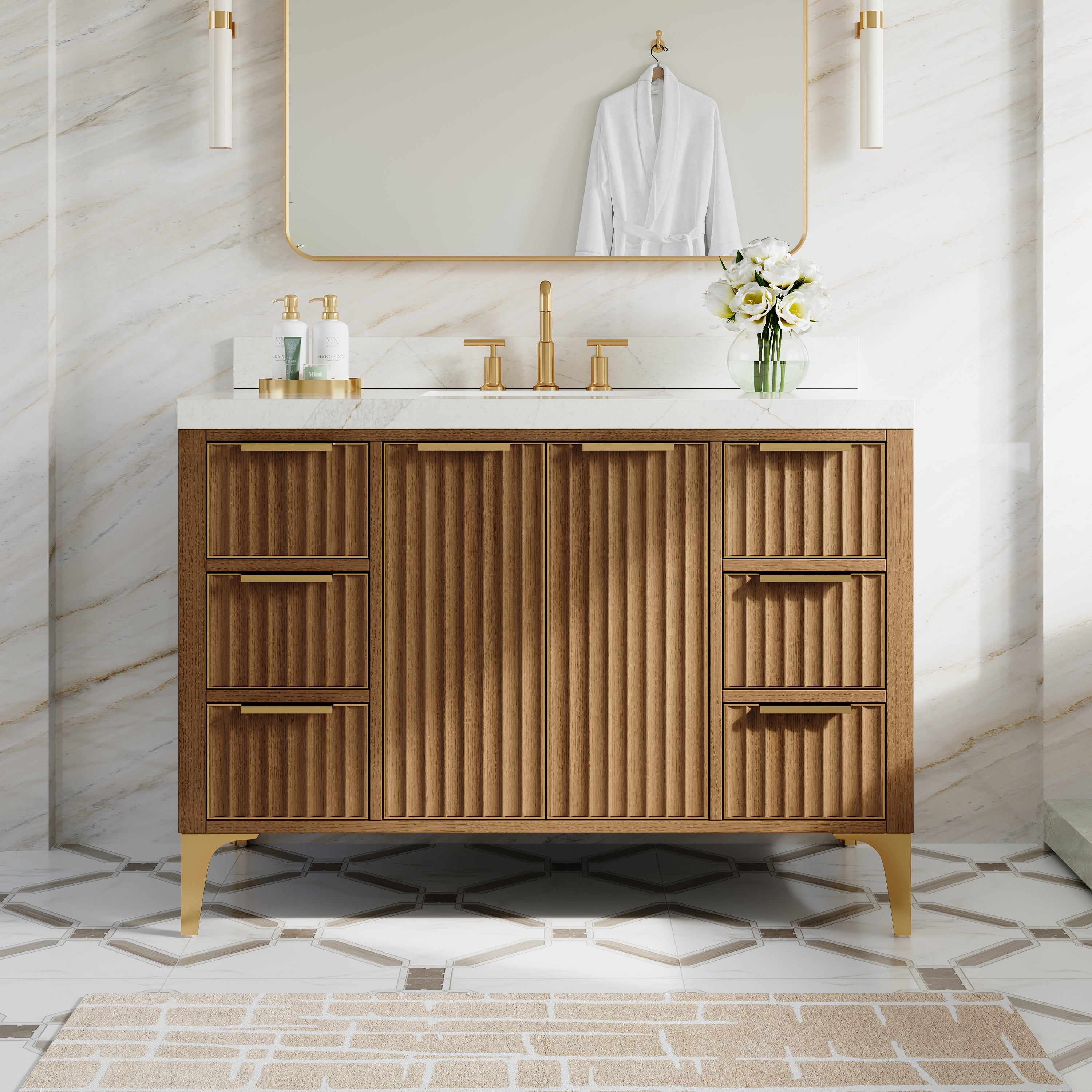
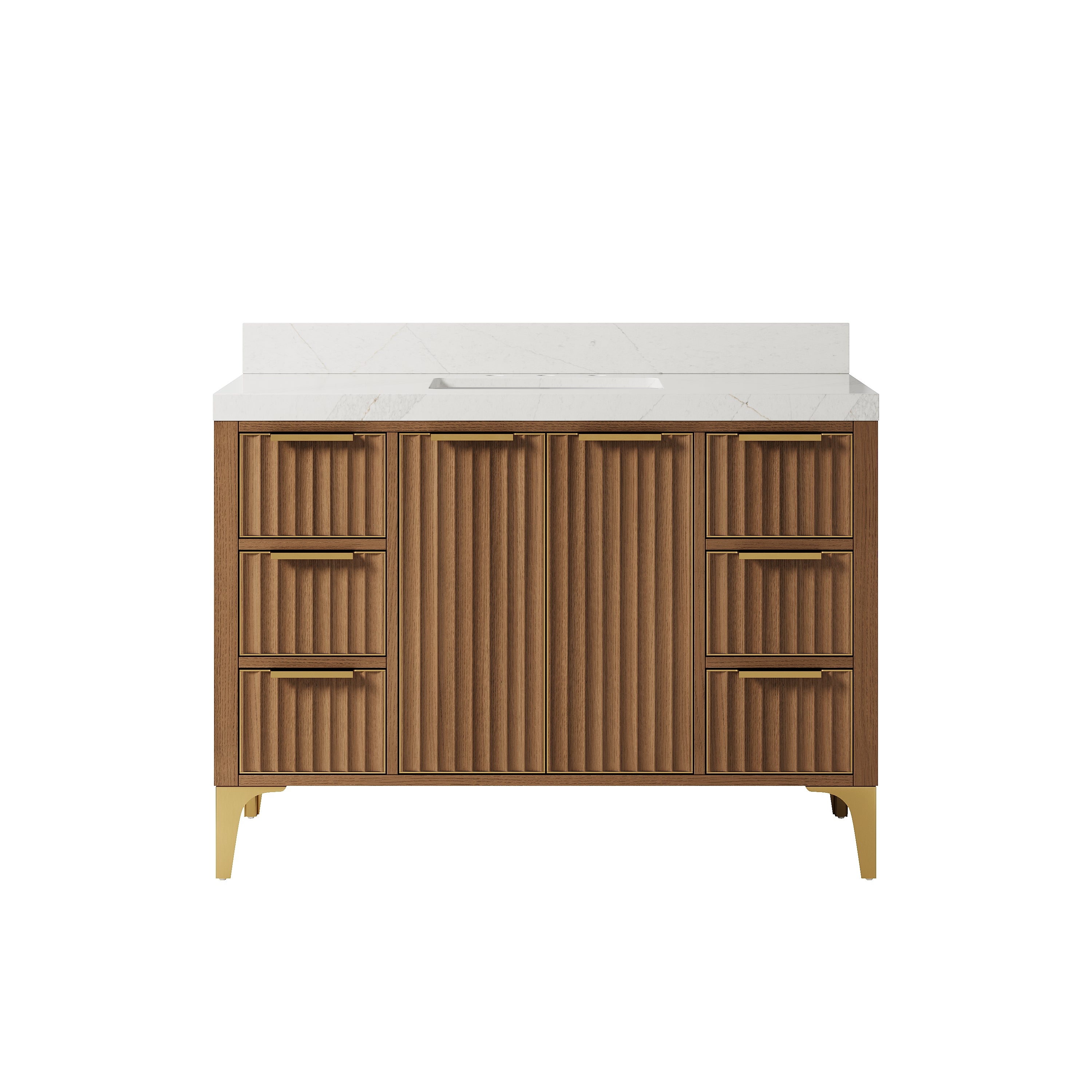


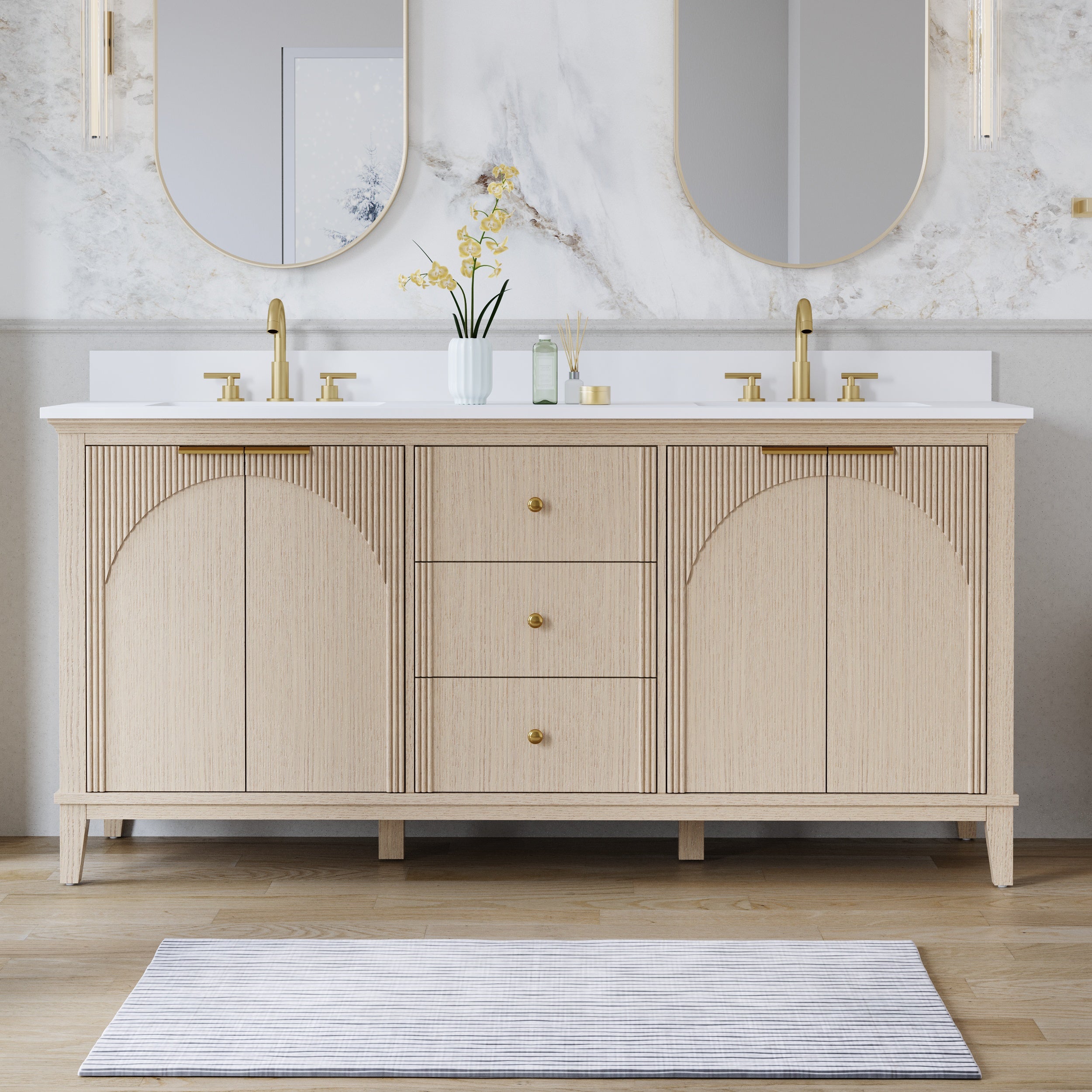
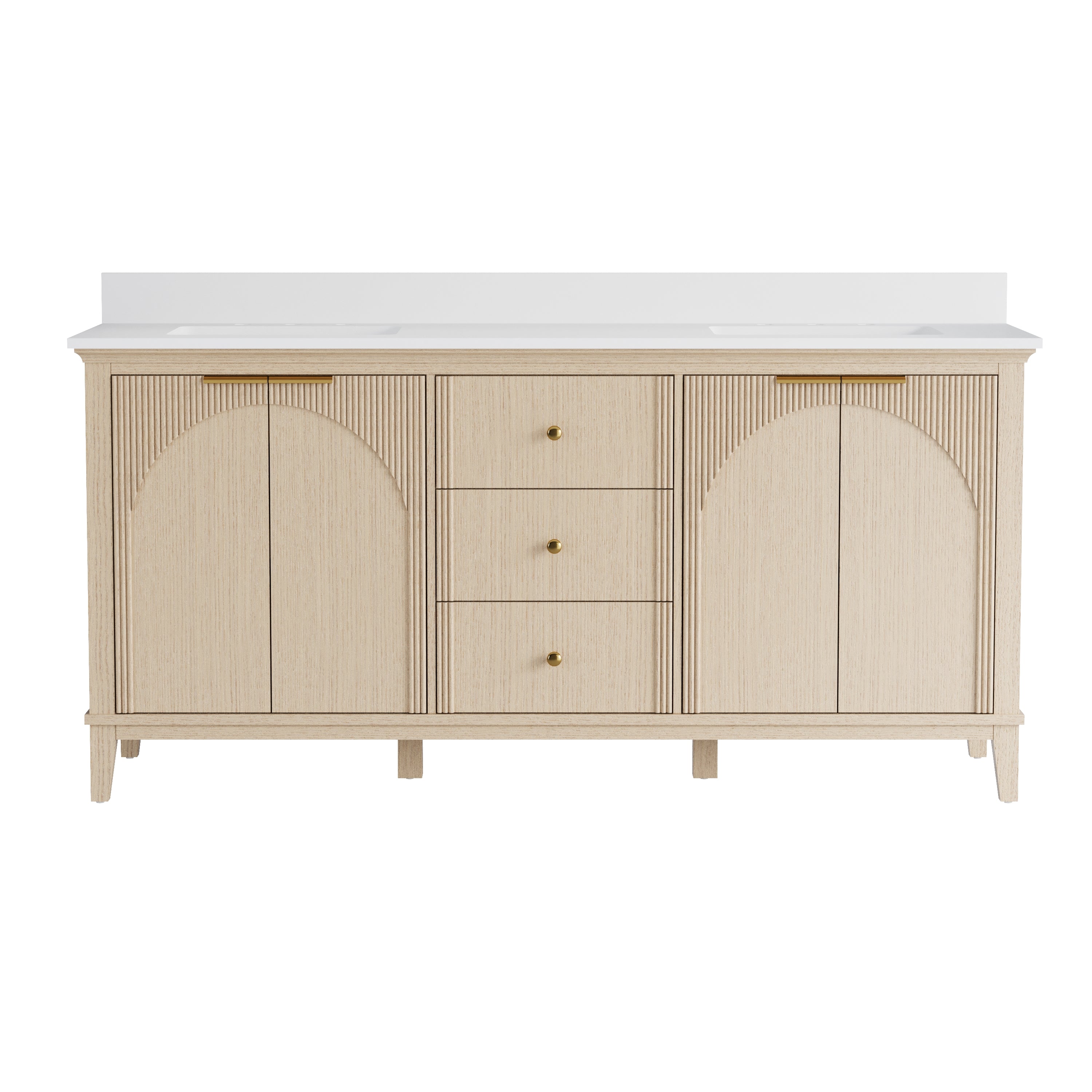
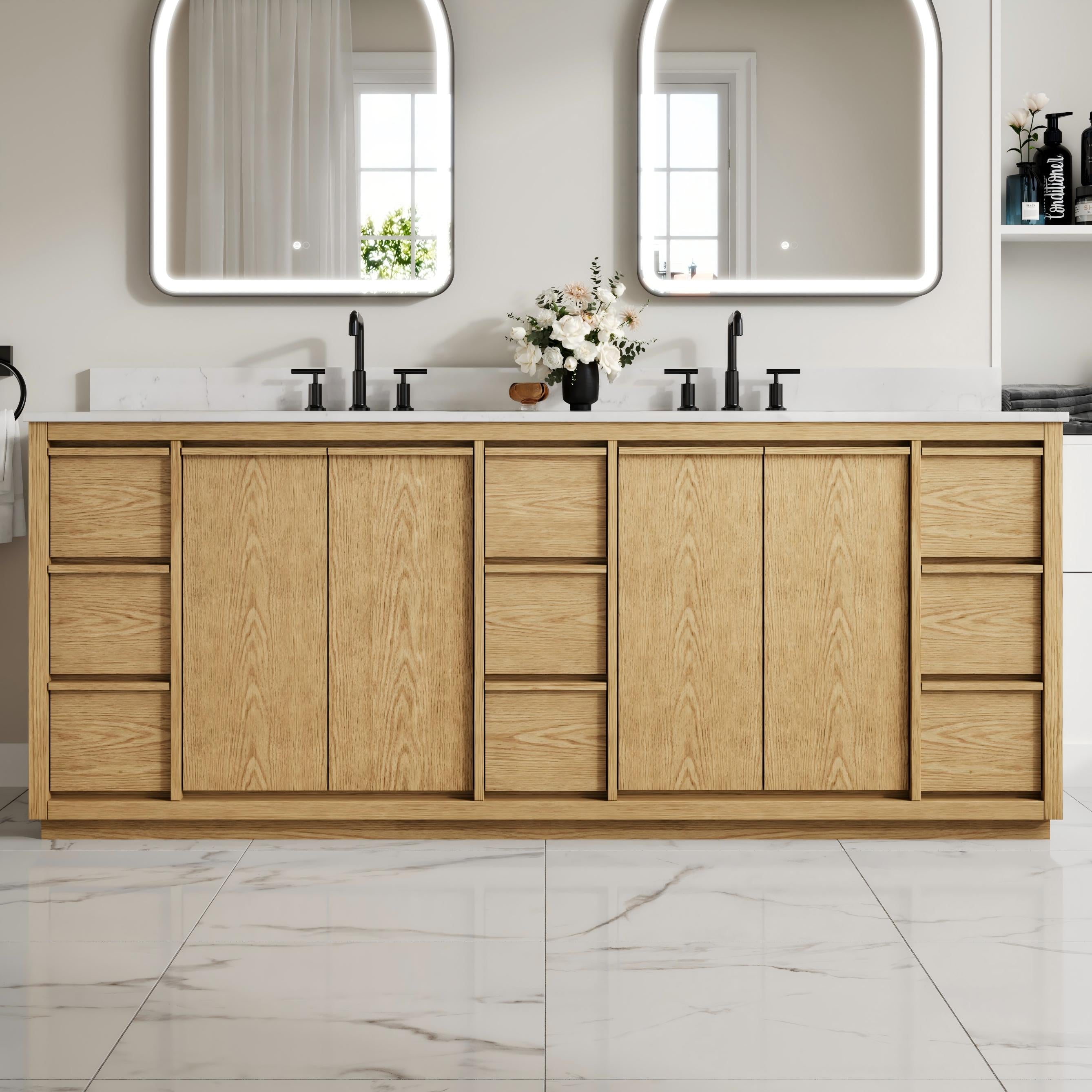
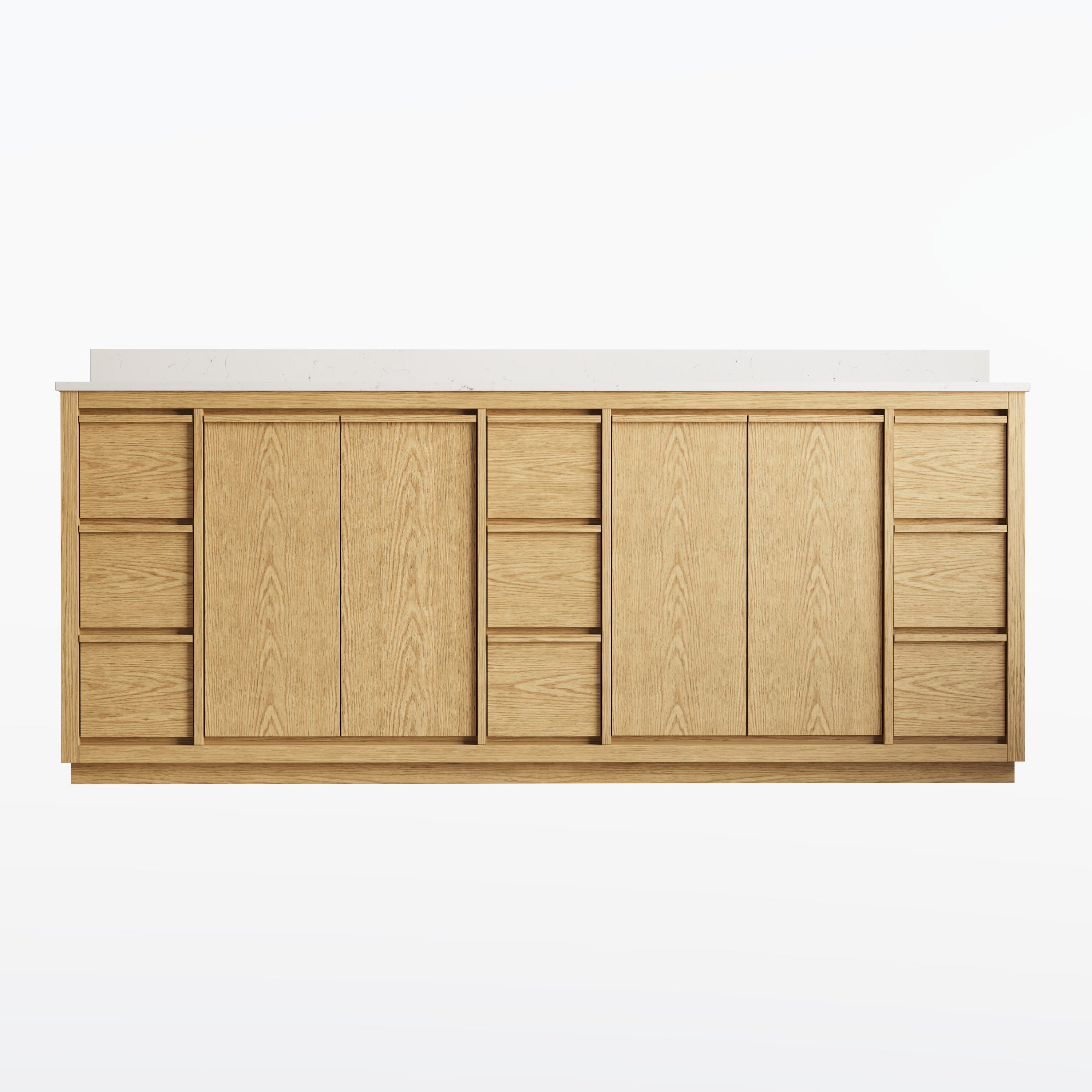

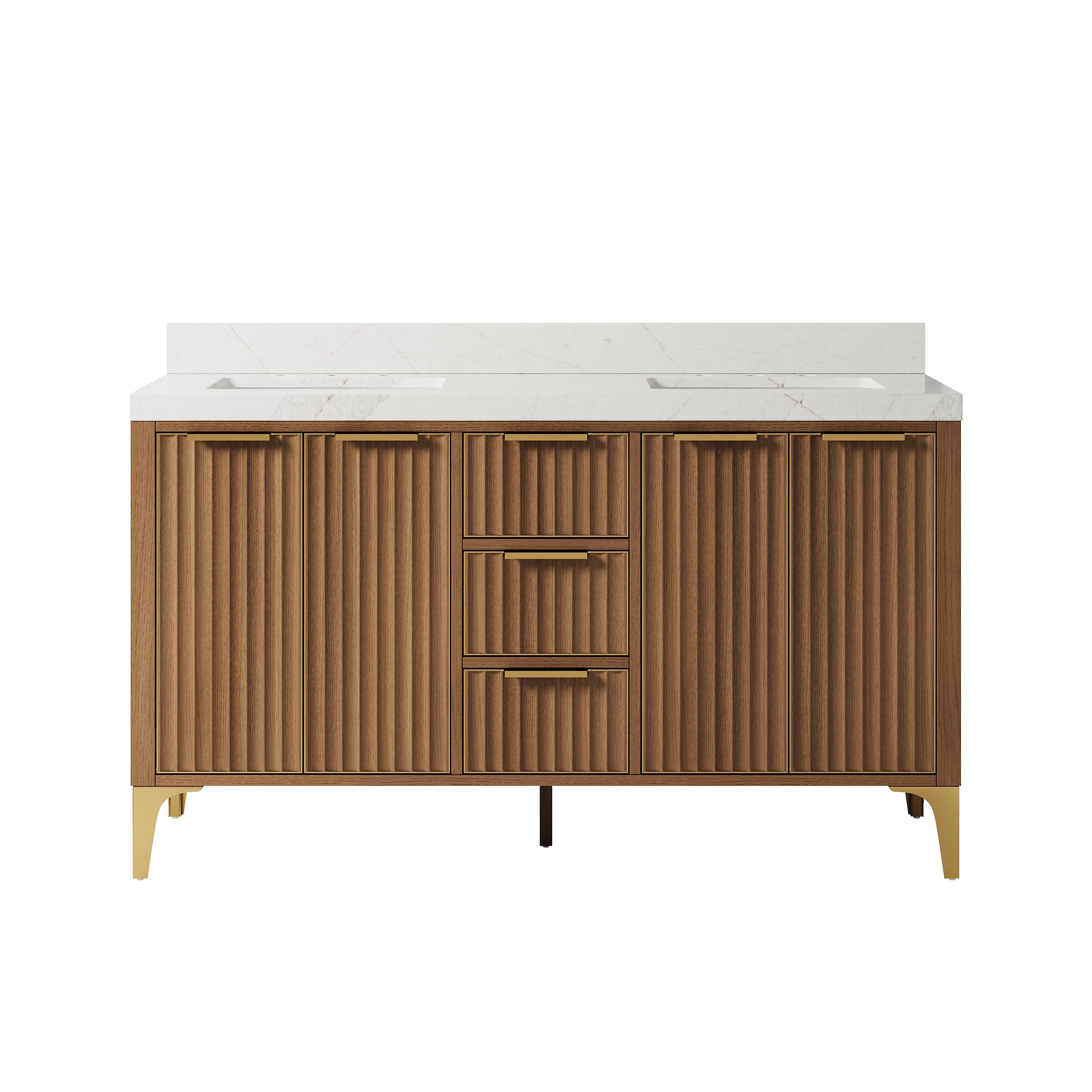
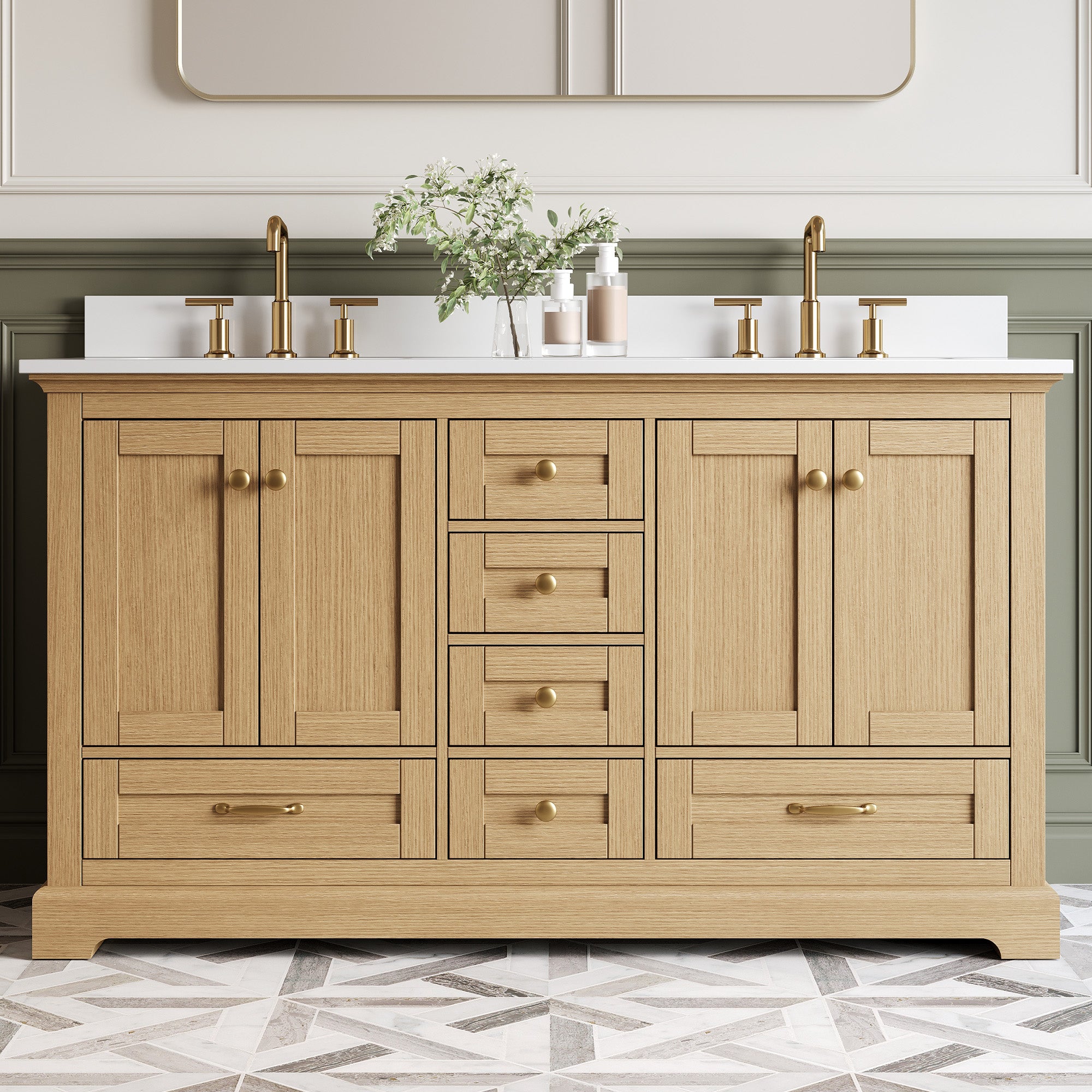
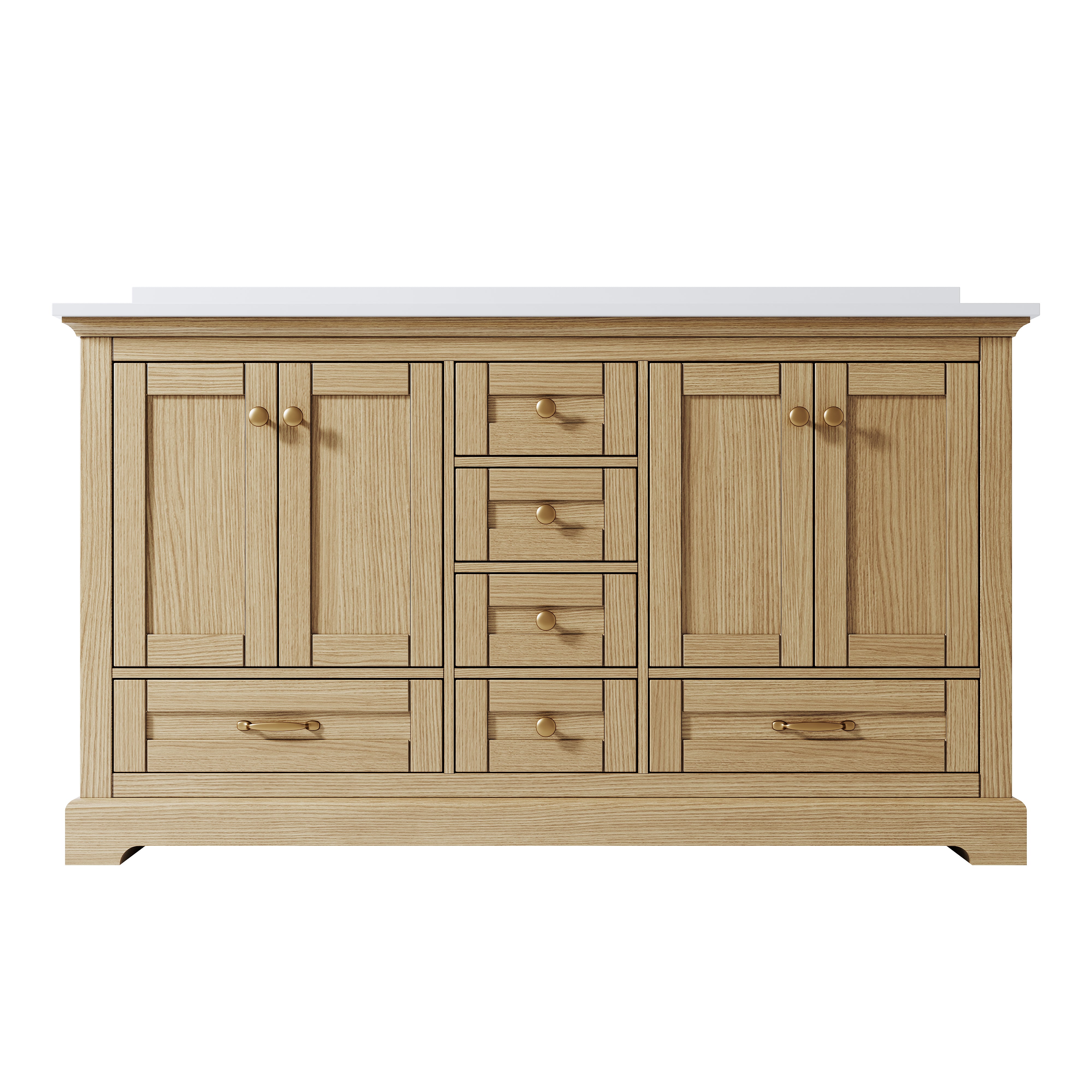
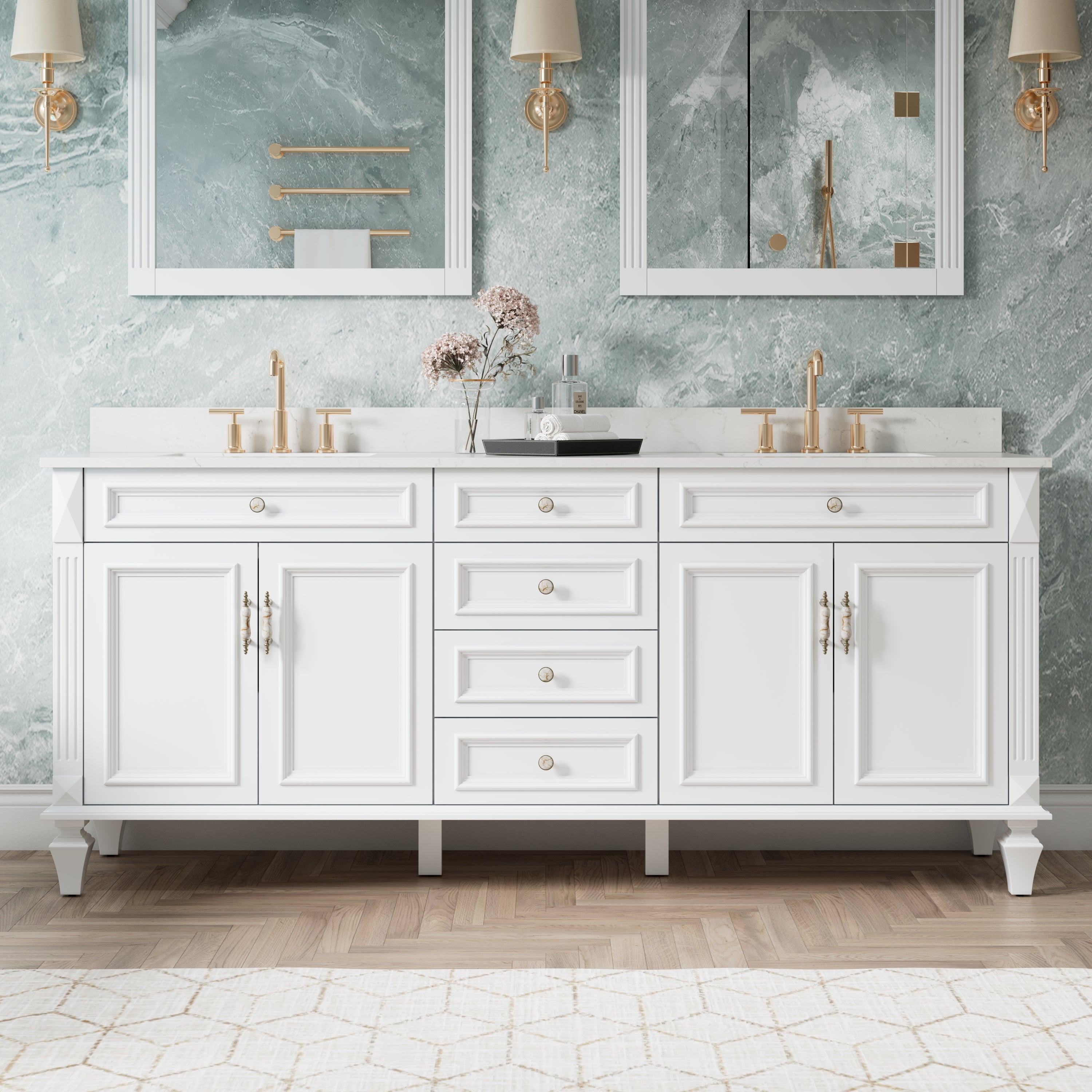
Bathroom vanities in wood bring natural texture into a room that is otherwise dominated by tile, glass, stone, and metal. After more than 20 years of working with bathroom cabinetry and renovation projects, I have found that wood can make a bathroom feel warmer and more settled without relying on decorative excess. It also has practical value when the cabinet is well built, properly sealed, and sized for the room. The key is understanding what wood does well—and where moisture, construction quality, or poor planning can become problems.
1. Bathroom Vanities in Wood Add Texture Without Visual Clutter
Wood grain creates movement that painted cabinetry cannot reproduce in quite the same way.
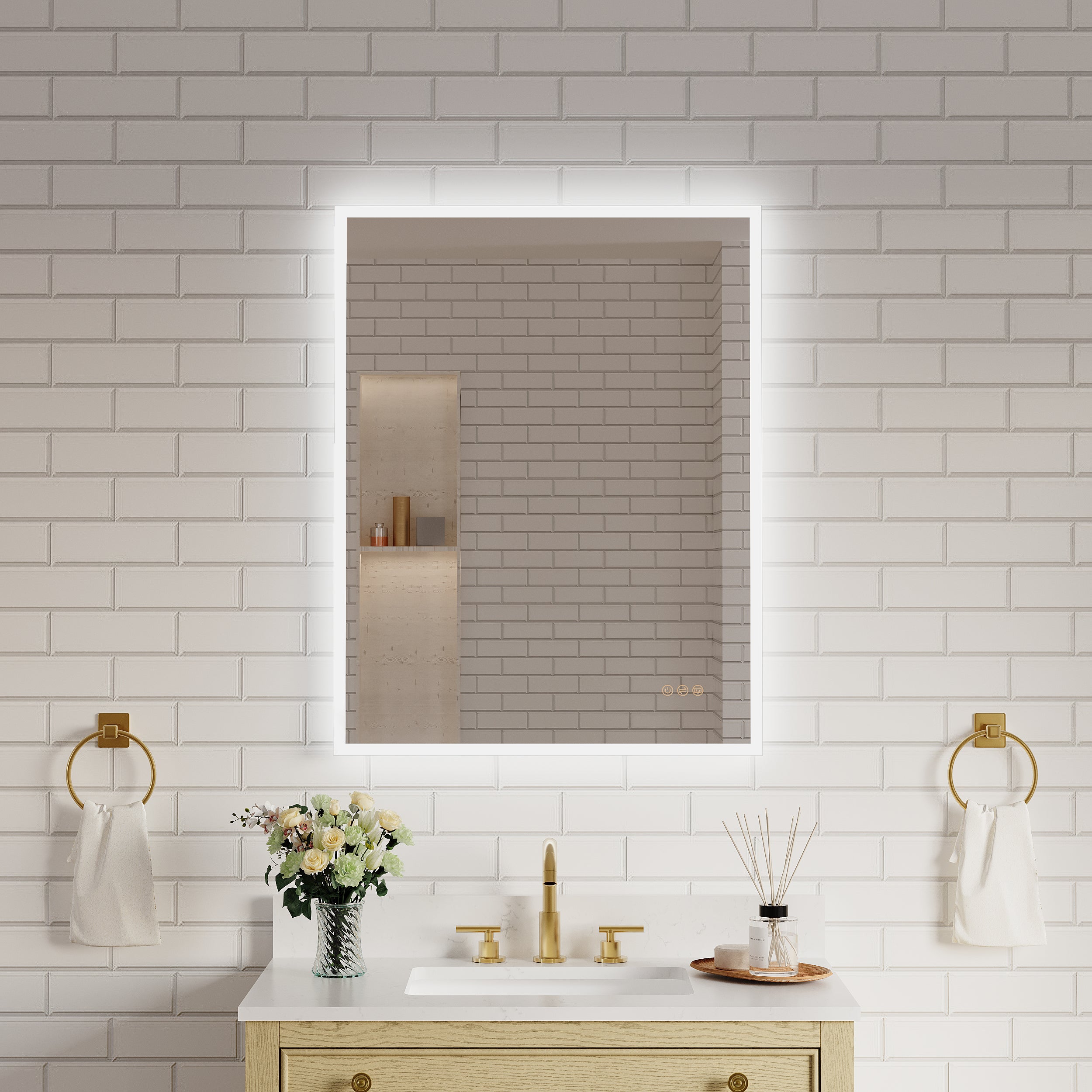
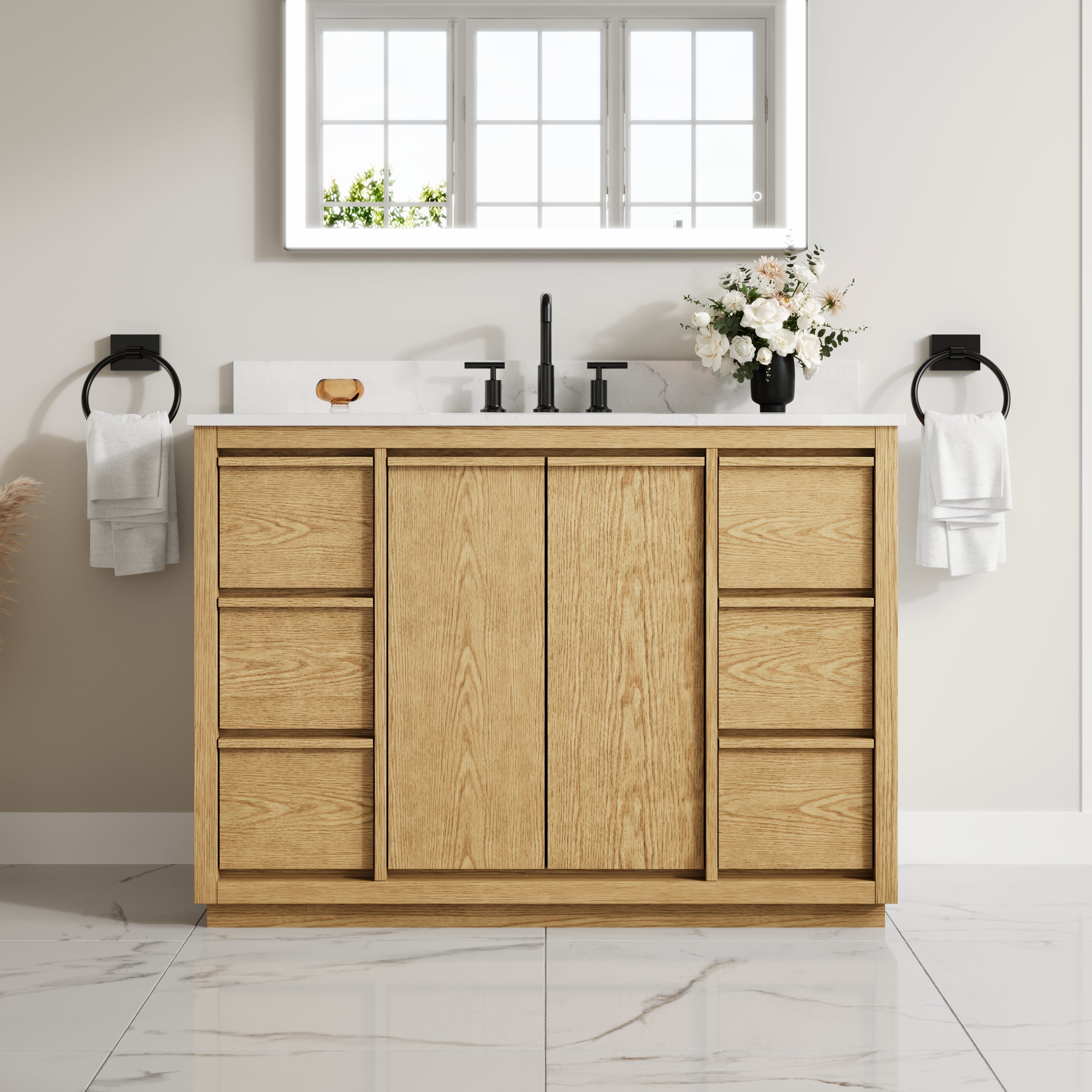
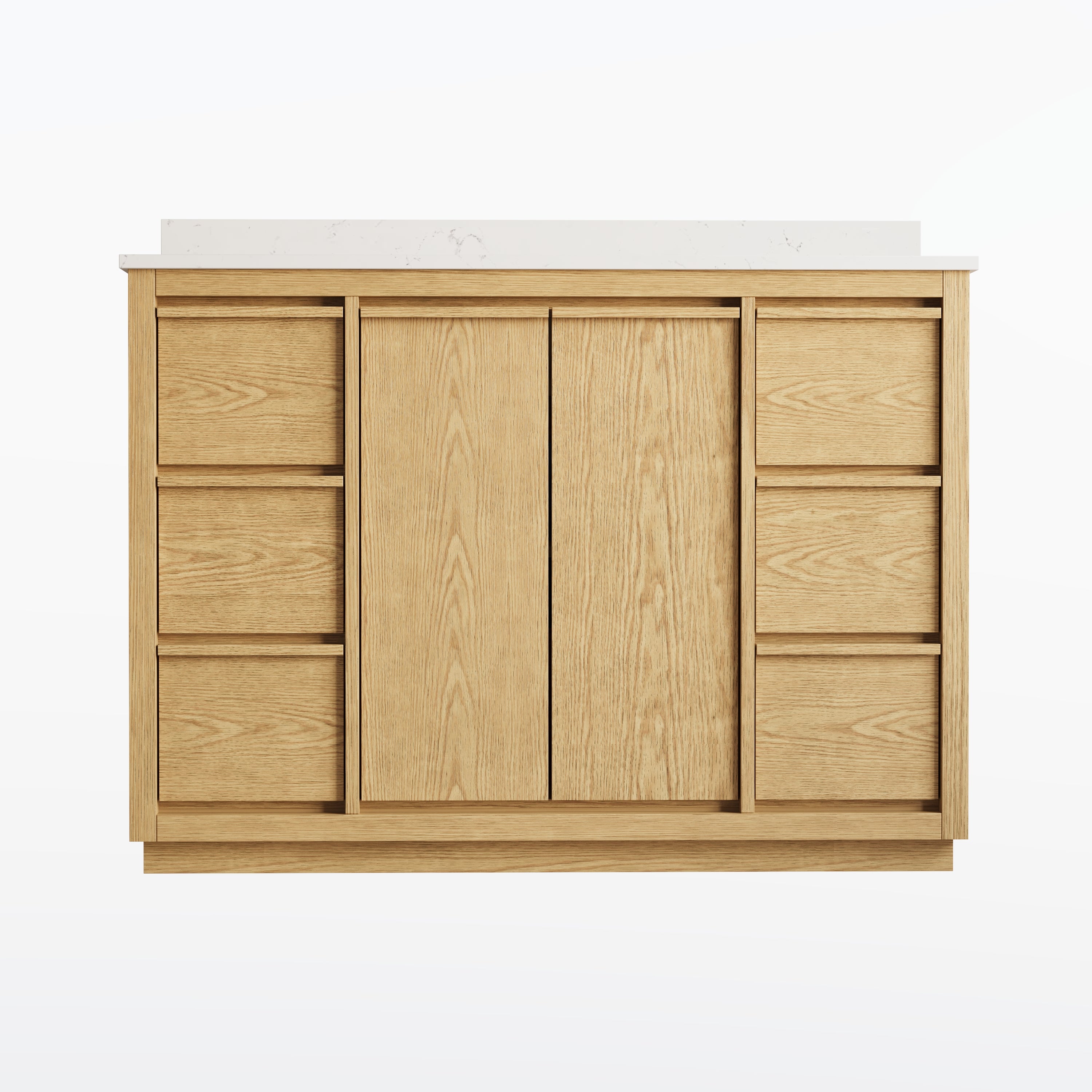
Light oak, walnut, maple, and other natural finishes introduce subtle variation across doors and drawer fronts. In a bathroom with plain white tile or smooth quartz, that texture can keep the room from feeling flat.
I often prefer wood when the rest of the space is intentionally simple. It gives the eye something to rest on without requiring patterned tile or strong color.
Let One Material Take the Lead
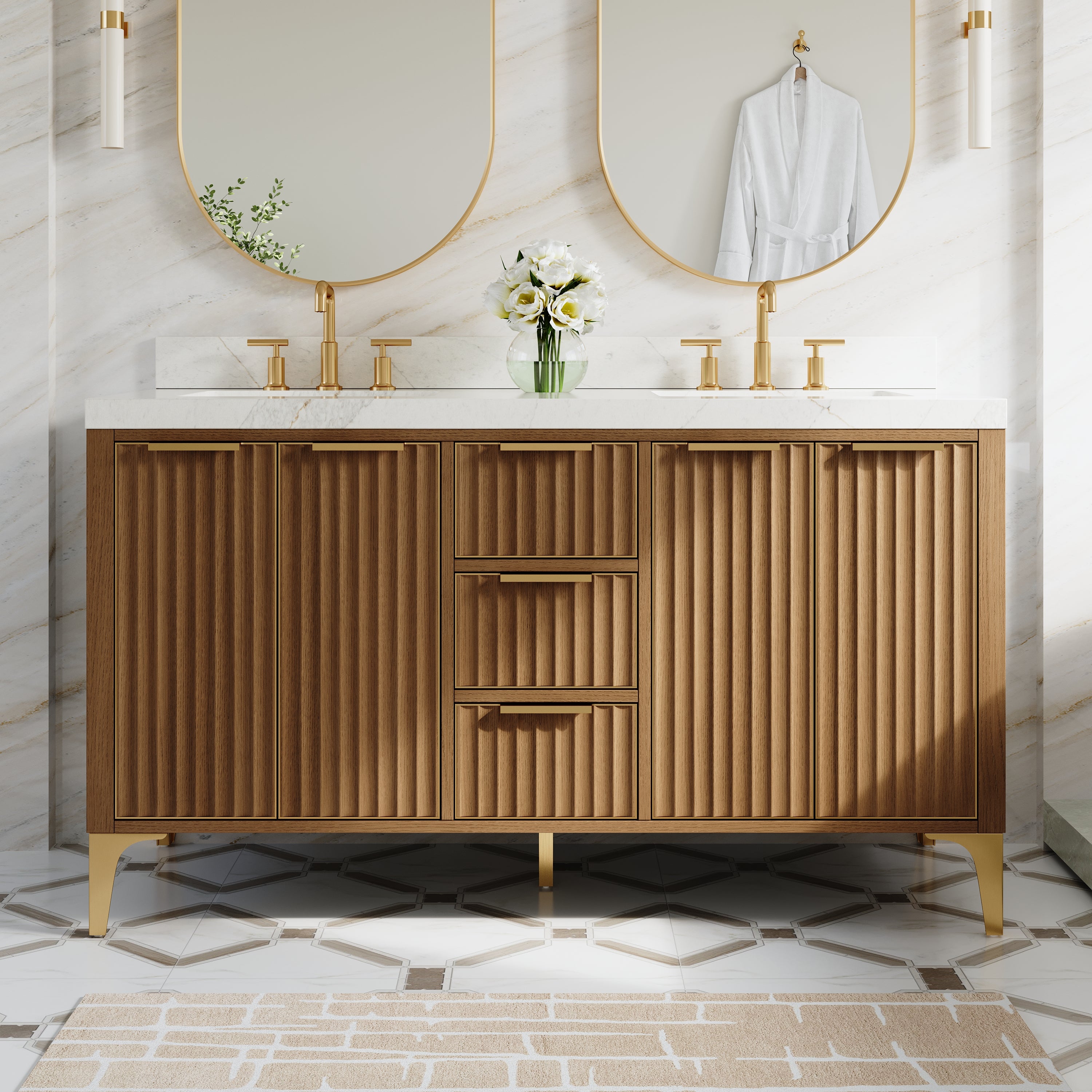
A common mistake is combining dramatic wood grain with heavily veined stone and patterned flooring.
That can become visually busy very quickly.
If the vanity has expressive grain, choose a quieter countertop. If the stone is the focal point, use a more restrained wood pattern.
2. Wood Can Make a Bathroom Feel Warmer
Bathrooms naturally contain hard, reflective surfaces.
Natural wood helps soften them.
A pale wood vanity works especially well in compact or modern bathrooms because it adds warmth without making the lower half of the room feel heavy. Darker wood can create a richer, more grounded look in a larger primary bath.
The effect is not only about color. Wood introduces a more residential, furniture-like quality that can make the room feel less clinical.
This is one reason I continue to see natural finishes perform well across modern, transitional, and spa-inspired bathrooms.
3. Natural Wood Can Support Long-Term Design Value
One practical advantage of wood is that it tends to outlast short-lived color trends.
A bright painted finish may feel fashionable for a few years, but natural grain often works through several design cycles because it is tied to material rather than novelty.
Hardware can be changed. Mirrors can be replaced. Wall color can evolve.
A well-chosen wood vanity can remain relevant through all of those updates.
That does not mean every wood tone is timeless. Extremely orange stains or highly specific finishes can date a bathroom just as easily as painted colors.
Medium and natural tones are usually easier to live with long term.
4. Construction Quality Determines Real Value
Wood appearance alone does not make a vanity a good investment.
Solid wood components can offer strength and repair potential, while quality plywood is often an excellent choice for cabinet boxes because it remains relatively stable as humidity changes.
Look Beyond the Front of the Cabinet
Inspect drawer bottoms, joints, edge sealing, plumbing cutouts, and the area beneath the sink.
Are the edges protected? Do the drawers feel rigid? Are hinges and slides mounted securely?
I would choose a well-built vanity using a combination of solid wood and plywood over a poorly assembled cabinet marketed simply as “solid wood.”
Construction creates value. The label does not.
5. Storage Design Makes the Cabinet More Useful
A beautiful vanity still needs to handle daily routines.
Deep drawers are excellent for skincare, grooming tools, cosmetics, and brushes because smaller items remain visible. Under-sink cabinets are better for tall bottles, cleaning supplies, and spare paper products.
Do not assume every drawer front is functional.
The sink may occupy space behind upper fronts, and plumbing cutouts can reduce the depth of usable drawers.
For a family bathroom, full-extension drawers and practical compartments usually matter more than decorative door details.
6. Wood Has Real Moisture Limitations
Wood is durable, but it is not waterproof.
Standing water, poor ventilation, and slow plumbing leaks can damage even high-quality cabinetry. Natural wood may also expand and contract slightly as humidity changes.
That does not make wood unsuitable for bathrooms.
It simply means the room needs to be managed properly.
Run the exhaust fan during and after showers. Wipe water around the sink promptly. Avoid leaving wet towels against cabinet fronts.
If the bathroom regularly stays damp for hours, address the ventilation before investing in premium cabinetry.
7. Some Bathrooms Are Better Suited to Wood Than Others
Wood vanities perform especially well in guest baths, family bathrooms, and primary suites with good ventilation.
They are less ideal in open wet rooms where shower spray regularly reaches the cabinet or where water frequently pools on the floor.
A floating vanity can keep the cabinet body away from floor moisture and create a lighter look, but it requires secure wall support.
Freestanding models generally provide more storage and are easier to install around existing plumbing.
Choose based on room conditions, not just appearance.
8. Wood Tone Should Coordinate With the Rest of the Room
Undertones matter.
A warm oak vanity may clash with blue-gray tile. Walnut can look elegant beside cream stone but may feel too dark in a poorly lit bathroom.
Always compare the cabinet finish with the countertop, flooring, and wall tile before ordering.
Lighting changes wood considerably.
Warm bulbs can make pale wood look more golden, while cool lighting may flatten its natural warmth.
When possible, view samples in the actual bathroom instead of relying entirely on online photographs.
9. Installation Protects the Cabinet's Long-Term Value
Measure wall width, cabinet depth, countertop overhang, and nearby fixture clearance before installation.
Check drain and supply-line positions against the interior storage layout. Plumbing that passes through a functional drawer may require relocation or cabinet modification.
Install the vanity level.
Seal the sink, faucet openings, countertop joints, and backsplash carefully. Then test every plumbing connection before storing anything inside.
A hidden slow leak can cause far more damage than ordinary bathroom humidity.

10. Maintain the Wood With Simple, Consistent Care
Use a soft cloth and mild, non-abrasive cleaner for routine maintenance. Wipe standing water rather than letting it dry repeatedly along cabinet edges.
Check beneath the sink several times a year for leaks, discoloration, or swelling. Repair finish chips early before moisture reaches exposed material.
When comparing Wellfor options, focus first on cabinet construction, storage layout, finish quality, plumbing compatibility, and the conditions in your bathroom. Then choose the grain and tone that work with the room. Well-selected bathroom vanities in wood add value because they combine natural character with useful storage and long-term adaptability, provided the cabinet is protected from moisture and chosen for the way the bathroom is actually used.















Leave a comment
This site is protected by hCaptcha and the hCaptcha Privacy Policy and Terms of Service apply.