


















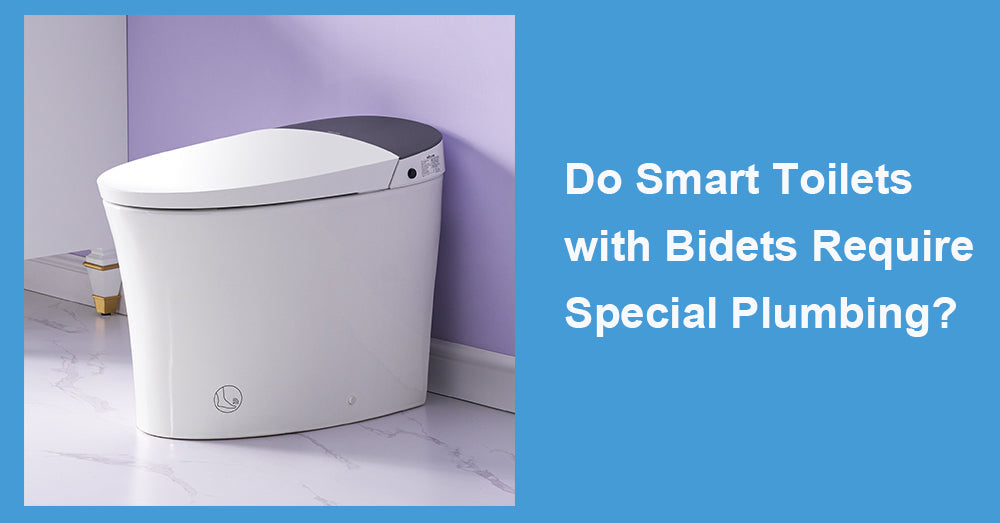
If you are already planning an acrylic tub refresh for easier cleaning and a brighter bath, it is natural to wonder whether smart toilets with bidet add to the plumbing headache. The good news is that most models do not require “special plumbing” in the sense of new drain lines or unusual pipe sizes. What they do require is the same basic toilet rough-in and water supply you already have, plus attention to electrical power and backflow safety details that codes and product standards take seriously.
What counts as “special plumbing” for a smart bidet toilet?
For most installations, the core connections are still the standard toilet trio:
· Drain outlet into the existing closet flange.
· Cold water supply from the existing shutoff valve
· Rough-in distance that matches the toilet’s spec (commonly 12 inches, sometimes 10 inches)
So the “special” part is usually not the plumbing layout. It is the planning around power, clearances, and backflow protection expectations that can vary by jurisdiction and product design.
Plumbing side: most use the same water line you already have
A typical smart toilet with a bidet uses the same cold-water feed as a conventional toilet. Many products simply tee off the supply internally (or via a provided adapter) to feed the bidet wash functions.
Two plumbing-related points that matter more than people expect:
· Shutoff access: You want the shutoff valve reachable, because smart seats and integrated units may have filters, quick-connect hoses, or service steps.
· Pressure consistency: Bidet wash quality depends on stable pressure; if your home has weak pressure, the “special” fix might be upstream (pressure regulator check, supply valve replacement), not a different toilet connection.
In other words, you usually keep your existing supply location, but you want it in good condition.
Rough-in and physical fit: measure before you buy
Most toilets are designed around common rough-ins, with a 12-inch rough-in frequently listed for one-piece smart bidet toilets. Some brands offer 10-inch options, but you should treat rough-in as non-negotiable: if it does not match, the toilet may not sit correctly, or the tankless body may crowd the wall.
Also check:
· Bowl shape and projection (how far it extends into the room)
· Seat height and comfort preferences
· Side clearance around the toilet for cleaning and usability
Smart toilets often have bulkier rear housings than basic two-piece toilets, so a “fits on paper” rough-in can still feel tight in real life.

The biggest “extra requirement” is usually electrical, not plumbing
Here is where smart toilets with bidets differ most from standard toilets: features like heated seats, warm-water washing, dryers, deodorization, UV cleaning, auto open/close, and auto flush often need electricity.
Many product listings and installation notes explicitly call out the need for an outlet near the toilet. That outlet is typically expected to be GFCI-protected in bathroom applications (requirements depend on the adopted electrical code and local amendments, but GFCI protection in bathrooms is a widely recognized safety baseline).
Practical takeaway: if there is no nearby outlet, the “special work” is usually adding a properly protected receptacle, not rerouting plumbing.
Backflow protection: why bidet functions get extra scrutiny
Bidet features introduce a cross-connection concern: water that contacts the bowl area must not siphon back into the potable supply.
Two helpful anchors:
· The plumbing world treats backflow prevention as a serious health-and-safety issue, and code resources explain where protection is required and what devices/methods are used.
· Product standards for personal hygiene devices applied to water closets (bidet sprays and similar features) include requirements around water sourcing and safety behaviors, which is why reputable manufacturers reference compliance and testing.
What this means for you:
· Some smart bidet toilets have integrated backflow/vacuum-breaker style protections as part of their listed design.
· Some jurisdictions or inspectors may still require a particular configuration based on local rules and the deviceis installation.
You do not need to memorize device types. You do need to buy from a reputable product line and be prepared that a plumber may choose an approved backflow approach consistent with local requirements.
Hot water: built-in heater vs. warm-water supply line
Many smart bidet toilets heat wash water with an internal heater, so they only need a cold-water connection. Others can be connected to hot water depending on design, but that is less common for integrated one-piece smart toilets.
A safety detail that often gets overlooked: standards for these devices include provisions that address temperature safety, such as shutoff behavior when water reaches a high threshold (commonly referenced as 118°F in standard text). This is one reason you should avoid improvised “hot-water hacks” and stick to manufacturer instructions.
Do you need a special drain line or a larger waste pipe?
In almost all residential swaps, the answer is no. A smart toilet still discharges to the same closet flange and waste system as any other toilet. The bidet function uses much less water than a flush.
The real drain-side watch-outs are the same as with any toilet:
· Flange condition and height
· Floor levelness
· Proper sealing and fastening
· Any history of slow drains or venting issues (those are house problems, not “smart toilet” problems)
If you are already planning a bathroom remodel, this is a good time to ensure the flange is secure and the floor is flat.
Water efficiency: what “good” looks like today
Many smart toilets with a bidet also position themselves as high-efficiency toilets. Efficiency labeling is usually about flush volume and performance certification, not bidet water use.
A widely referenced benchmark is 1.28 gallons per flush for efficient toilets, which is lower than the 1.6 gallons per flush federal standard noted in efficiency guidance; WaterSense-labeled models are independently certified for both performance and water efficiency.
So if you are comparing models, you can treat flush volume as a real, measurable spec rather than marketing fluff.
When you actually might need plumbing changes
You are more likely to need plumbing work if:
· Your shutoff valve is old, leaking, or poorly located.
· Your supply line is corroded or undersized (rare, but it happens in older homes)
· Your rough-in is 10 inches, and the model you want is strictly 12 inches.
· Your bathroom layout needs the toilet shifted (that is a flange move—real plumbing)
· Local rules require a particular backflow method based on your exact configuration.
In most other cases, the installation is comparable to swapping a standard toilet, provided power and safety requirements are met.
A simple pre-buy checklist that prevents 90% of surprises
Before ordering a smart toilet with a bidet, confirm these in inches and plain language:
l Rough-in (measure from finished wall to the center of the flange bolts; check the product spec, commonly 12 inches)
l Outlet plan (is there a nearby GFCI-protected receptacle or a plan to add one safely?)
l Shutoff valve condition (easy to reach, turns smoothly, no leaks)
l Space around the bowl (front projection and side clearance)
l Listing/standards confidence (choose products that reference recognized testing/standards for personal hygiene devices)





























Leave a comment
This site is protected by hCaptcha and the hCaptcha Privacy Policy and Terms of Service apply.